
Cell Structures Functions and Transport Figure 7 5







- Slides: 28
Cell Structures, Functions and Transport
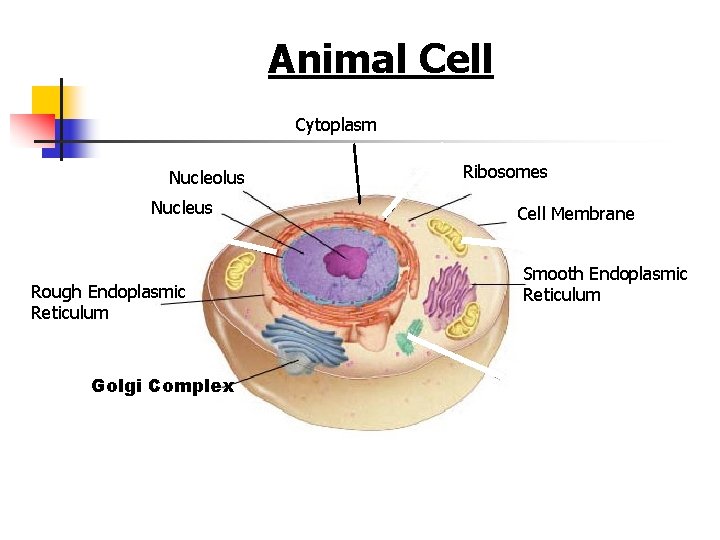
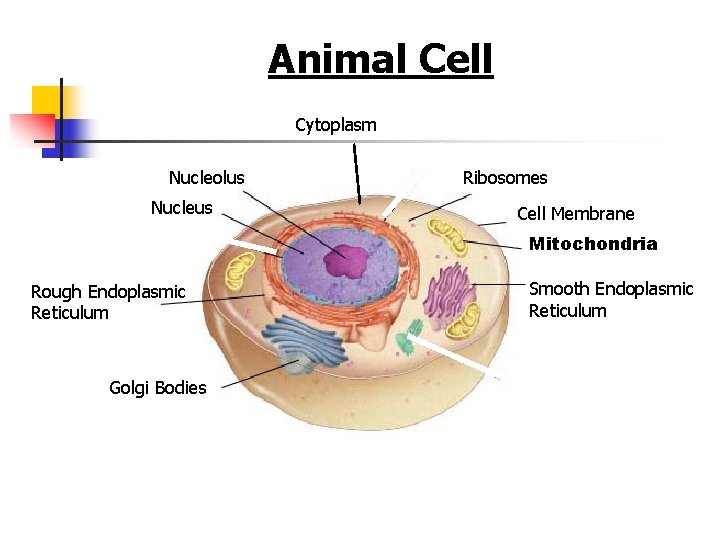
Figure 7 -5 Plant and Animal Cells Animal Cell Section 7 -2 Cytoplasm Nucleolus Nucleus Go to Section: Cell Membrane
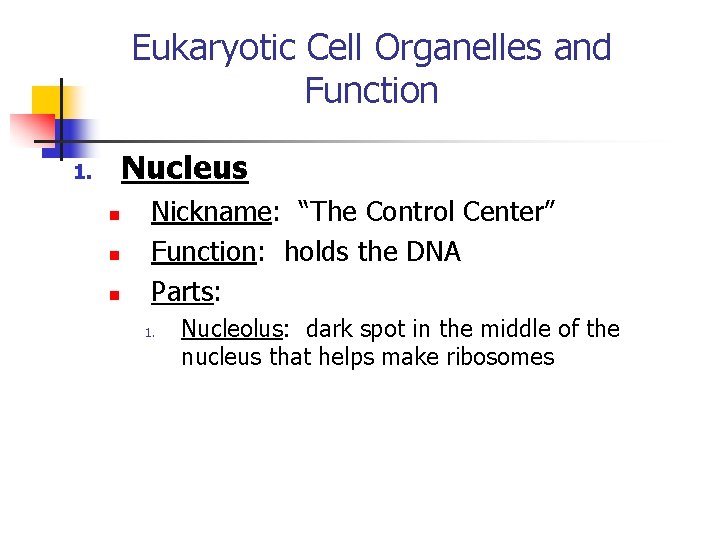
Eukaryotic Cell Organelles and Function Nucleus 1. n n n Nickname: “The Control Center” Function: holds the DNA Parts: 1. Nucleolus: dark spot in the middle of the nucleus that helps make ribosomes
Figure 7 -5 Plant and Animal Cells Animal Cell Section 7 -2 Cytoplasm Nucleolus Nucleus Go to Section: Ribosomes Cell Membrane
Cell Organelles and Function Ribosomes 2. n n Function: makes proteins Found in all cells, prokaryotic and eukaryotic
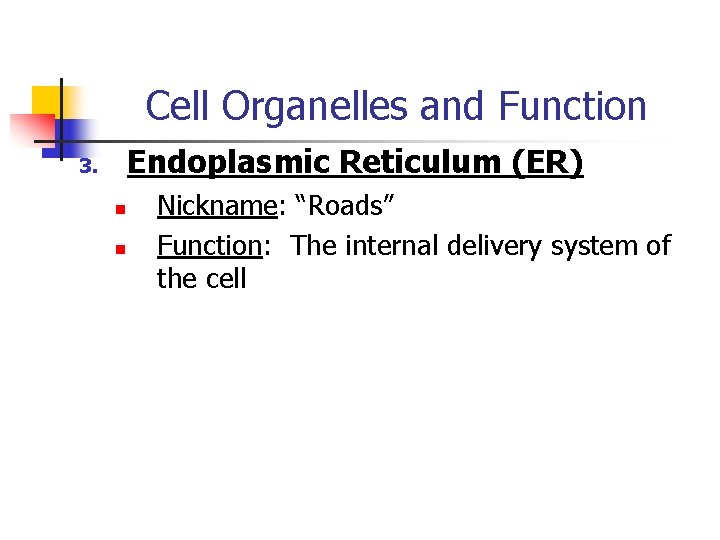
Cell Organelles and Function Endoplasmic Reticulum (ER) 3. n n Nickname: “Roads” Function: The internal delivery system of the cell
Figure 7 -5 Plant and Animal Cells Animal Cell Section 7 -2 Cytoplasm Nucleolus Nucleus Rough Endoplasmic Reticulum Go to Section: Ribosomes Cell Membrane Smooth Endoplasmic Reticulum
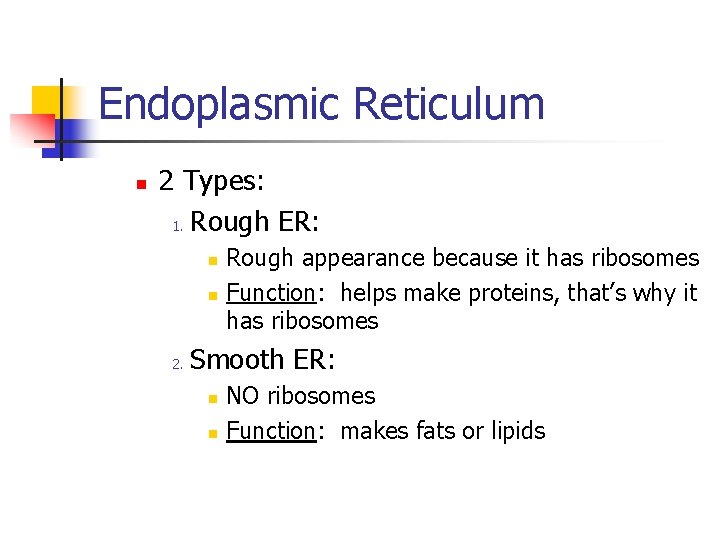
Endoplasmic Reticulum n 2 Types: 1. Rough ER: n n 2. Rough appearance because it has ribosomes Function: helps make proteins, that’s why it has ribosomes Smooth ER: n n NO ribosomes Function: makes fats or lipids
Figure 7 -5 Plant and Animal Cells Animal Cell Section 7 -2 Cytoplasm Nucleolus Nucleus Rough Endoplasmic Reticulum Golgi Complex Go to Section: Ribosomes Cell Membrane Smooth Endoplasmic Reticulum
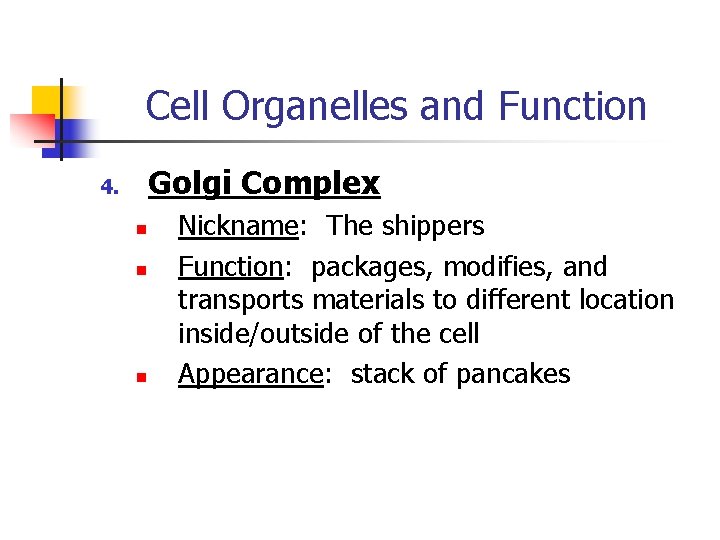
Cell Organelles and Function Golgi Complex 4. n n n Nickname: The shippers Function: packages, modifies, and transports materials to different location inside/outside of the cell Appearance: stack of pancakes
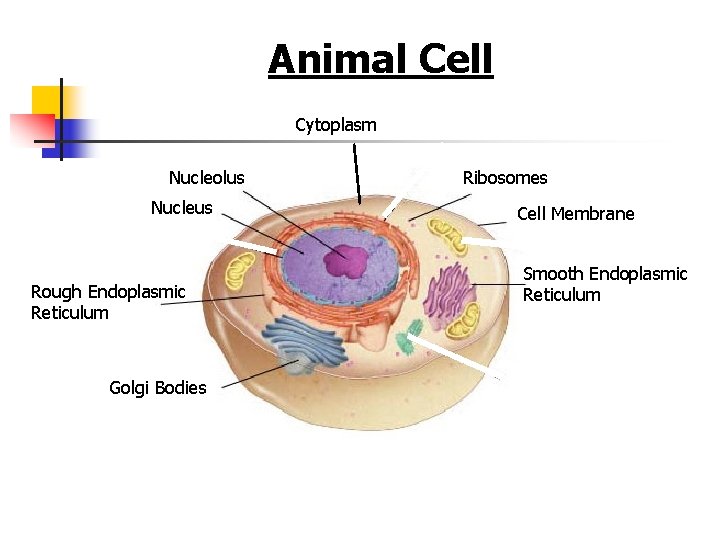
Figure 7 -5 Plant and Animal Cells Animal Cell Section 7 -2 Cytoplasm Nucleolus Nucleus Rough Endoplasmic Reticulum Golgi Bodies Go to Section: Ribosomes Cell Membrane Smooth Endoplasmic Reticulum
Cell Organelles and Function Lysosomes: circular, but bigger than ribosomes) 5. n n Nickname: “Clean-up Crews” Function: to break down food into particles the rest of the cell can use and to destroy old cells
Figure 7 -5 Plant and Animal Cells Animal Cell Section 7 -2 Cytoplasm Nucleolus Nucleus Ribosomes Cell Membrane Mitochondria Rough Endoplasmic Reticulum Golgi Bodies Smooth Endoplasmic Reticulum
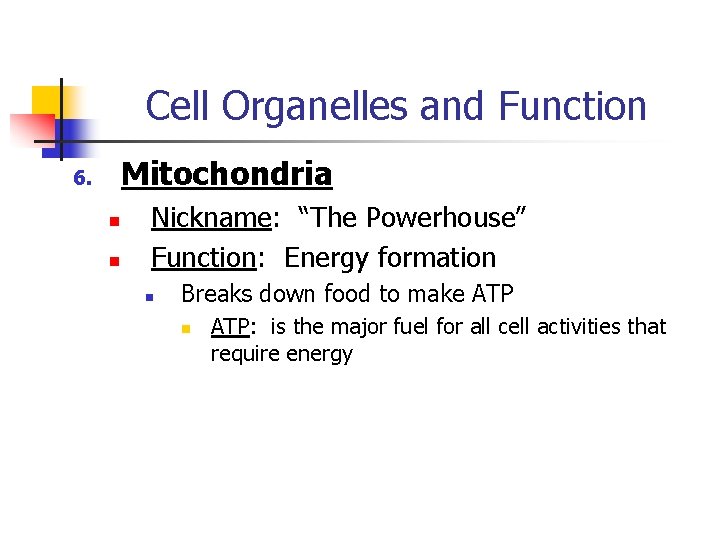
Cell Organelles and Function Mitochondria 6. n n Nickname: “The Powerhouse” Function: Energy formation n Breaks down food to make ATP n ATP: is the major fuel for all cell activities that require energy
Animal Cell Cytoplasm Nucleolus Nucleus Ribosomes Cell Membrane Mitochondria Rough Endoplasmic Reticulum Golgi Bodies Smooth Endoplasmic Reticulum
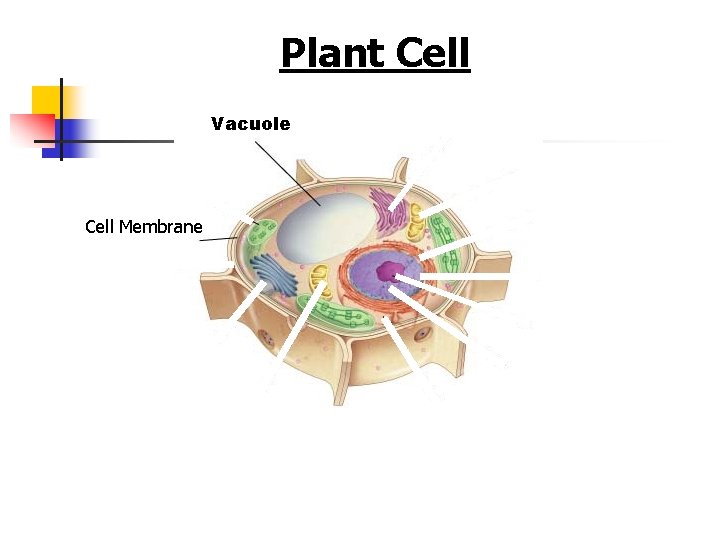
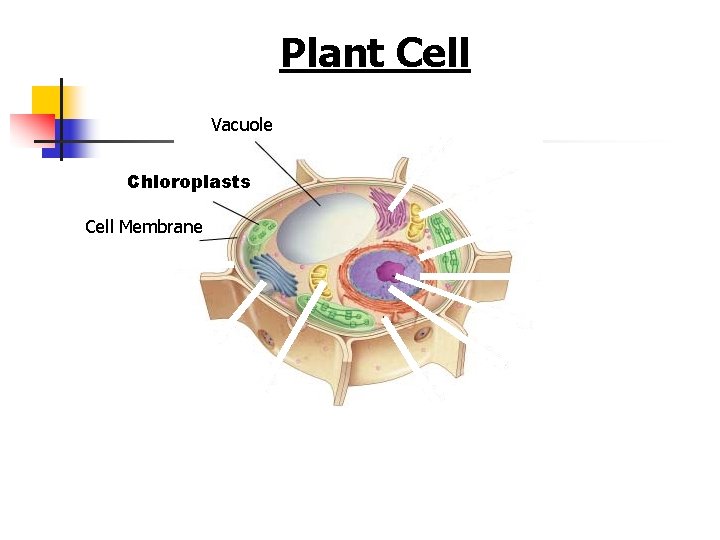
Figure 7 -5 Plant and Animal Cells Section 7 -2 Plant Cell Vacuole Cell Membrane Go to Section:
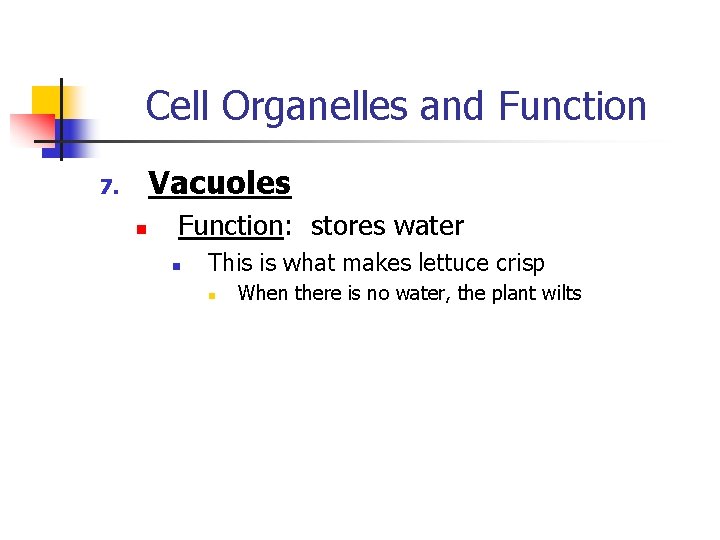
Cell Organelles and Function Vacuoles 7. n Function: stores water n This is what makes lettuce crisp n When there is no water, the plant wilts
n Now let’s talk about structures only found in PLANT Cells!!
Figure 7 -5 Plant and Animal Cells Plant Cell Section 7 -2 Vacuole Chloroplasts Cell Membrane Go to Section:
Eukaryotic Cell Organelles and Function Chloroplasts 8. n n Function: traps energy from the sun to produce food for the plant cell Green in color because of chlorophyll, which is a green pigment
Figure 7 -5 Plant and Animal Cells Plant Cell Section 7 -2 Vacuole Chloroplasts Cell Membrane Cell Wall Go to Section:
Eukaryotic Cell Organelles and Function Cell Wall 9. n n Function: provides support and protection to the cell membrane Found outside the cell membrane in plant cells
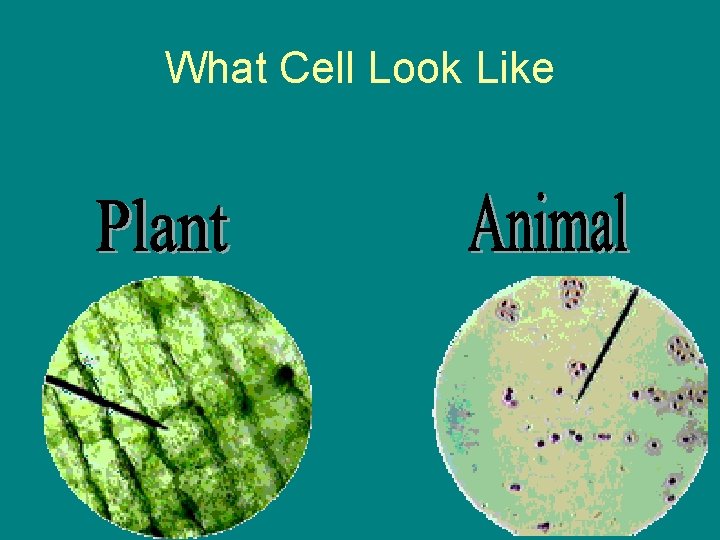
What Cell Look Like
The cell is the basic unit of life. Cell walls and chloroplasts are found in plant cells only. • The cell wall is a stiff covering outside the cell membrane of a plant cell. • Chloroplast is a green structure in a plant cell where food is produced. It is green because it contains the green pigment chlorophyll.
Both plant and animal cells contain: nucleus cytoplasm transport system vacuoles cell membrane mitochondria chromosomes
The nucleus is the control center of the cell. It controls all cell activity. The Nucleus contains chromosomes or the cell blueprints
• The cell membrane is the outer covering of an animal cell. It gives the cell its shape. • Most of the cells life activities take place within the cytoplasm. The mitochondrion is the powerhouse of the cell. It is a rod-shaped structure that releases energy.
Respiration is the process of releasing energy in sugar that occurs in the mitochondria. Vacuoles are sac like storage spaces in both plant and animal cells. These are larger in plants than in animals. Photosynthesis only happens in plants (producers). This is where they use sunlight to make food.