
Cell Structure Two Types of Cells n Prokaryotes

- Slides: 45
Cell Structure
Two Types of Cells n Prokaryotes n n Pro = before Karyon = nucleus Lacks: n Nucleus n Internal compartments (membrane bound organelles) Small, simple, singlecelled organisms n BACTERIA n Eukaryotes n n Eu = true Karyon = nucleus Has: n Nucleus n Internal compartments (membrane bound organelles) Complex, multi-celled organisms n PLANTS & ANIMALS
Prokaryotic Cells n Bacteria n Have no nuclei or internal compartments n Small, single-celled organisms
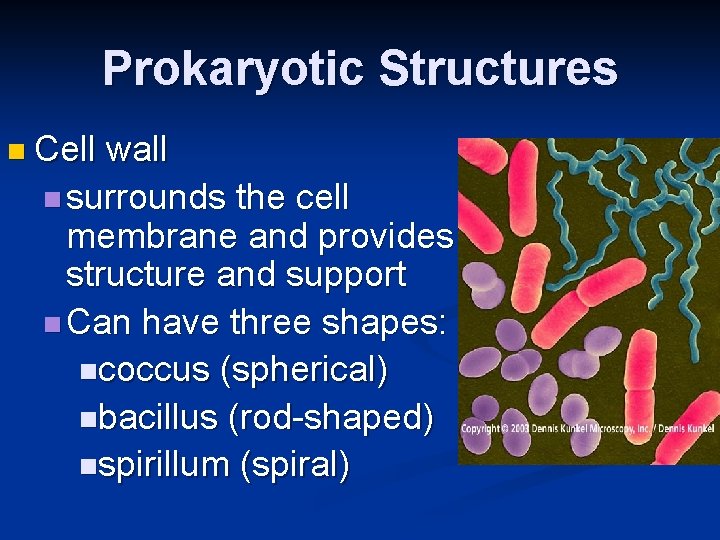
Prokaryotic Structures n Cell wall n surrounds the cell membrane and provides structure and support n Can have three shapes: ncoccus (spherical) nbacillus (rod-shaped) nspirillum (spiral)
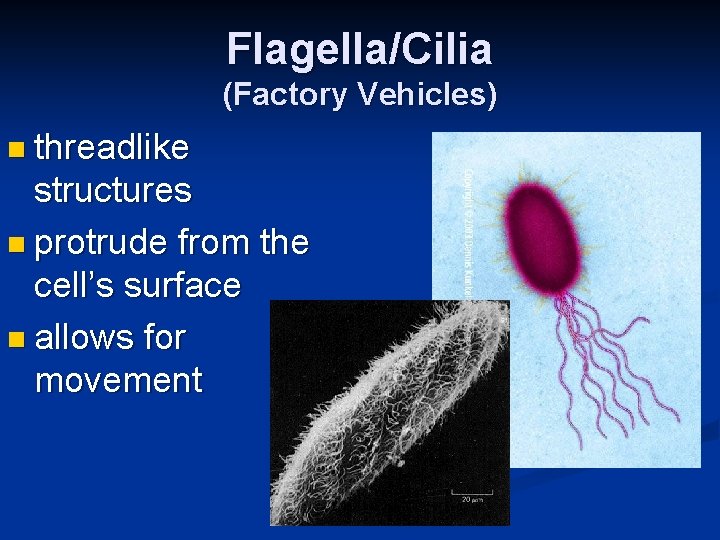
Flagella/Cilia (Factory Vehicles) n threadlike structures n protrude from the cell’s surface n allows for movement
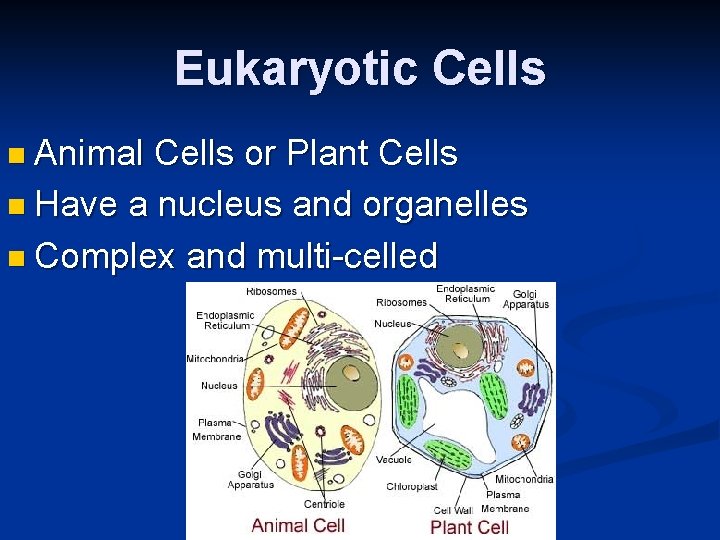
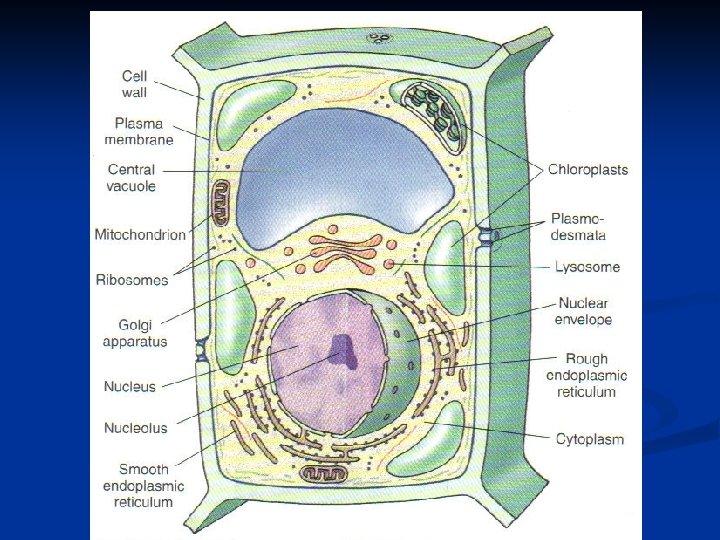
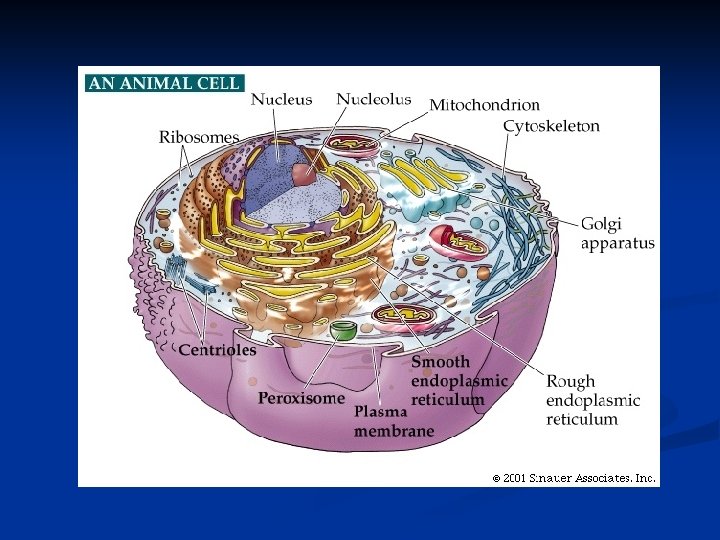
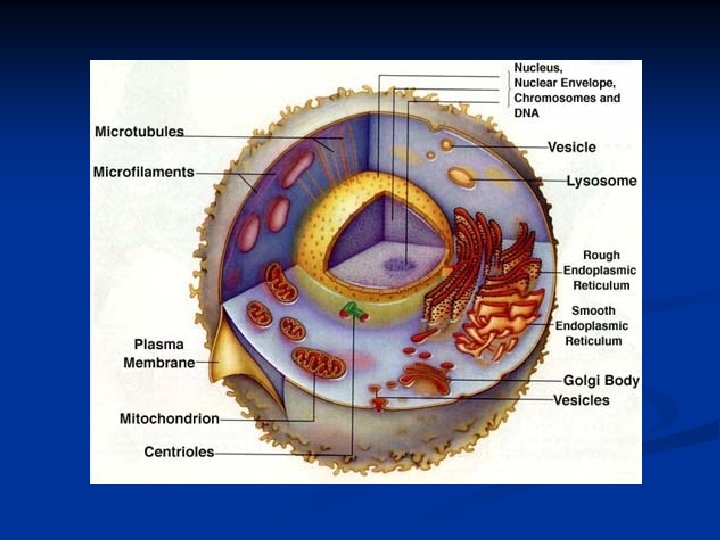
Eukaryotic Cells n Animal Cells or Plant Cells n Have a nucleus and organelles n Complex and multi-celled
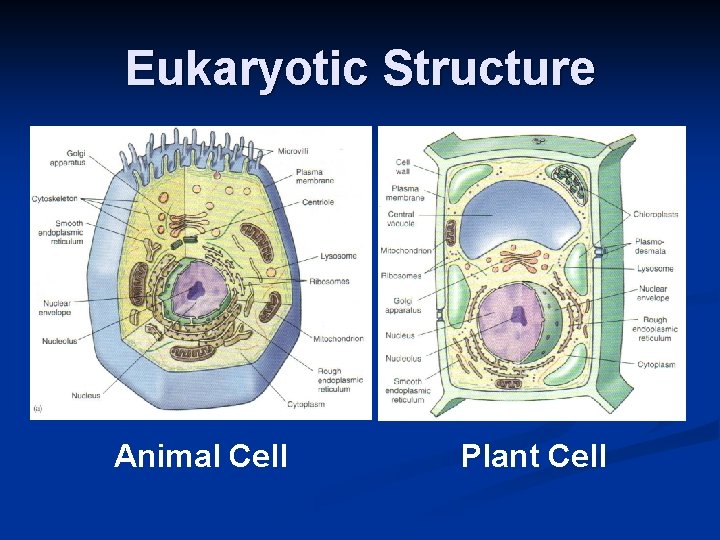
Eukaryotic Structure Animal Cell Plant Cell
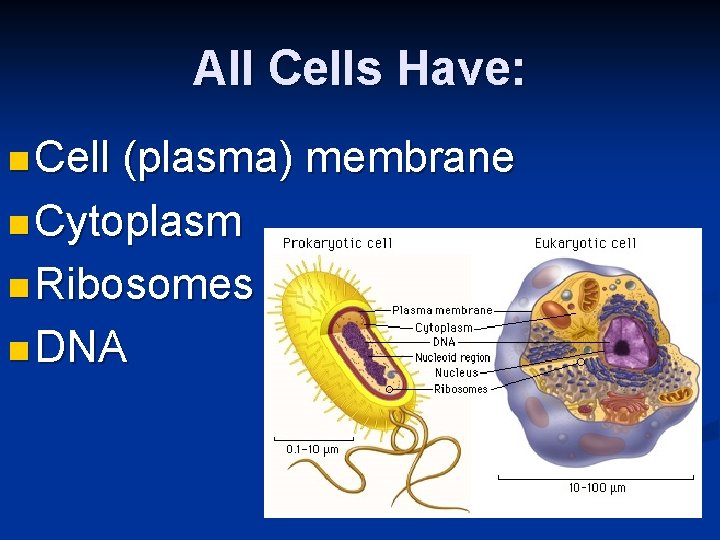
All Cells Have: n Cell (plasma) membrane n Cytoplasm n Ribosomes n DNA
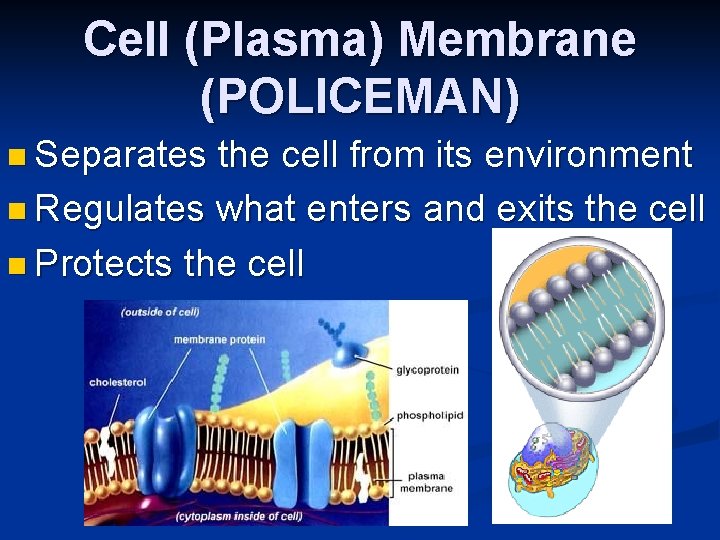
Cell (Plasma) Membrane (POLICEMAN) n Separates the cell from its environment n Regulates what enters and exits the cell n Protects the cell
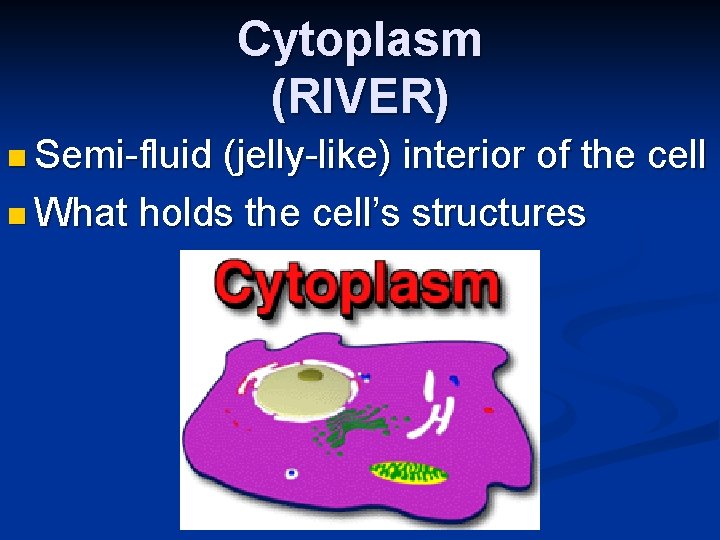
Cytoplasm (RIVER) n Semi-fluid (jelly-like) interior of the cell n What holds the cell’s structures
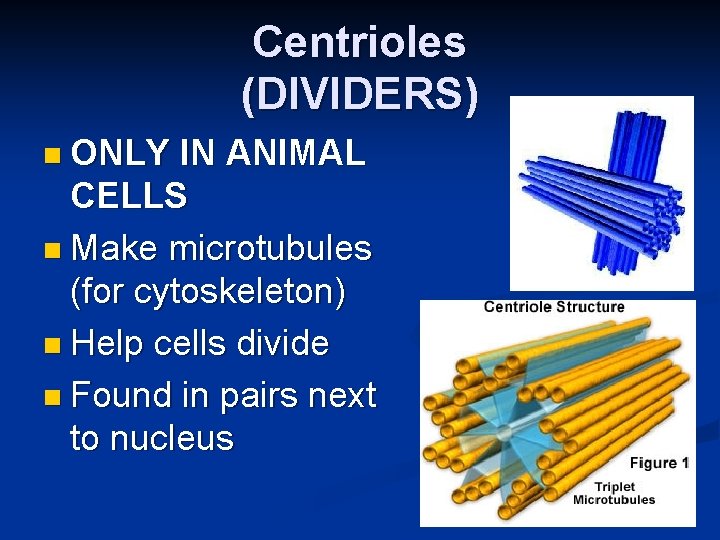
Centrioles (DIVIDERS) n ONLY IN ANIMAL CELLS n Make microtubules (for cytoskeleton) n Help cells divide n Found in pairs next to nucleus
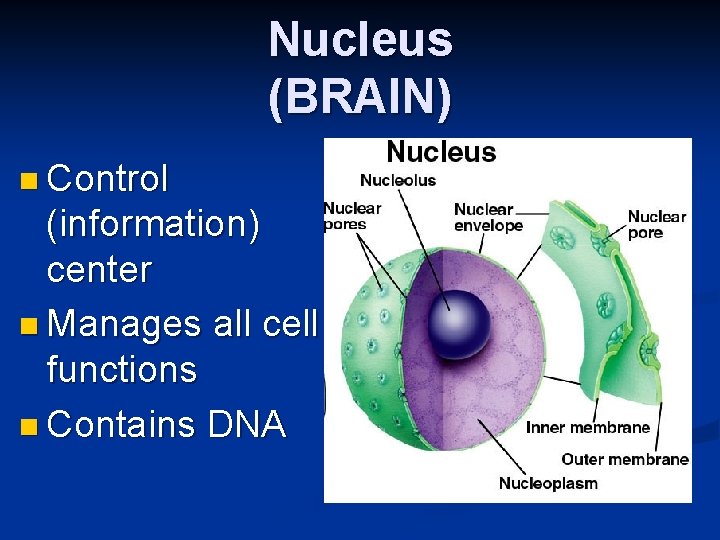
Nucleus (BRAIN) n Control (information) center n Manages all cell functions n Contains DNA
Nuclear Membrane/Envelope (GUARD OF NUCLEUS) n Separates the nucleus from the rest of the cell n Regulates what enters and exits the nucleus n Protects the nucleus
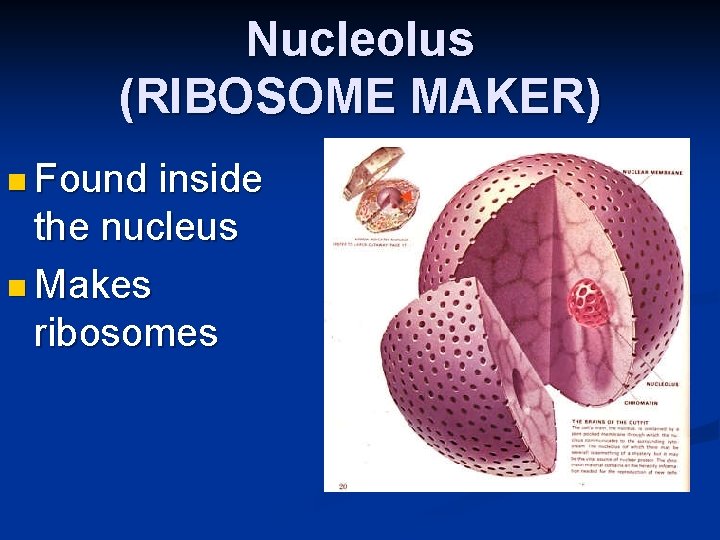
Nucleolus (RIBOSOME MAKER) n Found inside the nucleus n Makes ribosomes
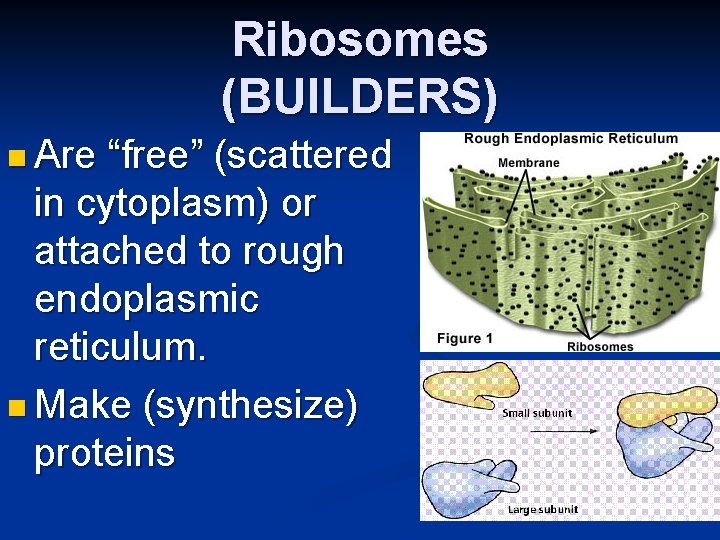
Ribosomes (BUILDERS) n Are “free” (scattered in cytoplasm) or attached to rough endoplasmic reticulum. n Make (synthesize) proteins
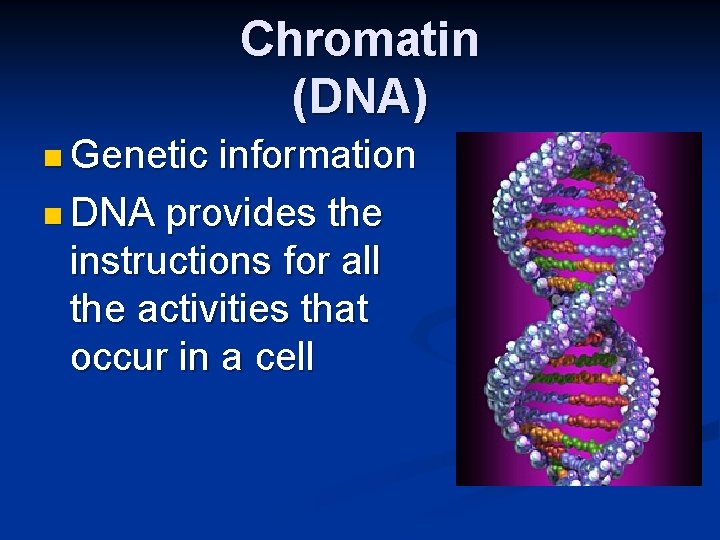
Chromatin (DNA) n Genetic information n DNA provides the instructions for all the activities that occur in a cell
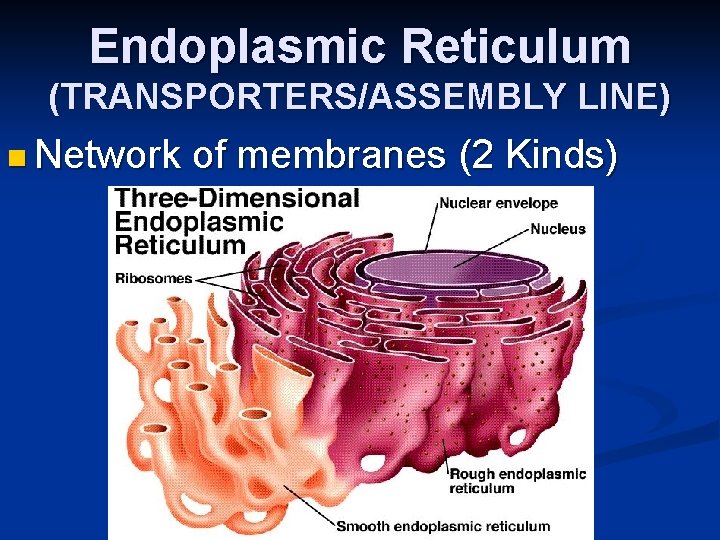
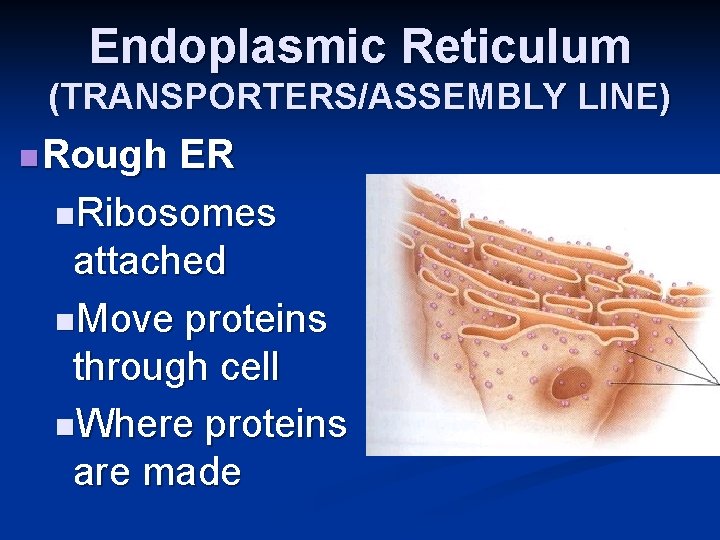
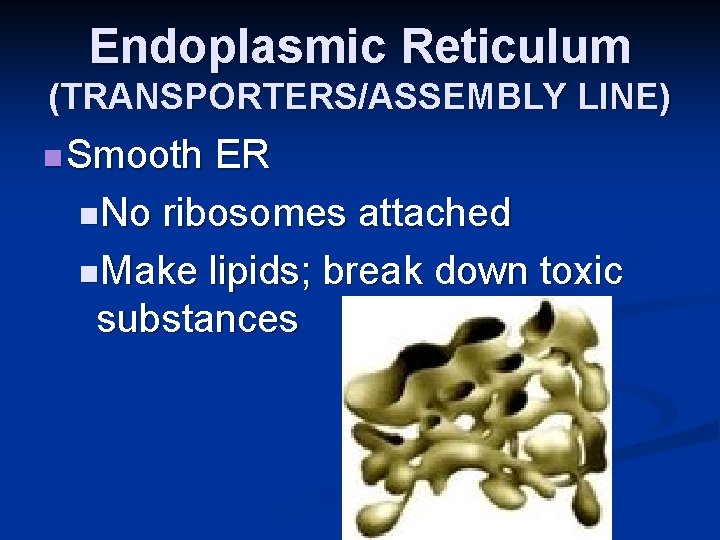
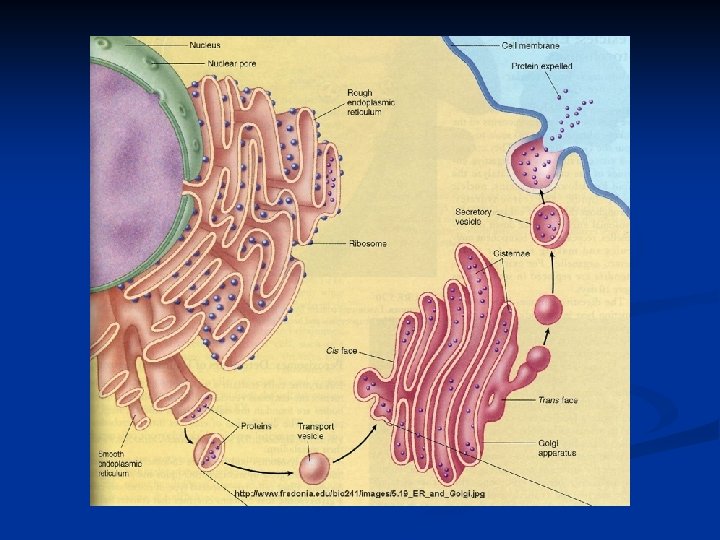
Endoplasmic Reticulum (TRANSPORTERS/ASSEMBLY LINE) n Network of membranes (2 Kinds)
Endoplasmic Reticulum (TRANSPORTERS/ASSEMBLY LINE) n Rough ER n. Ribosomes attached n. Move proteins through cell n. Where proteins are made
Endoplasmic Reticulum (TRANSPORTERS/ASSEMBLY LINE) n Smooth ER n. No ribosomes attached n. Make lipids; break down toxic substances
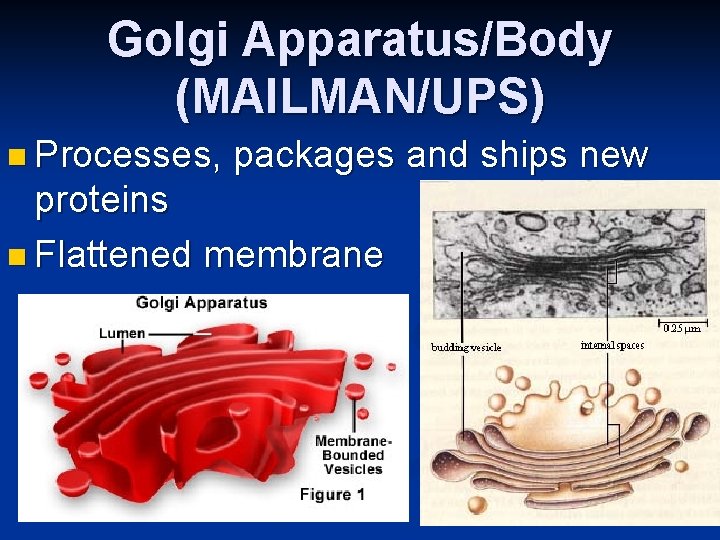
Golgi Apparatus/Body (MAILMAN/UPS) n Processes, packages and ships new proteins n Flattened membrane
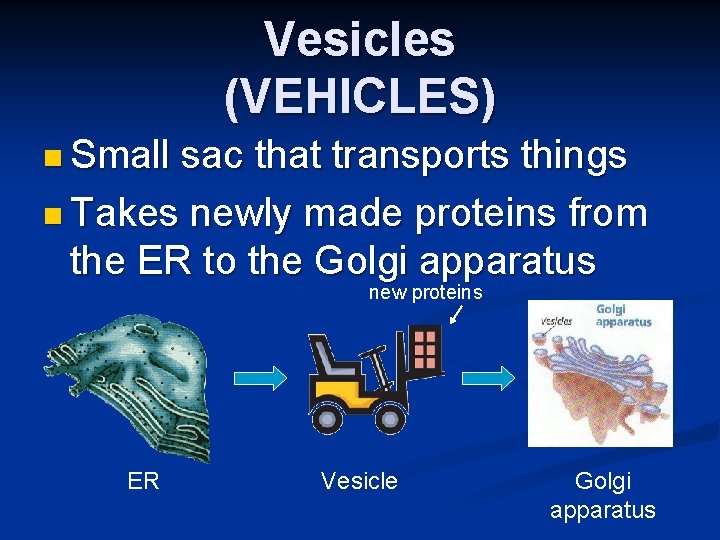
Vesicles (VEHICLES) n Small sac that transports things n Takes newly made proteins from the ER to the Golgi apparatus new proteins ER Vesicle Golgi apparatus
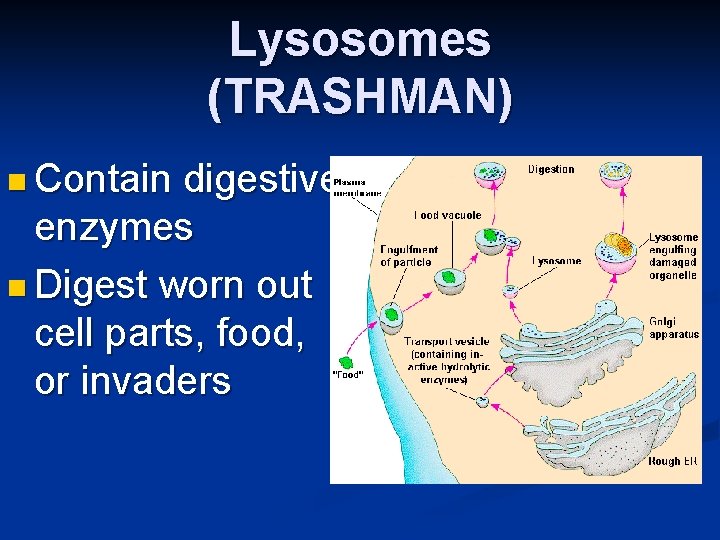
Lysosomes (TRASHMAN) n Contain digestive enzymes n Digest worn out cell parts, food, or invaders
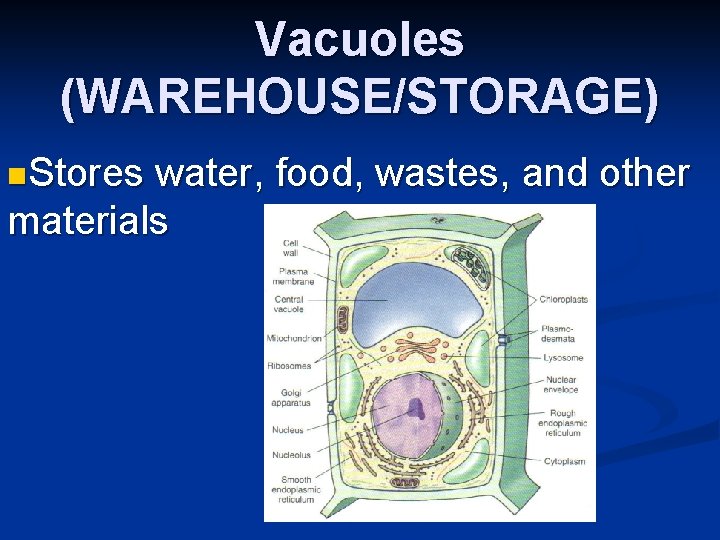
Vacuoles (WAREHOUSE/STORAGE) n. Stores water, food, wastes, and other materials
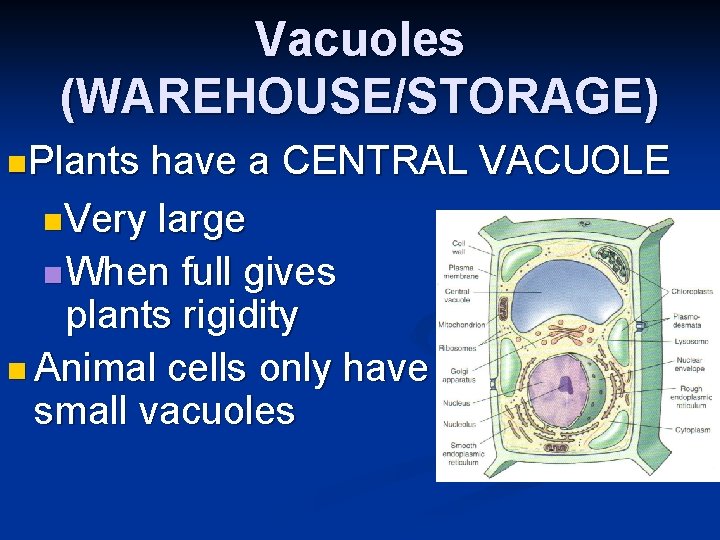
Vacuoles (WAREHOUSE/STORAGE) n. Plants have a CENTRAL VACUOLE n. Very large n When full gives plants rigidity n Animal cells only have small vacuoles
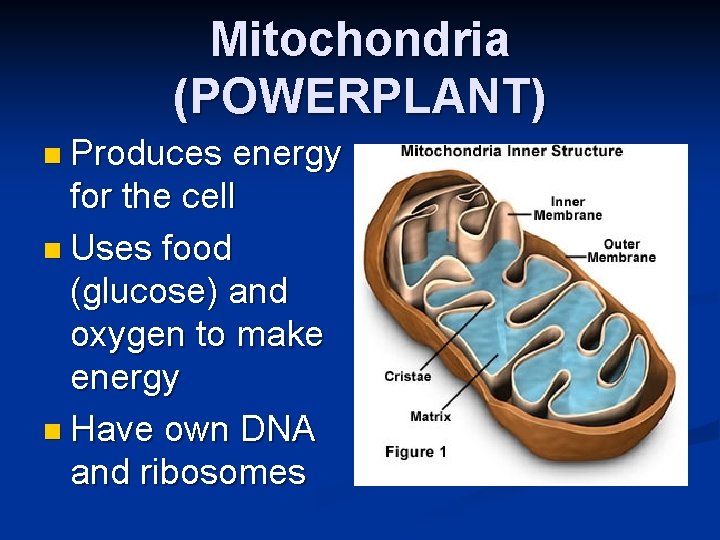
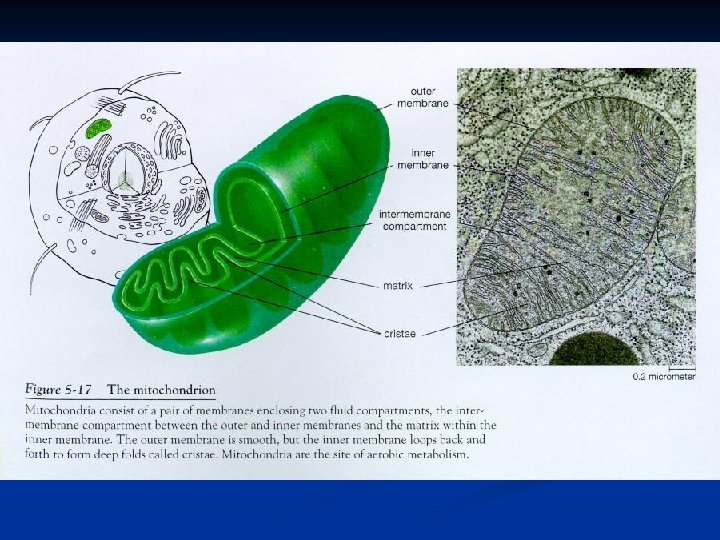
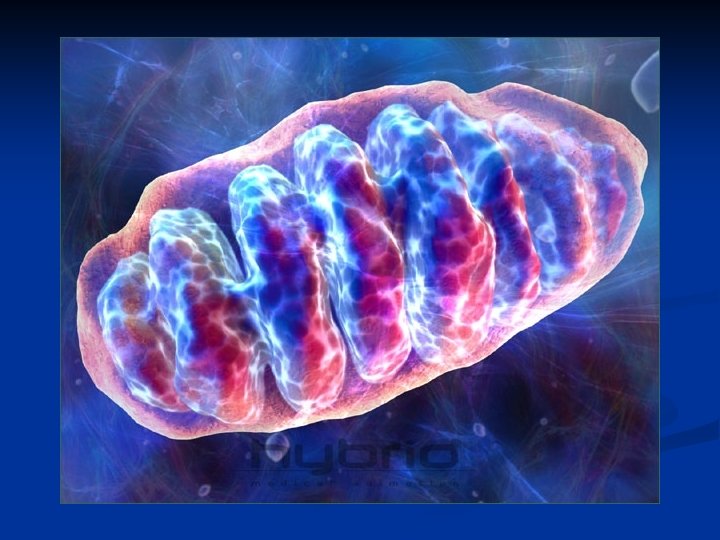
Mitochondria (POWERPLANT) n Produces energy for the cell n Uses food (glucose) and oxygen to make energy n Have own DNA and ribosomes
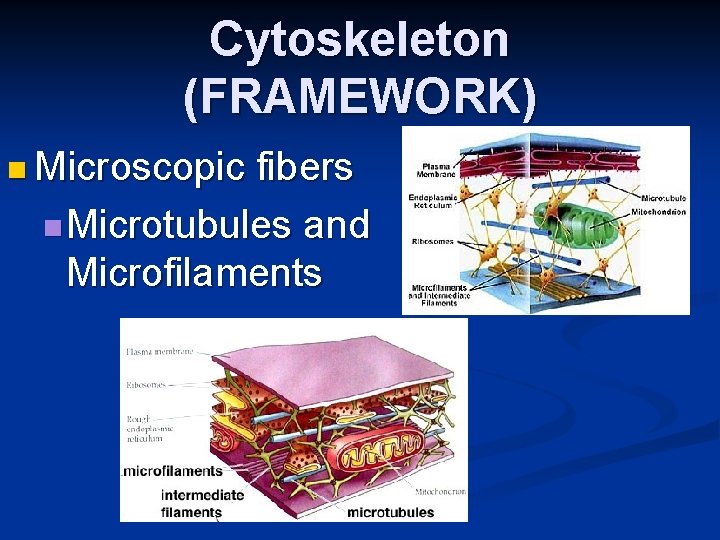
Cytoskeleton (FRAMEWORK) n Microscopic fibers n Microtubules and Microfilaments
Cytoskeleton (FRAMEWORK) n Microfilaments: n threadlike structures made up of the protein actin n produce a tough, flexible framework that supports the cell n help with movement
Cytoskeleton (FRAMEWORK) n Microtubules n hollow structures made of tubulins (protein) that help maintain cell shape n play an important role in cell division n build projections from the cell surface —cilia and flagella—that enable some cells to swim rapidly through liquids
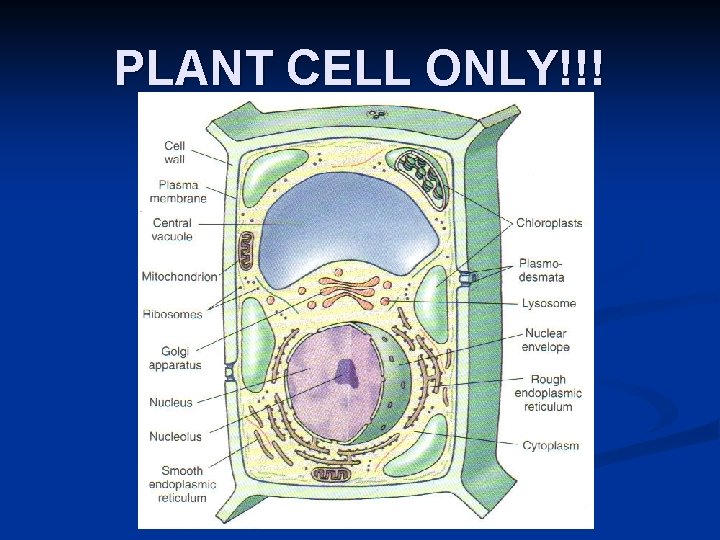
PLANT CELL ONLY!!!
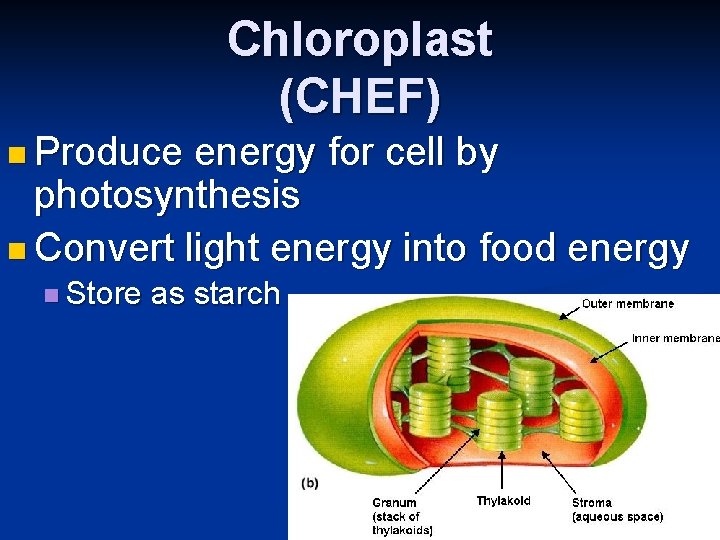
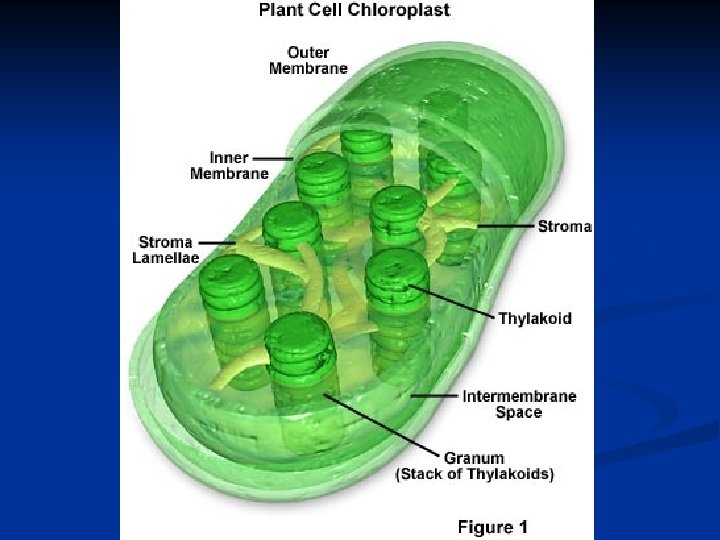
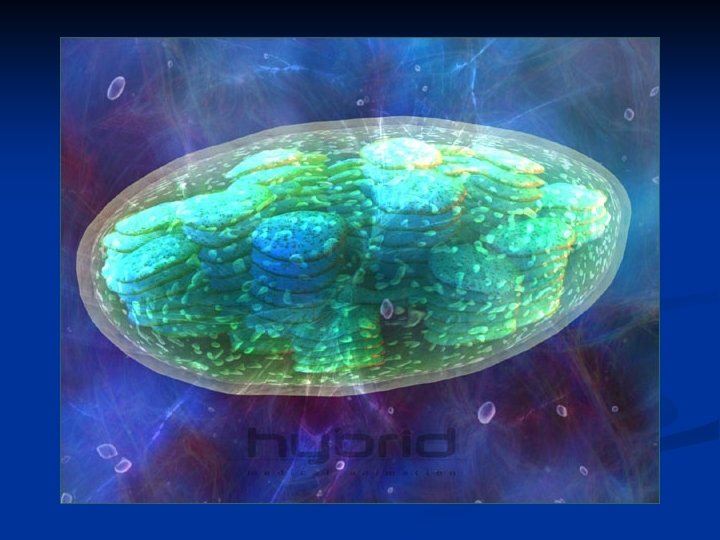
Chloroplast (CHEF) n Produce energy for cell by photosynthesis n Convert light energy into food energy n Store as starch
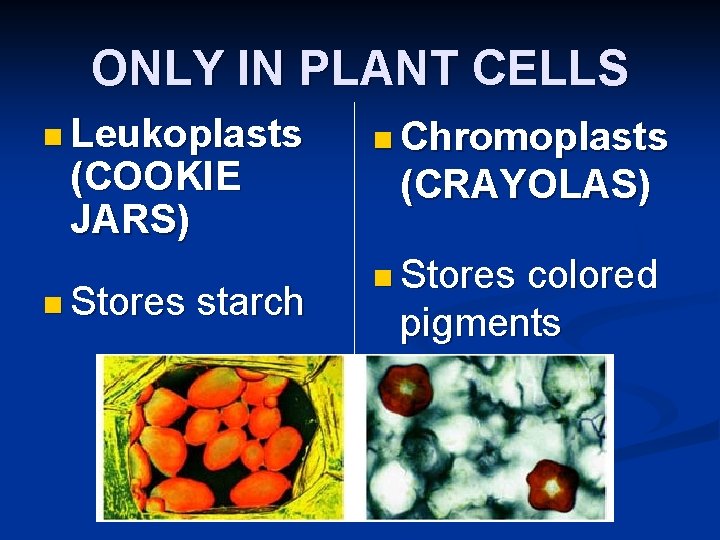
ONLY IN PLANT CELLS n Leukoplasts (COOKIE JARS) n Stores starch n Chromoplasts (CRAYOLAS) n Stores colored pigments
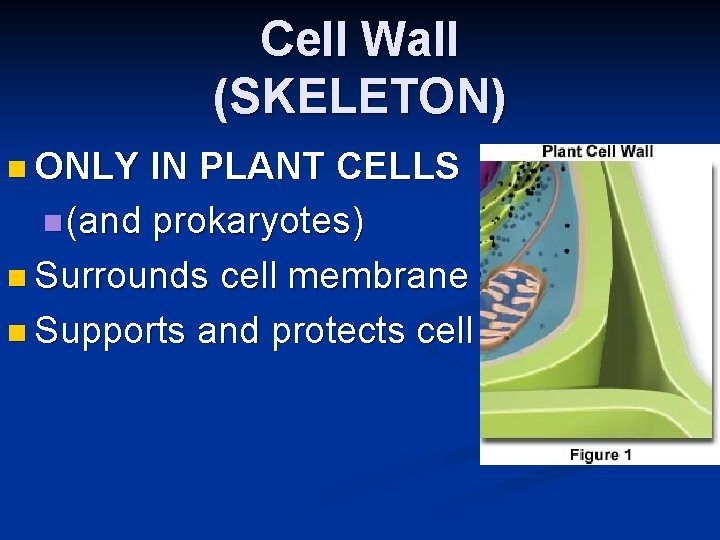
Cell Wall (SKELETON) n ONLY IN PLANT CELLS n (and prokaryotes) n Surrounds cell membrane n Supports and protects cell
LEVELS OF ORGANIZATION n CELL The basic unit of life. n What is a group of cells working together?
LEVELS OF ORGANIZATION n TISSUE A group of similar cells working together to perform a function. n What is a group of tissues working together?
LEVELS OF ORGANIZATION n ORGAN A group of similar tissues working together to perform a function. n What is a group of organs working together?
LEVELS OF ORGANIZATION n SYSTEM A group of similar organs working together to perform a function. n What is a group of organ systems working together?
LEVELS OF ORGANIZATION n ORGANISM A group of similar organ systems working together to perform a function.