
Cell Structure Prokaryotic and Eukaryotic Chapter 4 Cells

- Slides: 34
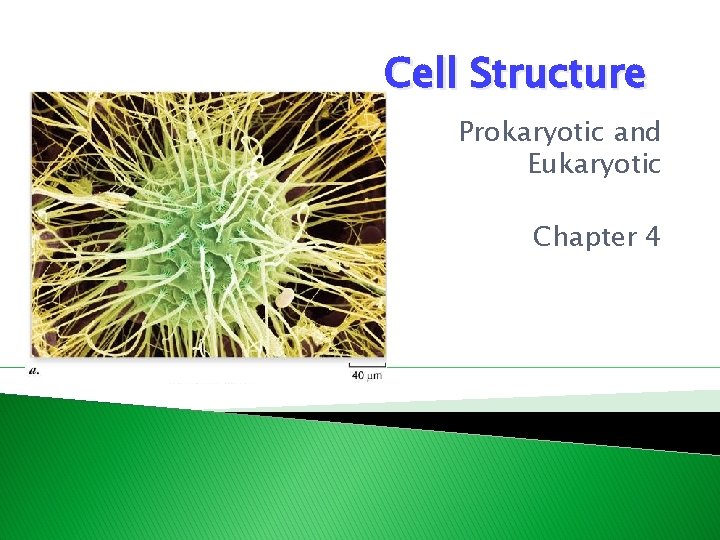
Cell Structure Prokaryotic and Eukaryotic Chapter 4
Cells – the Reason they are small… Cell size is limited. -As cell size increases, it takes longer for material to move from the cell membrane to the interior of the cell and vice versa *Cells need to have high Surface Area -tovolume ratio 2
Prokaryotic Cells Structures 3
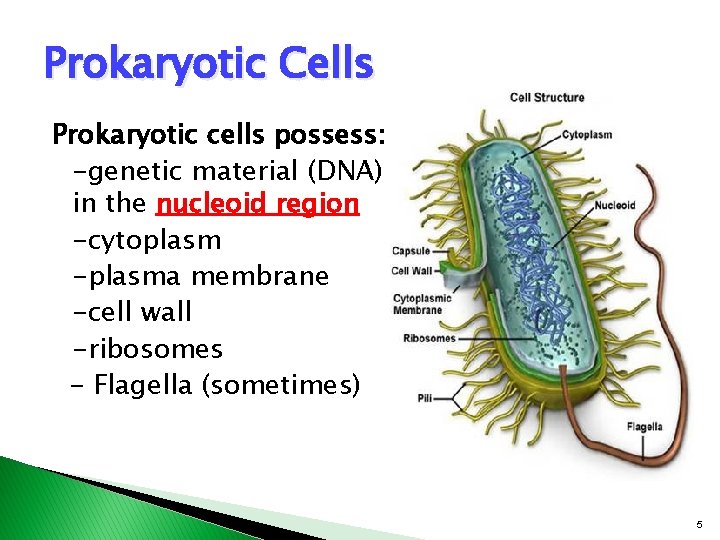
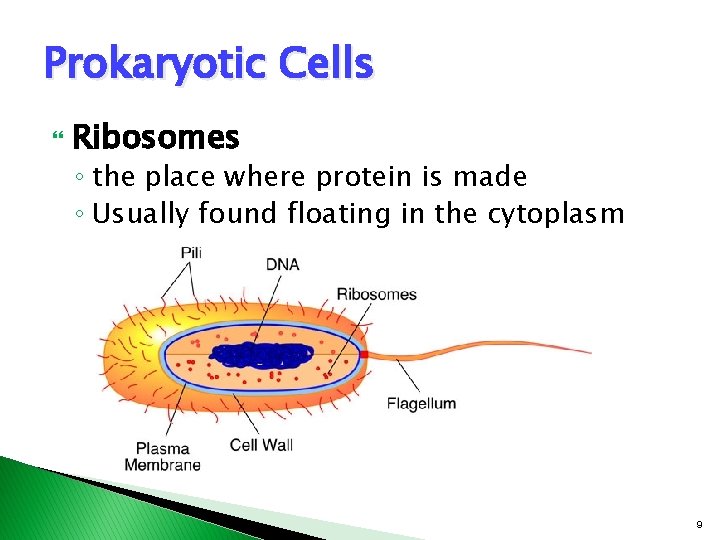
Prokaryotic Cells Prokaryotic cells lack a membrane-bound nucleus. -genetic material (DNA) is present in the nucleoid region 4
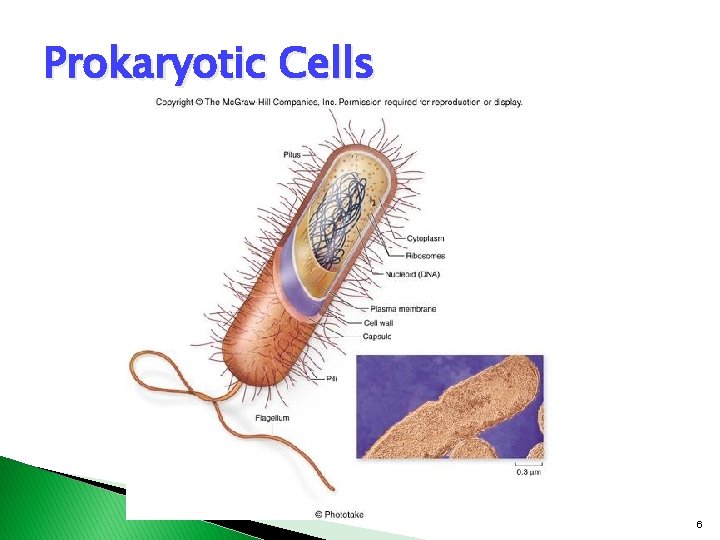
Prokaryotic Cells Prokaryotic cells possess: -genetic material (DNA) in the nucleoid region -cytoplasm -plasma membrane -cell wall -ribosomes - Flagella (sometimes) 5
Prokaryotic Cells 6
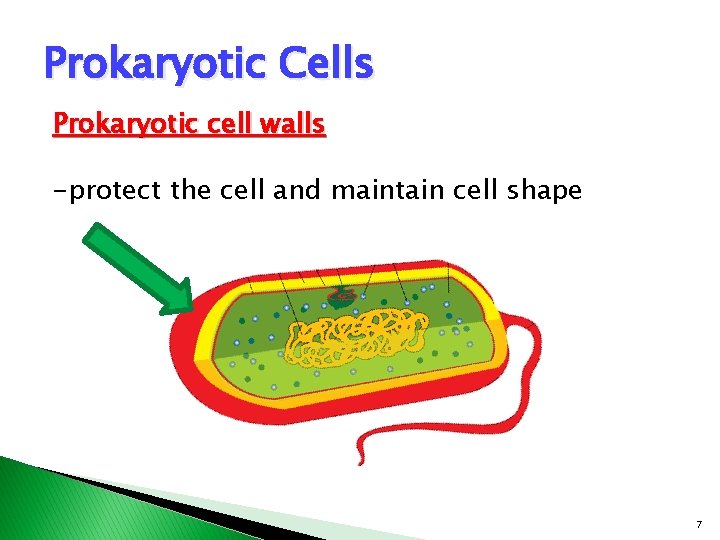
Prokaryotic Cells Prokaryotic cell walls -protect the cell and maintain cell shape 7
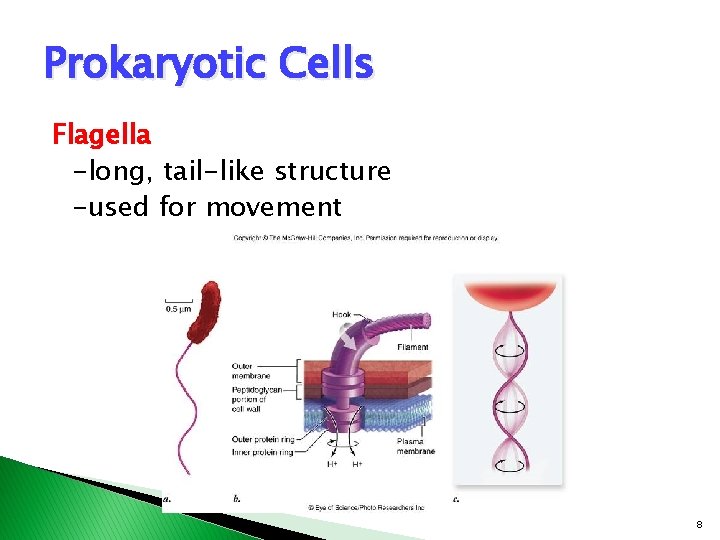
Prokaryotic Cells Flagella -long, tail-like structure -used for movement 8
Prokaryotic Cells Ribosomes ◦ the place where protein is made ◦ Usually found floating in the cytoplasm 9
Eukaryotic Cells Structures and Functions 10
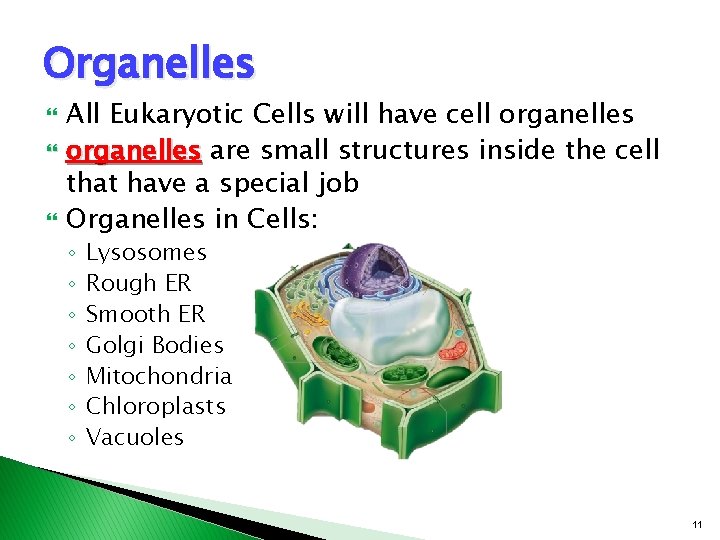
Organelles All Eukaryotic Cells will have cell organelles are small structures inside the cell that have a special job Organelles in Cells: ◦ ◦ ◦ ◦ Lysosomes Rough ER Smooth ER Golgi Bodies Mitochondria Chloroplasts Vacuoles 11
Nucleus- Information HQ Nucleus stores the genetic material (DNA) of the cell in the form of chromosomes/chromatin surrounded by a nuclear membrane In the center is the nucleolus The nucleus picks up dark stain so it can be seen under the microscope 12
Nucleus 13
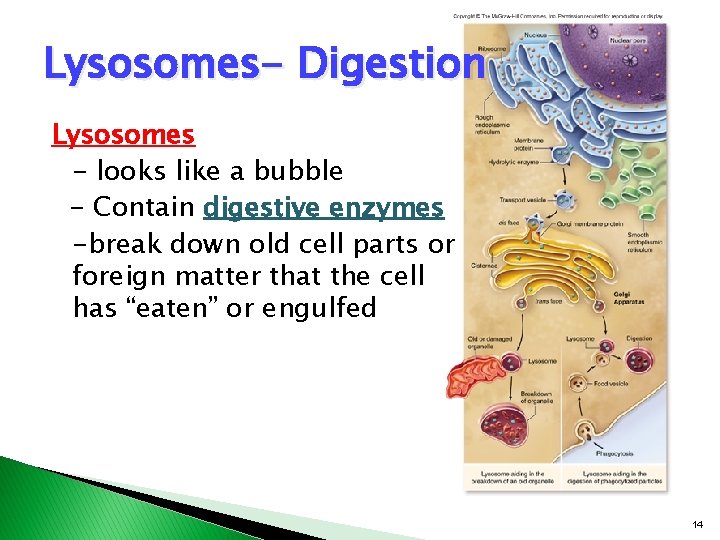
Lysosomes- Digestion Lysosomes - looks like a bubble - Contain digestive enzymes -break down old cell parts or foreign matter that the cell has “eaten” or engulfed 14
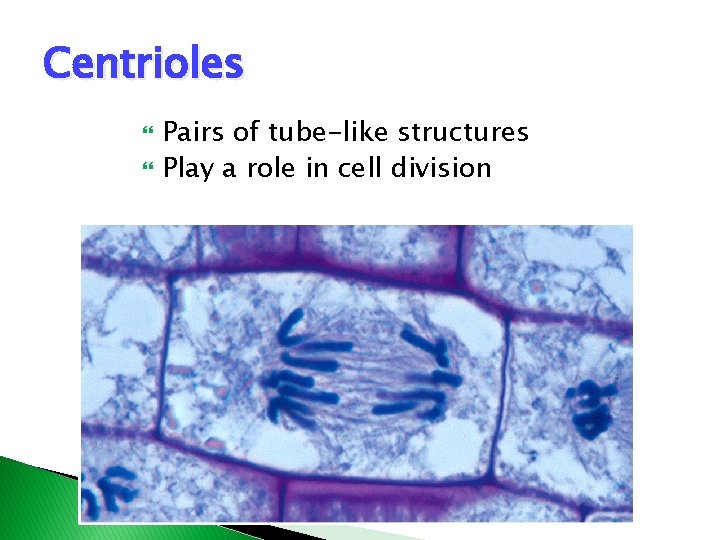
Centrioles Pairs of tube-like structures Play a role in cell division
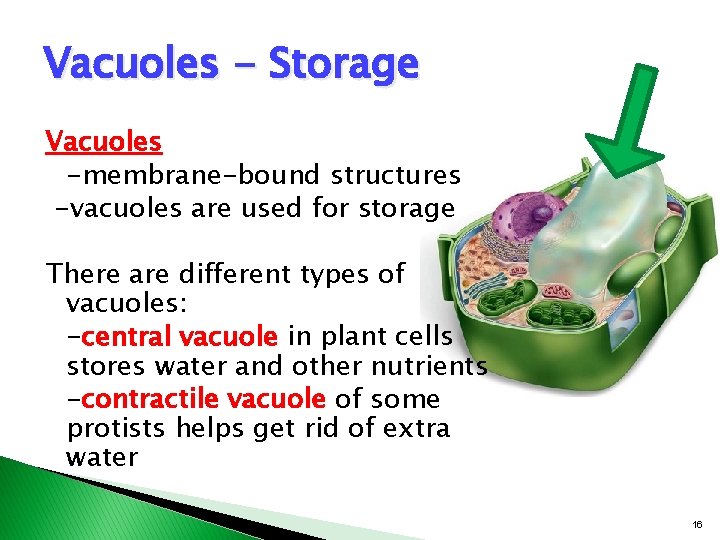
Vacuoles - Storage Vacuoles -membrane-bound structures -vacuoles are used for storage There are different types of vacuoles: -central vacuole in plant cells stores water and other nutrients -contractile vacuole of some protists helps get rid of extra water 16
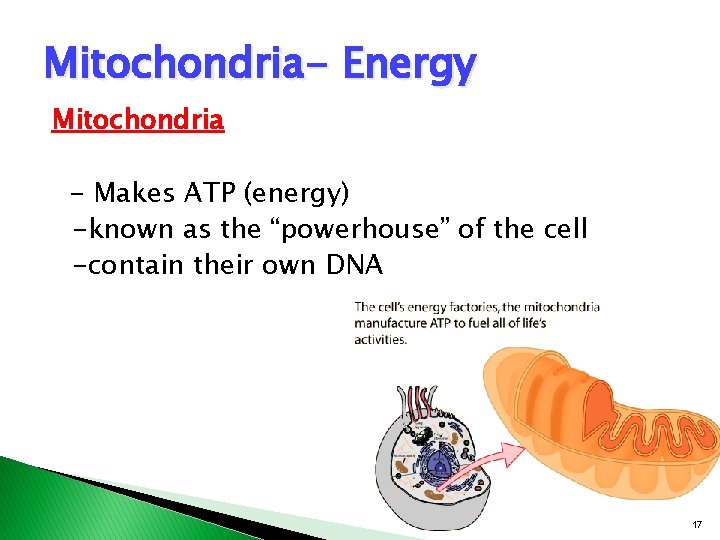
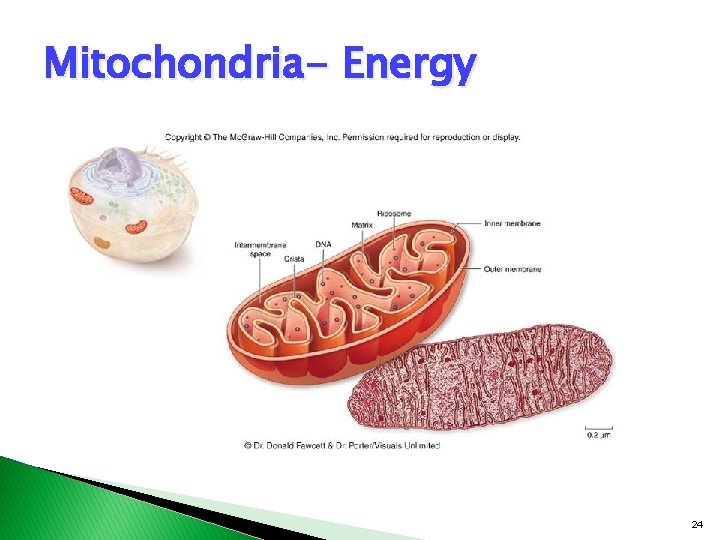
Mitochondria- Energy Mitochondria - Makes ATP (energy) -known as the “powerhouse” of the cell -contain their own DNA 17
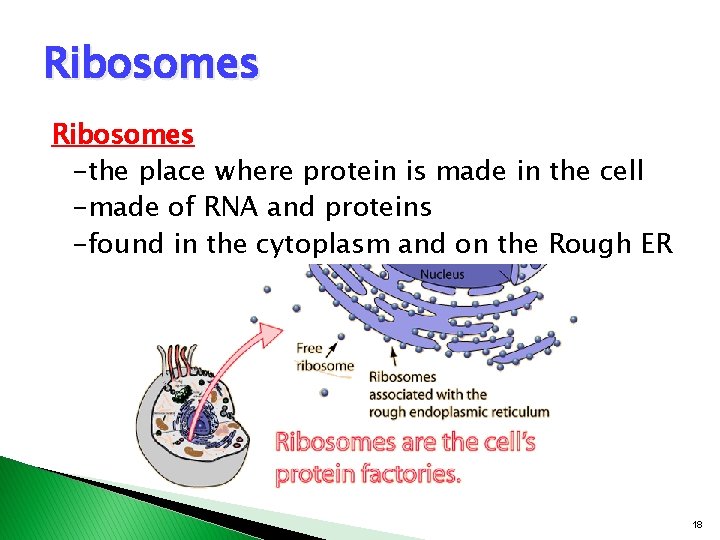
Ribosomes -the place where protein is made in the cell -made of RNA and proteins -found in the cytoplasm and on the Rough ER 18
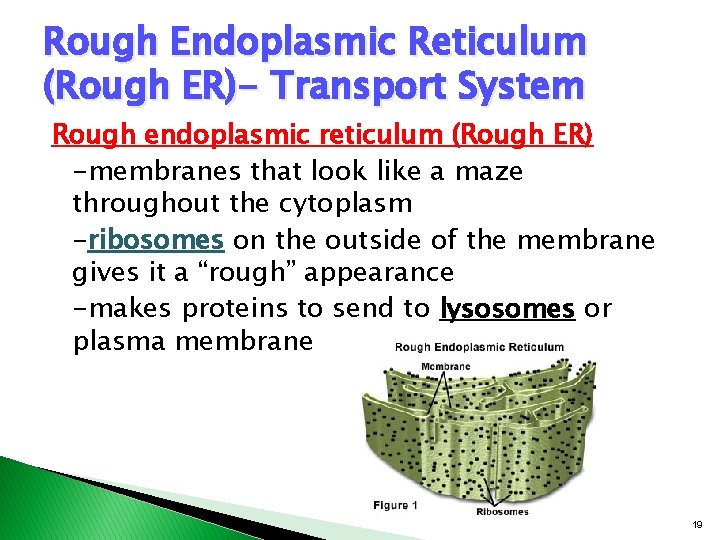
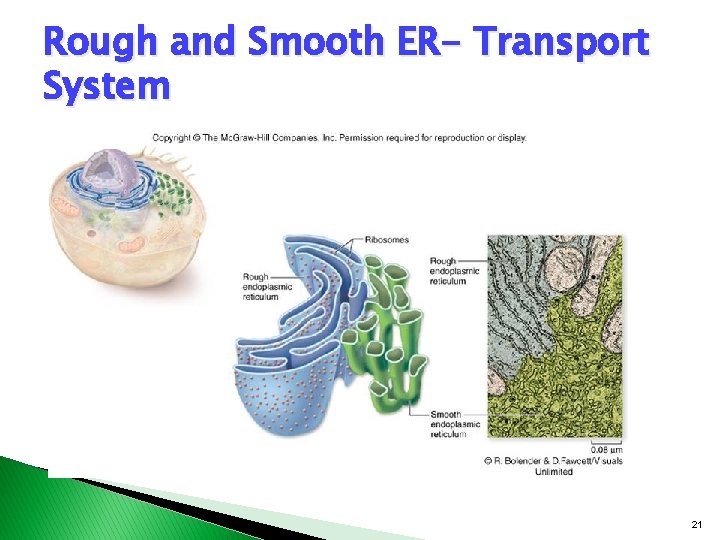
Rough Endoplasmic Reticulum (Rough ER)- Transport System Rough endoplasmic reticulum (Rough ER) -membranes that look like a maze throughout the cytoplasm -ribosomes on the outside of the membrane gives it a “rough” appearance -makes proteins to send to lysosomes or plasma membrane 19
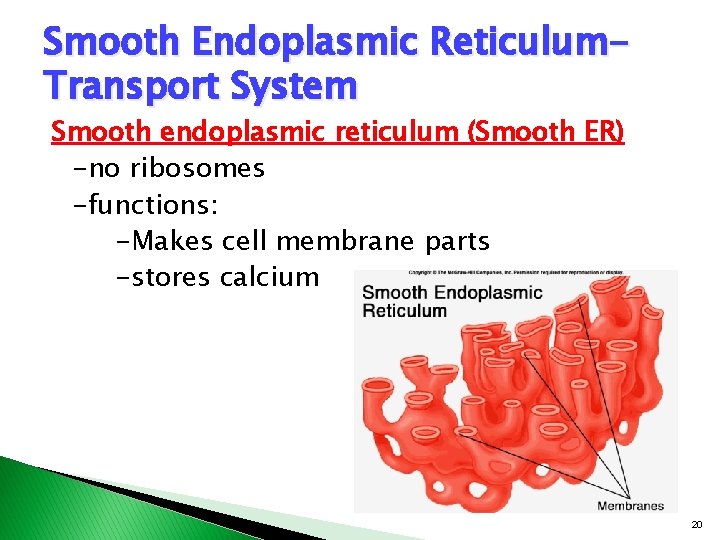
Smooth Endoplasmic Reticulum. Transport System Smooth endoplasmic reticulum (Smooth ER) -no ribosomes -functions: -Makes cell membrane parts -stores calcium 20
Rough and Smooth ER- Transport System 21
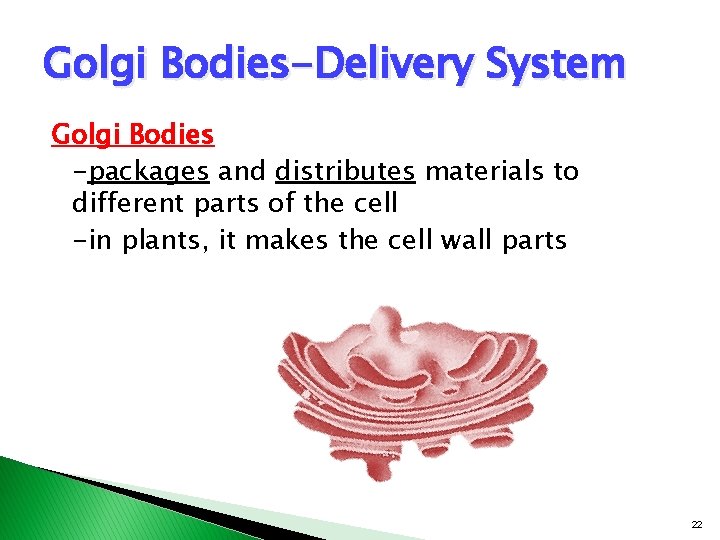
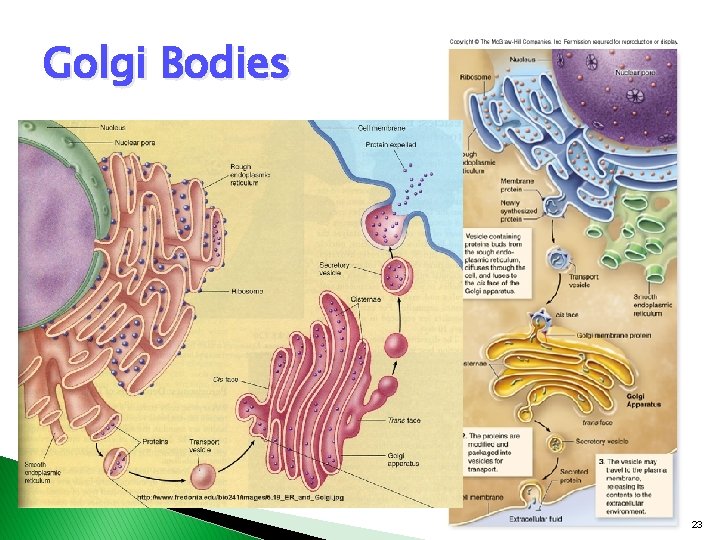
Golgi Bodies-Delivery System Golgi Bodies -packages and distributes materials to different parts of the cell -in plants, it makes the cell wall parts 22
Golgi Bodies 23
Mitochondria- Energy 24
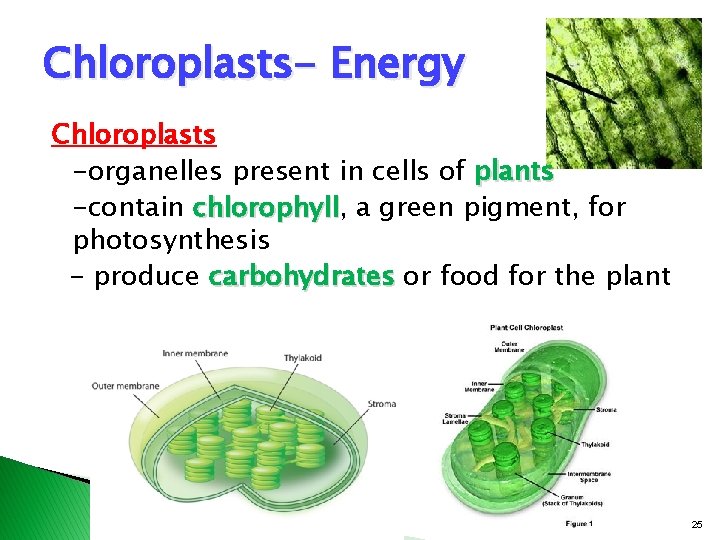
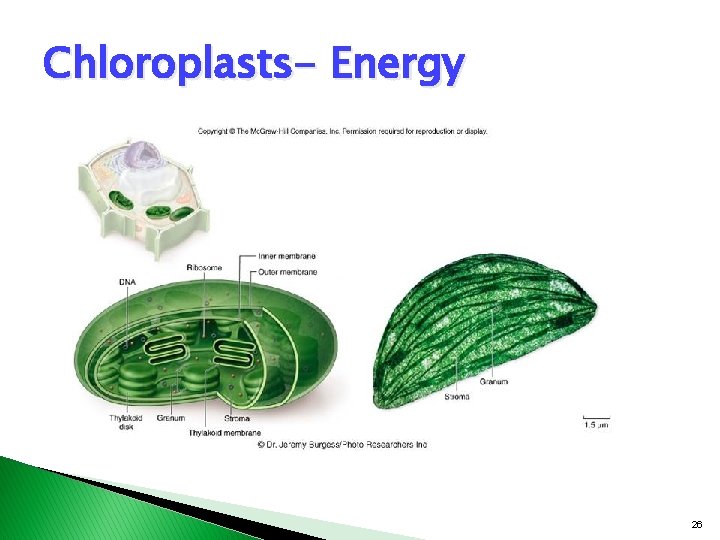
Chloroplasts- Energy Chloroplasts -organelles present in cells of plants -contain chlorophyll, chlorophyll a green pigment, for photosynthesis - produce carbohydrates or food for the plant 25
Chloroplasts- Energy 26
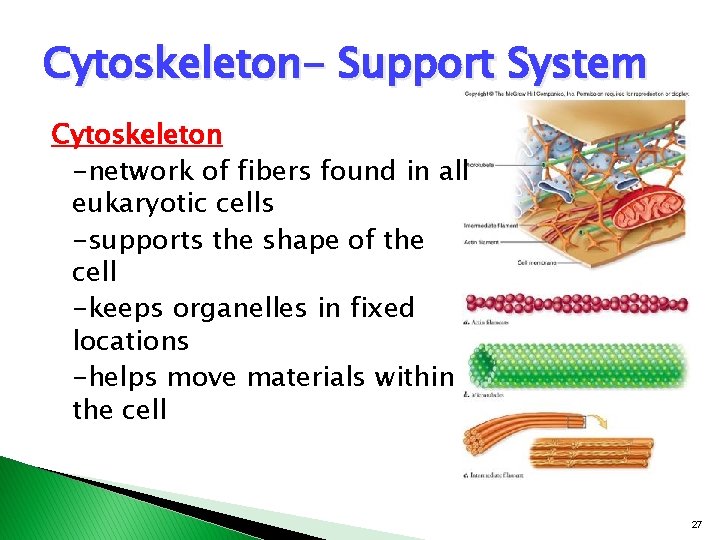
Cytoskeleton- Support System Cytoskeleton -network of fibers found in all eukaryotic cells -supports the shape of the cell -keeps organelles in fixed locations -helps move materials within the cell 27
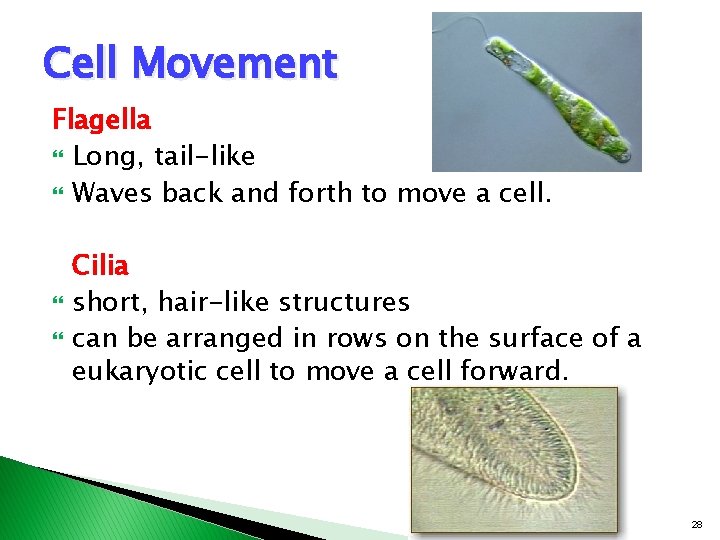
Cell Movement Flagella Long, tail-like Waves back and forth to move a cell. Cilia short, hair-like structures can be arranged in rows on the surface of a eukaryotic cell to move a cell forward. 28
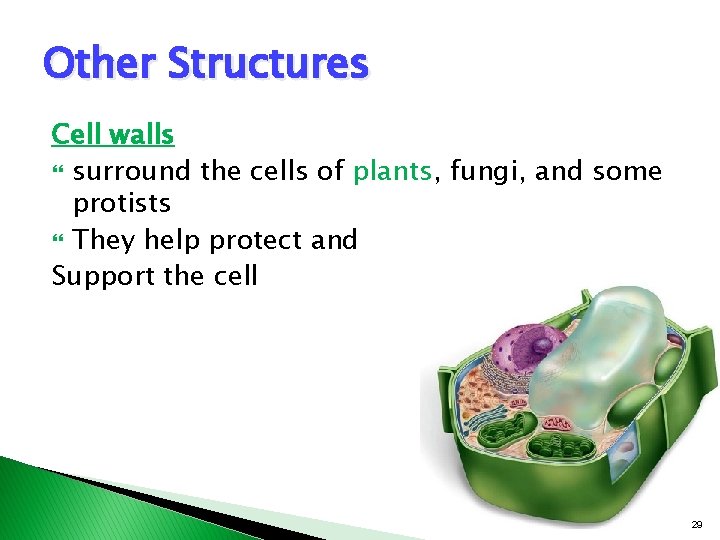
Other Structures Cell walls surround the cells of plants, fungi, and some protists They help protect and Support the cell 29
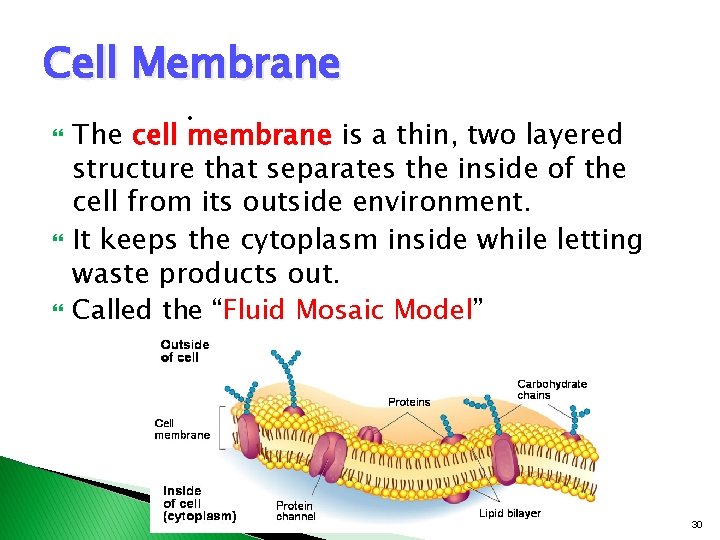
Cell Membrane • The cell membrane is a thin, two layered structure that separates the inside of the cell from its outside environment. It keeps the cytoplasm inside while letting waste products out. Called the “Fluid Mosaic Model” 30
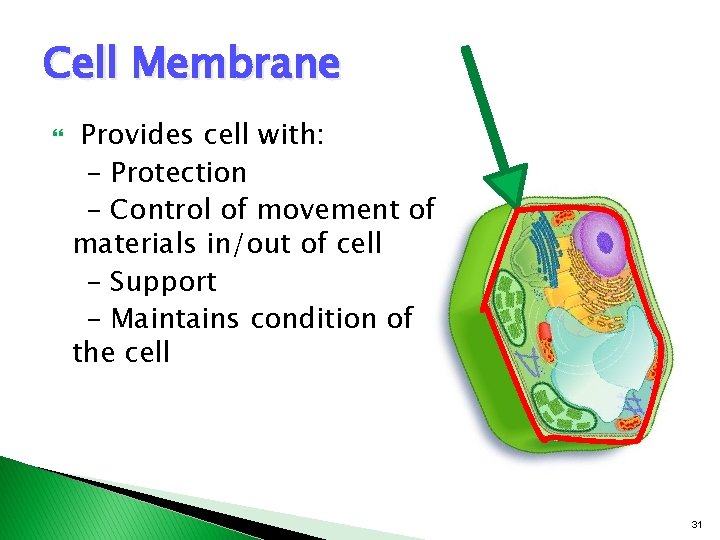
Cell Membrane Provides cell with: – Protection – Control of movement of materials in/out of cell – Support – Maintains condition of the cell 31
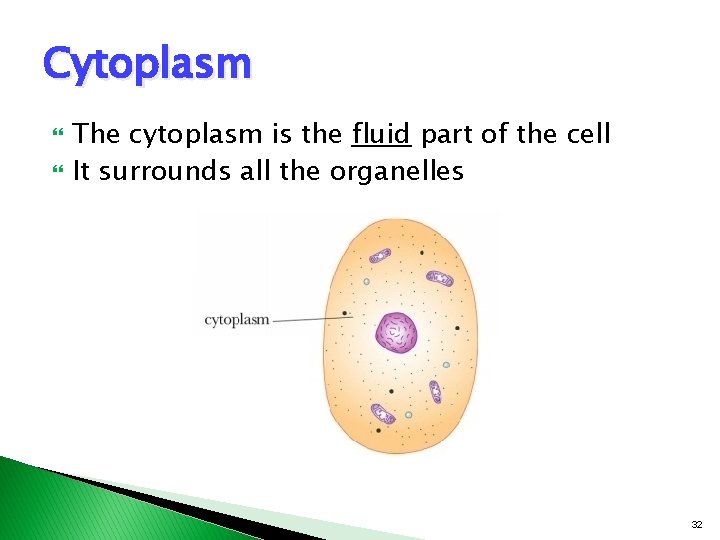
Cytoplasm The cytoplasm is the fluid part of the cell It surrounds all the organelles 32
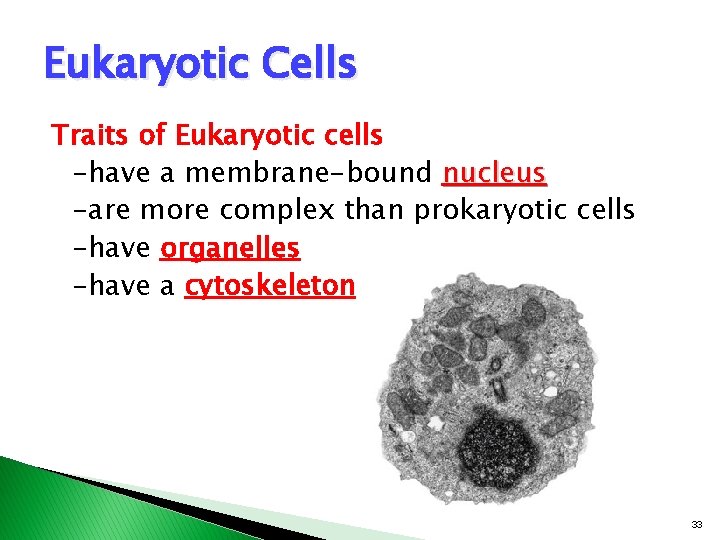
Eukaryotic Cells Traits of Eukaryotic cells -have a membrane-bound nucleus -are more complex than prokaryotic cells -have organelles -have a cytoskeleton 33
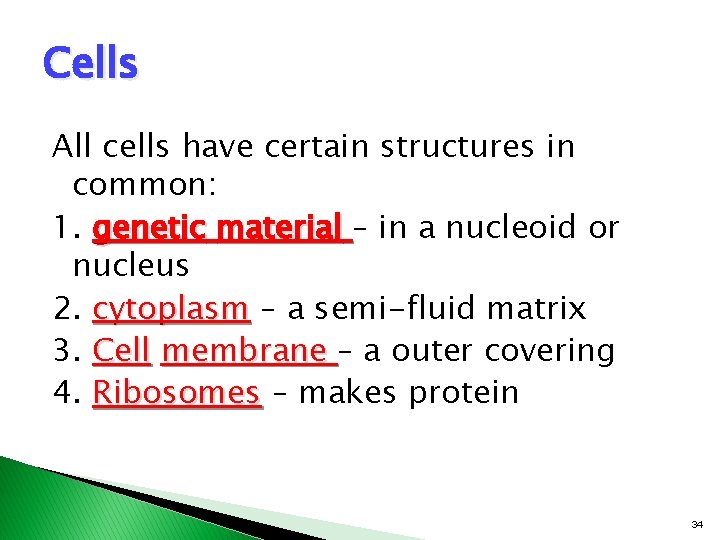
Cells All cells have certain structures in common: 1. genetic material – in a nucleoid or nucleus 2. cytoplasm – a semi-fluid matrix 3. Cell membrane – a outer covering 4. Ribosomes – makes protein 34