
Cell Structure Plasma membrane Structure Main component is
Cell Structure
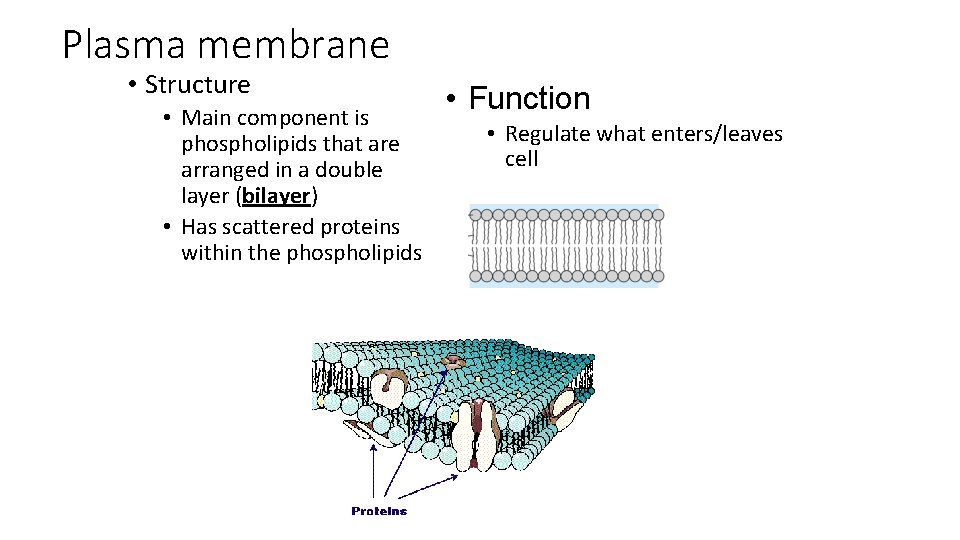
Plasma membrane • Structure • Main component is phospholipids that are arranged in a double layer (bilayer) • Has scattered proteins within the phospholipids • Function • Regulate what enters/leaves cell

Nucleus • Structure • Surrounded by a double membrane • Membrane contains pores (holes) to allow RNA to leave • Function • Holds the chromosomes (chromatin)…DNA • and the nucleolus
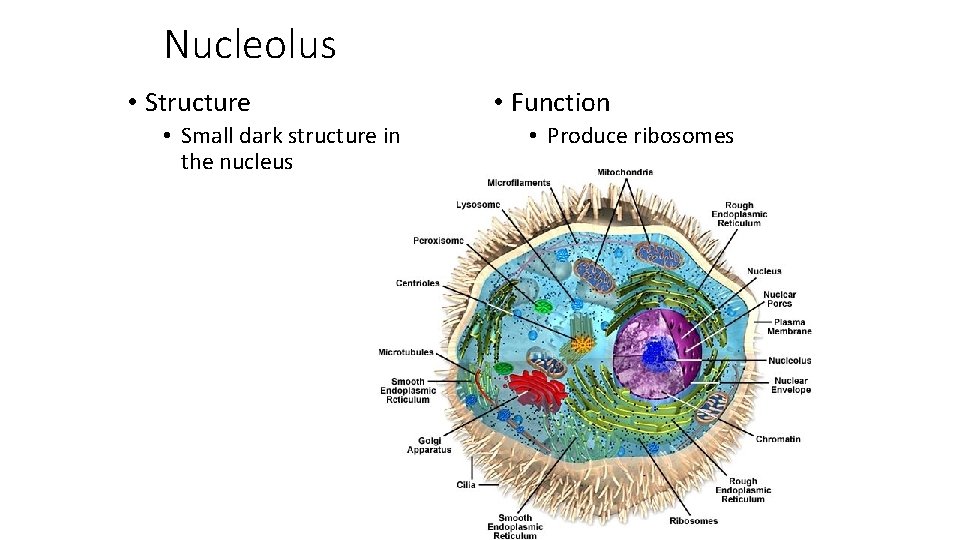
Nucleolus • Structure • Small dark structure in the nucleus • Function • Produce ribosomes
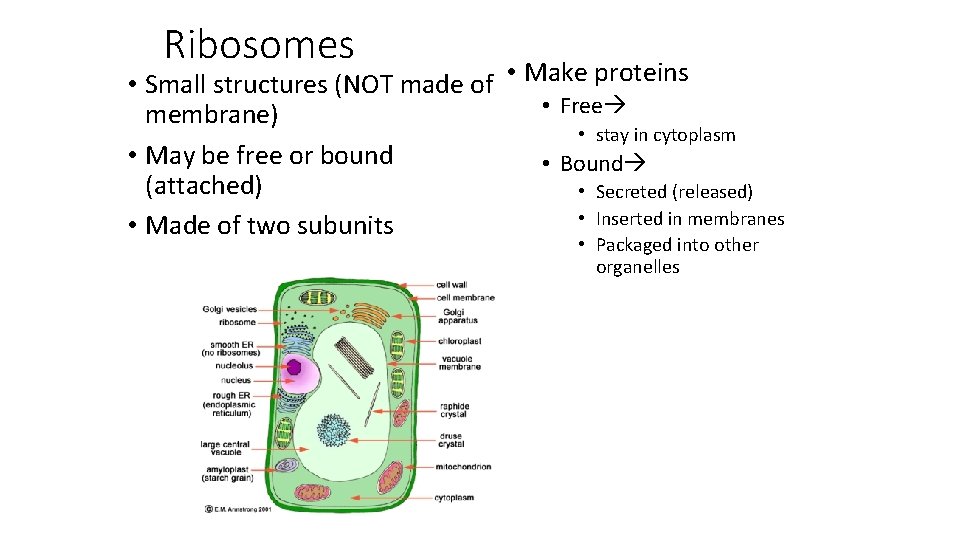
Ribosomes • Small structures (NOT made of • Make proteins • Free membrane) • stay in cytoplasm • May be free or bound • Bound (attached) • Secreted (released) • Inserted in membranes • Made of two subunits • Packaged into other organelles
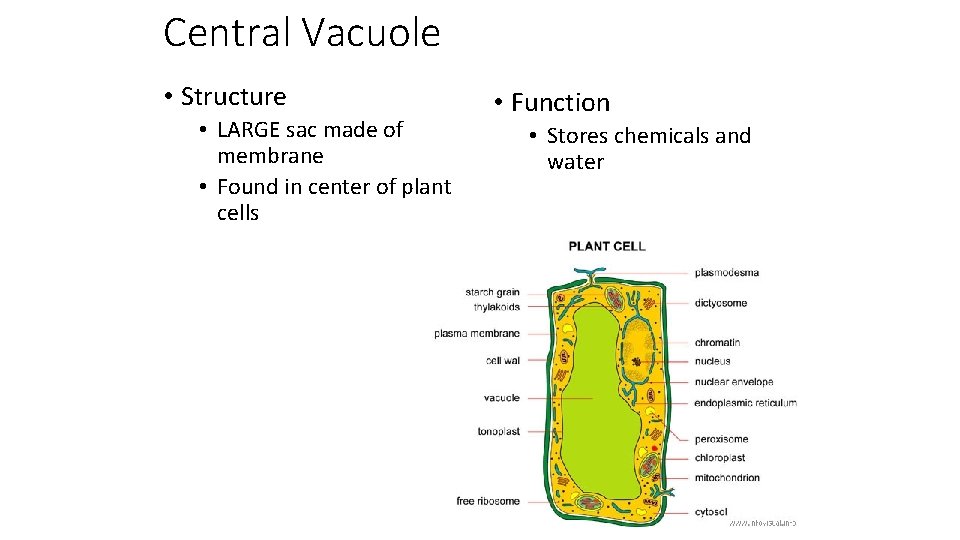
Central Vacuole • Structure • LARGE sac made of membrane • Found in center of plant cells • Function • Stores chemicals and water
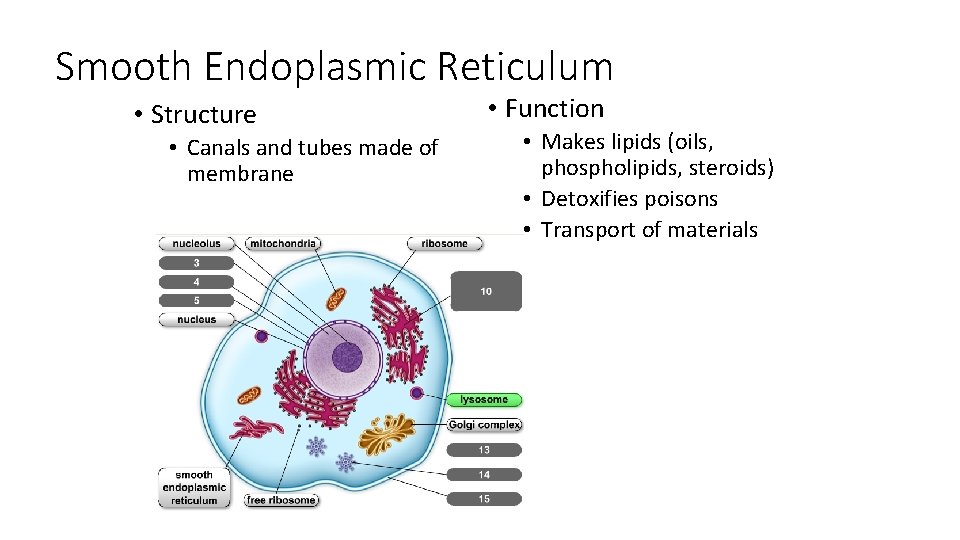
Smooth Endoplasmic Reticulum • Structure • Canals and tubes made of membrane • Function • Makes lipids (oils, phospholipids, steroids) • Detoxifies poisons • Transport of materials
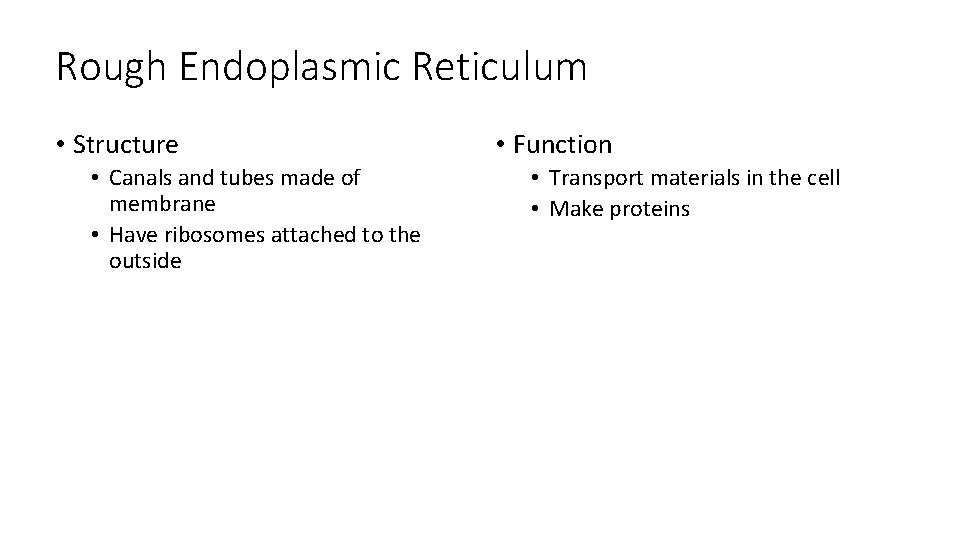
Rough Endoplasmic Reticulum • Structure • Canals and tubes made of membrane • Have ribosomes attached to the outside • Function • Transport materials in the cell • Make proteins
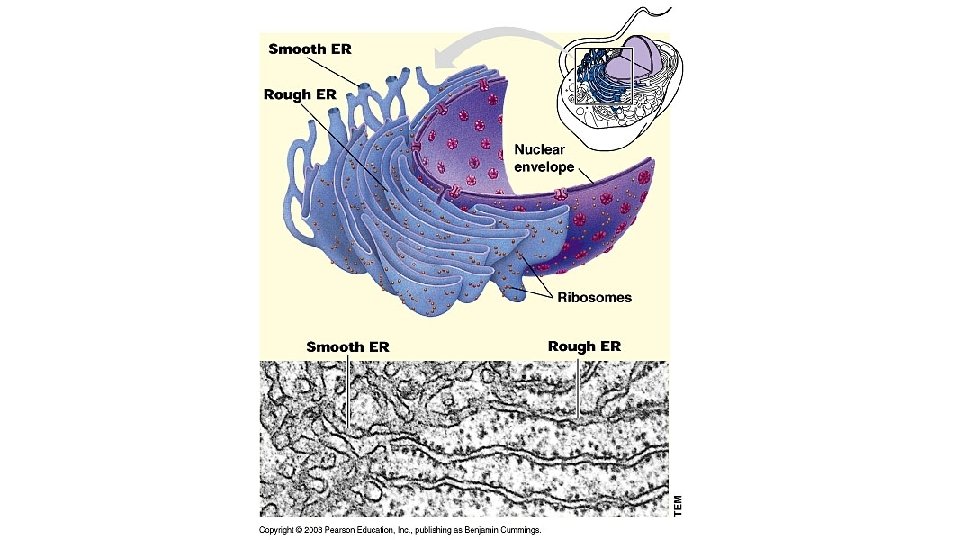
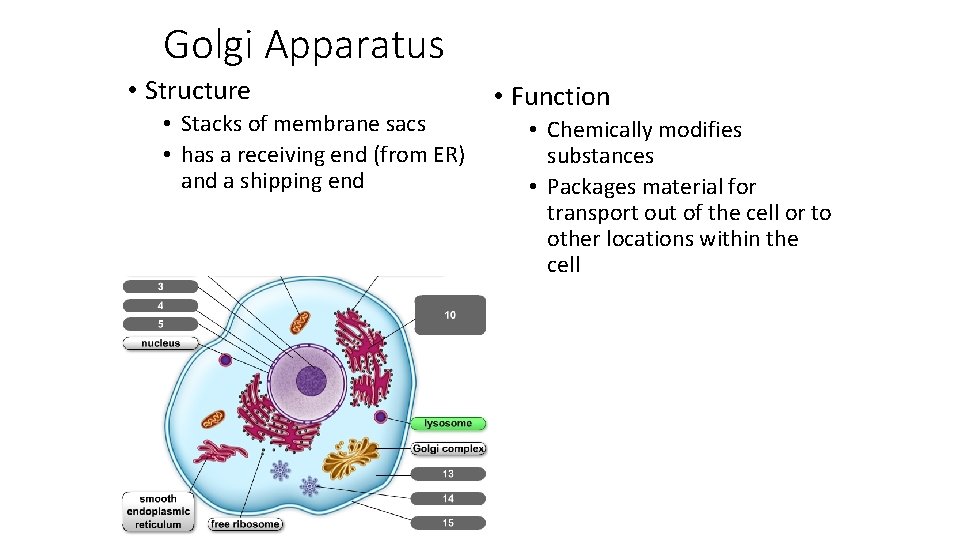
Golgi Apparatus • Structure • Stacks of membrane sacs • has a receiving end (from ER) and a shipping end • Function • Chemically modifies substances • Packages material for transport out of the cell or to other locations within the cell
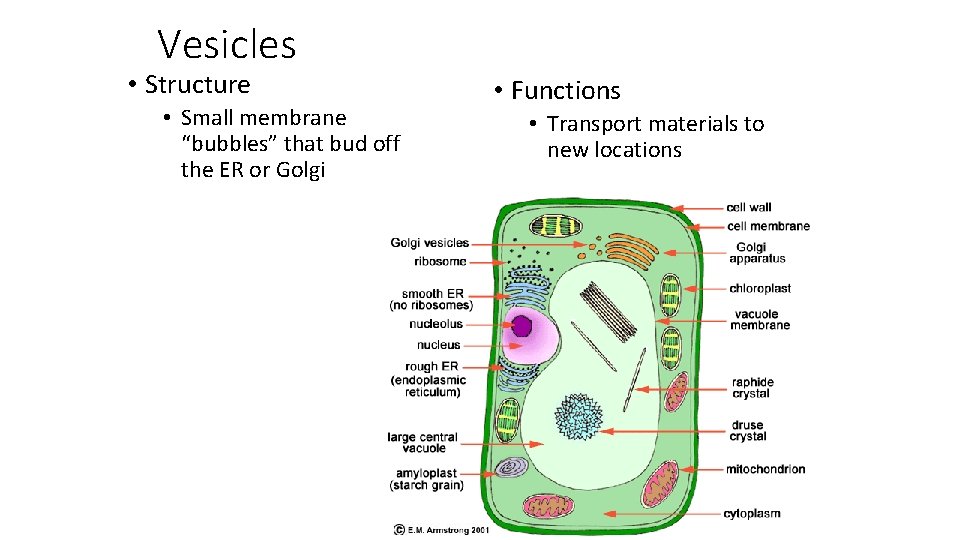
Vesicles • Structure • Small membrane “bubbles” that bud off the ER or Golgi • Functions • Transport materials to new locations
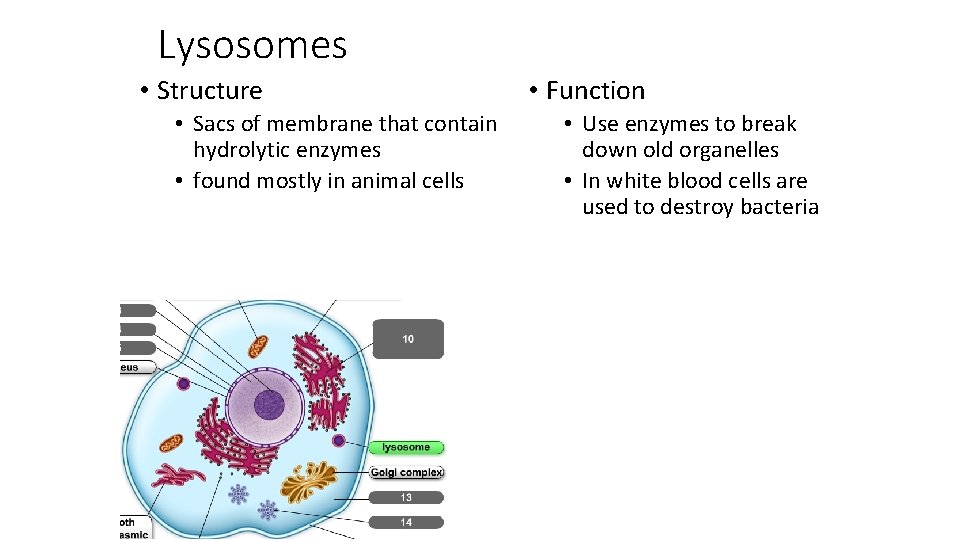
Lysosomes • Structure • Sacs of membrane that contain hydrolytic enzymes • found mostly in animal cells • Function • Use enzymes to break down old organelles • In white blood cells are used to destroy bacteria
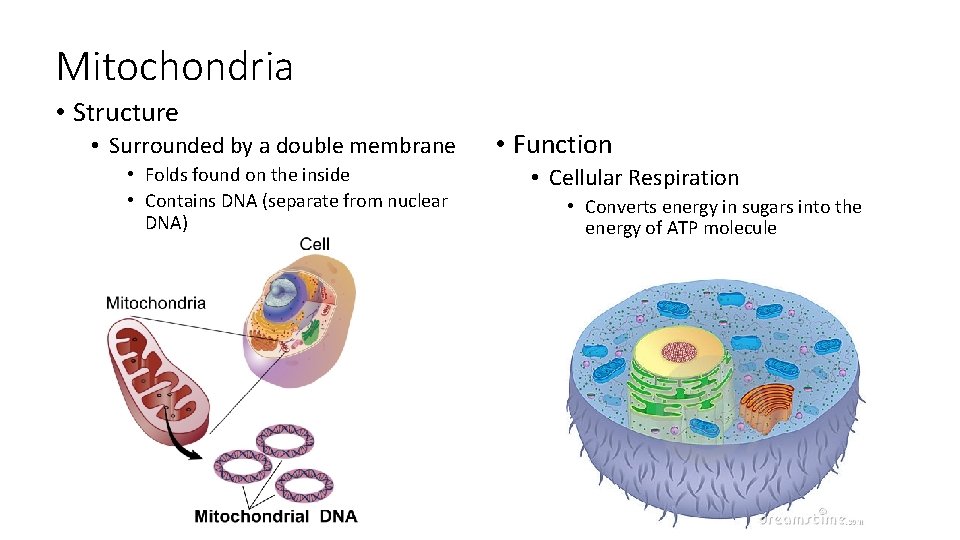
Mitochondria • Structure • Surrounded by a double membrane • Folds found on the inside • Contains DNA (separate from nuclear DNA) • Function • Cellular Respiration • Converts energy in sugars into the energy of ATP molecule
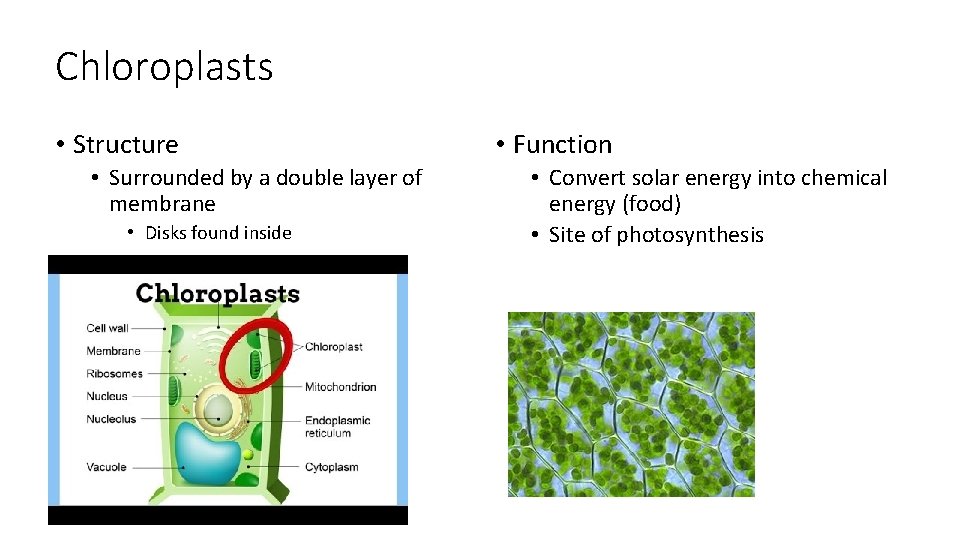
Chloroplasts • Structure • Surrounded by a double layer of membrane • Disks found inside • Function • Convert solar energy into chemical energy (food) • Site of photosynthesis
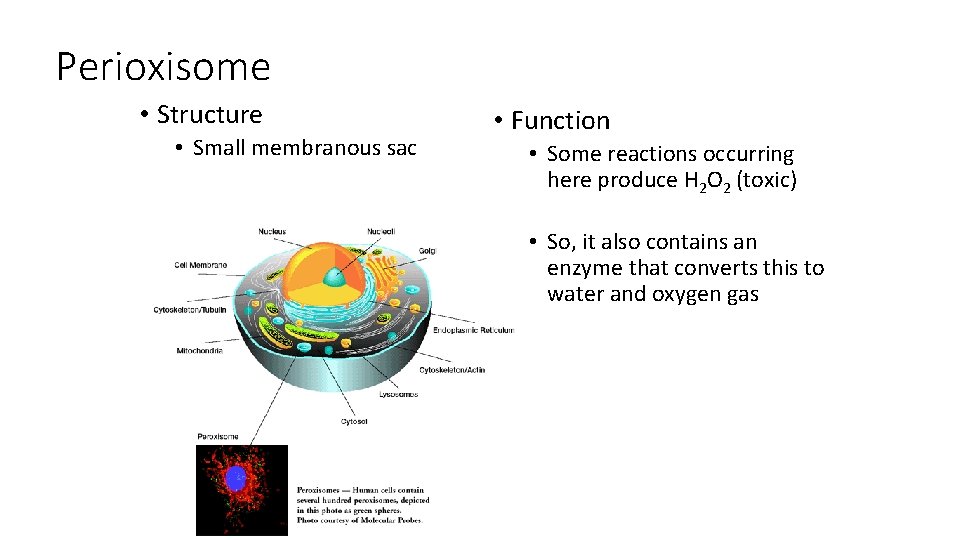
Perioxisome • Structure • Small membranous sac • Function • Some reactions occurring here produce H 2 O 2 (toxic) • So, it also contains an enzyme that converts this to water and oxygen gas
Centrioles • Structure • Made of rings of microtubules • Found in pairs that lie at right angles • Look similar to a pair of barrels • Function • Found in animal cells • Help in cell division
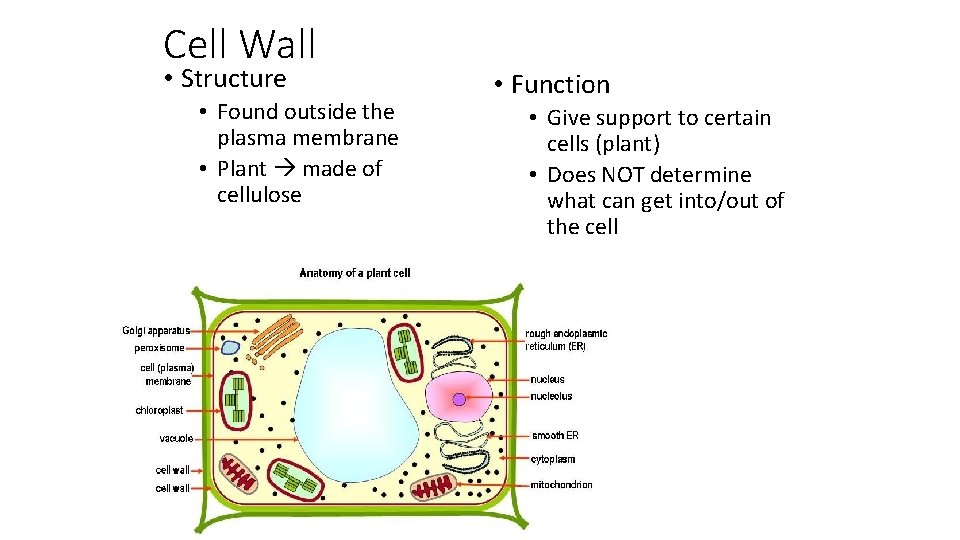
Cell Wall • Structure • Found outside the plasma membrane • Plant made of cellulose • Function • Give support to certain cells (plant) • Does NOT determine what can get into/out of the cell
Cytoskeleton • Structure • Made of protein fibers • Microtubules • Hollow tube • Microfilaments • Small rods • Intermediate filaments • Function • Give the cell shape • Help to move organelles around the cell
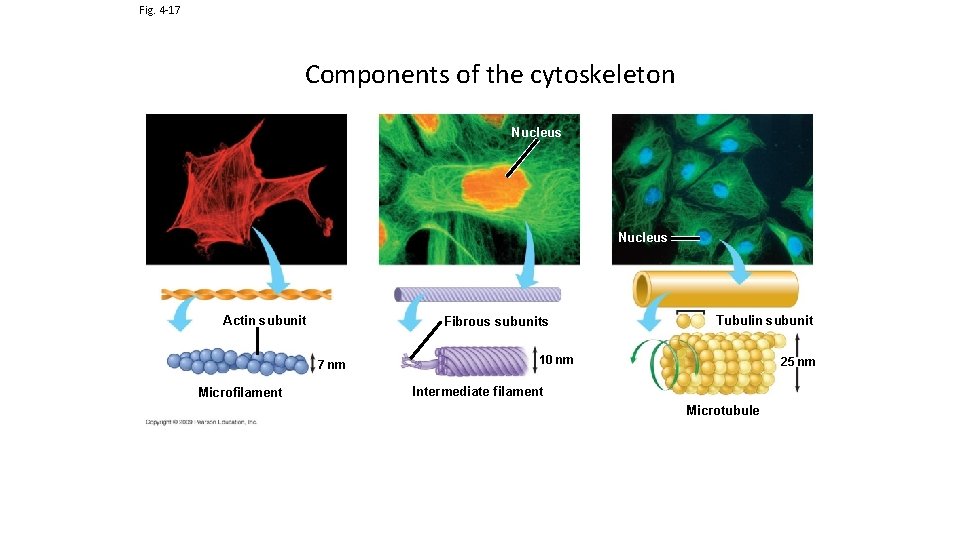
Fig. 4 -17 Components of the cytoskeleton Nucleus Actin subunit Fibrous subunits 7 nm Microfilament Tubulin subunit 10 nm 25 nm Intermediate filament Microtubule
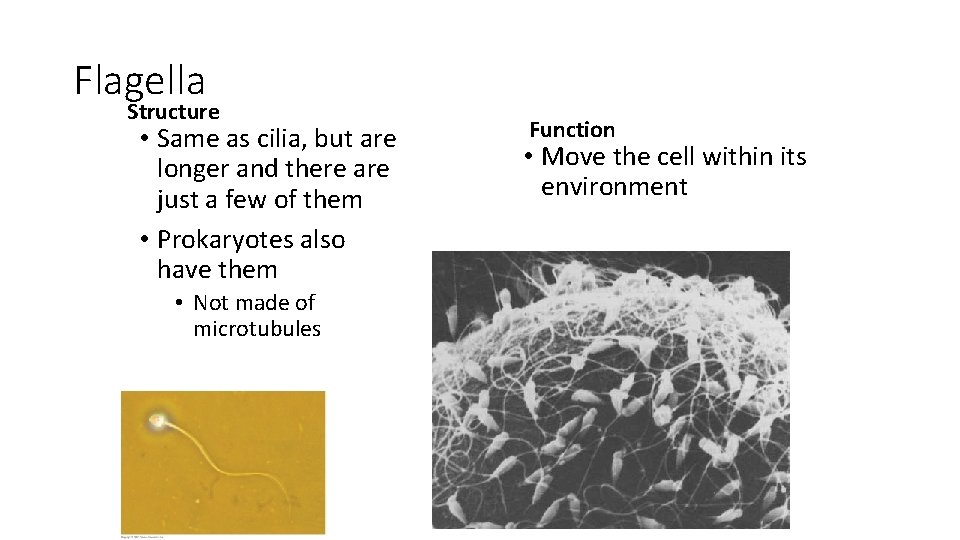
Flagella Structure • Same as cilia, but are longer and there are just a few of them • Prokaryotes also have them • Not made of microtubules Function • Move the cell within its environment
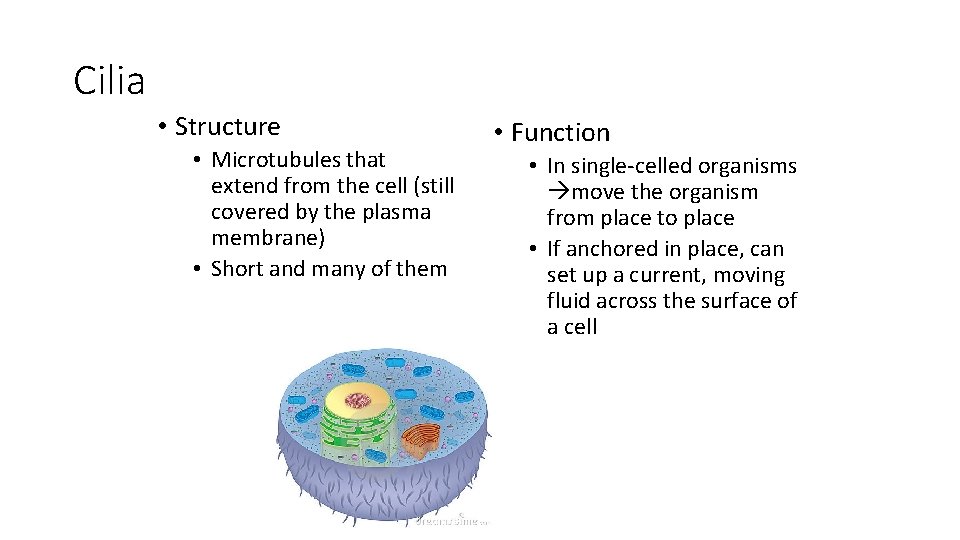
Cilia • Structure • Microtubules that extend from the cell (still covered by the plasma membrane) • Short and many of them • Function • In single-celled organisms move the organism from place to place • If anchored in place, can set up a current, moving fluid across the surface of a cell
- Slides: 21