
Cell Structure Function Discovery of Cells A History

- Slides: 16
Cell Structure & Function
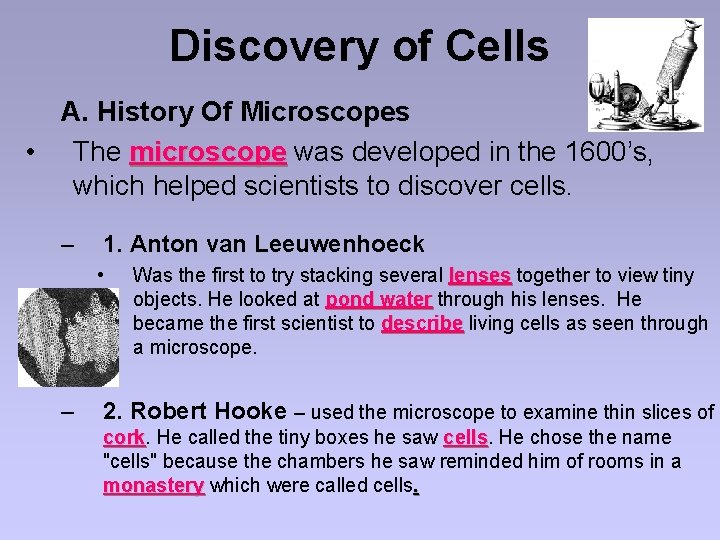
Discovery of Cells A. History Of Microscopes • The microscope was developed in the 1600’s, which helped scientists to discover cells. – 1. Anton van Leeuwenhoeck • – Was the first to try stacking several lenses together to view tiny objects. He looked at pond water through his lenses. He became the first scientist to describe living cells as seen through a microscope. 2. Robert Hooke – used the microscope to examine thin slices of cork He called the tiny boxes he saw cells He chose the name "cells" because the chambers he saw reminded him of rooms in a monastery which were called cells.
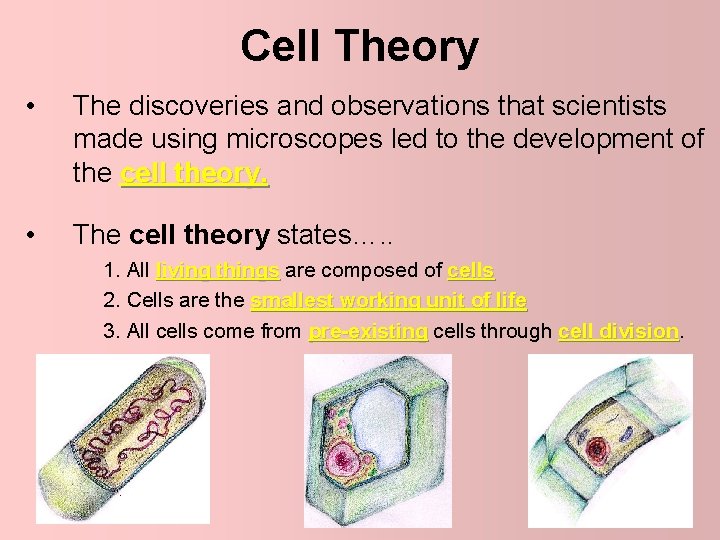
Cell Theory • The discoveries and observations that scientists made using microscopes led to the development of the cell theory. • The cell theory states…. . 1. All living things are composed of cells 2. Cells are the smallest working unit of life 3. All cells come from pre-existing cells through cell division
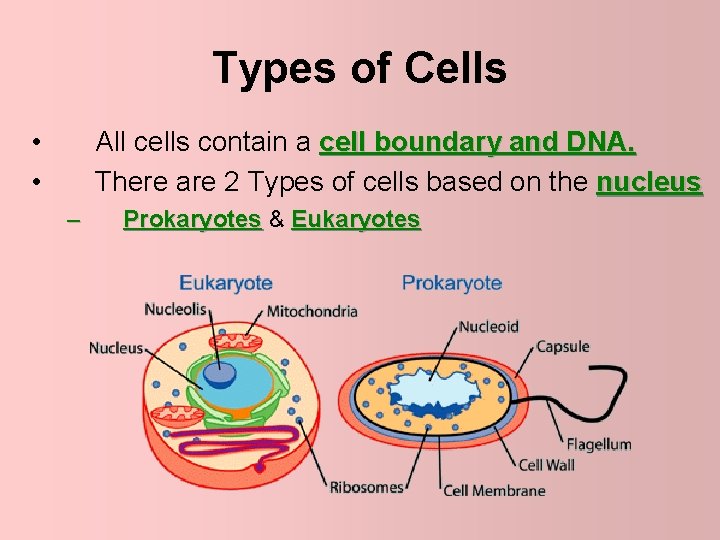
Types of Cells • • All cells contain a cell boundary and DNA. There are 2 Types of cells based on the nucleus – Prokaryotes & Eukaryotes
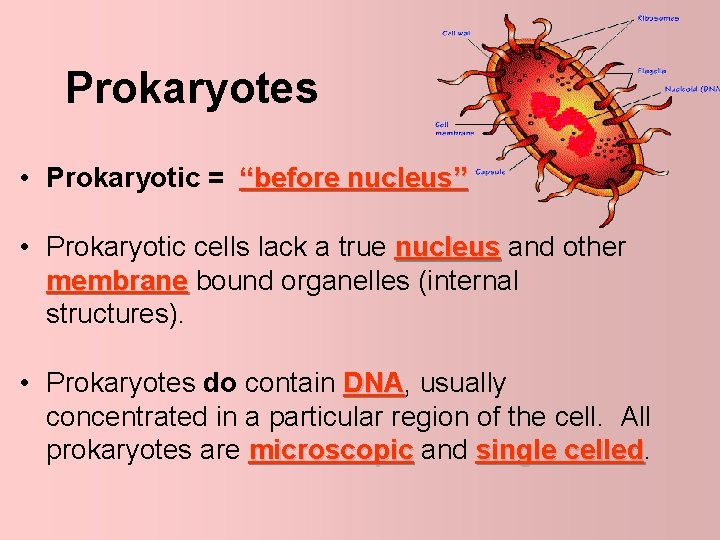
Prokaryotes • Prokaryotic = “before nucleus” • Prokaryotic cells lack a true nucleus and other membrane bound organelles (internal structures). • Prokaryotes do contain DNA, DNA usually concentrated in a particular region of the cell. All prokaryotes are microscopic and single celled
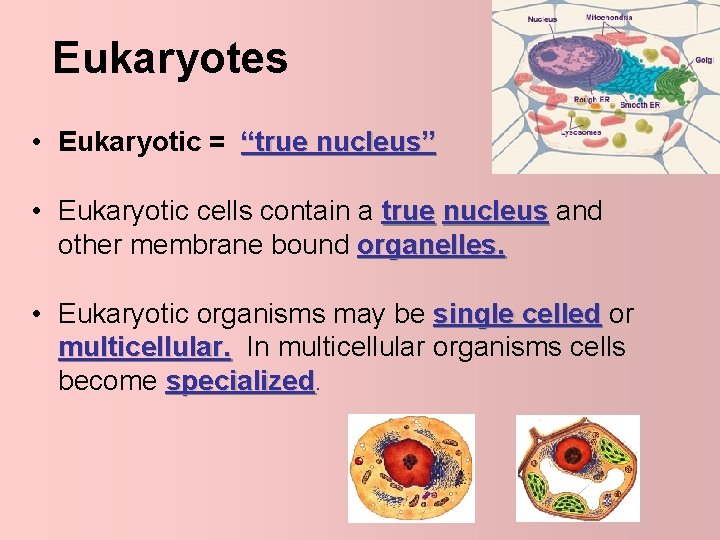
Eukaryotes • Eukaryotic = “true nucleus” • Eukaryotic cells contain a true nucleus and other membrane bound organelles. • Eukaryotic organisms may be single celled or multicellular. In multicellular organisms cells become specialized
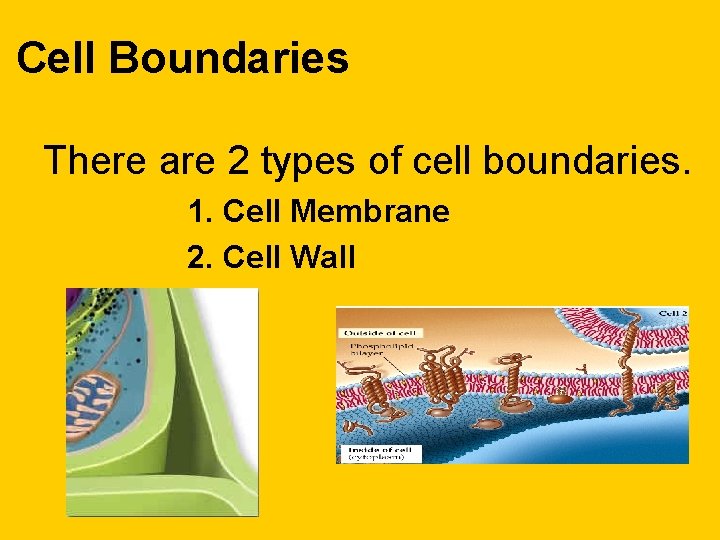
Cell Boundaries There are 2 types of cell boundaries. 1. Cell Membrane 2. Cell Wall
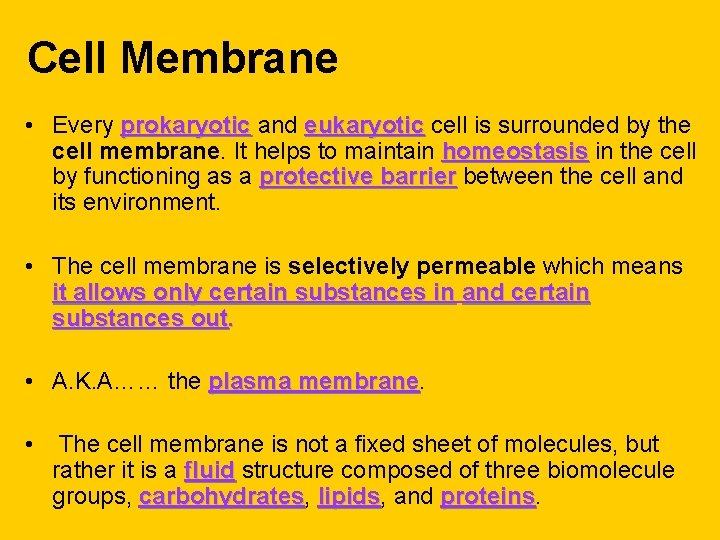
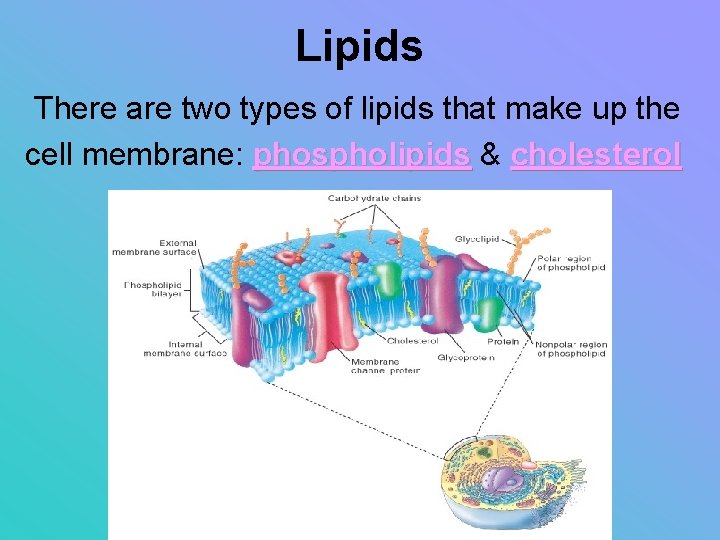
Cell Membrane • Every prokaryotic and eukaryotic cell is surrounded by the cell membrane. It helps to maintain homeostasis in the cell by functioning as a protective barrier between the cell and its environment. • The cell membrane is selectively permeable which means it allows only certain substances in and certain substances out. • A. K. A…… the plasma membrane • The cell membrane is not a fixed sheet of molecules, but rather it is a fluid structure composed of three biomolecule groups, carbohydrates lipids, lipids and proteins
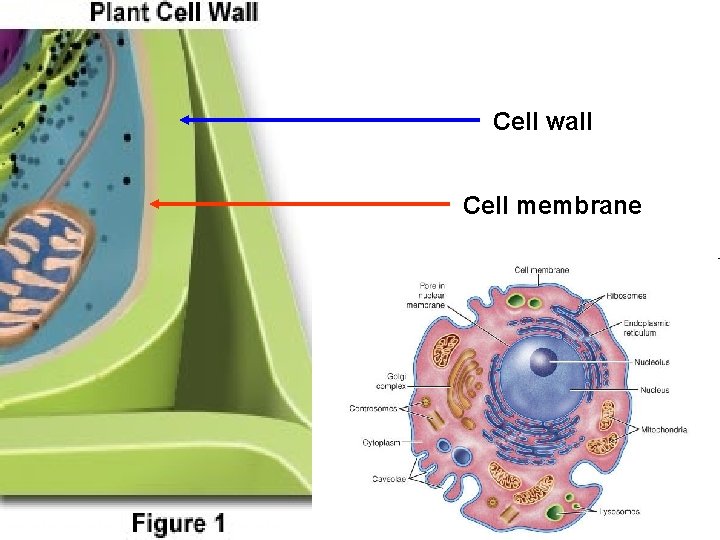
Cell wall Cell membrane
Lipids There are two types of lipids that make up the cell membrane: phospholipids & cholesterol
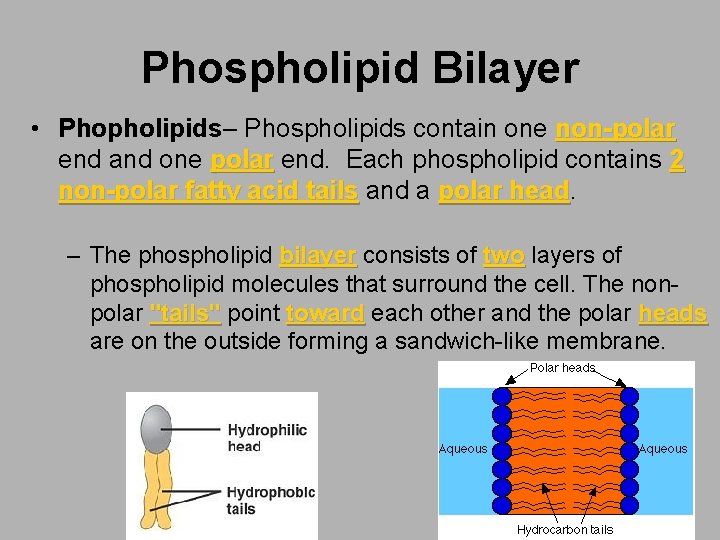
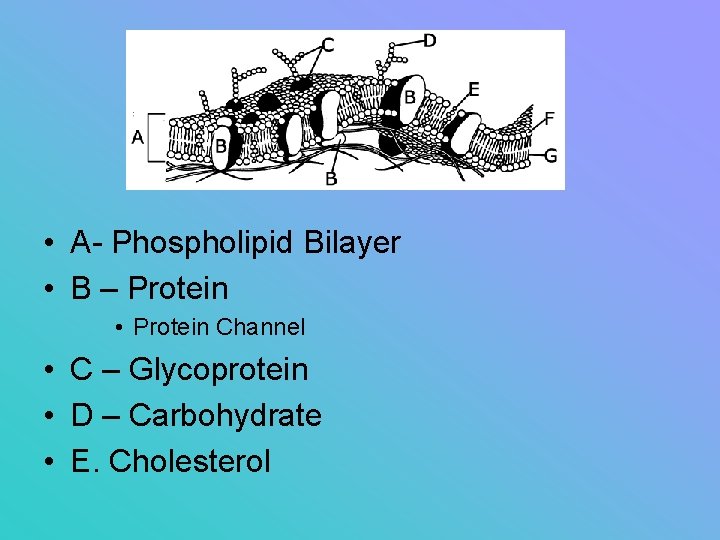
Phospholipid Bilayer • Phopholipids– Phospholipids contain one non-polar end and one polar end. Each phospholipid contains 2 non-polar fatty acid tails and a polar head – The phospholipid bilayer consists of two layers of phospholipid molecules that surround the cell. The nonpolar "tails" point toward each other and the polar heads are on the outside forming a sandwich-like membrane.
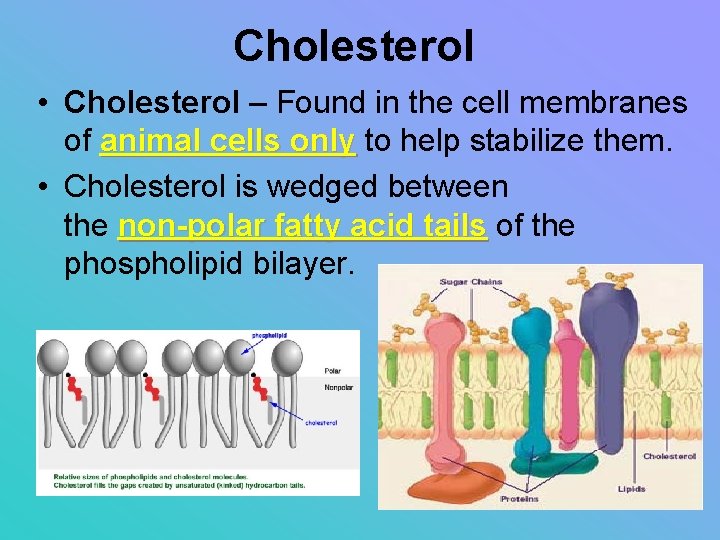
Cholesterol • Cholesterol – Found in the cell membranes of animal cells only to help stabilize them. • Cholesterol is wedged between the non-polar fatty acid tails of the phospholipid bilayer.
Carbs & Proteins • Carbohydrates serve as they are “ID tags” to help identify cells • Proteins are embedded in the phospholipid bilayer. Their function is to act as channels and pumps in order to transport specific molecules or ions across the cell membrane.
• A- Phospholipid Bilayer • B – Protein • Protein Channel • C – Glycoprotein • D – Carbohydrate • E. Cholesterol
• Cell membrane animation http: //www. susanahalpine. com/anim/Life/memb. htm
Cell Wall • Cell walls are the outer most boundary plants, plants fungi, fungi and bacteria They are not found in animal cells. • The primary function of the cell wall is to provide structure and support The cell wall does not regulate what comes in and out of the cell. • Cell walls of ……. . 1. plants are composed of cellulose 2. fungi are composed of chitin 3. bacteria are composed of other polysaccharides