
Cell Structure Function Chapter 3 The Diversity of
- Slides: 48
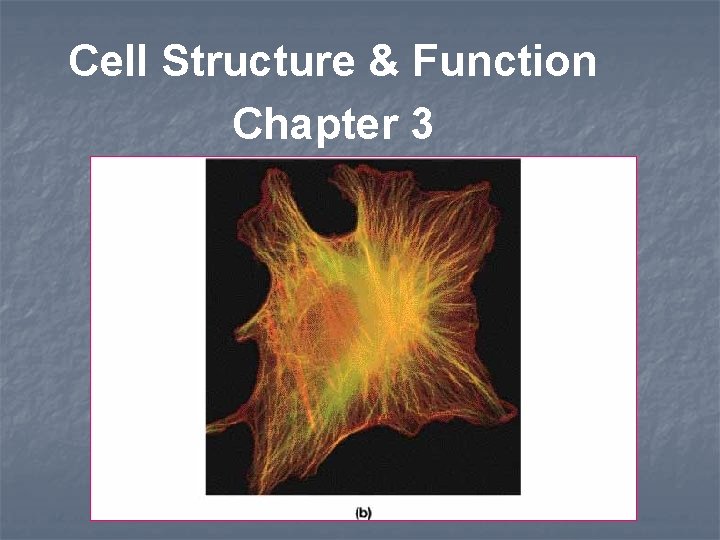
Cell Structure & Function Chapter 3
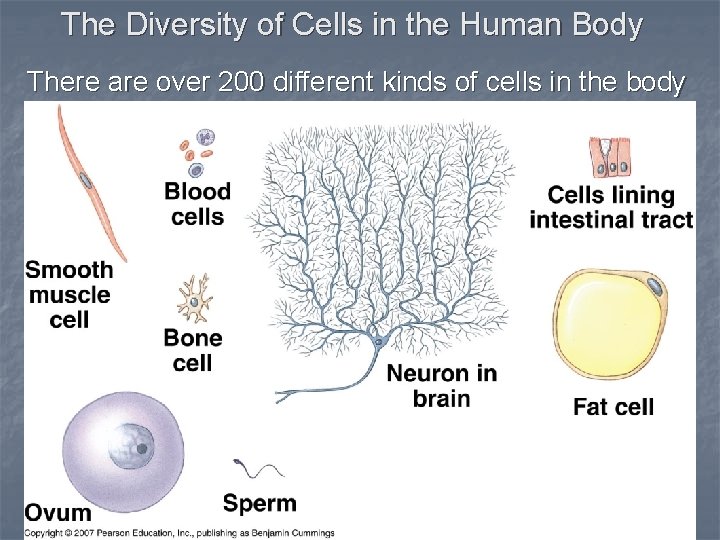
The Diversity of Cells in the Human Body There are over 200 different kinds of cells in the body Figure 3 -1
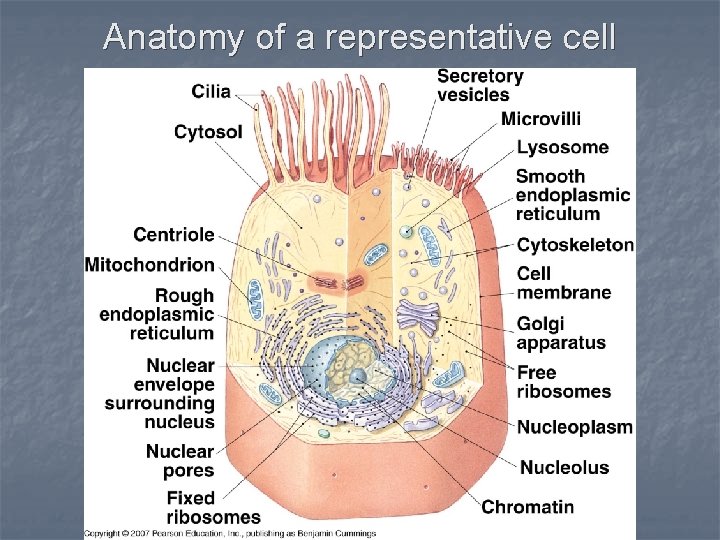
Anatomy of a representative cell
Parts of a “representative” cell Plasma (Cell) Membrane barrier between outside environment (extracellular fluid (ECF) and inside environment n Cytoplasm n Cytosol (intracellular fluid (ICF)) n Organelles n
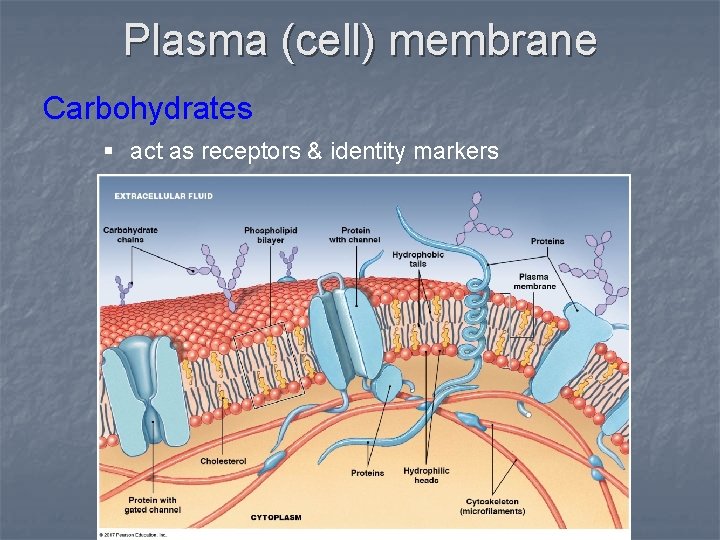
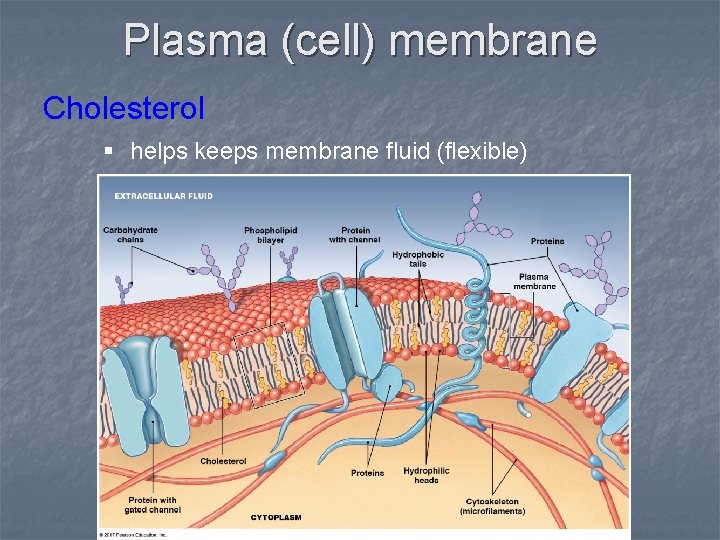
Plasma (cell) membrane Comprised primarily of: § Phospholipids § Proteins § Carbohydrates § Cholesterol
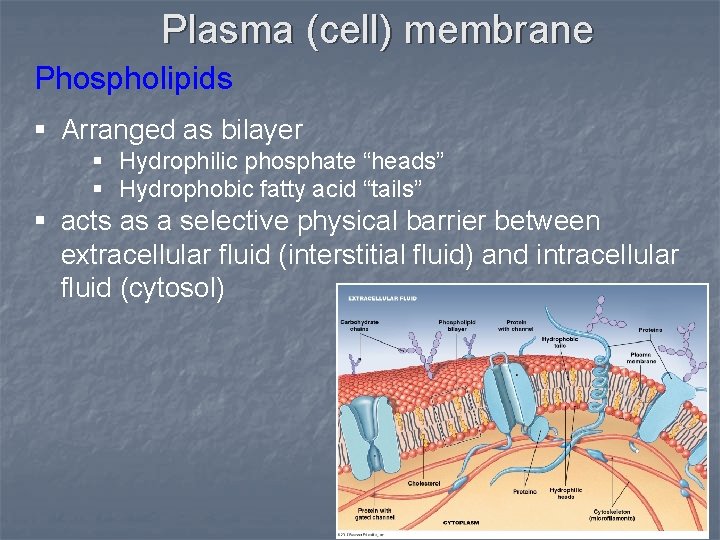
Plasma (cell) membrane Phospholipids § Arranged as bilayer § Hydrophilic phosphate “heads” § Hydrophobic fatty acid “tails” § acts as a selective physical barrier between extracellular fluid (interstitial fluid) and intracellular fluid (cytosol)
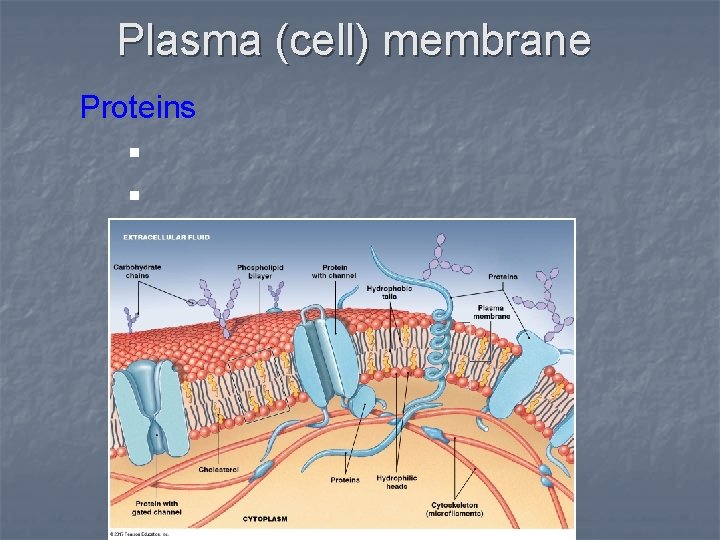
Plasma (cell) membrane Proteins § §
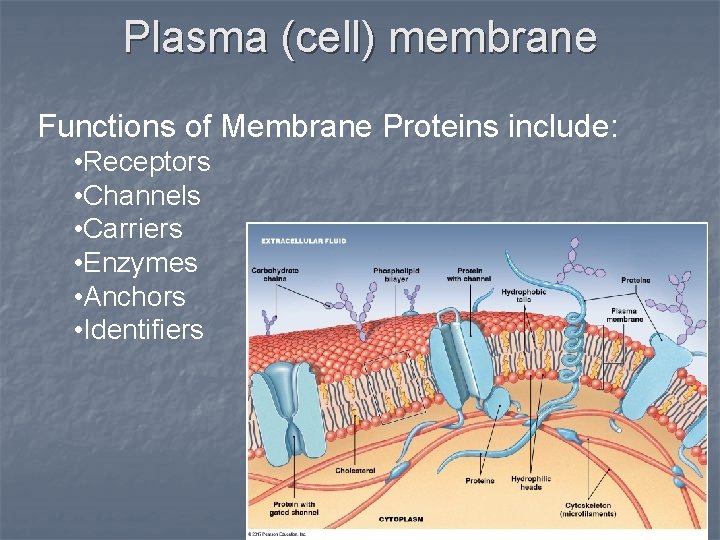
Plasma (cell) membrane Functions of Membrane Proteins include: • Receptors • Channels • Carriers • Enzymes • Anchors • Identifiers
Plasma (cell) membrane Carbohydrates § act as receptors & identity markers
Plasma (cell) membrane Cholesterol § helps keeps membrane fluid (flexible)
Functions of The Cell Membrane Functions of the plasma membrane include: n n n Physical isolation Regulation of exchange with the environment (“selective permeability”) Sensitivity to surrounding environment Help maintain shape and structural support between cells Cell identification Communication (signaling) Copyright © 2007 Pearson Education, Inc. , publishing as Benjamin Cummings
Cytoplasm All the “stuff” inside a cell The “stuff”: n Cytosol (a. k. a. intracellular fluid ICF) n Organelles Copyright © 2007 Pearson Education, Inc. , publishing as Benjamin Cummings
Cytosol n n n Intracellular fluid that usually has a _____ consistency Contains water, dissolved nutrients (including amino acids, sugars (glucose/glycogen) & lipids), ions, proteins (enzymes), and wastes Surrounds and suspends organelles; site of some chemical reactions; transportation medium Copyright © 2007 Pearson Education, Inc. , publishing as Benjamin Cummings
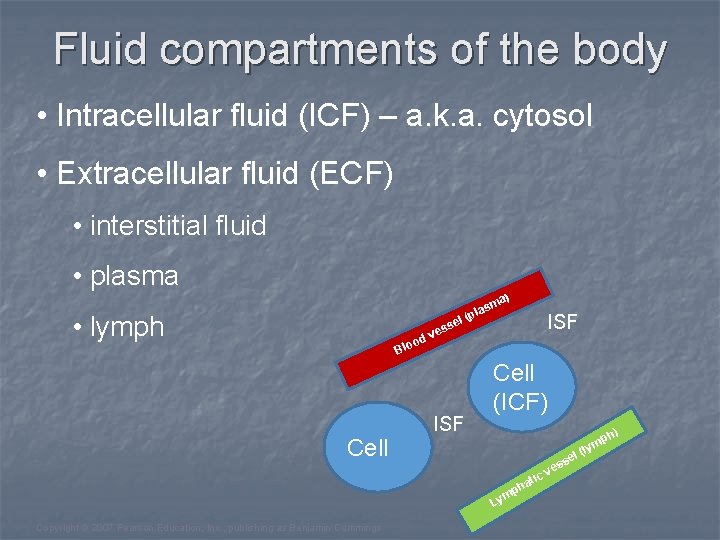
Fluid compartments of the body • Intracellular fluid (ICF) – a. k. a. cytosol • Extracellular fluid (ECF) • interstitial fluid • plasma a) • lymph sm pla el ( d loo s ves ISF B Cell ISF Cell (ICF) ) mp tic ha Ly Copyright © 2007 Pearson Education, Inc. , publishing as Benjamin Cummings v l se s e ph m y (l
Transport Processes between/within fluid compartments Two types of processes of transport (movement): • Passive – • Active –
Passive processes of transport - No energy required for movement - Movement occurs with (“down”) the concentration gradient Includes: n Diffusion (simple & channel-mediated) n Facilitated diffusion (carrier-mediated transport) n Osmosis n Filtration Copyright © 2007 Pearson Education, Inc. , publishing as Benjamin Cummings
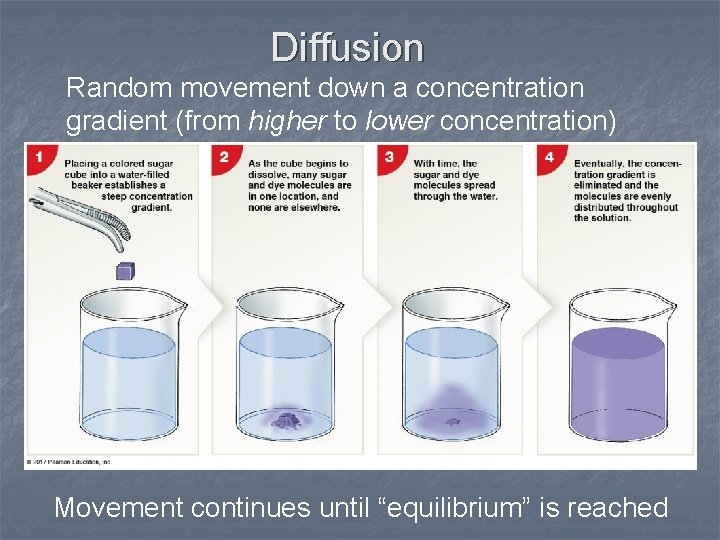
Diffusion Random movement down a concentration gradient (from higher to lower concentration) Movement continues until “equilibrium” is reached
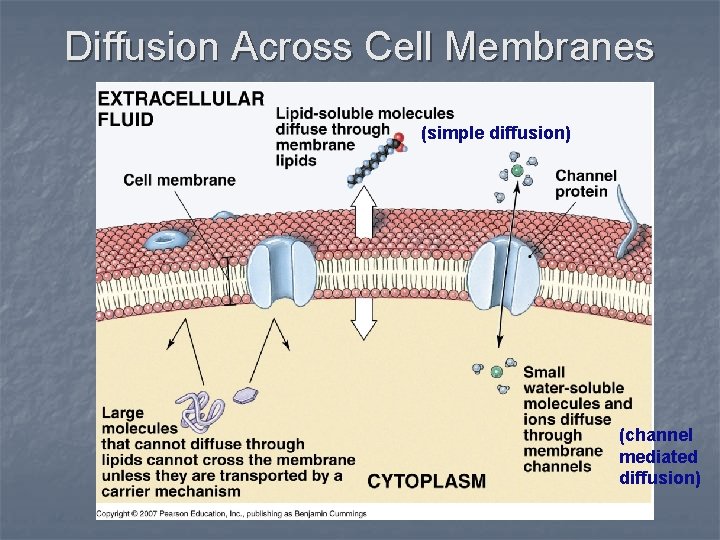
Diffusion Across Cell Membranes (simple diffusion) (channel mediated diffusion)
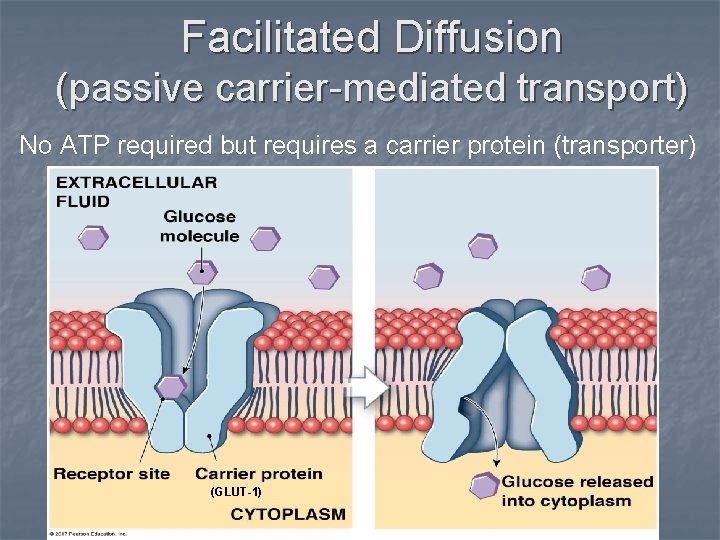
Facilitated Diffusion (passive carrier-mediated transport) No ATP required but requires a carrier protein (transporter) (GLUT-1)
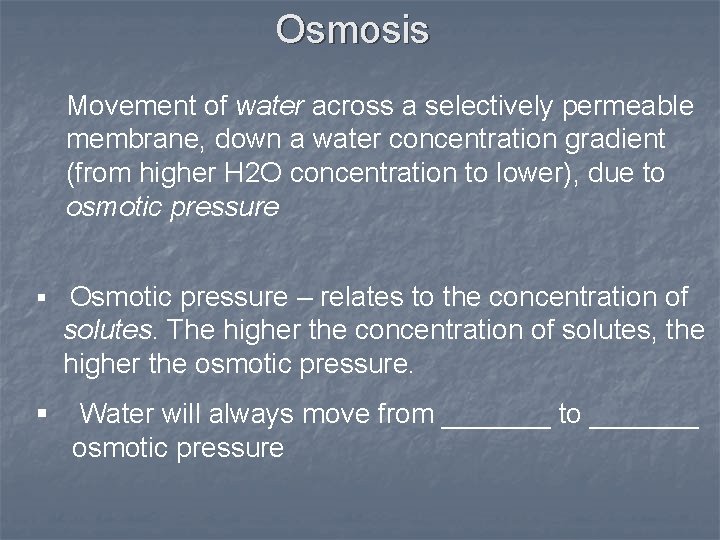
Osmosis Movement of water across a selectively permeable membrane, down a water concentration gradient (from higher H 2 O concentration to lower), due to osmotic pressure § Osmotic pressure – relates to the concentration of solutes. The higher the concentration of solutes, the higher the osmotic pressure. § Water will always move from _______ to _______ osmotic pressure
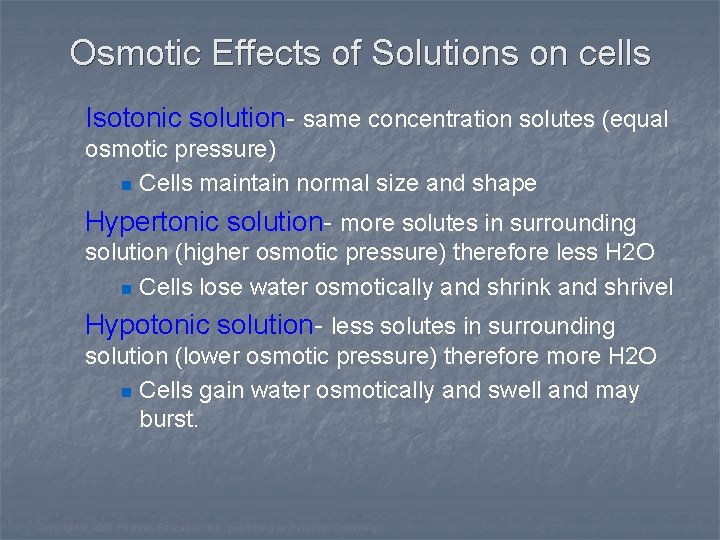
Osmotic Effects of Solutions on cells Isotonic solution- same concentration solutes (equal osmotic pressure) n Cells maintain normal size and shape Hypertonic solution- more solutes in surrounding solution (higher osmotic pressure) therefore less H 2 O n Cells lose water osmotically and shrink and shrivel Hypotonic solution- less solutes in surrounding solution (lower osmotic pressure) therefore more H 2 O n Cells gain water osmotically and swell and may burst. Copyright © 2007 Pearson Education, Inc. , publishing as Benjamin Cummings
Filtration Hydrostatic pressure ( _____ pressure in the body) pushes on water n Water crosses membrane (across capillary endothelium in the body) n If membrane is permeable to solutes, solutes follow water movement n Copyright © 2007 Pearson Education, Inc. , publishing as Benjamin Cummings
Active processes of transport - Cell must generate energy (ATP – adenosine triphosphate) for movement - Movement can occur against (“up”) the concentration gradient - Larger substances can move in/out of the cell -Includes: • Active transport • Vesicular transport endocytosis exocytosis
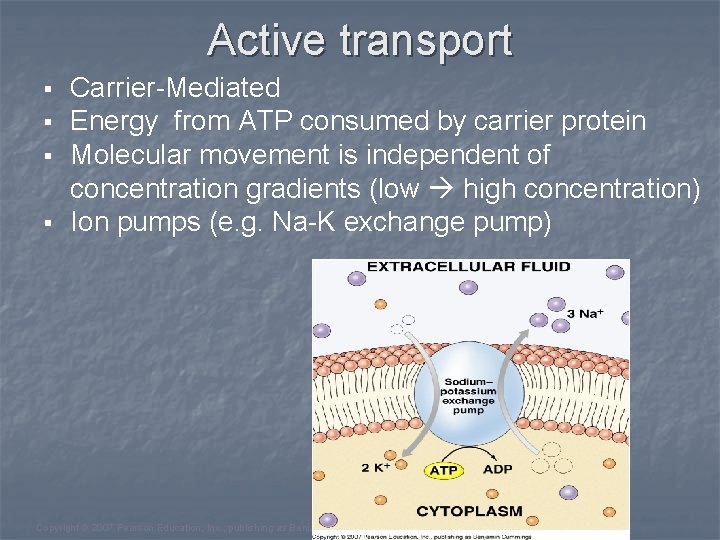
Active transport § § Carrier-Mediated Energy from ATP consumed by carrier protein Molecular movement is independent of concentration gradients (low high concentration) Ion pumps (e. g. Na-K exchange pump) Copyright © 2007 Pearson Education, Inc. , publishing as Benjamin Cummings
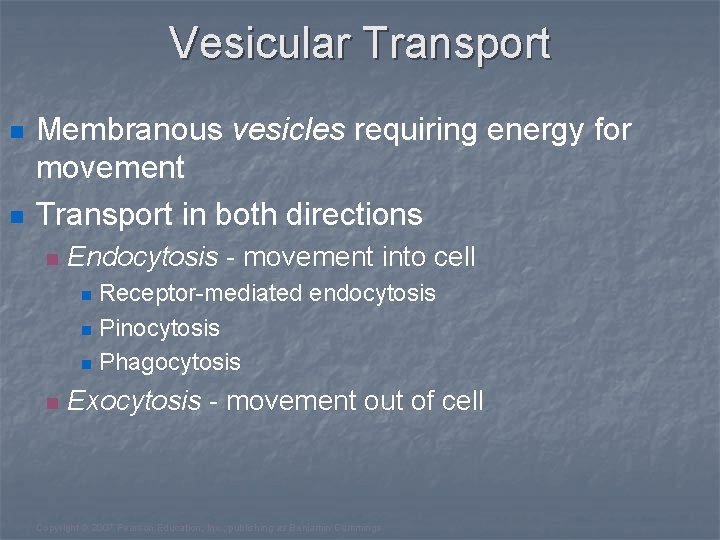
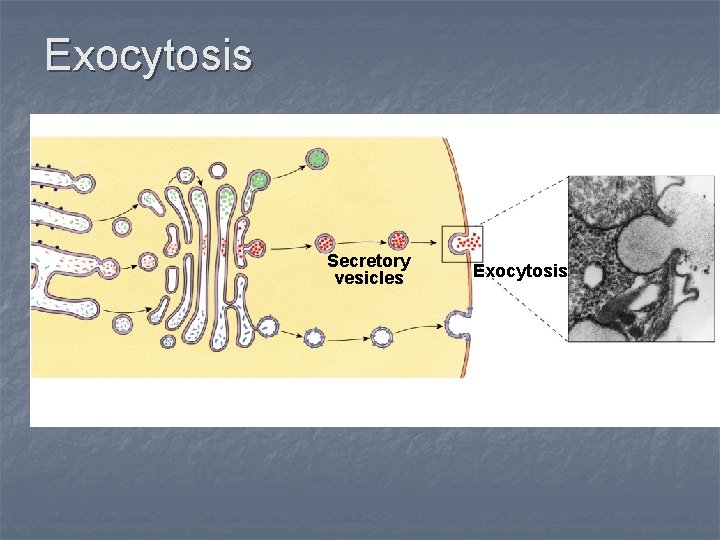
Vesicular Transport n n Membranous vesicles requiring energy for movement Transport in both directions n Endocytosis - movement into cell Receptor-mediated endocytosis n Pinocytosis n Phagocytosis n n Exocytosis - movement out of cell Copyright © 2007 Pearson Education, Inc. , publishing as Benjamin Cummings
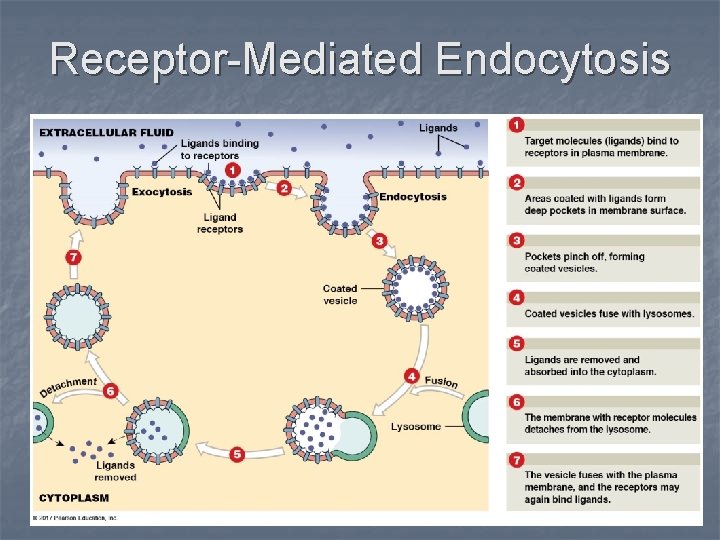
Receptor-Mediated Endocytosis
Pinocytosis § “_______” § Cell membrane folds inward “engulfing” ECF § No receptor proteins involved
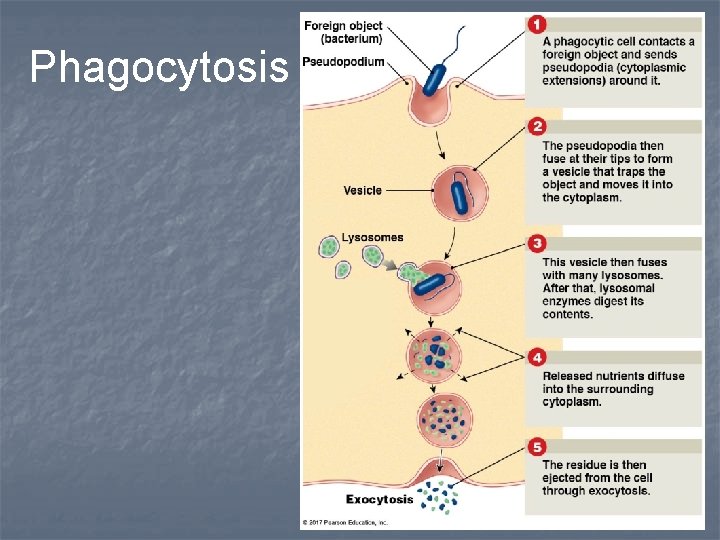
Phagocytosis
Exocytosis Secretory vesicles Exocytosis
The Organelles Membranous organelles n n n - Isolated compartments Nucleus Mitochondria Endoplasmic reticulum (smooth & rough ER) Golgi apparatus Lysosomes Nonmembranous organelles - In direct contact with cytosol § Cytoskeleton (including microvilli, centrioles, cilia, flagella) § Ribosomes § Nucleolus
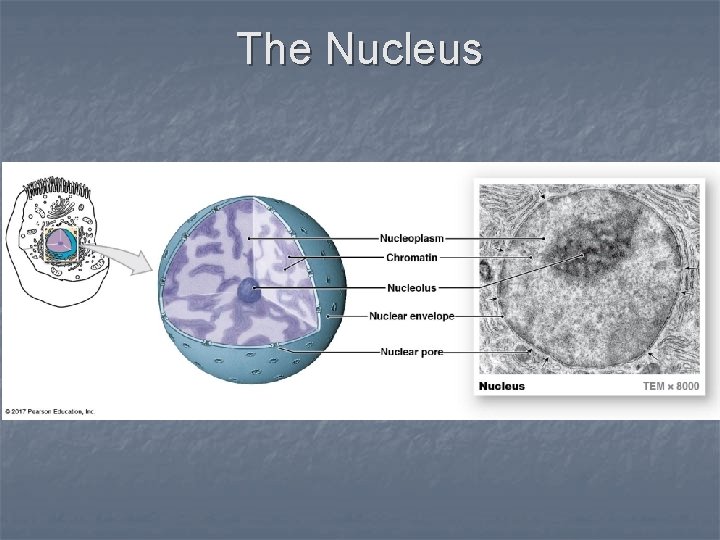
The Nucleus
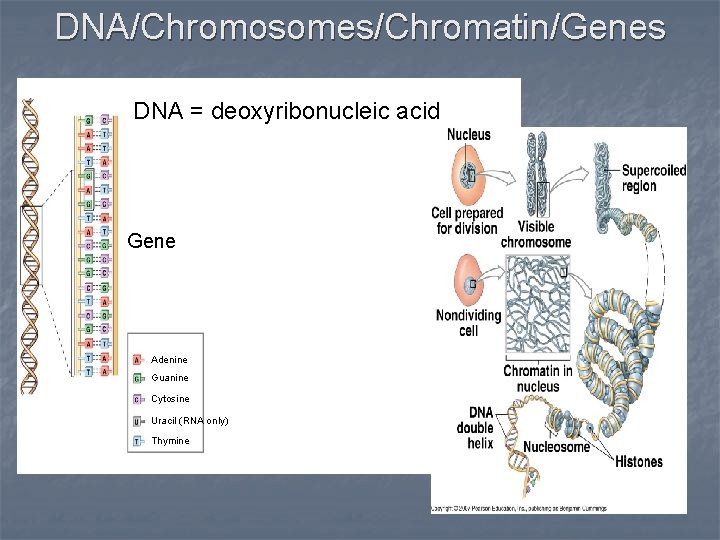
DNA/Chromosomes/Chromatin/Genes DNA = deoxyribonucleic acid Gene Adenine Guanine Cytosine Uracil (RNA only) Thymine
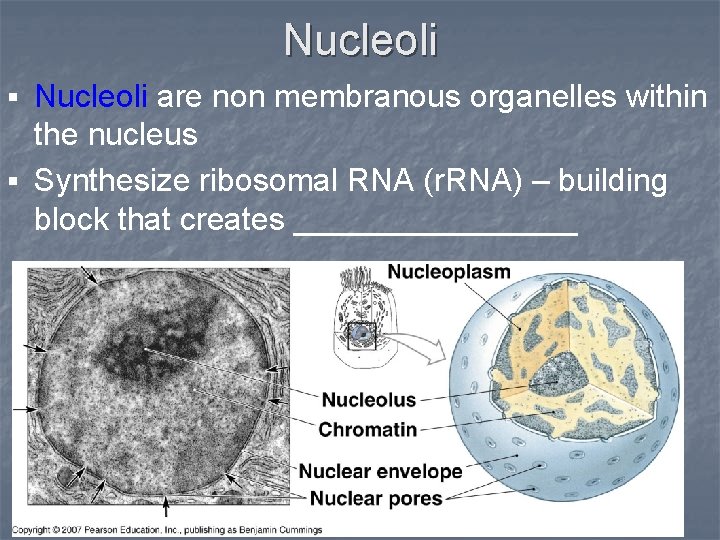
Nucleoli are non membranous organelles within the nucleus § Synthesize ribosomal RNA (r. RNA) – building block that creates ________ § RNA = ribonucleic acid
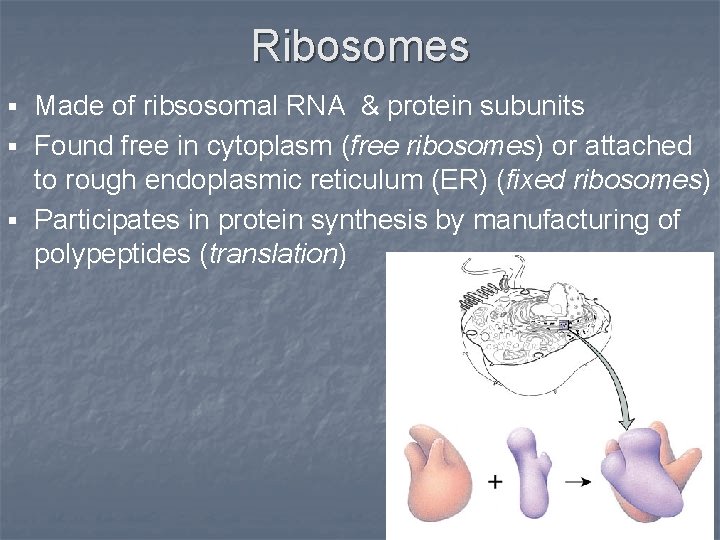
Ribosomes Made of ribsosomal RNA & protein subunits § Found free in cytoplasm (free ribosomes) or attached to rough endoplasmic reticulum (ER) (fixed ribosomes) § Participates in protein synthesis by manufacturing of polypeptides (translation) §
Protein Synthesis Two step process: § Transcription – § Translation –
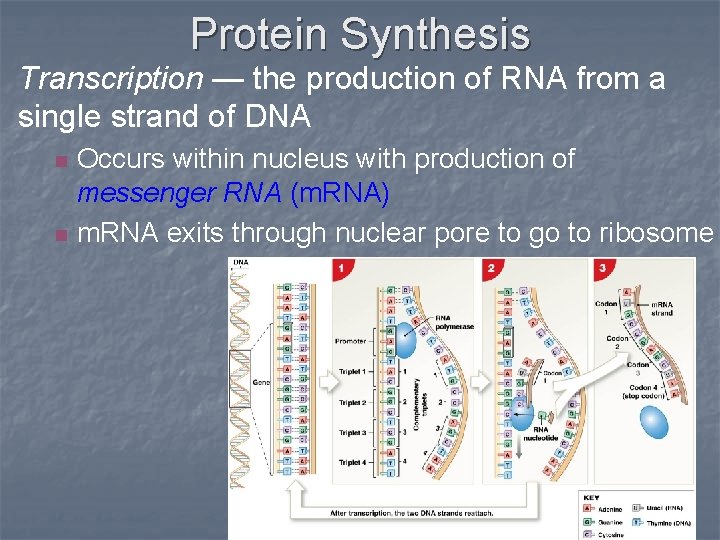
Protein Synthesis Transcription — the production of RNA from a single strand of DNA n n Occurs within nucleus with production of messenger RNA (m. RNA) m. RNA exits through nuclear pore to go to ribosome
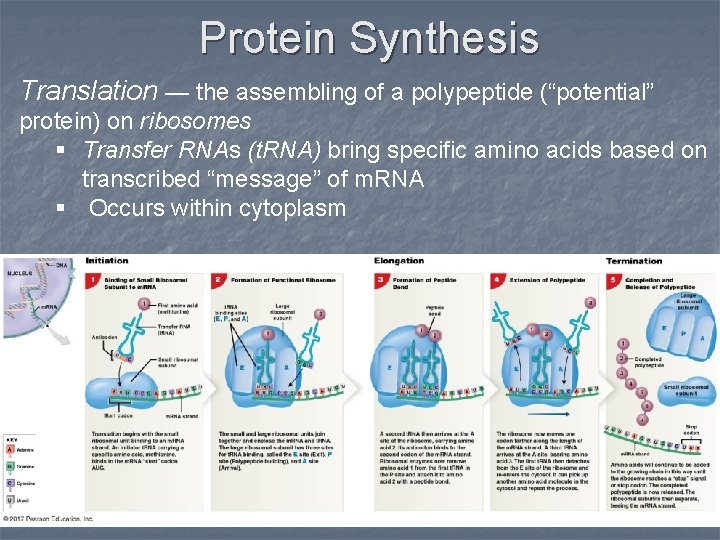
Protein Synthesis Translation — the assembling of a polypeptide (“potential” protein) on ribosomes § Transfer RNAs (t. RNA) bring specific amino acids based on transcribed “message” of m. RNA § Occurs within cytoplasm
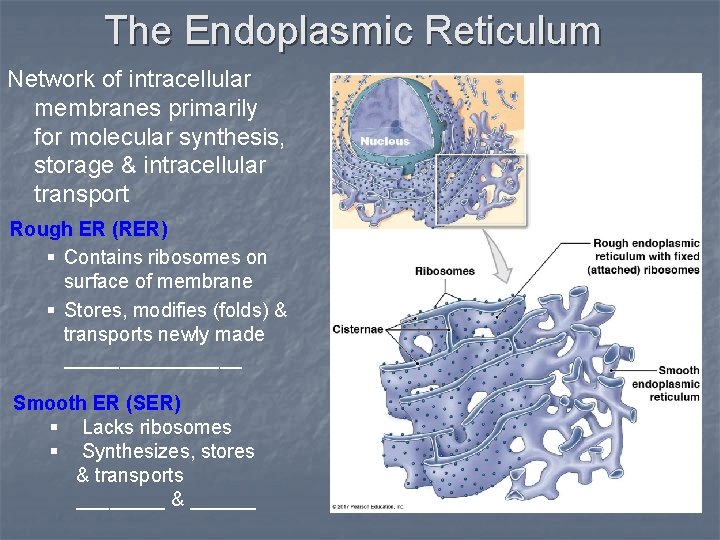
The Endoplasmic Reticulum Network of intracellular membranes primarily for molecular synthesis, storage & intracellular transport Rough ER (RER) § Contains ribosomes on surface of membrane § Stores, modifies (folds) & transports newly made ________ Smooth ER (SER) § Lacks ribosomes § Synthesizes, stores & transports ____ & ______
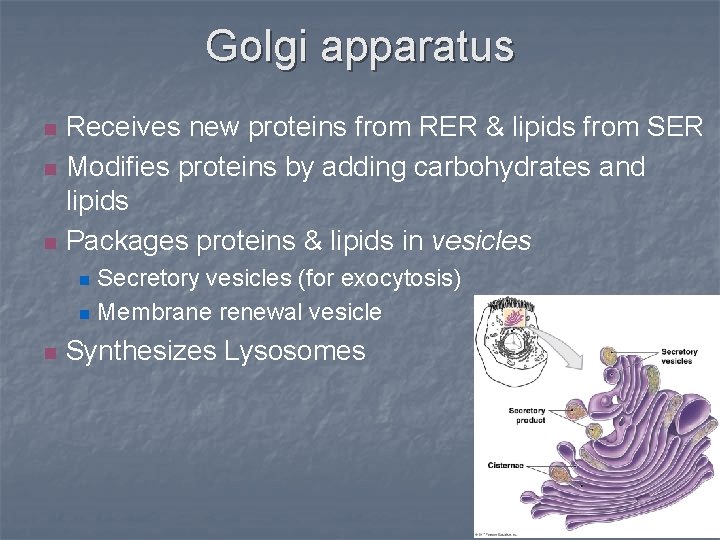
Golgi apparatus n n n Receives new proteins from RER & lipids from SER Modifies proteins by adding carbohydrates and lipids Packages proteins & lipids in vesicles Secretory vesicles (for exocytosis) n Membrane renewal vesicle n n Synthesizes Lysosomes
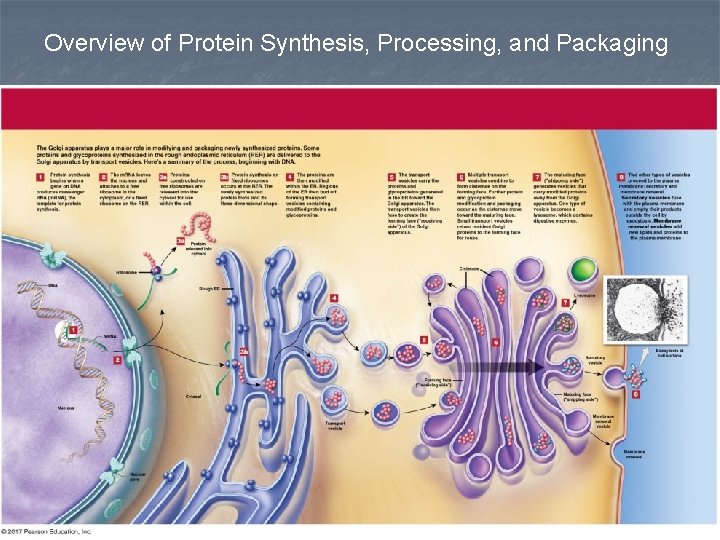
Overview of Protein Synthesis, Processing, and Packaging
Lysosomes: Produced by golgi apparatus Vesicles containing digestive enzymes Clean-up cellular debris & recycle worn out organelles Defend against bacteria
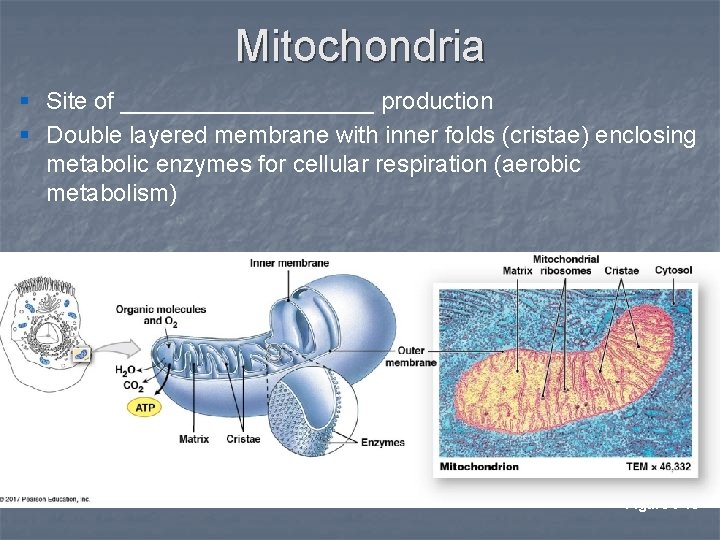
Mitochondria § Site of __________ production § Double layered membrane with inner folds (cristae) enclosing metabolic enzymes for cellular respiration (aerobic metabolism) Figure 3 -15
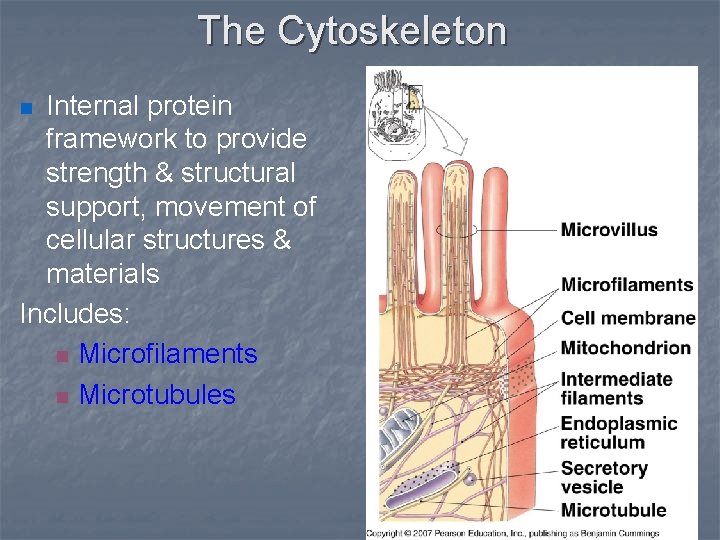
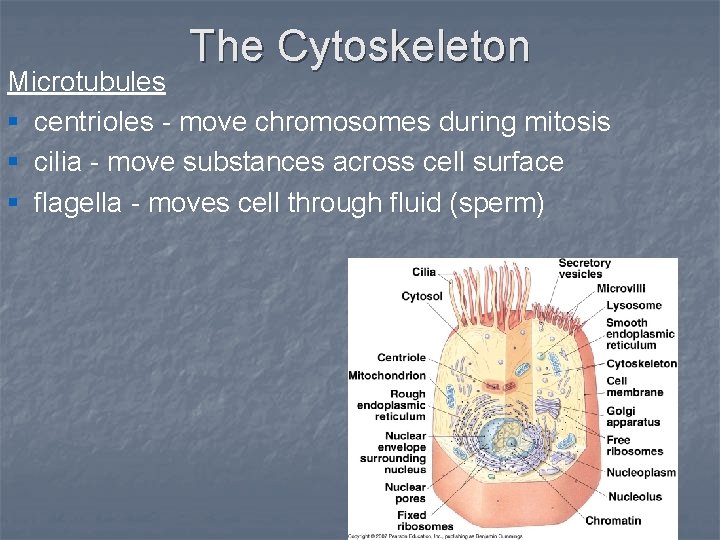
The Cytoskeleton Internal protein framework to provide strength & structural support, movement of cellular structures & materials Includes: n Microfilaments n Microtubules n
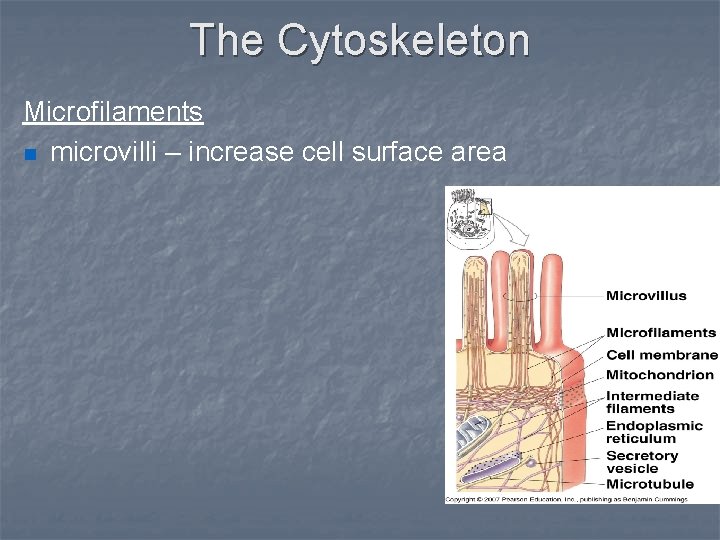
The Cytoskeleton Microfilaments n microvilli – increase cell surface area
The Cytoskeleton Microtubules § centrioles - move chromosomes during mitosis § cilia - move substances across cell surface § flagella - moves cell through fluid (sperm)
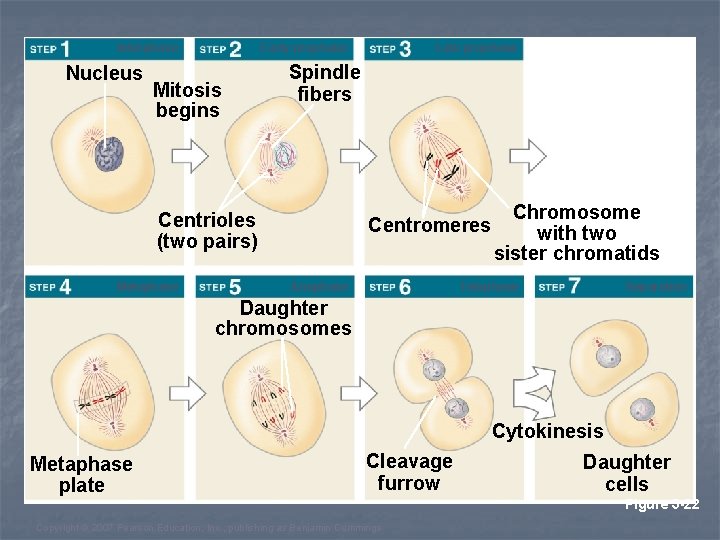
Cell division Somatic Cell division - The reproduction of body cells; necessary for growth & repair. Results in the formation of 2 genetically identical “daughter” cells § Mitosis - nuclear (chromosomal) division of somatic cells (after chromosomal replication has occurred). § Cytokinesis - division of cytoplasmic contents Copyright © 2007 Pearson Education, Inc. , publishing as Benjamin Cummings
Interphase Nucleus Early prophase Mitosis begins Spindle fibers Chromosome Centromeres with two sister chromatids Centrioles (two pairs) Metaphase Late prophase Anaphase Telophase Separation Daughter chromosomes Cytokinesis Metaphase plate Cleavage furrow Copyright © 2007 Pearson Education, Inc. , publishing as Benjamin Cummings Daughter cells Figure 3 -22
Cell Diversity and Differentiation Somatic (Body) Cells n n All have same genes Some genes inactivate during development Cells thus become structurally and functionally specialized. This specialization is known as “differentiation” of cells Specialized (differentiated) cells form distinct tissues in the body