
Cell Structure Eukaryotes 1 Cell Wall plants fungi
- Slides: 15
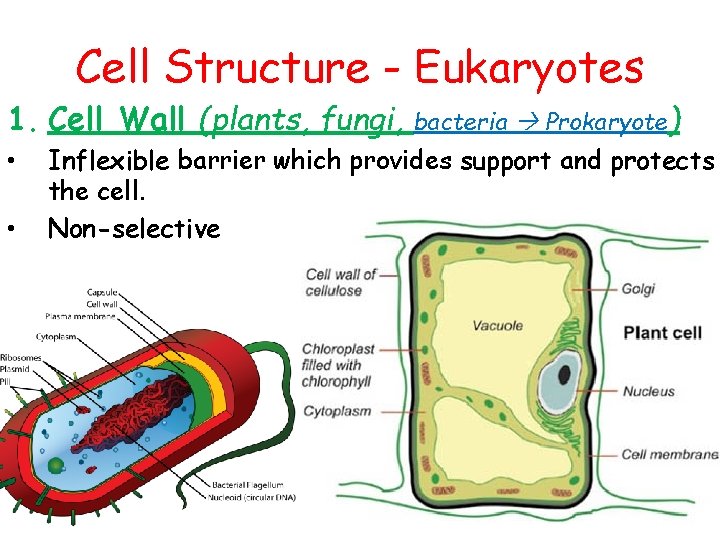
Cell Structure - Eukaryotes 1. Cell Wall (plants, fungi, • • bacteria Prokaryote) Inflexible barrier which provides support and protects the cell. Non-selective
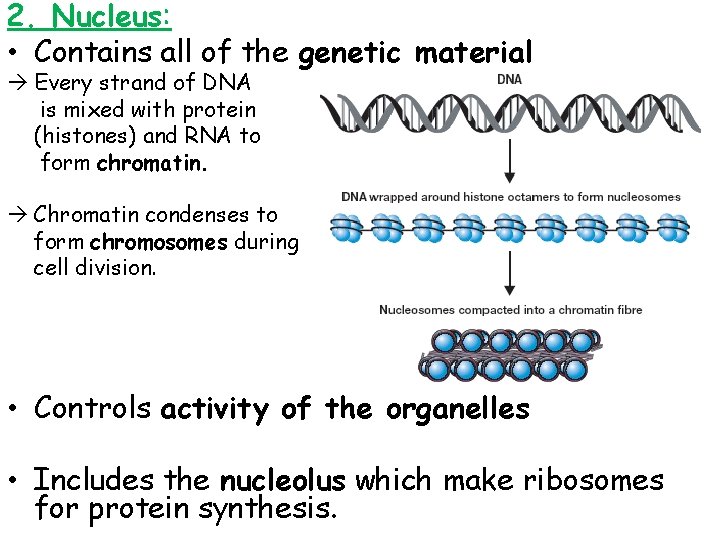
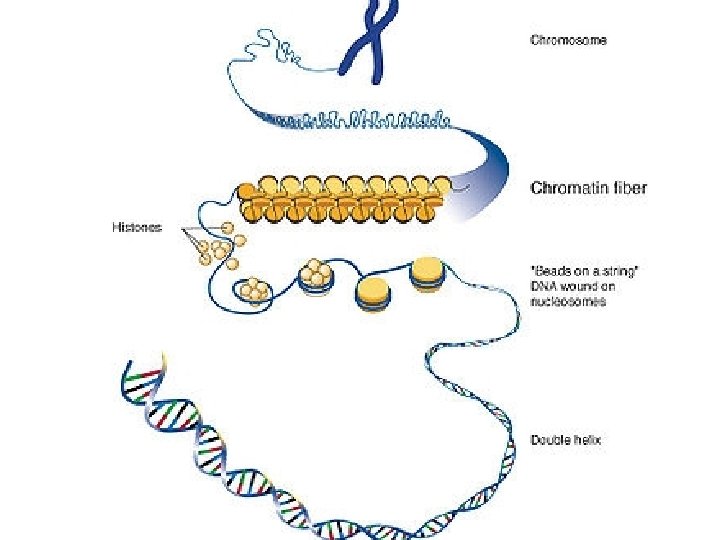
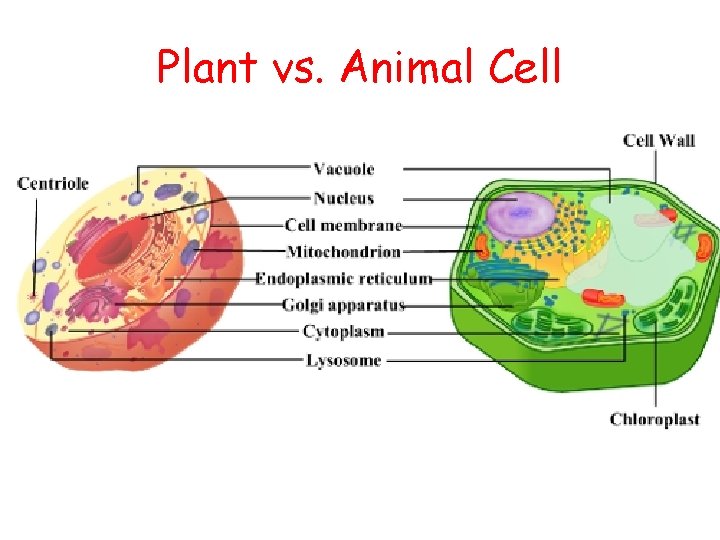
2. Nucleus: • Contains all of the genetic material Every strand of DNA is mixed with protein (histones) and RNA to form chromatin. Chromatin condenses to form chromosomes during cell division. • Controls activity of the organelles • Includes the nucleolus which make ribosomes for protein synthesis.
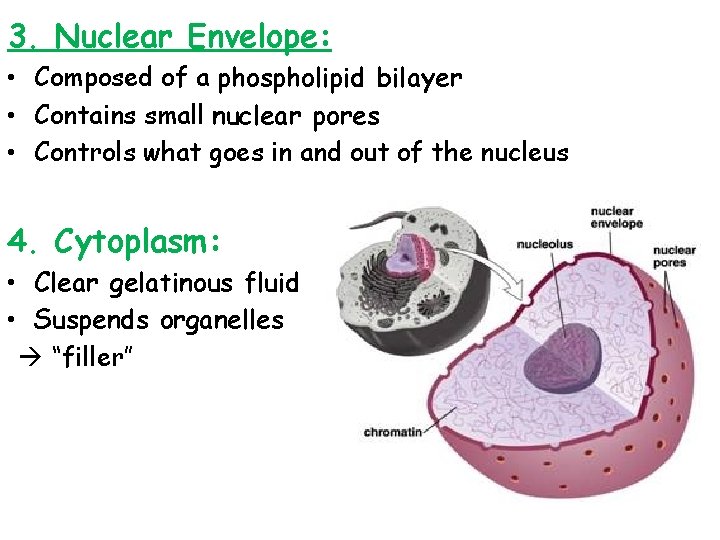
3. Nuclear Envelope: • Composed of a phospholipid bilayer • Contains small nuclear pores • Controls what goes in and out of the nucleus 4. Cytoplasm: • Clear gelatinous fluid • Suspends organelles “filler”
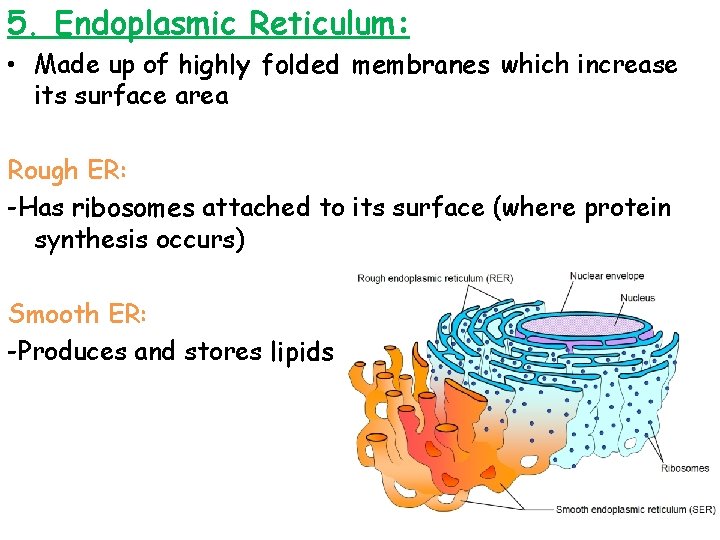
5. Endoplasmic Reticulum: • Made up of highly folded membranes which increase its surface area Rough ER: -Has ribosomes attached to its surface (where protein synthesis occurs) Smooth ER: -Produces and stores lipids
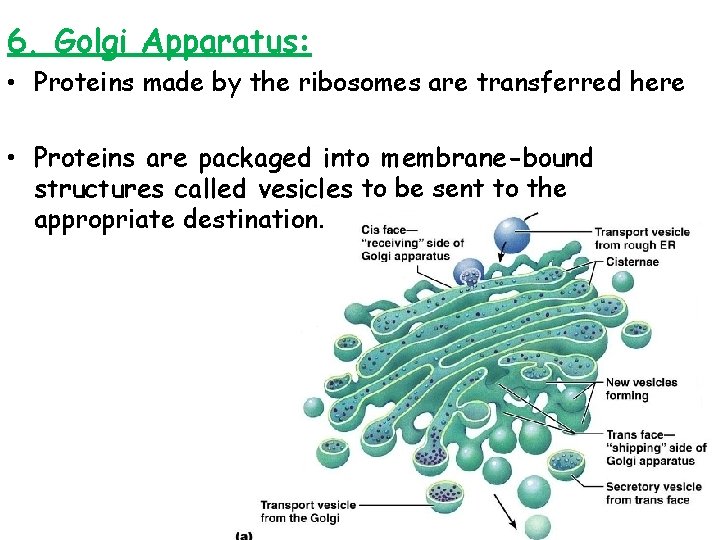
6. Golgi Apparatus: • Proteins made by the ribosomes are transferred here • Proteins are packaged into membrane-bound structures called vesicles to be sent to the appropriate destination.
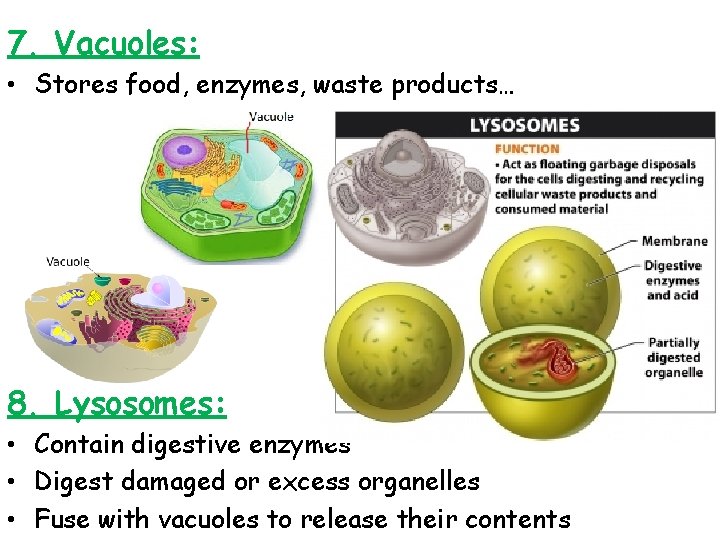
7. Vacuoles: • Stores food, enzymes, waste products… 8. Lysosomes: • Contain digestive enzymes • Digest damaged or excess organelles • Fuse with vacuoles to release their contents
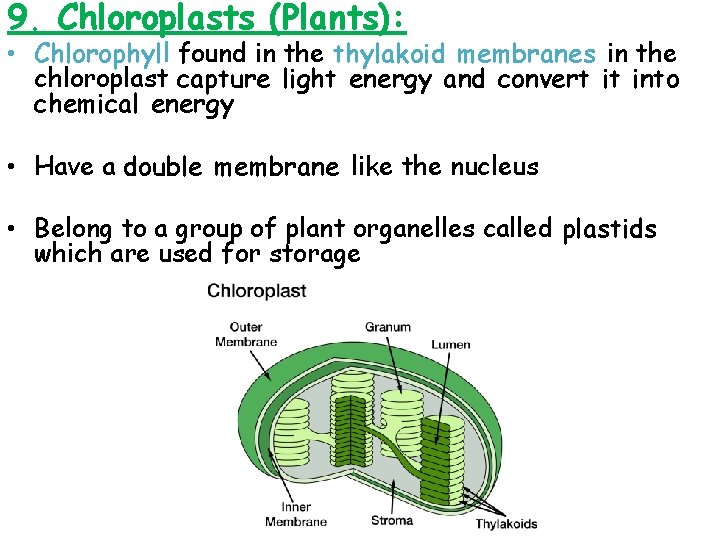
9. Chloroplasts (Plants): • Chlorophyll found in the thylakoid membranes in the chloroplast capture light energy and convert it into chemical energy • Have a double membrane like the nucleus • Belong to a group of plant organelles called plastids which are used for storage
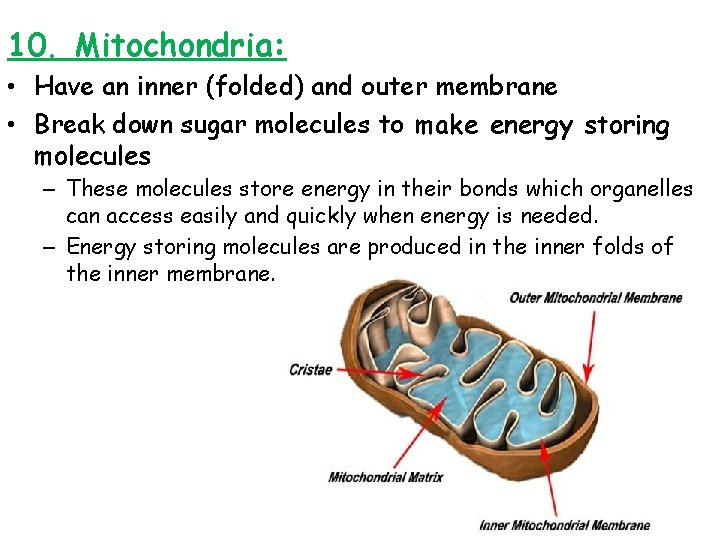
10. Mitochondria: • Have an inner (folded) and outer membrane • Break down sugar molecules to make energy storing molecules – These molecules store energy in their bonds which organelles can access easily and quickly when energy is needed. – Energy storing molecules are produced in the inner folds of the inner membrane.
Try This! 1. Compare and contrast the two types of ER. 2. Describe the internal structure of a chloroplast. 3. Why is the inner membrane of a mitochondrion folded? 4. What would happen is a cell had a decreased number of mitochondria?
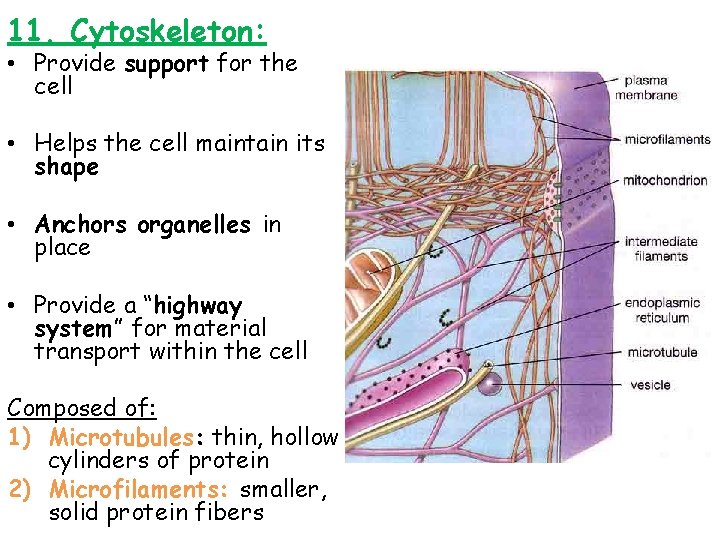
11. Cytoskeleton: • Provide support for the cell • Helps the cell maintain its shape • Anchors organelles in place • Provide a “highway system” for material transport within the cell Composed of: 1) Microtubules: thin, hollow cylinders of protein 2) Microfilaments: smaller, solid protein fibers
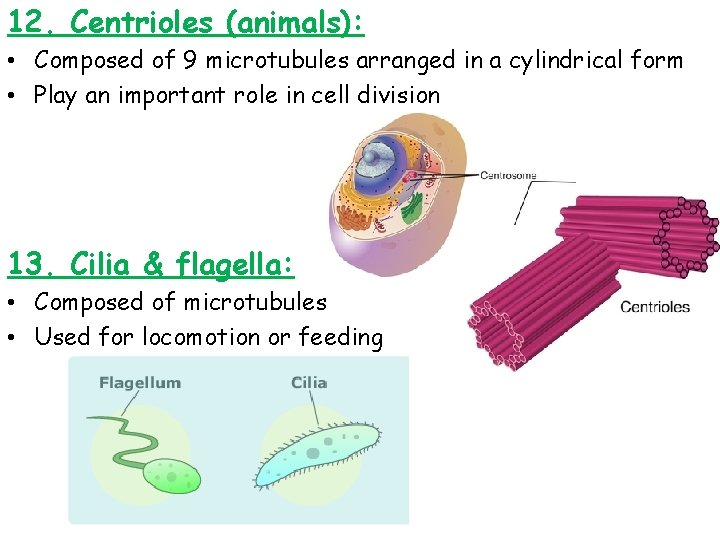
12. Centrioles (animals): • Composed of 9 microtubules arranged in a cylindrical form • Play an important role in cell division 13. Cilia & flagella: • Composed of microtubules • Used for locomotion or feeding
Plant vs. Animal Cell
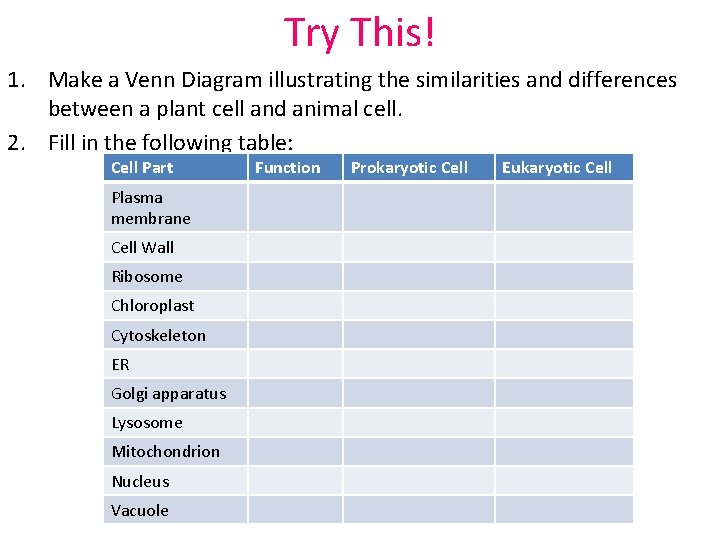
Try This! 1. Make a Venn Diagram illustrating the similarities and differences between a plant cell and animal cell. 2. Fill in the following table: Cell Part Plasma membrane Cell Wall Ribosome Chloroplast Cytoskeleton ER Golgi apparatus Lysosome Mitochondrion Nucleus Vacuole Function Prokaryotic Cell Eukaryotic Cell
Try This! 3. Mini. Lab 7. 2 (textbook p. 182) 4. Construct an animal and plant cell with playdoh provided to you.