
Cell Structure Biology chapter 5 section 2 Objectives
Cell Structure Biology chapter 5 section 2
Objectives Understand the structure and function of: nucleus, mitochondrion, chloroplast, lysosome, ER, Golgi body, vesicle, vacuole Understand the relationship of the functions of ribosomes, ER, and Golgi body Compare/contrast prokaryotic and eukaryotic cells
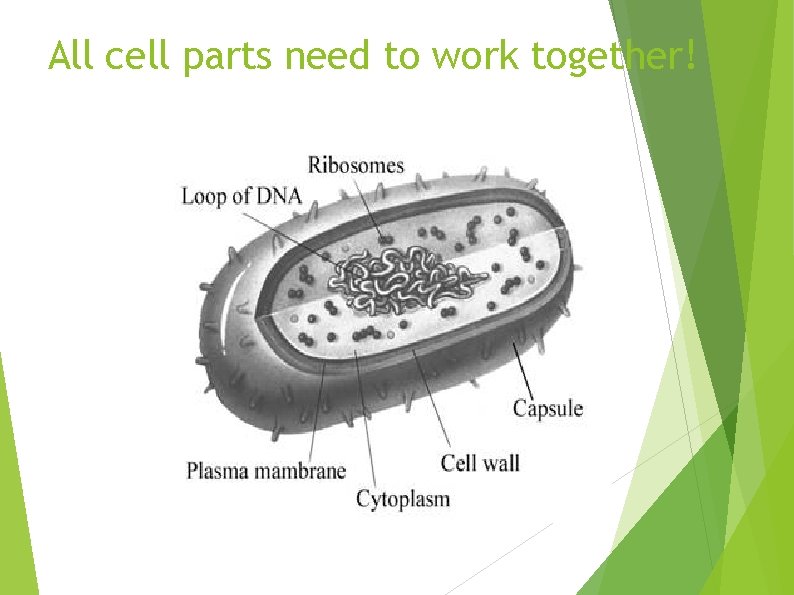
Cell Types There are two groups we put cells into: Prokaryotic: Cells do not have special membrane-bound structures (organelles) in them Eukaryotic: Cells have membrane-bound structures (organelles)

Prokaryotic Cell No special membranebound cell structures Belong to Domain Archaea or Domain Bacteria Example: bacteria
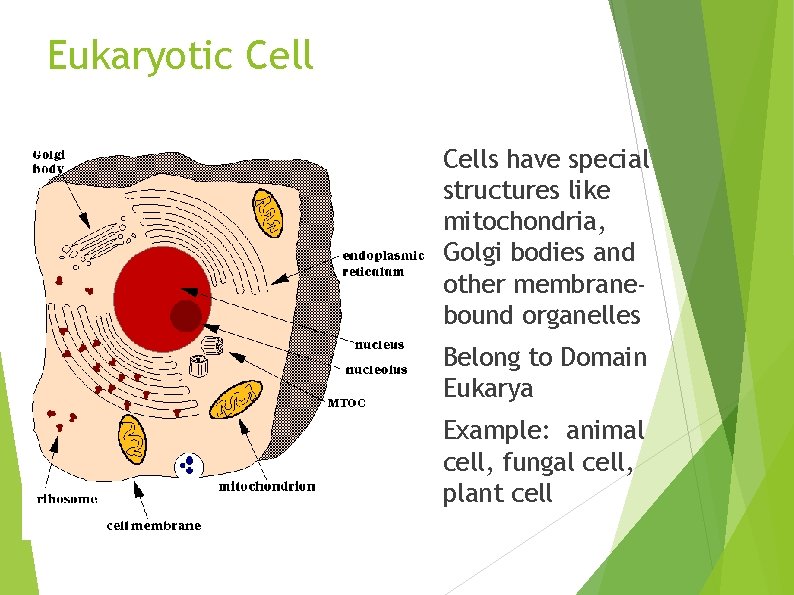
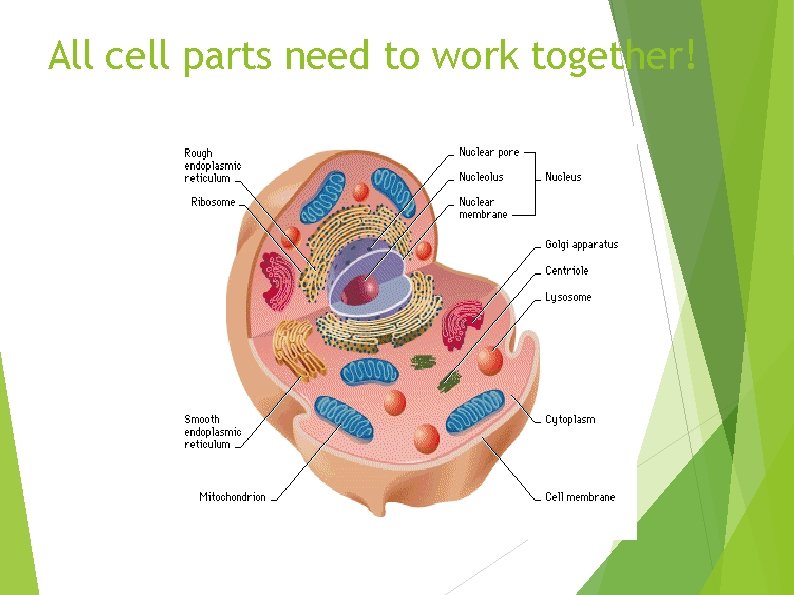
Eukaryotic Cells have special structures like mitochondria, Golgi bodies and other membranebound organelles Belong to Domain Eukarya Example: animal cell, fungal cell, plant cell
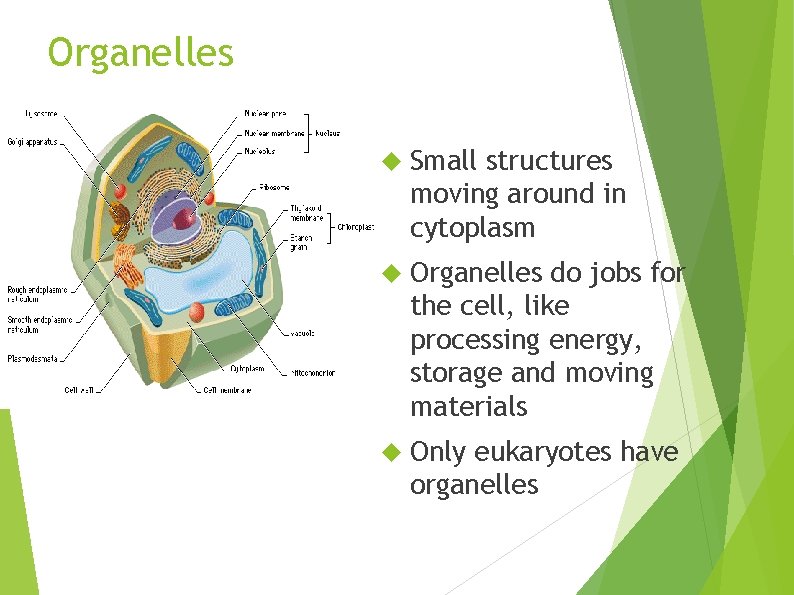
Organelles Small structures moving around in cytoplasm Organelles do jobs for the cell, like processing energy, storage and moving materials Only eukaryotes have organelles
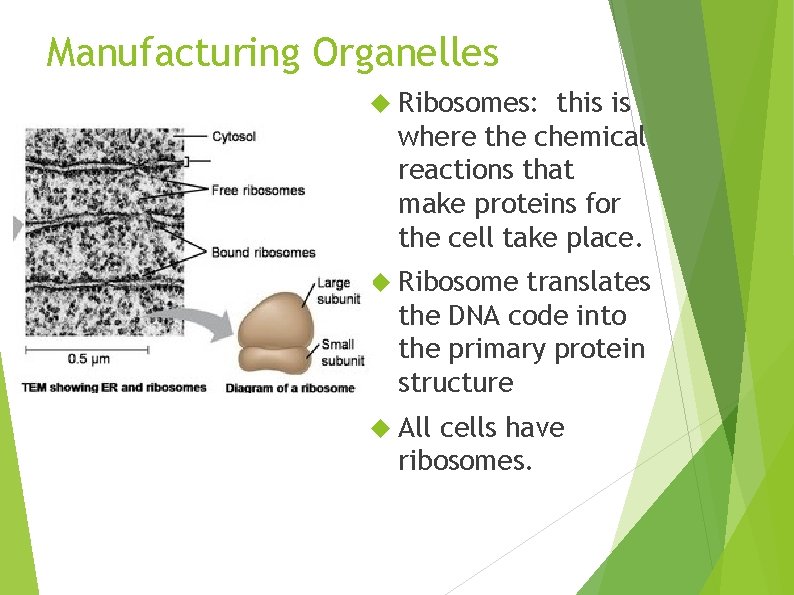
Manufacturing Organelles Ribosomes: this is where the chemical reactions that make proteins for the cell take place. Ribosome translates the DNA code into the primary protein structure All cells have ribosomes.
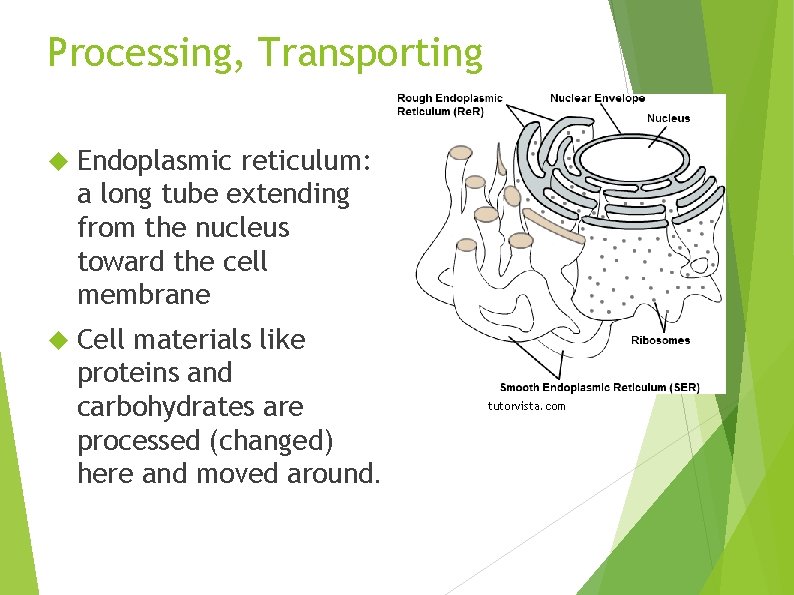
Processing, Transporting Endoplasmic reticulum: a long tube extending from the nucleus toward the cell membrane Cell materials like proteins and carbohydrates are processed (changed) here and moved around. tutorvista. com
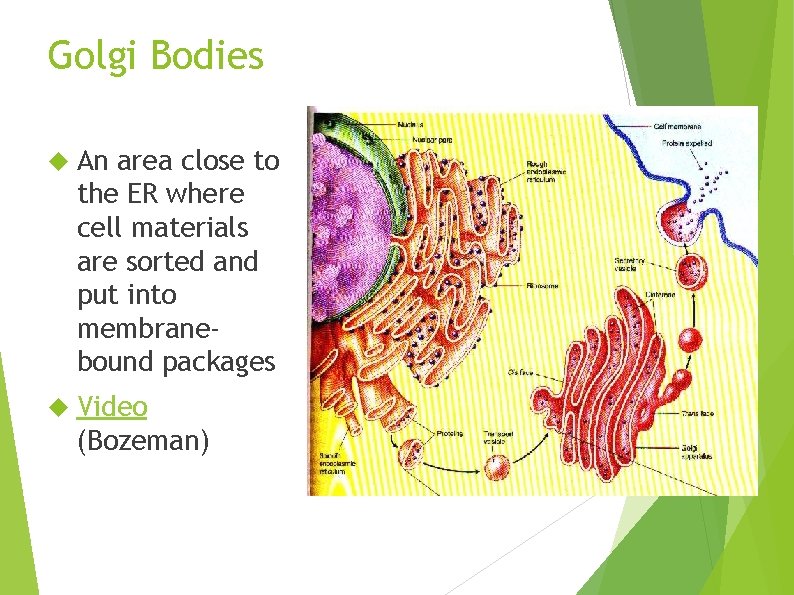
Golgi Bodies An area close to the ER where cell materials are sorted and put into membranebound packages Video (Bozeman)
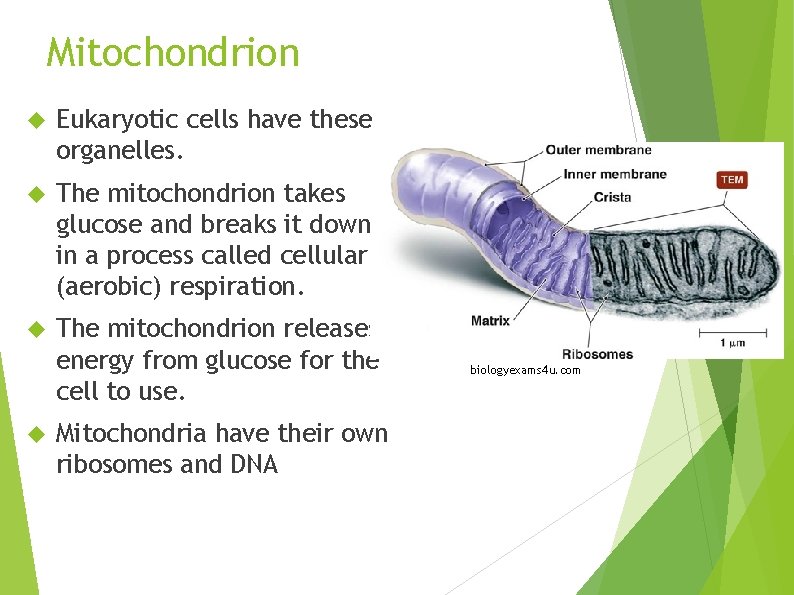
Mitochondrion Eukaryotic cells have these organelles. The mitochondrion takes glucose and breaks it down in a process called cellular (aerobic) respiration. The mitochondrion releases energy from glucose for the cell to use. Mitochondria have their own ribosomes and DNA biologyexams 4 u. com
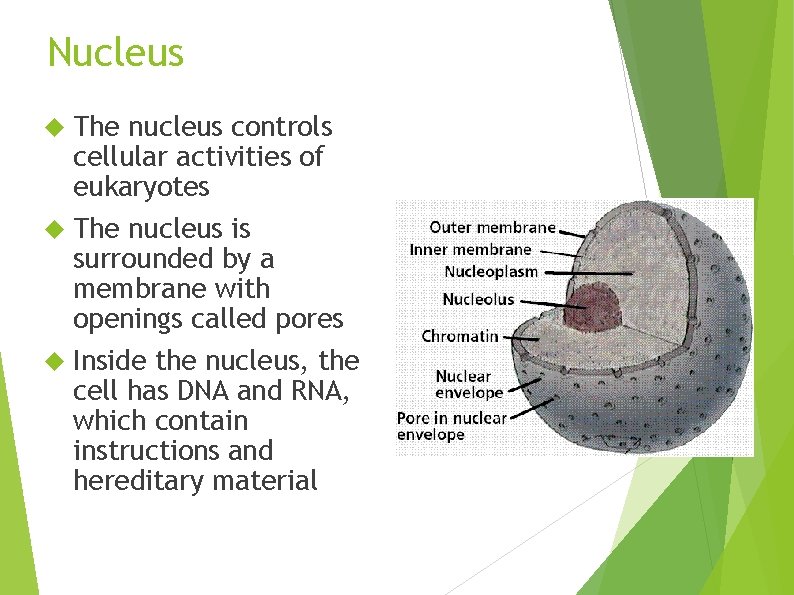
Nucleus The nucleus controls cellular activities of eukaryotes The nucleus is surrounded by a membrane with openings called pores Inside the nucleus, the cell has DNA and RNA, which contain instructions and hereditary material
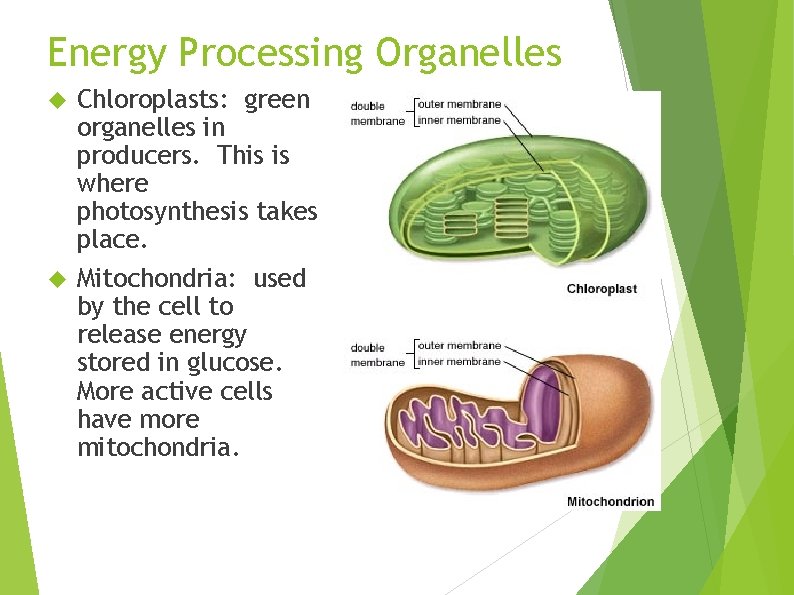
Energy Processing Organelles Chloroplasts: green organelles in producers. This is where photosynthesis takes place. Mitochondria: used by the cell to release energy stored in glucose. More active cells have more mitochondria.
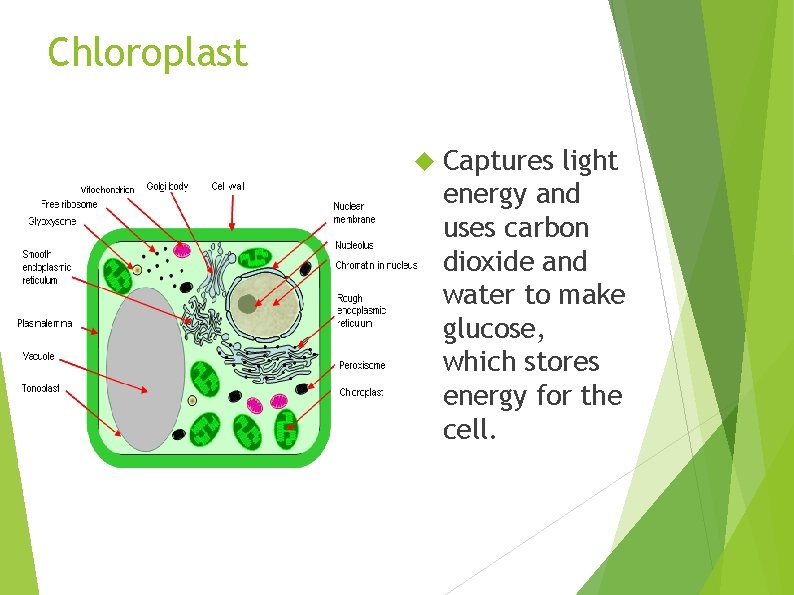
Chloroplast Captures light energy and uses carbon dioxide and water to make glucose, which stores energy for the cell.
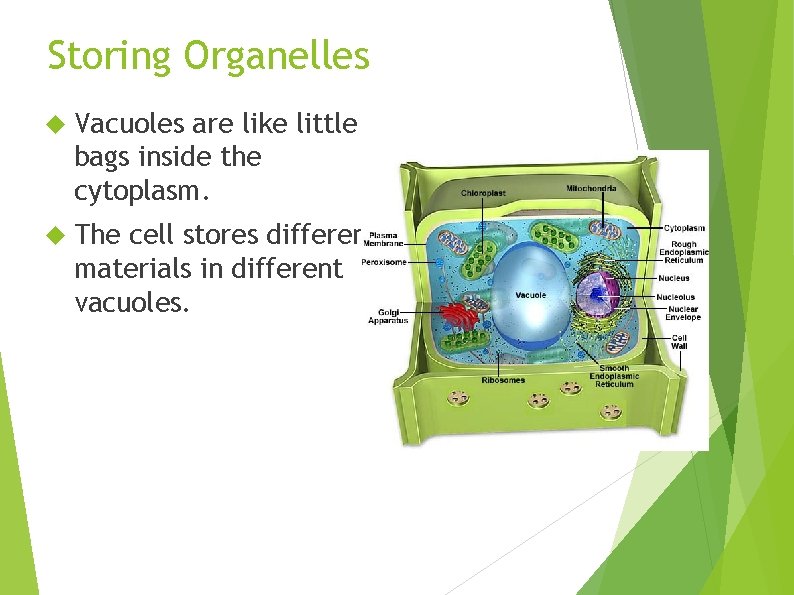
Storing Organelles Vacuoles are like little bags inside the cytoplasm. The cell stores different materials in different vacuoles.
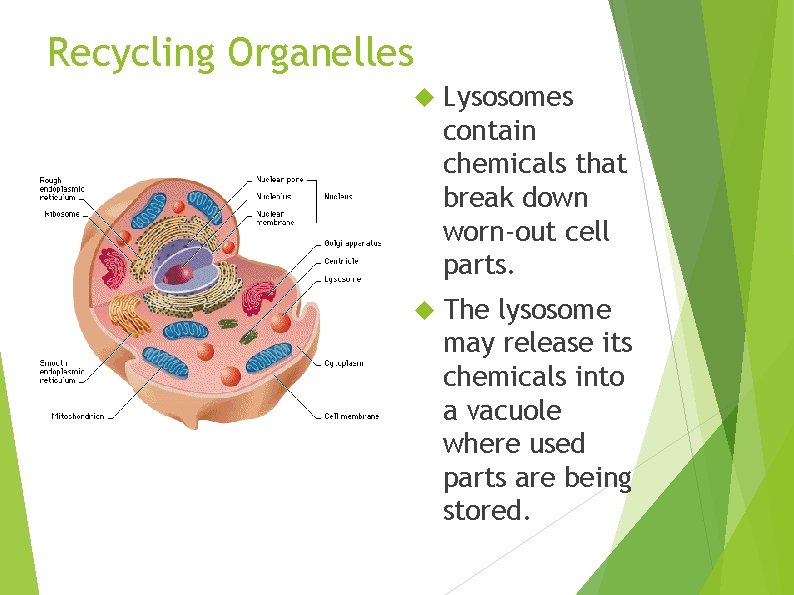
Recycling Organelles Lysosomes contain chemicals that break down worn-out cell parts. The lysosome may release its chemicals into a vacuole where used parts are being stored.
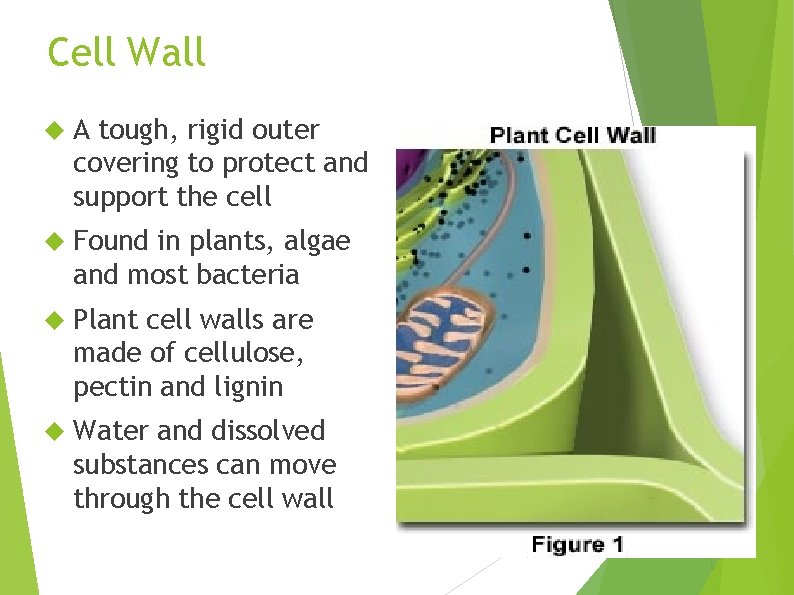
Cell Wall A tough, rigid outer covering to protect and support the cell Found in plants, algae and most bacteria Plant cell walls are made of cellulose, pectin and lignin Water and dissolved substances can move through the cell wall
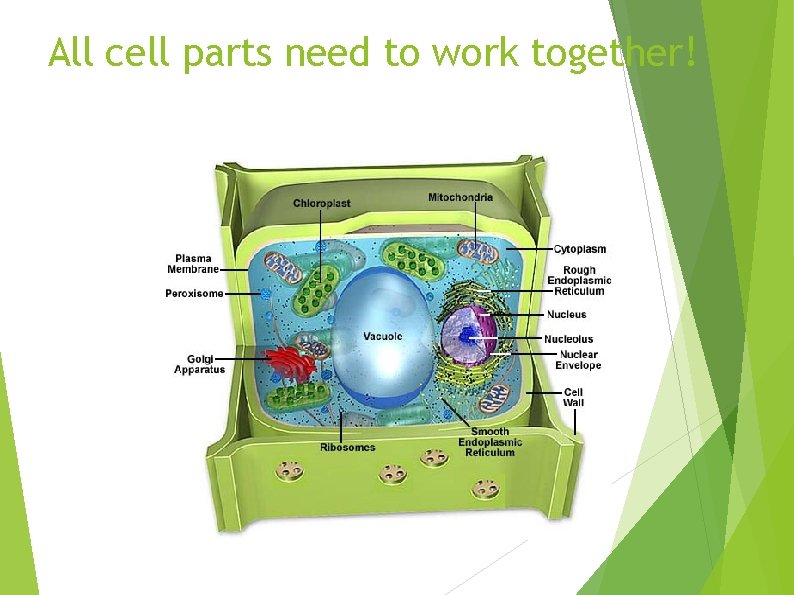
All cell parts need to work together!
All cell parts need to work together!
All cell parts need to work together!
- Slides: 19