
Cell Structure and Transport 7 1 Objectives Describe
Cell Structure and Transport
7 -1 Objectives • Describe the tenets of the cell theory • Compare the characteristics of prokaryotic and eukaryotic cells • Describe the parts of a light and electron microscope

Chapter 7 Cellular Structure and Function 7. 1 Cell Discovery and Theory The Cell Theory § All organisms are composed of one or more cells. § The cell is the basic unit of structure and organization of organisms. § All cells come from preexisting cells.

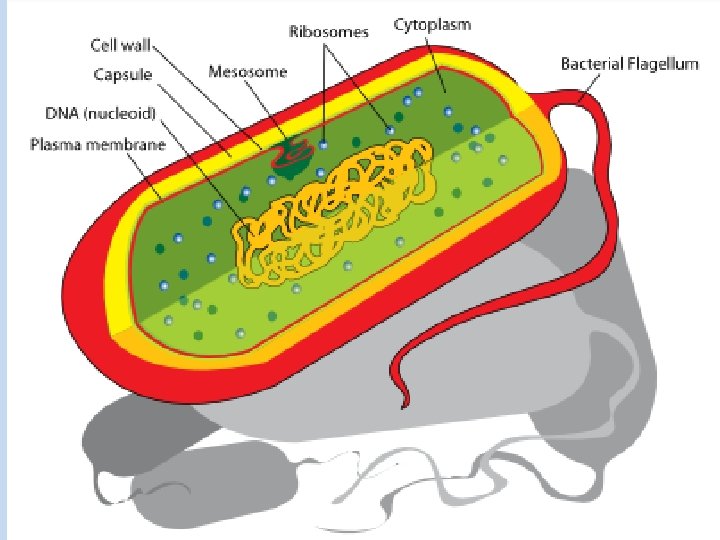
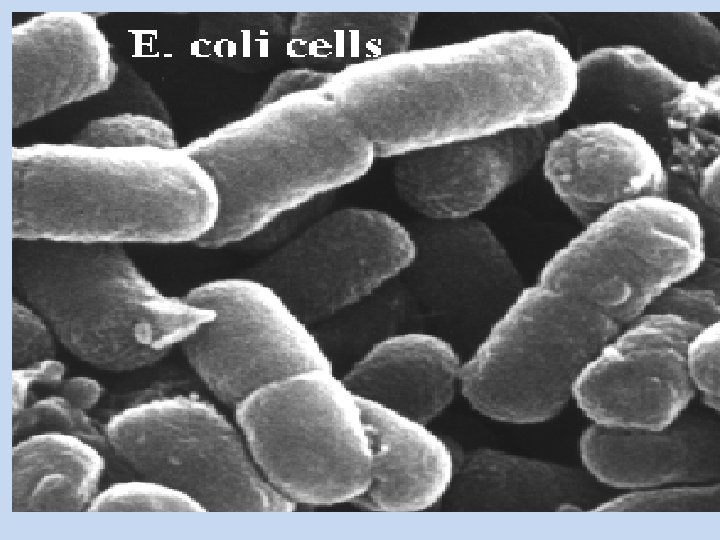
Chapter 7 Cellular Structure and Function 7. 1 Cell Discovery and Theory Basic Cell Types - All cells have a plasma membrane Prokaryotic Cell § Simple structure § Contains a plasma membrane § Does not contain membrane-bound organelles § No nucleus 11, 000 x

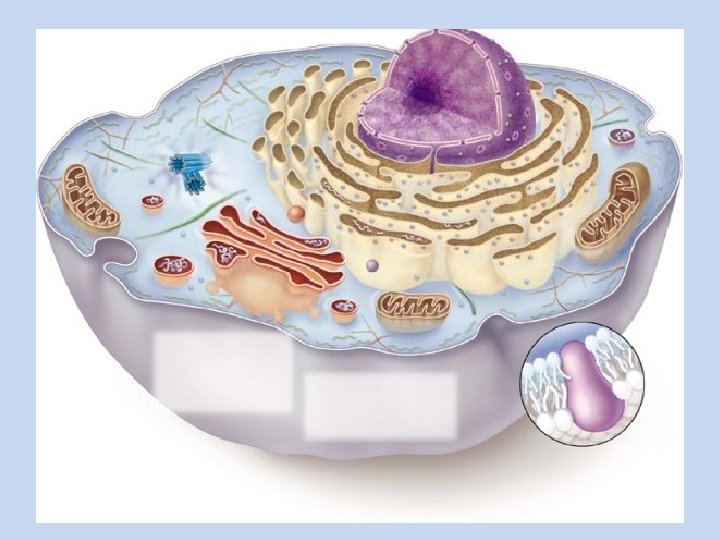
Chapter 7 Cellular Structure and Function 7. 1 Cell Discovery and Theory Eukaryotic Cell § More complex structure § Contains a plasma membrane § Membrane cell organelles
7. 2 The Plasma Membrane Objectives 1. Describe how a cell’s plasma membrane functions 2. Identify the roles of proteins, carbohydrates, and cholesterol in the plasma membrane

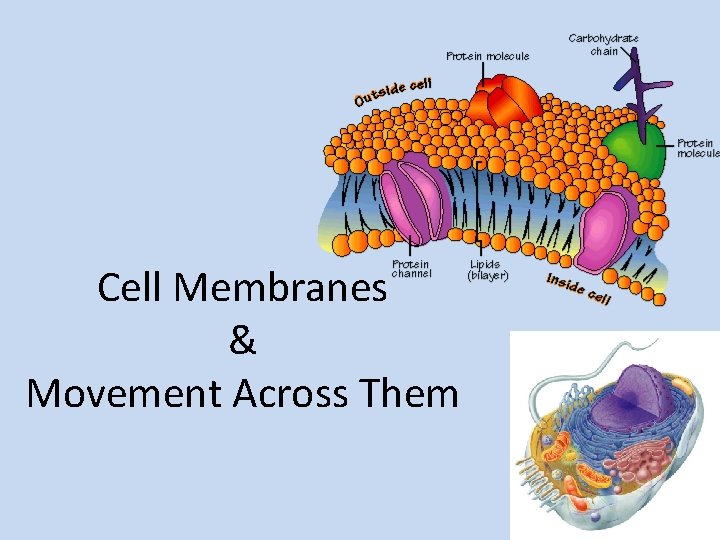
Chapter 7 Cellular Structure and Function 7. 2 The Plasma Membrane § Thin, flexible boundary between the cell and its environment
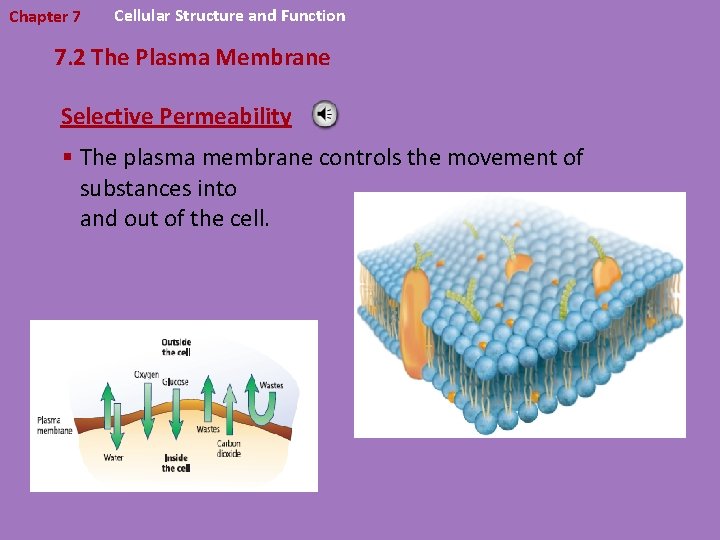
Chapter 7 Cellular Structure and Function 7. 2 The Plasma Membrane Selective Permeability § The plasma membrane controls the movement of substances into and out of the cell.
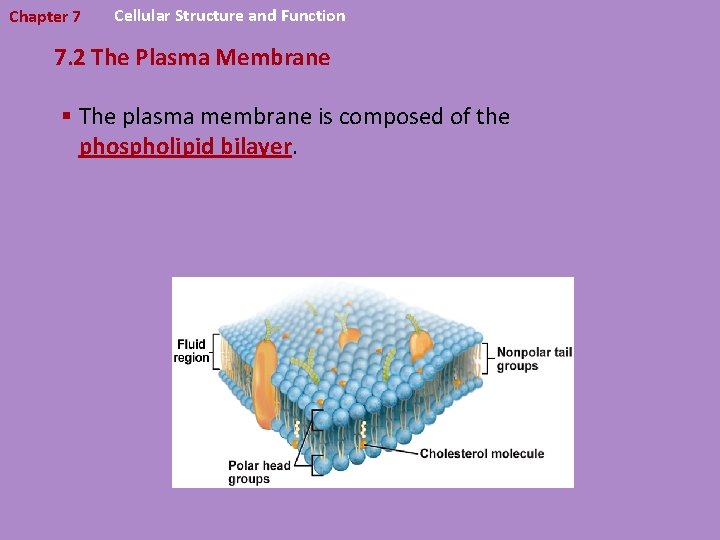
Chapter 7 Cellular Structure and Function 7. 2 The Plasma Membrane § The plasma membrane is composed of the phospholipid bilayer.

Chapter 7 Cellular Structure and Function 7. 2 The Plasma Membrane Fluid Mosaic Model § “float” in the membrane. Other Components § Proteins § Cholesterol § Carbohydrates

Chapter 7 Cellular Structure and Function 7. 2 The Plasma Membrane Proteins § Transmit signals inside the cell § support structure § Provide pathways for substances to enter and leave
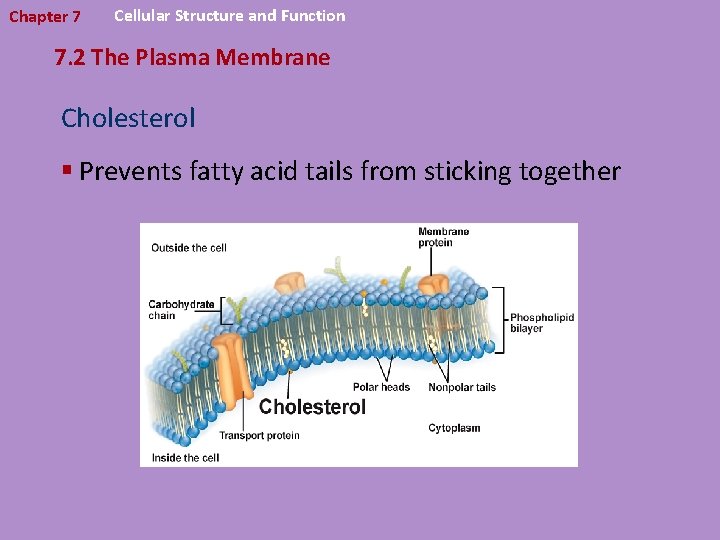
Chapter 7 Cellular Structure and Function 7. 2 The Plasma Membrane Cholesterol § Prevents fatty acid tails from sticking together
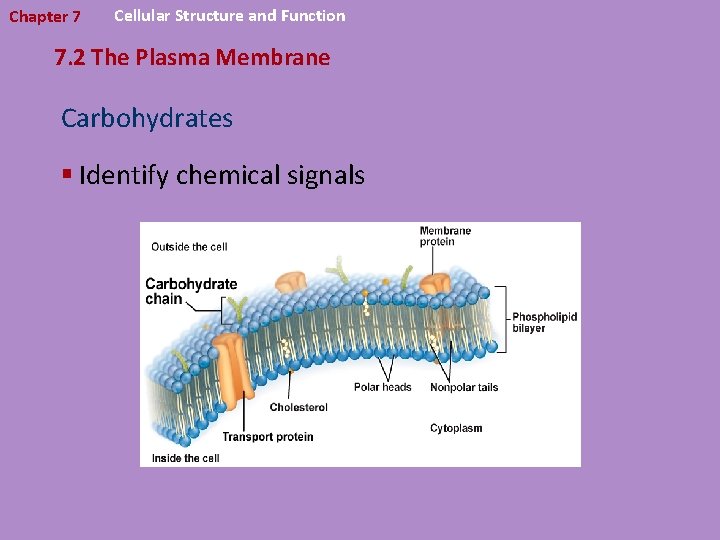
Chapter 7 Cellular Structure and Function 7. 2 The Plasma Membrane Carbohydrates § Identify chemical signals
• Plasma membrane
7. 3 Structures and Organelles Objectives 1. Identify the structure and function of the parts of a typical eukaryotic cell. 2. Compare and contrast structures of plant and animal cells.
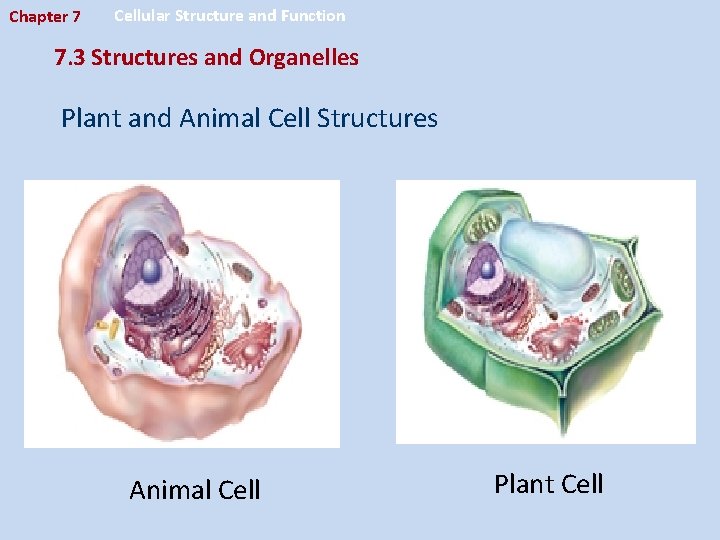
Chapter 7 Cellular Structure and Function 7. 3 Structures and Organelles Plant and Animal Cell Structures Animal Cell Plant Cell
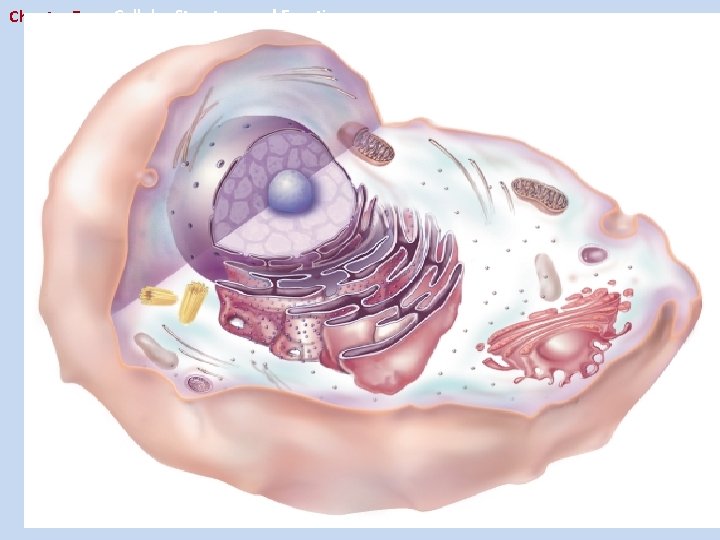
Chapter 7 Cellular Structure and Function 7. 3 Structures and Organelles
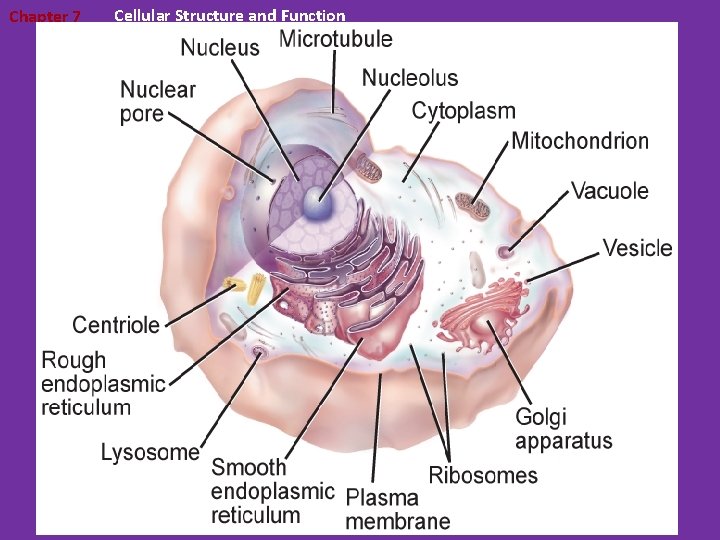
Chapter 7 Cellular Structure and Function 7. 3 Structures and Organelles
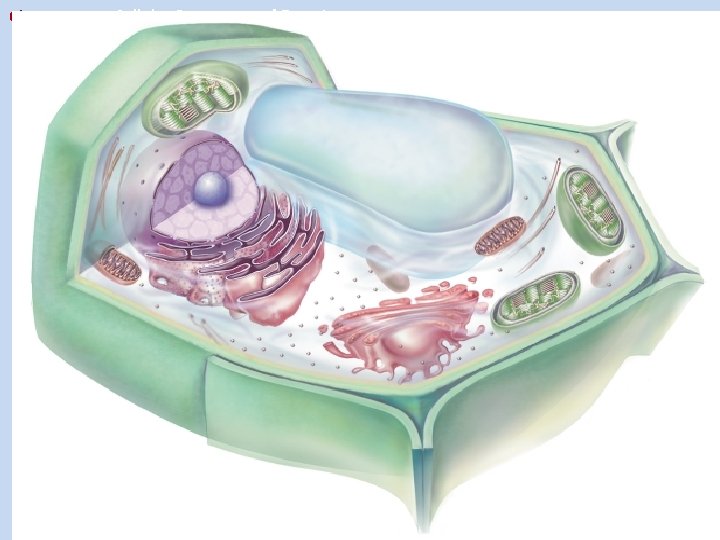
Chapter 7 Cellular Structure and Function 7. 3 Structures and Organelles
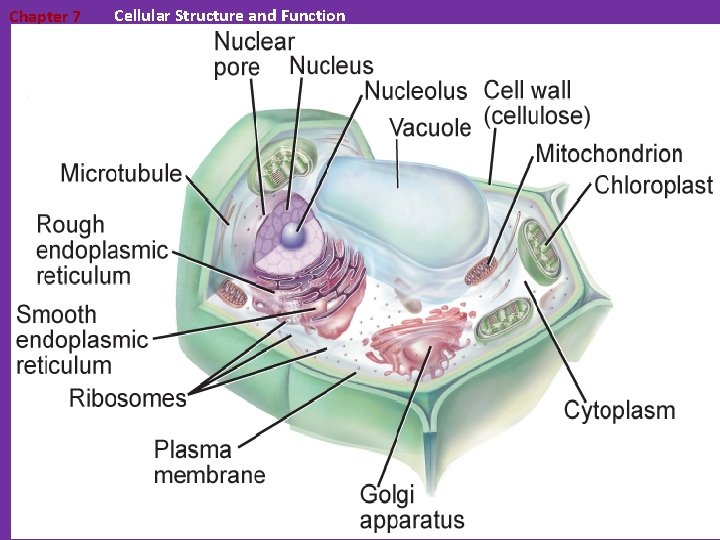
Chapter 7 Cellular Structure and Function 7. 3 Structures and Organelles
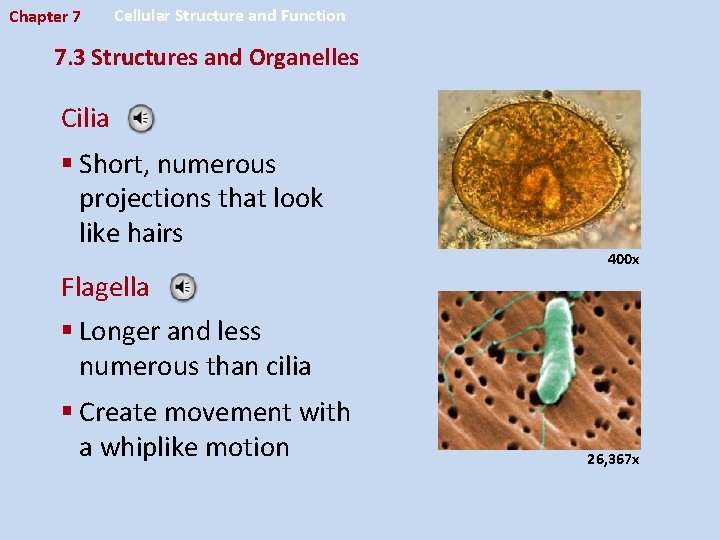
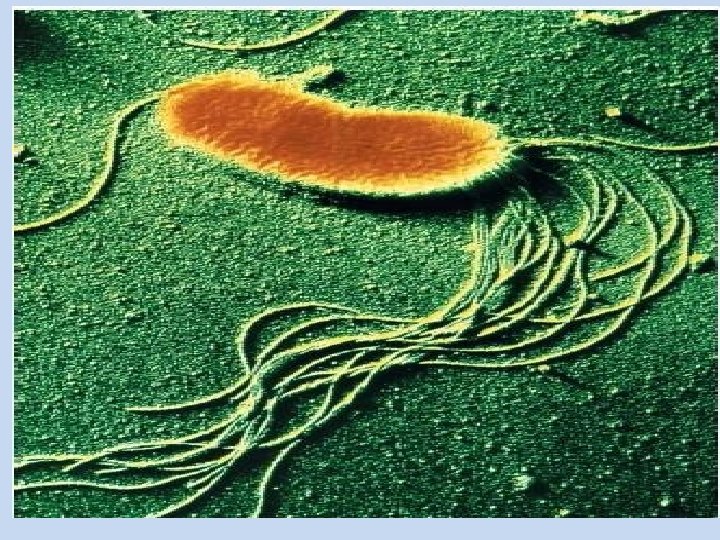
Chapter 7 Cellular Structure and Function 7. 3 Structures and Organelles Cilia § Short, numerous projections that look like hairs 400 x Flagella § Longer and less numerous than cilia § Create movement with a whiplike motion 26, 367 x
Summary of cell parts • http: //glencoe. mcgrawhill. com/olcweb/cgi/pluginpop. cgi? it=swf: : 550: : 400: : /sites/dl/free/ 0078695104/383931/Table 7_1 a. swf: : Summary%20 of%20 Cell%20 St ructures%20 -%20 A • http: //glencoe. mcgrawhill. com/olcweb/cgi/pluginpop. cgi? it=swf: : 550: : 400: : /sites/dl/free/ 0078695104/383931/Table 7_1 b. swf: : Summary%20 of%20 Cell%20 St ructures%20 -%20 B • http: //glencoe. mcgrawhill. com/olcweb/cgi/pluginpop. cgi? it=swf: : 550: : 400: : /sites/dl/free/ 0078695104/383931/Table 7_1 c. swf: : Summary%20 of%20 Cell%20 St ructures%20 -%20 C
7. 4 Cellular Transport Objectives 1. Explain the processes of diffusion, facilitated diffusion, and active transport 2. Predict the effect of a hypotonic, hypertonic, or isotonic solution on a cell 3. Discuss how large particles enter and exit cells
Cell Membranes & Movement Across Them 2006 -2007
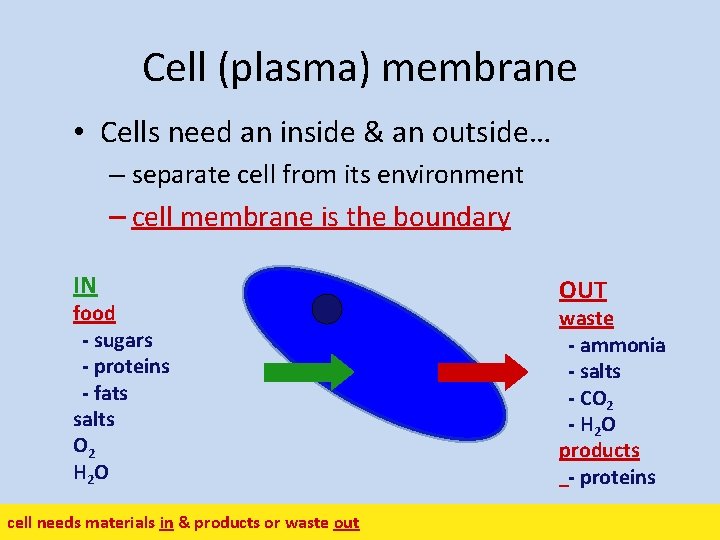
Cell (plasma) membrane • Cells need an inside & an outside… – separate cell from its environment – cell membrane is the boundary IN food - sugars - proteins - fats salts O 2 H 2 O cell needs materials in & products or waste out OUT waste - ammonia - salts - CO 2 - H 2 O products - proteins
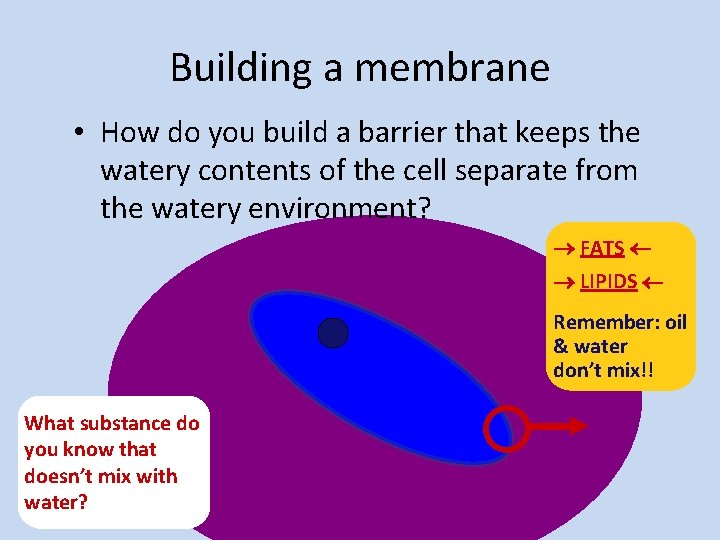
Building a membrane • How do you build a barrier that keeps the watery contents of the cell separate from the watery environment? FATS LIPIDS Remember: oil & water don’t mix!! What substance do you know that doesn’t mix with water?
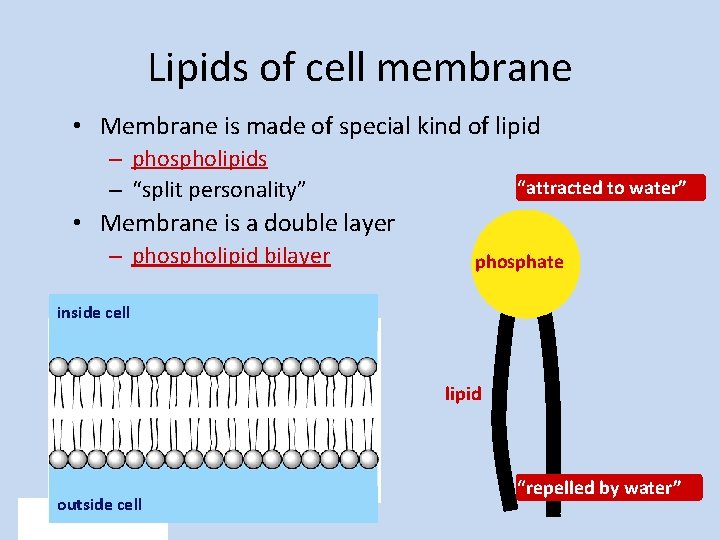
Lipids of cell membrane • Membrane is made of special kind of lipid – phospholipids – “split personality” “attracted to water” • Membrane is a double layer – phospholipid bilayer phosphate inside cell lipid outside cell “repelled by water”
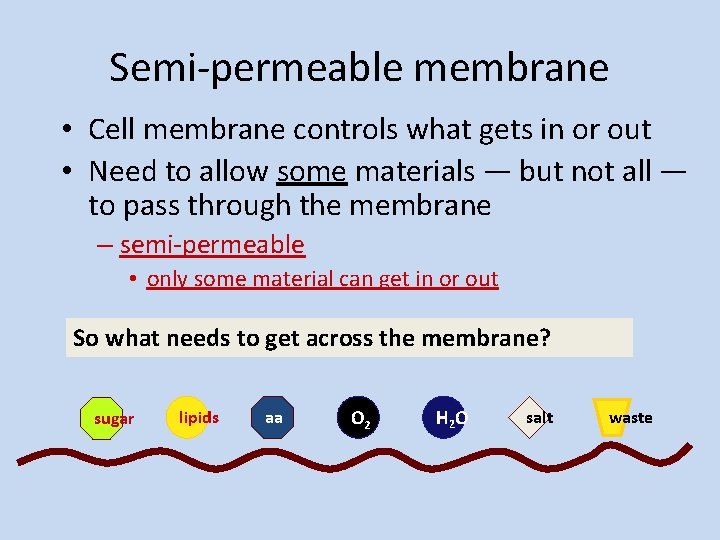
Semi-permeable membrane • Cell membrane controls what gets in or out • Need to allow some materials — but not all — to pass through the membrane – semi-permeable • only some material can get in or out So what needs to get across the membrane? sugar lipids aa O 2 H 2 O salt waste
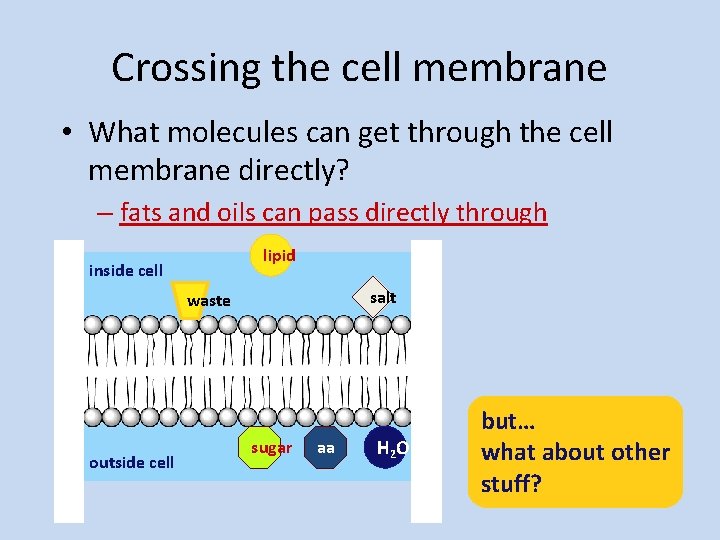
Crossing the cell membrane • What molecules can get through the cell membrane directly? – fats and oils can pass directly through lipid inside cell salt waste outside cell sugar aa H 2 O but… what about other stuff?
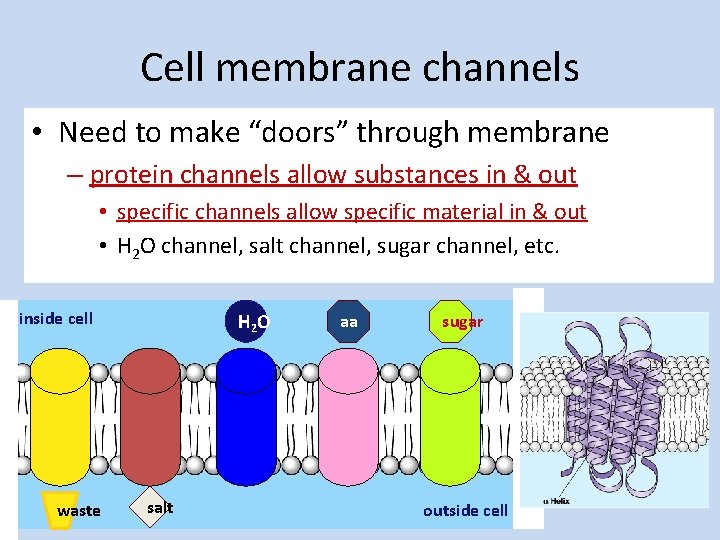
Cell membrane channels • Need to make “doors” through membrane – protein channels allow substances in & out • specific channels allow specific material in & out • H 2 O channel, salt channel, sugar channel, etc. inside cell waste H 2 O salt aa sugar outside cell
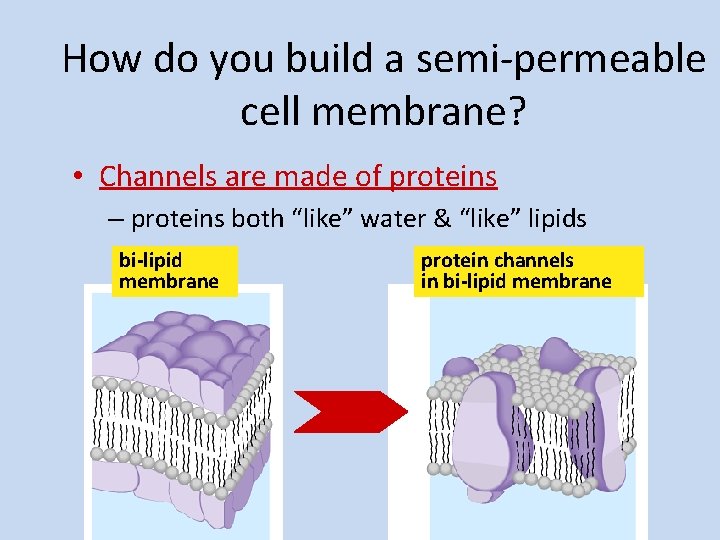
How do you build a semi-permeable cell membrane? • Channels are made of proteins – proteins both “like” water & “like” lipids bi-lipid membrane protein channels in bi-lipid membrane
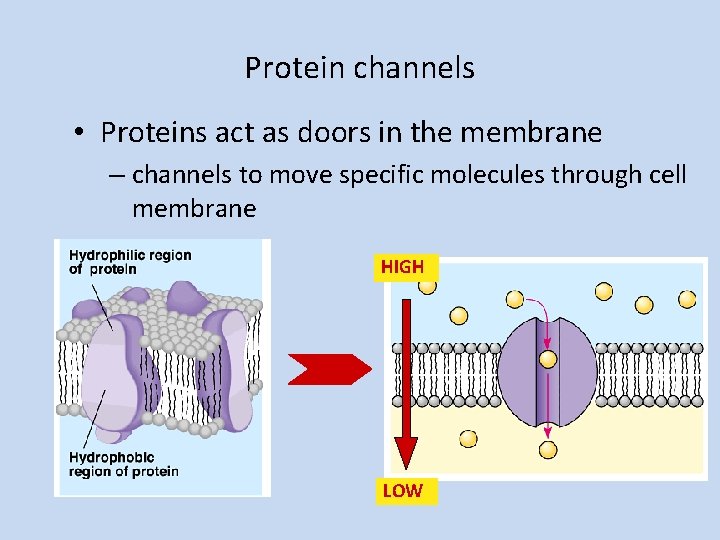
Protein channels • Proteins act as doors in the membrane – channels to move specific molecules through cell membrane HIGH LOW
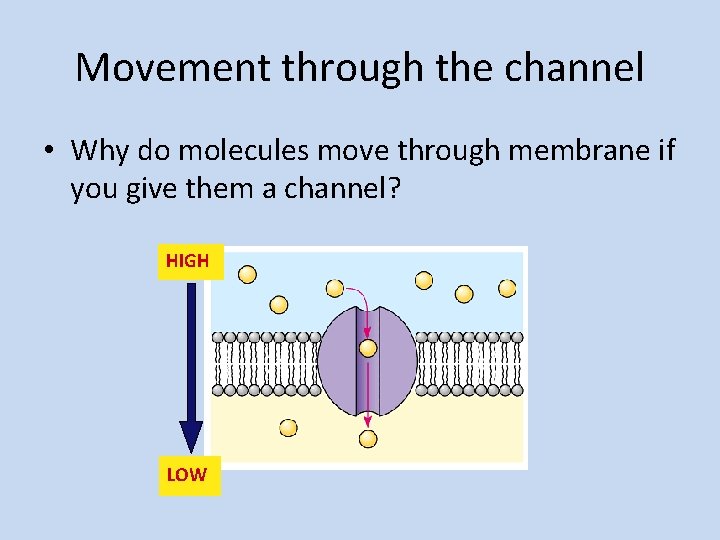
Movement through the channel • Why do molecules move through membrane if you give them a channel? HIGH ? LOW ?
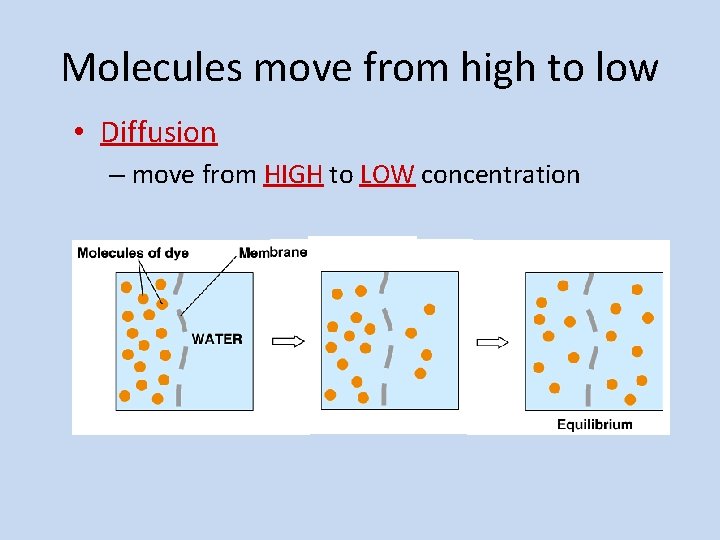
Molecules move from high to low • Diffusion – move from HIGH to LOW concentration
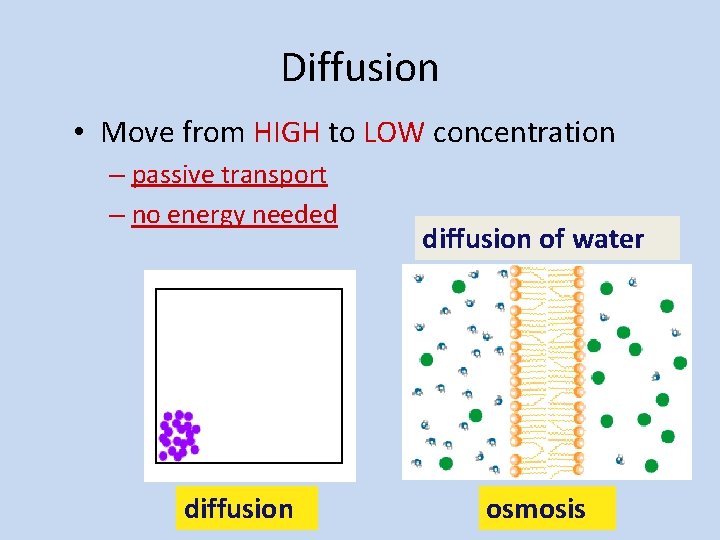
Diffusion • Move from HIGH to LOW concentration – passive transport – no energy needed diffusion of water osmosis
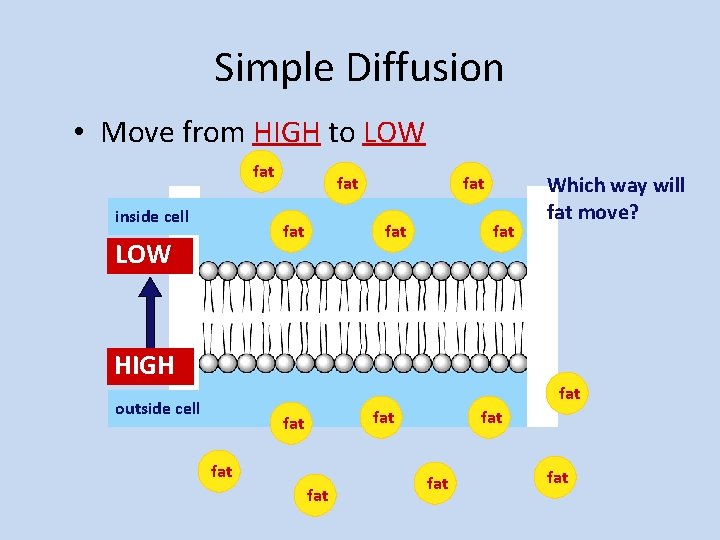
Simple Diffusion • Move from HIGH to LOW fat inside cell fat LOW fat fat Which way will fat move? HIGH fat outside cell fat fat
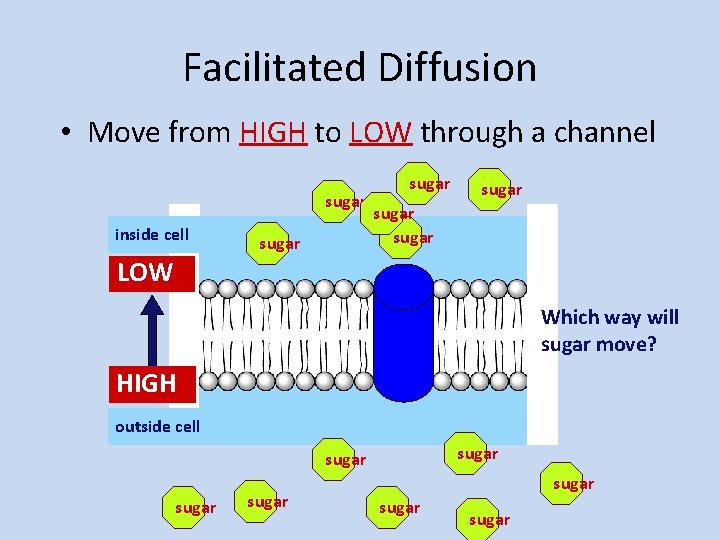
Facilitated Diffusion • Move from HIGH to LOW through a channel sugar inside cell sugar sugar LOW Which way will sugar move? HIGH outside cell sugar sugar
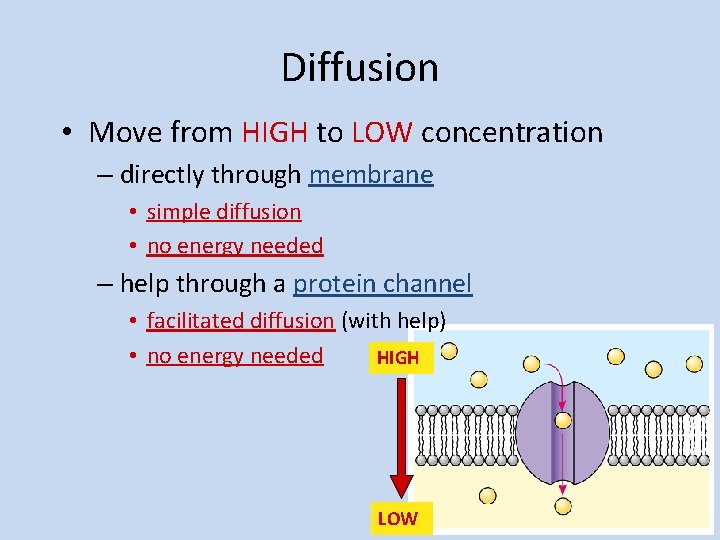
Diffusion • Move from HIGH to LOW concentration – directly through membrane • simple diffusion • no energy needed – help through a protein channel • facilitated diffusion (with help) • no energy needed HIGH LOW
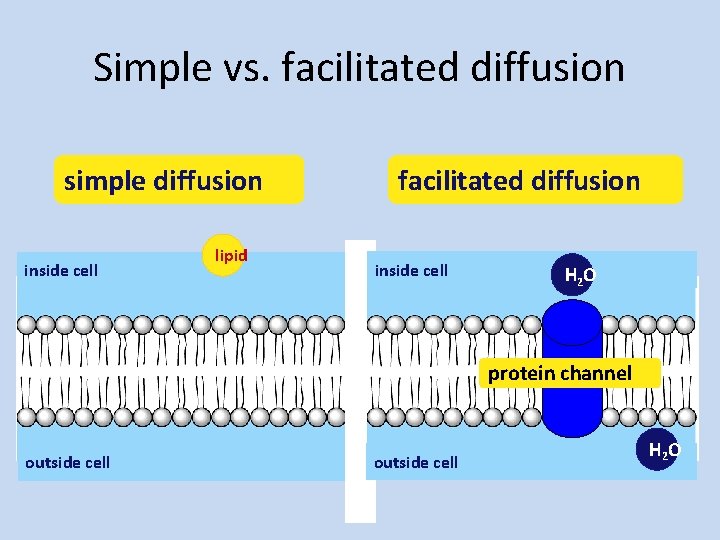
Simple vs. facilitated diffusion simple diffusion inside cell lipid facilitated diffusion inside cell H 2 O protein channel outside cell H 2 O
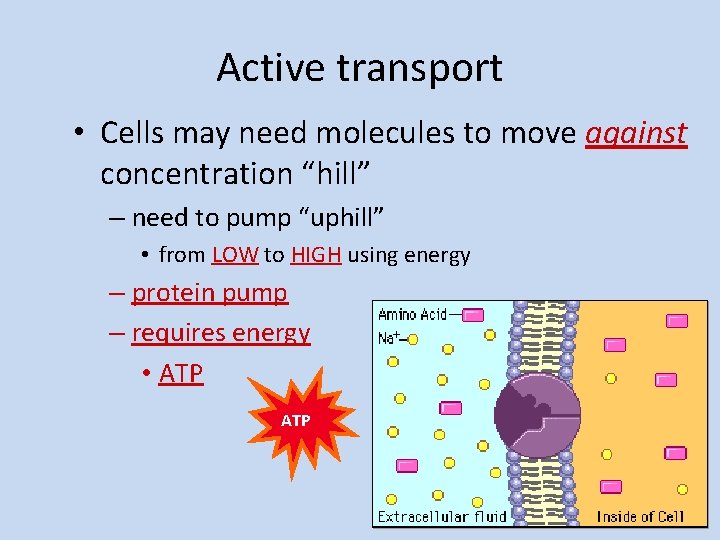
Active transport • Cells may need molecules to move against concentration “hill” – need to pump “uphill” • from LOW to HIGH using energy – protein pump – requires energy • ATP
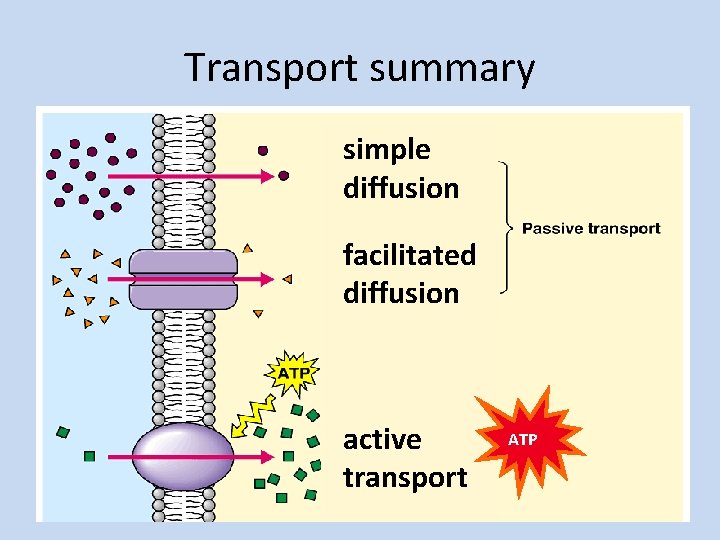
Transport summary simple diffusion facilitated diffusion active transport ATP
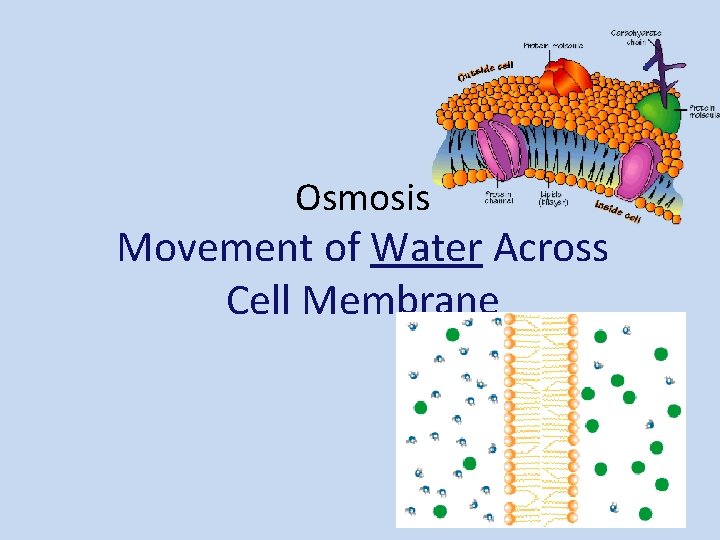
Osmosis Movement of Water Across Cell Membrane 2006 -2007
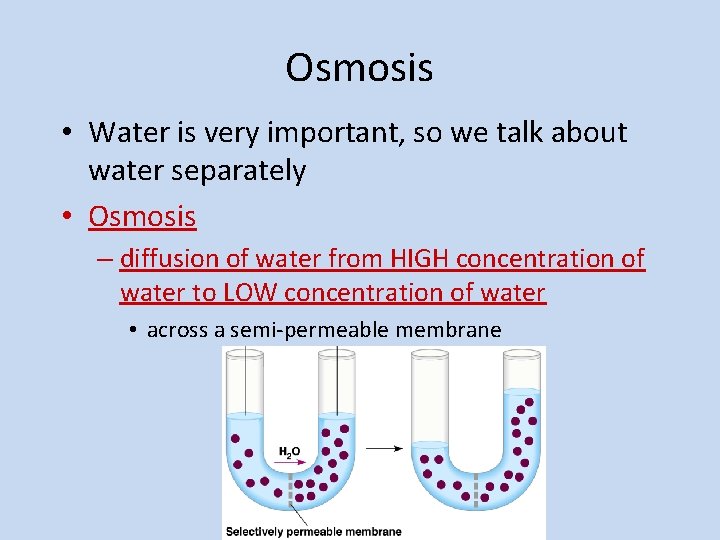
Osmosis • Water is very important, so we talk about water separately • Osmosis – diffusion of water from HIGH concentration of water to LOW concentration of water • across a semi-permeable membrane
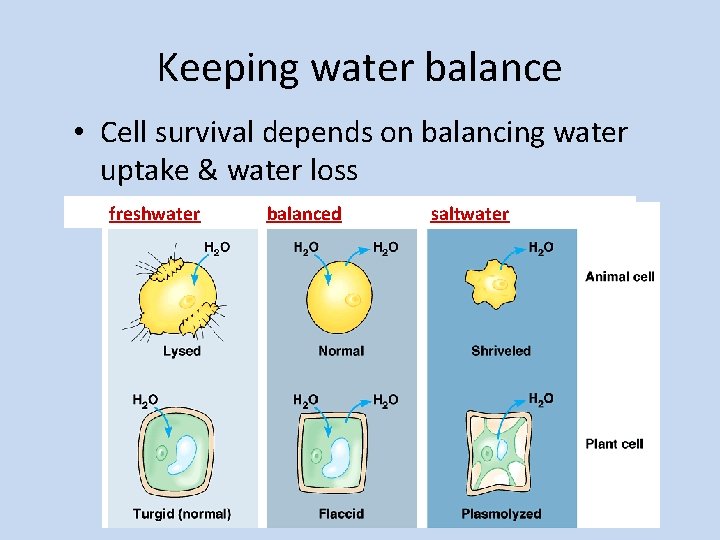
Keeping water balance • Cell survival depends on balancing water uptake & water loss freshwater balanced saltwater
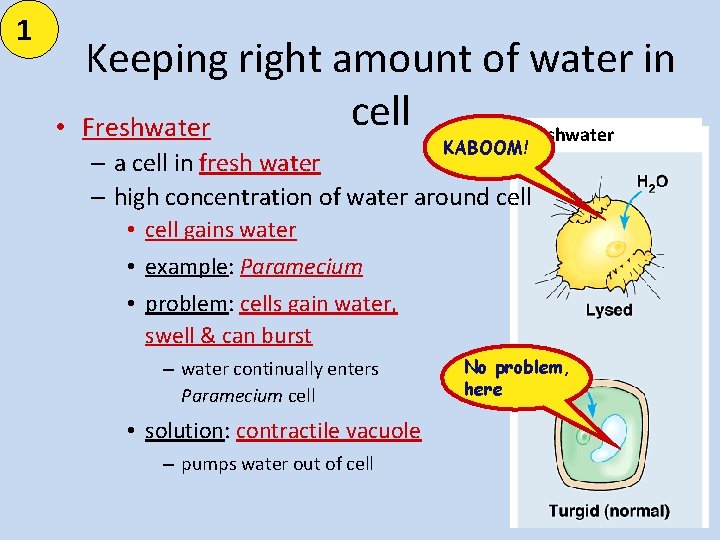
1 • Keeping right amount of water in cell Freshwater freshwater KABOOM! – a cell in fresh water – high concentration of water around cell • cell gains water • example: Paramecium • problem: cells gain water, swell & can burst – water continually enters Paramecium cell • solution: contractile vacuole – pumps water out of cell No problem, here
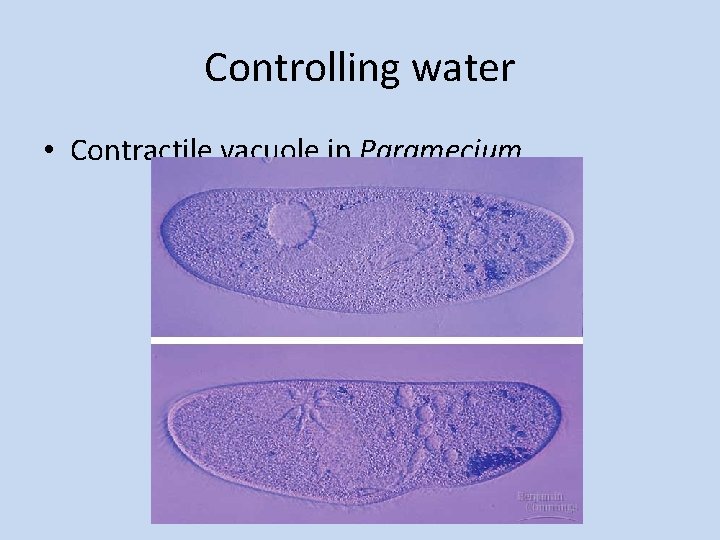
Controlling water • Contractile vacuole in Paramecium
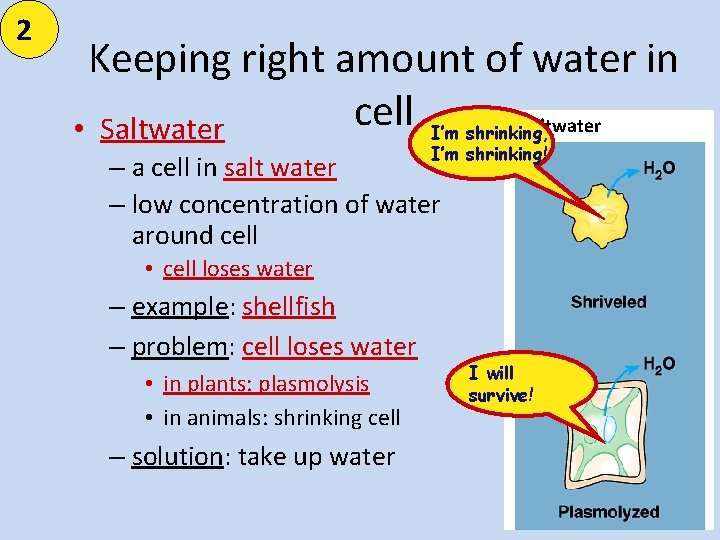
2 Keeping right amount of water in cell I’m shrinking, saltwater • Saltwater I’m shrinking! – a cell in salt water – low concentration of water around cell • cell loses water – example: shellfish – problem: cell loses water • in plants: plasmolysis • in animals: shrinking cell – solution: take up water I will survive!
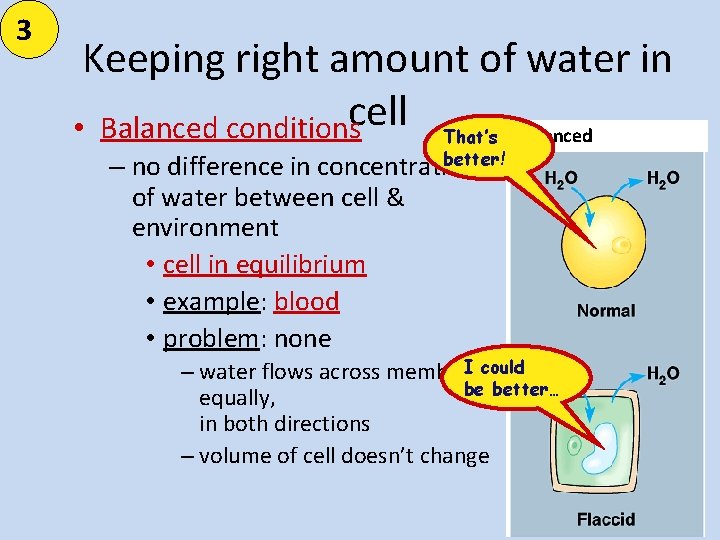
3 Keeping right amount of water in • Balanced conditionscell That’s balanced better! – no difference in concentration of water between cell & environment • cell in equilibrium • example: blood • problem: none I could – water flows across membrane be better… equally, in both directions – volume of cell doesn’t change
Ice Fishing in Barrow
- Slides: 58