
CELL STRUCTURE AND FUNCTIONS Cell Types Prokaryotic has
- Slides: 15
CELL STRUCTURE AND FUNCTIONS
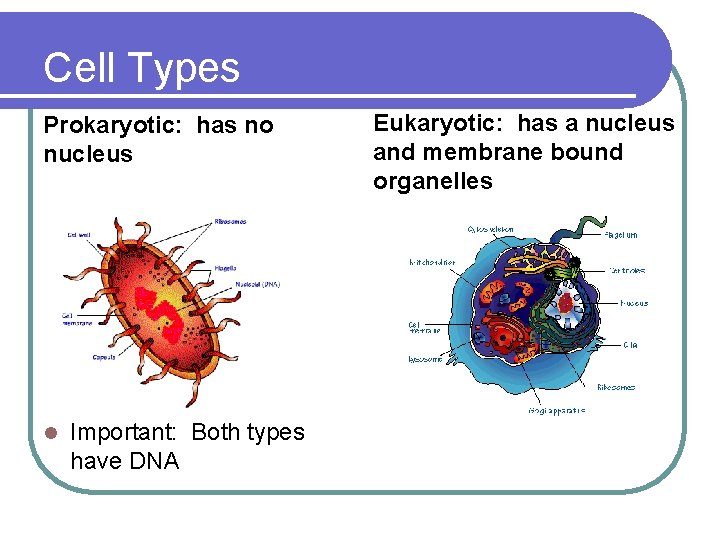
Cell Types Prokaryotic: has no nucleus l Important: Both types have DNA Eukaryotic: has a nucleus and membrane bound organelles
Common factors in all cells! l Cell Membrane l Cytoplasm l DNA (the genetic code)
Organelle l “little organs” l A subunit in a cell that has a special function
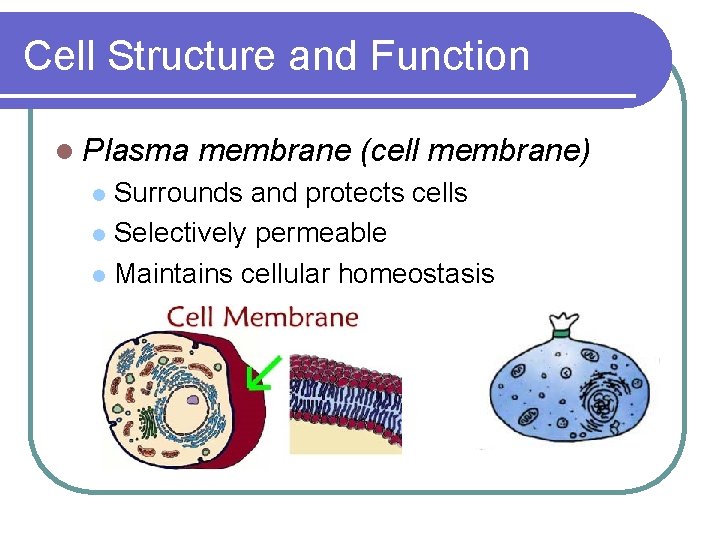
Cell Structure and Function l Plasma membrane (cell membrane) Surrounds and protects cells l Selectively permeable l Maintains cellular homeostasis l
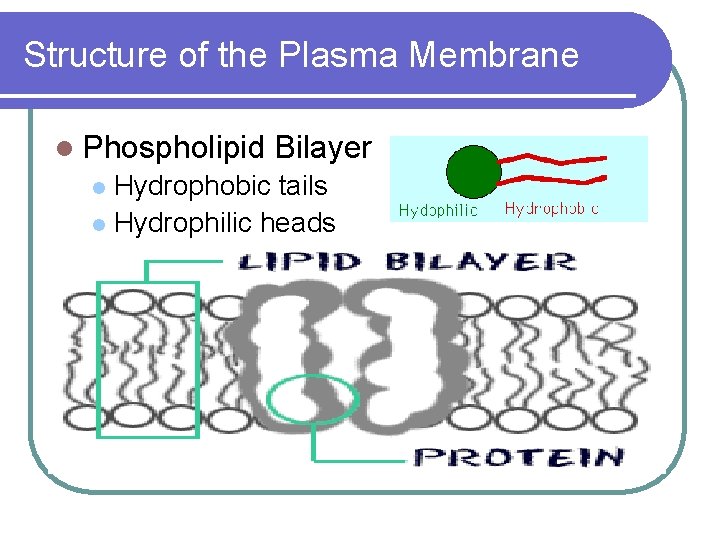
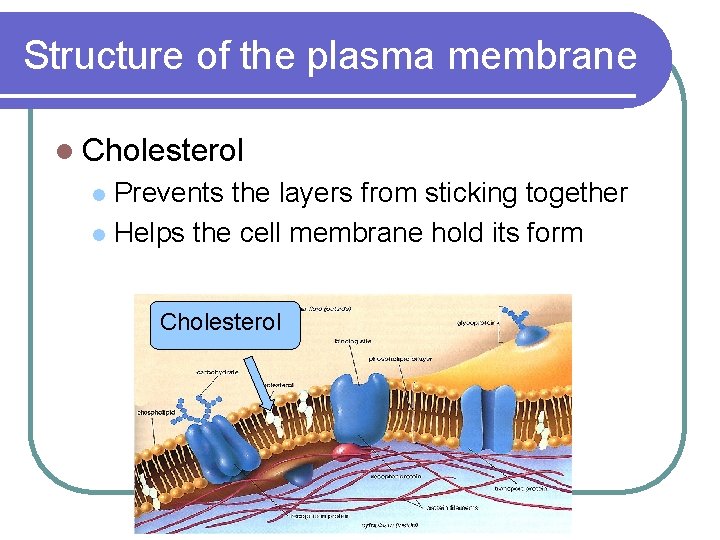
Structure of the Plasma Membrane l Phospholipid Bilayer Hydrophobic tails l Hydrophilic heads l l Embedded and surface proteins Transport l Cell cell identification l l Cholesterol l Prevents fatty acid chains from sticking together
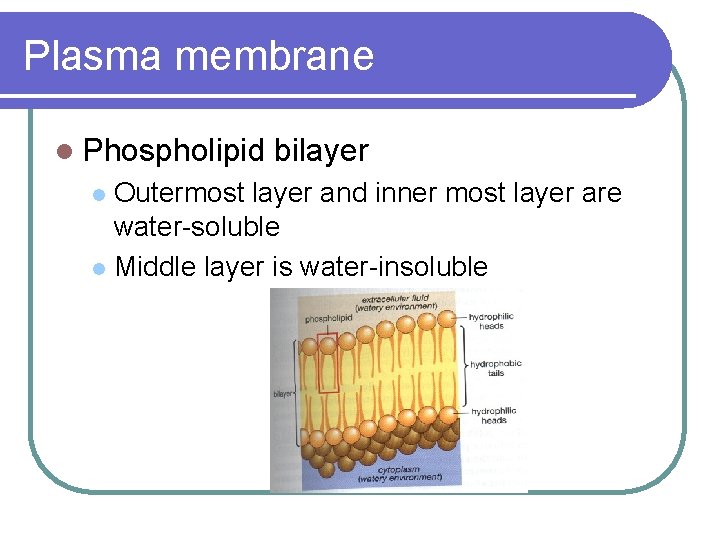
Plasma membrane l Phospholipid bilayer Outermost layer and inner most layer are water-soluble l Middle layer is water-insoluble l
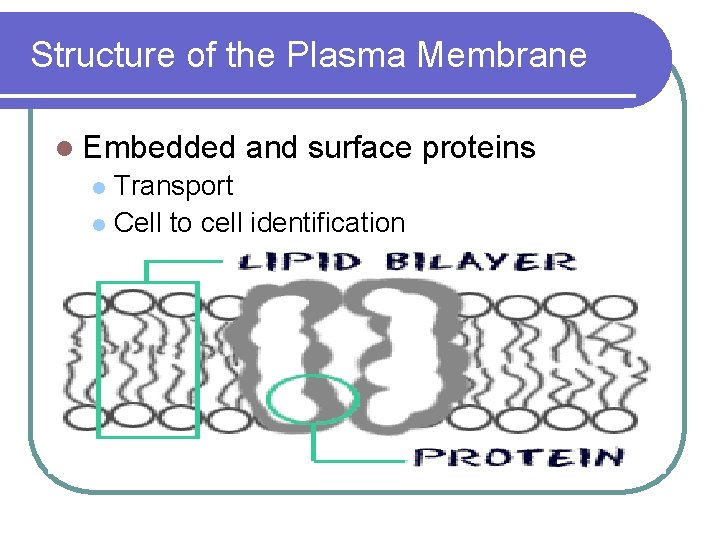
Structure of the Plasma Membrane l Embedded and surface proteins Transport l Cell to cell identification l l Cholesterol l Prevents fatty acid chains from sticking together
Structure of the plasma membrane l Cholesterol Prevents the layers from sticking together l Helps the cell membrane hold its form l Cholesterol
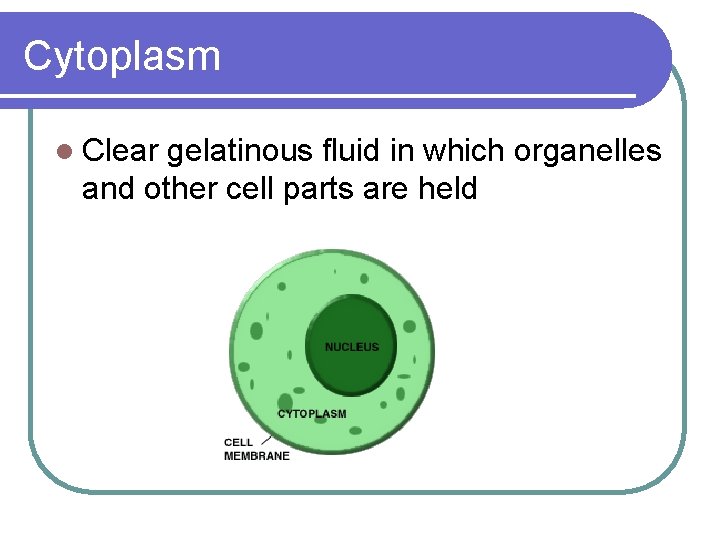
Cytoplasm l Clear gelatinous fluid in which organelles and other cell parts are held
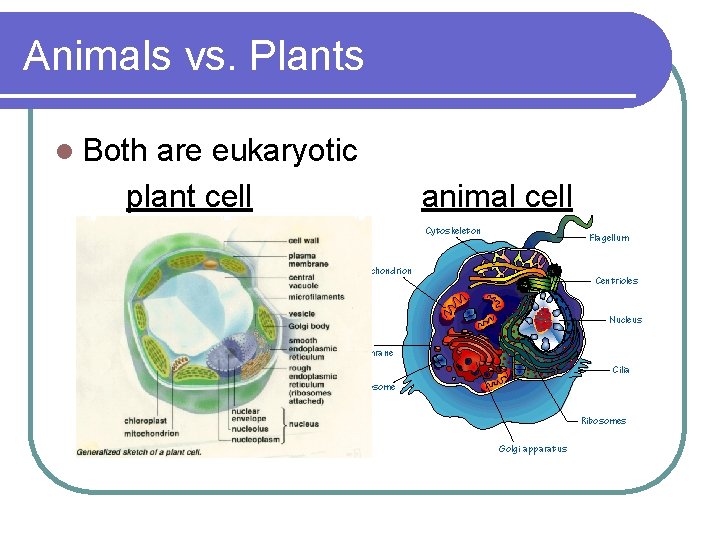
Animals vs. Plants l Both are eukaryotic plant cell animal cell
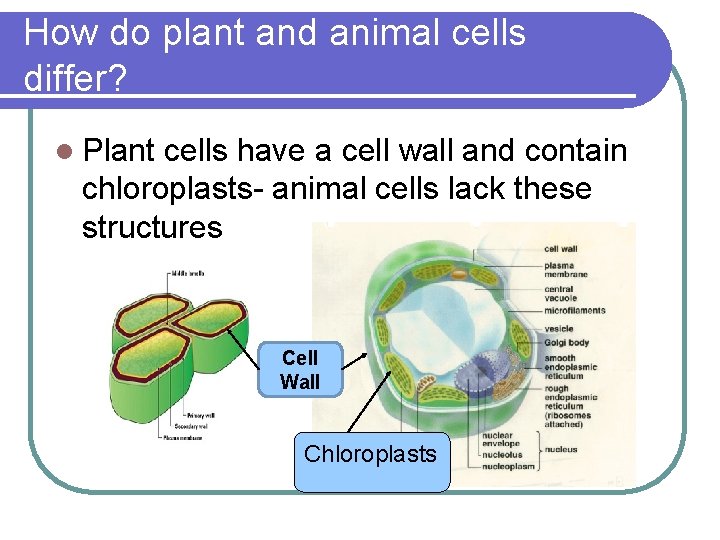
How do plant and animal cells differ? l Plant cells have a cell wall and contain chloroplasts- animal cells lack these structures Cell Wall Chloroplasts
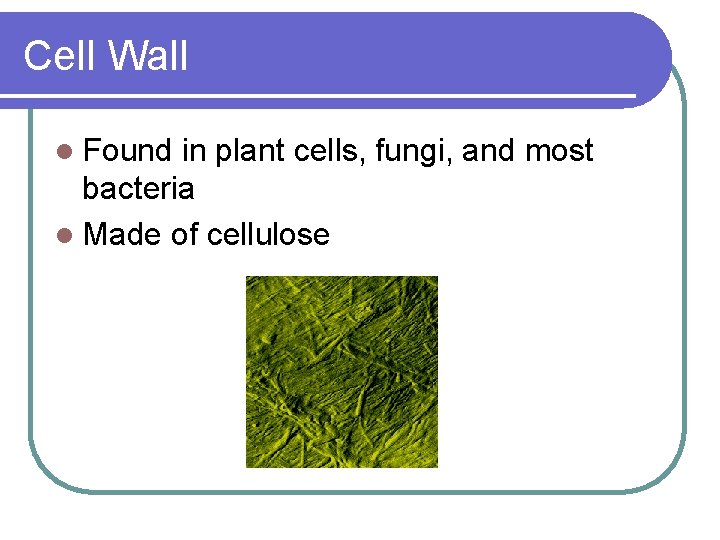
Cell Wall l Found in plant cells, fungi, and most bacteria l Made of cellulose
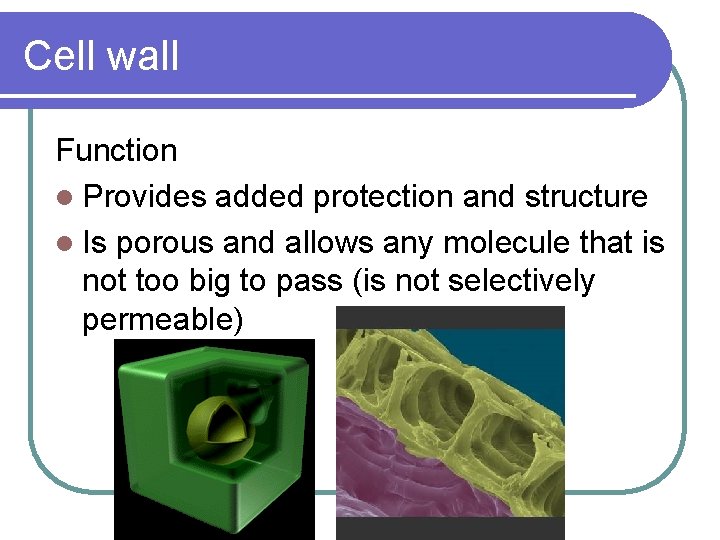
Cell wall Function l Provides added protection and structure l Is porous and allows any molecule that is not too big to pass (is not selectively permeable)
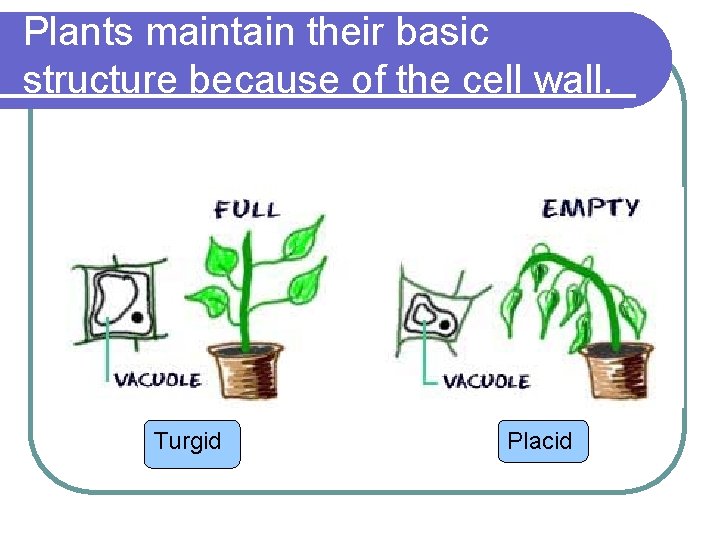
Plants maintain their basic structure because of the cell wall. Turgid Placid