
Cell Structure and Function What is a cell




- Slides: 21
Cell Structure and Function
What is a cell? n n n Smallest particle or building block of life Made up of four elements – (CHON) Majority of structure is protein Vary in size (2 micrometers to over a meter) Shape controls function Example: white blood cells destroy bacteria
What is Cytology? The study of the structure and the function of cells.
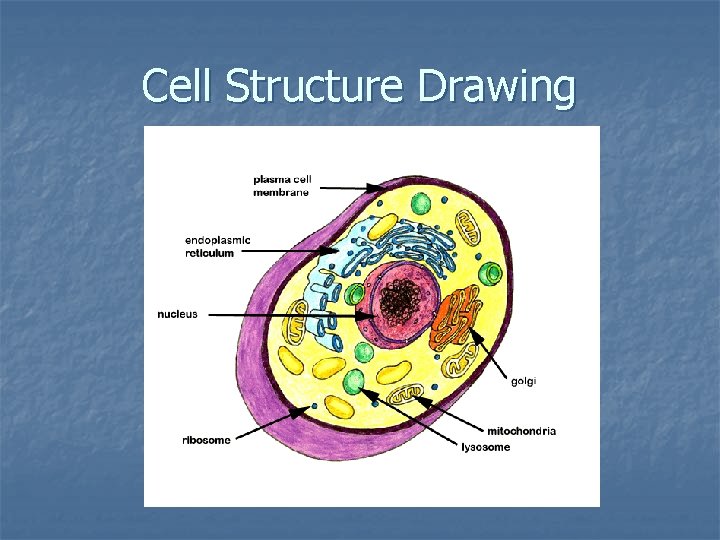
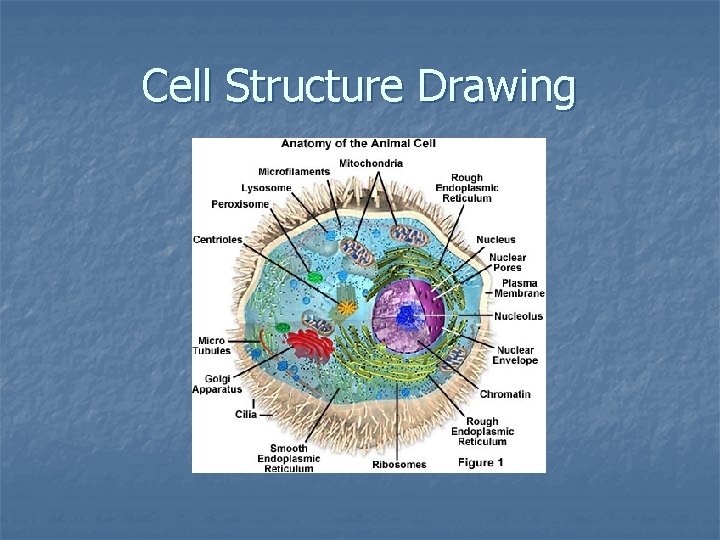
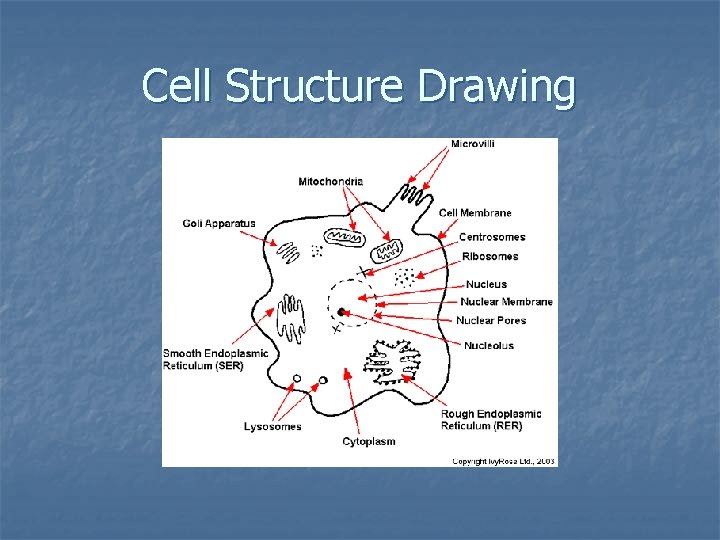
What is the main structure of a cell? n n n Nucleus - contains DNA Plasma membrane - lipid bilayer barrier that separates the inside with outside environment of the cell Cytoplasm – cellular material outside the nucleus and inside the plasma membrane
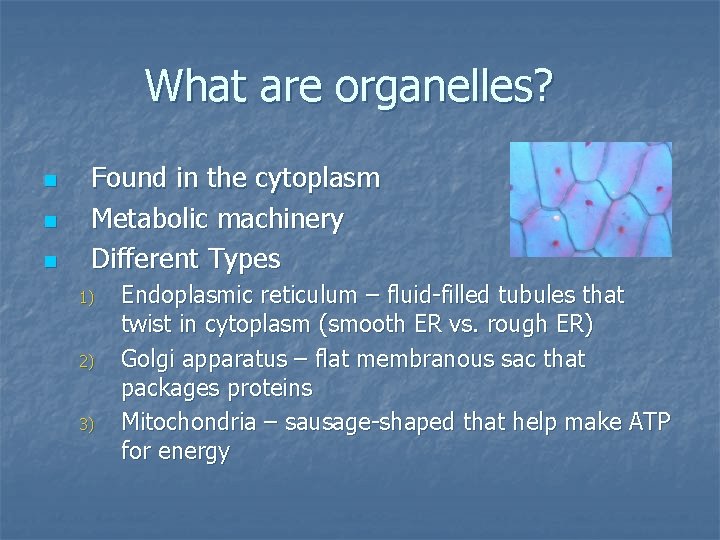
What are organelles? n n n Found in the cytoplasm Metabolic machinery Different Types 1) 2) 3) Endoplasmic reticulum – fluid-filled tubules that twist in cytoplasm (smooth ER vs. rough ER) Golgi apparatus – flat membranous sac that packages proteins Mitochondria – sausage-shaped that help make ATP for energy
What are the organelles? 1) 2) 3) 4) 5) Ribosomes – tiny, round proteins that allow protein synthesis Lysosomes – membrane bags that have digestive enzymes to get rid of foreign substances Peroxisomes – membranous sacs that use oxygen to get rid of harmful substances Cytoskeleton – network of protein structures that gives internal framework Centrioles – rod-shaped bodies that form the mitotic spindle during cell division
Cell Structure Drawing
Cell Structure Drawing
Cell Structure Drawing
What are the main functions of the cell? n n n n Metabolize Digest foods Get rid of wastes Reproduce Grow Move Respond to a stimulus (irritability)
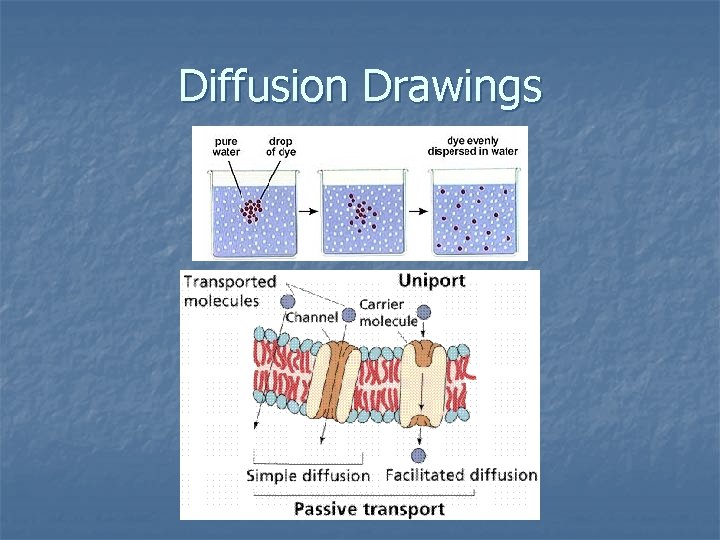
What are two types of membrane transport? 1. Passive transport – no energy is needed to transport substances through cell membrane a) b) diffusion – particles that are in random motion and move to an area where there is less particles filtration – water and solutes are forced through a membrane by fluid or hydrostatic pressure
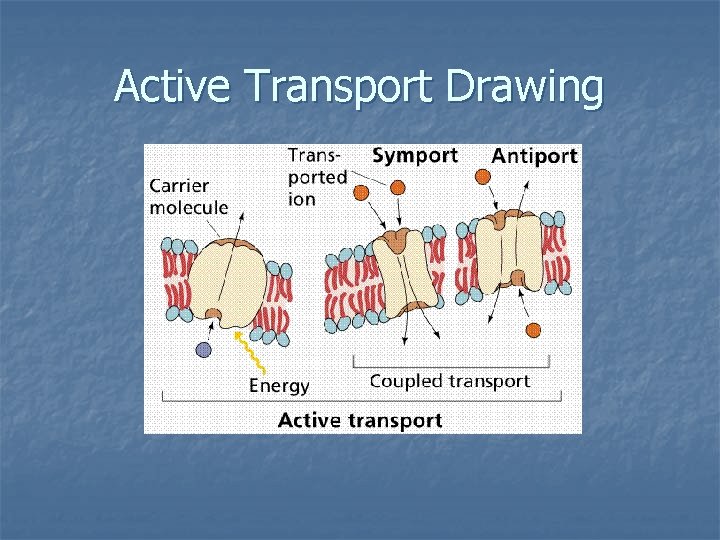
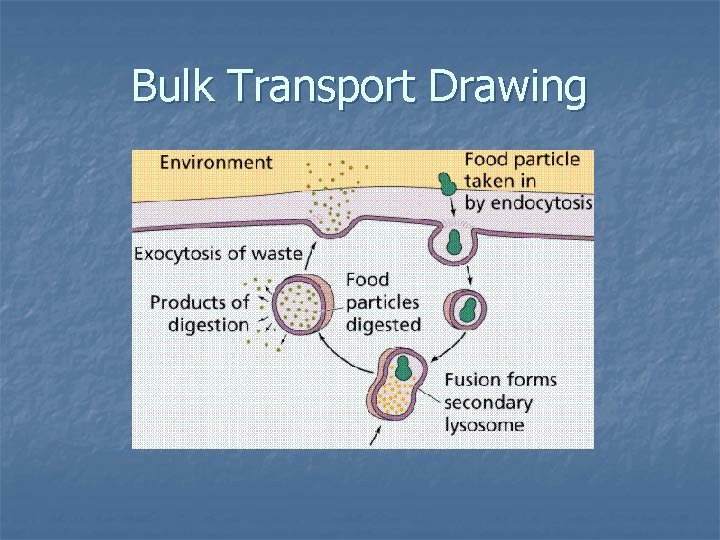
What are two types of membrane transport? 2. Active transport – the use of ATP (energy) to move substances across the membrane a) b) solute pumping – the use of protein solute pumps to get substances across membrane (sodium-potassium pump) bulk transport – endocytosis (phagocytosis) vs. exocytosis
What are the types of diffusion? n n n Simple diffusion – no assistance is needed to get particles or solutes across the plasma membrane Osmosis – the movement of water across the plasma membrane Facilitated diffusion – proteins in the plasma membrane are needed to get certain substances (glucose) across
Diffusion Drawings
Active Transport Drawing
Sodium-Potassium Pump Drawings
Bulk Transport Drawing
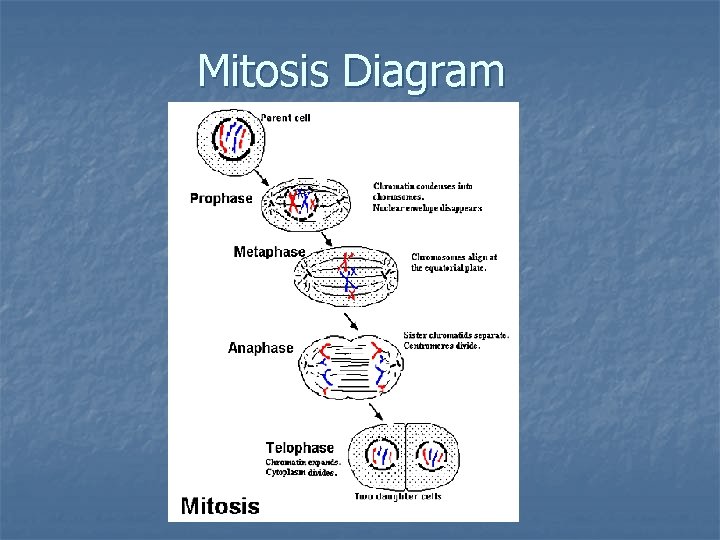
What is cell division? n n Interphase – cell growth & metabolic activity Cell division (2 parts) a) b) Mitosis – 4 phases (prophase, metaphase, anaphase, telophase) Cytokinesis – division of the cytoplasm to make two daughter cells
Mitosis Diagram
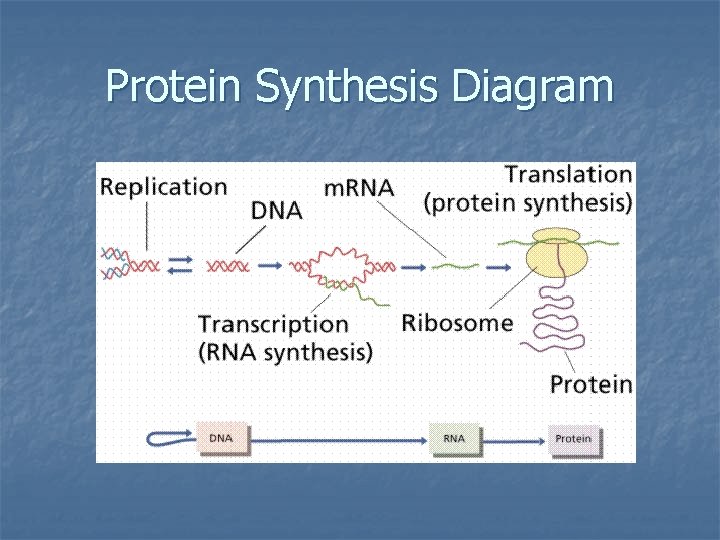
What is protein synthesis? n n Need DNA (genes) Need RNA 1) 2) 3) n m. RNA t. RNA r. RNA Two Steps (2 T’s) 1. 2. transcription – DNA is copied into m. RNA translation – m. RNA is decoded to make proteins
Protein Synthesis Diagram