
Cell Structure and Function New Textbook Chapter 2
Cell Structure and Function New Textbook Chapter 2 -Pg. 38 Old Textbook Chapter 3 -Pg. 58
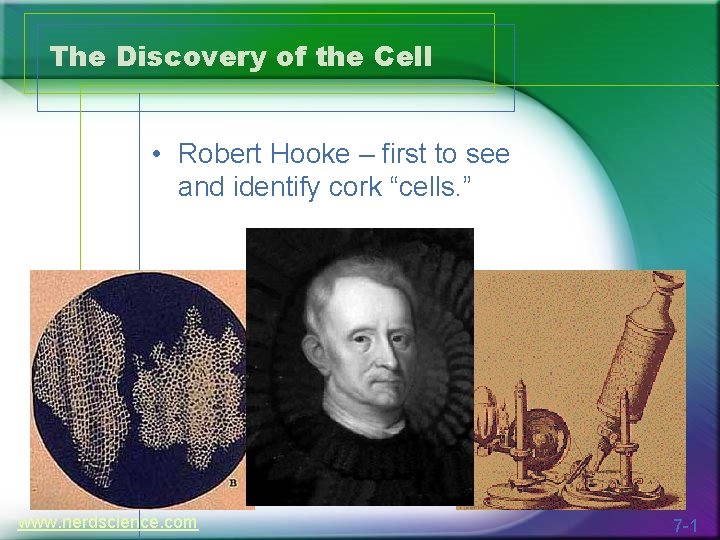
The Discovery of the Cell • Robert Hooke – first to see and identify cork “cells. ” www. nerdscience. com 7 -1
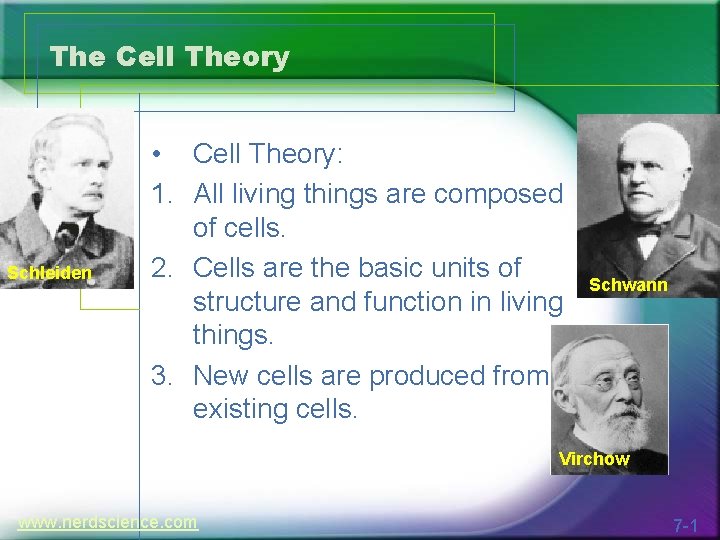
The Cell Theory Schleiden • Cell Theory: 1. All living things are composed of cells. 2. Cells are the basic units of structure and function in living things. 3. New cells are produced from existing cells. Schwann Virchow www. nerdscience. com 7 -1
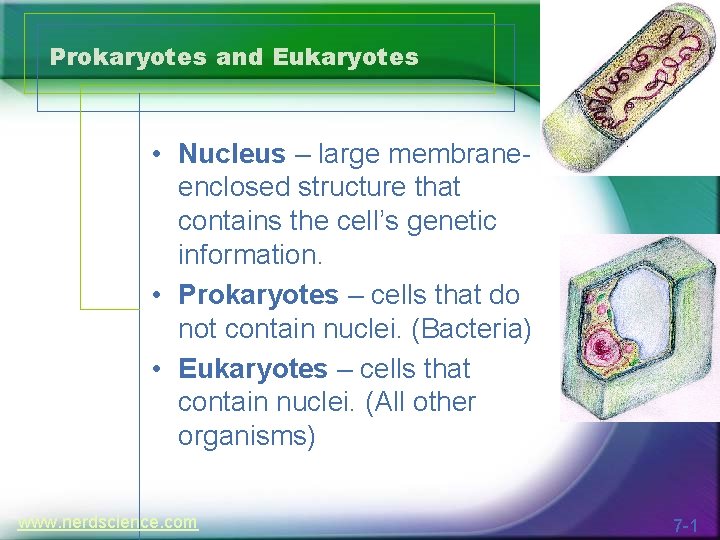
Prokaryotes and Eukaryotes • Nucleus – large membraneenclosed structure that contains the cell’s genetic information. • Prokaryotes – cells that do not contain nuclei. (Bacteria) • Eukaryotes – cells that contain nuclei. (All other organisms) www. nerdscience. com 7 -1
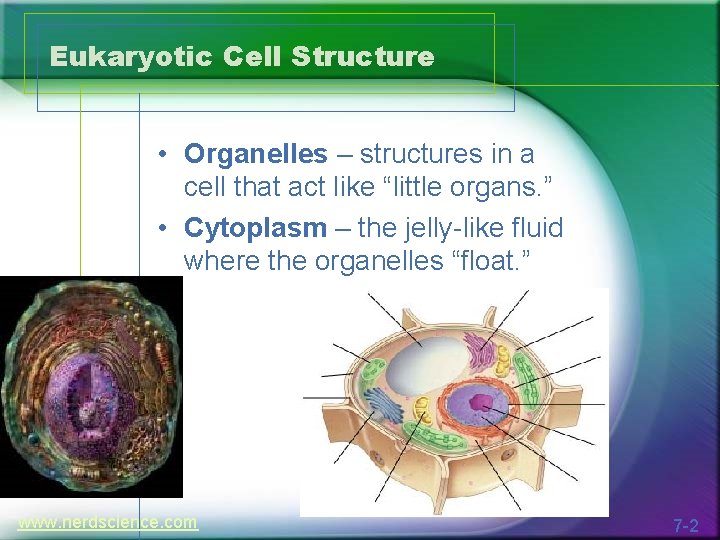
Eukaryotic Cell Structure • Organelles – structures in a cell that act like “little organs. ” • Cytoplasm – the jelly-like fluid where the organelles “float. ” www. nerdscience. com 7 -2
Inside the Nucleus • Nuclear Envelope – membrane that surrounds the nucleus. • Chromatin – consists of DNA wrapped around proteins. “Ball of string” • Chromosomes – condensed stringlike structure that forms from DNA just before the cell divides. • Nucleolus – structure within the nucleus that makes ribosomes. www. nerdscience. com 7 -2
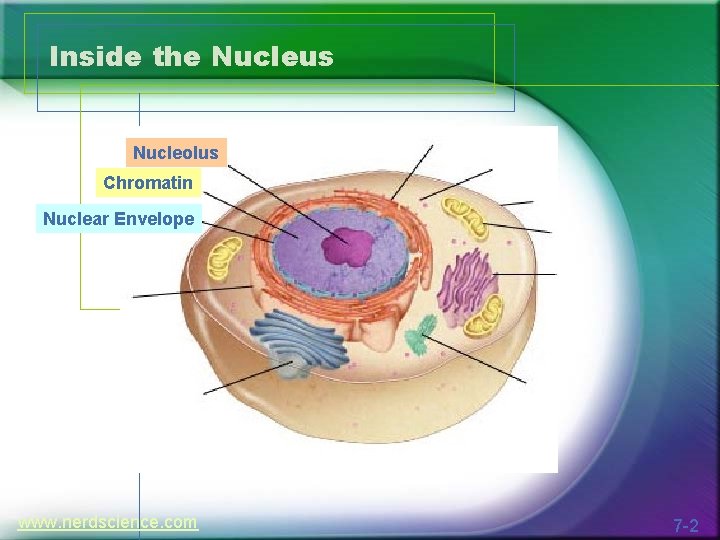
Inside the Nucleus Nucleolus Chromatin Nuclear Envelope www. nerdscience. com 7 -2
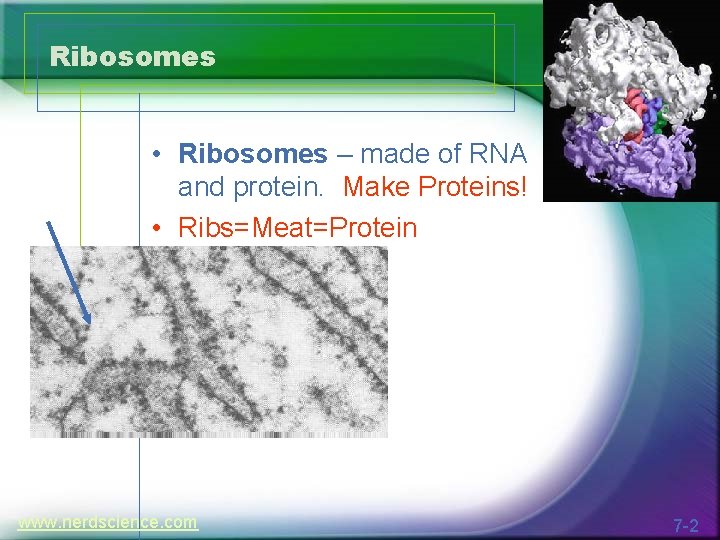
Ribosomes • Ribosomes – made of RNA and protein. Make Proteins! • Ribs=Meat=Protein www. nerdscience. com 7 -2
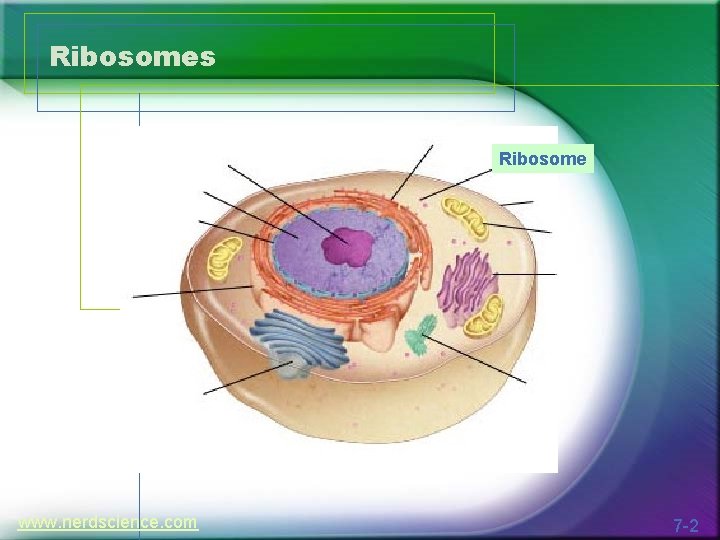
Ribosomes Ribosome www. nerdscience. com 7 -2
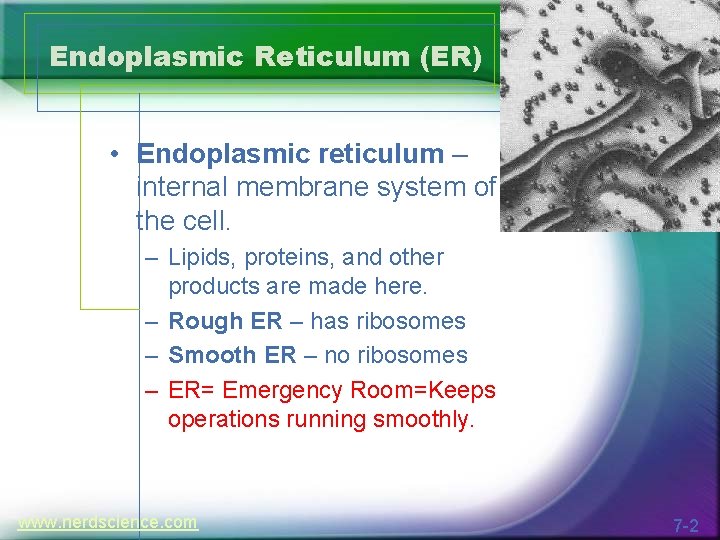
Endoplasmic Reticulum (ER) • Endoplasmic reticulum – internal membrane system of the cell. – Lipids, proteins, and other products are made here. – Rough ER – has ribosomes – Smooth ER – no ribosomes – ER= Emergency Room=Keeps operations running smoothly. www. nerdscience. com 7 -2
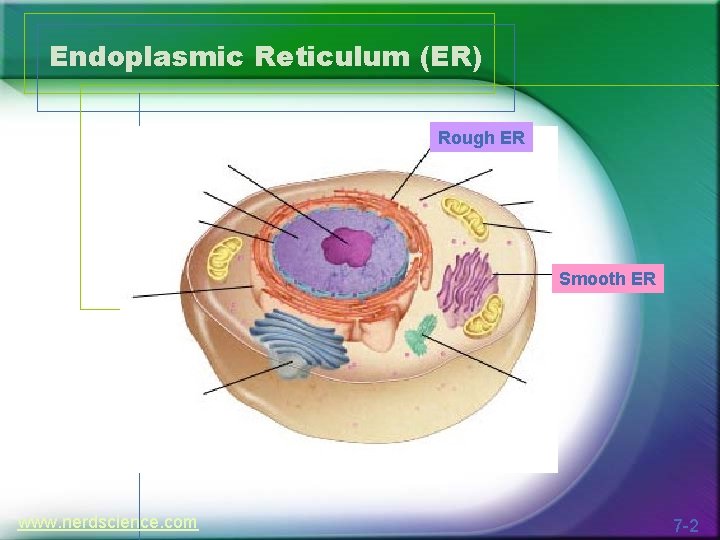
Endoplasmic Reticulum (ER) Rough ER Smooth ER www. nerdscience. com 7 -2
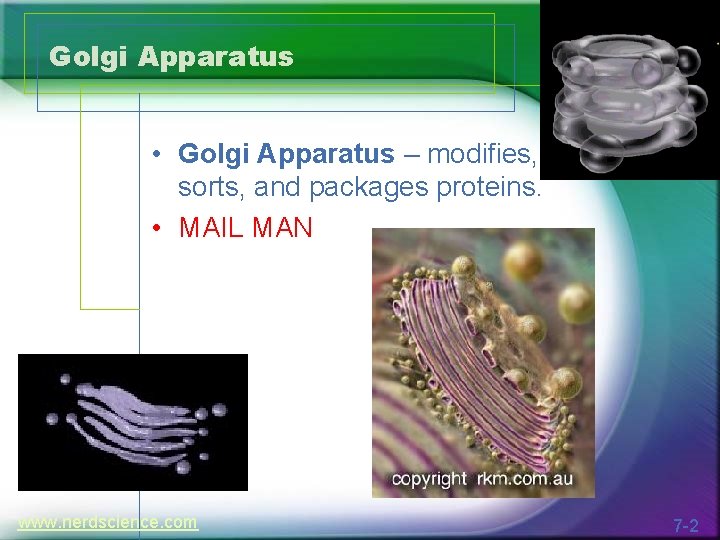
Golgi Apparatus • Golgi Apparatus – modifies, sorts, and packages proteins. • MAIL MAN www. nerdscience. com 7 -2
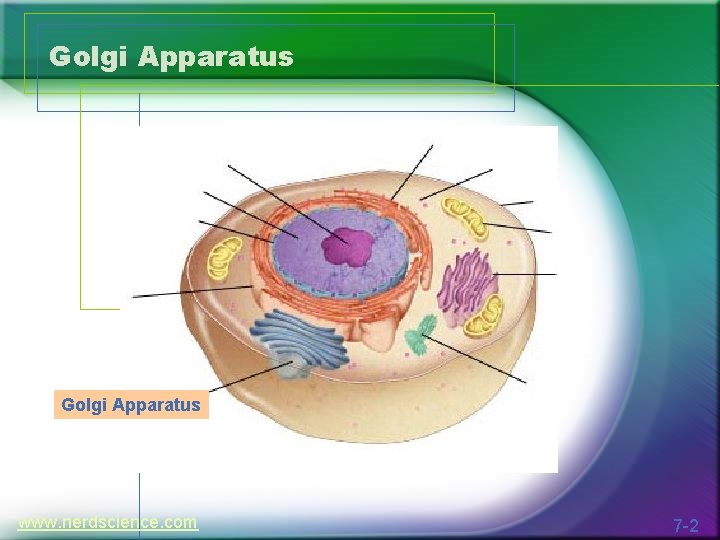
Golgi Apparatus www. nerdscience. com 7 -2
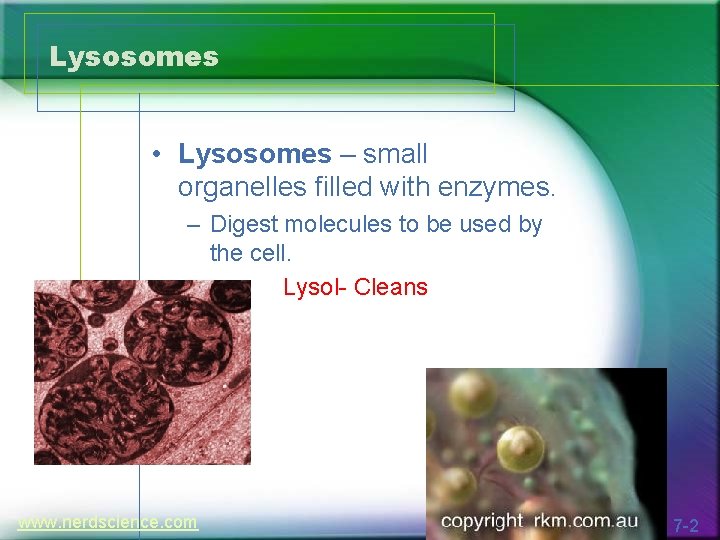
Lysosomes • Lysosomes – small organelles filled with enzymes. – Digest molecules to be used by the cell. – Lysol- Cleans www. nerdscience. com 7 -2
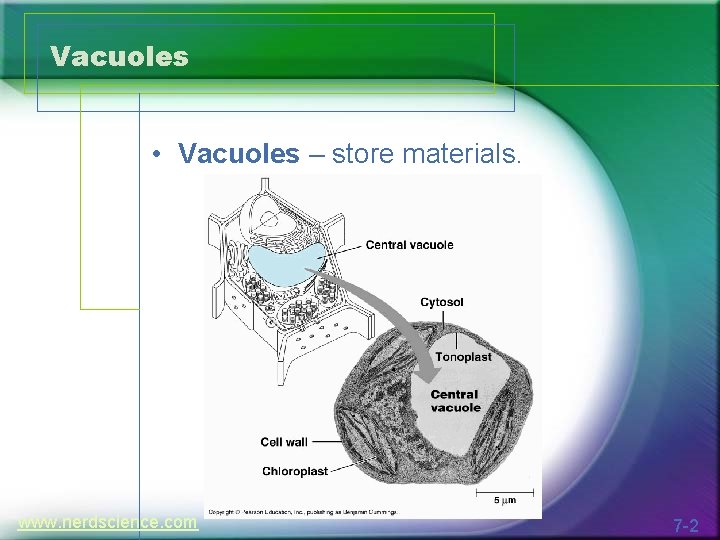
Vacuoles • Vacuoles – store materials. www. nerdscience. com 7 -2
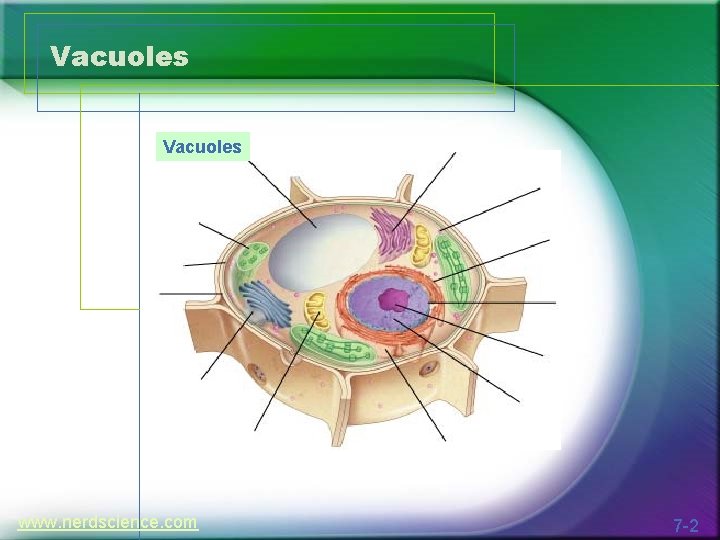
Vacuoles www. nerdscience. com 7 -2
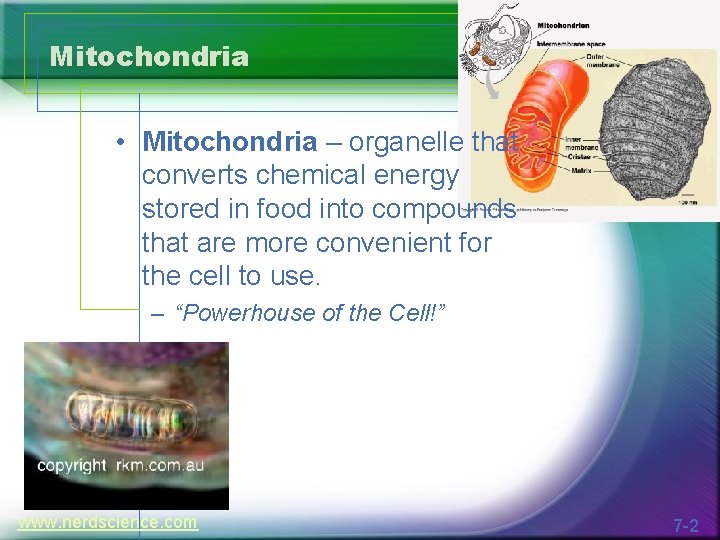
Mitochondria • Mitochondria – organelle that converts chemical energy stored in food into compounds that are more convenient for the cell to use. – “Powerhouse of the Cell!” www. nerdscience. com 7 -2
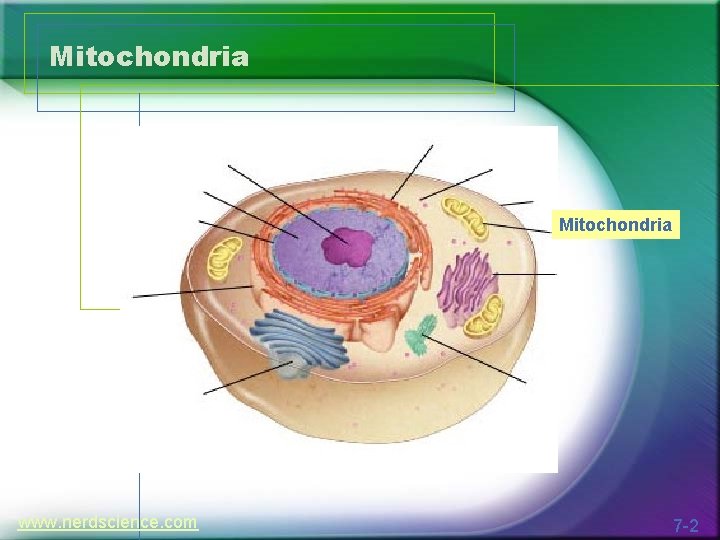
Mitochondria www. nerdscience. com 7 -2
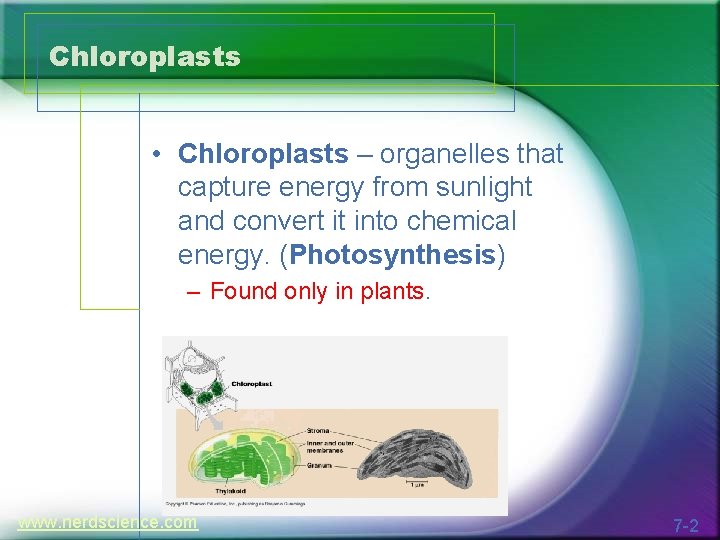
Chloroplasts • Chloroplasts – organelles that capture energy from sunlight and convert it into chemical energy. (Photosynthesis) – Found only in plants. www. nerdscience. com 7 -2
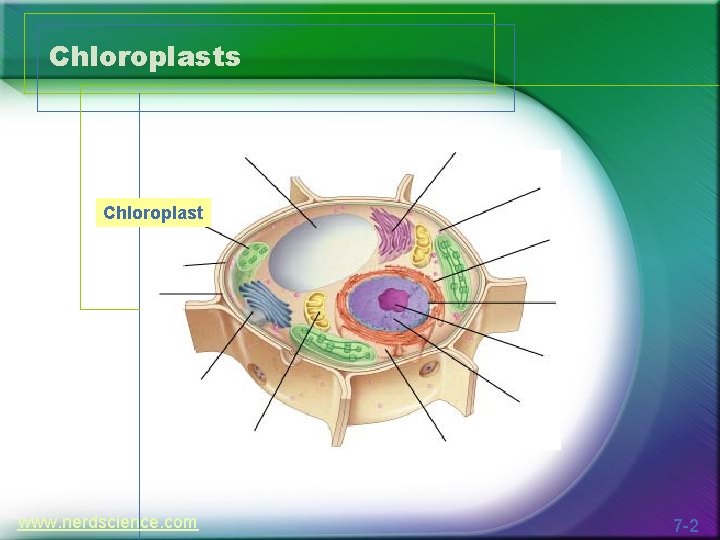
Chloroplasts Chloroplast www. nerdscience. com 7 -2
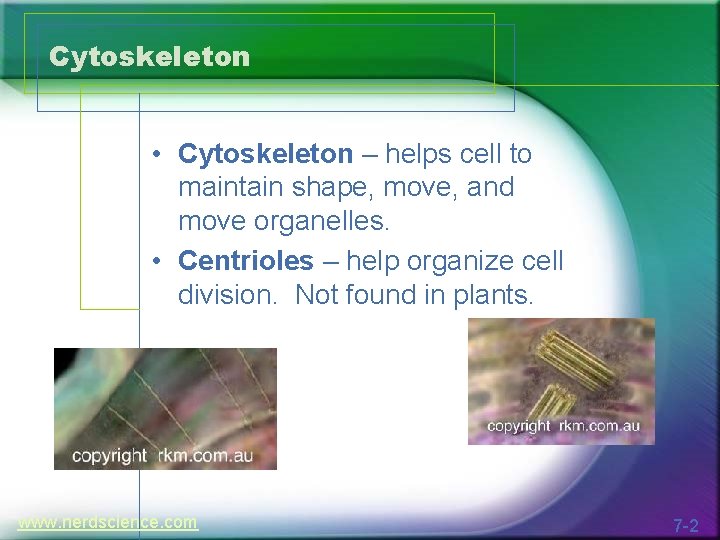
Cytoskeleton • Cytoskeleton – helps cell to maintain shape, move, and move organelles. • Centrioles – help organize cell division. Not found in plants. www. nerdscience. com 7 -2
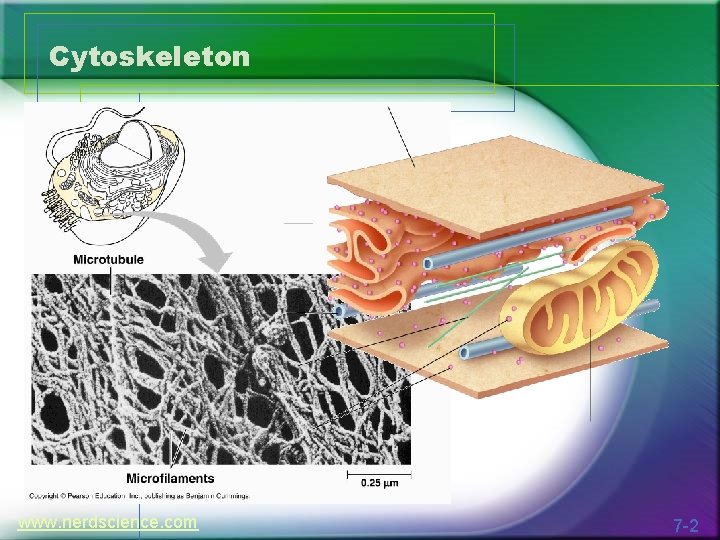
Cytoskeleton www. nerdscience. com 7 -2
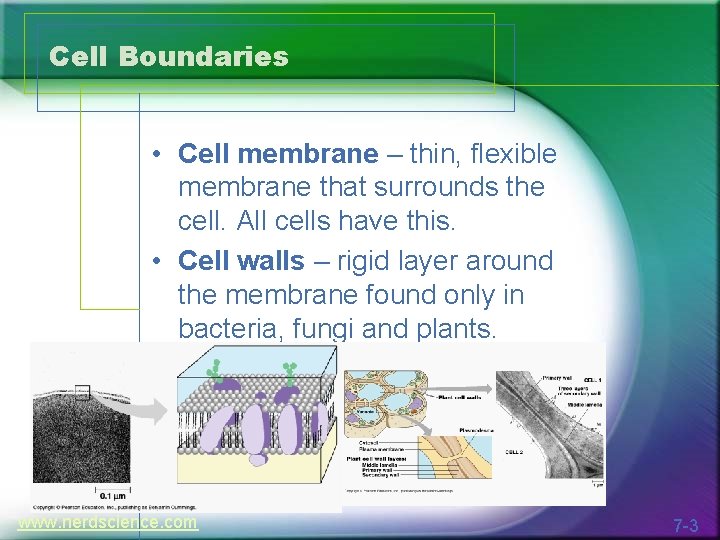
Cell Boundaries • Cell membrane – thin, flexible membrane that surrounds the cell. All cells have this. • Cell walls – rigid layer around the membrane found only in bacteria, fungi and plants. www. nerdscience. com 7 -3
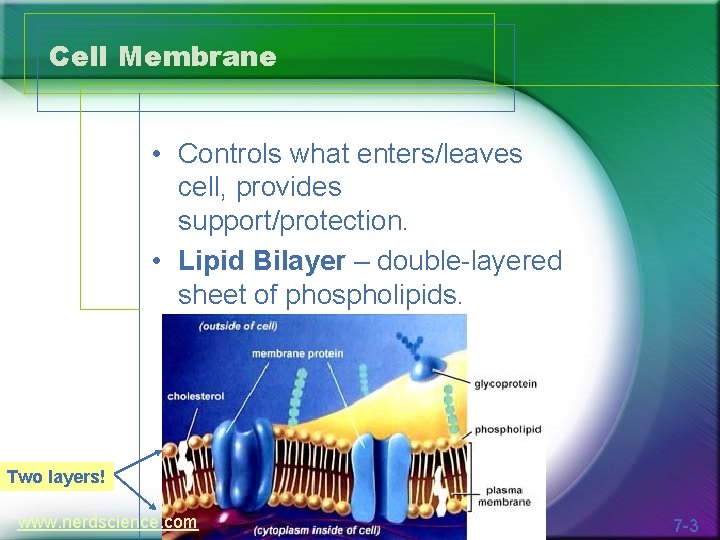
Cell Membrane • Controls what enters/leaves cell, provides support/protection. • Lipid Bilayer – double-layered sheet of phospholipids. Two layers! www. nerdscience. com 7 -3
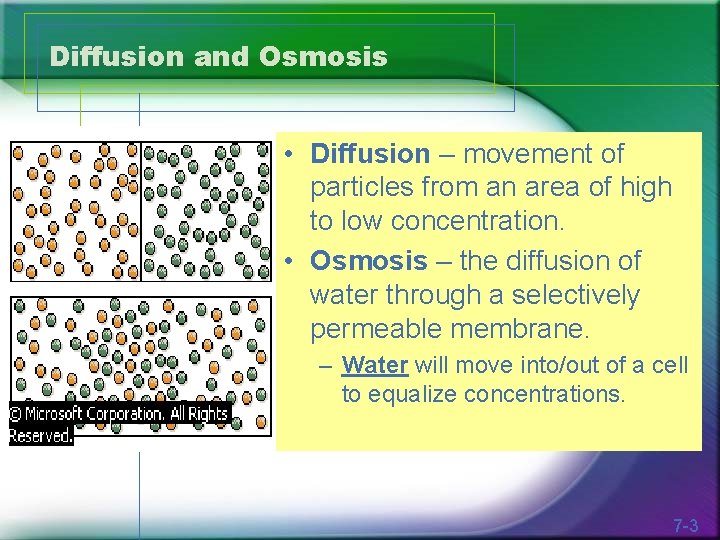
Diffusion and Osmosis • Diffusion – movement of particles from an area of high to low concentration. • Osmosis – the diffusion of water through a selectively permeable membrane. – Water will move into/out of a cell to equalize concentrations. 7 -3
Facilitated Diffusion and Active Transport • Facilitated diffusion – when the plasma membrane “helps” particles pass through protein channels. – No energy used. • Active transport – when the plasma membrane uses energy to move particles against a concentration gradient. – Uses Transport Proteins www. nerdscience. com 7 -3
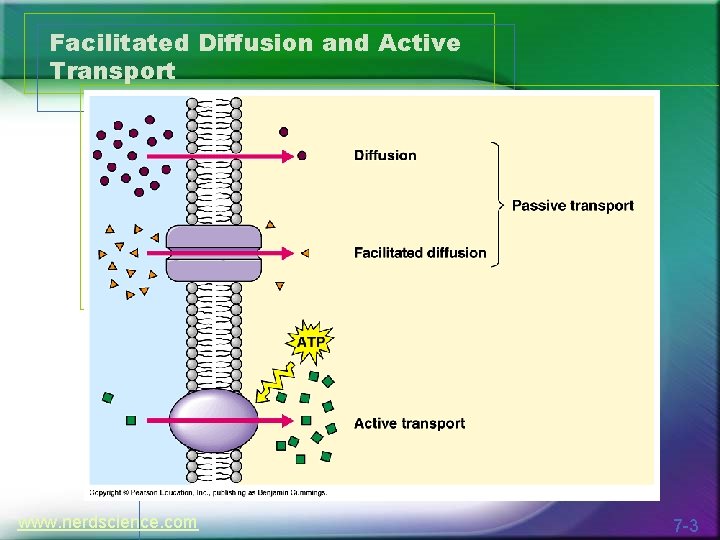
Facilitated Diffusion and Active Transport www. nerdscience. com 7 -3
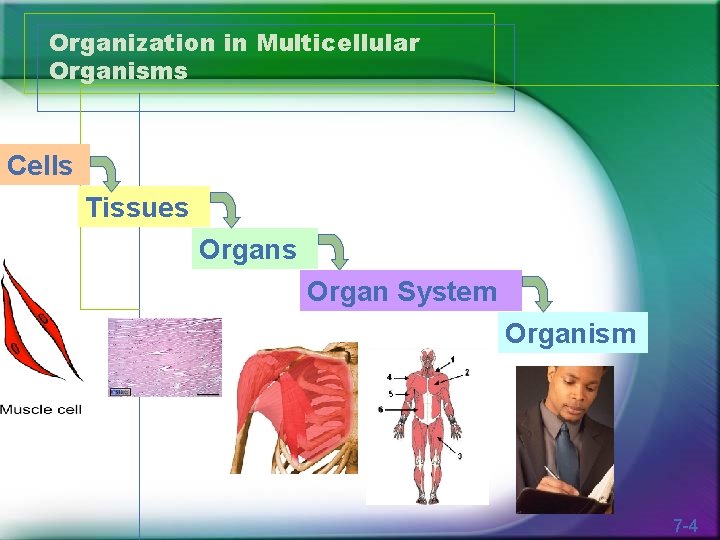
Organization in Multicellular Organisms Cells Tissues Organ System Organism 7 -4
- Slides: 28