
Cell Structure and Function General Biology KEY I
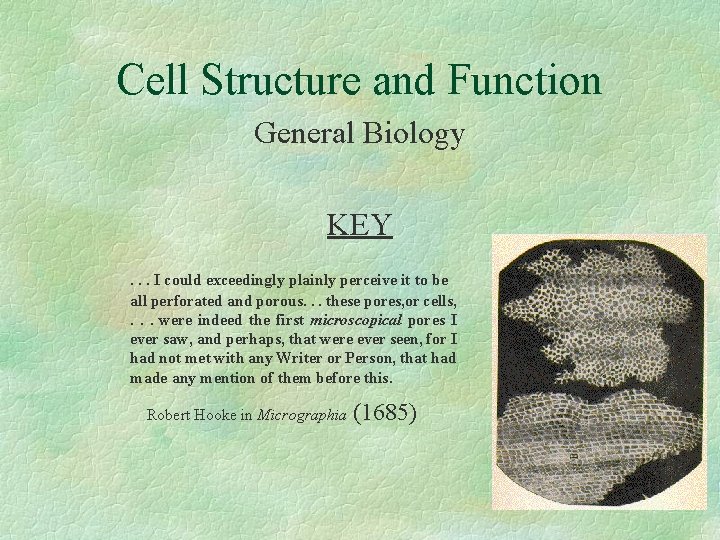
Cell Structure and Function General Biology KEY. . . I could exceedingly plainly perceive it to be all perforated and porous. . . these pores, or cells, . . . were indeed the first microscopical pores I ever saw, and perhaps, that were ever seen, for I had not met with any Writer or Person, that had made any mention of them before this. Robert Hooke in Micrographia (1685)
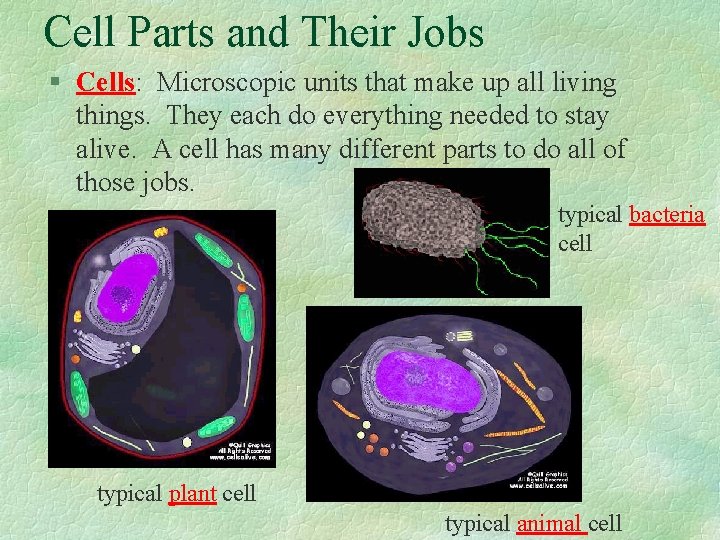
Cell Parts and Their Jobs § Cells: Microscopic units that make up all living things. They each do everything needed to stay alive. A cell has many different parts to do all of those jobs. typical bacteria cell typical plant cell typical animal cell
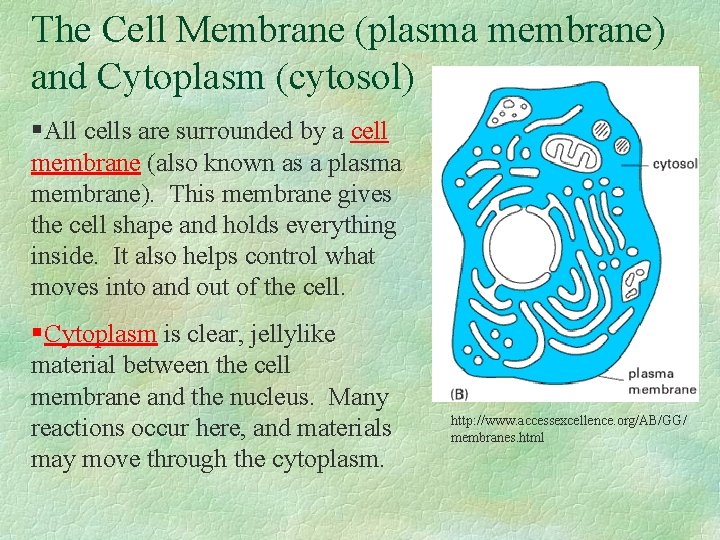
The Cell Membrane (plasma membrane) and Cytoplasm (cytosol) § All cells are surrounded by a cell membrane (also known as a plasma membrane). This membrane gives the cell shape and holds everything inside. It also helps control what moves into and out of the cell. § Cytoplasm is clear, jellylike material between the cell membrane and the nucleus. Many reactions occur here, and materials may move through the cytoplasm. http: //www. accessexcellence. org/AB/GG/ membranes. html
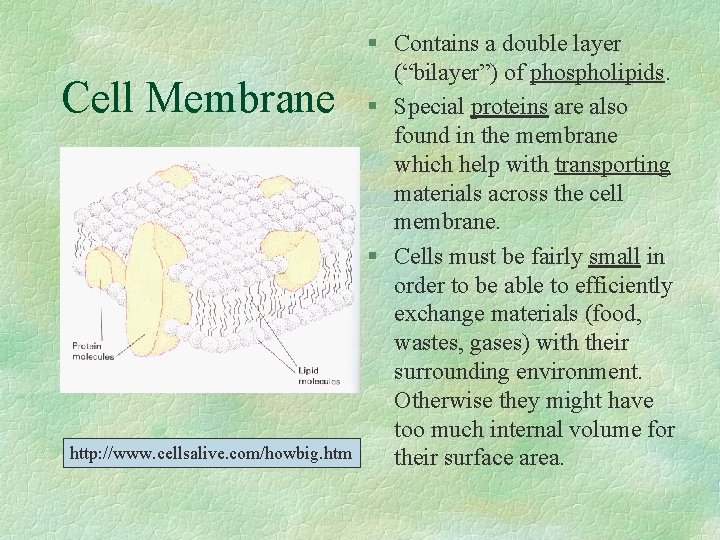
Cell Membrane http: //www. cellsalive. com/howbig. htm § Contains a double layer (“bilayer”) of phospholipids. § Special proteins are also found in the membrane which help with transporting materials across the cell membrane. § Cells must be fairly small in order to be able to efficiently exchange materials (food, wastes, gases) with their surrounding environment. Otherwise they might have too much internal volume for their surface area.
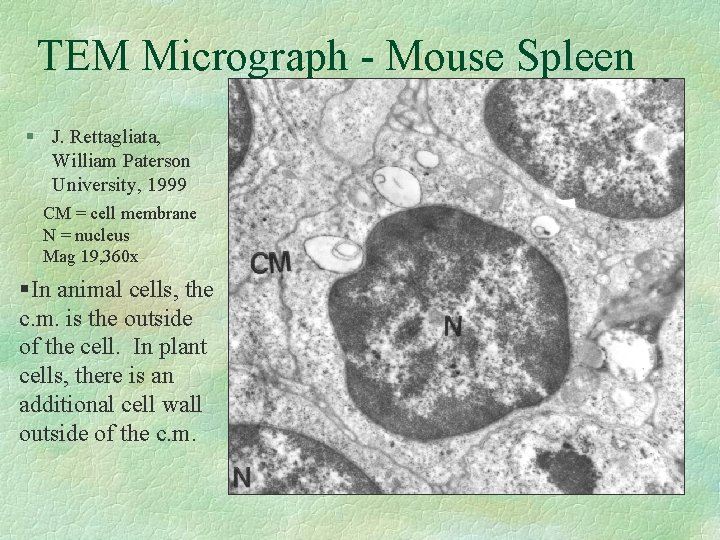
TEM Micrograph - Mouse Spleen § J. Rettagliata, William Paterson University, 1999 CM = cell membrane N = nucleus Mag 19, 360 x § In animal cells, the c. m. is the outside of the cell. In plant cells, there is an additional cell wall outside of the c. m.
Two Basic Cell Types § EUKARYOTIC l l plants, animals, fungi, protists contain complex cell structures (organelles) have a distinct nucleus size: 10 -1000 micrometers § PROKARYOTIC l l bacteria do not contain complex cell structures (no organelles) do not have a distinct nucleus size: 1 -10 micrometers
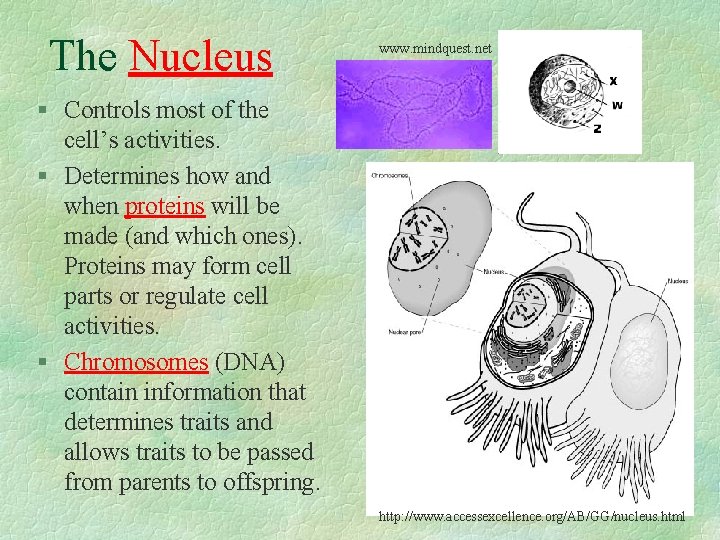
The Nucleus www. mindquest. net § Controls most of the cell’s activities. § Determines how and when proteins will be made (and which ones). Proteins may form cell parts or regulate cell activities. § Chromosomes (DNA) contain information that determines traits and allows traits to be passed from parents to offspring. http: //www. accessexcellence. org/AB/GG/nucleus. html
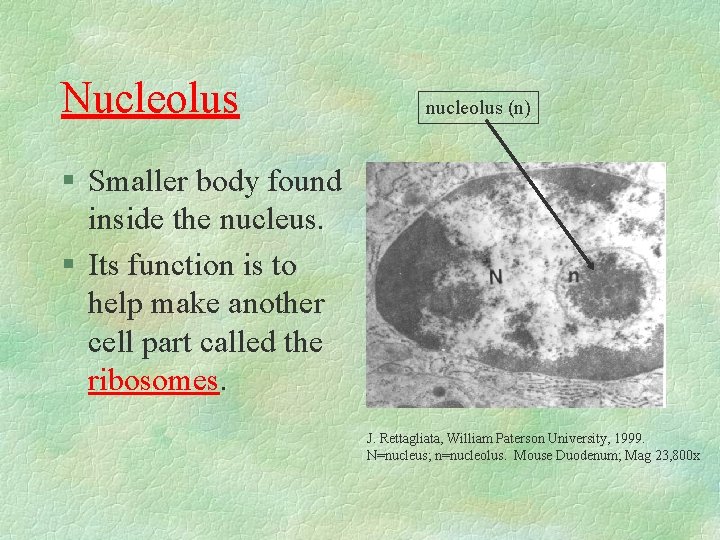
Nucleolus nucleolus (n) § Smaller body found inside the nucleus. § Its function is to help make another cell part called the ribosomes. J. Rettagliata, William Paterson University, 1999. N=nucleus; n=nucleolus. Mouse Duodenum; Mag 23, 800 x
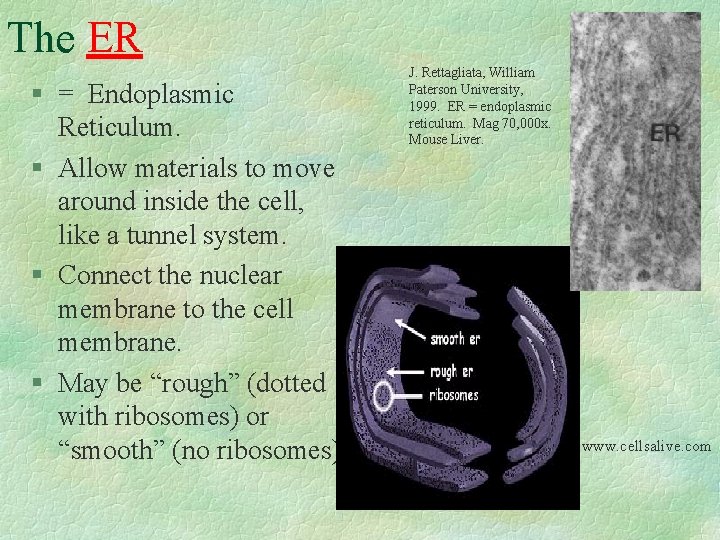
The ER § = Endoplasmic Reticulum. § Allow materials to move around inside the cell, like a tunnel system. § Connect the nuclear membrane to the cell membrane. § May be “rough” (dotted with ribosomes) or “smooth” (no ribosomes). J. Rettagliata, William Paterson University, 1999. ER = endoplasmic reticulum. Mag 70, 000 x. Mouse Liver. www. cellsalive. com
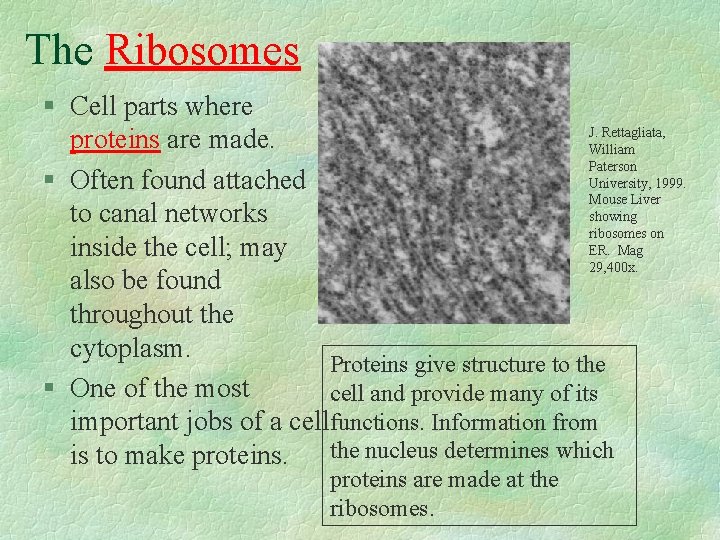
The Ribosomes § Cell parts where J. Rettagliata, proteins are made. William Paterson University, 1999. § Often found attached Mouse Liver showing to canal networks ribosomes on ER. Mag inside the cell; may 29, 400 x. also be found throughout the cytoplasm. Proteins give structure to the § One of the most cell and provide many of its important jobs of a cellfunctions. Information from is to make proteins. the nucleus determines which proteins are made at the ribosomes.
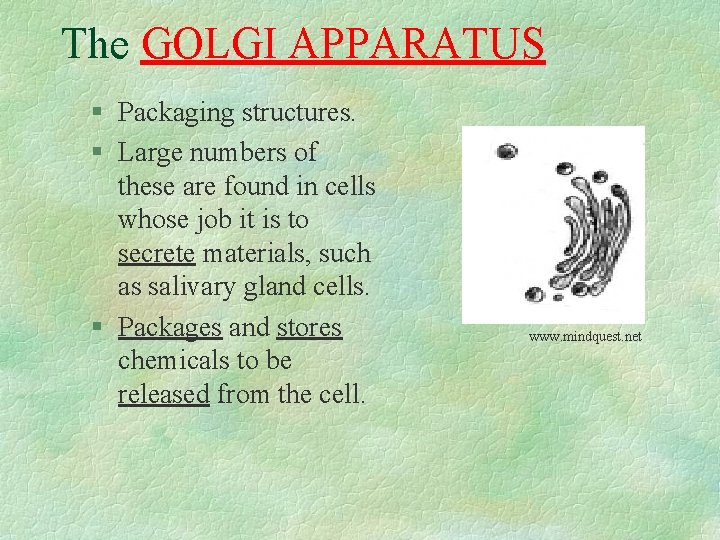
The GOLGI APPARATUS § Packaging structures. § Large numbers of these are found in cells whose job it is to secrete materials, such as salivary gland cells. § Packages and stores chemicals to be released from the cell. www. mindquest. net
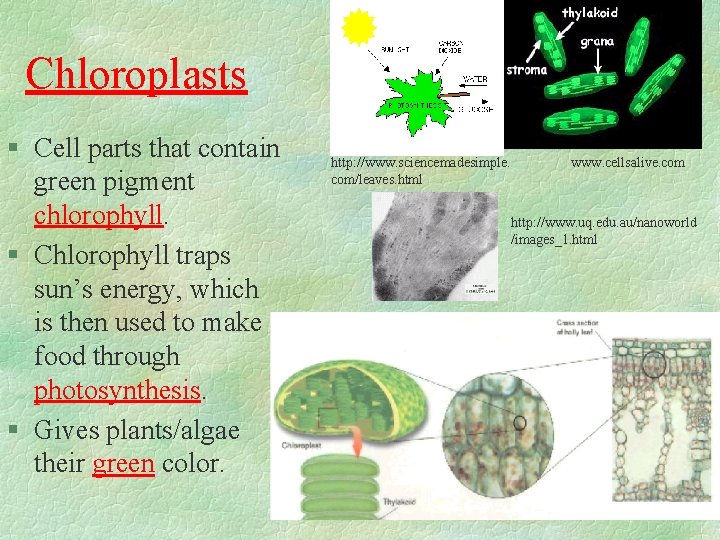
Chloroplasts § Cell parts that contain green pigment chlorophyll. § Chlorophyll traps sun’s energy, which is then used to make food through photosynthesis. § Gives plants/algae their green color. http: //www. sciencemadesimple. com/leaves. html www. cellsalive. com http: //www. uq. edu. au/nanoworld /images_1. html
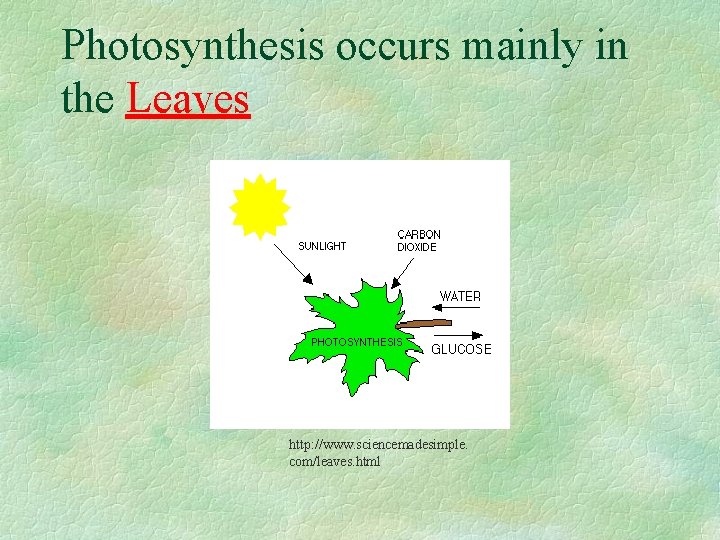
Photosynthesis occurs mainly in the Leaves http: //www. sciencemadesimple. com/leaves. html
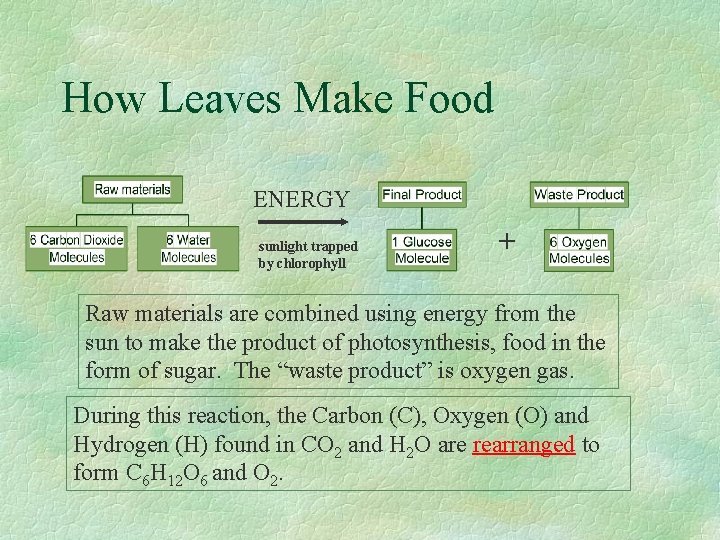
How Leaves Make Food ENERGY sunlight trapped by chlorophyll + Raw materials are combined using energy from the sun to make the product of photosynthesis, food in the form of sugar. The “waste product” is oxygen gas. During this reaction, the Carbon (C), Oxygen (O) and Hydrogen (H) found in CO 2 and H 2 O are rearranged to form C 6 H 12 O 6 and O 2.
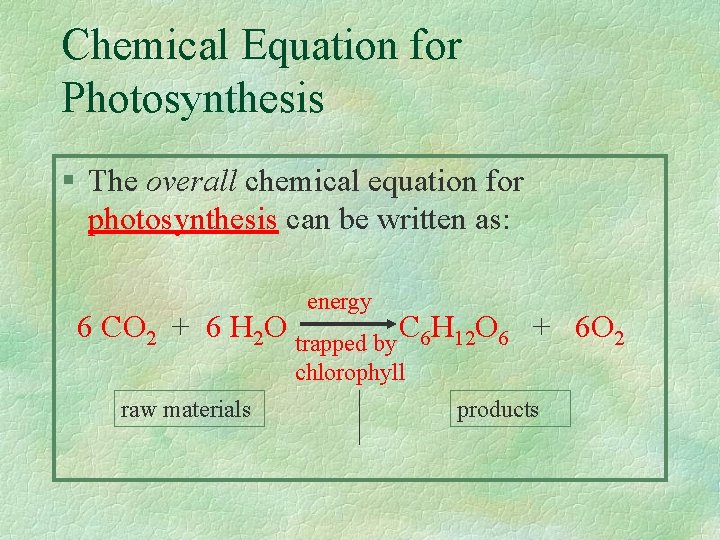
Chemical Equation for Photosynthesis § The overall chemical equation for photosynthesis can be written as: energy 6 CO 2 + 6 H 2 O trapped by C 6 H 12 O 6 + 6 O 2 chlorophyll raw materials products
How is glucose Used? § This simple sugar can then used by the plant to make other more complex carbohydrates as starch and sucrose. § When glucose is broken down (whether in the plant itself or within an animal that ate the plant), energy is released. This is called cellular respiration. § The energy released when sugar is broken down is used for life processes by all living things.
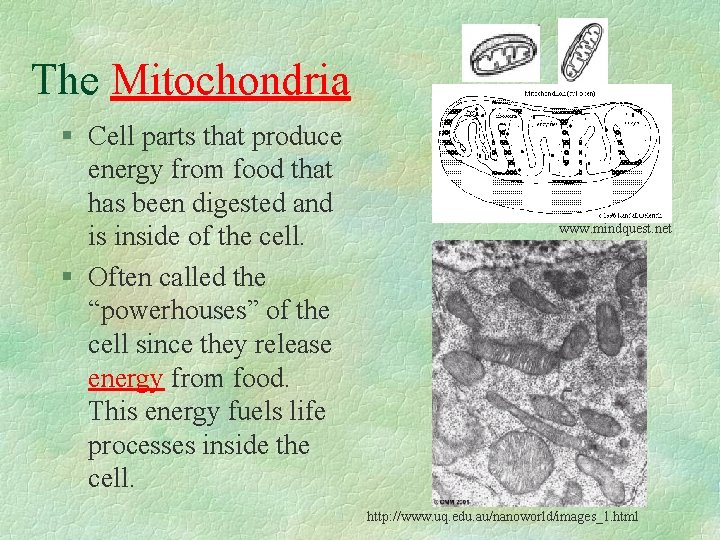
The Mitochondria § Cell parts that produce energy from food that has been digested and is inside of the cell. § Often called the “powerhouses” of the cell since they release energy from food. This energy fuels life processes inside the cell. www. mindquest. net http: //www. uq. edu. au/nanoworld/images_1. html
What is “respiration”? § Many people think of breathing when they hear this word. § Actually, some sort of breathing is necessary for all organisms because the process of cellular respiration needs oxygen. However, there is also a type of cellular respiration that can occur without oxygen. § All organisms perform some type of cellular respiration in order to release energy from food.
What happens to Oxygen in cells? § Once oxygen reaches a cell, it will be used in the process of cellular respiration. § Cellular respiration involves a series of chemical reactions. Some of these reactions happen in the cytoplasm, and some happen within the mitochondria. § The overall result is that sugar reacts with the oxygen to release energy (in the form of ATP) for the cell’s activities.
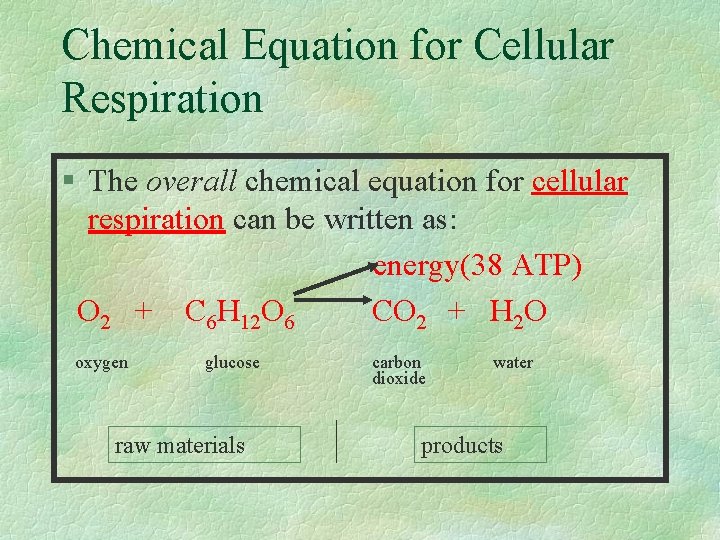
Chemical Equation for Cellular Respiration § The overall chemical equation for cellular respiration can be written as: energy(38 ATP) O 2 + C 6 H 12 O 6 CO 2 + H 2 O oxygen glucose raw materials carbon dioxide water products
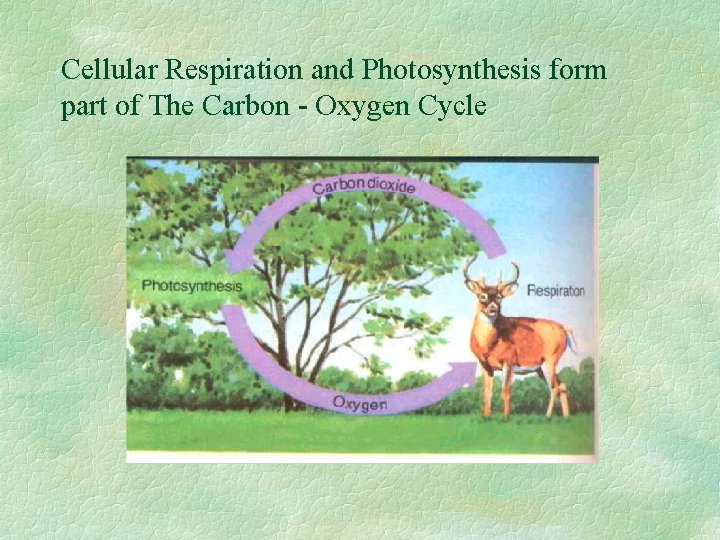
Cellular Respiration and Photosynthesis form part of The Carbon - Oxygen Cycle
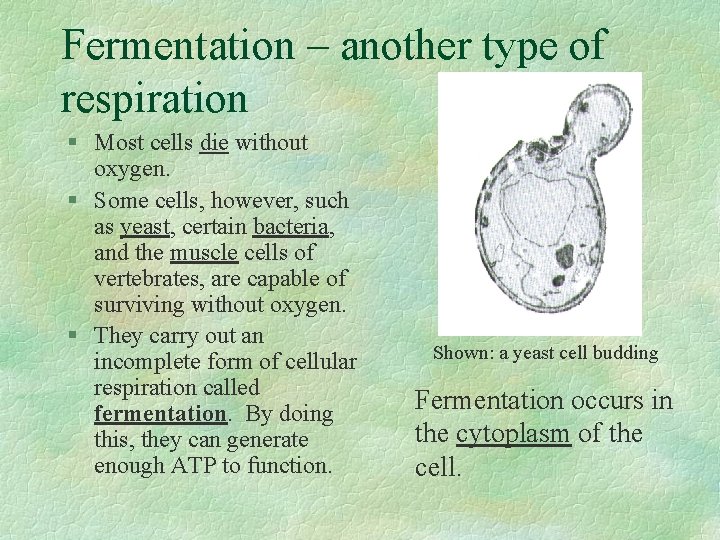
Fermentation – another type of respiration § Most cells die without oxygen. § Some cells, however, such as yeast, certain bacteria, and the muscle cells of vertebrates, are capable of surviving without oxygen. § They carry out an incomplete form of cellular respiration called fermentation. By doing this, they can generate enough ATP to function. Shown: a yeast cell budding Fermentation occurs in the cytoplasm of the cell.
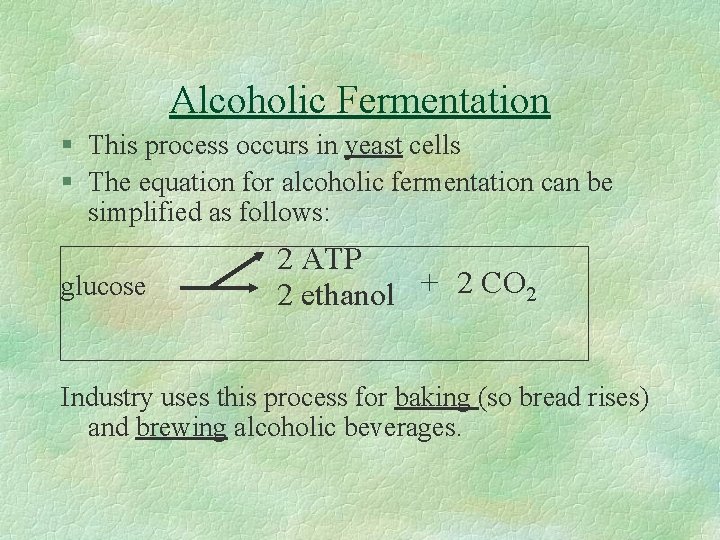
Alcoholic Fermentation § This process occurs in yeast cells § The equation for alcoholic fermentation can be simplified as follows: glucose 2 ATP 2 ethanol + 2 CO 2 Industry uses this process for baking (so bread rises) and brewing alcoholic beverages.
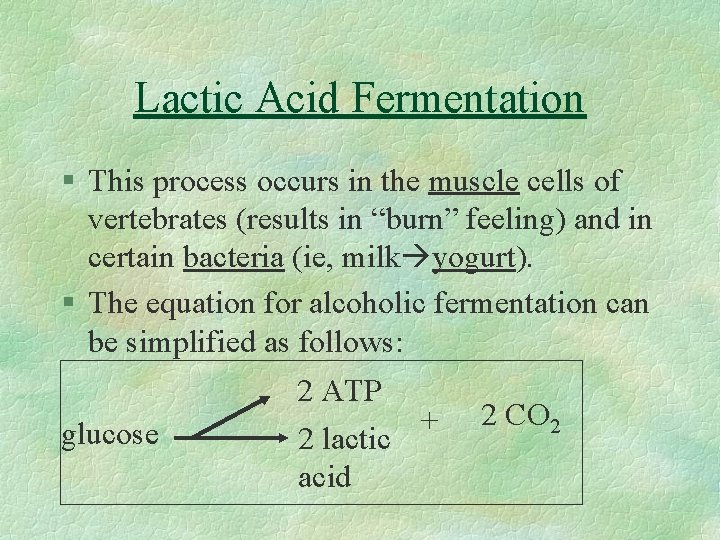
Lactic Acid Fermentation § This process occurs in the muscle cells of vertebrates (results in “burn” feeling) and in certain bacteria (ie, milk yogurt). § The equation for alcoholic fermentation can be simplified as follows: 2 ATP 2 CO 2 + glucose 2 lactic acid
Digestive sacs § =LYSOSOMES § Small sacs which contain chemicals that can break down large molecules. § Get rid of disease-causing agents that may enter the cell. § Destroy worn-out cell parts and form products which can be used again.
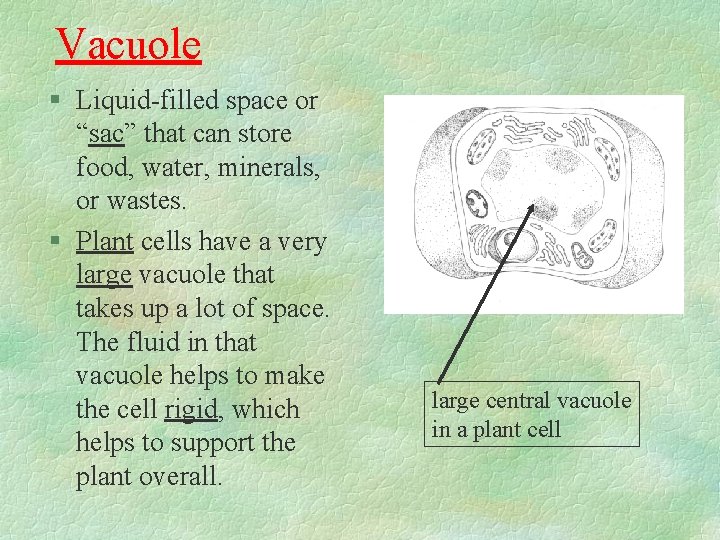
Vacuole § Liquid-filled space or “sac” that can store food, water, minerals, or wastes. § Plant cells have a very large vacuole that takes up a lot of space. The fluid in that vacuole helps to make the cell rigid, which helps to support the plant overall. large central vacuole in a plant cell
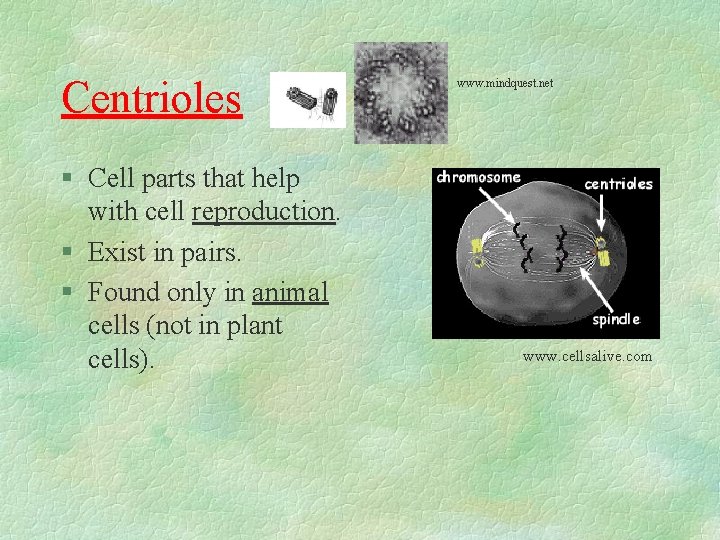
Centrioles § Cell parts that help with cell reproduction. § Exist in pairs. § Found only in animal cells (not in plant cells). www. mindquest. net www. cellsalive. com
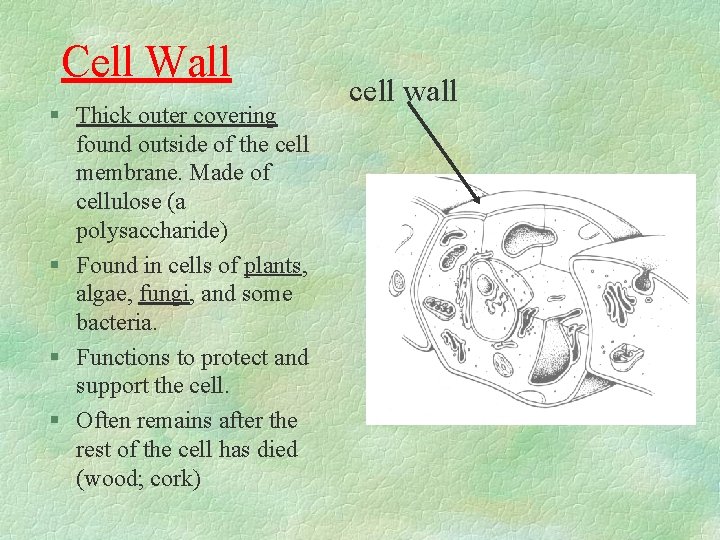
Cell Wall § Thick outer covering found outside of the cell membrane. Made of cellulose (a polysaccharide) § Found in cells of plants, algae, fungi, and some bacteria. § Functions to protect and support the cell. § Often remains after the rest of the cell has died (wood; cork) cell wall
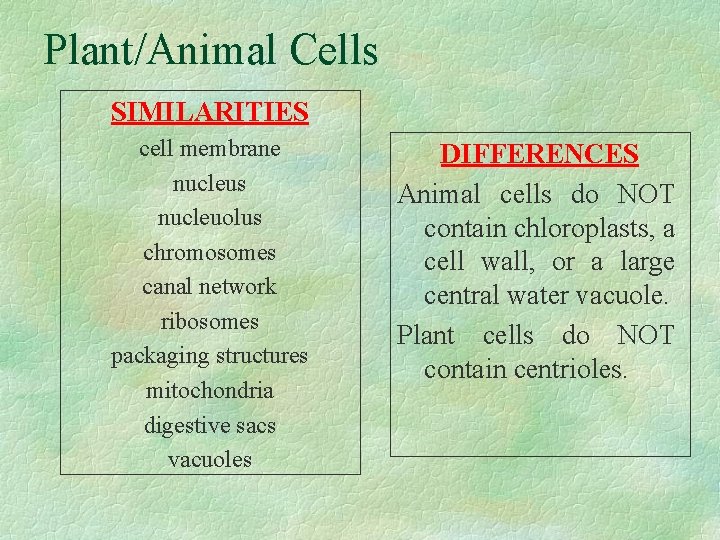
Plant/Animal Cells SIMILARITIES cell membrane nucleus nucleuolus chromosomes canal network ribosomes packaging structures mitochondria digestive sacs vacuoles DIFFERENCES Animal cells do NOT contain chloroplasts, a cell wall, or a large central water vacuole. Plant cells do NOT contain centrioles.
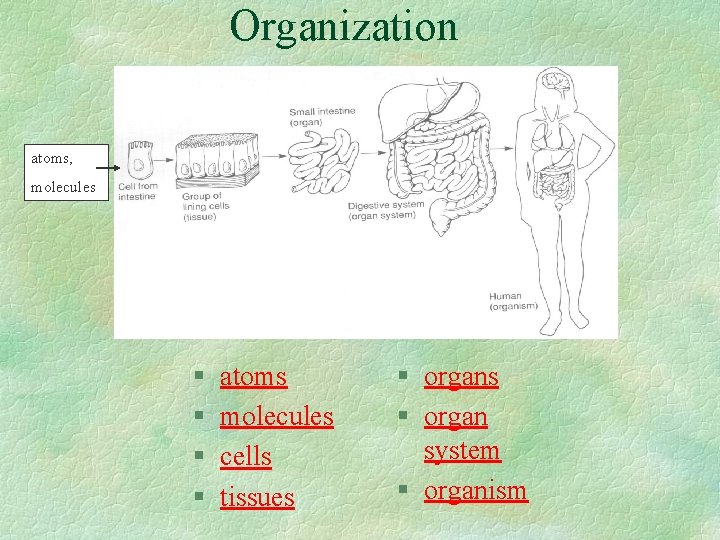
Organization atoms, molecules § § atoms molecules cells tissues § organ system § organism
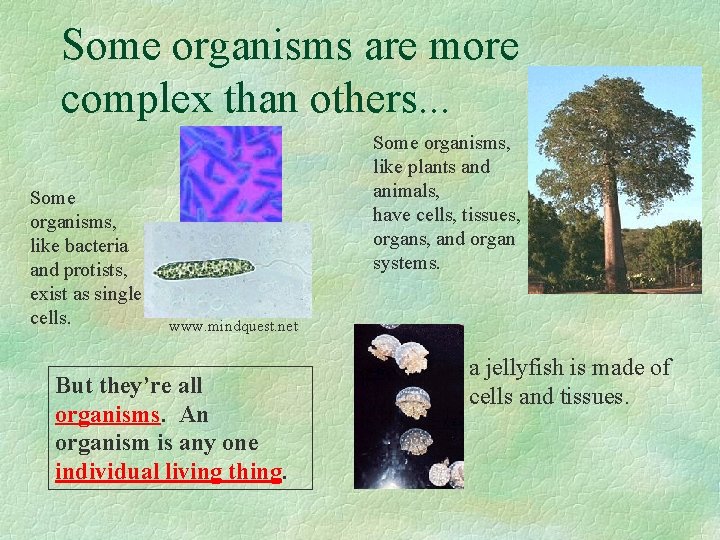
Some organisms are more complex than others. . . Some organisms, like bacteria and protists, exist as single cells. Some organisms, like plants and animals, have cells, tissues, organs, and organ systems. www. mindquest. net But they’re all organisms. An organism is any one individual living thing. a jellyfish is made of cells and tissues.
- Slides: 31