
CELL STRUCTURE AND FUNCTION Chapter 7 Section 1
- Slides: 6
CELL STRUCTURE AND FUNCTION Chapter 7 Section 1: LIFE IS CELLULAR
General Cell Stuff ~Mid-1600’s: Robert Hooke used an early Microscope to look at cork cells. � He call the little chambers he saw “cells” after the rooms monks slept in in monasteries. ~Mid-1600’s: Anton van Leeuwenhoek looked at pond water and found living organisms! 1838: Matthias Schleiden said all plants were made of cells. 1839: Theodor Shwann said all animals were made of cells 1855: Rudolph Virchow said all new cells come from existing cells
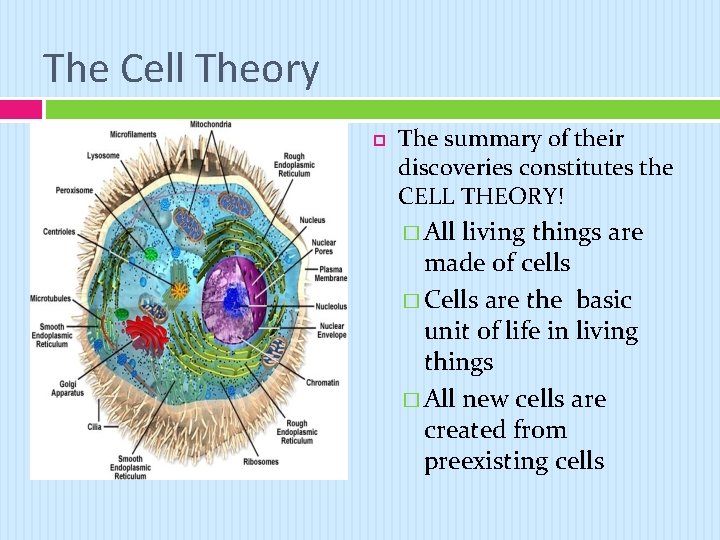
The Cell Theory The summary of their discoveries constitutes the CELL THEORY! � All living things are made of cells � Cells are the basic unit of life in living things � All new cells are created from preexisting cells
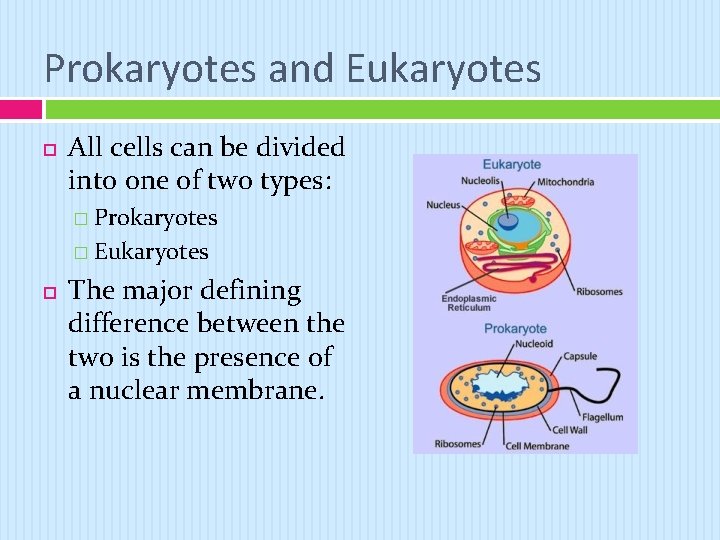
Prokaryotes and Eukaryotes All cells can be divided into one of two types: � Prokaryotes � Eukaryotes The major defining difference between the two is the presence of a nuclear membrane.
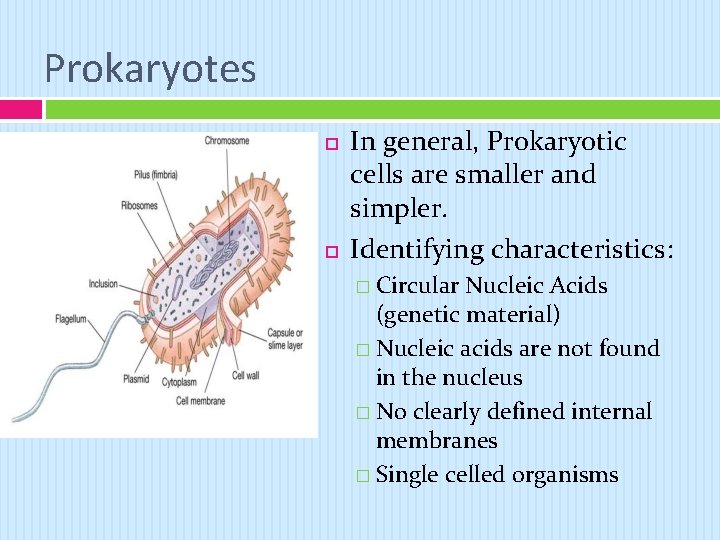
Prokaryotes In general, Prokaryotic cells are smaller and simpler. Identifying characteristics: � Circular Nucleic Acids (genetic material) � Nucleic acids are not found in the nucleus � No clearly defined internal membranes � Single celled organisms
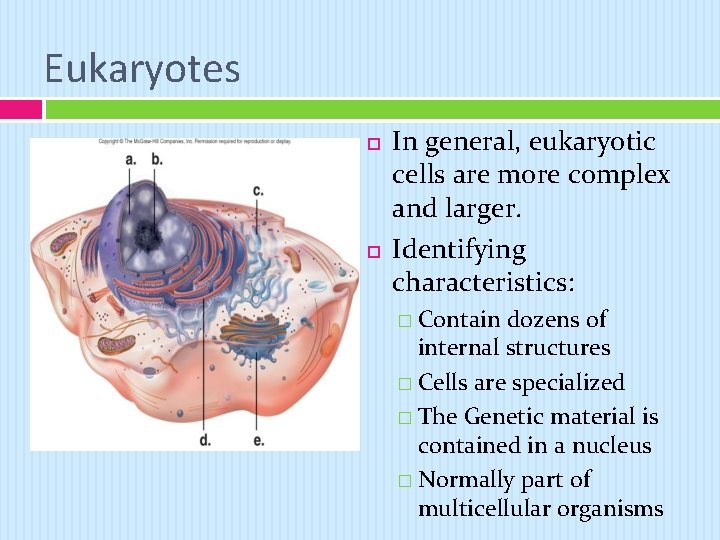
Eukaryotes In general, eukaryotic cells are more complex and larger. Identifying characteristics: � Contain dozens of internal structures � Cells are specialized � The Genetic material is contained in a nucleus � Normally part of multicellular organisms