
Cell Structure and Function Chapter 7 Biology Miller
Cell Structure and Function Chapter 7 Biology Miller • Levine
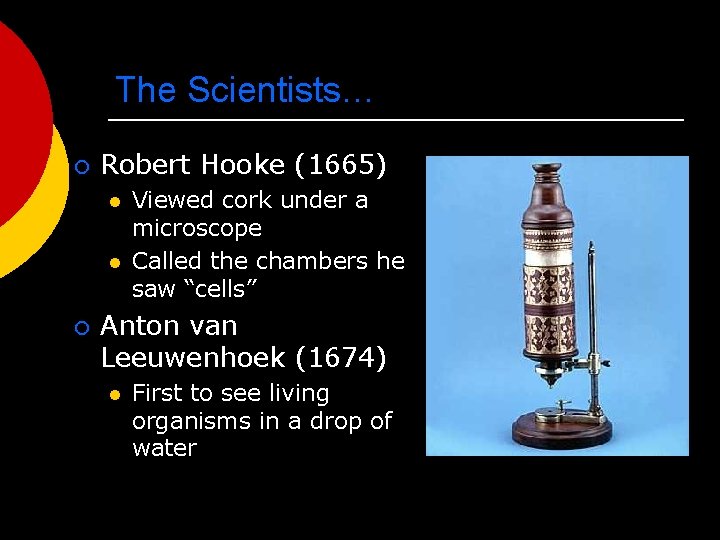
The Scientists… ¡ Robert Hooke (1665) l l ¡ Viewed cork under a microscope Called the chambers he saw “cells” Anton van Leeuwenhoek (1674) l First to see living organisms in a drop of water
The Scientists… ¡ Matthias l All plants are made of cells ¡ Theodor l Schwann (1839) All animals are made of cells ¡ Rudolf l Schleiden (1838) Virchow (1855) All cells come from preexisting cells
The Cell Theory ¡ All living things are composed of cells ¡ Cells are the basic units of structure and function in living things ¡ New cells are produced from existing cells
Unicellular vs. Multicellular ¡ Unicellular – single-celled organism ¡ Multicellular – many-celled organism Cell specialization – cells are specialized to perform certain functions l Cells → Tissues → Organ systems → Organism l
Prokaryotes vs. Eukaryotes ¡ Prokaryotes Have a cell membrane & cytoplasm, but do not have a nucleus l Ex. Bacteria such as E. coli l ¡ Eukaryotes Have a nucleus, cell membrane, cytoplasm & organelles l Ex. Plants, Animals, Fungi l
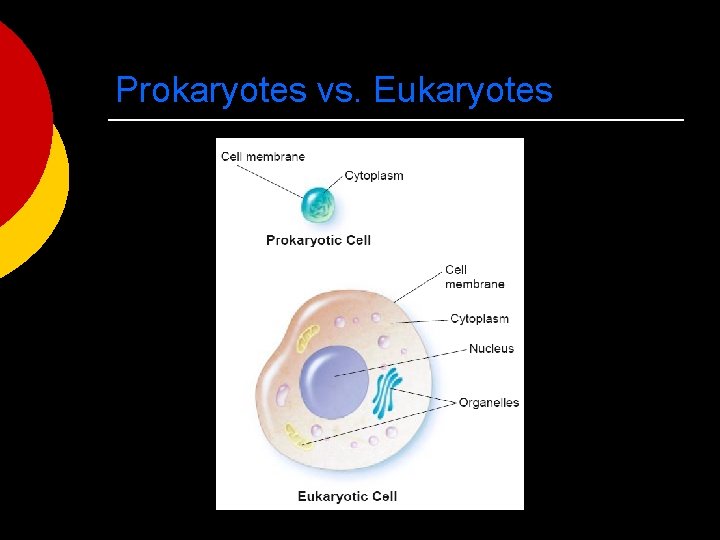
Prokaryotes vs. Eukaryotes
Basic Cell Structures ¡ Cell membrane – thin, flexible barrier around the cell; protects the cell l Present in all cells ¡ Cytoplasm – material inside the cell membrane (not including the nucleus) l Prokaryotes & Eukaryotes
Cell Wall ¡ Found in many organisms, including plants, algae, fungi and nearly all prokaryotes ¡ Not found in animal cells ¡ Lies outside the cell membrane ¡ Main function is to provide support & protection for the cell
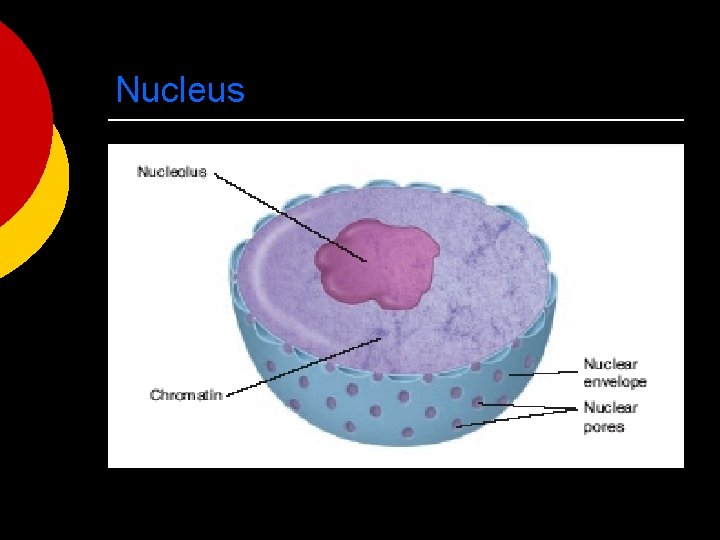
Nucleus ¡ Almost all eukaryotic cells, including plants and animals have a nucleus ¡ Prokaryotes do not have a nucleus ¡ Controls most cell process and contains the DNA
Nucleolus and Nuclear Envelope ¡ Nucleolus: Inside the nucleus l Where ribosomes are made l ¡ Nuclear Envelope: Double-membrane layer around the nucleus l Allows material to move into and out of the nucleus l
Nucleus
Cytoskeleton ¡ Found in all eukaryotic cells ¡ Not found in prokaryotes ¡ A network of protein filaments that helps the cell maintain its shape ¡ It also is involved in cell movement
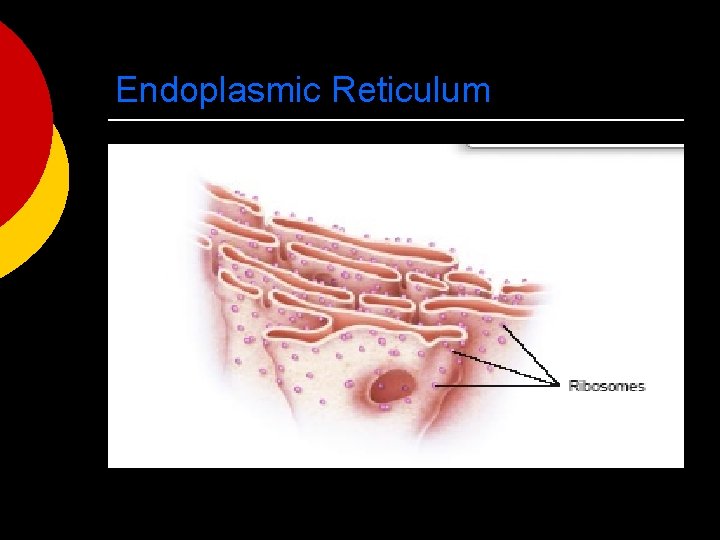
Ribosomes ¡ Found in all cells ¡ Main function is to make proteins ¡ Can be found floating in the cytosol or attached to endoplasmic reticulum
Endoplasmic Reticulum (ER) ¡ Found only in eukaryotic cells ¡ Where components of the cell membrane are assembled ¡ Two kinds: Smooth ER & Rough ER Smooth ER: no ribosomes; makes lipids l Rough ER: has ribosomes; involved in making proteins l
Endoplasmic Reticulum
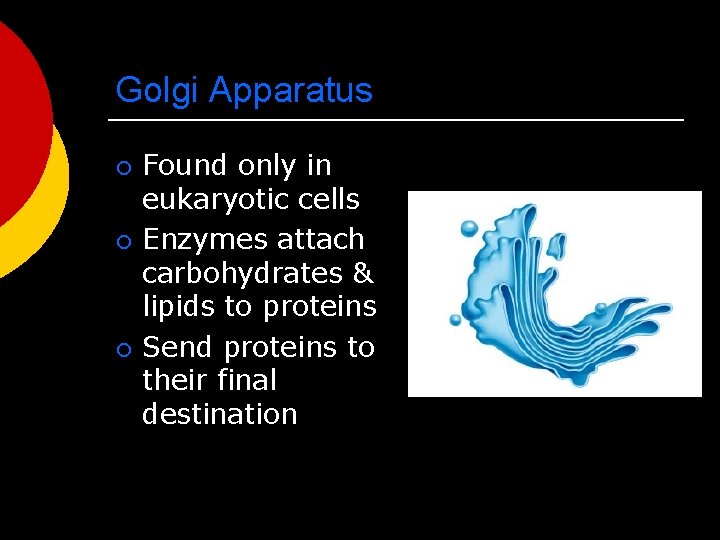
Golgi Apparatus ¡ ¡ ¡ Found only in eukaryotic cells Enzymes attach carbohydrates & lipids to proteins Send proteins to their final destination
Lysosomes ¡ Found in animal cells only ¡ Break down lipids, carbohydrates & proteins from food into particles that can be used by the cell ¡ Also break down “dead” organelles
Vacuoles ¡ Not found in prokaryotes ¡ Animal cells have small or no vacuoles ¡ Plant cells have a large central vacuole ¡ Store materials such as water, salts, proteins & carbohydrates
Chloroplasts ¡ Found in all plant cells ¡ Some prokaryotes have them, but most do not ¡ Use the energy from sunlight to make energy-rich food molecules during photosynthesis
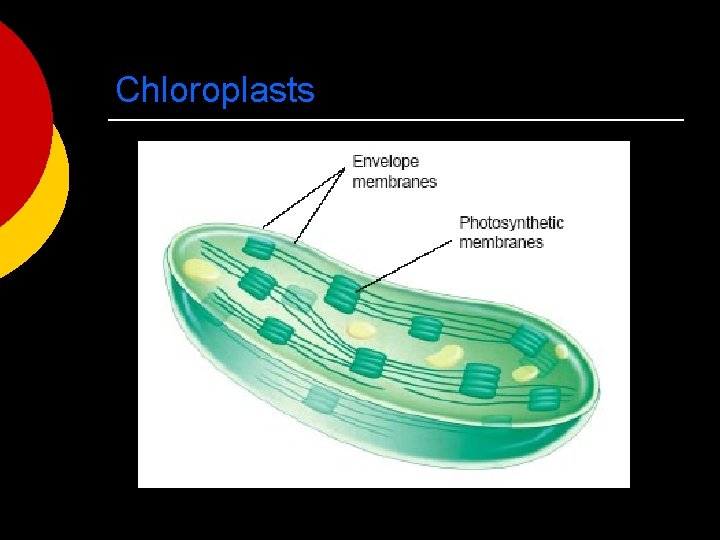
Chloroplasts
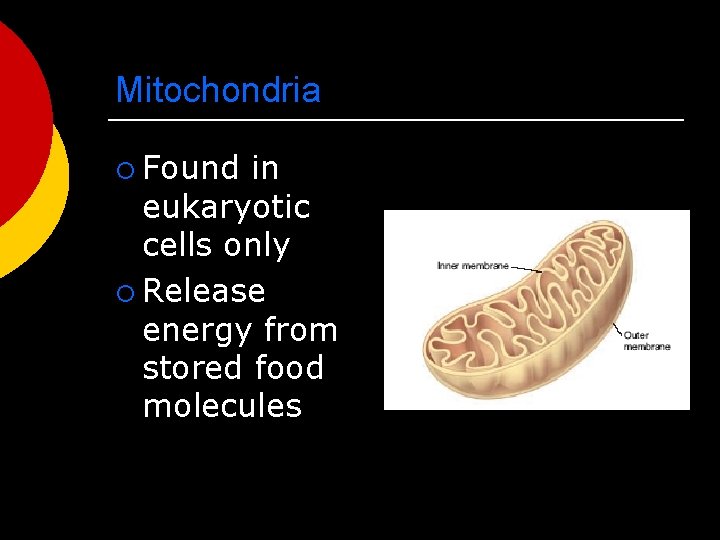
Mitochondria ¡ Found in eukaryotic cells only ¡ Release energy from stored food molecules
Cell Membrane ¡ Regulates what enters and leaves the cell (selectively permeable) ¡ Provides protection and support ¡ Lipid bilayer – two layers of lipids Proteins run through the layers l Carbohydrates are attached to some of the proteins l Fluid Mosaic Model l
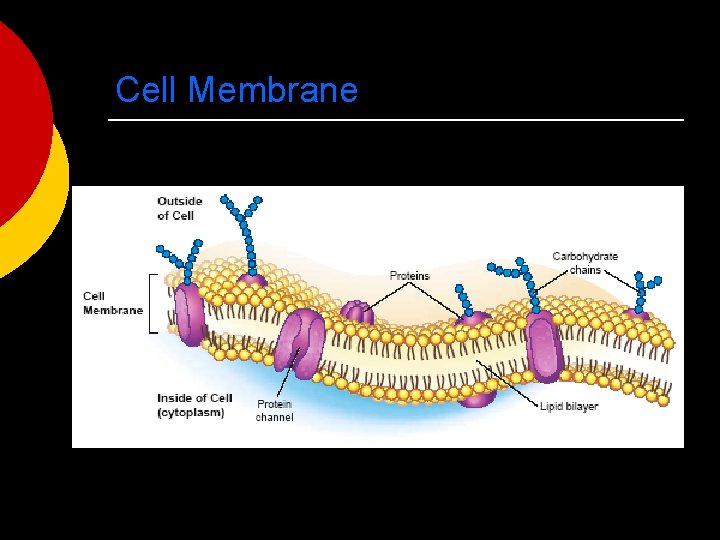
Cell Membrane
Diffusion ¡ Molecules move from an area of high concentration to an area of low concentration ¡ Movement continues until equilibrium is reached ¡ Many substances move across the membrane by diffusion ¡ Does not require energy (passive transport)
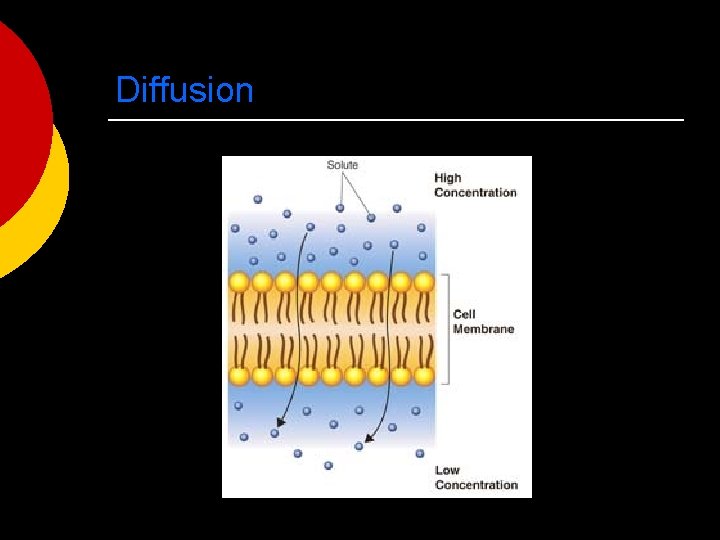
Diffusion
Osmosis ¡ The l diffusion of water Isotonic – equal concentration ¡ Nothing l Hypertonic – higher concentration ¡ Water l happens moves out of the cell Hypotonic – lower concentration ¡ Water ¡ No moves into the cell energy is required
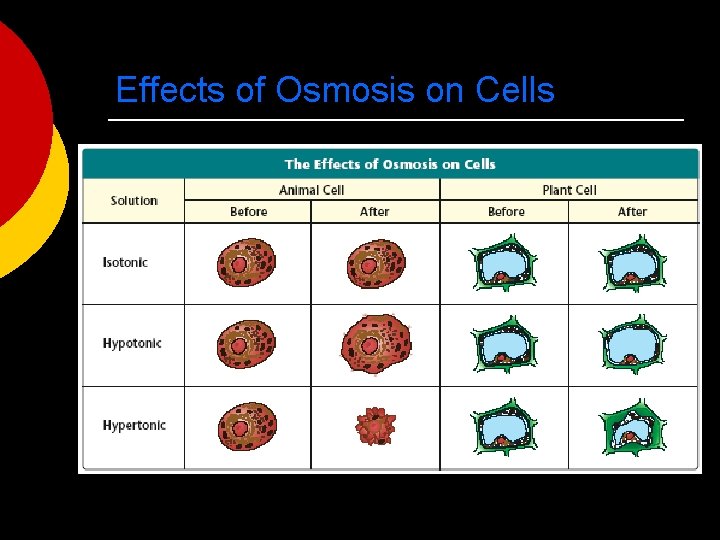
Effects of Osmosis on Cells
Osmotic Pressure ¡ In pure water, an animal cell would burst ¡ Plant cells are protected by their cell wall ¡ Some freshwater organism have special structures like contractile vacuoles to get rid of extra water
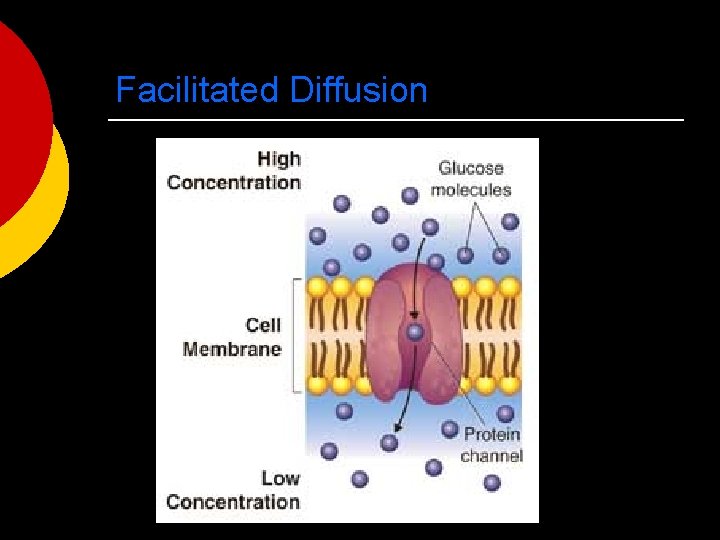
Facilitated Diffusion ¡ Some molecules cannot cross the membrane without help ¡ Some of the proteins in the membrane form protein channels ¡ Materials still move from higher to lower concentrations ¡ No energy is required
Facilitated Diffusion
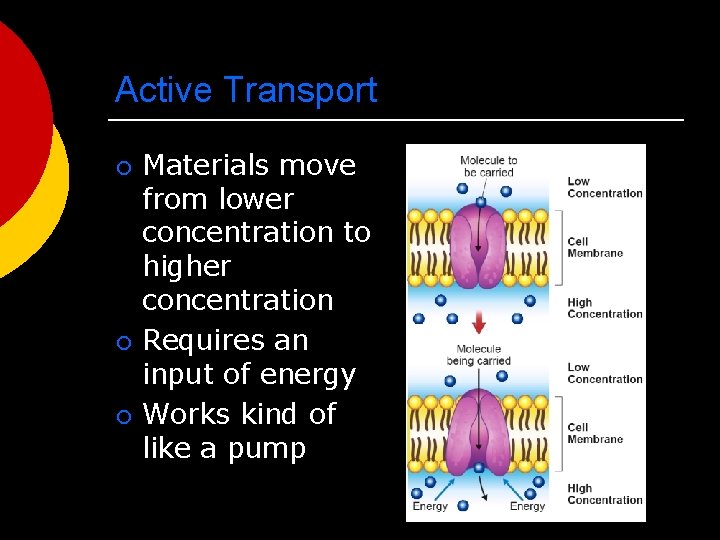
Active Transport ¡ ¡ ¡ Materials move from lower concentration to higher concentration Requires an input of energy Works kind of like a pump
Transport of Large Amounts ¡ Endocytosis the cell – movement into Phagocytosis – “cell eating” – solid particles l Pinocytosis – “cell drinking” – particles dissolved in water l ¡ Exocytosis the cell – movement out of
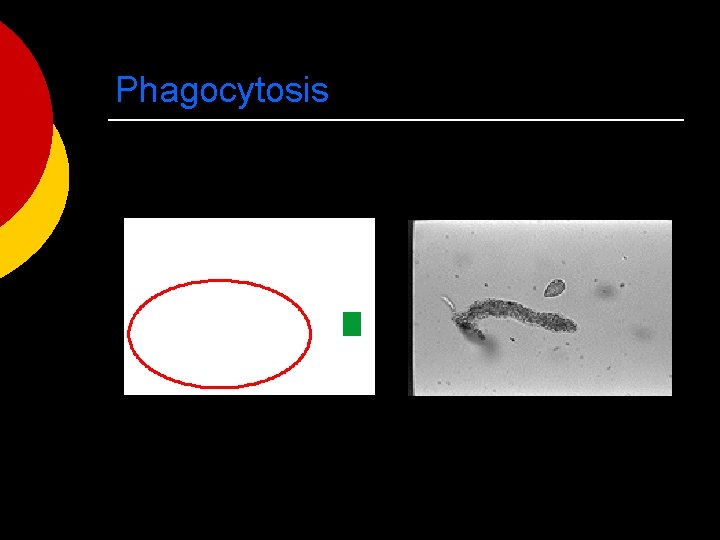
Phagocytosis
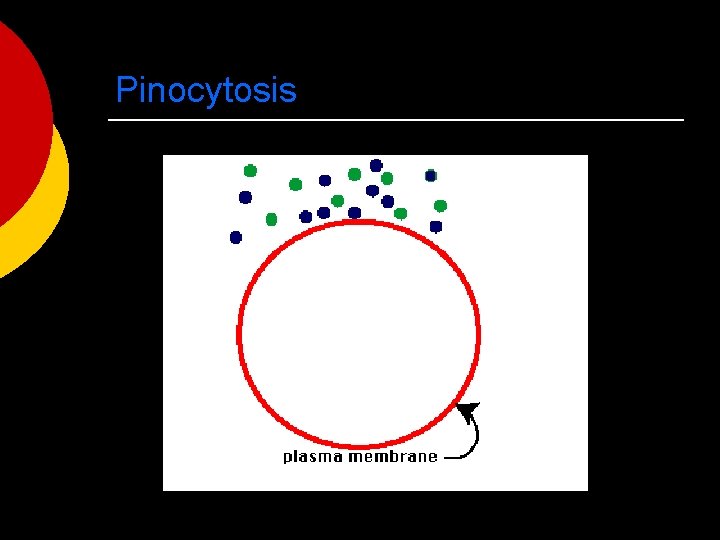
Pinocytosis
- Slides: 35