
Cell Structure and Function Chapter 4 1 Early

- Slides: 52
Cell Structure and Function Chapter 4 1
Early Discoveries + • Mid 1600 s - Robert Hooke observed and described cells in cork • Late 1600 s - Antony van Leeuwenhoek observed sperm, microorganisms • 1820 s - Robert Brown observed and named nucleus in plant cells 2
Developing Cell Theory • Matthias Schleiden • Theodor Schwann • Rudolf Virchow 3
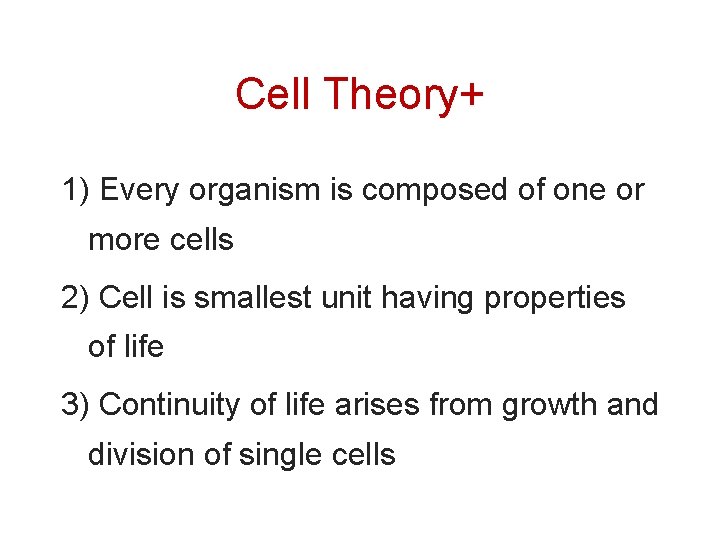
Cell Theory+ 1) Every organism is composed of one or more cells 2) Cell is smallest unit having properties of life 3) Continuity of life arises from growth and division of single cells 4
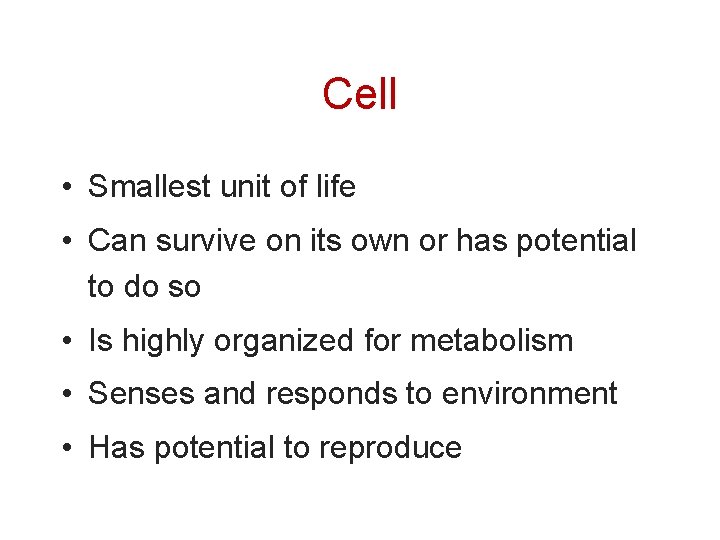
Cell • Smallest unit of life • Can survive on its own or has potential to do so • Is highly organized for metabolism • Senses and responds to environment • Has potential to reproduce 5
Structure of Cells+ All start out life with: Two types: – Plasma membrane – Prokaryotic – Region where DNA is stored – Eukaryotic – Cytoplasm 6
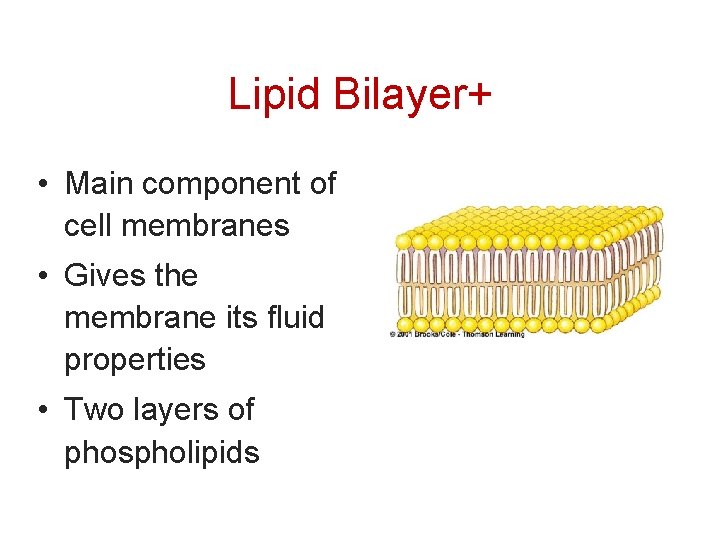
Lipid Bilayer+ • Main component of cell membranes • Gives the membrane its fluid properties • Two layers of phospholipids 7
Fluid Mosaic Model+ • Membrane is a mosaic of – Phospholipids – Glycolipids – Sterols – Proteins • Most phospholipids and some proteins can drift through membrane 8
Membrane Proteins+ • Transport proteins • Receptor proteins • Recognition proteins • Adhesion proteins 9
Why Are Cells So Small? • Surface-to-volume ratio • The bigger a cell is, the less surface area there is per unit volume • Above a certain size, material cannot be moved in or out of cell fast enough 10
Microscopes • Create detailed images of something that is otherwise too small to see • Light microscopes – Simple or compound • Electron microscopes – Transmission EM or Scanning EM 11
Limitations of Light Microscopy • Wavelengths of light are 400 -750 nm • If a structure is less than one-half of a wavelength long, it will not be visible • Light microscopes can resolve objects down to about 200 nm in size 12
Electron Microscopy • Uses streams of accelerated electrons rather than light • Electrons are focused by magnets rather than glass lenses • Can resolve structures down to 0. 5 nm 13
Eukaryotic Cells+ • Have a nucleus and other organelles • Eukaryotic organisms – Plants – Animals – Protistans – Fungi 14
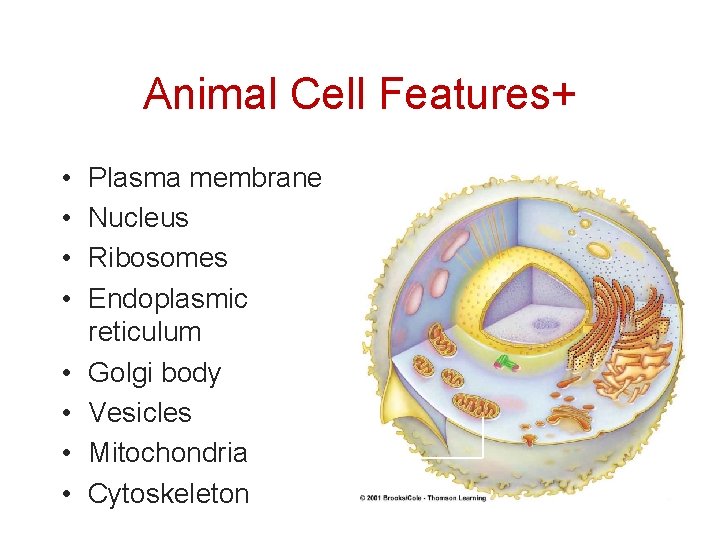
Animal Cell Features+ • • Plasma membrane Nucleus Ribosomes Endoplasmic reticulum Golgi body Vesicles Mitochondria Cytoskeleton 15
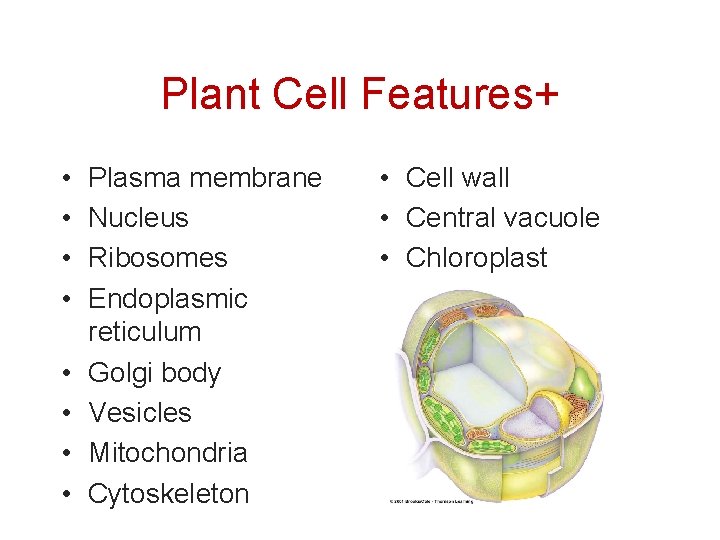
Plant Cell Features+ • • Plasma membrane Nucleus Ribosomes Endoplasmic reticulum Golgi body Vesicles Mitochondria Cytoskeleton • Cell wall • Central vacuole • Chloroplast 16
Functions of Nucleus+ • Keeps the DNA molecules of eukaryotic cells separated from metabolic machinery of cytoplasm • Makes it easier to organize DNA and to copy it before parent cells divide into daughter cells 17
Components of Nucleus+ Nuclear envelope Nucleoplasm Nucleolus Chromosome Chromatin 18
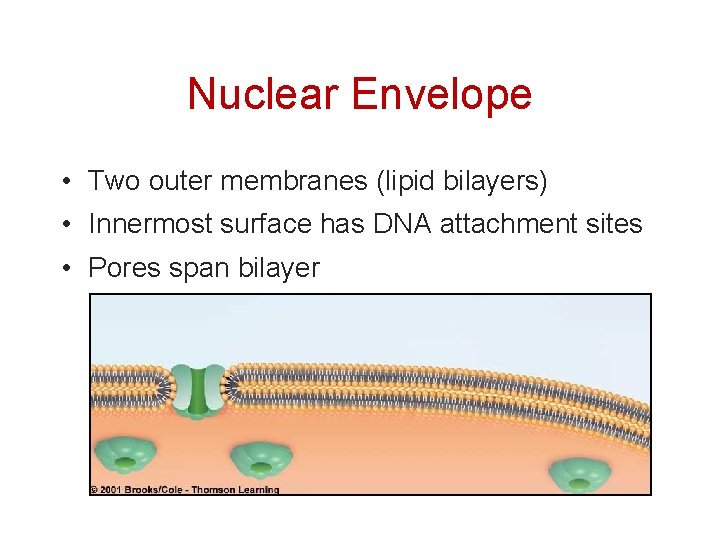
Nuclear Envelope • Two outer membranes (lipid bilayers) • Innermost surface has DNA attachment sites • Pores span bilayer 19
Nucleolus • • Dense mass of material in nucleus May be one or more Cluster of DNA and proteins Materials from which ribosomal subunits are built • Subunits must pass through nuclear pores to reach cytoplasm 20
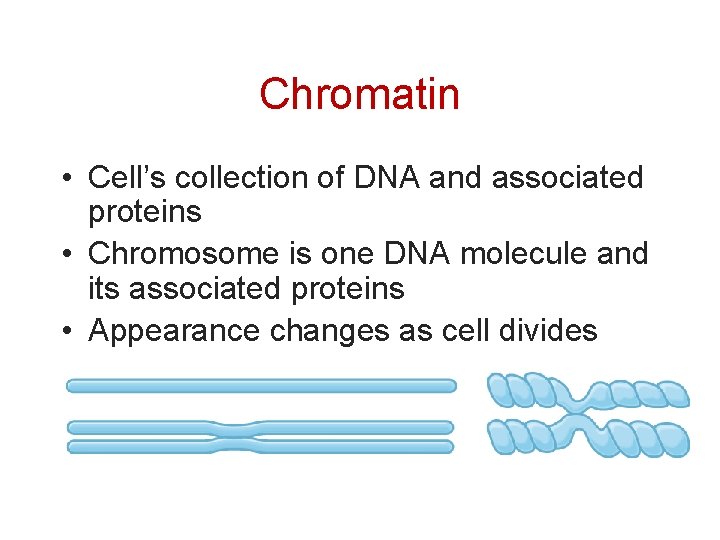
Chromatin • Cell’s collection of DNA and associated proteins • Chromosome is one DNA molecule and its associated proteins • Appearance changes as cell divides 21
Cytomembrane System • Group of related organelles in which lipids are assembled and new polypeptide chains are modified • Products are sorted and shipped to various destinations 22
Components of Cytomembrane System Endoplasmic reticulum Golgi bodies Vesicles 23
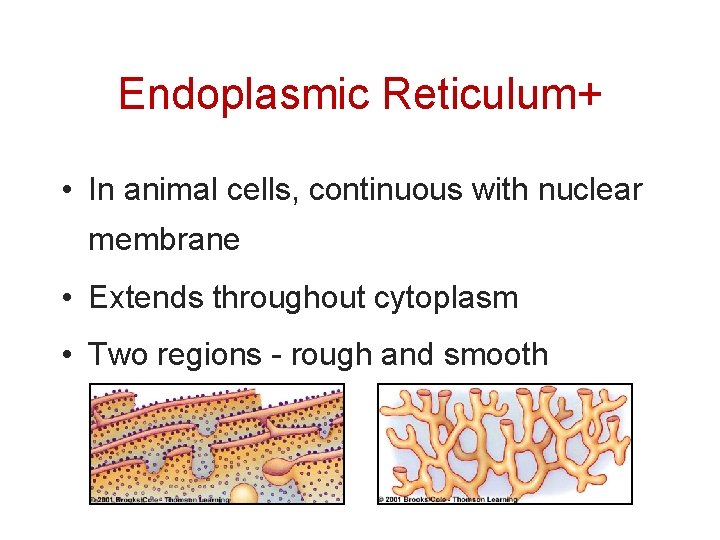
Endoplasmic Reticulum+ • In animal cells, continuous with nuclear membrane • Extends throughout cytoplasm • Two regions - rough and smooth 24
Rough ER+ • Arranged into flattened sacs • Ribosomes on surface give it a rough appearance • Some polypeptide chains enter rough ER and are modified • Cells that specialize in secreting proteins have lots of rough ER 25
Smooth ER+ • • A series of interconnected tubules No ribosomes on surface Lipids assembled inside tubules Smooth ER of liver inactivates wastes, drugs • Sarcoplasmic reticulum of muscle is a specialized form 26
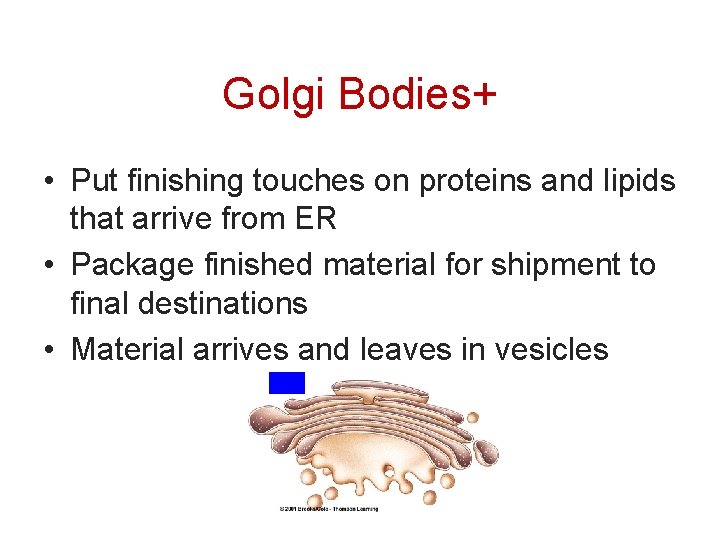
Golgi Bodies+ • Put finishing touches on proteins and lipids that arrive from ER • Package finished material for shipment to final destinations • Material arrives and leaves in vesicles 27
Vesicles • Membranous sacs that move through the cytoplasm • Lysosomes • Peroxisomes 28
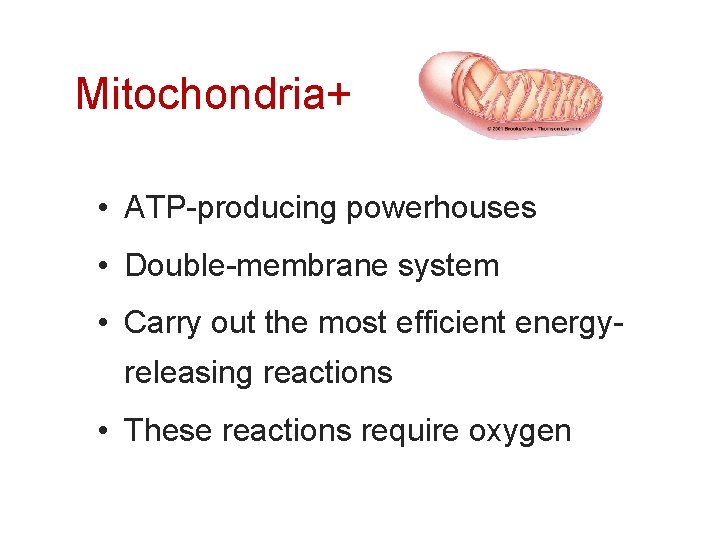
Mitochondria+ • ATP-producing powerhouses • Double-membrane system • Carry out the most efficient energyreleasing reactions • These reactions require oxygen 29
Mitochondrial Structure+ • Outer membrane faces cytoplasm • Inner membrane folds back on itself • Membranes form two distinct compartments • ATP-making machinery is embedded in the inner mitochondrial membrane 30
Mitochondrial Origins+ • Mitochondria resemble bacteria – Have own DNA, ribosomes – Divide on their own • May have evolved from ancient bacteria that were engulfed but not digested 31
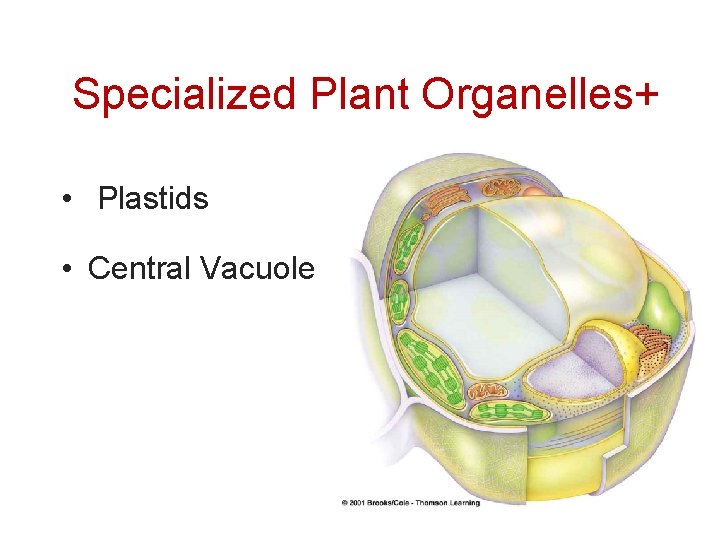
Specialized Plant Organelles+ • Plastids • Central Vacuole 32
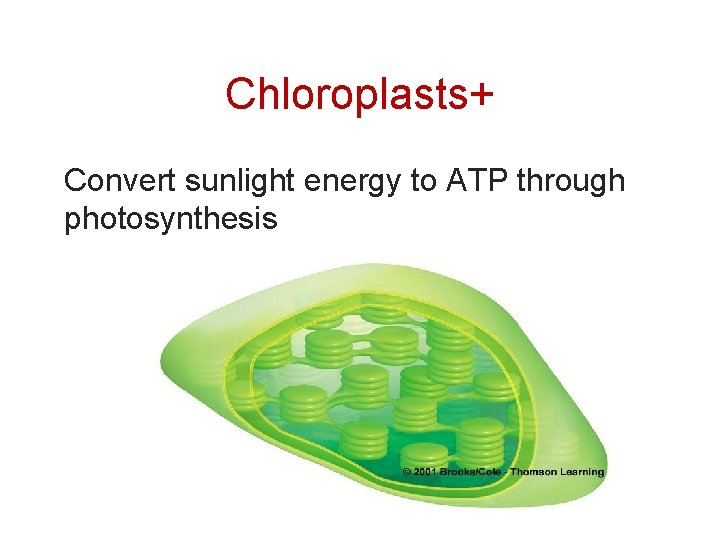
Chloroplasts+ Convert sunlight energy to ATP through photosynthesis 33
Photosynthesis+ • First stage – Occurs at thylakoid membrane – Light energy is trapped by pigments and stored as ATP • Second stage – Inside stroma, ATP energy is used to make sugars, then other carbohydrates 34
Other Plastids+ • Chromoplasts – No chlorophyll – Abundance of carotenoids – Color fruits and flowers red-to-yellow • Amyloplasts – No pigments – Store starch 35
Central Vacuole • Fluid-filled organelle • Stores amino acids, sugars, wastes • As cell grows, expansion of vacuole as a result of fluid pressure forces cell wall to expand • In mature cell, central vacuole takes up 50 -90 percent of cell interior 36
Cytoskeleton • Present in all eukaryotic cells • Basis for cell shape and internal organization • Allows organelle movement within cells and, in some cases, cell motility 37
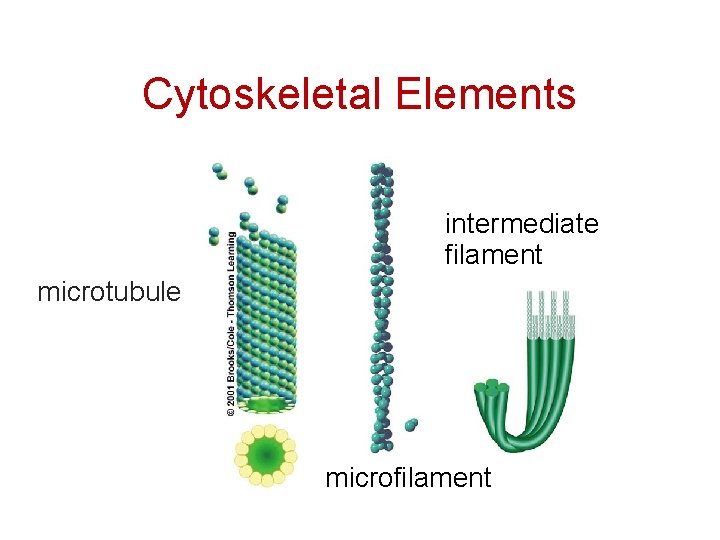
Cytoskeletal Elements intermediate filament microtubule microfilament 38
Microtubules+ • Largest elements • Composed of the protein tubulin • Arise from microtubule organizing centers (MTOCs) • Polar and dynamic • Involved in shape, motility, cell division 39
Microfilaments+ • Thinnest cytoskeletal elements • Composed of the protein actin • Polar and dynamic • Take part in movement, formation and maintenance of cell shape 40
Accessory Proteins • Attach to tubulin and actin • Motor proteins • Crosslinking proteins 41
Intermediate Filaments • Present only in animal cells of certain tissues • Most stable cytoskeletal elements • Six known groups – Desmins, vimentins, lamins, etc. • Different cell types usually have 1 -2 different kinds 42
Mechanisms of Movement+ • Length of microtubules or microfilaments can change • Parallel rows of microtubules or microfilaments actively slide in a specific direction • Microtubules or microfilaments can shunt organelles to different parts of cell 43
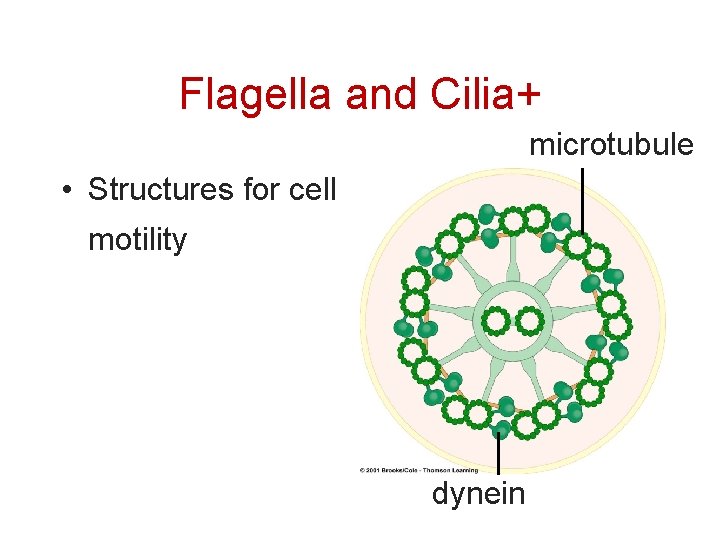
Flagella and Cilia+ microtubule • Structures for cell motility dynein 44
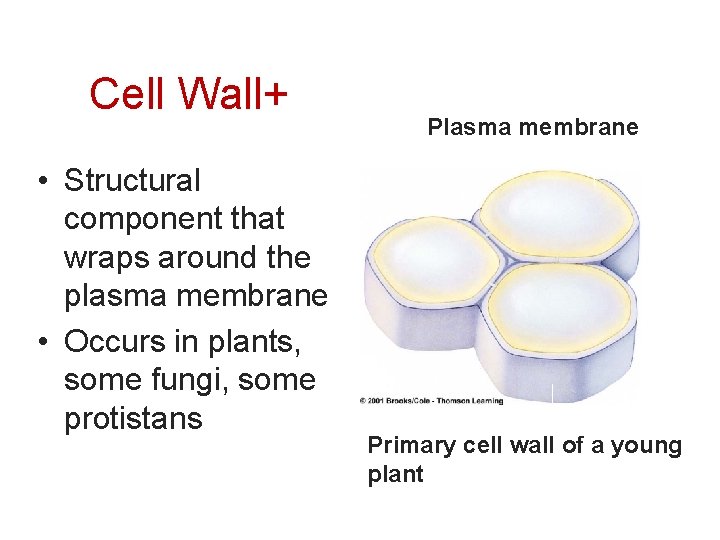
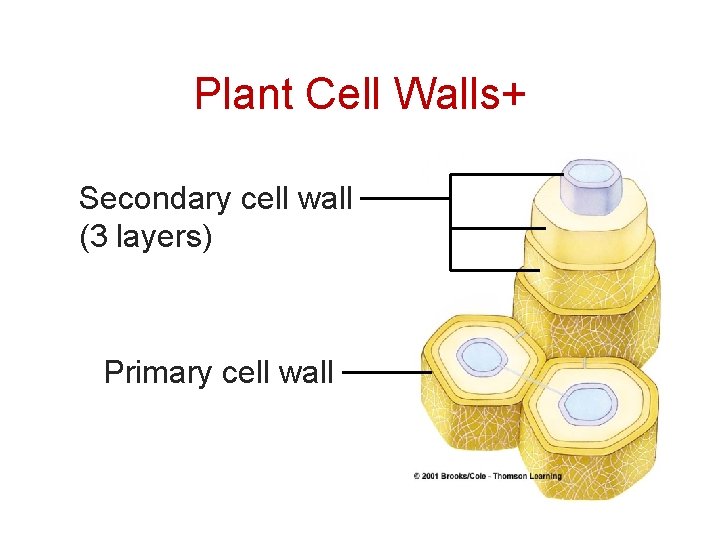
Cell Wall+ • Structural component that wraps around the plasma membrane • Occurs in plants, some fungi, some protistans Plasma membrane Primary cell wall of a young plant 45
Plant Cell Walls+ Secondary cell wall (3 layers) Primary cell wall 46
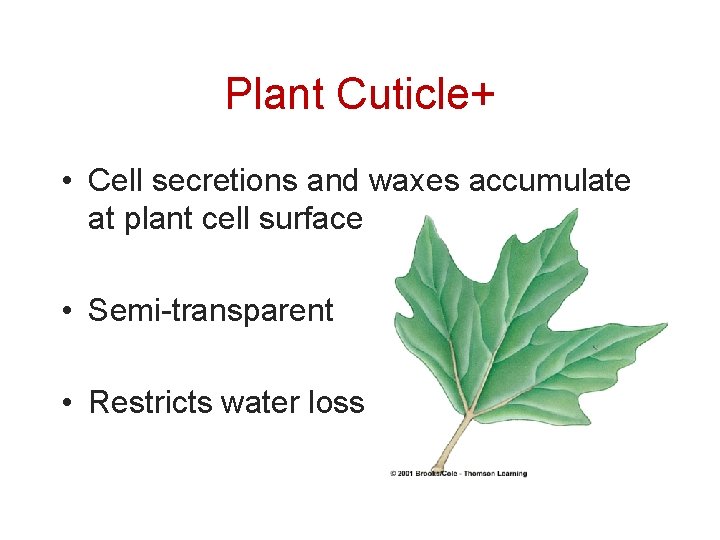
Plant Cuticle+ • Cell secretions and waxes accumulate at plant cell surface • Semi-transparent • Restricts water loss 47
Matrixes Between Animal Cells • Animal cells have no cell walls • Some are surrounded by a matrix of cell secretions and other material 48
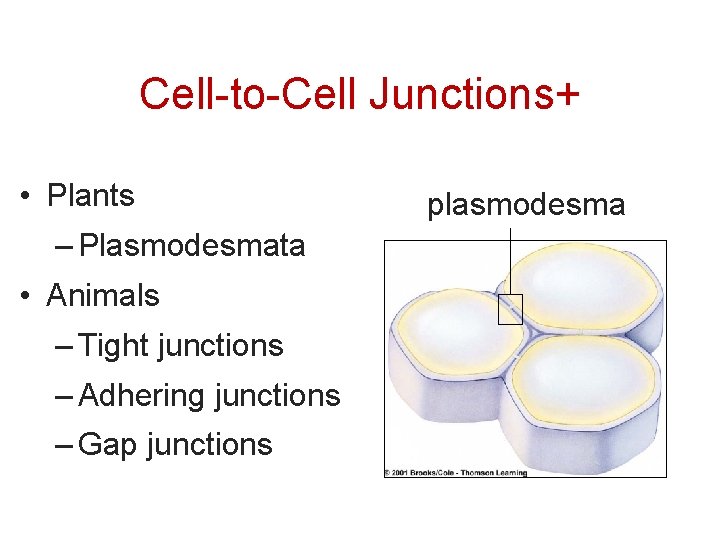
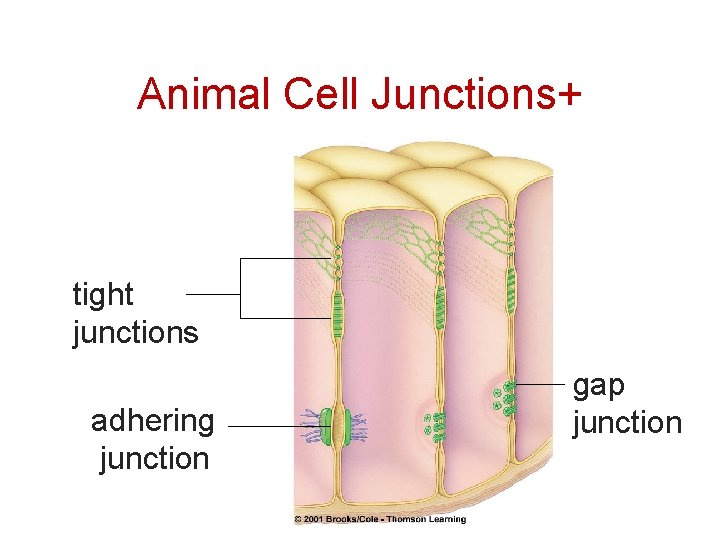
Cell-to-Cell Junctions+ • Plants plasmodesma – Plasmodesmata • Animals – Tight junctions – Adhering junctions – Gap junctions 49
Animal Cell Junctions+ tight junctions adhering junction gap junction 50
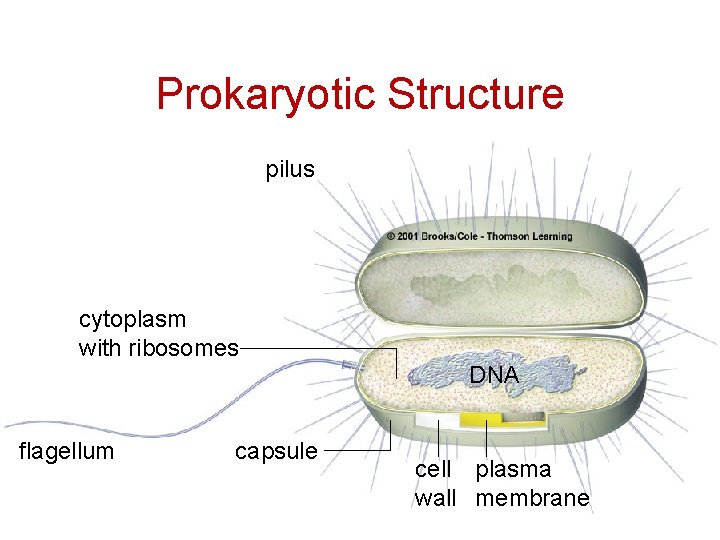
Prokaryotic Cells • Archaebacteria and Eubacteria • DNA is NOT enclosed in nucleus • Generally the smallest, simplest cells • No organelles 51
Prokaryotic Structure pilus cytoplasm with ribosomes DNA flagellum capsule cell plasma wall membrane 52