
Cell Structure and Function CELLS UNIT Discovering Cells
- Slides: 110
Cell Structure and Function CELLS UNIT
Discovering Cells Section One
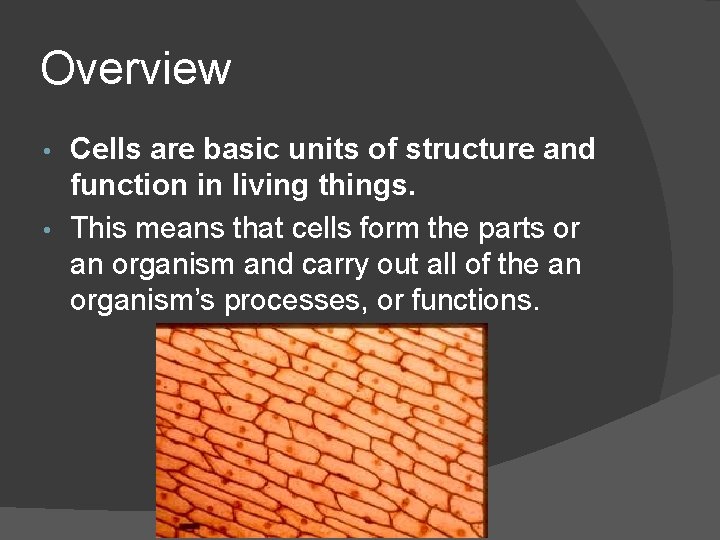
Overview Cells are basic units of structure and function in living things. • This means that cells form the parts or an organism and carry out all of the an organism’s processes, or functions. •
Cells and Structure The structures of living things are determined by the variety of ways in which cells are put together. • Examples: • • A tall tree consists of cells arranged to form a high trunk and leafy branch. • A red newt’s cells form a body with a head and four legs.
Cells and Functions � An organisms functions are processes that enable it to stay alive and reproduce. � Examples: �Obtaining oxygen �Getting rid of waste �Growing �Obtaining food
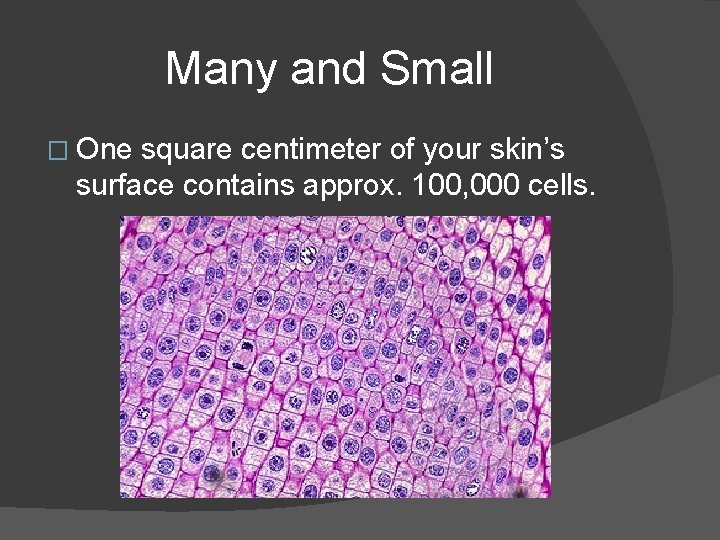
Many and Small � One square centimeter of your skin’s surface contains approx. 100, 000 cells.
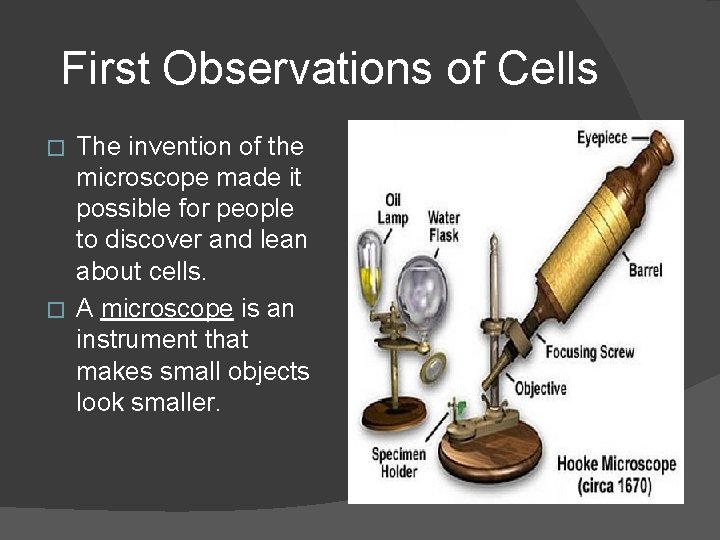
First Observations of Cells The invention of the microscope made it possible for people to discover and lean about cells. � A microscope is an instrument that makes small objects look smaller. �
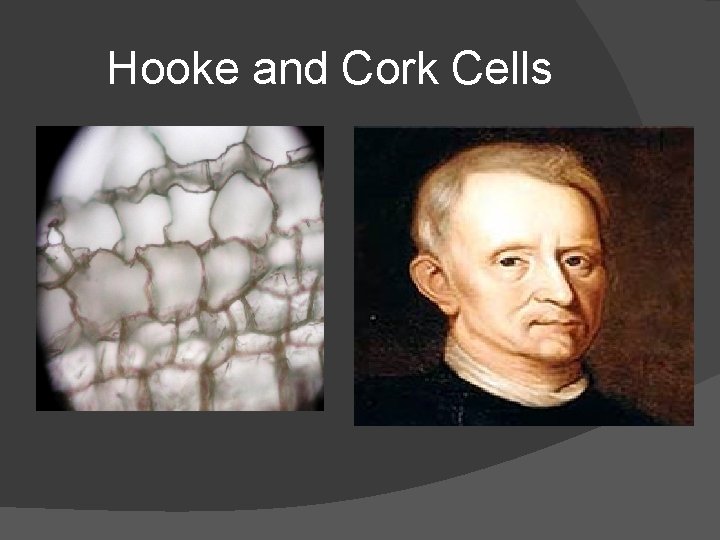
Robert Hooke � One of the first people to observe cells was the English scientist and inventor Robert Hooke. � Hooke used his microscope to observe a thin slice of cork. �Cork is made from trees � To Hooke the empty spaces looked like empty rooms, which is where we get the word cell –meaning “small rooms”
Hooke and Cork Cells
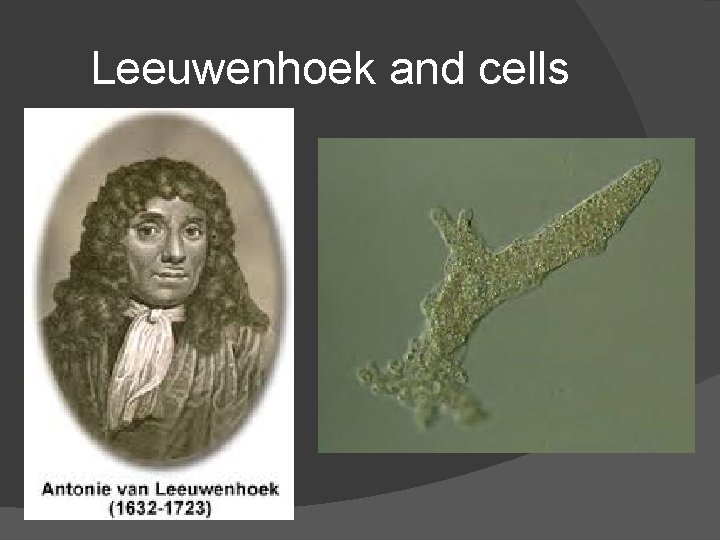
Anton van Leeuwenhoek � Leeuwenhoek was a Dutch businessman who sold cloth. In his spare time he build simple microscopes. � Leeuwenhoek looked at samples from lake water, scrapings from teeth, and rain water. � When looking at the samples he say cells and some of these cells moved. � He called these moving organisms animalcules meaning “little animals”
Leeuwenhoek and cells
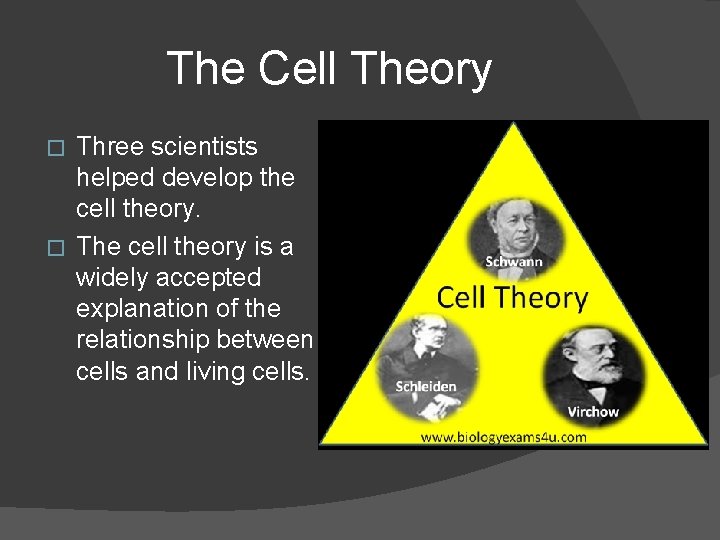
The Cell Theory Three scientists helped develop the cell theory. � The cell theory is a widely accepted explanation of the relationship between cells and living cells. �
The Cell Theory � The cell theory states the following: �All living things are composed of cells. �Cells are the basic units of structure and function in living things �All cells are produced from other cells.
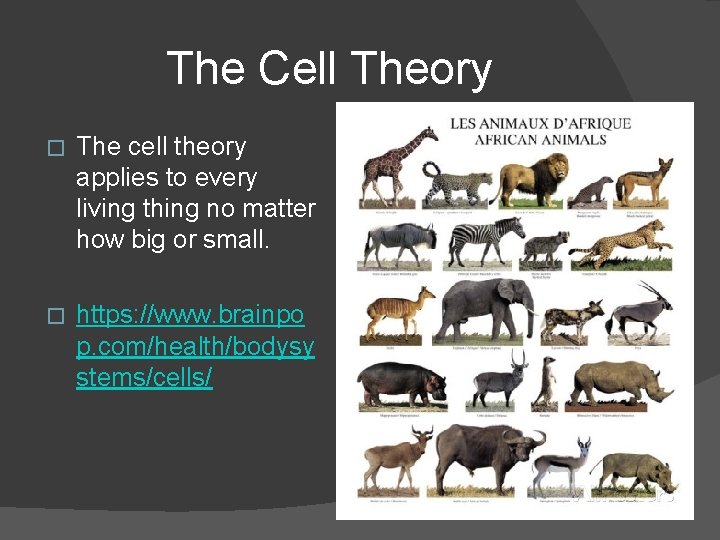
The Cell Theory � The cell theory applies to every living thing no matter how big or small. � https: //www. brainpo p. com/health/bodysy stems/cells/
Unicellular Organisms vs. Multicellular Organisms TYPES OF ORGANISMS
What makes a living thing different from a nonliving thing? �A living things uses energy! � Any individual form of life that uses energy to carry out its activities is an organism. � Most organisms move. � All organisms get water and other materials from the environment.
Characteristics of Living Things � Living things have these characteristics: � organization � the ability to develop and grow � the ability to respond to the environment � the ability to reproduce
Needs of Life � Organisms cannot carry out the activities that characterize life without a few necessities: �Energy �Materials �Living space.
What is an Organism? Definition: Organism – anything that can live on its own
Unicellular Organisms
Unicellular Organisms Definition: Unicellular organism – an organism made of only one cell Information: These organism are very small and need to be seen with a microscope.
Unicellular: Common Names � Microscopic Organisms � Microorganisms � Really small living things
Examples of Unicellular Organisms � Amoeba � Unicellular fungi � Bacteria � Unicellular yeasts � Protozoa � Paramecium � Unicellular algae
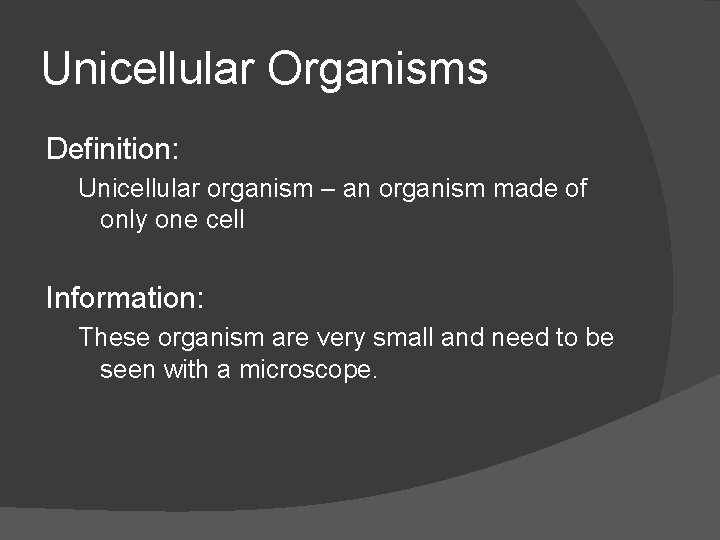
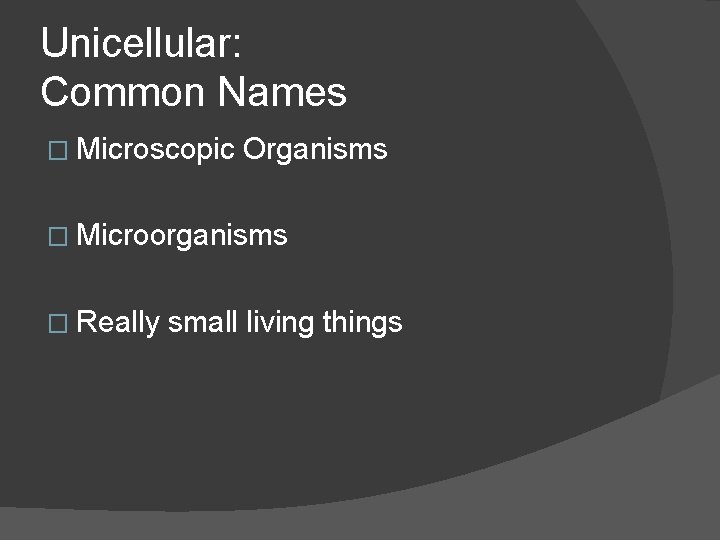
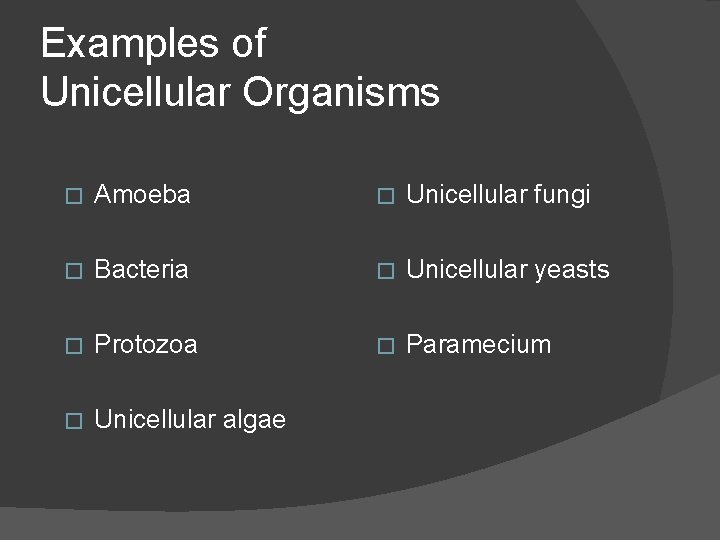
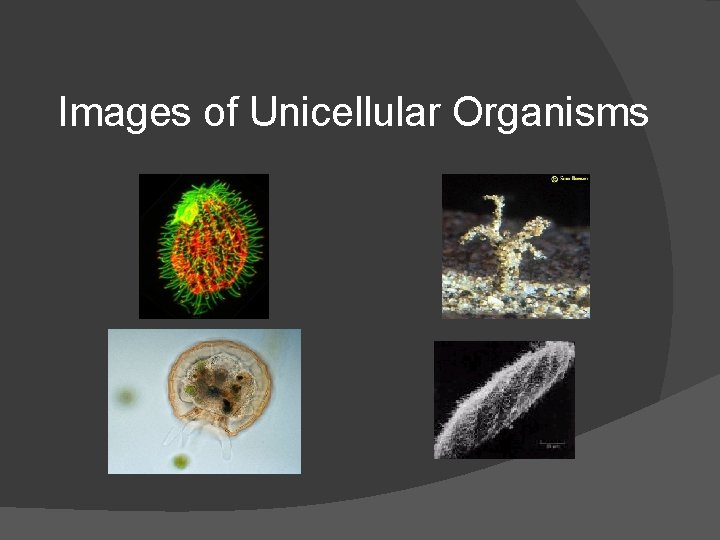
Images of Unicellular Organisms
Multicellular Organisms
Multicellular Organisms Definition: Multicellular organism – an organism made of two or more cells Information: v. These organisms are able to be seen with the naked eye. v. These organisms need all parts of itself to survive.
Common Names � Many – celled organisms � Eukaryotic organisms � Mammals � Birds � Reptile � Fish � Many others…
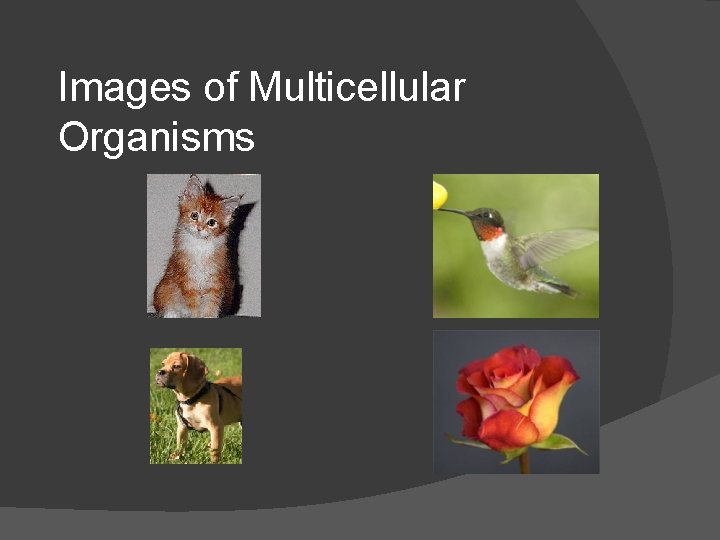
Examples of Multicellular Organisms � Humans � Birds � Cats � Flowers � Dogs � Mold � Insects � Trees
Images of Multicellular Organisms
Section Two Looking Inside Cells
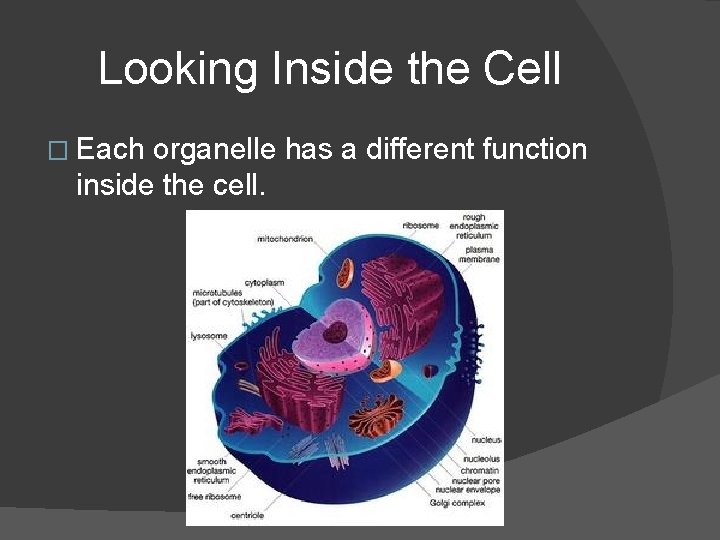
Looking Inside Cell � Cells are basic units of structure and function in living things. � There are even small structures inside a cell. These tiny structures are called organelles. � Organelles carry out specific functions within the cell. � https: //www. brainpop. com/science/cellularlifea ndgenetics/cellstructures/
Looking Inside the Cell � Each organelle has a different function inside the cell.
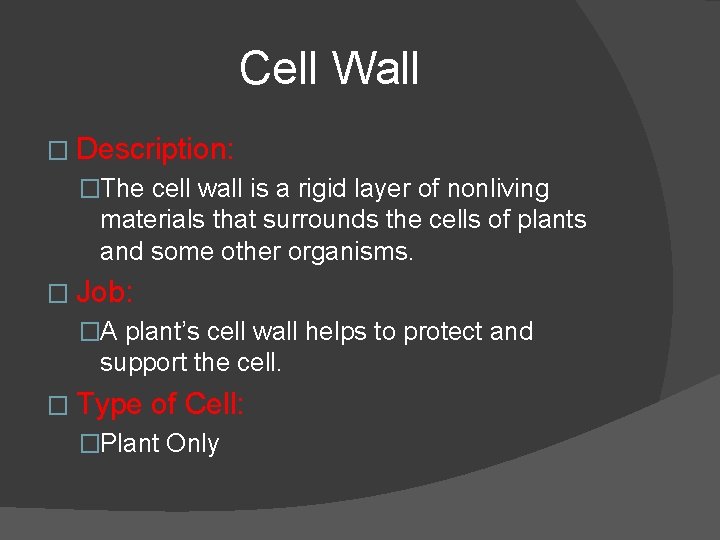
Cell Wall � Description: �The cell wall is a rigid layer of nonliving materials that surrounds the cells of plants and some other organisms. � Job: �A plant’s cell wall helps to protect and support the cell. � Type of Cell: �Plant Only
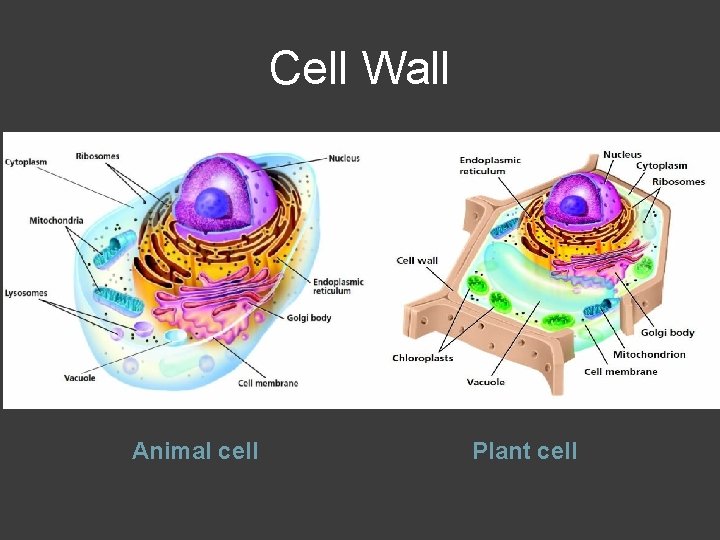
Cell Wall Animal cell Plant cell
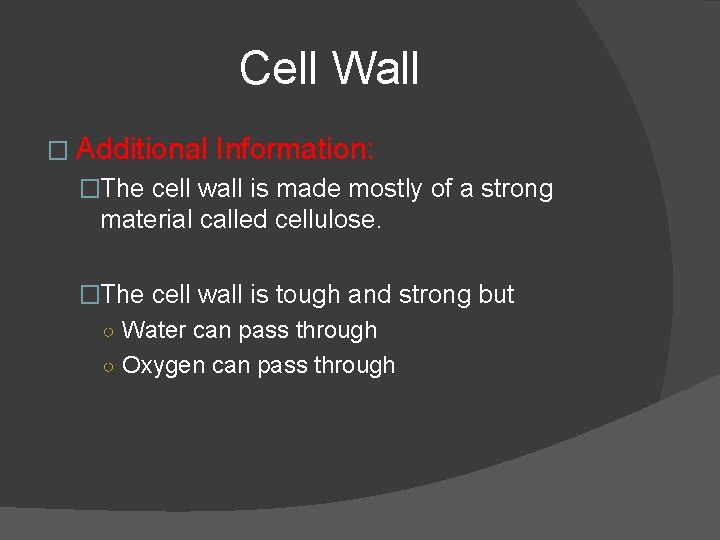
Cell Wall � Additional Information: �The cell wall is made mostly of a strong material called cellulose. �The cell wall is tough and strong but ○ Water can pass through ○ Oxygen can pass through
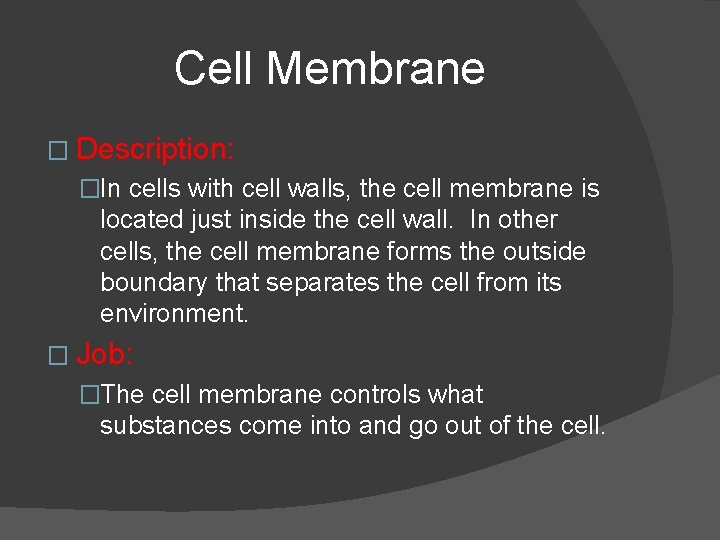
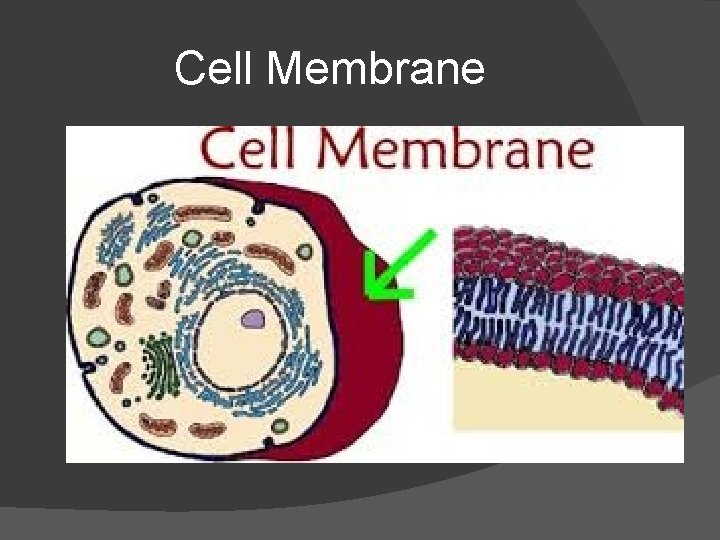
Cell Membrane � Description: �In cells with cell walls, the cell membrane is located just inside the cell wall. In other cells, the cell membrane forms the outside boundary that separates the cell from its environment. � Job: �The cell membrane controls what substances come into and go out of the cell.
Cell Membrane � Type of Cell: �Plant and Animal Cells � Additional Information: �Everything that the cell needs from food to oxygen pass through the cell membrane. �The cell membrane prevents harmful materials from entering the cell
Cell Membrane
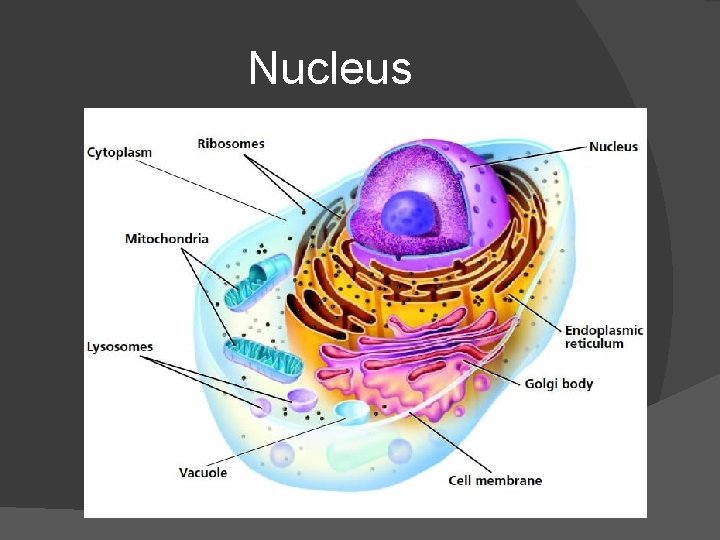
Nucleus � Description: �A large oval structure in the center of the cell. � Job: �The “brain of the cell”. Controls the activities of the cell � Types of Cell: �Animal and Plant Cell � Additional Information: �There are several parts that make up the nucleus
Nucleus
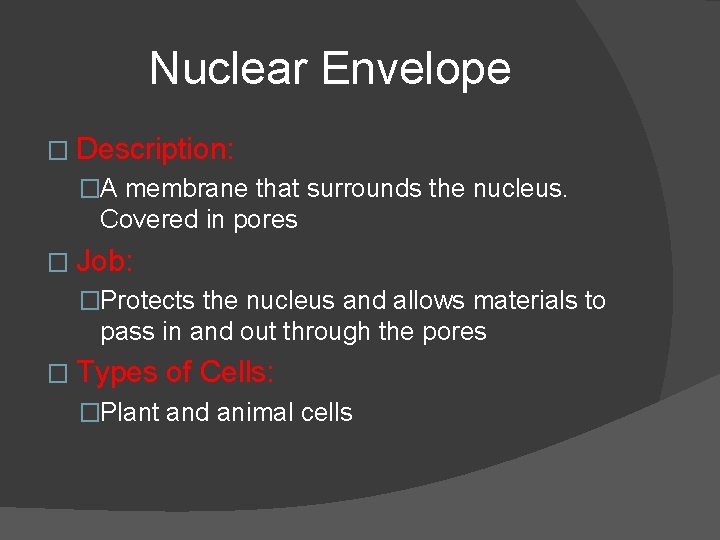
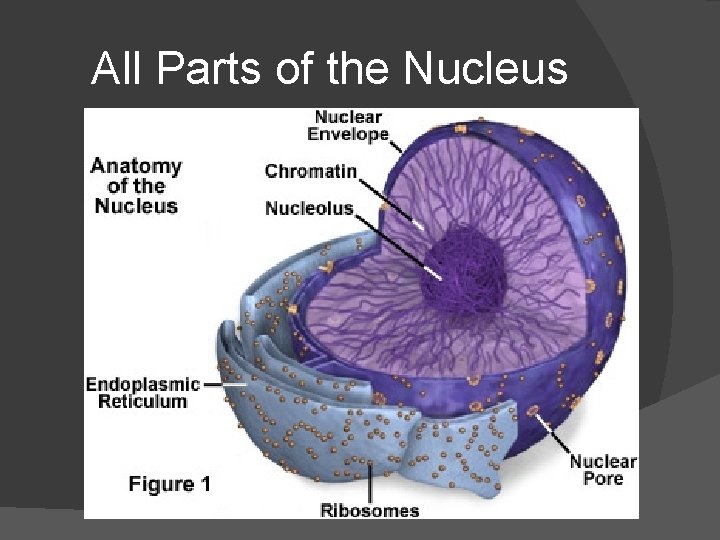
Nuclear Envelope � Description: �A membrane that surrounds the nucleus. Covered in pores � Job: �Protects the nucleus and allows materials to pass in and out through the pores � Types of Cells: �Plant and animal cells
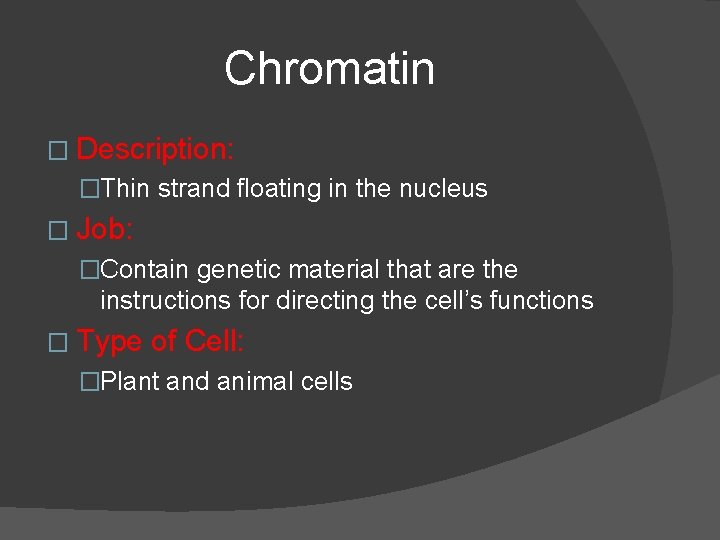
Chromatin � Description: �Thin strand floating in the nucleus � Job: �Contain genetic material that are the instructions for directing the cell’s functions � Type of Cell: �Plant and animal cells
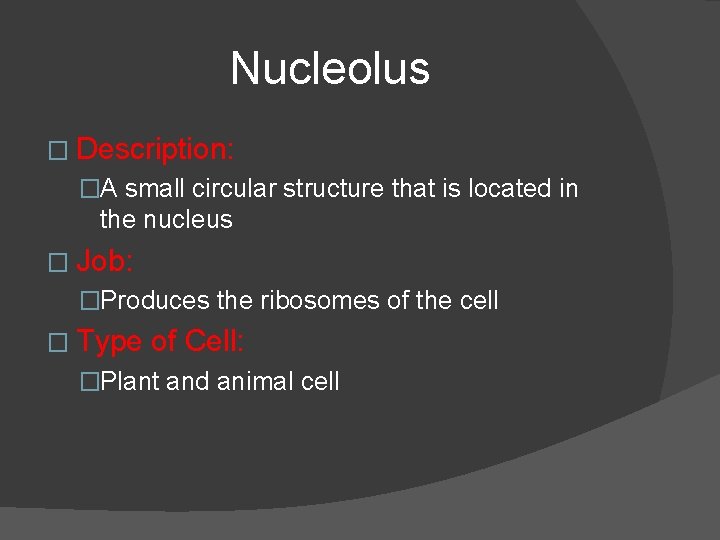
Nucleolus � Description: �A small circular structure that is located in the nucleus � Job: �Produces the ribosomes of the cell � Type of Cell: �Plant and animal cell
All Parts of the Nucleus
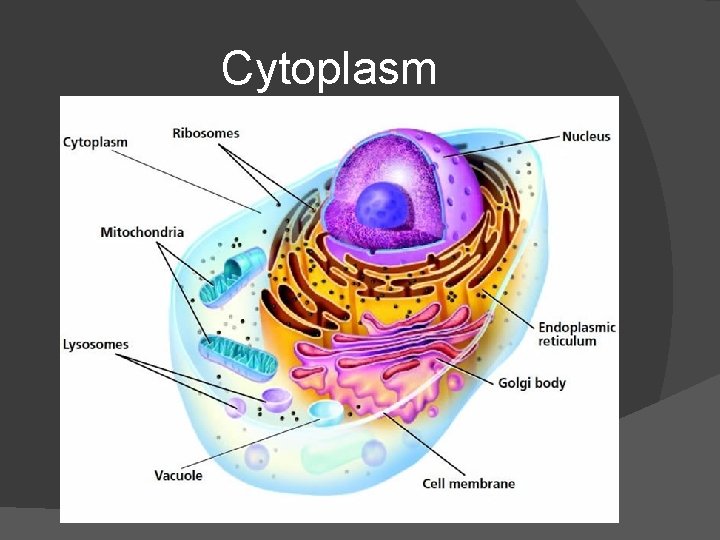
Cytoplasm � Description: �The region between the cell membrane and the nucleus. Made of a clear gel-like fluid. � Job: �Cytoplasm is responsible for giving a cell its shape, keeps organelles in their place. � Types of Cells: �Plant and animal cells
Cytoplasm
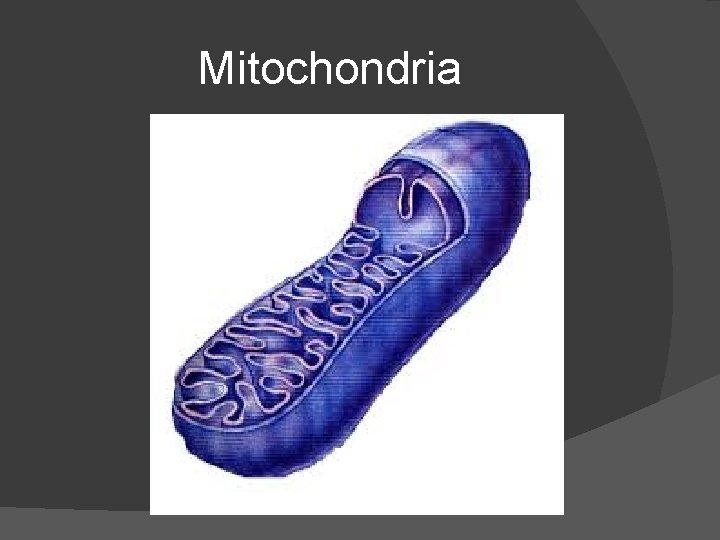
Mitochondria � Description: �Rod shaped structure � Job: �Known as the “powerhouse” of the cell because they convert energy into food molecules to energy the cell can use to carry out its functions � Types of Cells: �Plant and Animals
Mitochondria
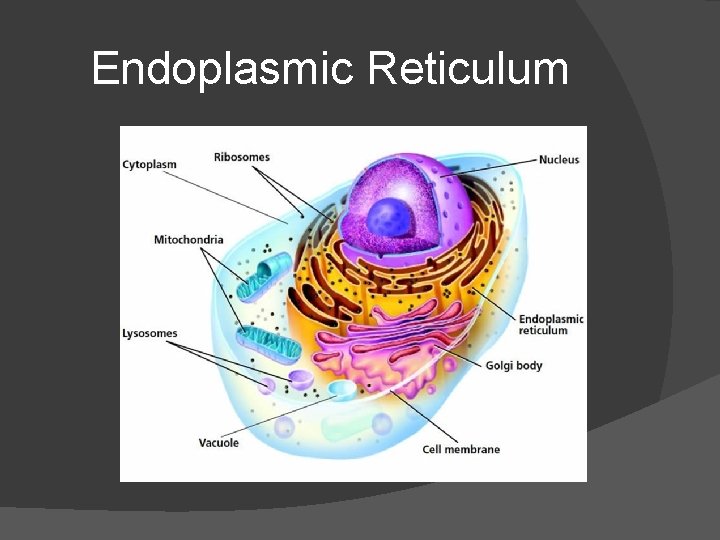
Endoplasmic Reticulum � Description: �A maze of passageways that surround the nucleus � Job: �Carries proteins and other materials from one part of the cell to another � Types of Cells: �Plants and Animal Cell
Endoplasmic Reticulum
Ribosomes � Description: �Small, grain-like bodies that attach to the Endoplasmic Reticulum � Job: �Produce proteins � Types of Cells: �Animal and Plant cells
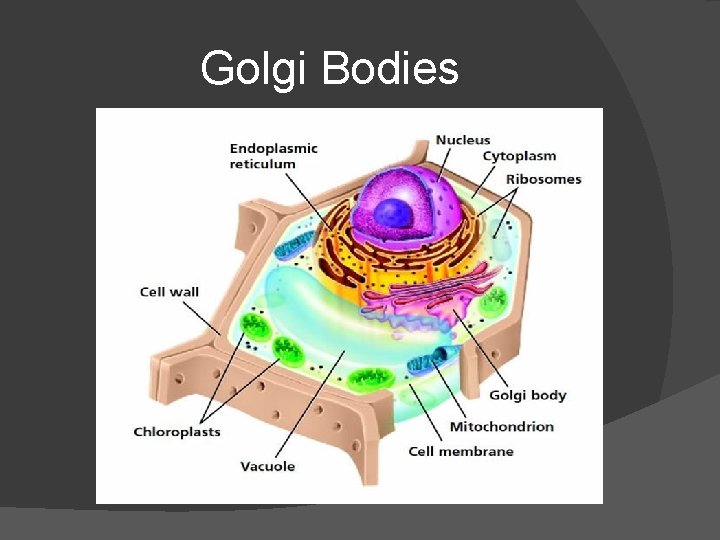
Golgi Bodies � Description: �Flattened sacs and tubes � Job: �Receive proteins and other newly formed materials from the endoplasmic reticulum, package them, and distribute them to the other parts of cells � Types of Cells: �Plant and Animal Cells
Golgi Bodies
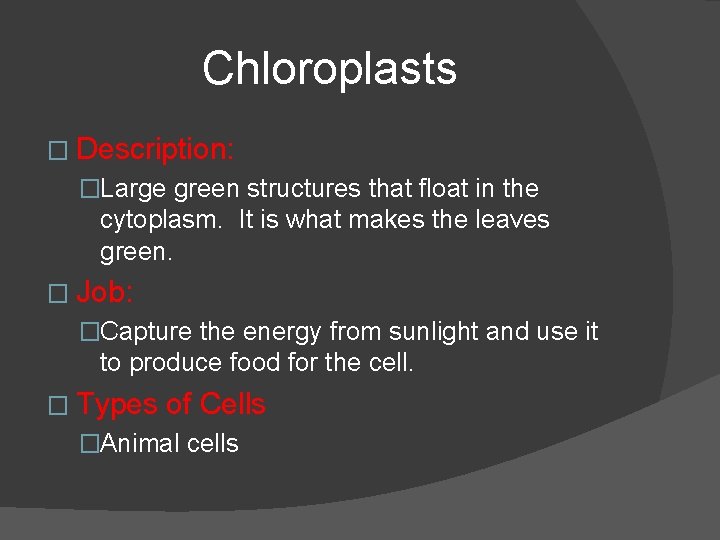
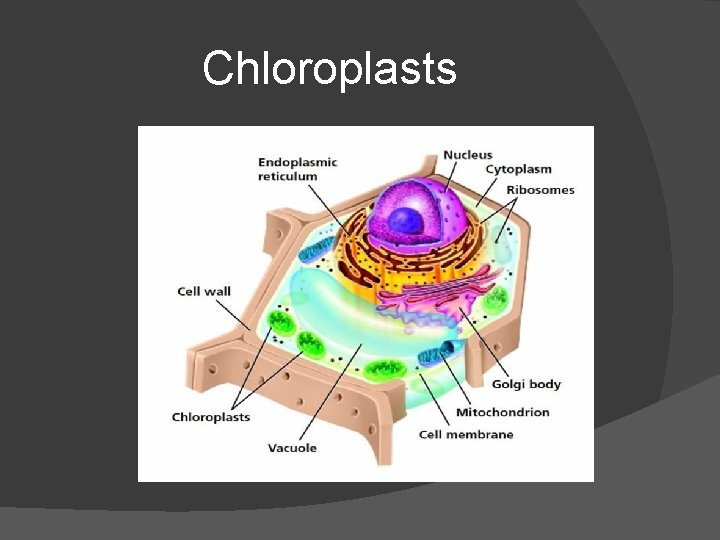
Chloroplasts � Description: �Large green structures that float in the cytoplasm. It is what makes the leaves green. � Job: �Capture the energy from sunlight and use it to produce food for the cell. � Types of Cells �Animal cells
Chloroplasts
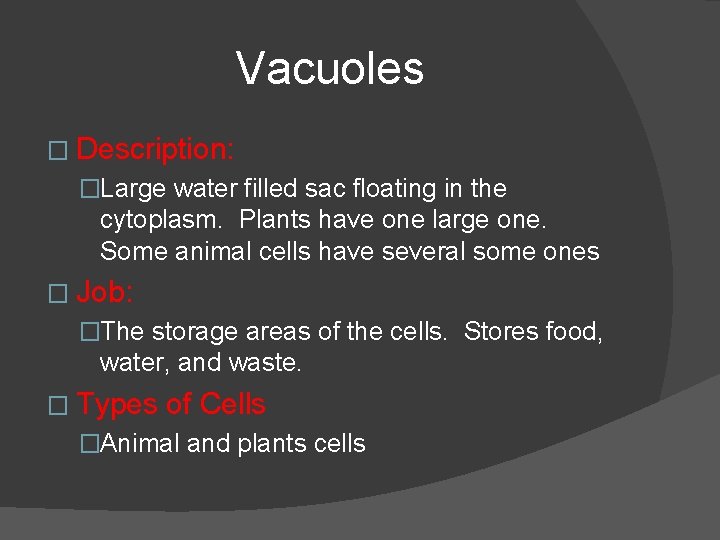
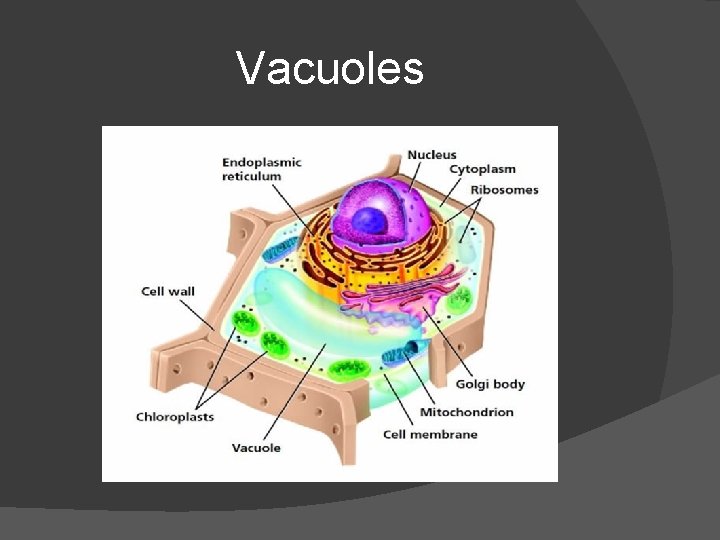
Vacuoles � Description: �Large water filled sac floating in the cytoplasm. Plants have one large one. Some animal cells have several some ones � Job: �The storage areas of the cells. Stores food, water, and waste. � Types of Cells �Animal and plants cells
Vacuoles
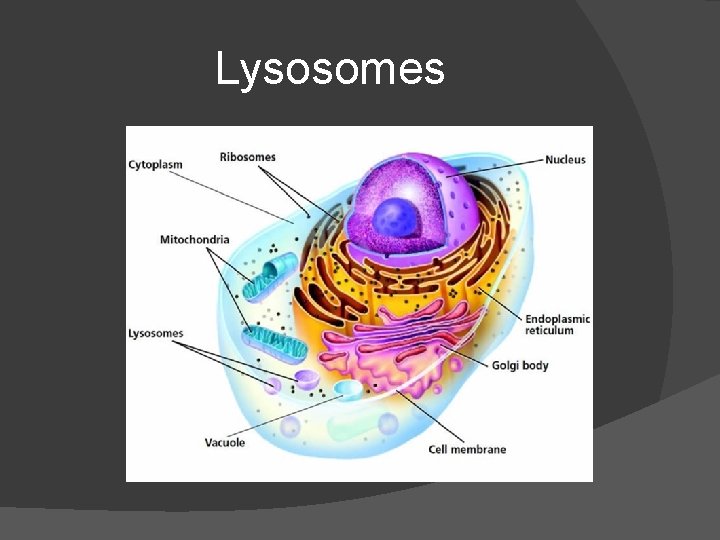
Lysosomes � Description: �Small, round structures that contain chemicals � Job: �Break down materials in the cell. ○ Food ○ Old parts of the cell � Types of Cells �Animal and Plant cells
Lysosomes
Section Four The Cell in its Environment
The Cell in its Environment � All cells are surrounded by a cell membrane that separates the cell from the outside environment. � The cell membrane is selectively permeable, which means that some substances can pass through the membrane while others cannot.
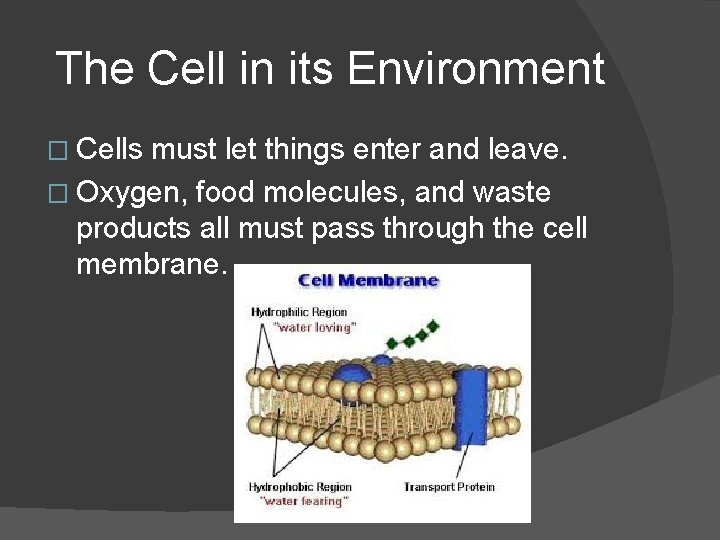
The Cell in its Environment � Cells must let things enter and leave. � Oxygen, food molecules, and waste products all must pass through the cell membrane.
The Cell in its Environment � Substances that can move into and out of a cell do so by one of three methods: �Diffusion �Osmosis �Active transport
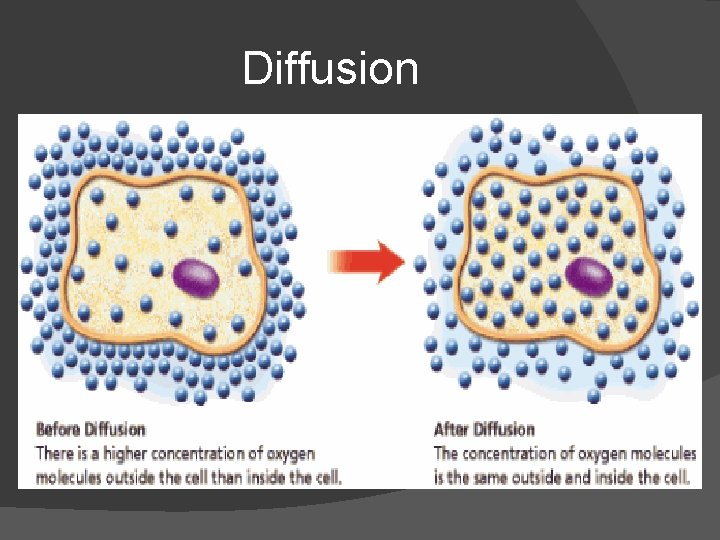
Diffusion � Diffusion is the main method by which small molecules move across the cell membrane. � Diffusion is the process by which molecules move from an area of higher concentration to an area of lower concentration. � https: //www. brainpop. com/science/cellul arlifeandgenetics/passivetransport/
What Causes Diffusion? � Molecules are always moving and bumping into one another. � The more molecules there are in an area, the more collisions there will be. � Eventually they will spread evenly throughout the area.
Diffusion
Osmosis � Osmosis is the diffusion of water molecules through a selectively permeable membrane � Cells cannot function properly without adequate water, many cellular processes depend on osmosis
Osmosis and Diffusion � In osmosis, water molecules move by diffusion from an area where they are highly concentrated through the cell membrane to an area where they are less concentrated. � Osmosis is simply diffusion for water
Effects of Osmosis � There are three effects of osmosis: �Hypertonic �Isotonic �Hypotonic
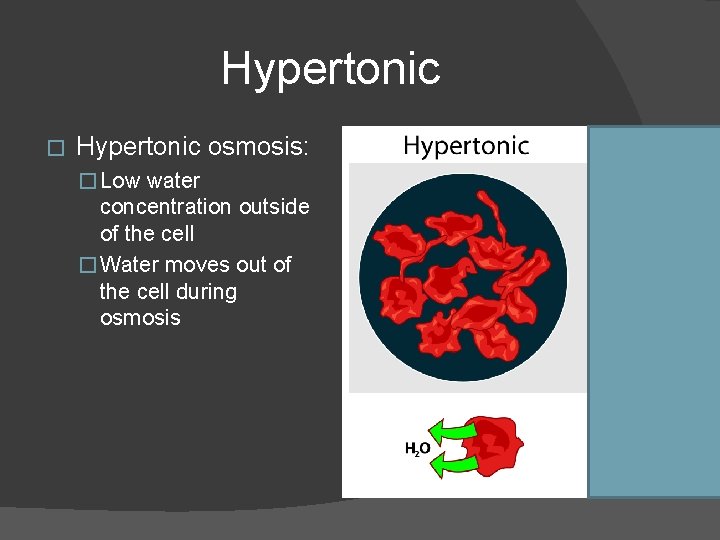
Hypertonic � Hypertonic osmosis: � Low water concentration outside of the cell � Water moves out of the cell during osmosis
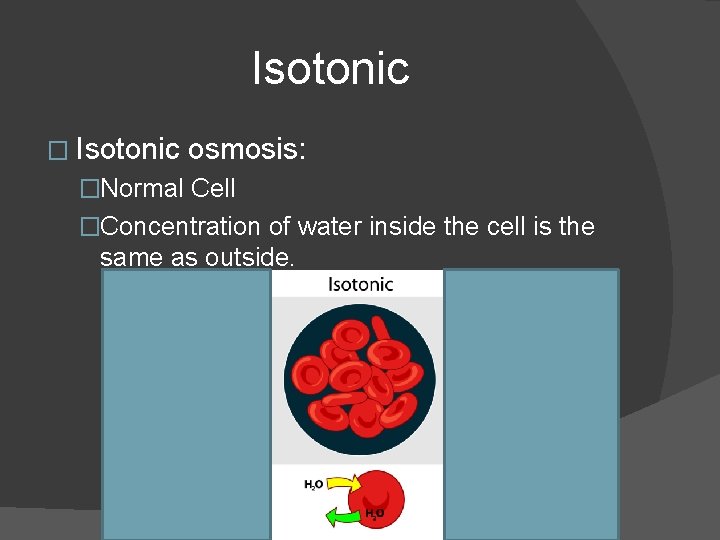
Isotonic � Isotonic osmosis: �Normal Cell �Concentration of water inside the cell is the same as outside.
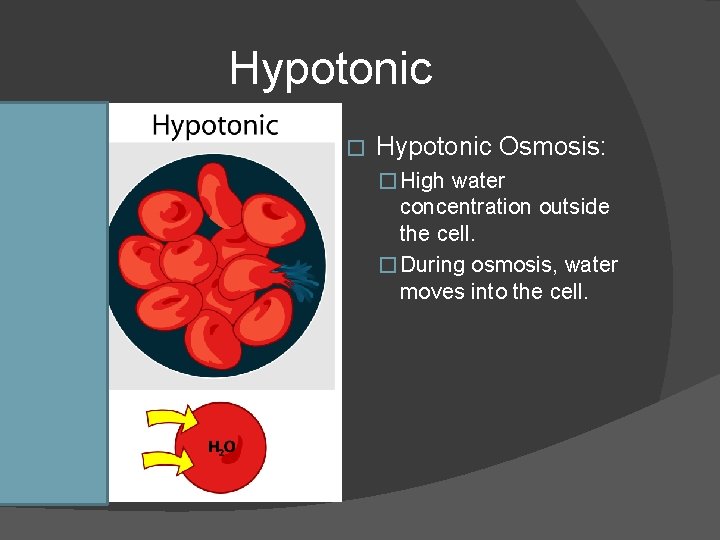
Hypotonic � Hypotonic Osmosis: � High water concentration outside the cell. � During osmosis, water moves into the cell.
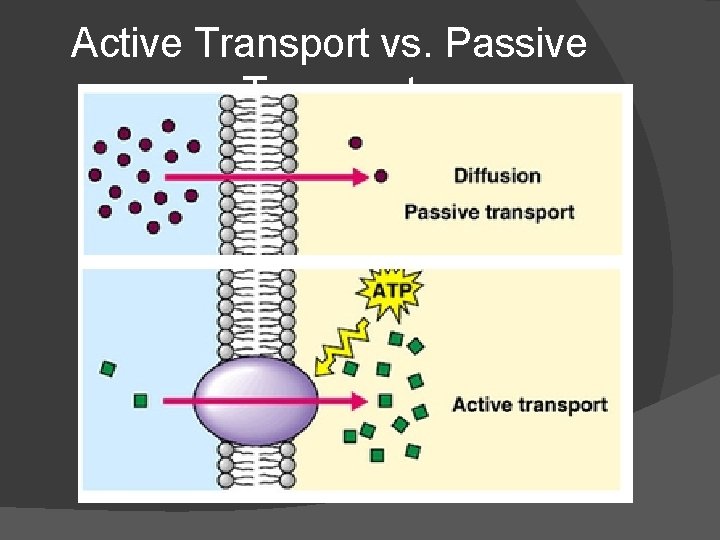
Passive Transport � For a cell moving materials through the cell membrane by diffusion and osmosis require no energy. � The movement of dissolved material through a cell membrane without using cellular energy is called passive transport
Active Transport � What if a cell has to take in a substance that is present in a higher concentration inside the cell than outside? � The cell would have to move the molecules in the opposite direction than they naturally move by diffusion.
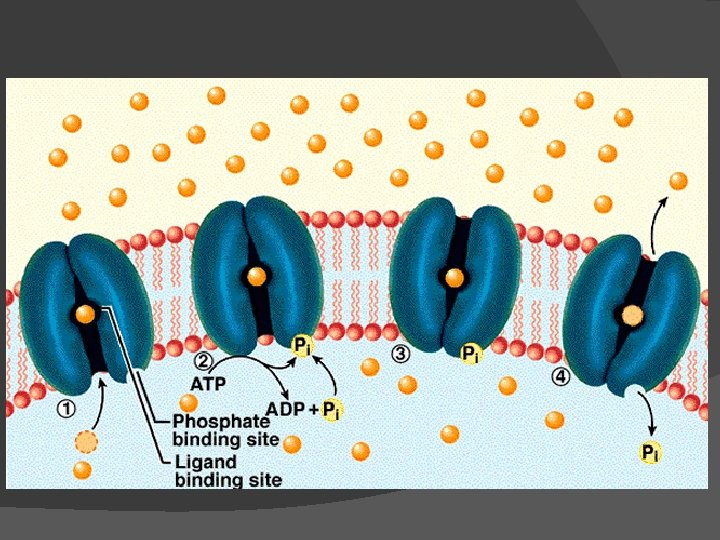
Active Transport � Active transport is the movement of materials through a cell membrane using cellular energy. � Active transport uses the cell’s energy while passive transport does not. � https: //www. brainpop. com/science/ce llularlifeandgenetics/activetransport/
Active Transport vs. Passive Transport
Types of Active Transport � Transport proteins: �Transport proteins in the cell membrane “pick up” molecules outside the cell and carry them inside the cell ○ Calcium ○ Potassium ○ Sodium
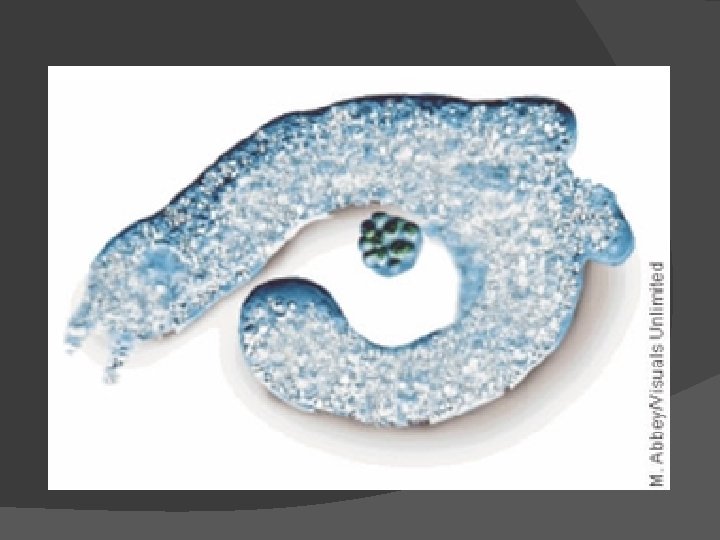
Types of Active Transport � Transport by engulfing: �The cell membrane surrounds and engulfs, or encloses, a particle. �Once the particle is engulfed, the cell membrane wraps around the particle and forms a vacuole within the cell.
Specialized Cells � Plants � In and animals contain many cells. a many-celled organism, the cells are often quite different from one another and are specialized to preform specific functions.
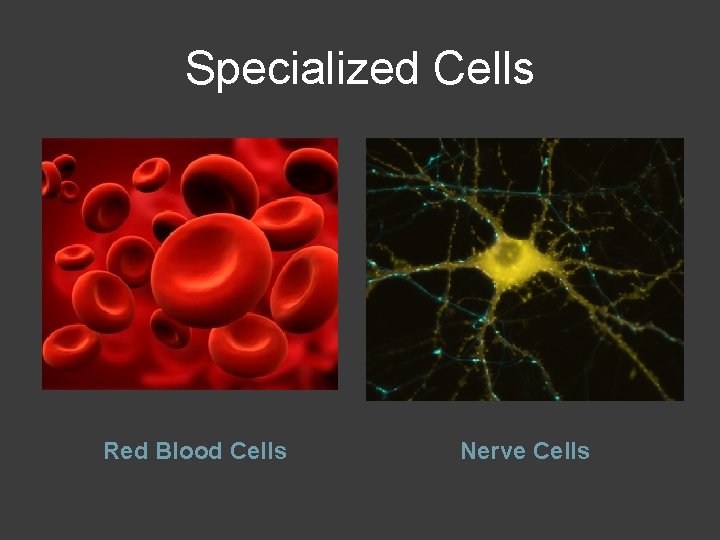
Specialized Cells Red Blood Cells Nerve Cells
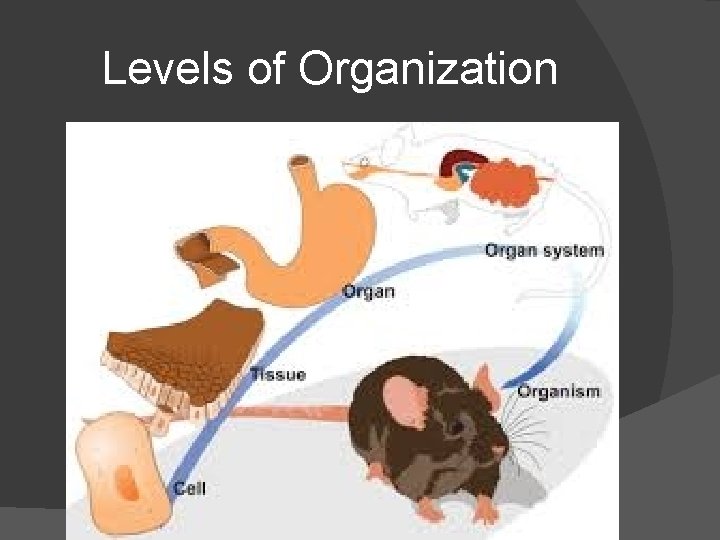
Levels Of Organization
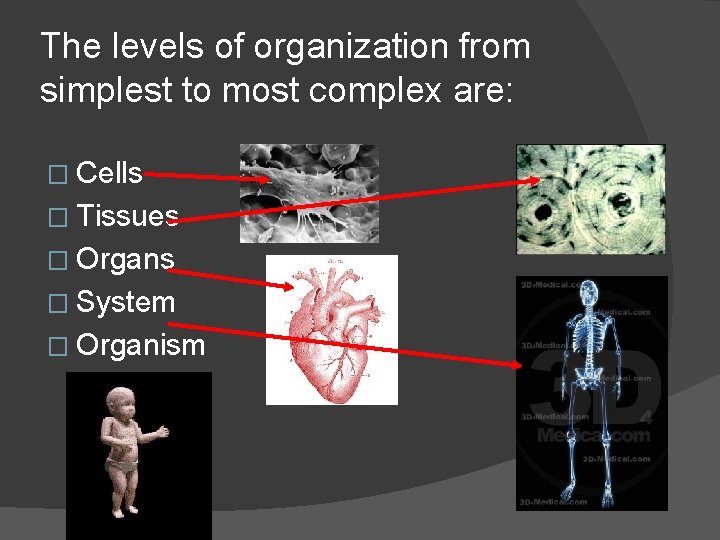
The levels of organization from simplest to most complex are: � Cells � Tissues � Organs � System � Organism
Levels of Organization
Cells � The basic unit of structure and function in the human body � Though all cells perform the processes that keep humans alive, they also have specialized functions as well. � Examples may be nerve cells (neurons), blood cells, and bone cells.
Tissues A group of specialized cells that work together to perform the same function. � There are four basic types of tissue in the human body: �
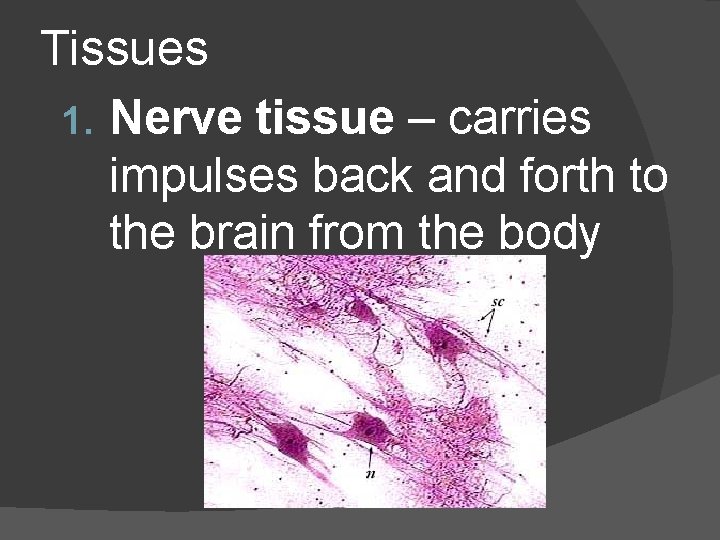
Tissues 1. Nerve tissue – carries impulses back and forth to the brain from the body
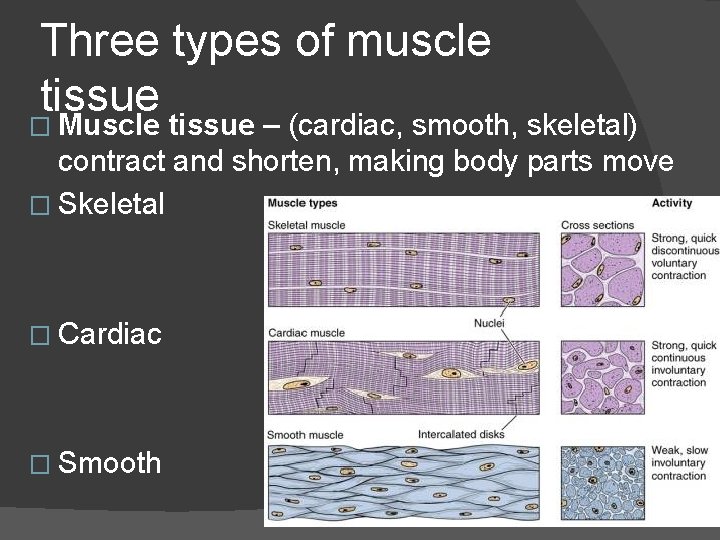
Three types of muscle tissue � Muscle tissue – (cardiac, smooth, skeletal) contract and shorten, making body parts move � Skeletal � Cardiac � Smooth
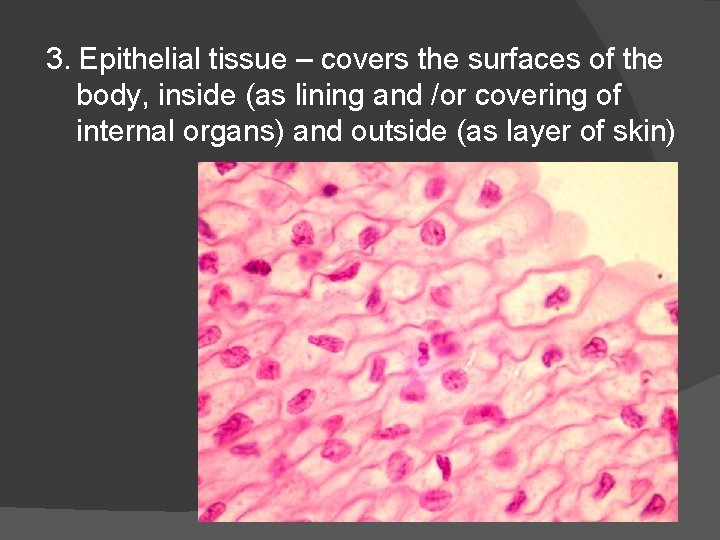
3. Epithelial tissue – covers the surfaces of the body, inside (as lining and /or covering of internal organs) and outside (as layer of skin)
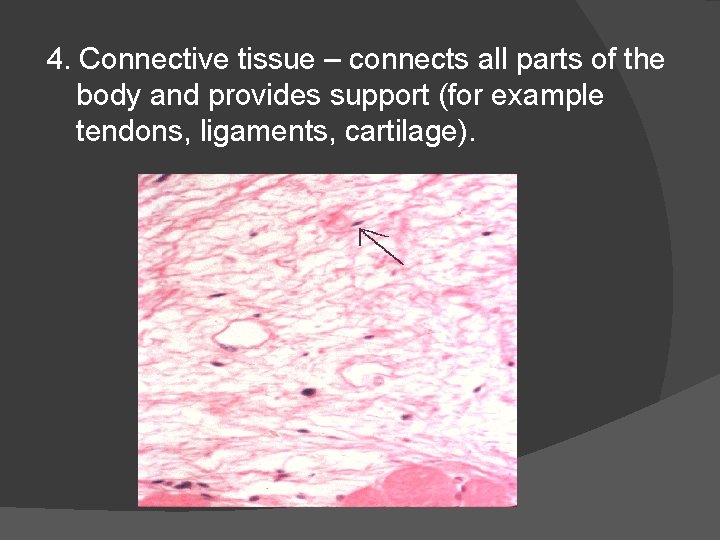
4. Connective tissue – connects all parts of the body and provides support (for example tendons, ligaments, cartilage).
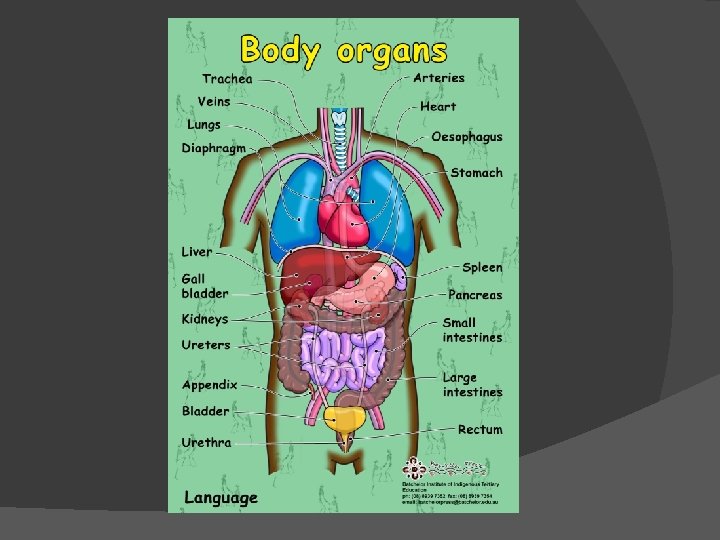
Organs �A group of two or more different types of tissue that work together to perform a specific function. � The task is generally more complex than that of the tissue. � For example, the heart is made of muscle and connective tissues which functions to pump blood throughout the body.
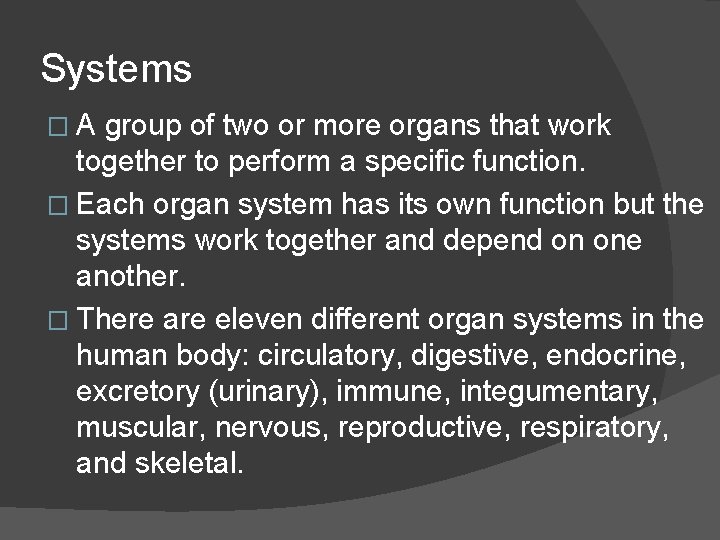
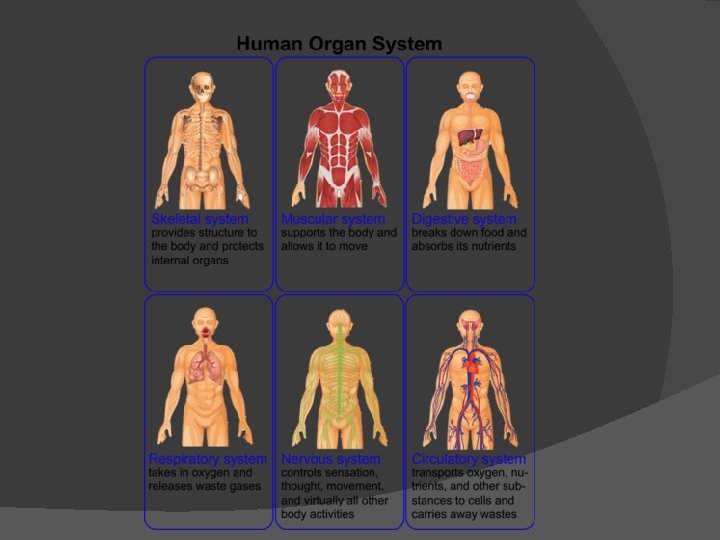
Systems �A group of two or more organs that work together to perform a specific function. � Each organ system has its own function but the systems work together and depend on one another. � There are eleven different organ systems in the human body: circulatory, digestive, endocrine, excretory (urinary), immune, integumentary, muscular, nervous, reproductive, respiratory, and skeletal.
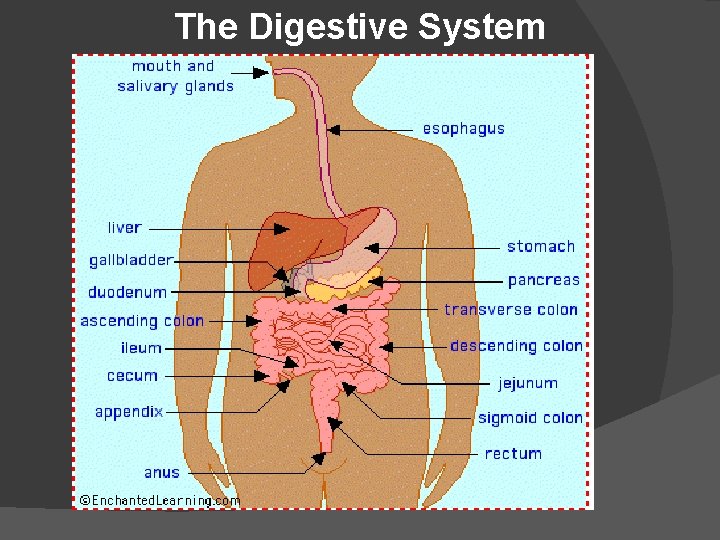
The Digestive System Purpose: to convert food particles into simpler micromolecules that can be absorbed into the bloodstream and used by the body Major Organs and their Functions: Mouth – to chew and grind up food -- saliva also begins the chemical breakdown Esophagus – pipe connecting mouth to stomach Stomach – secretes an extraordinarily strong acid (p. H = 2) that leads to breakdown of food
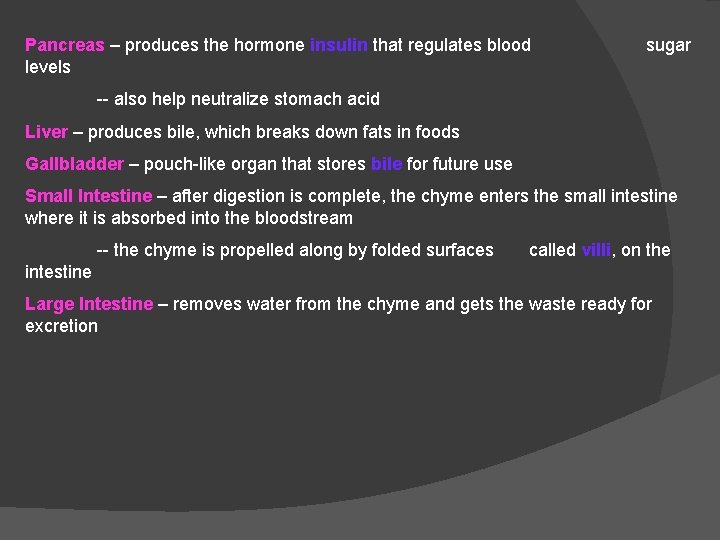
Pancreas – produces the hormone insulin that regulates blood levels sugar -- also help neutralize stomach acid Liver – produces bile, which breaks down fats in foods Gallbladder – pouch-like organ that stores bile for future use Small Intestine – after digestion is complete, the chyme enters the small intestine where it is absorbed into the bloodstream -- the chyme is propelled along by folded surfaces called villi, on the intestine Large Intestine – removes water from the chyme and gets the waste ready for excretion
The Digestive System
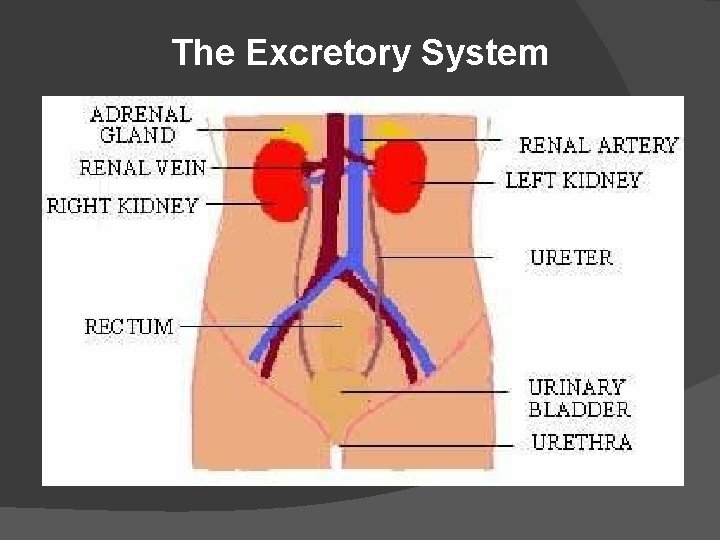
The Excretory System Purpose: to rid the body of wastes, including excess water and salts Major Organs and Their Functions Kidneys – the main organs of the excretory system -- waste-laden blood enters the kidney and the kidney filters out urea, excess water and other waste products, which eventually travel out of the kidney as urine -- eventually they travel through the ureter to the urinary bladder Rectum – solid (food) waste travels out of the body through the rectum Skin – sweat glands remove excess water and salts from the Lungs – expel the waste gas carbon dioxide body
The Excretory System
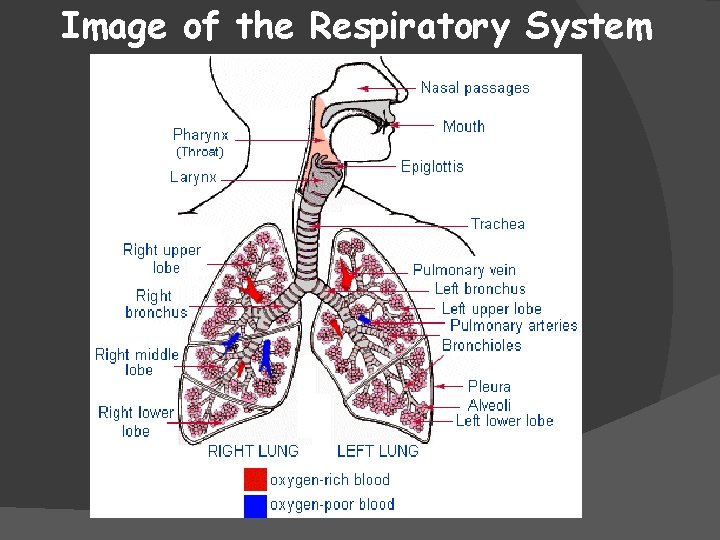
The Respiratory System Purpose: to provide the body with a fresh supply of oxygen for cellular respiration and remove the waste product carbon dioxide Major Organs and Their Functions Nose – internal entry and exit point for air Pharynx – serves as a passage way for both air and food at the back of the throat Larynx – your “voicebox”, as air passes over your vocal chords, you speak Trachea – the “windpipe”, or what connects your pharynx to your lungs
Bronchi – the two large passageways that lead from the trachea to your lungs (one for each lung) The diaphragm is the muscle that causes you to breath
Image of the Respiratory System
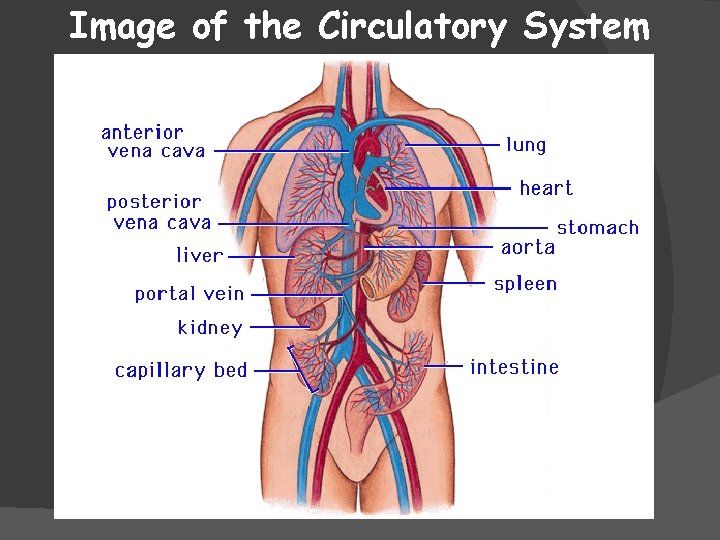
The Circulatory System Purpose: to deliver oxygenated blood to the various cells and organ systems in your body so they can undergo cellular respiration Major Organs and Their Functions Heart – the major muscle of the circulatory system -- pumps blood through its four chambers (two ventricles and two atria) -- pumps deoxygenated blood into the lungs, where it gets oxygenated, returned to the heart, and then pumped out through the aorta to the rest of the body -- valve regulate the flow of blood between the chambers
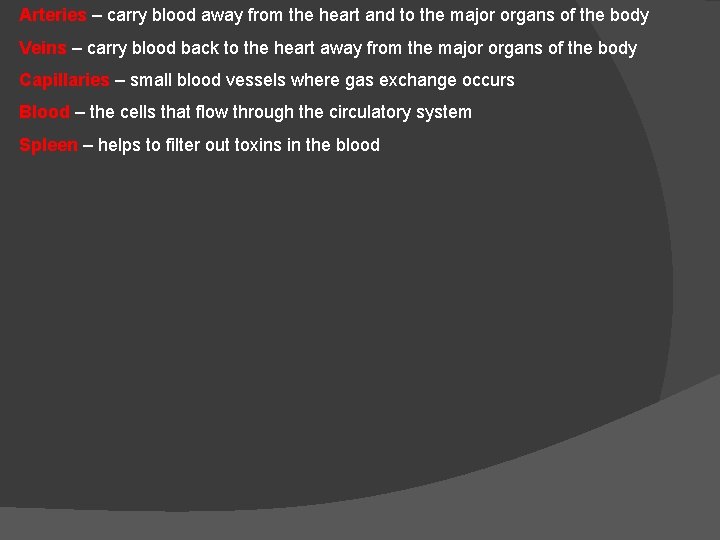
Arteries – carry blood away from the heart and to the major organs of the body Veins – carry blood back to the heart away from the major organs of the body Capillaries – small blood vessels where gas exchange occurs Blood – the cells that flow through the circulatory system Spleen – helps to filter out toxins in the blood
Image of the Circulatory System
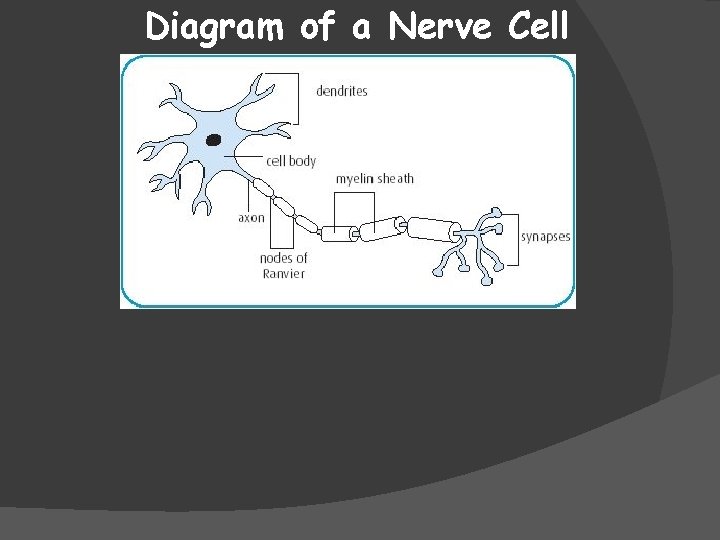
The Nervous System Purpose: to coordinate the body’s response to changes in its internal and external environment Major Organs and Their Functions Brain – control center of the body, where all processes are relayed through Spinal Cord – sends instructions from the brain to the rest of the body and vice versa Nerves – conduct impulses to muscle cells throughout the body
Diagram of a Nerve Cell
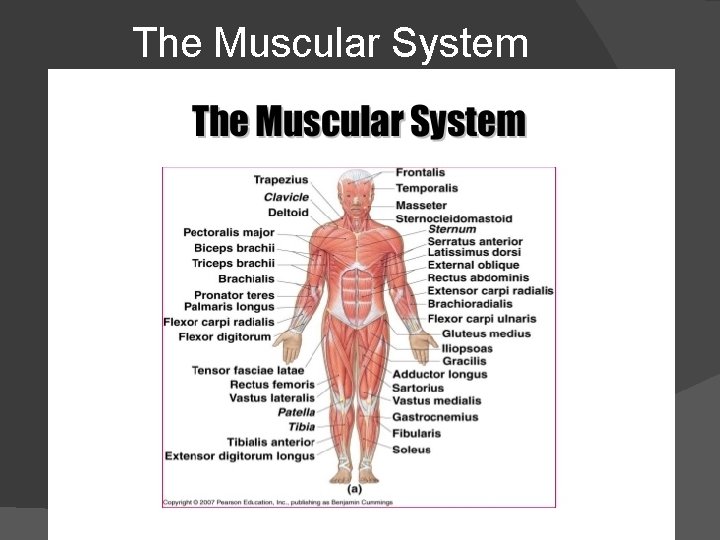
The Muscular System Purpose: works with the skeletal and nervous system to produce movement, also helps to circulate blood through the human body -- muscle cells are fibrous -- muscle contractions can be voluntary or involuntary Major Muscles in the Human Body -- biceps -- glutes -- triceps -- hamstrings -- deltoids
The Muscular System