
Cell Structure and Function Cell Boundaries What Are
Cell Structure and Function Cell Boundaries
What Are We Learning? Benchmark: ü SC. 912. L. 14. 2 –. . . Relate structure to function for the components of plant and animal cells. Explain the role of cell membranes as a highly selective barrier (passive and active transport). Objectives: ü Describe the arrangement of phospholipids and proteins in the membrane lipid bilayer ü Explain the processes of diffusion, osmosis, facilitated diffusion, and active transport.
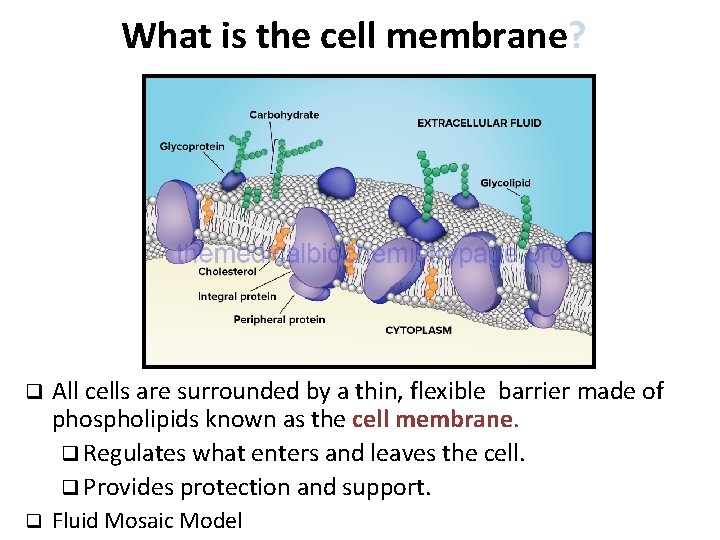
What is the cell membrane? q All cells are surrounded by a thin, flexible barrier made of phospholipids known as the cell membrane. q Regulates what enters and leaves the cell. q Provides protection and support. q Fluid Mosaic Model
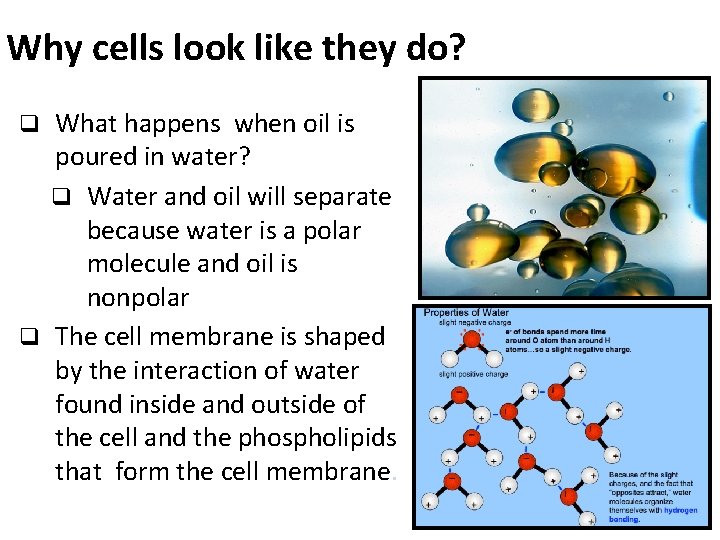
Why cells look like they do? What happens when oil is poured in water? q Water and oil will separate because water is a polar molecule and oil is nonpolar q The cell membrane is shaped by the interaction of water found inside and outside of the cell and the phospholipids that form the cell membrane. q
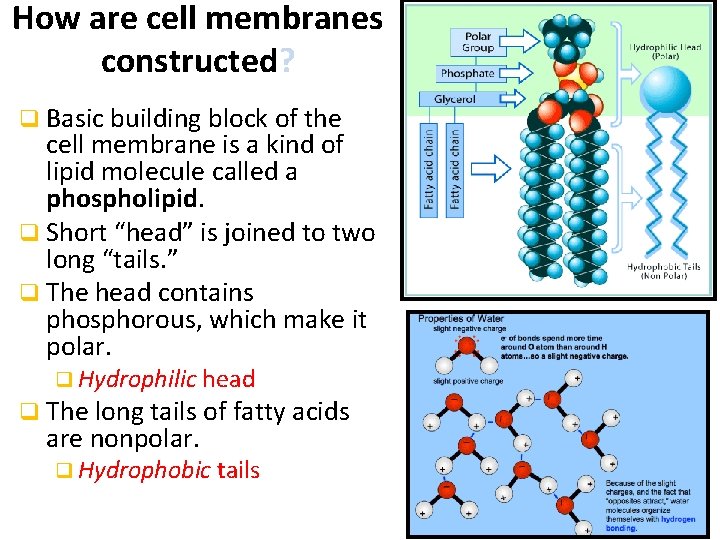
How are cell membranes constructed? q Basic building block of the cell membrane is a kind of lipid molecule called a phospholipid. q Short “head” is joined to two long “tails. ” q The head contains phosphorous, which make it polar. q Hydrophilic head q The long tails of fatty acids are nonpolar. q Hydrophobic tails
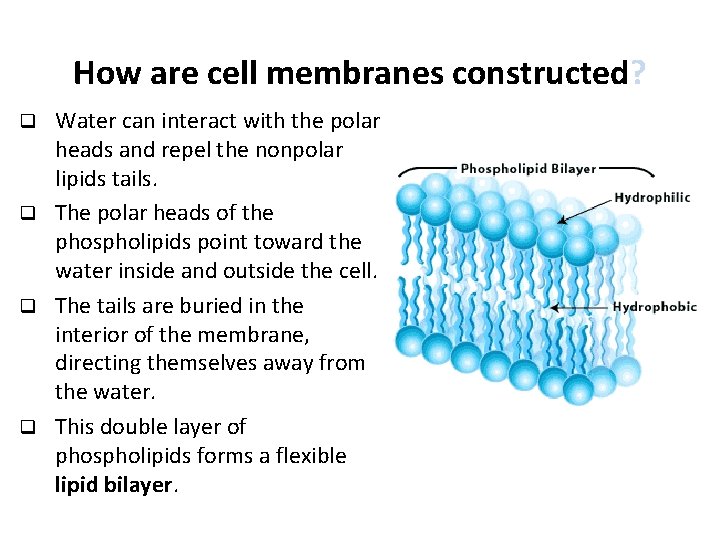
How are cell membranes constructed? Water can interact with the polar heads and repel the nonpolar lipids tails. q The polar heads of the phospholipids point toward the water inside and outside the cell. q The tails are buried in the interior of the membrane, directing themselves away from the water. q This double layer of phospholipids forms a flexible lipid bilayer. q
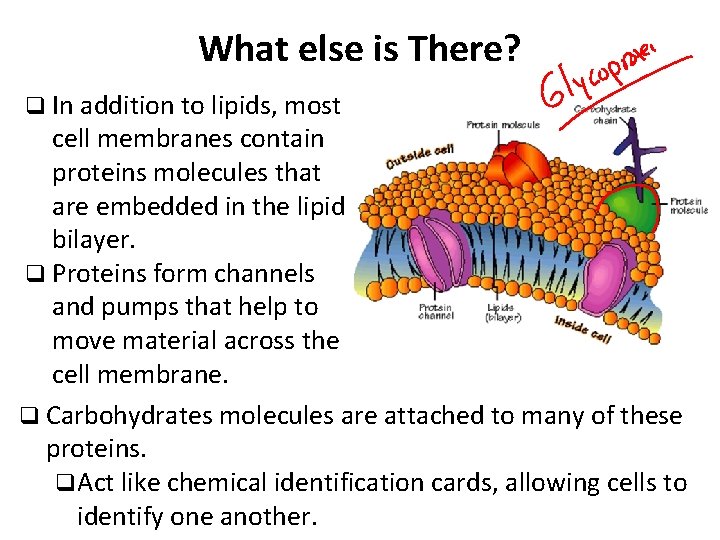
What else is There? q In addition to lipids, most cell membranes contain proteins molecules that are embedded in the lipid bilayer. q Proteins form channels and pumps that help to move material across the cell membrane. q Carbohydrates molecules are attached to many of these proteins. q Act like chemical identification cards, allowing cells to identify one another.

What are protein channels and Carriers? q Proteins channels are formed by doughnutshaped proteins. q Act as passageways through which only certain molecules can pass. q Each channel will admit only certain molecules q Protein carriers are proteins that carry molecules from one side of the membrane to another q Both channels and carriers use no energy Channel Carrier
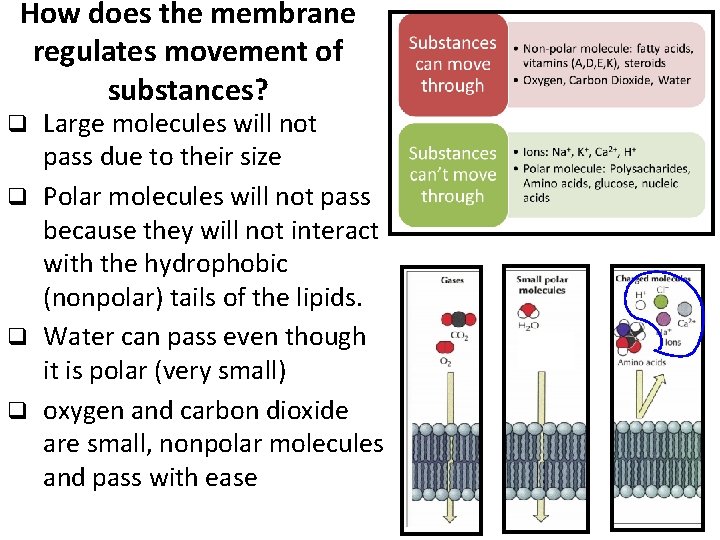
How does the membrane regulates movement of substances? Large molecules will not pass due to their size q Polar molecules will not pass because they will not interact with the hydrophobic (nonpolar) tails of the lipids. q Water can pass even though it is polar (very small) q oxygen and carbon dioxide are small, nonpolar molecules and pass with ease q
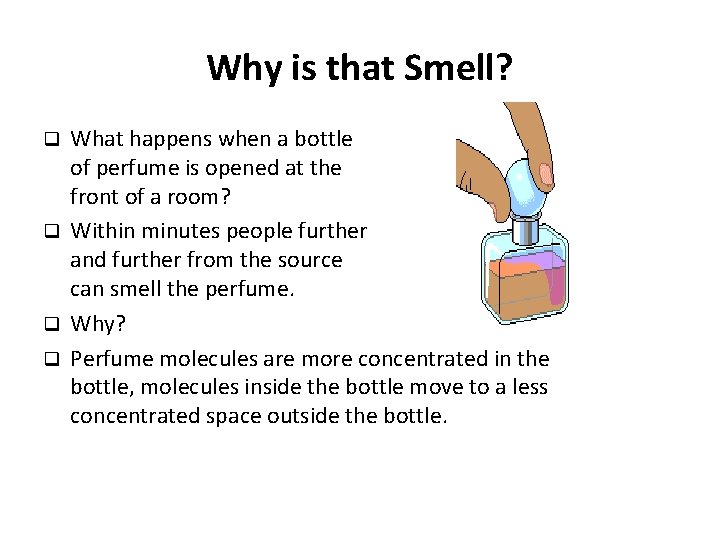
Why is that Smell? What happens when a bottle of perfume is opened at the front of a room? q Within minutes people further and further from the source can smell the perfume. q Why? q Perfume molecules are more concentrated in the bottle, molecules inside the bottle move to a less concentrated space outside the bottle. q
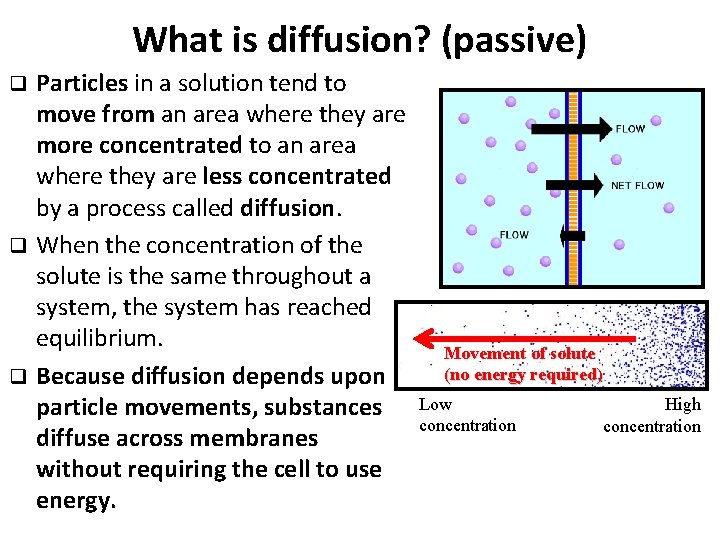
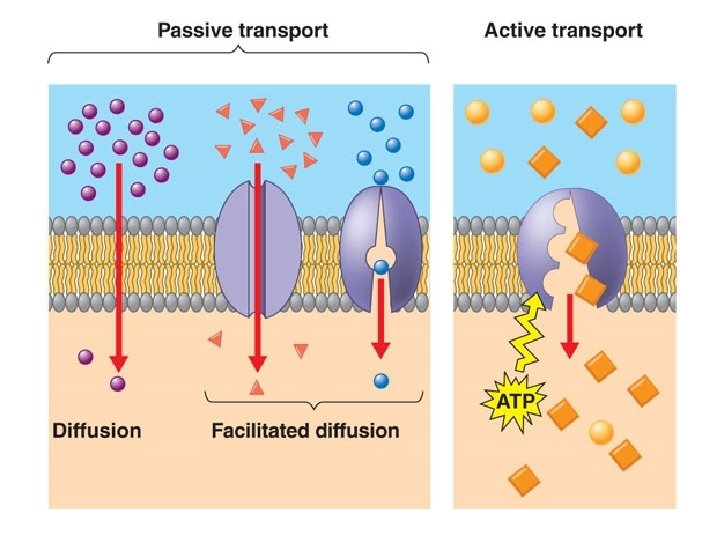
What is diffusion? (passive) Particles in a solution tend to move from an area where they are more concentrated to an area where they are less concentrated by a process called diffusion. q When the concentration of the solute is the same throughout a system, the system has reached equilibrium. q Because diffusion depends upon particle movements, substances diffuse across membranes without requiring the cell to use energy. q Movement of solute (no energy required) Low concentration High concentration
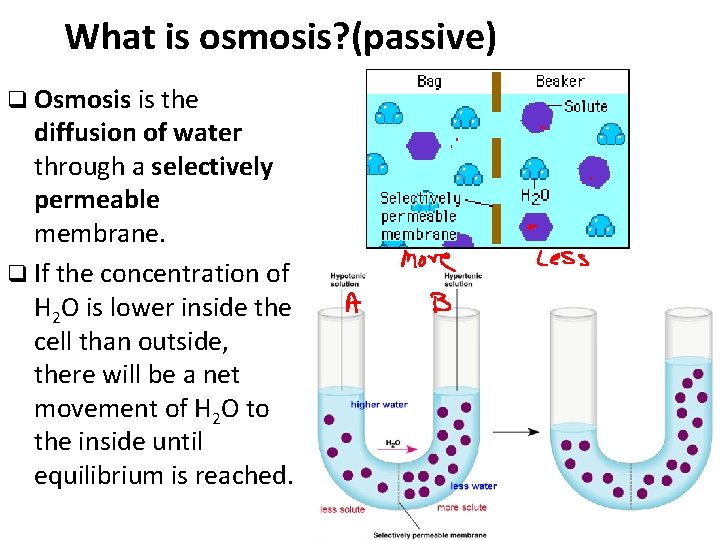
What is osmosis? (passive) q Osmosis is the diffusion of water through a selectively permeable membrane. q If the concentration of H 2 O is lower inside the cell than outside, there will be a net movement of H 2 O to the inside until equilibrium is reached.
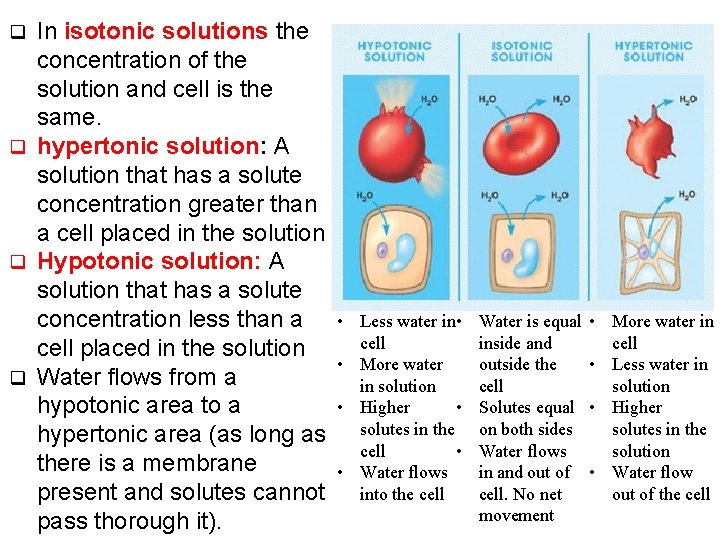
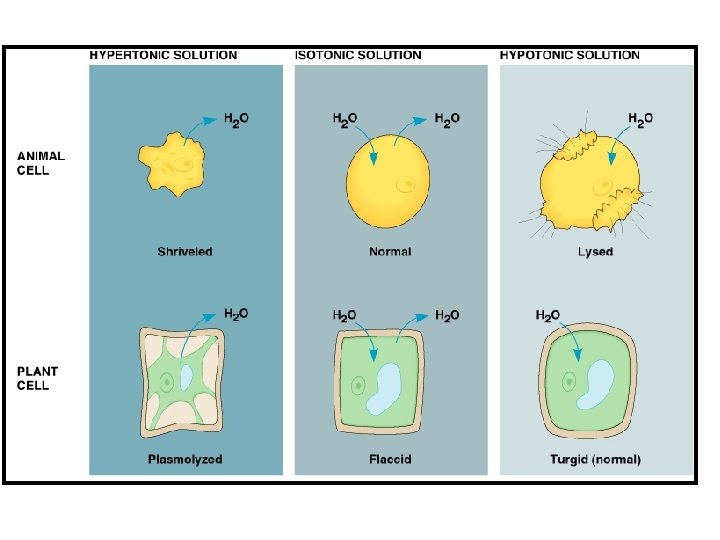
In isotonic solutions the concentration of the solution and cell is the same. q hypertonic solution: A solution that has a solute concentration greater than a cell placed in the solution q Hypotonic solution: A solution that has a solute concentration less than a cell placed in the solution q Water flows from a hypotonic area to a hypertonic area (as long as there is a membrane present and solutes cannot pass thorough it). q • Less water in • cell • More water in solution • Higher • solutes in the cell • • Water flows into the cell Water is equal inside and outside the cell Solutes equal on both sides Water flows in and out of cell. No net movement • More water in cell • Less water in solution • Higher solutes in the solution • Water flow out of the cell
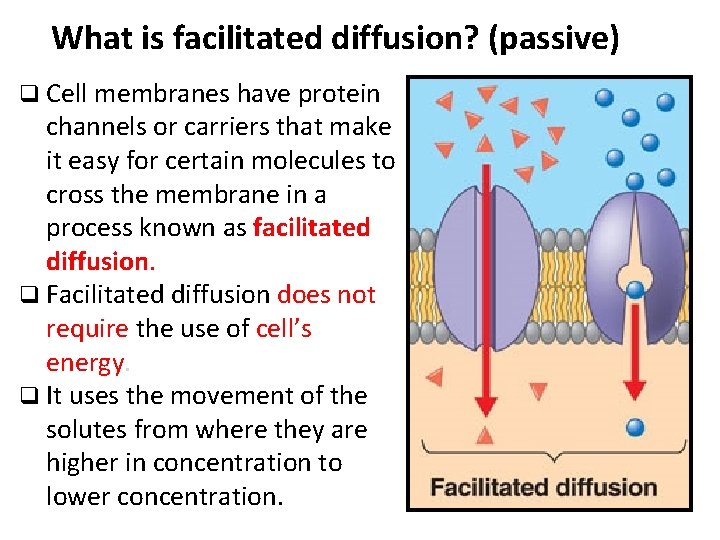
What is facilitated diffusion? (passive) q Cell membranes have protein channels or carriers that make it easy for certain molecules to cross the membrane in a process known as facilitated diffusion. q Facilitated diffusion does not require the use of cell’s energy. q It uses the movement of the solutes from where they are higher in concentration to lower concentration.

What is Active Transport? q During active transport cells move materials against their concentration gradient. q Requires energy (ATP). q Carried out by transport proteins or pumps found in the cell membrane. q Moves molecules in only one direction. Many cells use such proteins to move Ca 2+, K+, and Na+. q Enables cells to concentrate substances in a particular location, even against the forces of diffusion. q Remember, H+ in cellular respiration Squares have a lower concentration q Squares have a higher concentration
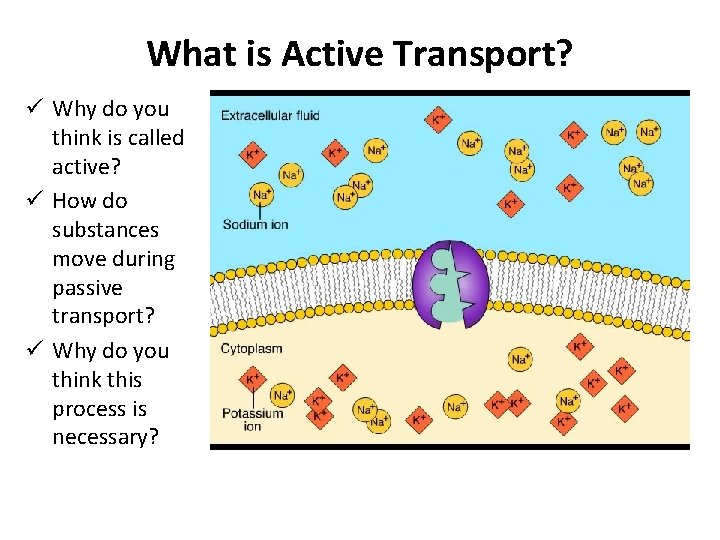
What is Active Transport? ü Why do you think is called active? ü How do substances move during passive transport? ü Why do you think this process is necessary?
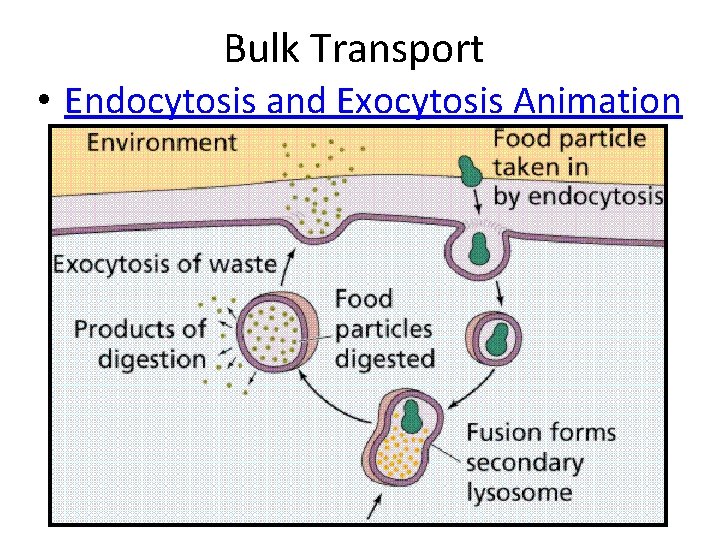
Bulk Transport • Endocytosis and Exocytosis Animation
DO now ü Cut a sheet of paper in half. ü Keep one and give the other one to a classmate ü Answer the five following questions. ü True ü False
Cell Membrane Model Project On a half sheet of paper, list and explain the components and functions of the parts of the cell membrane. Components to mention: Glycoproteins, Channel Proteins, Carrier Proteins, and Phospholipids.
- Slides: 21