
Cell Structure and Function 1 Cell Theory 1
- Slides: 54
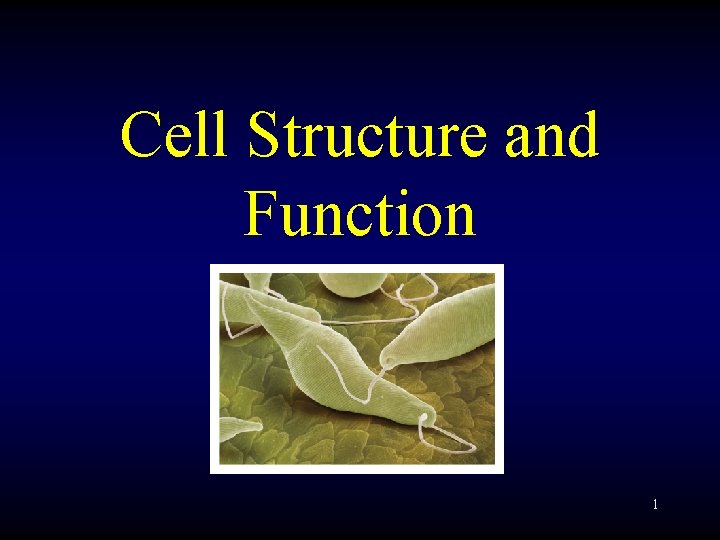
Cell Structure and Function 1
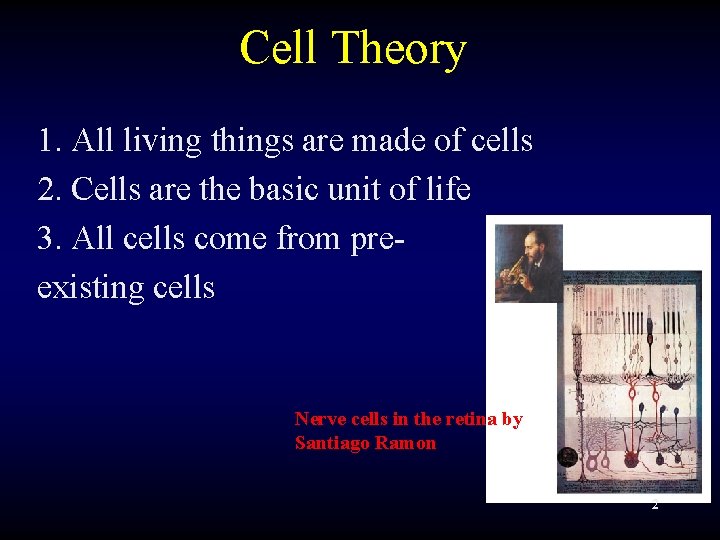
Cell Theory 1. All living things are made of cells 2. Cells are the basic unit of life 3. All cells come from preexisting cells Nerve cells in the retina by Santiago Ramon 2
Important People • 1) Anton von Leeuwenhoek – made the first simple microscope • 2) Robert Hooke – discovered cells by looking at cork (dead plant cells) • 3) Matthias Schleiden – German botanist; said all plants are made up of cells 3
Important People • 4) Theodor Schwann – German zoologist; said all animals are made up of cells • 5) Rudolf Virchow – German physician; said all cells come from other cells 4
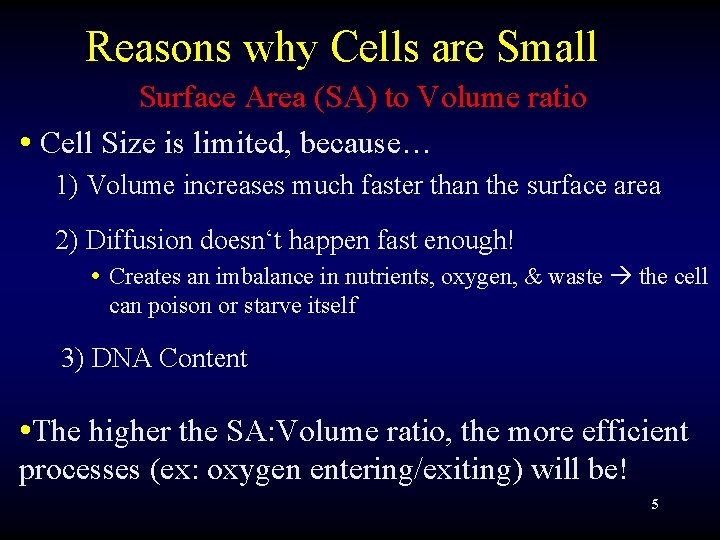
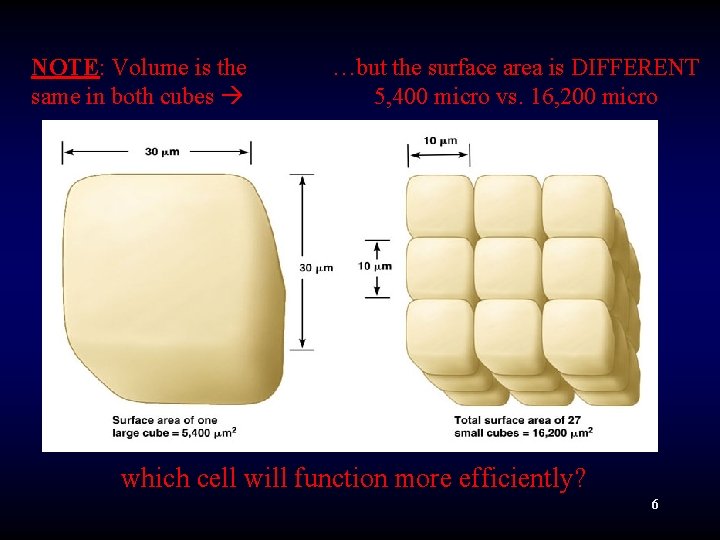
Reasons why Cells are Small Surface Area (SA) to Volume ratio • Cell Size is limited, because… 1) Volume increases much faster than the surface area 2) Diffusion doesn‘t happen fast enough! • Creates an imbalance in nutrients, oxygen, & waste the cell can poison or starve itself 3) DNA Content • The higher the SA: Volume ratio, the more efficient processes (ex: oxygen entering/exiting) will be! 5
NOTE: Volume is the same in both cubes …but the surface area is DIFFERENT 5, 400 micro vs. 16, 200 micro which cell will function more efficiently? 6
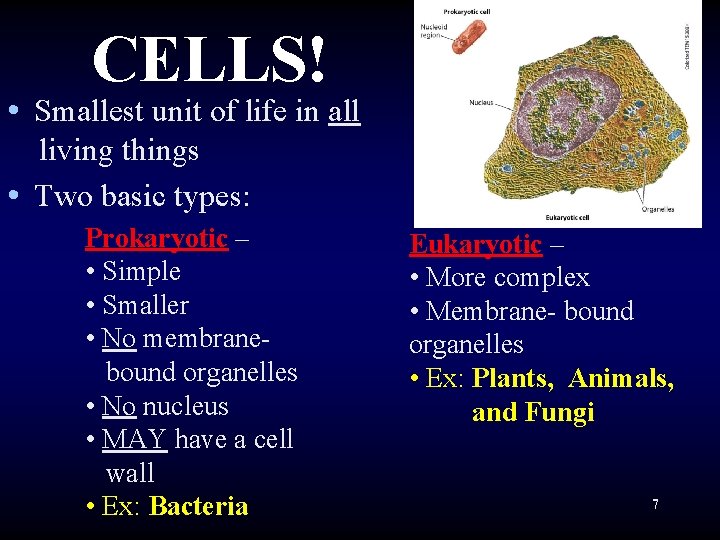
CELLS! • Smallest unit of life in all living things • Two basic types: Prokaryotic – • Simple • Smaller • No membranebound organelles • No nucleus • MAY have a cell wall • Ex: Bacteria Eukaryotic – • More complex • Membrane- bound organelles • Ex: Plants, Animals, and Fungi 7
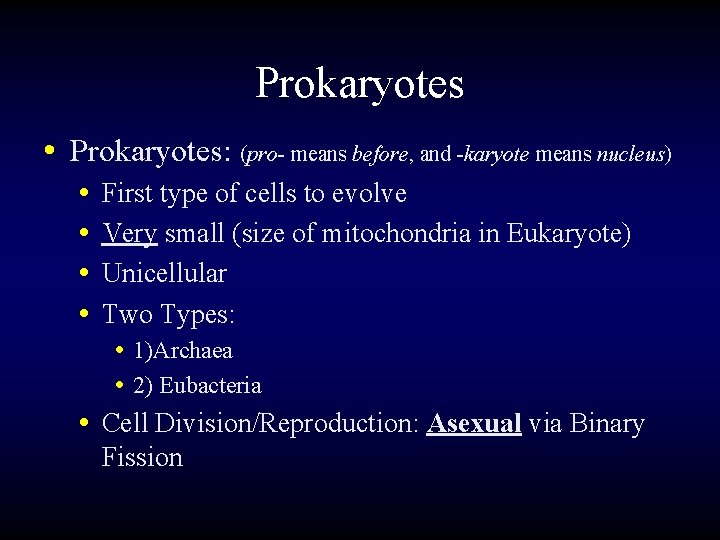
Prokaryotes • Prokaryotes: (pro- means before, and -karyote means nucleus) • • First type of cells to evolve Very small (size of mitochondria in Eukaryote) Unicellular Two Types: • 1)Archaea • 2) Eubacteria • Cell Division/Reproduction: Asexual via Binary Fission
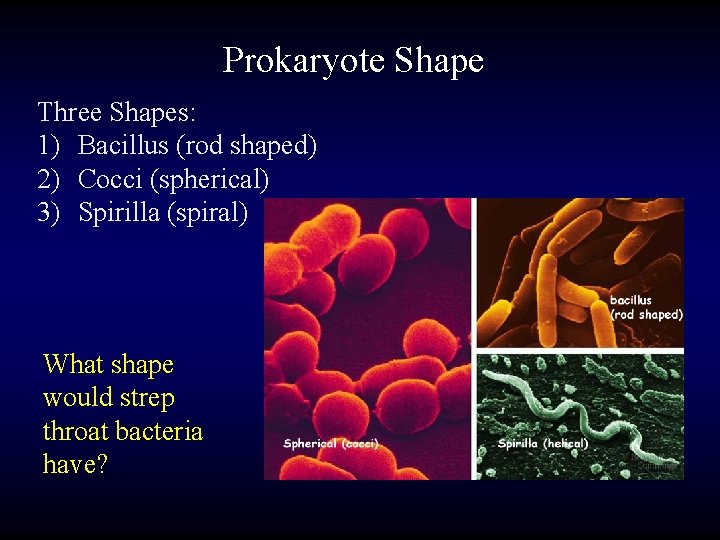
Prokaryote Shape Three Shapes: 1) Bacillus (rod shaped) 2) Cocci (spherical) 3) Spirilla (spiral) What shape would strep throat bacteria have?
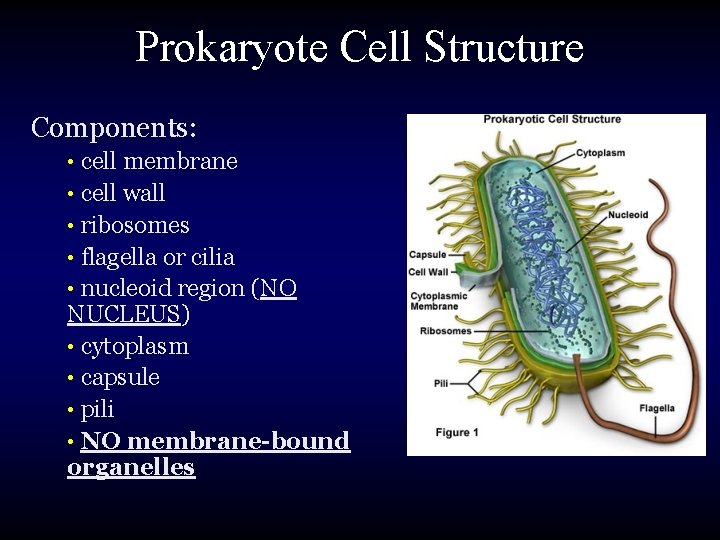
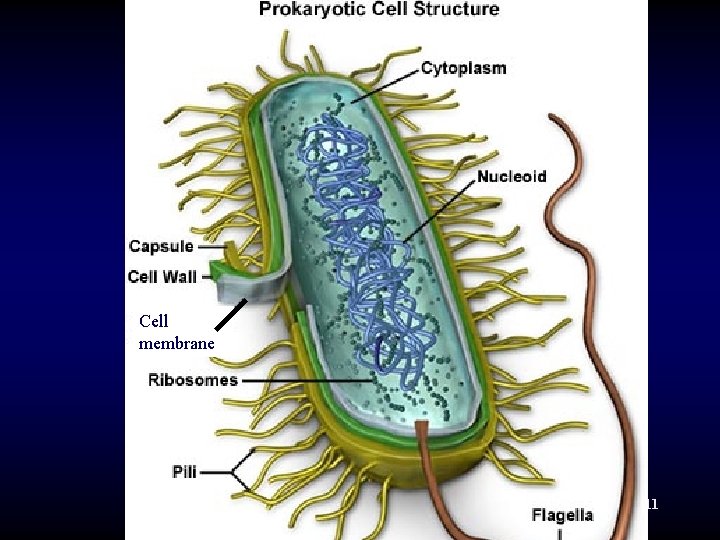
Prokaryote Cell Structure Components: • cell membrane • cell wall • ribosomes • flagella or cilia • nucleoid region (NO NUCLEUS) • cytoplasm • capsule • pili • NO membrane-bound organelles
Cell membrane 11
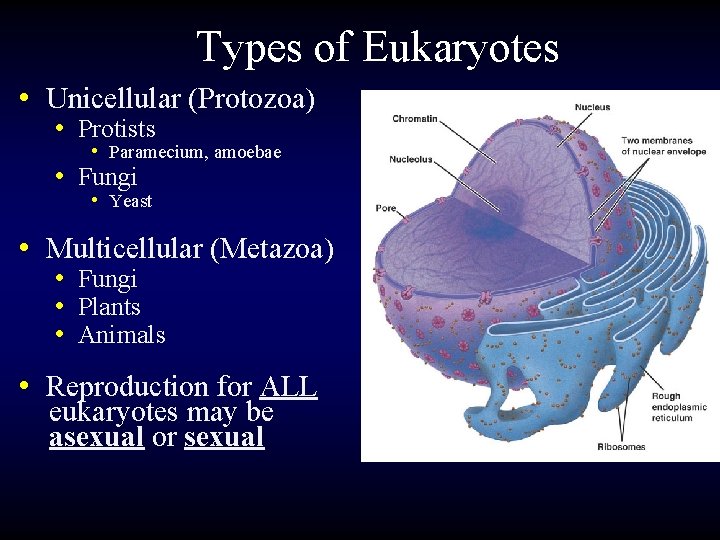
Eukaryotic Cells • Divided into compartments • Unicellular or Multicellular • Organelles → structures that have a specific function in the cell (including the nucleus) • Cytoplasm → region between nucleus and plasma membrane that surrounds organelles • Filled with cytosol (watery-jelly part) and organelles • Contains centrioles, which help with cell division reproduction 12
Types of Eukaryotes • Unicellular (Protozoa) • Protists • Paramecium, amoebae • Fungi • Yeast • Multicellular (Metazoa) • Fungi • Plants • Animals • Reproduction for ALL eukaryotes may be asexual or sexual
Features in Common between Eukaryote & Prokayrote • Both eukaryote and prokaryote cells have these features in common: 1) Surrounded by a plasma/cell membrane • This determines what enters and leaves the cell • It is thin and flexible and does not provide much structural support • Ex: school doors 2) Have RIBOSOMES • MAKES proteins by linking amino acids (protein synthesis) 3) Have DNA or RNA as genetic material 14
The Cell Membrane • Thin, flexible, surround all cells • Controls the traffic of molecules into and out of the cell (school doors) • Takes in substances & disposes the cell’s waste • Allows substances through by either passive transport (no energy) or active transport (energy required!) 15
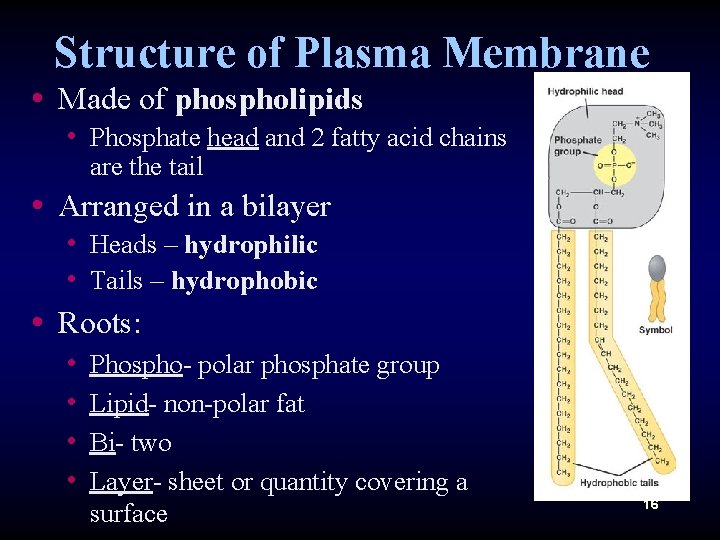
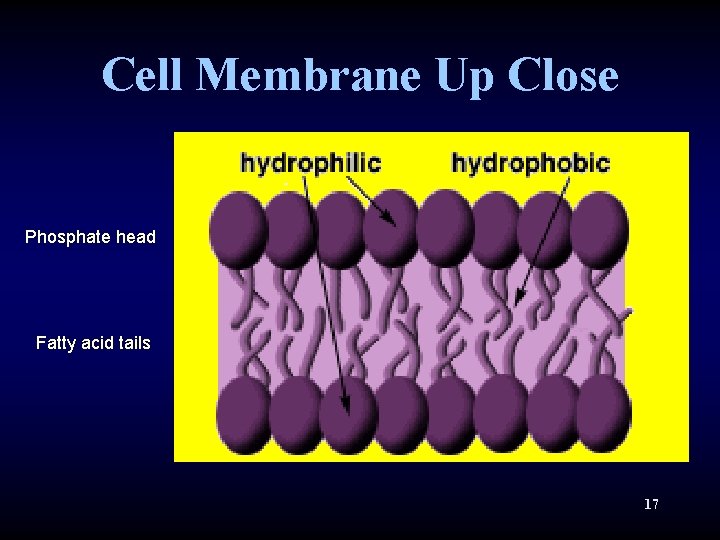
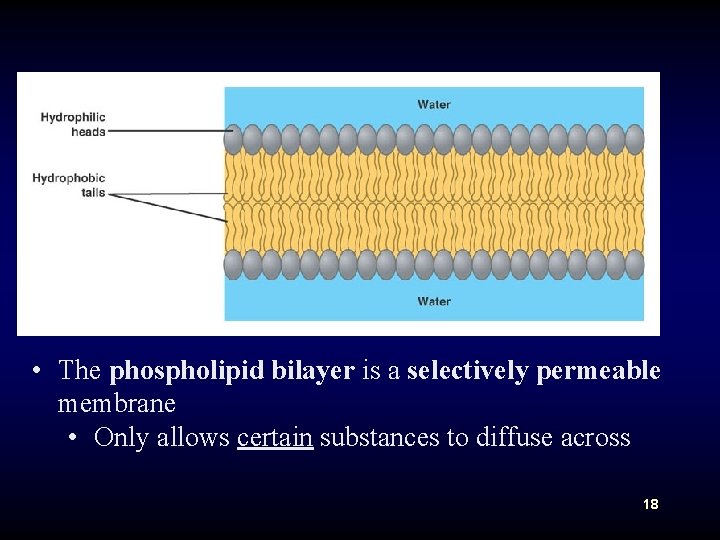
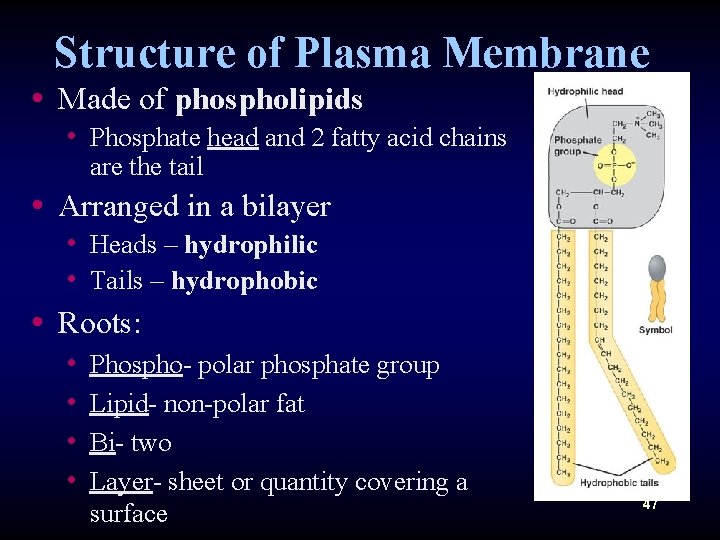
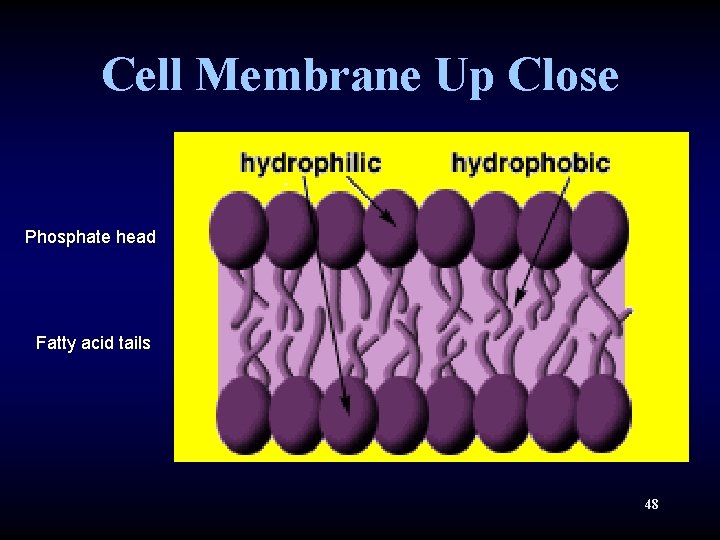
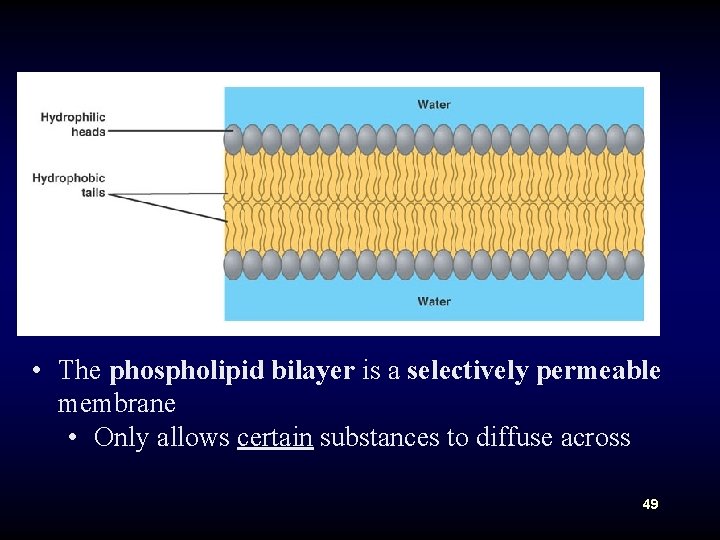
Structure of Plasma Membrane • Made of phospholipids • Phosphate head and 2 fatty acid chains are the tail • Arranged in a bilayer • Heads – hydrophilic • Tails – hydrophobic • Roots: • • Phospho- polar phosphate group Lipid- non-polar fat Bi- two Layer- sheet or quantity covering a surface 16
Cell Membrane Up Close Phosphate head Fatty acid tails 17
• The phospholipid bilayer is a selectively permeable membrane • Only allows certain substances to diffuse across 18
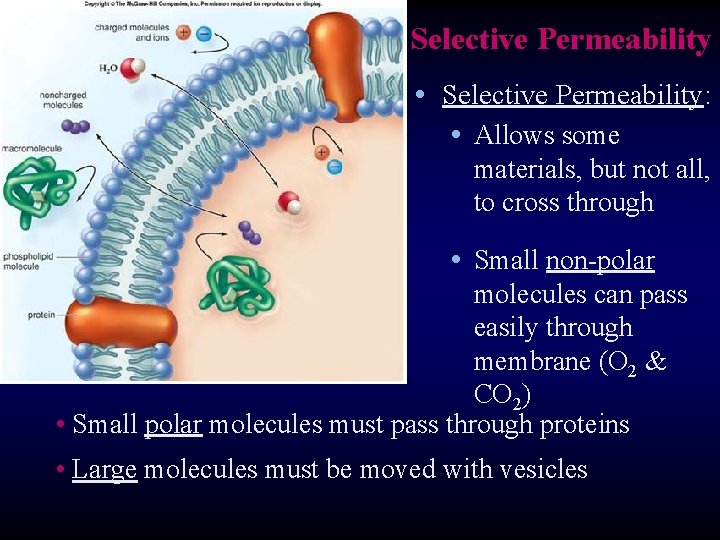
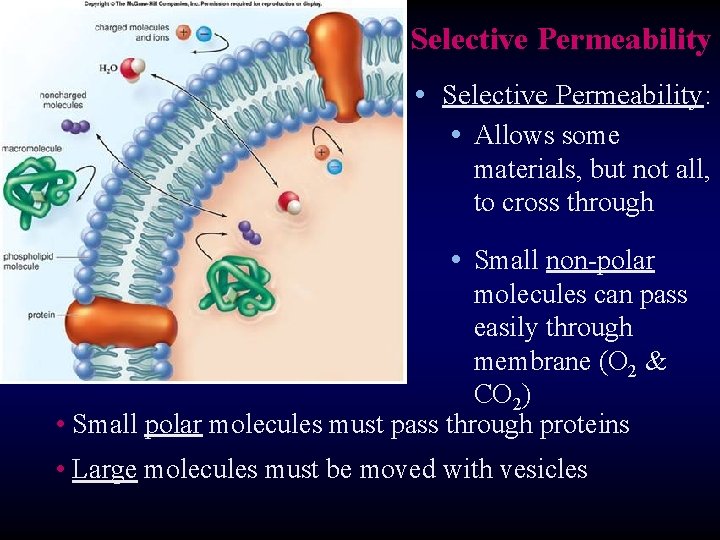
Selective Permeability • Selective Permeability: • Allows some materials, but not all, to cross through • Small non-polar molecules can pass easily through membrane (O 2 & CO 2) • Small polar molecules must pass through proteins • Large molecules must be moved with vesicles
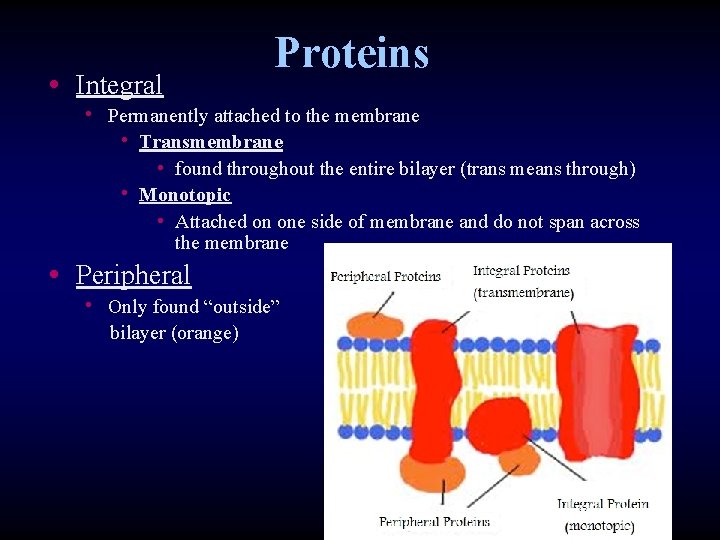
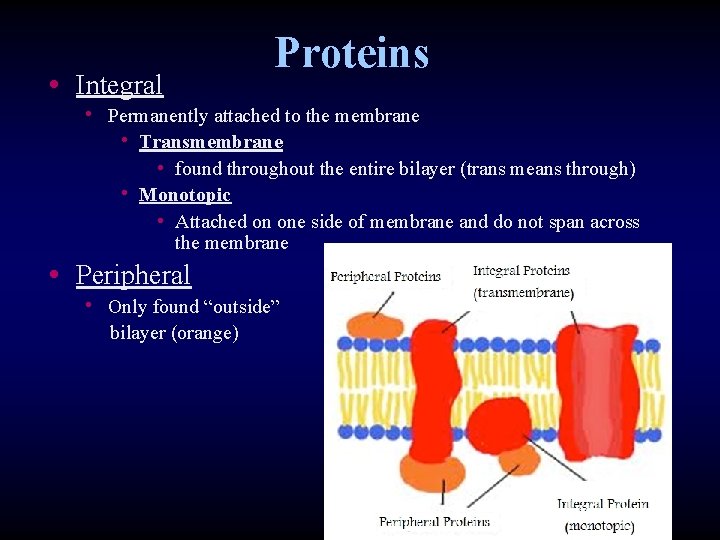
• Integral Proteins • Permanently attached to the membrane • Transmembrane • found throughout the entire bilayer (trans means through) • Monotopic • Attached on one side of membrane and do not span across the membrane • Peripheral • Only found “outside” bilayer (orange)
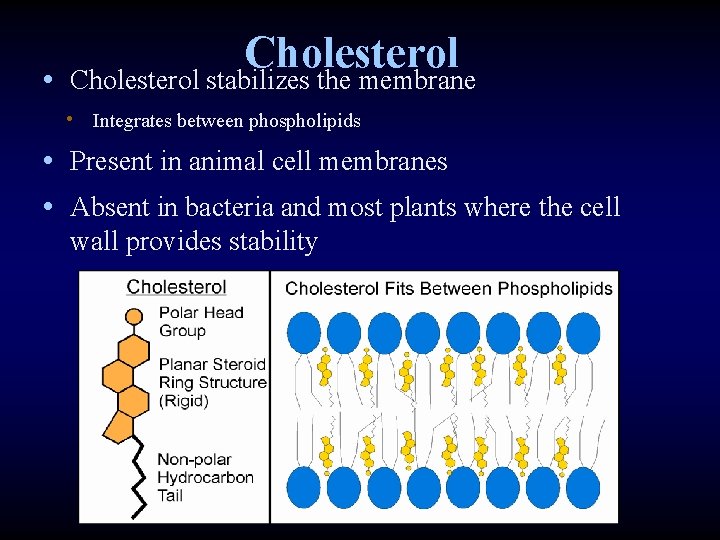
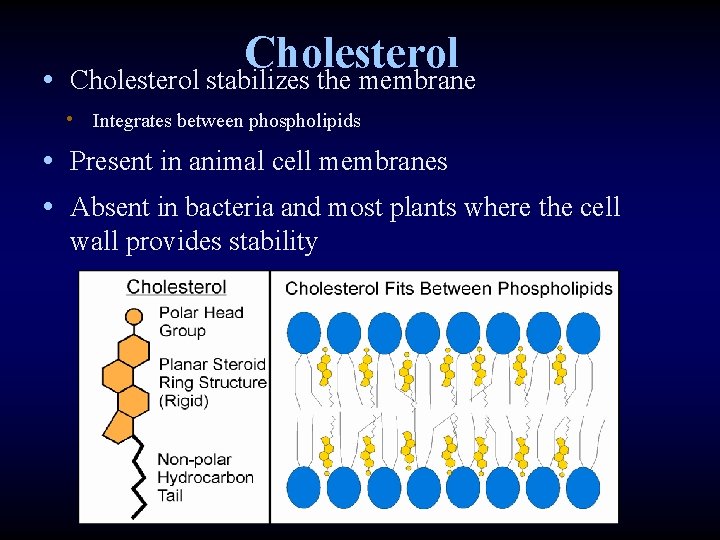
• Cholesterol stabilizes the membrane • Integrates between phospholipids • Present in animal cell membranes • Absent in bacteria and most plants where the cell wall provides stability
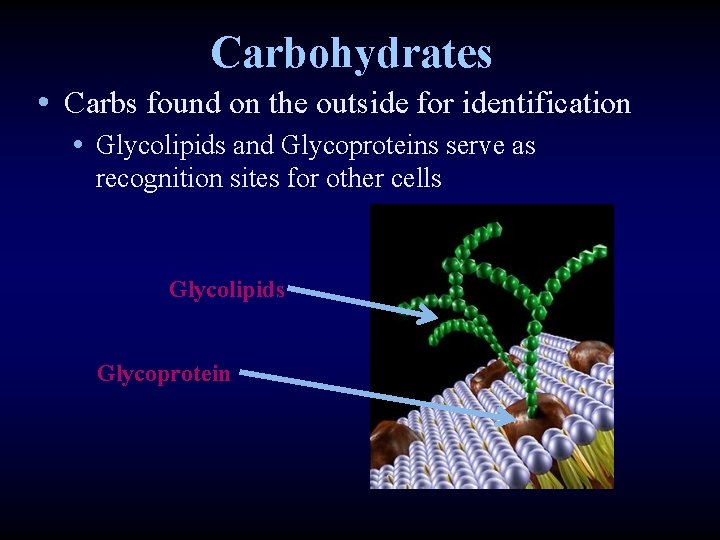
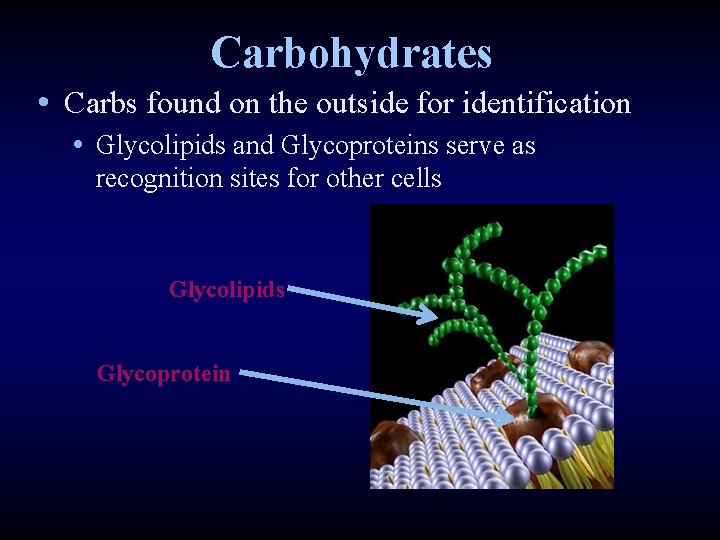
Carbohydrates • Carbs found on the outside for identification • Glycolipids and Glycoproteins serve as recognition sites for other cells Glycolipids Glycoprotein
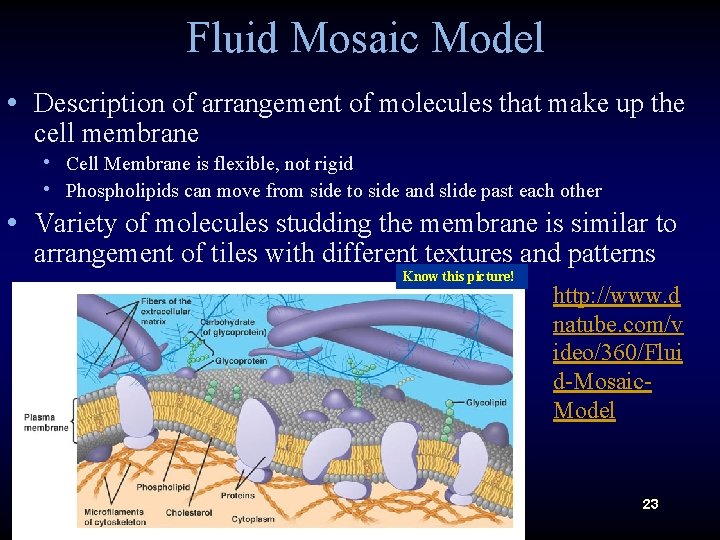
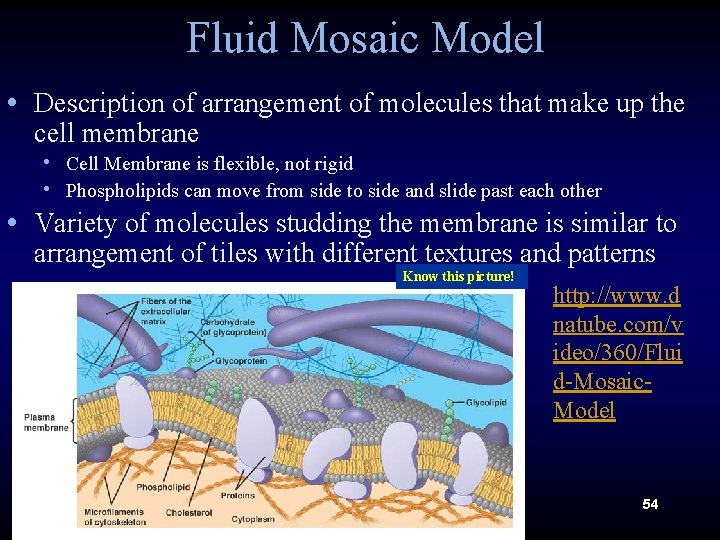
Fluid Mosaic Model • Description of arrangement of molecules that make up the cell membrane • Cell Membrane is flexible, not rigid • Phospholipids can move from side to side and slide past each other • Variety of molecules studding the membrane is similar to arrangement of tiles with different textures and patterns Know this picture! http: //www. d natube. com/v ideo/360/Flui d-Mosaic. Model 23
24
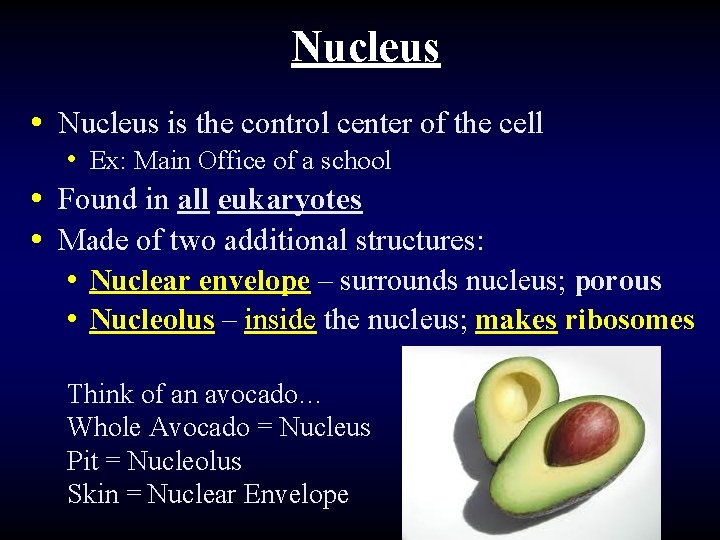
Nucleus • Nucleus is the control center of the cell • Ex: Main Office of a school • Found in all eukaryotes • Made of two additional structures: • Nuclear envelope – surrounds nucleus; porous • Nucleolus – inside the nucleus; makes ribosomes Think of an avocado… Whole Avocado = Nucleus Pit = Nucleolus Skin = Nuclear Envelope 25
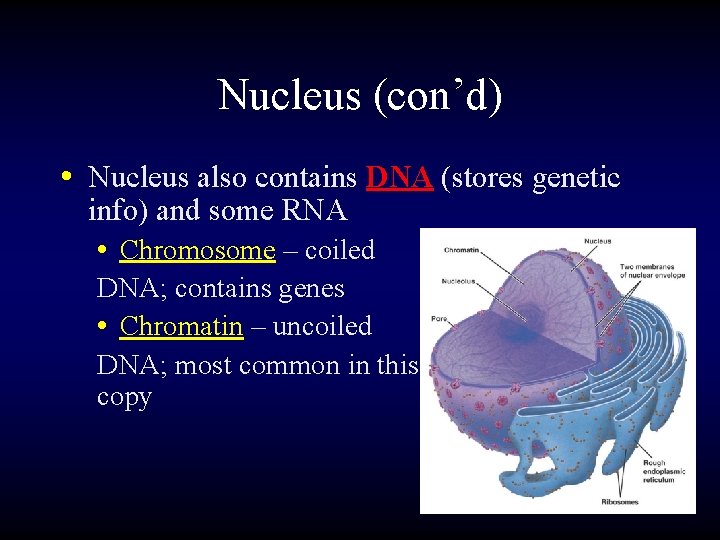
Nucleus (con’d) • Nucleus also contains DNA (stores genetic info) and some RNA • Chromosome – coiled DNA; contains genes • Chromatin – uncoiled DNA; most common in this form, easier to copy 26
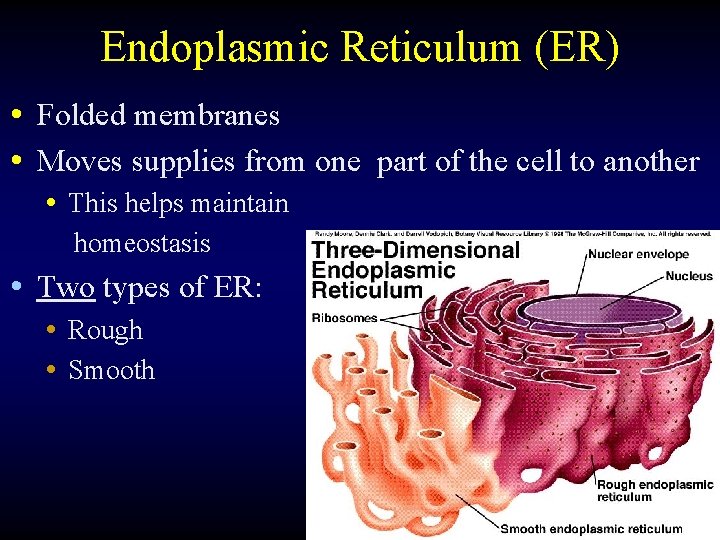
Endoplasmic Reticulum (ER) • Folded membranes • Moves supplies from one part of the cell to another • This helps maintain homeostasis • Two types of ER: • Rough • Smooth 27
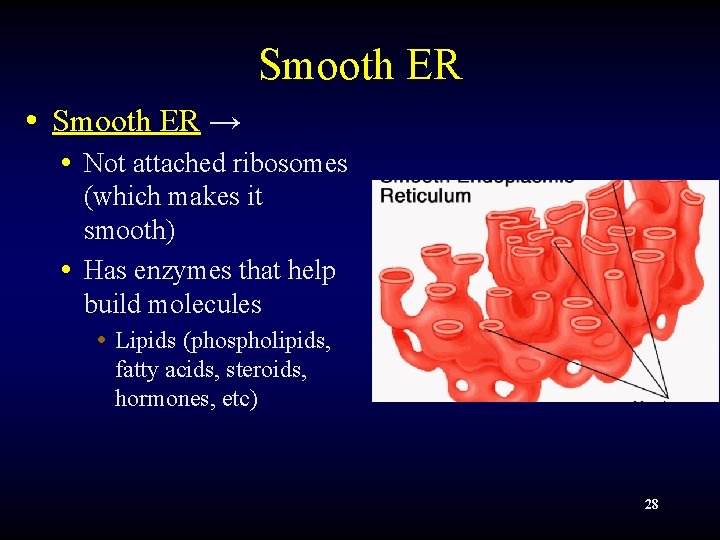
Smooth ER • Smooth ER → • Not attached ribosomes (which makes it smooth) • Has enzymes that help build molecules • Lipids (phospholipids, fatty acids, steroids, hormones, etc) 28
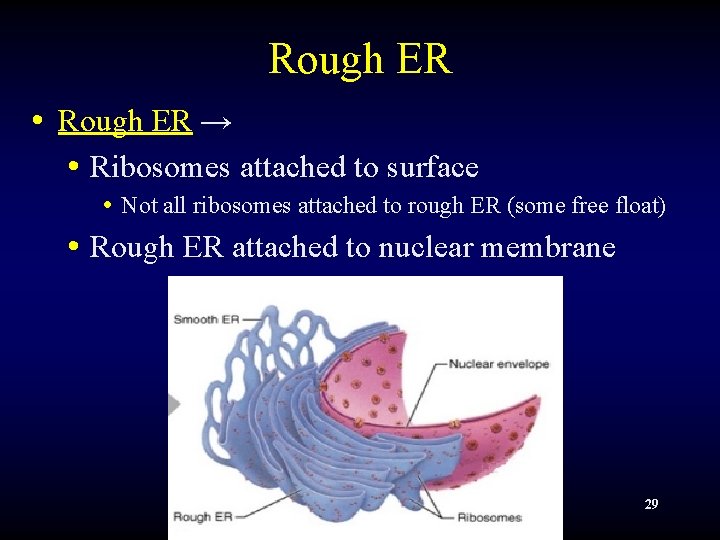
Rough ER • Rough ER → • Ribosomes attached to surface • Not all ribosomes attached to rough ER (some free float) • Rough ER attached to nuclear membrane 29
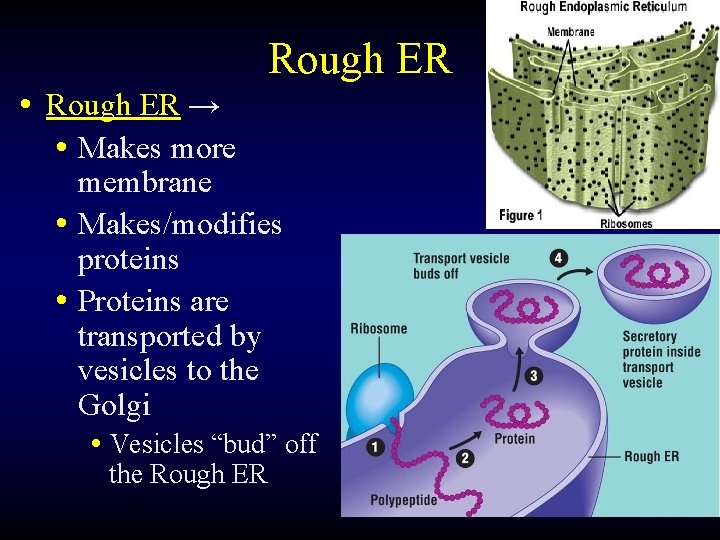
Rough ER • Rough ER → • Makes more membrane • Makes/modifies proteins • Proteins are transported by vesicles to the Golgi • Vesicles “bud” off the Rough ER 30
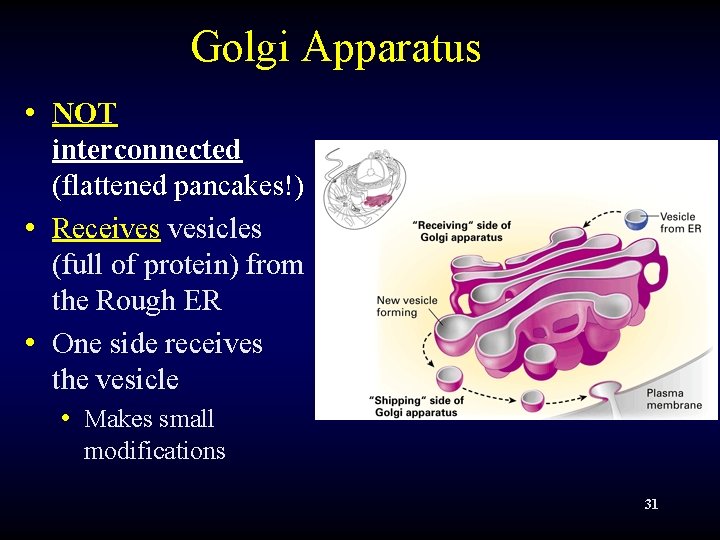
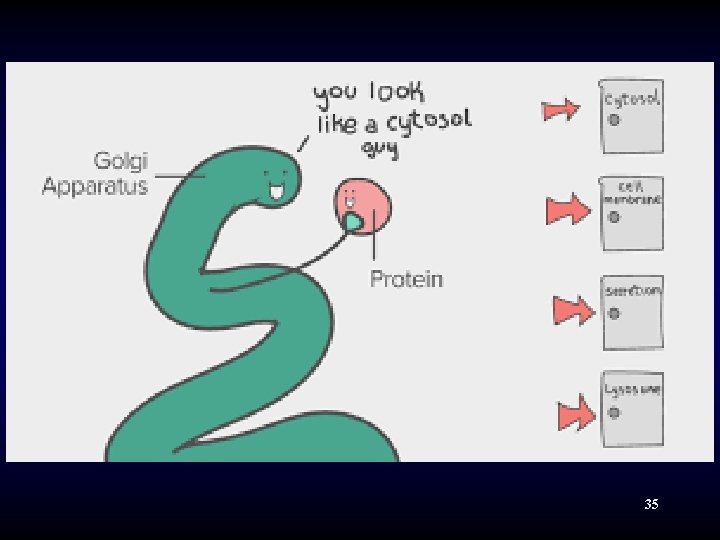
Golgi Apparatus • NOT interconnected (flattened pancakes!) • Receives vesicles (full of protein) from the Rough ER • One side receives the vesicle • Makes small modifications 31
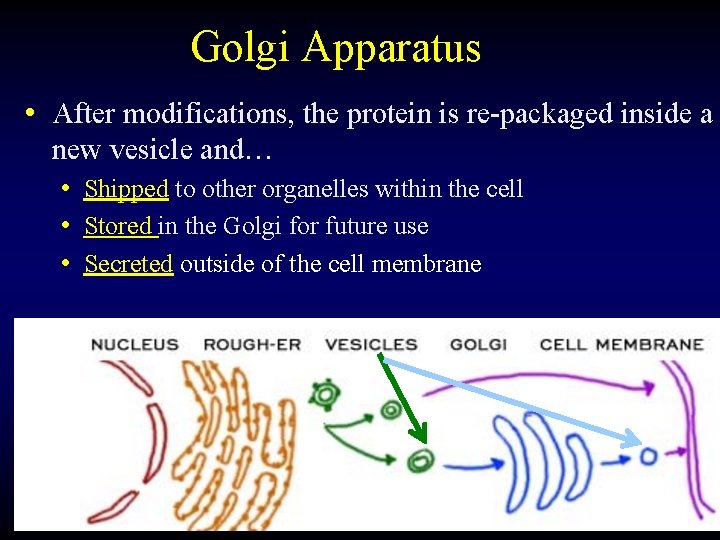
Golgi Apparatus • After modifications, the protein is re-packaged inside a new vesicle and… • Shipped to other organelles within the cell • Stored in the Golgi for future use • Secreted outside of the cell membrane 32
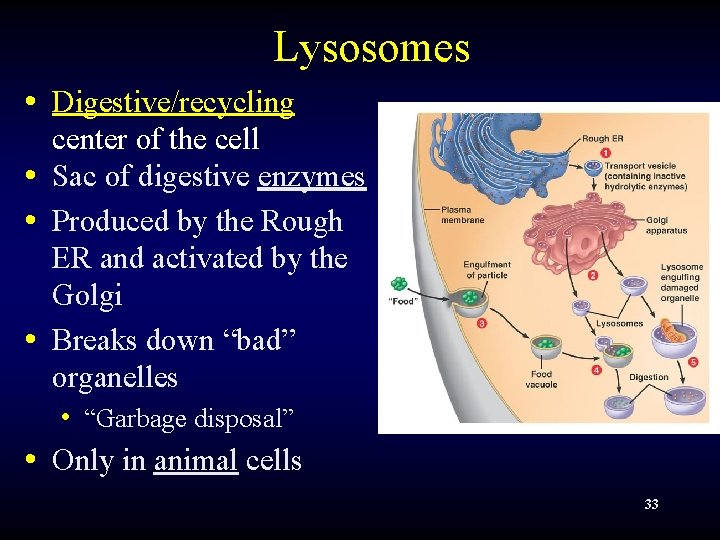
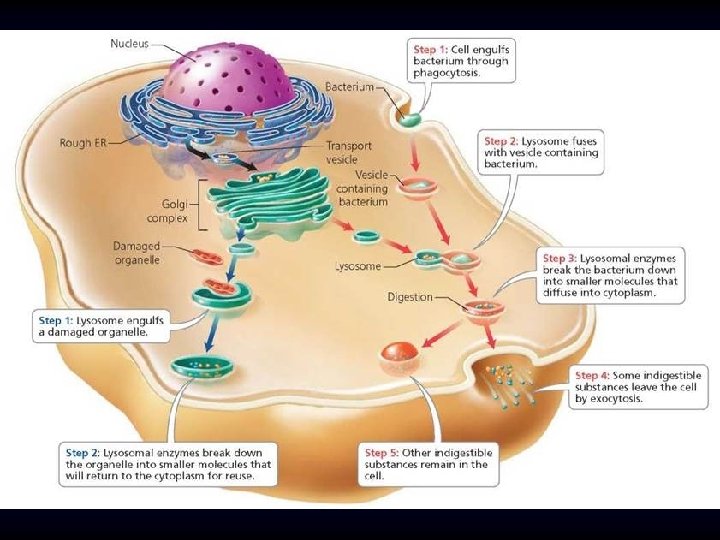
Lysosomes • Digestive/recycling • • center of the cell Sac of digestive enzymes Produced by the Rough ER and activated by the Golgi Breaks down “bad” organelles • “Garbage disposal” Only in animal cells 33
34
35
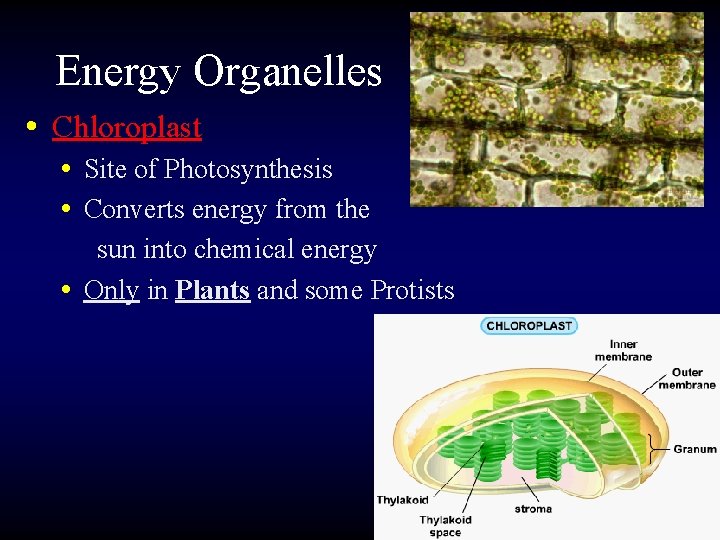
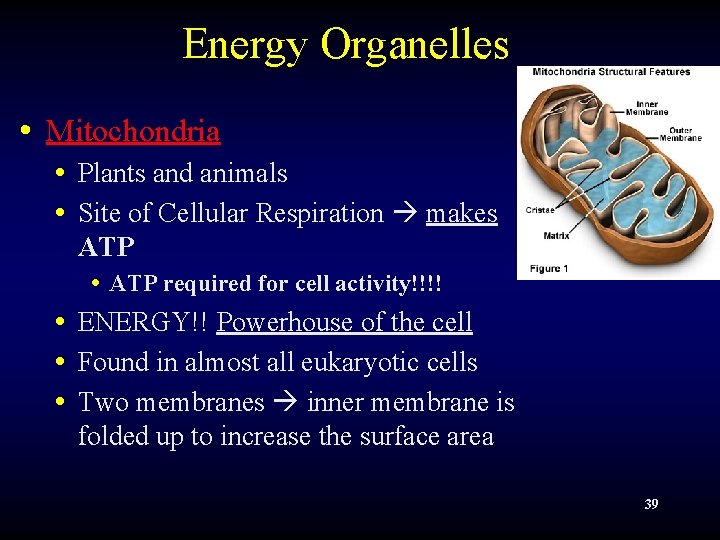
Energy Organelles • Two “energy” organelles • Chloroplasts • Mitochondria • Both contain their own DNA 36
Energy Organelles • Chloroplast • Site of Photosynthesis • Converts energy from the sun into chemical energy • Only in Plants and some Protists 37
Grrrr! 38
Energy Organelles • Mitochondria • Plants and animals • Site of Cellular Respiration makes ATP • ATP required for cell activity!!!! • ENERGY!! Powerhouse of the cell • Found in almost all eukaryotic cells • Two membranes inner membrane is folded up to increase the surface area 39
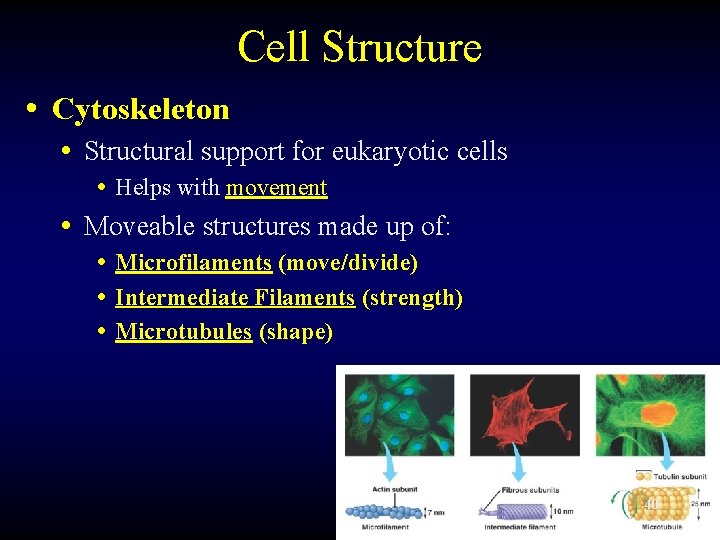
Cell Structure • Cytoskeleton • Structural support for eukaryotic cells • Helps with movement • Moveable structures made up of: • Microfilaments (move/divide) • Intermediate Filaments (strength) • Microtubules (shape) 40
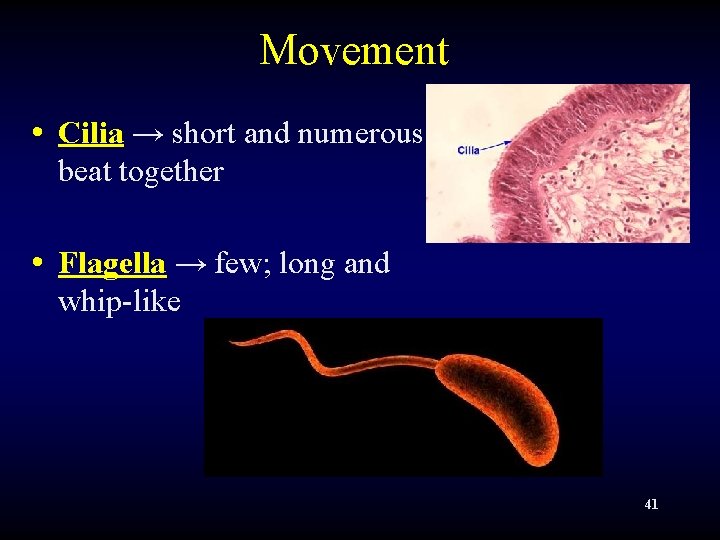
Movement • Cilia → short and numerous; beat together • Flagella → few; long and whip-like 41
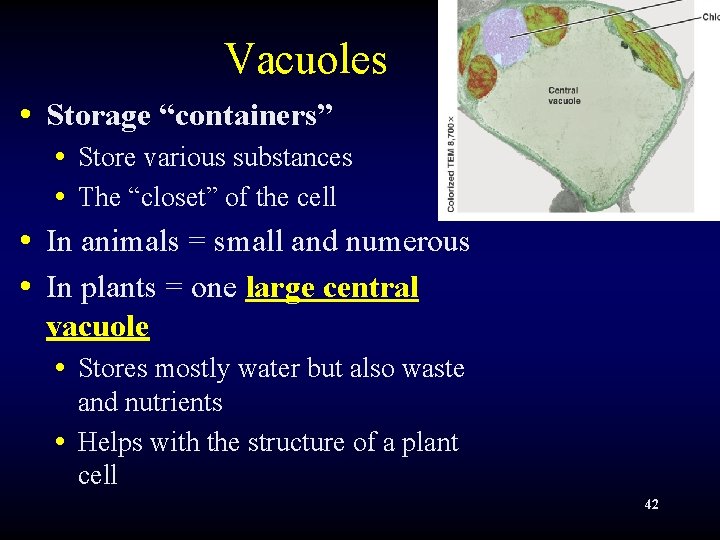
Vacuoles • Storage “containers” • Store various substances • The “closet” of the cell • In animals = small and numerous • In plants = one large central vacuole • Stores mostly water but also waste and nutrients • Helps with the structure of a plant cell 42
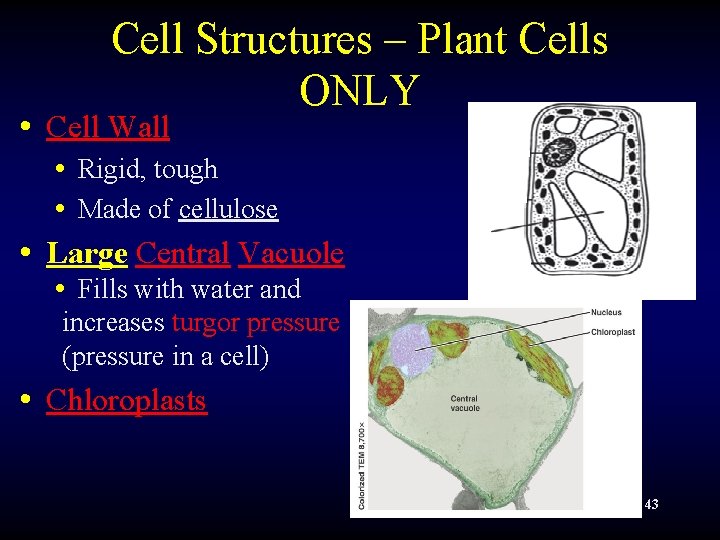
Cell Structures – Plant Cells ONLY • Cell Wall • Rigid, tough • Made of cellulose • Large Central Vacuole • Fills with water and increases turgor pressure (pressure in a cell) • Chloroplasts 43
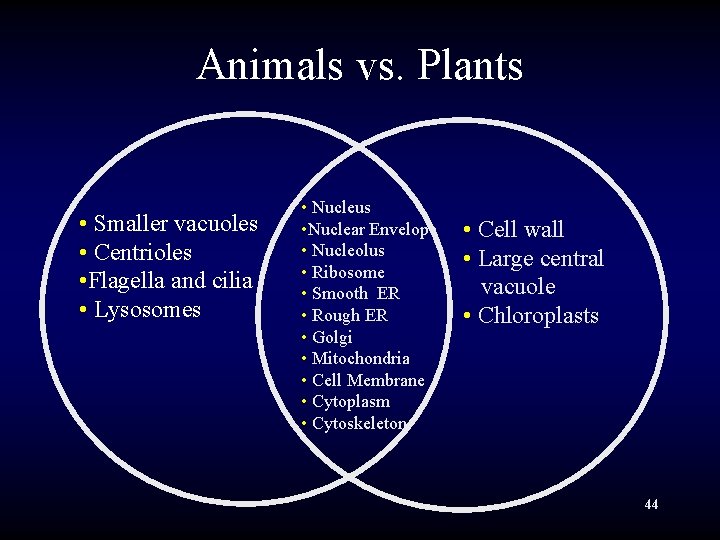
Animals vs. Plants • Smaller vacuoles • Centrioles • Flagella and cilia • Lysosomes • Nucleus • Nuclear Envelope • Nucleolus • Ribosome • Smooth ER • Rough ER • Golgi • Mitochondria • Cell Membrane • Cytoplasm • Cytoskeleton • Cell wall • Large central vacuole • Chloroplasts 44
Remember macromolecules…? 45
The Cell Membrane • Thin, flexible, surround all cells • Controls the traffic of molecules into and out of the cell (school doors) • Takes in substances & disposes the cell’s waste • Allows substances through by either passive transport (no energy) or active transport (energy required!) 46
Structure of Plasma Membrane • Made of phospholipids • Phosphate head and 2 fatty acid chains are the tail • Arranged in a bilayer • Heads – hydrophilic • Tails – hydrophobic • Roots: • • Phospho- polar phosphate group Lipid- non-polar fat Bi- two Layer- sheet or quantity covering a surface 47
Cell Membrane Up Close Phosphate head Fatty acid tails 48
• The phospholipid bilayer is a selectively permeable membrane • Only allows certain substances to diffuse across 49
Selective Permeability • Selective Permeability: • Allows some materials, but not all, to cross through • Small non-polar molecules can pass easily through membrane (O 2 & CO 2) • Small polar molecules must pass through proteins • Large molecules must be moved with vesicles
• Integral Proteins • Permanently attached to the membrane • Transmembrane • found throughout the entire bilayer (trans means through) • Monotopic • Attached on one side of membrane and do not span across the membrane • Peripheral • Only found “outside” bilayer (orange)
• Cholesterol stabilizes the membrane • Integrates between phospholipids • Present in animal cell membranes • Absent in bacteria and most plants where the cell wall provides stability
Carbohydrates • Carbs found on the outside for identification • Glycolipids and Glycoproteins serve as recognition sites for other cells Glycolipids Glycoprotein
Fluid Mosaic Model • Description of arrangement of molecules that make up the cell membrane • Cell Membrane is flexible, not rigid • Phospholipids can move from side to side and slide past each other • Variety of molecules studding the membrane is similar to arrangement of tiles with different textures and patterns Know this picture! http: //www. d natube. com/v ideo/360/Flui d-Mosaic. Model 54