
Cell Specialization Diversity of Cellular Life Organisms are
- Slides: 12
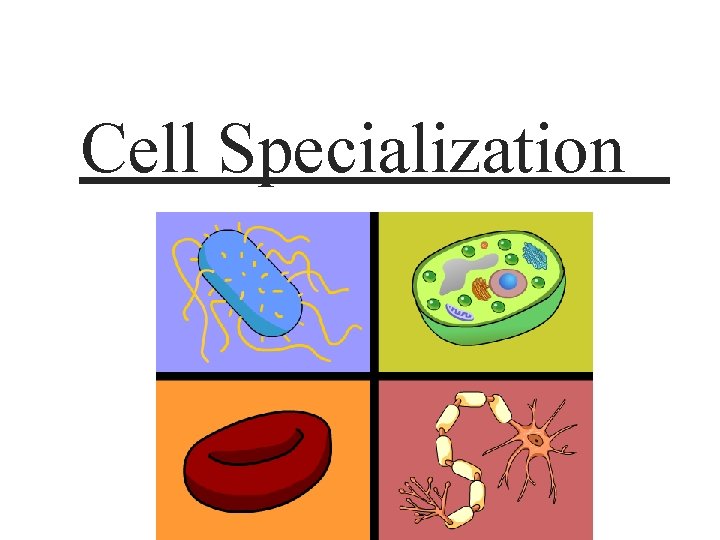
Cell Specialization
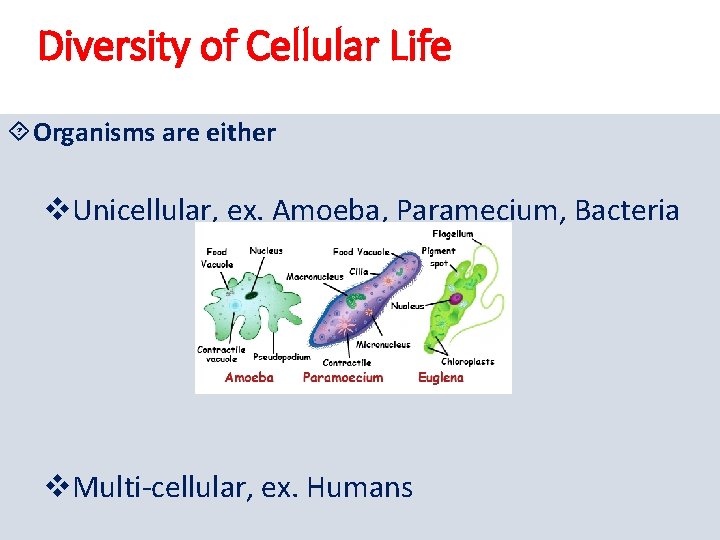
Diversity of Cellular Life Organisms are either v. Unicellular, ex. Amoeba, Paramecium, Bacteria v. Multi-cellular, ex. Humans
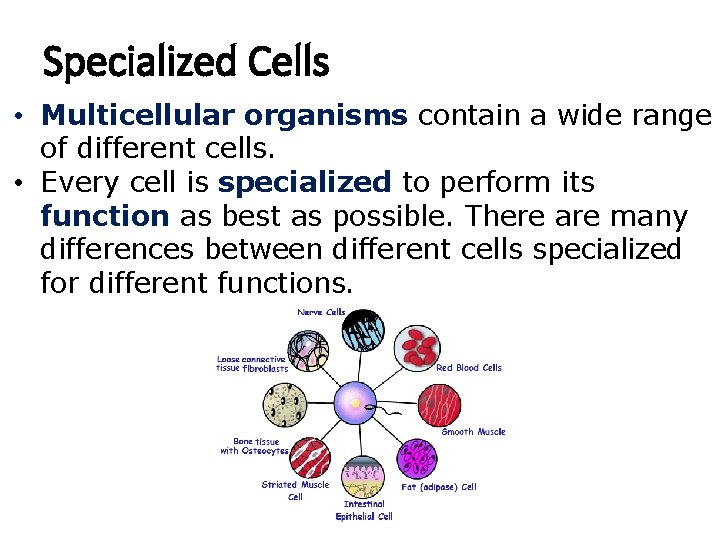
Specialized Cells • Multicellular organisms contain a wide range of different cells. • Every cell is specialized to perform its function as best as possible. There are many differences between different cells specialized for different functions.
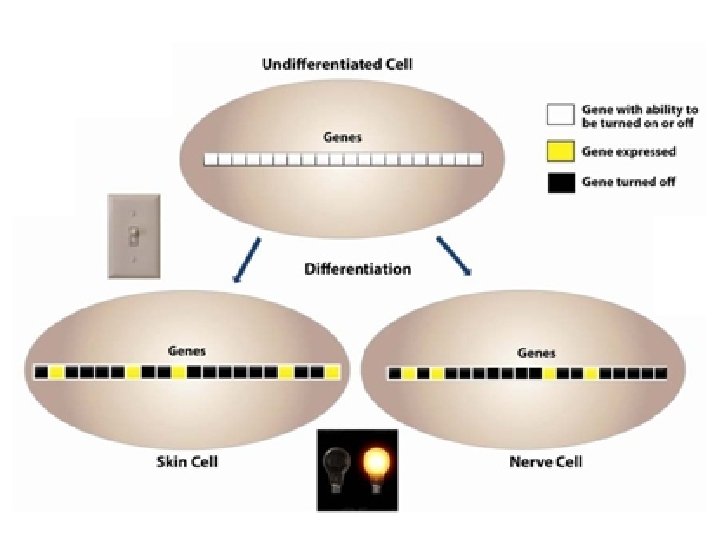
• Each cell in the body, (except for gametes (sex cells)), contains identical DNA. • Different genes function in each type of cell • some are activated (expressed) and others are deactivated (not expressed) due to internal and external environmental conditions • Cells may have different shapes, different contents or different numbers of an organelle.
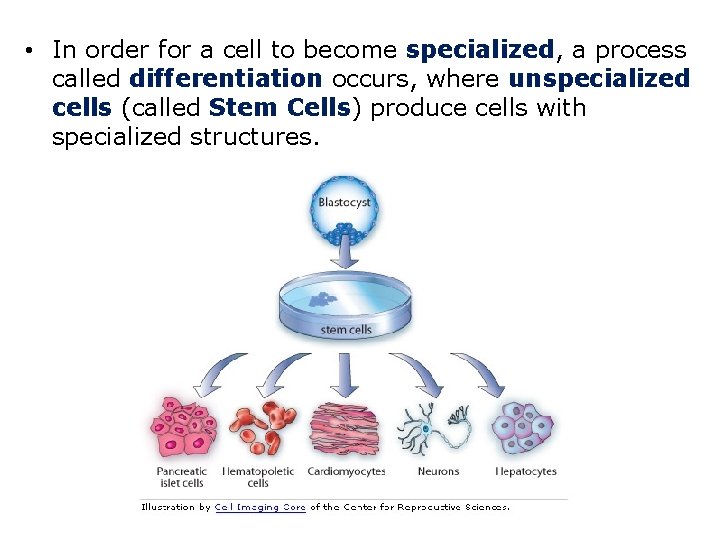
• In order for a cell to become specialized, a process called differentiation occurs, where unspecialized cells (called Stem Cells) produce cells with specialized structures.
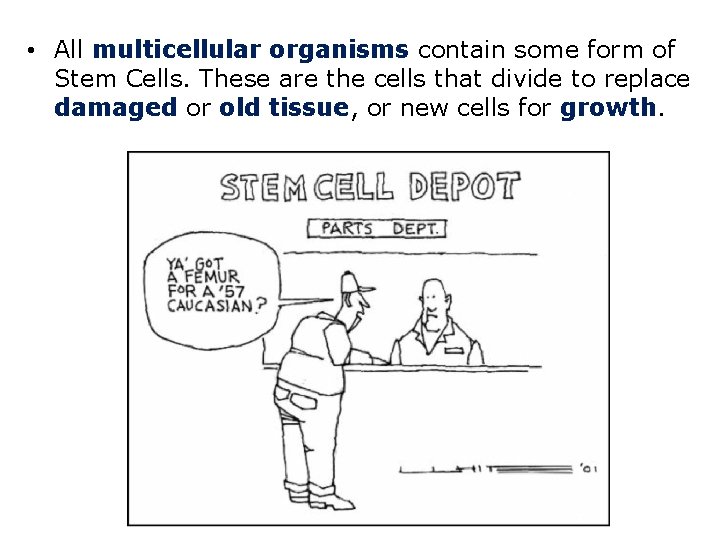
• All multicellular organisms contain some form of Stem Cells. These are the cells that divide to replace damaged or old tissue, or new cells for growth.
The cell as an organism The cells of multi-cellular organisms become specialized for particular tasks and communicate with one another to maintain homeostasis Homeostasis relatively constant internal physical and chemical conditions that organisms maintain Dynamic equilibrium refers to the optimal conditions for survival To maintain homeostasis, unicellular organisms grow, respond to the environment, transform energy, and reproduce
The cell as an organism • Cells communicate by the means of chemical signals that are passed from one cell to another. These signals can speed up or slow down the activities of the cells that receive them and can even result in the cell to change what it is doing. • To respond to the signals from another cell, a cell must have a receptor to which the signaling molecule can bind
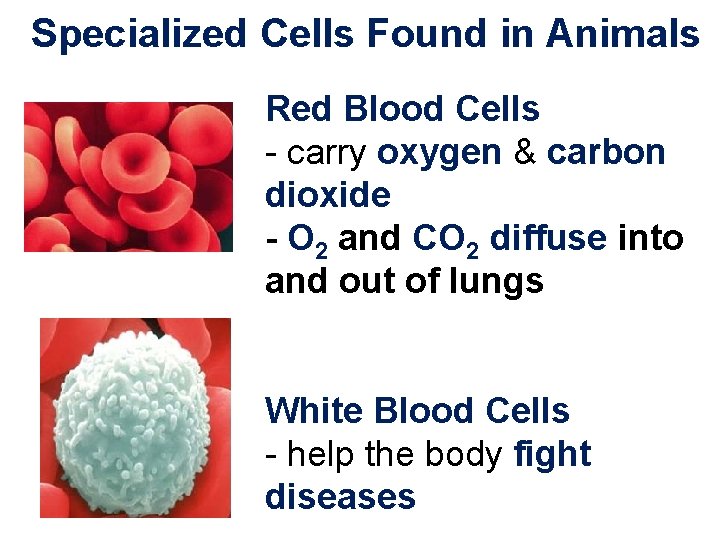
Specialized Cells Found in Animals Red Blood Cells - carry oxygen & carbon dioxide - O 2 and CO 2 diffuse into and out of lungs White Blood Cells - help the body fight diseases
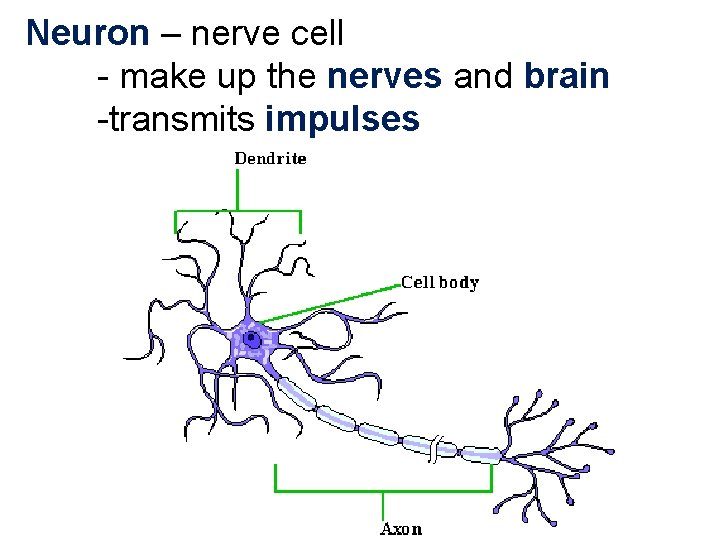
Neuron – nerve cell - make up the nerves and brain -transmits impulses
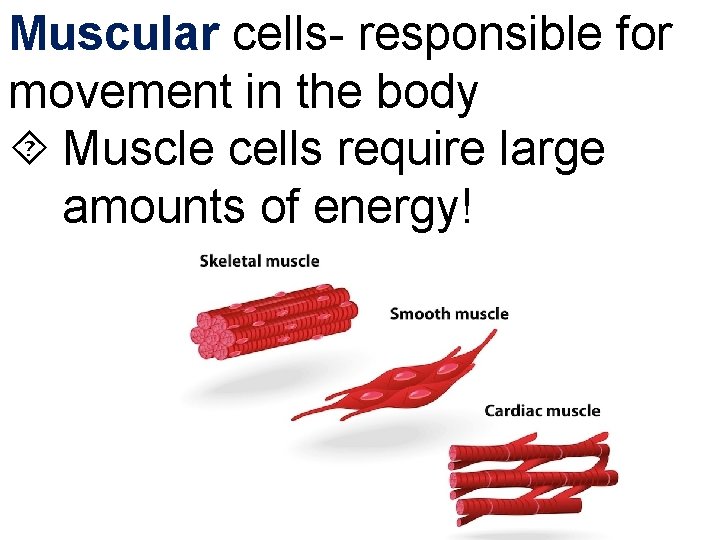
Muscular cells- responsible for movement in the body Muscle cells require large amounts of energy!