
CELL SPECIALIZATION All animals begin their lives as

CELL SPECIALIZATION
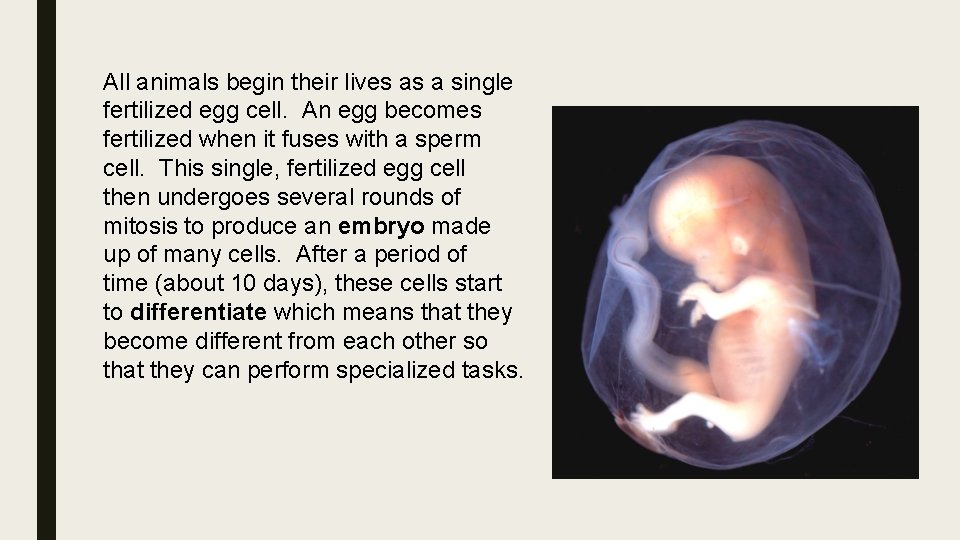
All animals begin their lives as a single fertilized egg cell. An egg becomes fertilized when it fuses with a sperm cell. This single, fertilized egg cell then undergoes several rounds of mitosis to produce an embryo made up of many cells. After a period of time (about 10 days), these cells start to differentiate which means that they become different from each other so that they can perform specialized tasks.
Multicellular organisms are made up of collections or groups of different types of cells with specialized jobs. Although all cells in an organism have the same genetic information, the are not all identical. Different types of cells have different shapes, sizes, functions, organelles, proteins and other characteristics that differ. It is necessary to have all these different types of cells because they play different roles within an organism.
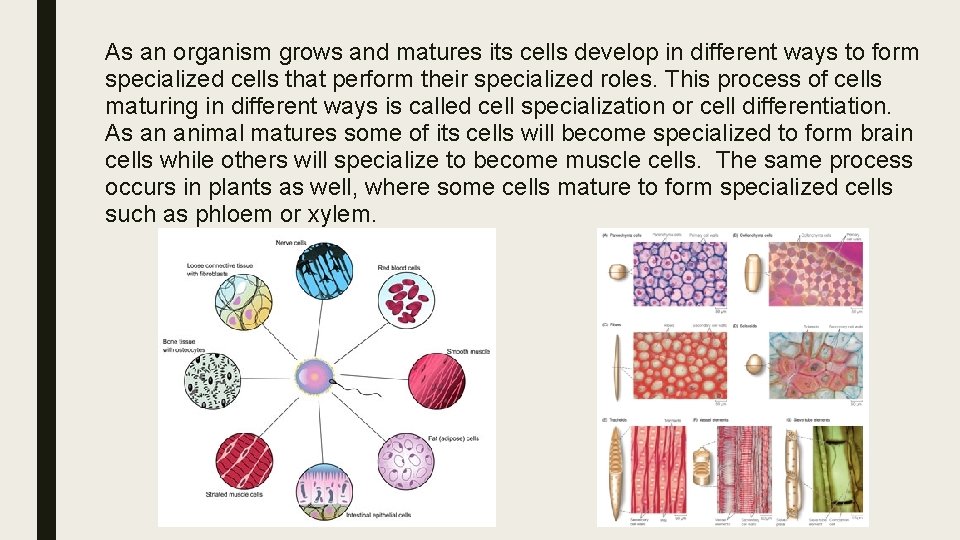
As an organism grows and matures its cells develop in different ways to form specialized cells that perform their specialized roles. This process of cells maturing in different ways is called cell specialization or cell differentiation. As an animal matures some of its cells will become specialized to form brain cells while others will specialize to become muscle cells. The same process occurs in plants as well, where some cells mature to form specialized cells such as phloem or xylem.
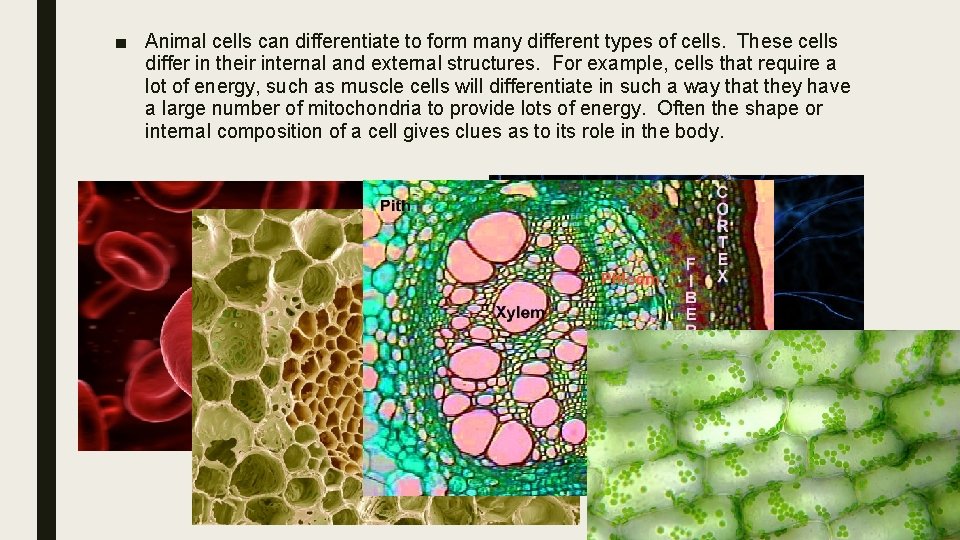
■ Animal cells can differentiate to form many different types of cells. These cells differ in their internal and external structures. For example, cells that require a lot of energy, such as muscle cells will differentiate in such a way that they have a large number of mitochondria to provide lots of energy. Often the shape or internal composition of a cell gives clues as to its role in the body.
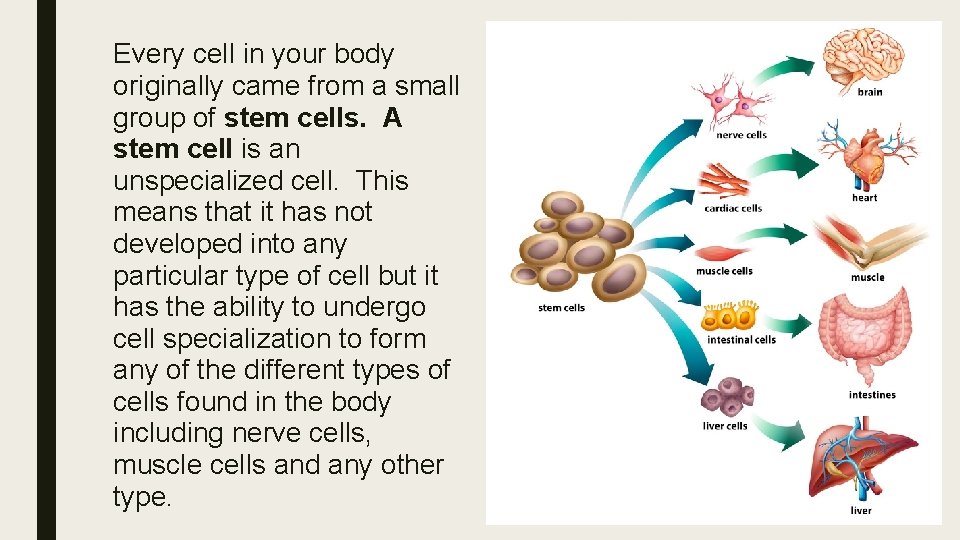
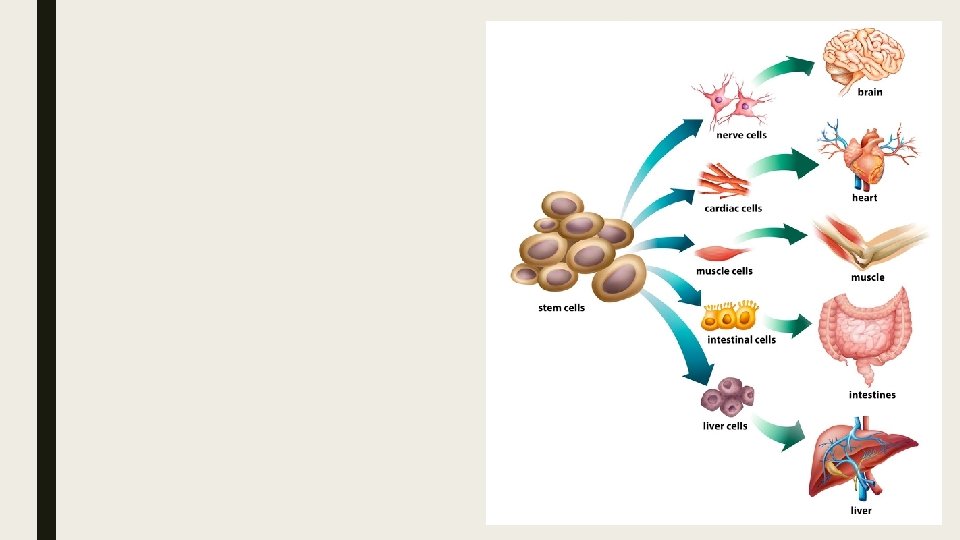
Every cell in your body originally came from a small group of stem cells. A stem cell is an unspecialized cell. This means that it has not developed into any particular type of cell but it has the ability to undergo cell specialization to form any of the different types of cells found in the body including nerve cells, muscle cells and any other type.
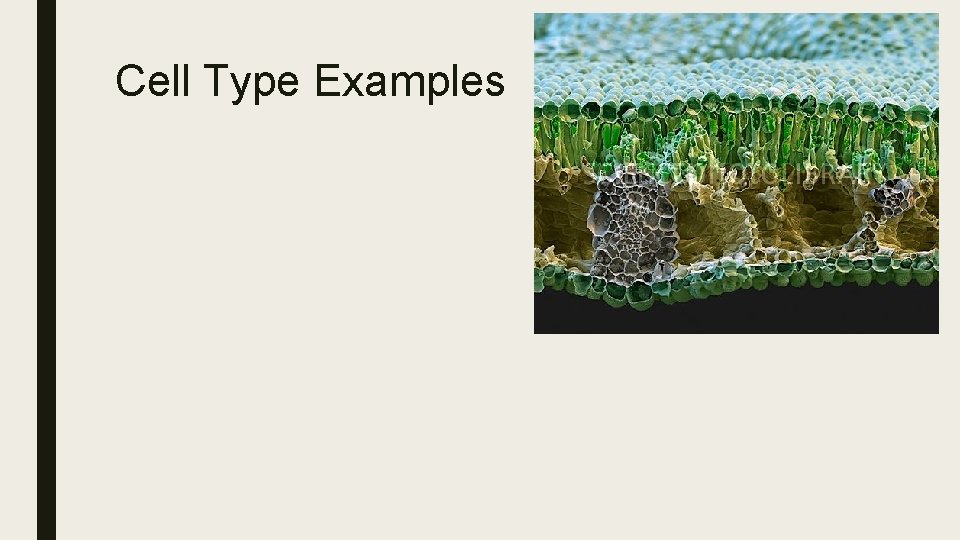
Cell Type Examples
- Slides: 8