
Cell Size and Types Cells the basic units

Cell Size and Types • Cells, the basic units of organisms, can only be observed under microscope • Three Basic types of cells include: Animal Cell Plant Cell Bacterial Cell 1
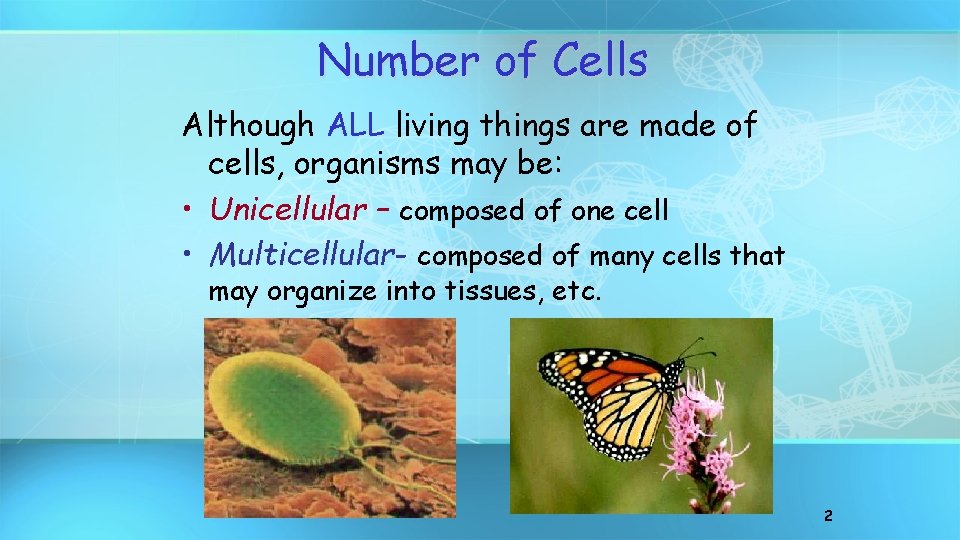
Number of Cells Although ALL living things are made of cells, organisms may be: • Unicellular – composed of one cell • Multicellular- composed of many cells that may organize into tissues, etc. 2
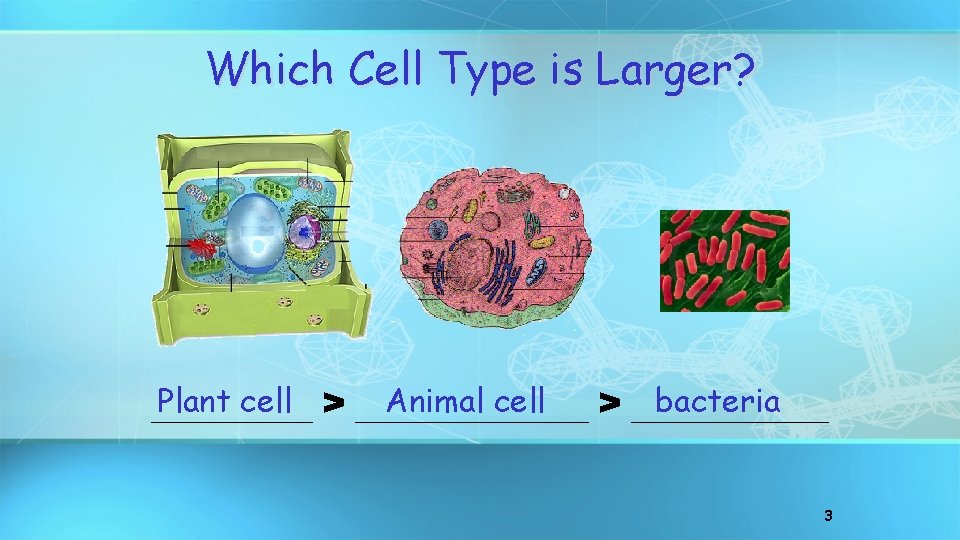
Which Cell Type is Larger? Plant cell > _______ Animal cell bacteria _____ > ______ 3

Multicellular Organisms • Cells in multicellular organisms often specialize (take on different shapes & functions) 4
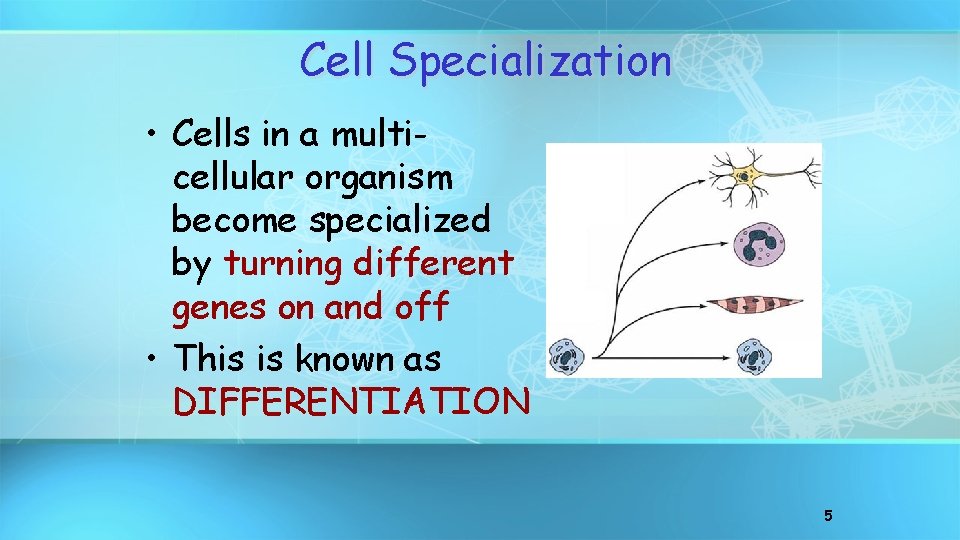
Cell Specialization • Cells in a multicellular organism become specialized by turning different genes on and off • This is known as DIFFERENTIATION 5
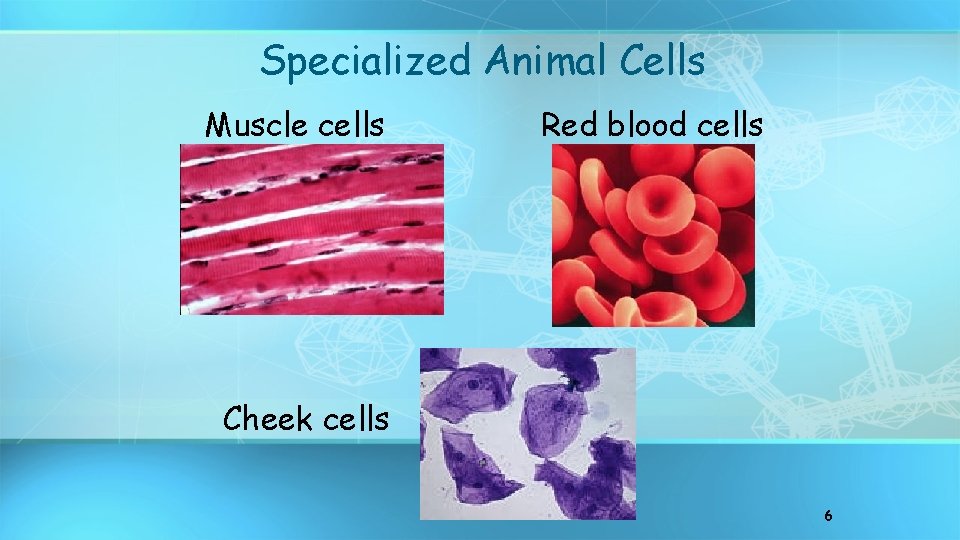
Specialized Animal Cells Muscle cells Red blood cells Cheek cells 6

Specialized Plant cells Guard Cells Pollen Xylem cells 7
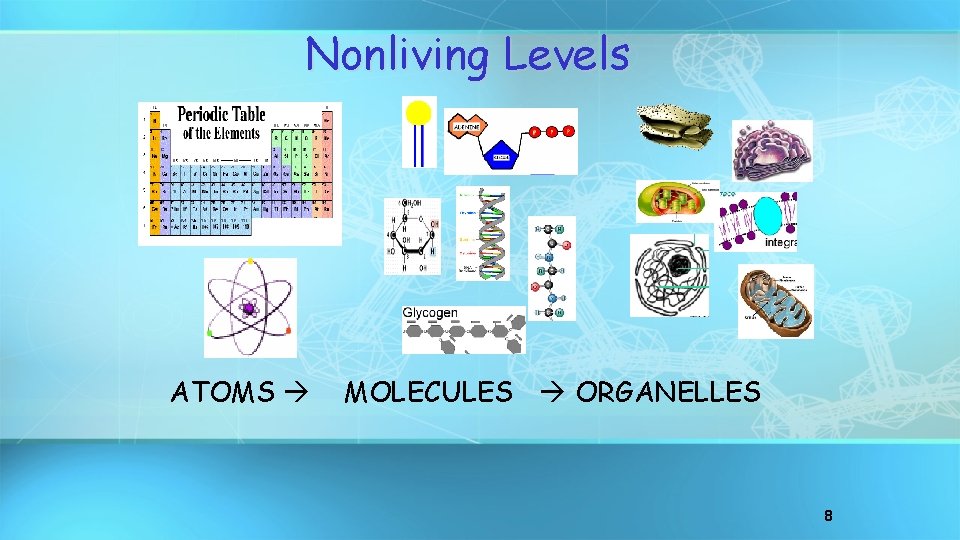
Nonliving Levels ATOMS MOLECULES ORGANELLES 8
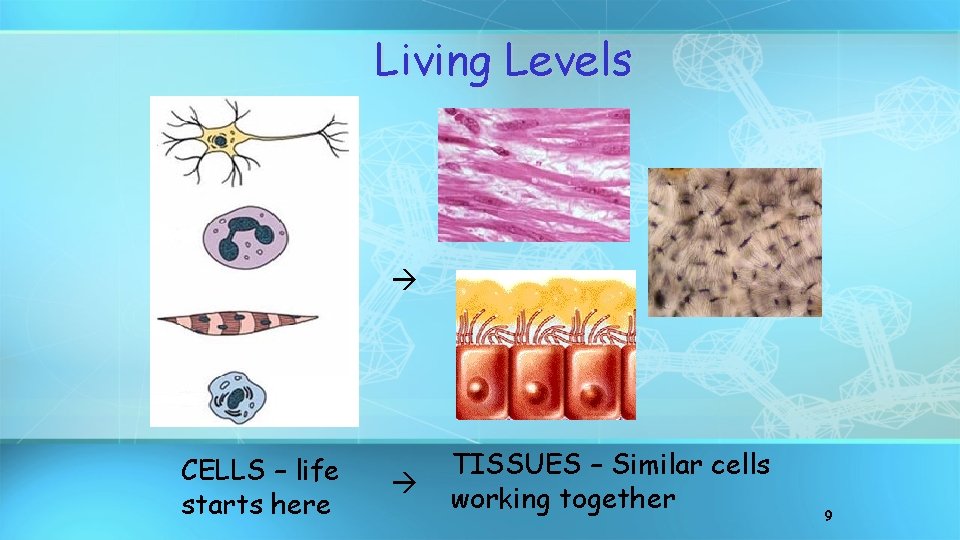
Living Levels CELLS – life starts here TISSUES – Similar cells working together 9
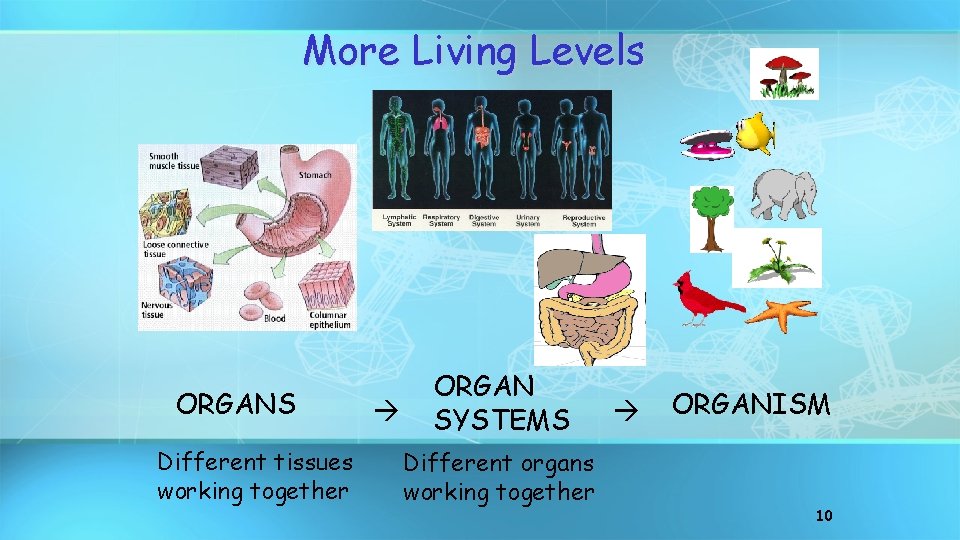
More Living Levels ORGANS Different tissues working together ORGAN SYSTEMS Different organs working together ORGANISM 10
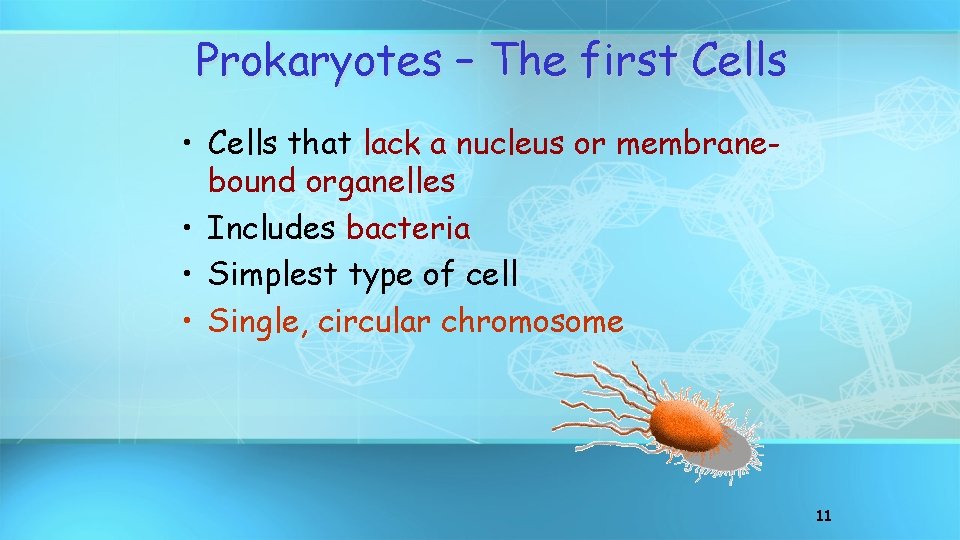
Prokaryotes – The first Cells • Cells that lack a nucleus or membranebound organelles • Includes bacteria • Simplest type of cell • Single, circular chromosome 11
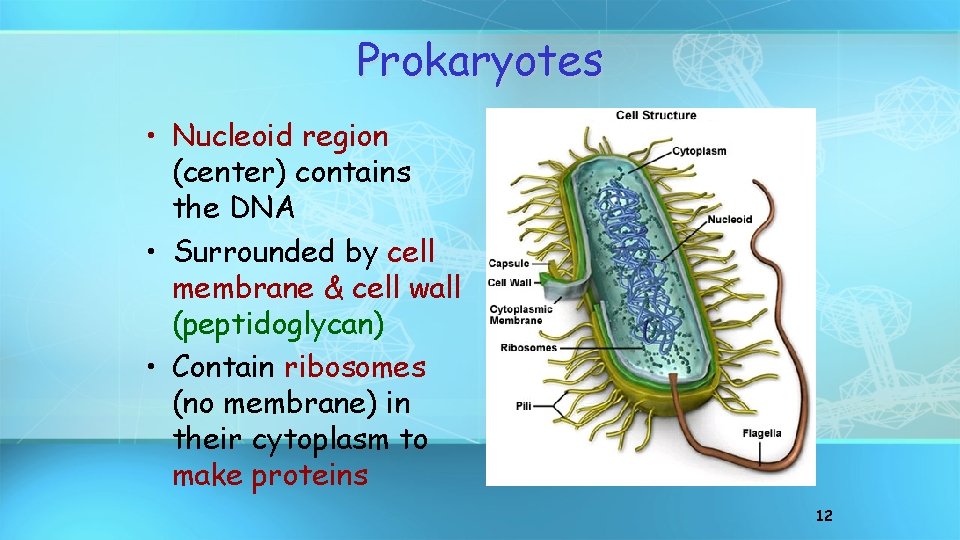
Prokaryotes • Nucleoid region (center) contains the DNA • Surrounded by cell membrane & cell wall (peptidoglycan) • Contain ribosomes (no membrane) in their cytoplasm to make proteins 12
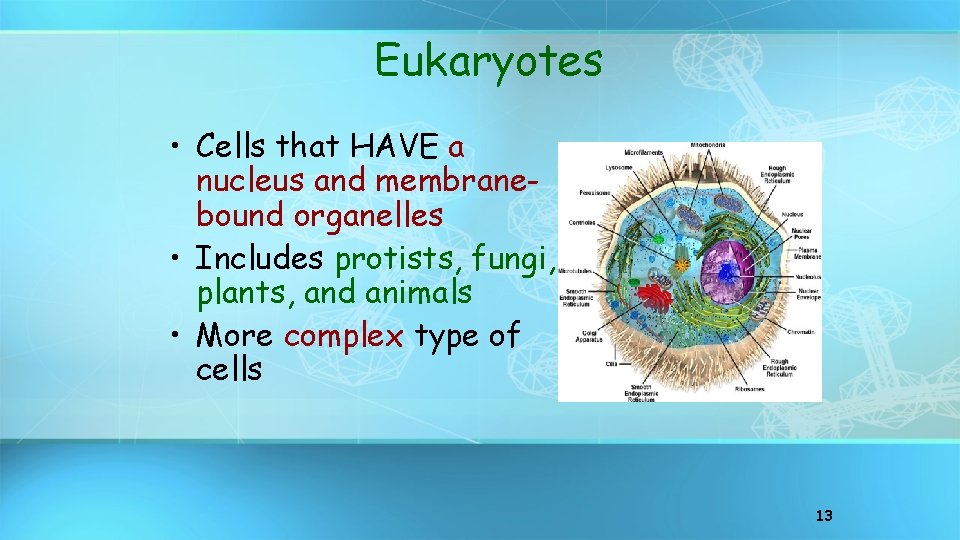
Eukaryotes • Cells that HAVE a nucleus and membranebound organelles • Includes protists, fungi, plants, and animals • More complex type of cells 13
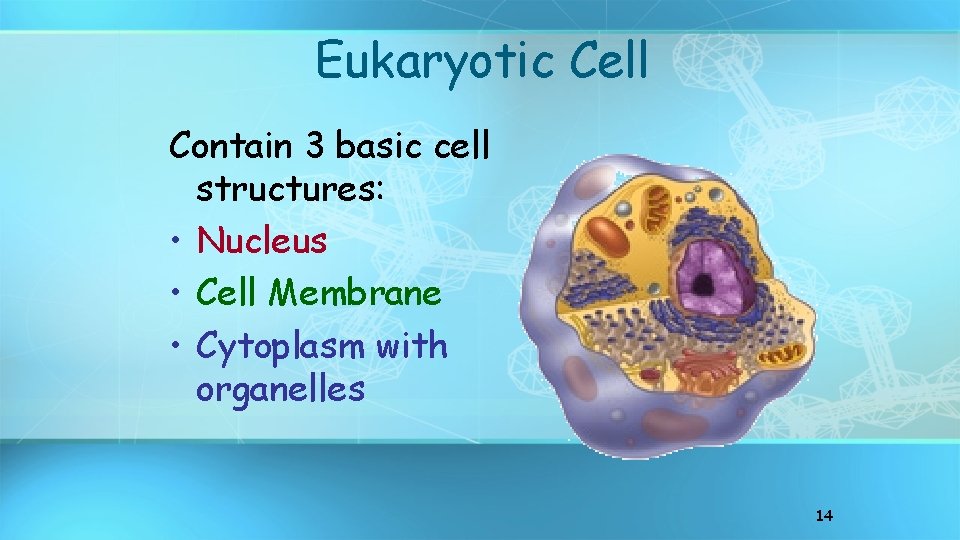
Eukaryotic Cell Contain 3 basic cell structures: • Nucleus • Cell Membrane • Cytoplasm with organelles 14
- Slides: 14