
Cell Signaling The 3 Steps Step 1 Reception
- Slides: 4
Cell Signaling The 3 Steps
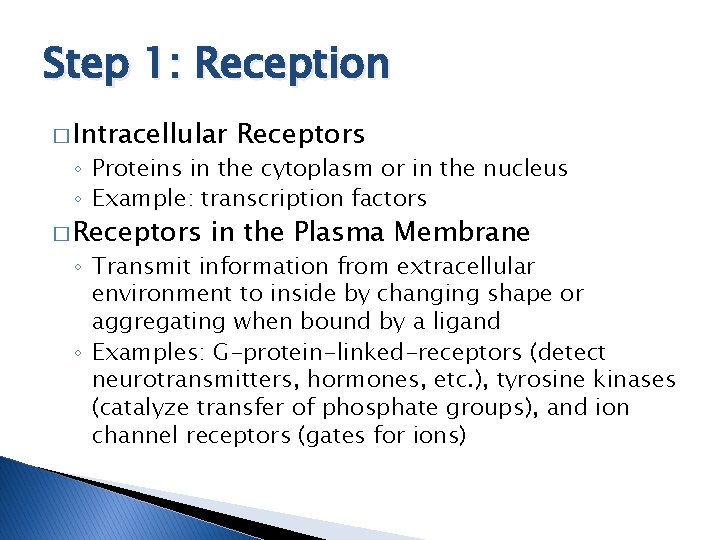
Step 1: Reception � Intracellular Receptors ◦ Proteins in the cytoplasm or in the nucleus ◦ Example: transcription factors � Receptors in the Plasma Membrane ◦ Transmit information from extracellular environment to inside by changing shape or aggregating when bound by a ligand ◦ Examples: G-protein-linked-receptors (detect neurotransmitters, hormones, etc. ), tyrosine kinases (catalyze transfer of phosphate groups), and ion channel receptors (gates for ions)
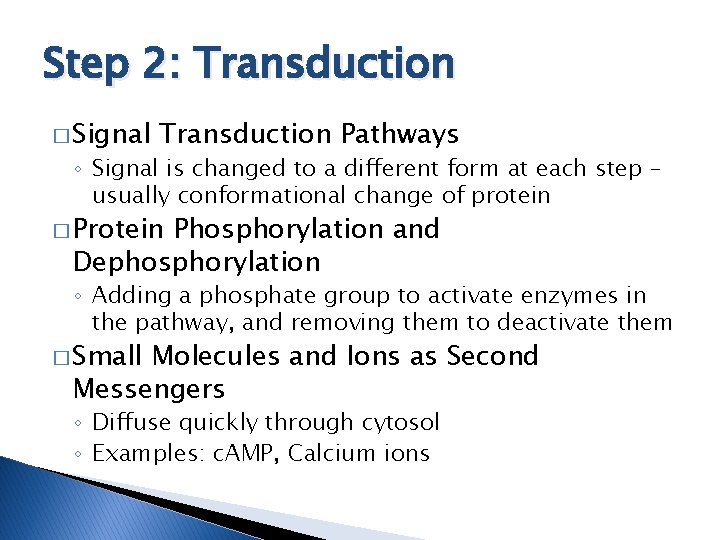
Step 2: Transduction � Signal Transduction Pathways ◦ Signal is changed to a different form at each step – usually conformational change of protein � Protein Phosphorylation and Dephosphorylation ◦ Adding a phosphate group to activate enzymes in the pathway, and removing them to deactivate them � Small Molecules and Ions as Second Messengers ◦ Diffuse quickly through cytosol ◦ Examples: c. AMP, Calcium ions
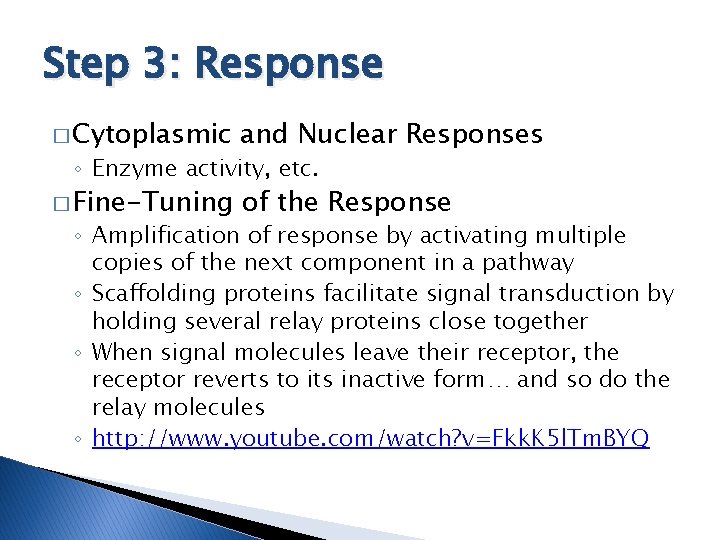
Step 3: Response � Cytoplasmic and Nuclear Responses � Fine-Tuning of the Response ◦ Enzyme activity, etc. ◦ Amplification of response by activating multiple copies of the next component in a pathway ◦ Scaffolding proteins facilitate signal transduction by holding several relay proteins close together ◦ When signal molecules leave their receptor, the receptor reverts to its inactive form… and so do the relay molecules ◦ http: //www. youtube. com/watch? v=Fkk. K 5 l. Tm. BYQ