
Cell Signaling Cell signaling cells can process information
- Slides: 25
Cell Signaling
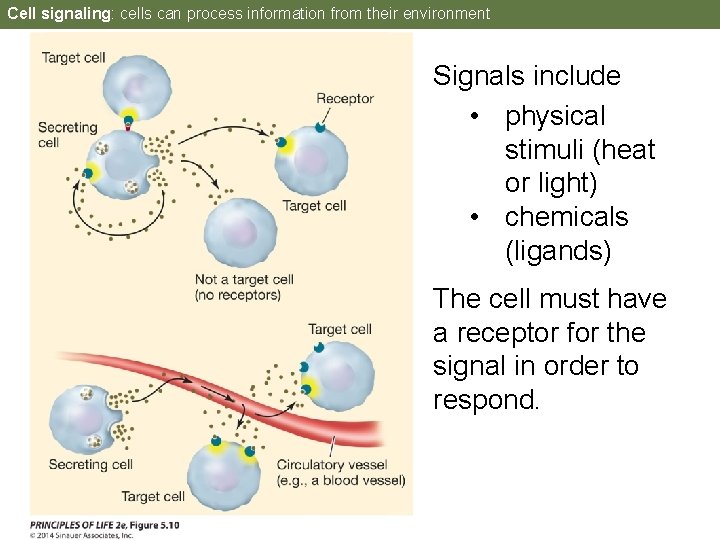
Cell signaling: cells can process information from their environment Signals include • physical stimuli (heat or light) • chemicals (ligands) The cell must have a receptor for the signal in order to respond.
Concept 5. 5 The Membrane Plays a Key Role in a Cell’s Response to Environmental Signals In a multicellular animal, cells are exposed to many chemical signals: • Autocrine signals affect the same cells that release them. • Paracrine signals diffuse to and affect nearby cells. • Juxtacrine signaling requires direct contact between the signaling and responding cell. • Hormones travel to distant cells.
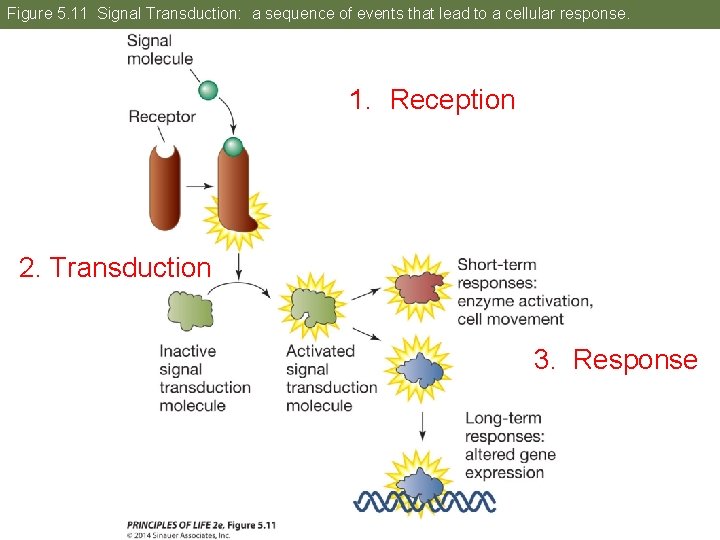
Figure 5. 11 Signal Transduction: a sequence of events that lead to a cellular response. 1. Reception 2. Transduction 3. Response
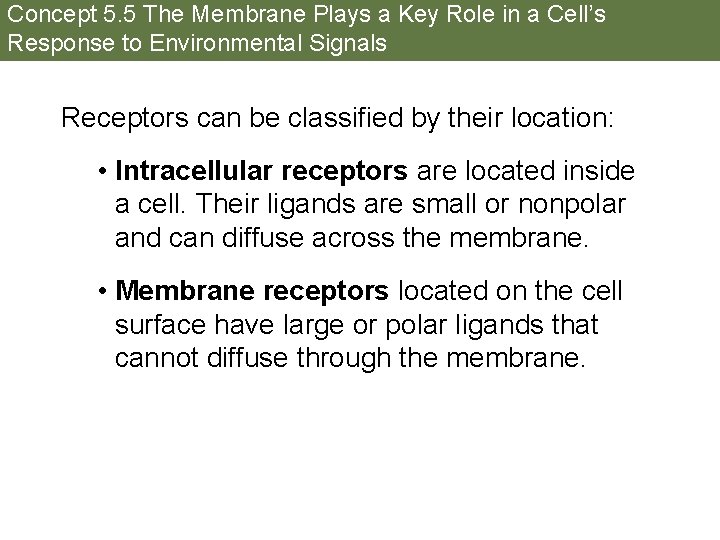
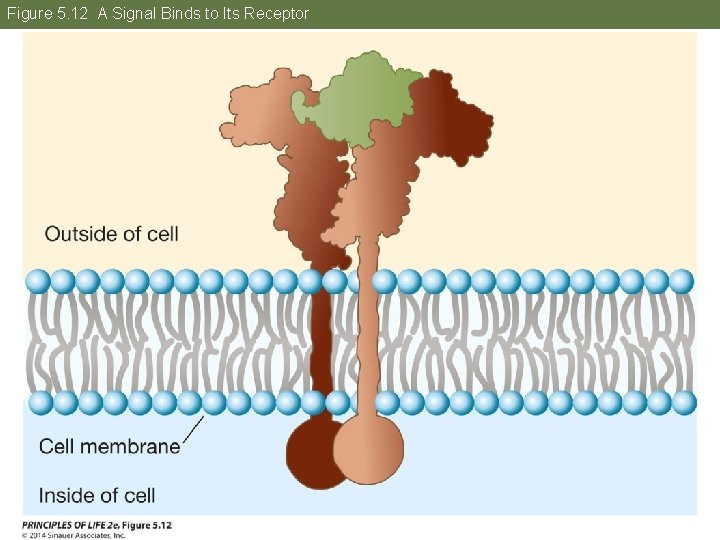
Concept 5. 5 The Membrane Plays a Key Role in a Cell’s Response to Environmental Signals Receptors can be classified by their location: • Intracellular receptors are located inside a cell. Their ligands are small or nonpolar and can diffuse across the membrane. • Membrane receptors located on the cell surface have large or polar ligands that cannot diffuse through the membrane.
Figure 5. 12 A Signal Binds to Its Receptor
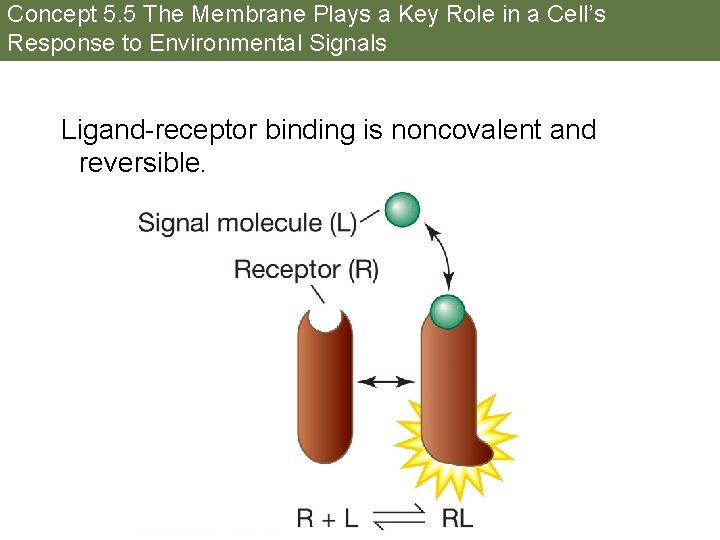
Concept 5. 5 The Membrane Plays a Key Role in a Cell’s Response to Environmental Signals Ligand-receptor binding is noncovalent and reversible.
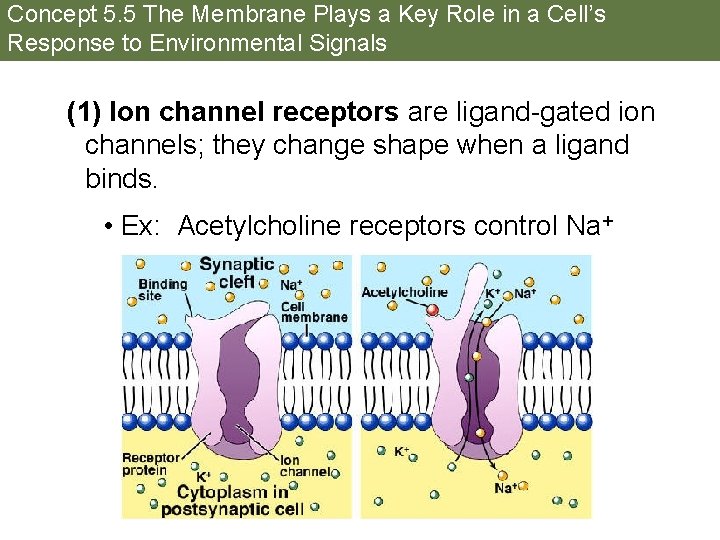
Concept 5. 5 The Membrane Plays a Key Role in a Cell’s Response to Environmental Signals (1) Ion channel receptors are ligand-gated ion channels; they change shape when a ligand binds. • Ex: Acetylcholine receptors control Na+
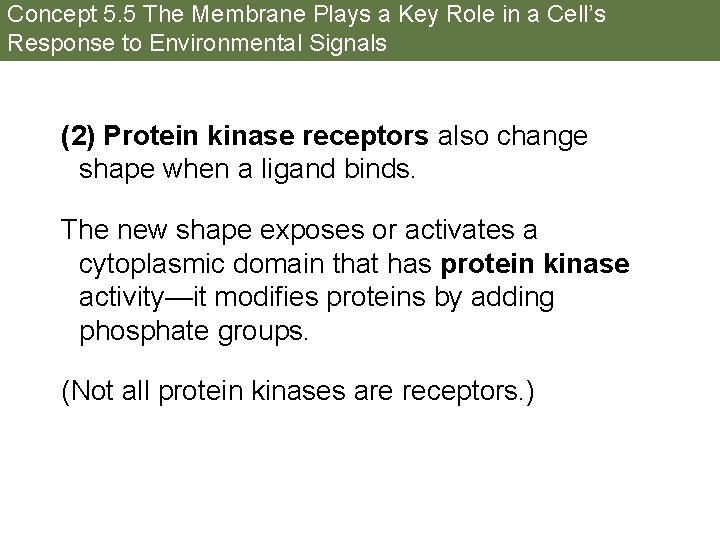
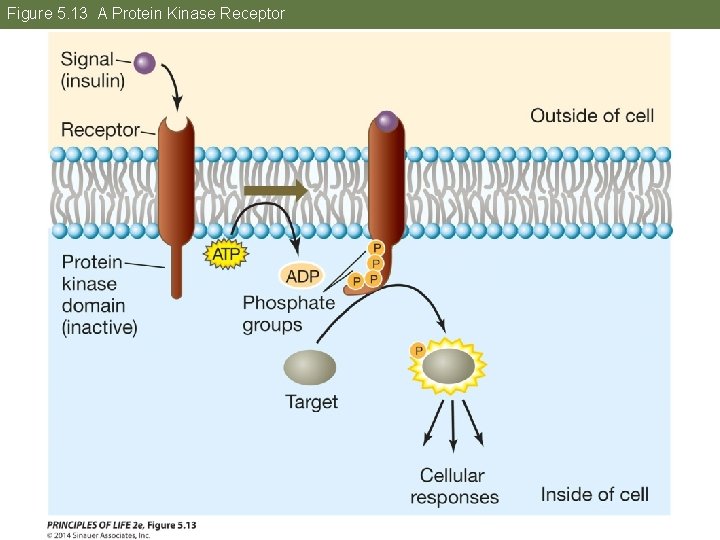
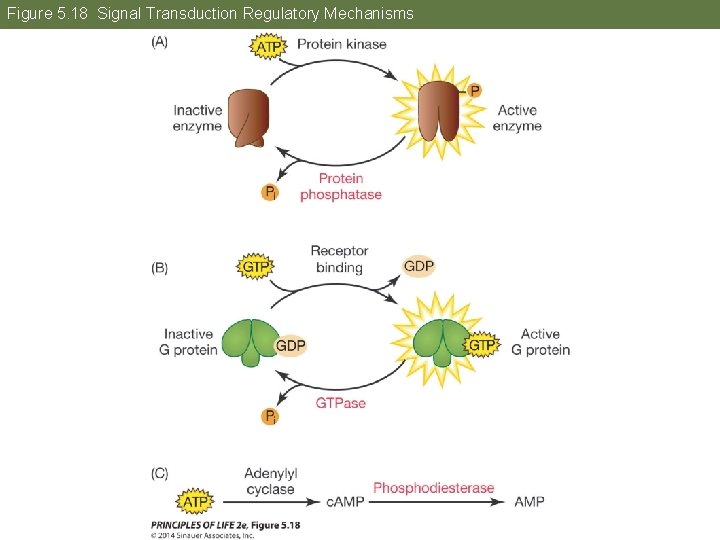
Concept 5. 5 The Membrane Plays a Key Role in a Cell’s Response to Environmental Signals (2) Protein kinase receptors also change shape when a ligand binds. The new shape exposes or activates a cytoplasmic domain that has protein kinase activity—it modifies proteins by adding phosphate groups. (Not all protein kinases are receptors. )
Figure 5. 13 A Protein Kinase Receptor
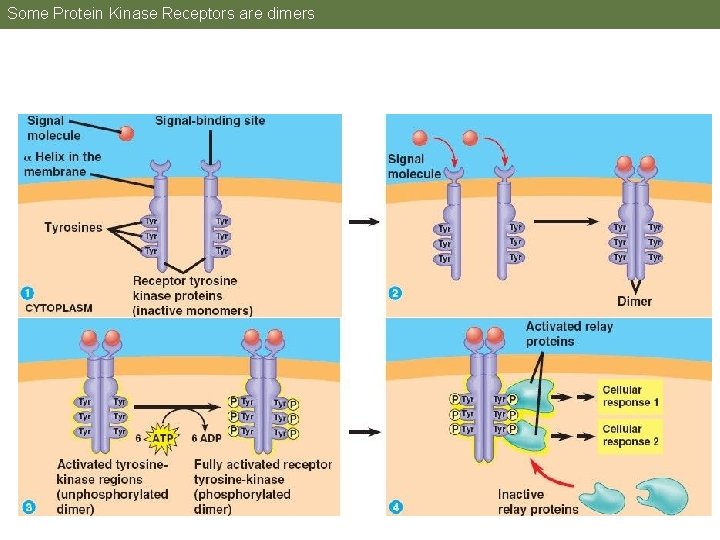
Some Protein Kinase Receptors are dimers
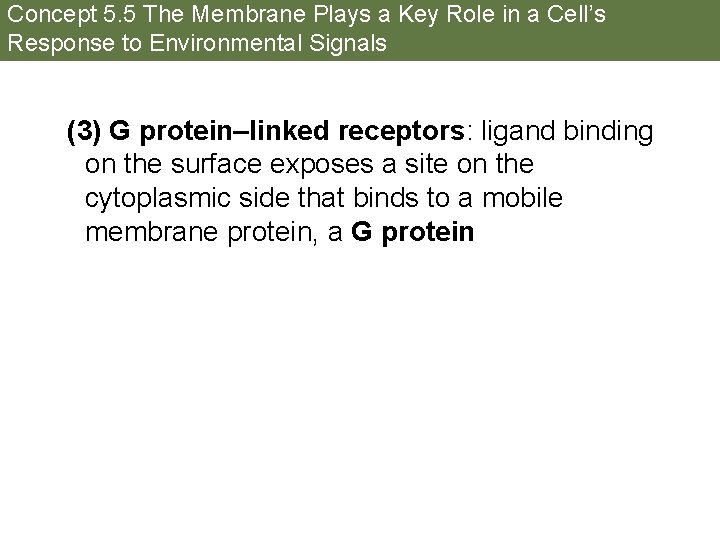
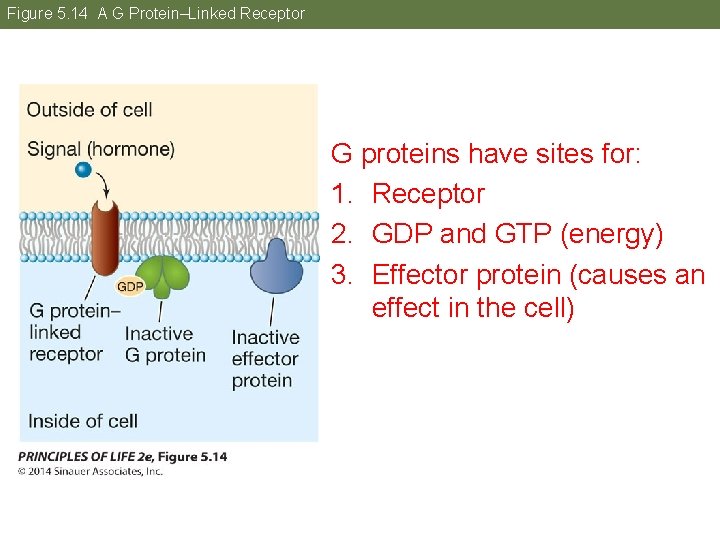
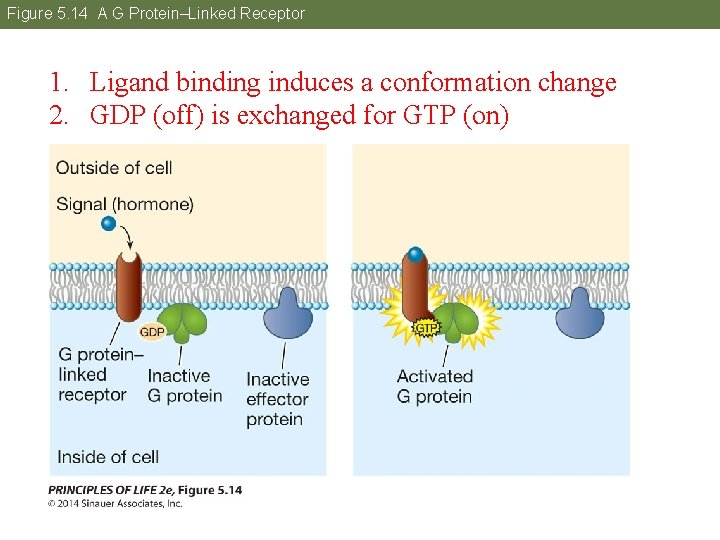
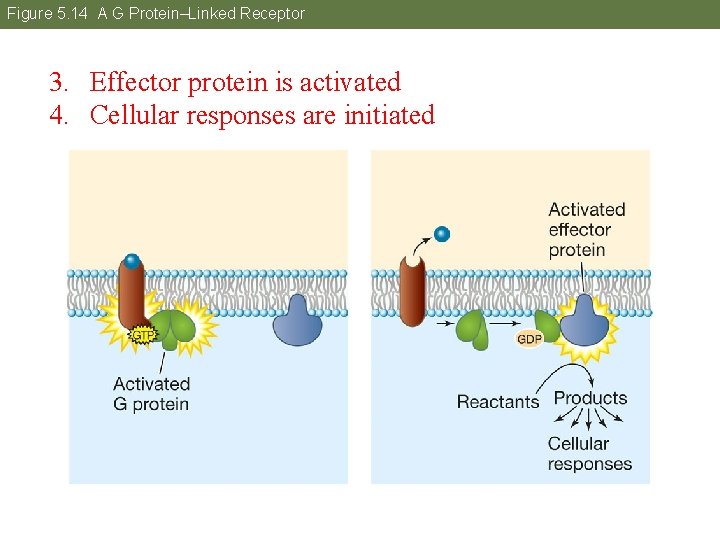
Concept 5. 5 The Membrane Plays a Key Role in a Cell’s Response to Environmental Signals (3) G protein–linked receptors: ligand binding on the surface exposes a site on the cytoplasmic side that binds to a mobile membrane protein, a G protein
Figure 5. 14 A G Protein–Linked Receptor G proteins have sites for: 1. Receptor 2. GDP and GTP (energy) 3. Effector protein (causes an effect in the cell)
Figure 5. 14 A G Protein–Linked Receptor 1. Ligand binding induces a conformation change 2. GDP (off) is exchanged for GTP (on)
Figure 5. 14 A G Protein–Linked Receptor 3. Effector protein is activated 4. Cellular responses are initiated
Concept 5. 6 Signal Transduction Allows the Cell to Respond to Its Environment There are many ways in which cells respond to environmental signals: 1. Opening of ion channels—changes the balance of ion concentrations between the outside and inside of the cell and results in change in the electrical potential across the membrane.
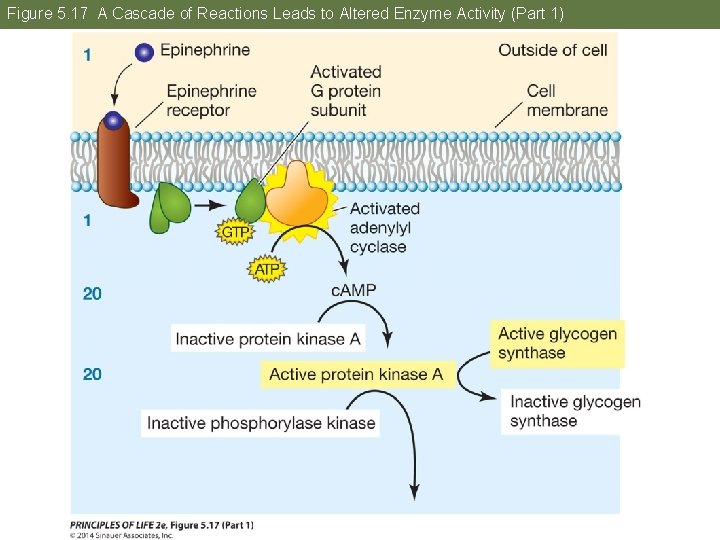
Concept 5. 6 Signal Transduction Allows the Cell to Respond to Its Environment 2. Alterations in gene expression—genes may be switched on (upregulated) or switched off (downregulated). This affects the abundance of proteins (often enzymes), thus changing cell function. 3. Alteration of enzyme activities—more rapid response than those involving change in gene expression.
Concept 5. 6 Signal Transduction Allows the Cell to Respond to Its Environment The same signal can lead to different responses in different types of cells. Example: Heart and digestive tract muscle cells respond differently to epinephrine because the signal transduction pathways stimulated are different in the two cell types.
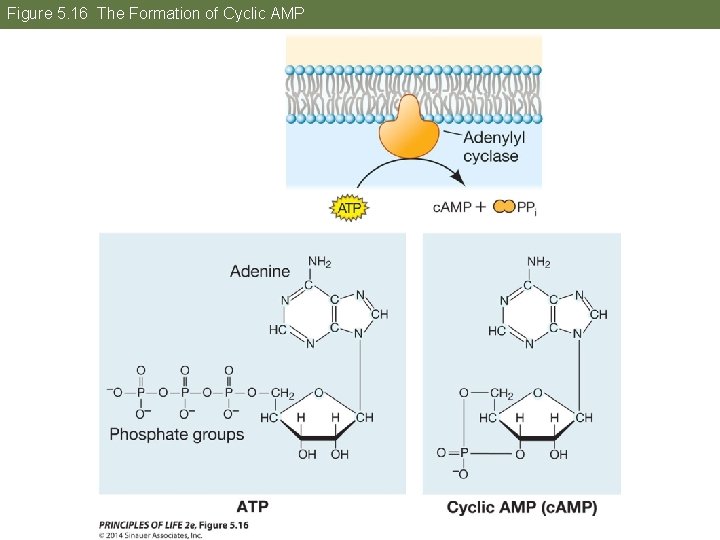
Concept 5. 6 Signal Transduction Allows the Cell to Respond to Its Environment Often there is a small molecule intermediary, a “second messenger, ” between the activated receptor and the cascade of responses that ensues. • Ca 2+ • c. AMP
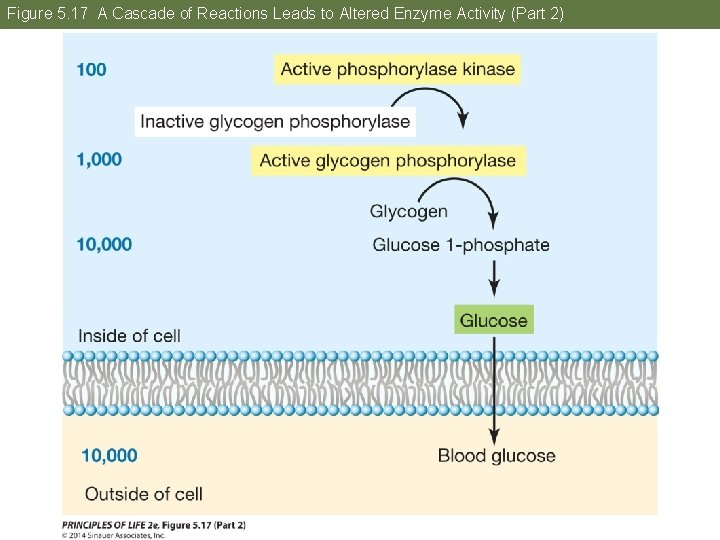
Concept 5. 6 Signal Transduction Allows the Cell to Respond to Its Environment The second messenger was later discovered to be cyclic AMP (c. AMP). Second messengers regulate target enzymes by binding to them noncovalently. They allow the cell to respond to a single membrane event with many events inside the cell—they distribute the signal. They amplify the signal by activating more than one enzyme target.
Figure 5. 16 The Formation of Cyclic AMP
Figure 5. 17 A Cascade of Reactions Leads to Altered Enzyme Activity (Part 1)
Figure 5. 17 A Cascade of Reactions Leads to Altered Enzyme Activity (Part 2)
Figure 5. 18 Signal Transduction Regulatory Mechanisms
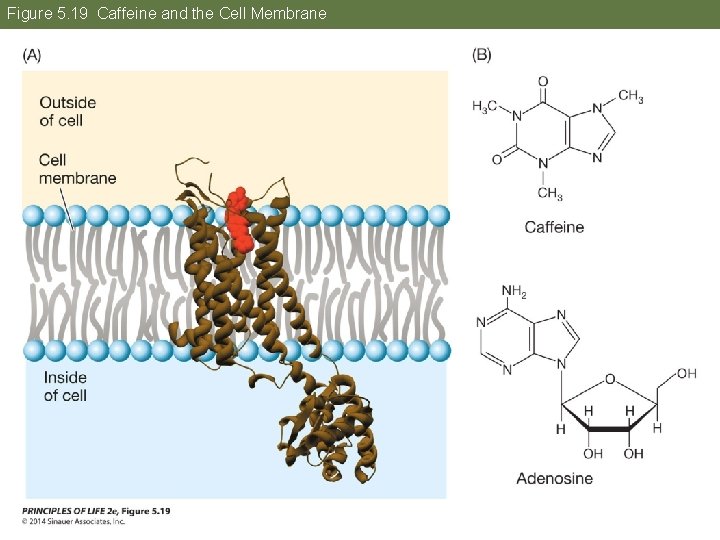
Figure 5. 19 Caffeine and the Cell Membrane