
Cell Signaling and Regulation of Metabolism Objectives By
Cell Signaling and Regulation of Metabolism
Objectives By the end of this lecture, students are expected to: • Differentiate different steps in signaling pathways • Describe the second messenger systems • Recognize the function of signaling pathways for • Signal transmission • Amplification • Discuss the role of signaling pathways in regulation and integration of metabolism

No cell lives in isolation • Cells communicate with each other • Cells send and receive information (signals) • Information is relayed within cell to produce a response
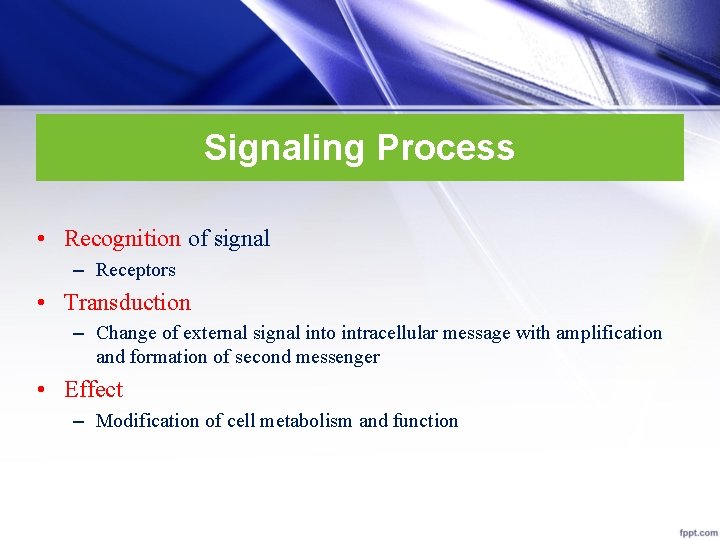
Signaling Process • Recognition of signal – Receptors • Transduction – Change of external signal into intracellular message with amplification and formation of second messenger • Effect – Modification of cell metabolism and function

General Signaling Pathway
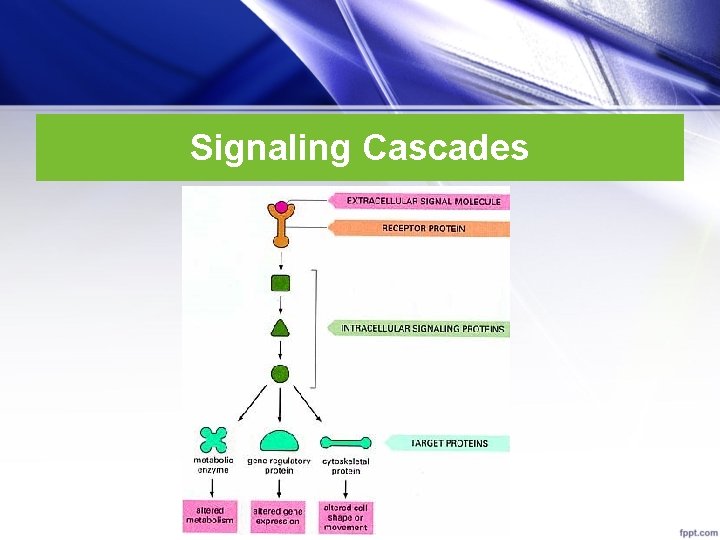
Signaling Cascades
Recognition • Performed by receptors • Ligand will produce response only in cells that have receptors for this particular ligand • Each cell has a specific set of receptors
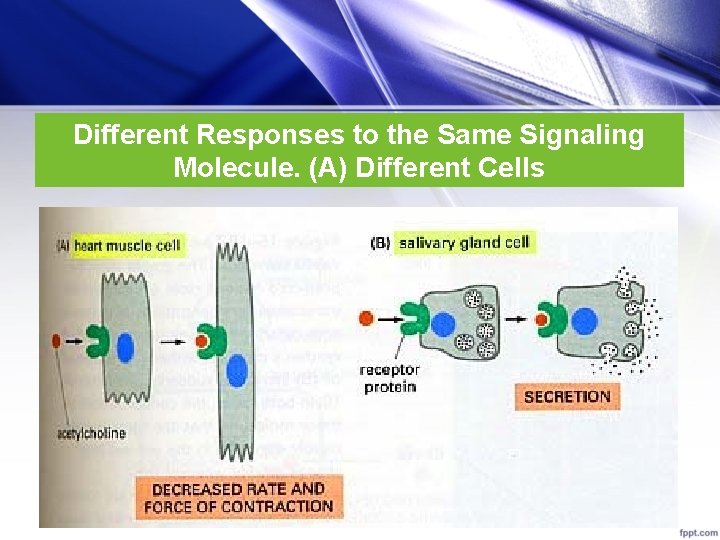
Different Responses to the Same Signaling Molecule. (A) Different Cells
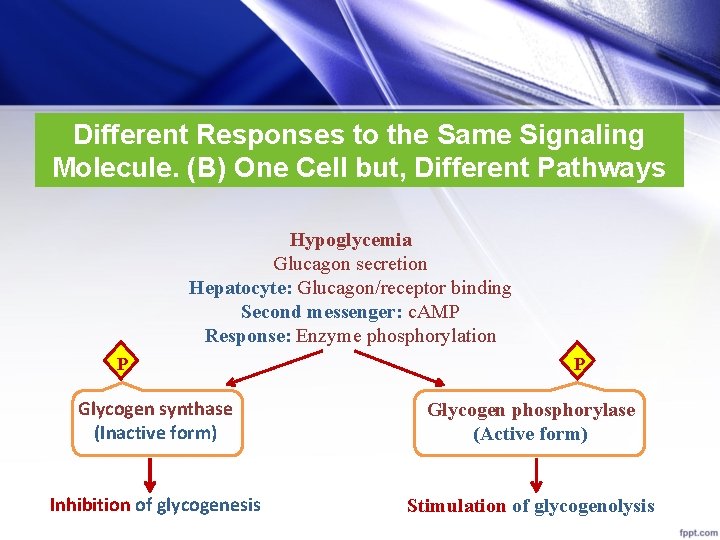
Different Responses to the Same Signaling Molecule. (B) One Cell but, Different Pathways Hypoglycemia Glucagon secretion Hepatocyte: Glucagon/receptor binding Second messenger: c. AMP Response: Enzyme phosphorylation P P Glycogen synthase (Inactive form) Glycogen phosphorylase (Active form) Inhibition of glycogenesis Stimulation of glycogenolysis
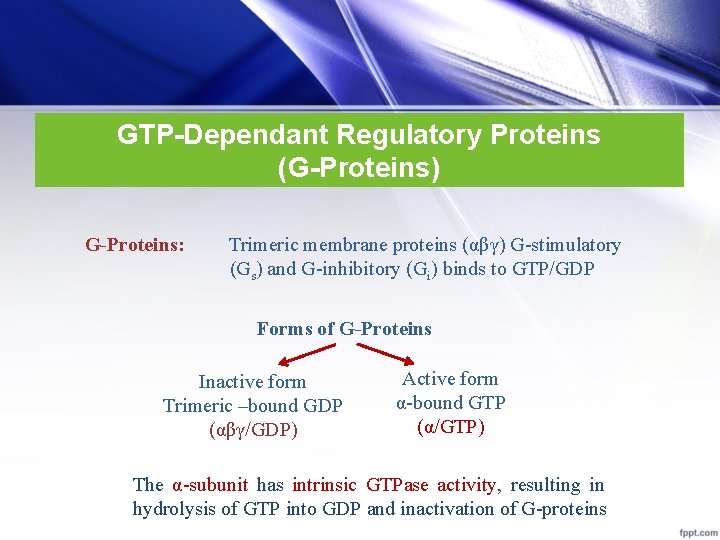
GTP-Dependant Regulatory Proteins (G-Proteins) G-Proteins: Trimeric membrane proteins (αβγ) G-stimulatory (Gs) and G-inhibitory (Gi) binds to GTP/GDP Forms of G-Proteins Inactive form Trimeric –bound GDP (αβγ/GDP) Active form α-bound GTP (α/GTP) The α-subunit has intrinsic GTPase activity, resulting in hydrolysis of GTP into GDP and inactivation of G-proteins
Signaling Pathways for Regulation of Metabolism Two important second messenger systems: q Adenylyl cyclase system q Calcium/phosphatidylinositol system

Adenylyl Cyclase System Adenylyl cyclase: Membrane-bound enzyme, Converts ATP to c. AMP Activation/Inhibition: Signal: Hormones or neurotransmitters (e. g. , Glucagon and epinephrine) or Toxins (e. g. , Cholera and pertussis toxins) Receptor: G-protein coupled receptor Response: Activation/inhibition of protein kinase A (c. AMP-dependent protein kinase)
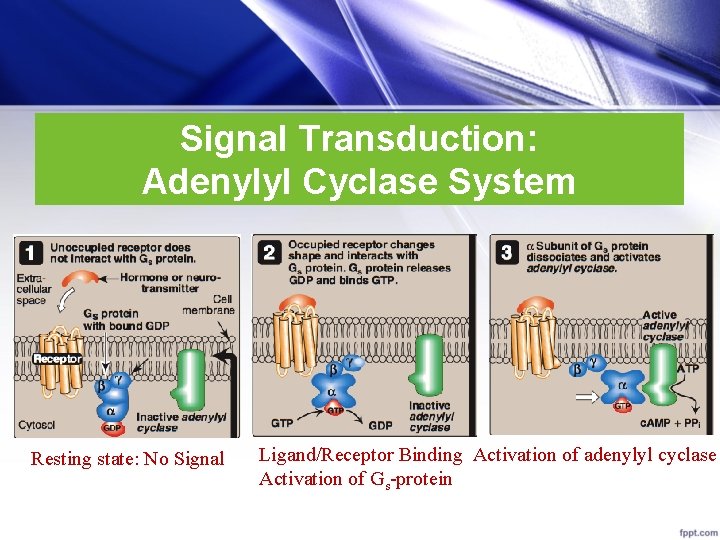
Signal Transduction: Adenylyl Cyclase System Resting state: No Signal Ligand/Receptor Binding Activation of adenylyl cyclase Activation of Gs-protein
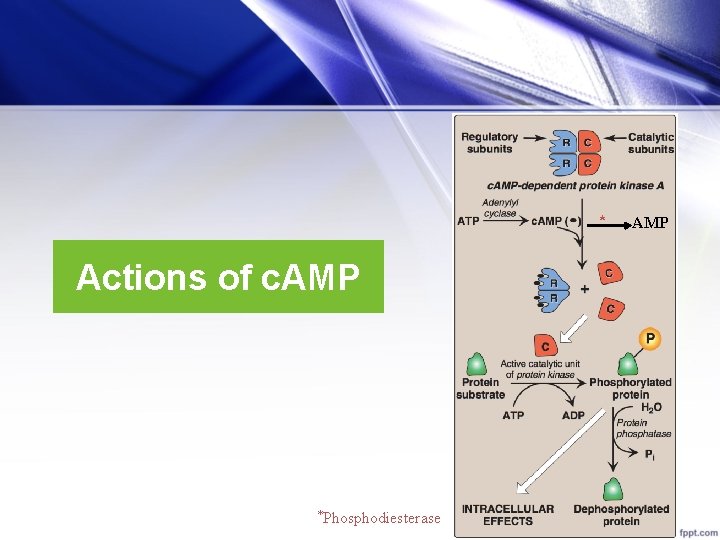
* Actions of c. AMP *Phosphodiesterase AMP
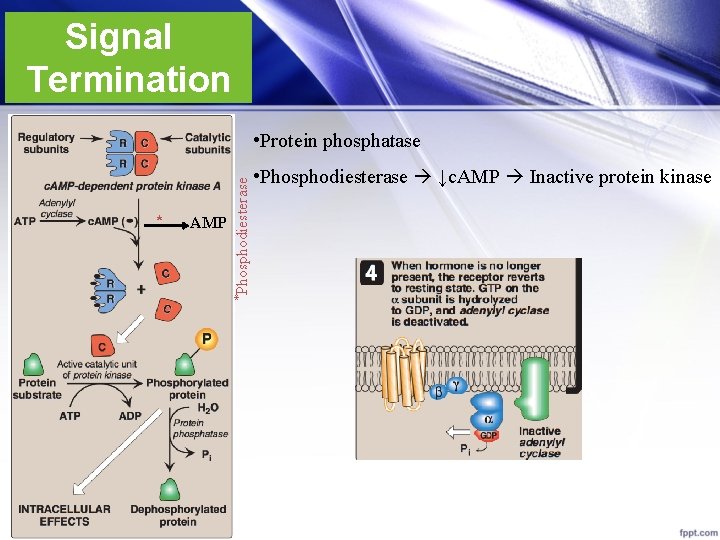
Signal Termination * AMP *Phosphodiesterase • Protein phosphatase • Phosphodiesterase ↓c. AMP Inactive protein kinase
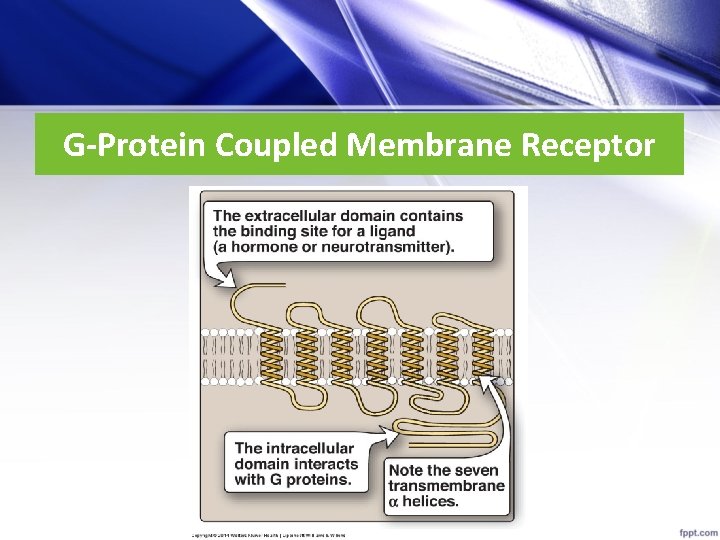
G-Protein Coupled Membrane Receptor
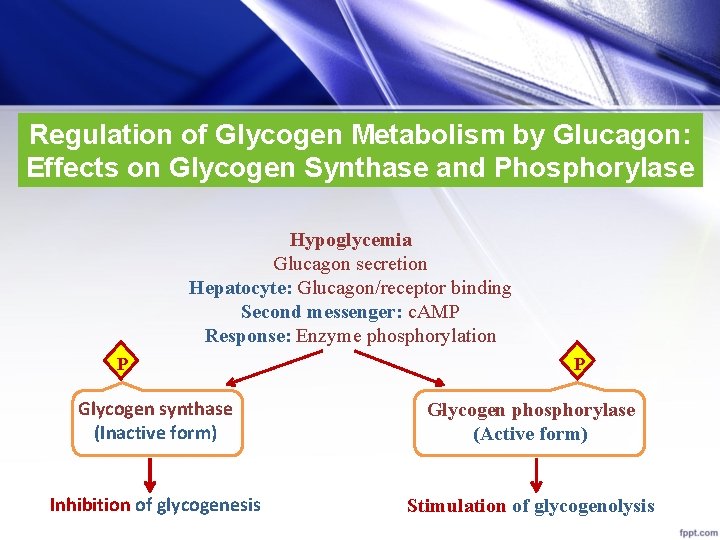
Regulation of Glycogen Metabolism by Glucagon: Effects on Glycogen Synthase and Phosphorylase Hypoglycemia Glucagon secretion Hepatocyte: Glucagon/receptor binding Second messenger: c. AMP Response: Enzyme phosphorylation P P Glycogen synthase (Inactive form) Glycogen phosphorylase (Active form) Inhibition of glycogenesis Stimulation of glycogenolysis
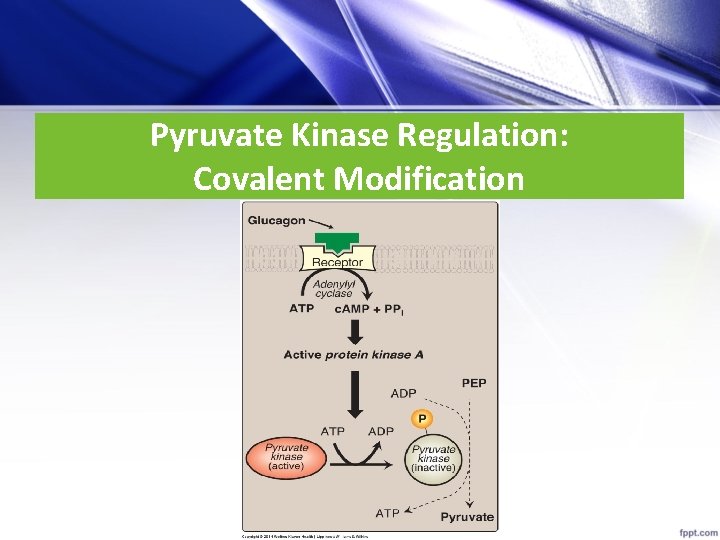
Pyruvate Kinase Regulation: Covalent Modification
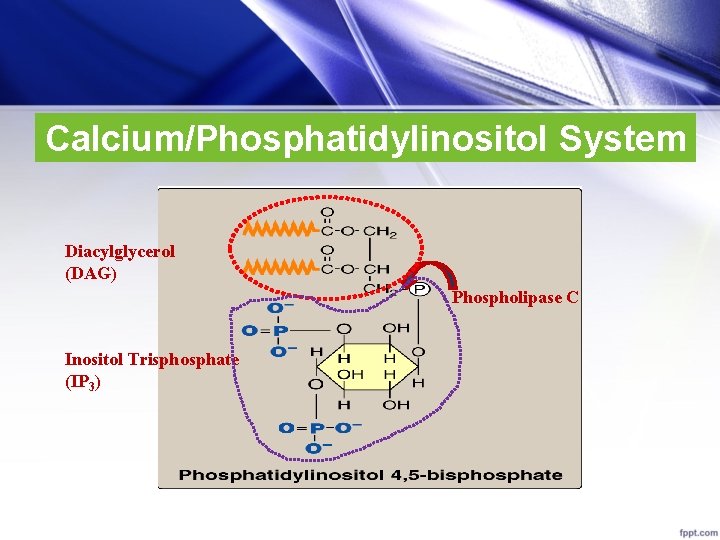
Calcium/Phosphatidylinositol System Diacylglycerol (DAG) Phospholipase C Inositol Trisphosphate (IP 3)
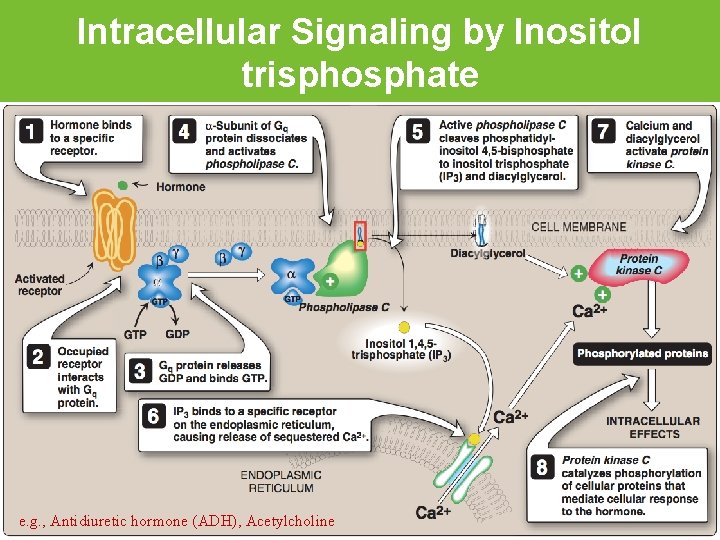
Intracellular Signaling by Inositol trisphosphate e. g. , Antidiuretic hormone (ADH), Acetylcholine
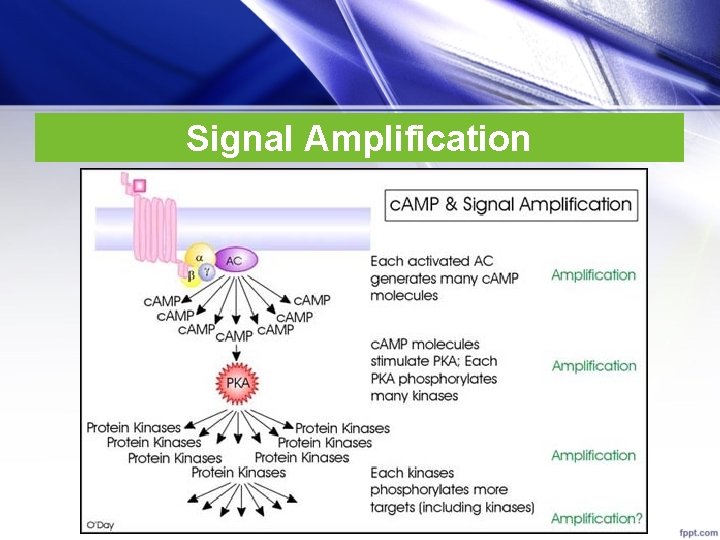
Signal Amplification
Take home messages Cell signaling allows q Signal transmission and amplification q Regulation of metabolism q Intercellular communications & coordination of complex biologic functions
Reference Lippincott’s Illustrated reviews: Biochemistry 6 th edition, Unit 2, Chapter 8, Pages 91 -107; and Chapter 17, Pages 204 -205.
- Slides: 23