
Cell Reproduction Prokaryotes Bacteria Eukaryotes Plants animals Warm
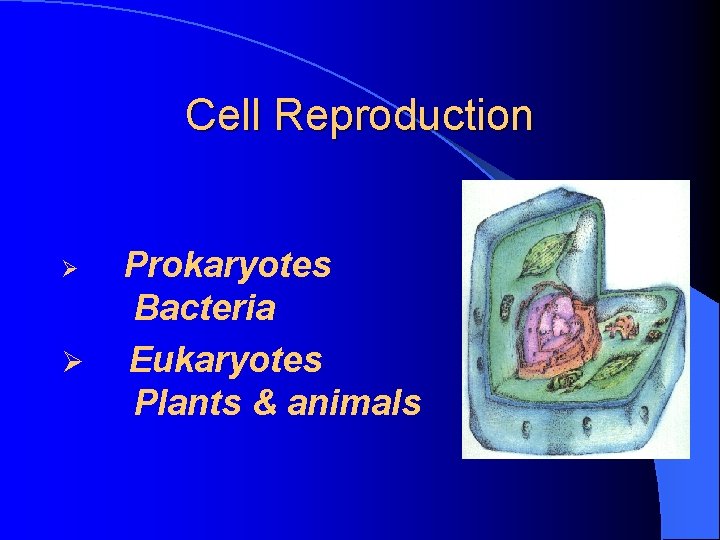
Cell Reproduction Ø Ø Prokaryotes Bacteria Eukaryotes Plants & animals
Warm Up Mitosis Day #1 1. What process do prokaryotes use for cell division? 2. What are the two cells produced called? 3. Cells spend the most time in which stage of the cell cycle? 4. What happens during the S phase of the cell cycle? 5. What is another name for mitosis?
Prokaryotes Ø Lack a nucleus Ø Have a single chromosome Ø Reproduce by binary fission Ø Include bacteria
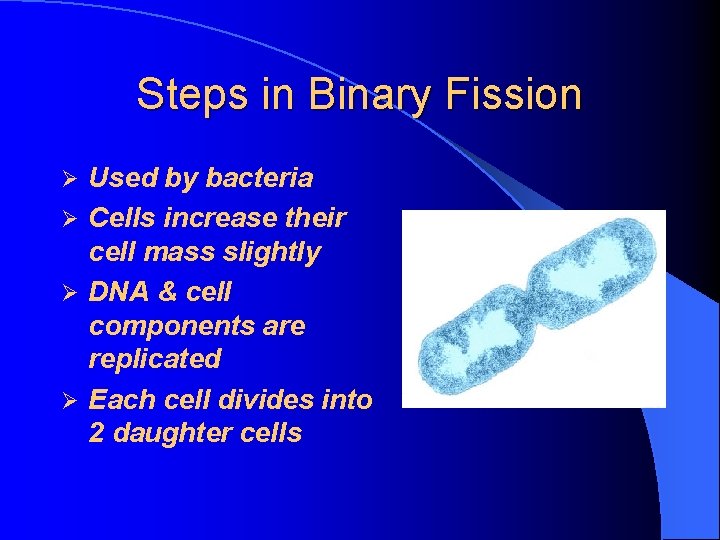
Steps in Binary Fission Used by bacteria Ø Cells increase their cell mass slightly Ø DNA & cell components are replicated Ø Each cell divides into 2 daughter cells Ø
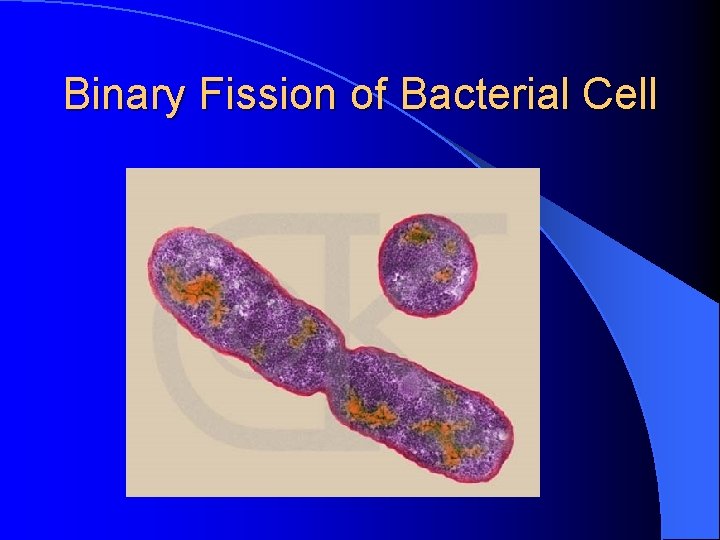
Binary Fission of Bacterial Cell
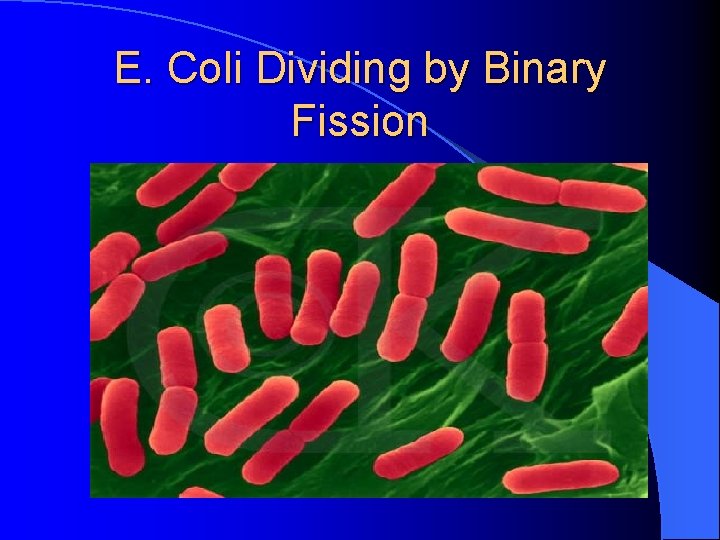
E. Coli Dividing by Binary Fission
Eukaryotes Ø Contain a nucleus & membrane bound organelles Ø Asexually reproduce cells by mitosis
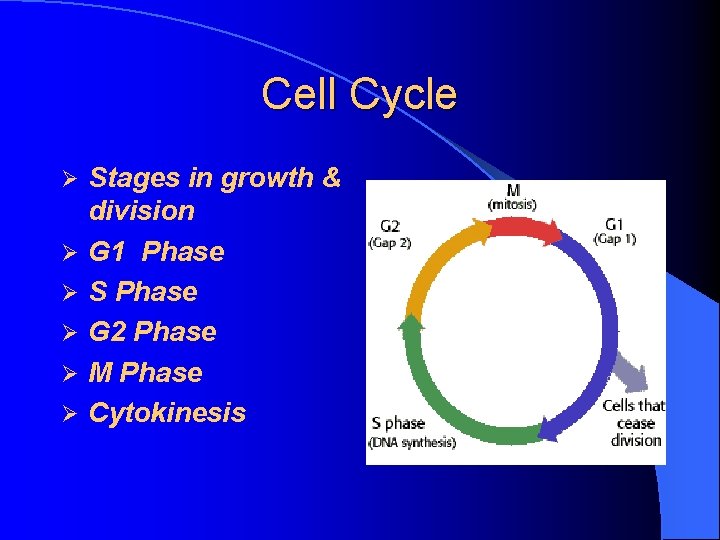
Cell Cycle Ø Ø Ø Stages in growth & division G 1 Phase S Phase G 2 Phase M Phase Cytokinesis
G 1 Phase Ø First growth stage Ø Cell increases in size Ø Cell prepares to copy its DNA and organelles increase in number Ø Cells spend most of their time in this phase.
Synthesis Phase (S) Ø Copying of all of DNA’s instructions Ø Chromosomes duplicated Ø By the end of S stage the cell nucleus contains two complete sets of DNA
G 2 Phase Ø Time between DNA synthesis & mitosis Ø Cell continues growing Ø Needed proteins produced
M Phase ( Mitosis) Ø Cell growth & protein production stop Ø Cell’s energy used to make 2 daughter cells Ø Called mitosis or karyokinesis (nuclear division)
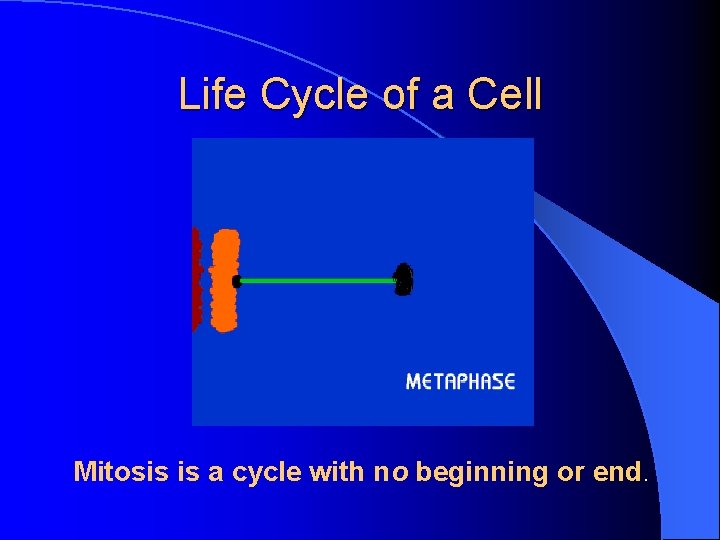
Life Cycle of a Cell Mitosis is a cycle with no beginning or end.
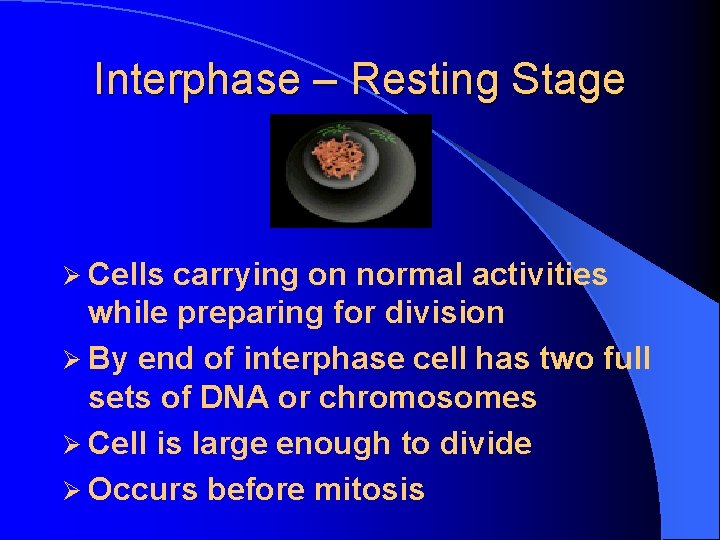
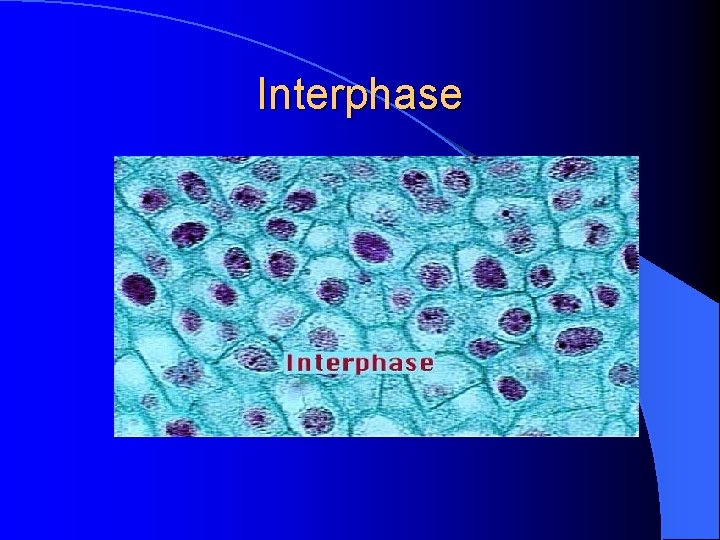
Interphase – Resting Stage Ø Cells carrying on normal activities while preparing for division Ø By end of interphase cell has two full sets of DNA or chromosomes Ø Cell is large enough to divide Ø Occurs before mitosis
Interphase
Stages of Mitosis Ø Prophase Ø Metaphase Ø Anaphase Ø Telophase
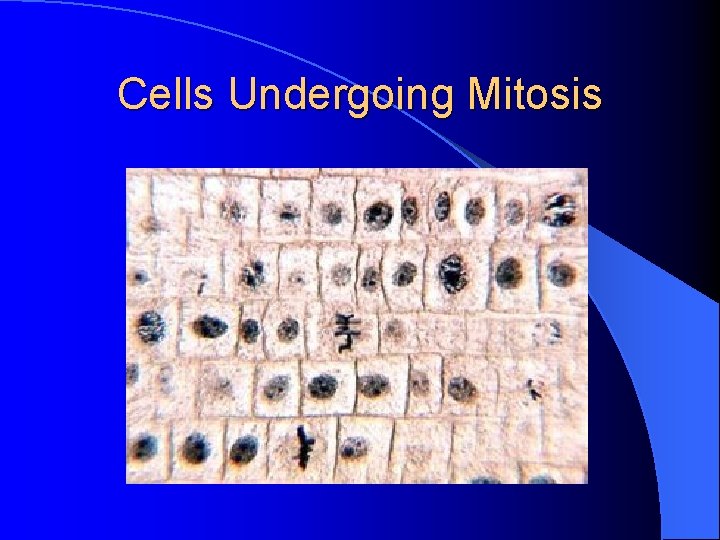
Cells Undergoing Mitosis
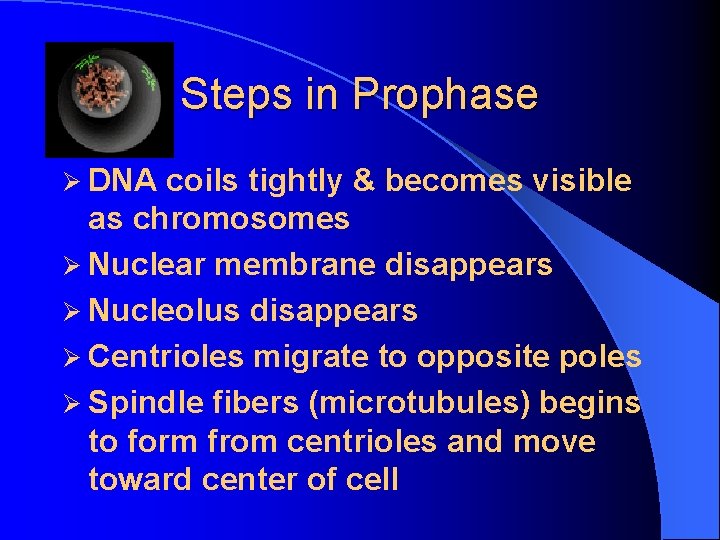
Steps in Prophase Ø DNA coils tightly & becomes visible as chromosomes Ø Nuclear membrane disappears Ø Nucleolus disappears Ø Centrioles migrate to opposite poles Ø Spindle fibers (microtubules) begins to form from centrioles and move toward center of cell
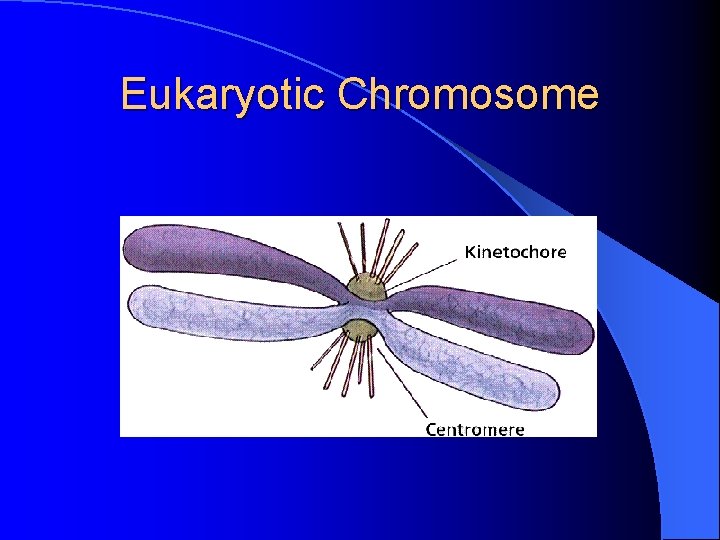
Eukaryotic Chromosome
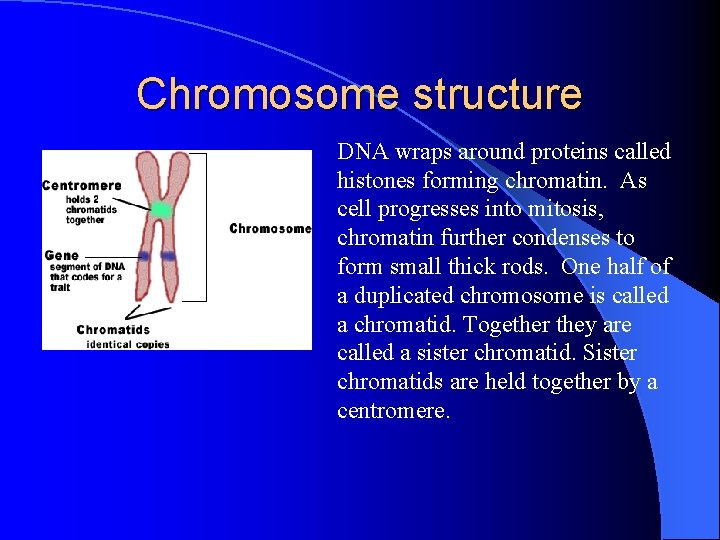
Chromosome structure DNA wraps around proteins called histones forming chromatin. As cell progresses into mitosis, chromatin further condenses to form small thick rods. One half of a duplicated chromosome is called a chromatid. Together they are called a sister chromatid. Sister chromatids are held together by a centromere.
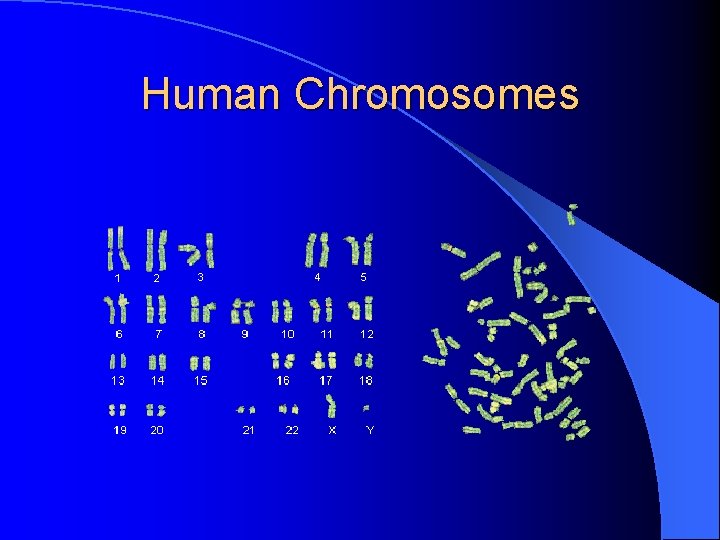
Human Chromosomes
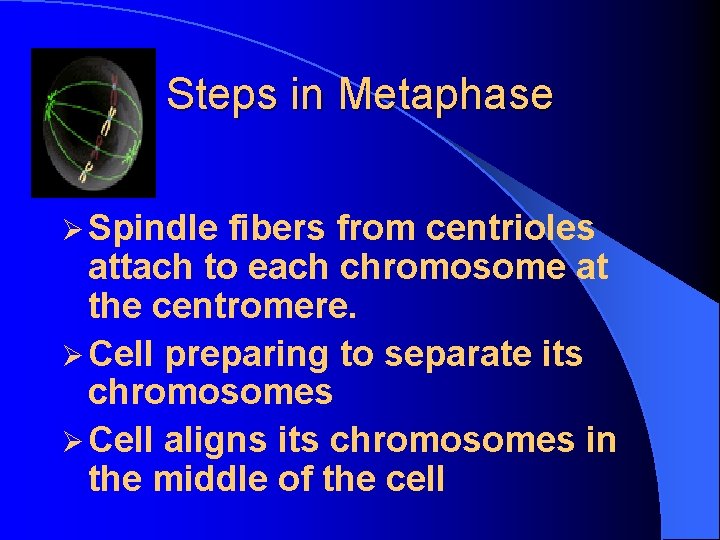
Steps in Metaphase Ø Spindle fibers from centrioles attach to each chromosome at the centromere. Ø Cell preparing to separate its chromosomes Ø Cell aligns its chromosomes in the middle of the cell
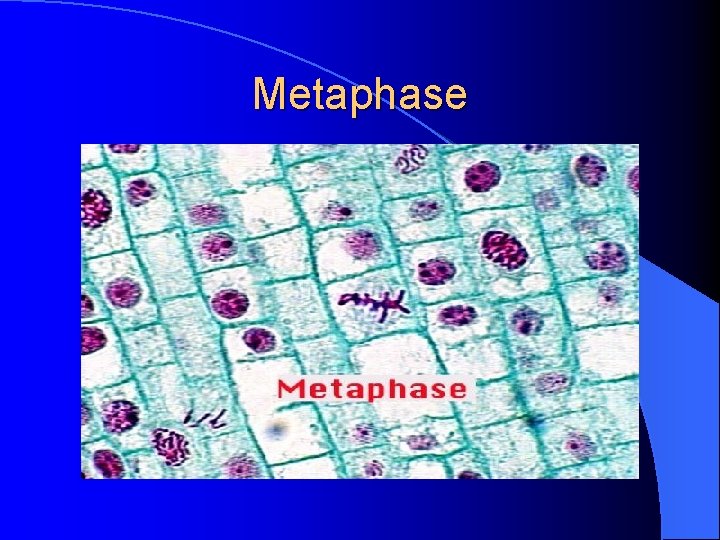
Metaphase
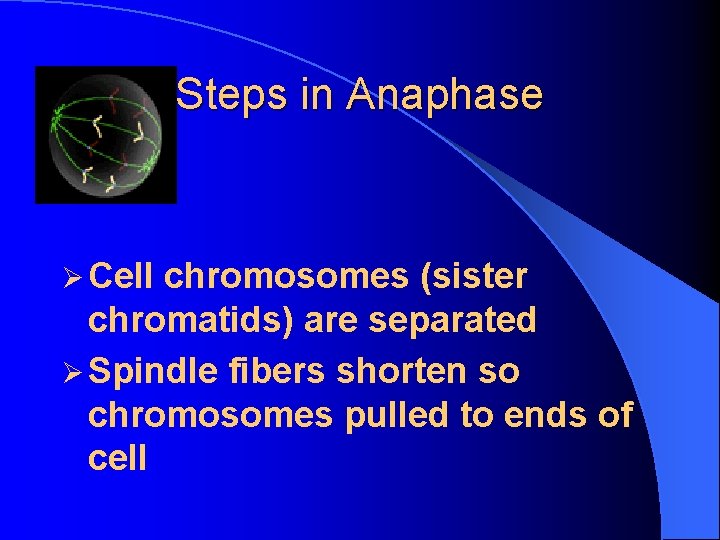
Steps in Anaphase Ø Cell chromosomes (sister chromatids) are separated Ø Spindle fibers shorten so chromosomes pulled to ends of cell
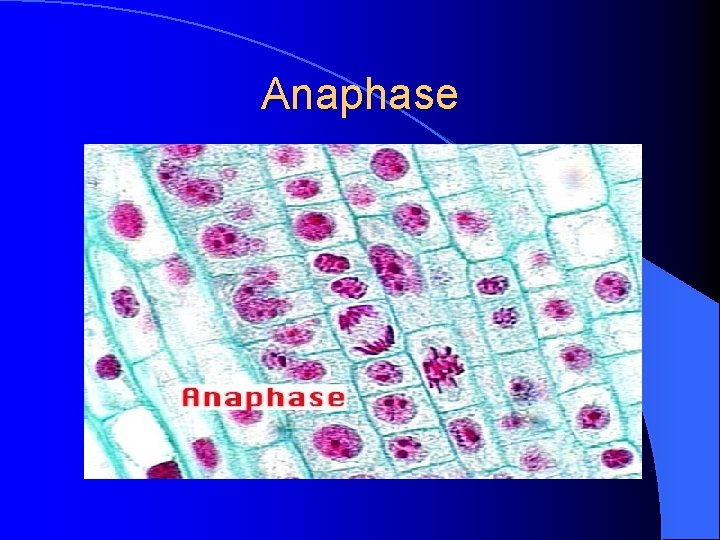
Anaphase
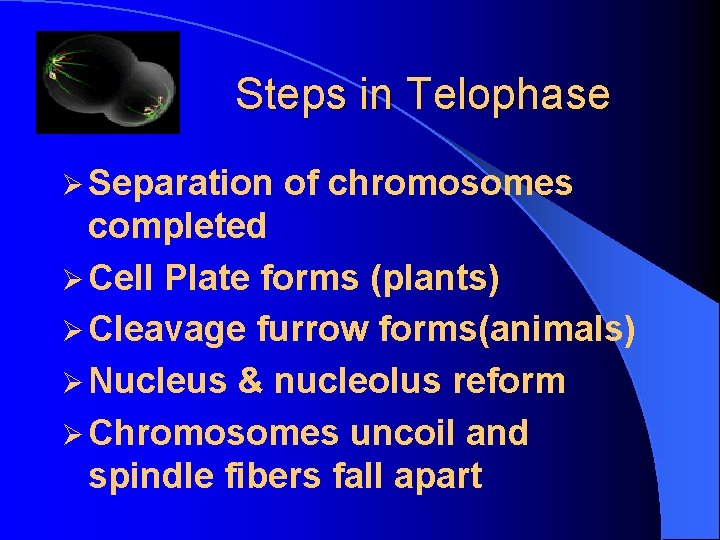
Steps in Telophase Ø Separation of chromosomes completed Ø Cell Plate forms (plants) Ø Cleavage furrow forms(animals) Ø Nucleus & nucleolus reform Ø Chromosomes uncoil and spindle fibers fall apart
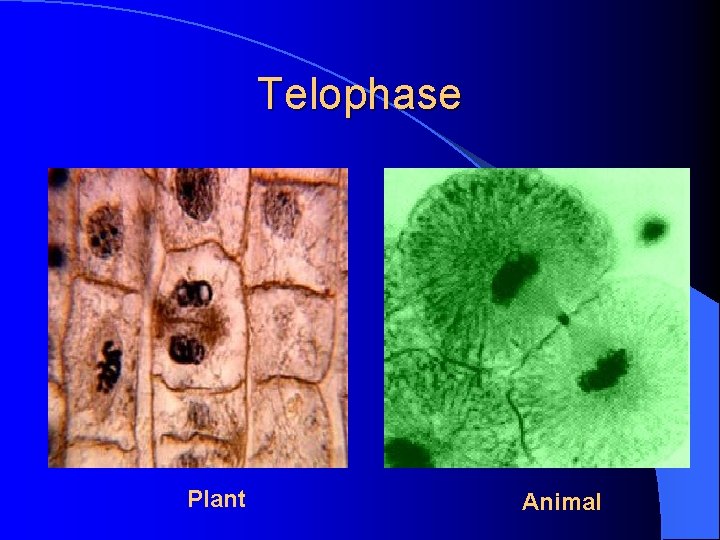
Telophase Plant Animal
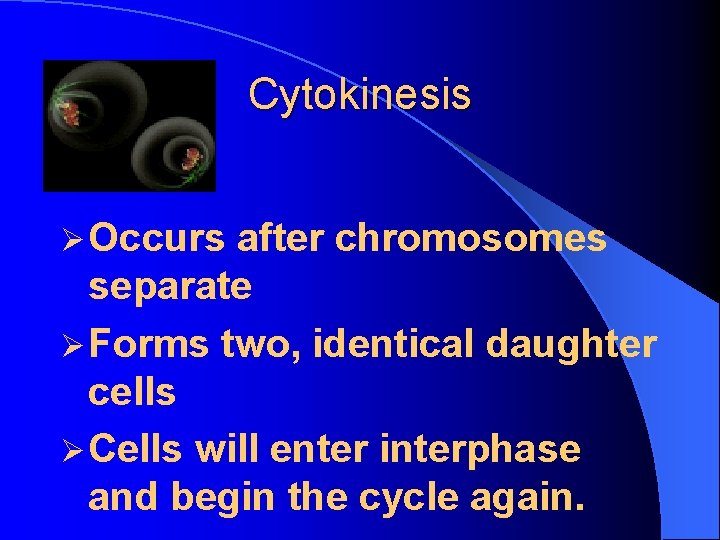
Cytokinesis Ø Occurs after chromosomes separate Ø Forms two, identical daughter cells Ø Cells will enter interphase and begin the cycle again.
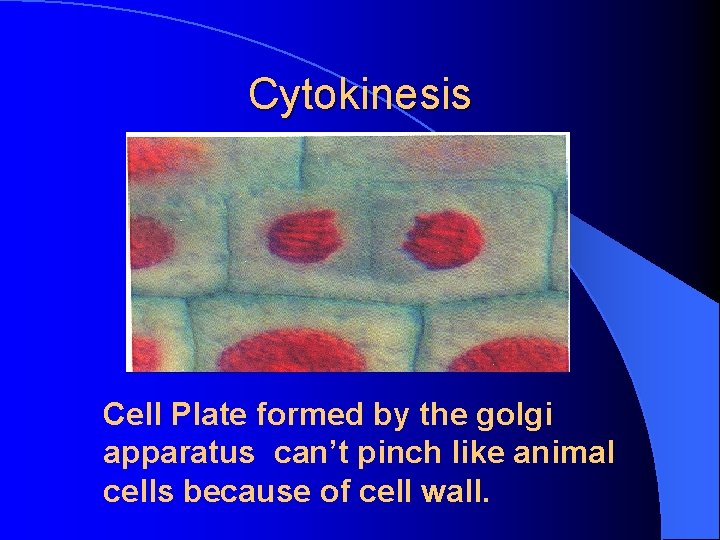
Cytokinesis Cell Plate formed by the golgi apparatus can’t pinch like animal cells because of cell wall.
- Slides: 29