
Cell Reproduction Part 1 Chromosomes Cells All living












- Slides: 33
Cell Reproduction Part 1: Chromosomes
Cells All living things are made up of one or more cells. These cells all contain DNA (deoxyribonucleic acid) which is your genetic material. DNA can be stored in two forms as either chromatin (relaxed or unraveled) or as chromosomes (coiled) 2
Chromatin coils to form a chromosome. Chromosomes are rod shaped and comprised of both DNA and proteins called histones. Histones are proteins that help the DNA maintain the coiled shape of a chromosome. DNA needs to be relaxed in order to be read. However, it is never completely uncoiled as it would take up too much space. And it is never super coiled into a chromosome unless a cell is dividing. DNA
Chromosome Structure Most of the time, your cells are not dividing. Therefore you have unduplicated chromosomes. A dividing cell will have a duplicated chromosome which is made up of identical chromatids Constricted area is the centromere This is a eukaryotic chromosome. Prokaryotic organisms only have one chromosome and it is round.
Chromosome Structure (continued) What kind of chromosome is this? Chromosomes contain genes which areas of DNA that code for particular proteins. 5
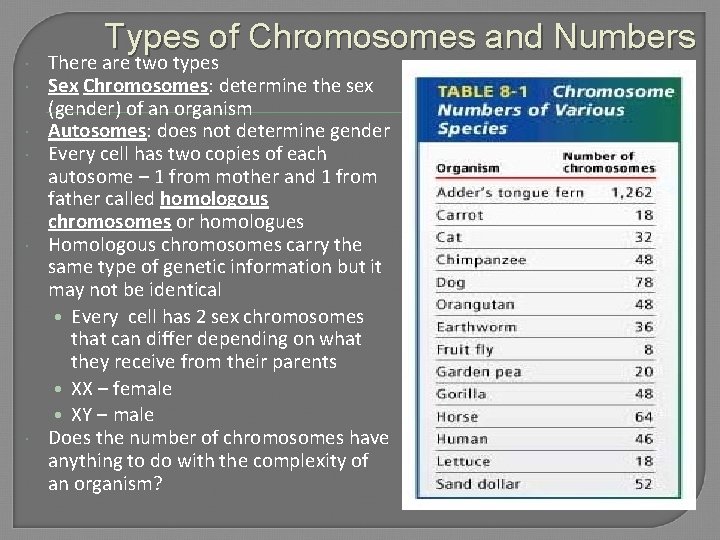
Types of Chromosomes and Numbers There are two types Sex Chromosomes: determine the sex (gender) of an organism Autosomes: does not determine gender Every cell has two copies of each autosome – 1 from mother and 1 from father called homologous chromosomes or homologues Homologous chromosomes carry the same type of genetic information but it may not be identical • Every cell has 2 sex chromosomes that can differ depending on what they receive from their parents • XX – female • XY – male Does the number of chromosomes have anything to do with the complexity of an organism?
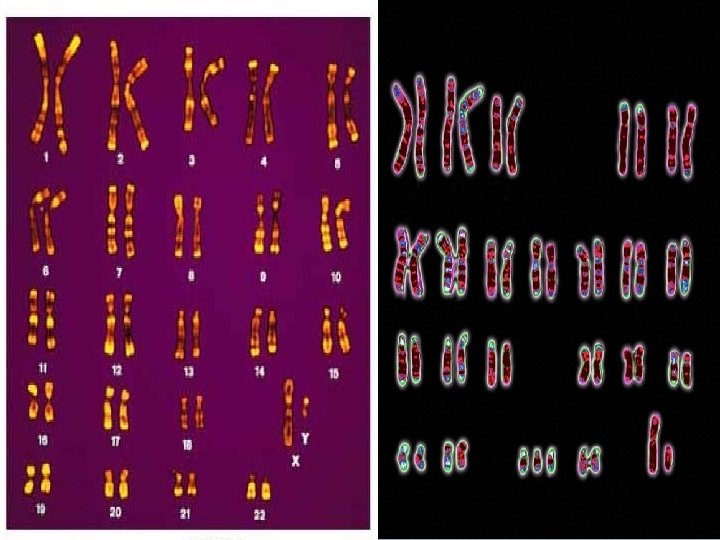
Karyotypes Photomicrograph of the chromosomes in a dividing cell Human karyotypes show 22 homologous pairs of autosomes and 2 sex chromosomes What do you notice about the arrangement? Is this a male or female?
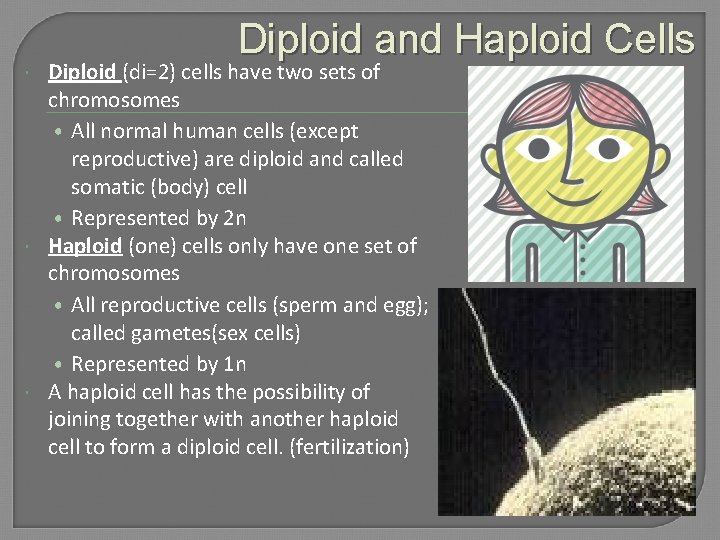
Diploid and Haploid Cells Diploid (di=2) cells have two sets of chromosomes • All normal human cells (except reproductive) are diploid and called somatic (body) cell • Represented by 2 n Haploid (one) cells only have one set of chromosomes • All reproductive cells (sperm and egg); called gametes(sex cells) • Represented by 1 n A haploid cell has the possibility of joining together with another haploid cell to form a diploid cell. (fertilization)
Cell Reproduction Part 2: Cell Cycle
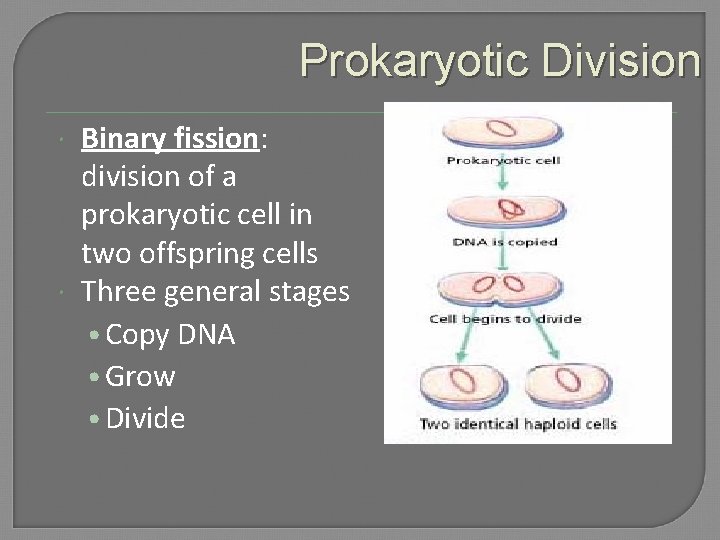
Prokaryotic Division Binary fission: division of a prokaryotic cell in two offspring cells Three general stages • Copy DNA • Grow • Divide
Cell Division in Eukaryotes Two types in eukaryotes Mitosis • Results in two cells with genetic material identical to the • original cell – used for: repair, growth, and asexual reproduction Meiosis • Reduces the chromosome number by half and the genetic material is not the same • Produces gametes which are sex cells • Part of sexual reproduction The gametes are haploid cells which retain the ability to join together and form diploid cells.
The Cell Cycle Two major phases of the cell are interphase and cell division Interphase is the time between divisions Cell division is the division of the nucleus (mitosis) and the cytoplasm (cytokinesis)
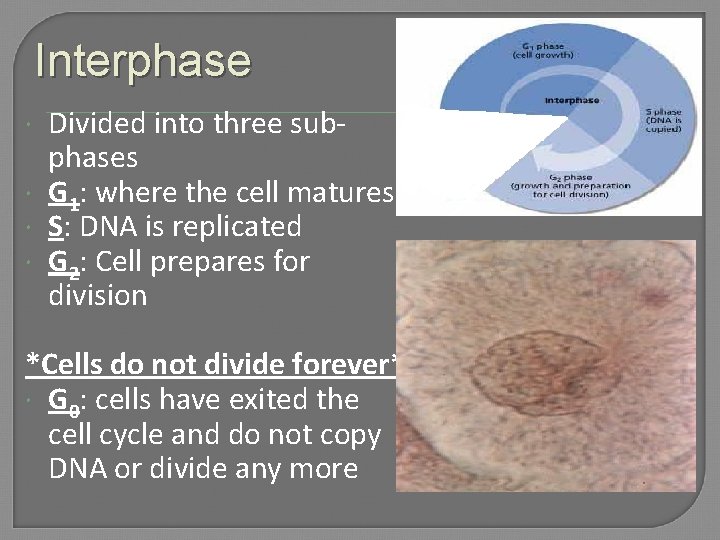
Interphase Divided into three subphases G 1: where the cell matures S: DNA is replicated G 2: Cell prepares for division *Cells do not divide forever* G 0: cells have exited the cell cycle and do not copy DNA or divide any more
Mitosis Division of the nucleus; called the M phase It is divided into four different phases • Prophase • Metaphase • Anaphase • Telophase
Prophase Shortening and tightening of DNA into chromosomes The nuclear membrane and nucleolus disappear Centrosomes appear and migrate toward the poles of the cell. In animal cells, the centrosomes contain centrioles. Spindle fibers begin to radiate form the centrosomes • Kinetochore fibers • Polar fibers
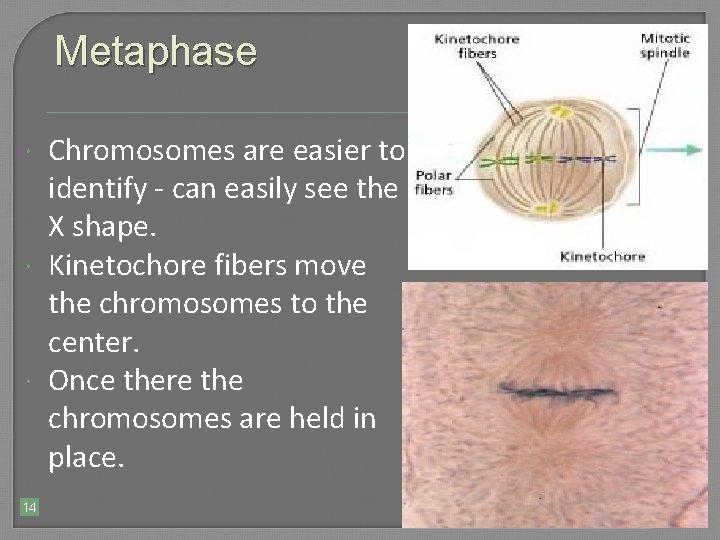
Metaphase 14 Chromosomes are easier to identify - can easily see the X shape. Kinetochore fibers move the chromosomes to the center. Once there the chromosomes are held in place.
Anaphase The chromatids separate and move centromere first to opposite poles Once the chromatids separate they are considered to be individual chromosomes 15
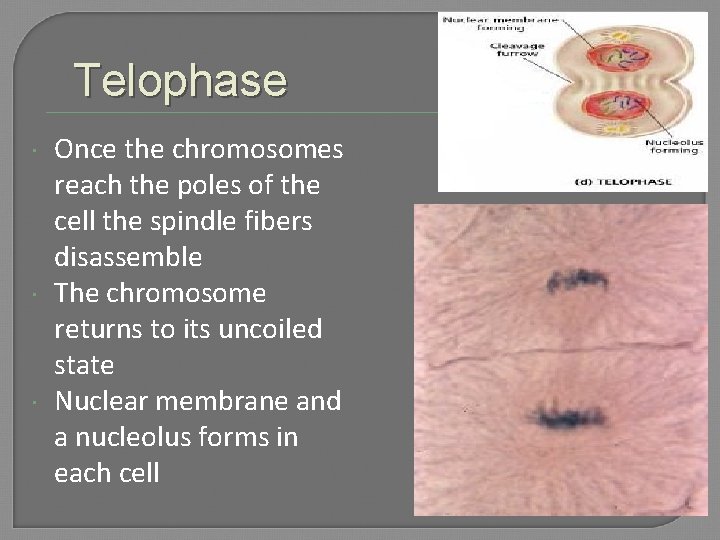
Telophase Once the chromosomes reach the poles of the cell the spindle fibers disassemble The chromosome returns to its uncoiled state Nuclear membrane and a nucleolus forms in each cell
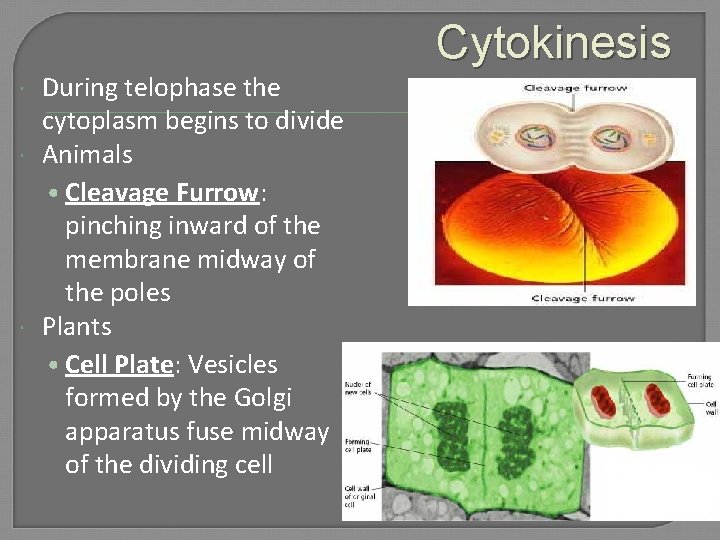
During telophase the cytoplasm begins to divide Animals • Cleavage Furrow: pinching inward of the membrane midway of the poles Plants • Cell Plate: Vesicles formed by the Golgi apparatus fuse midway of the dividing cell Cytokinesis
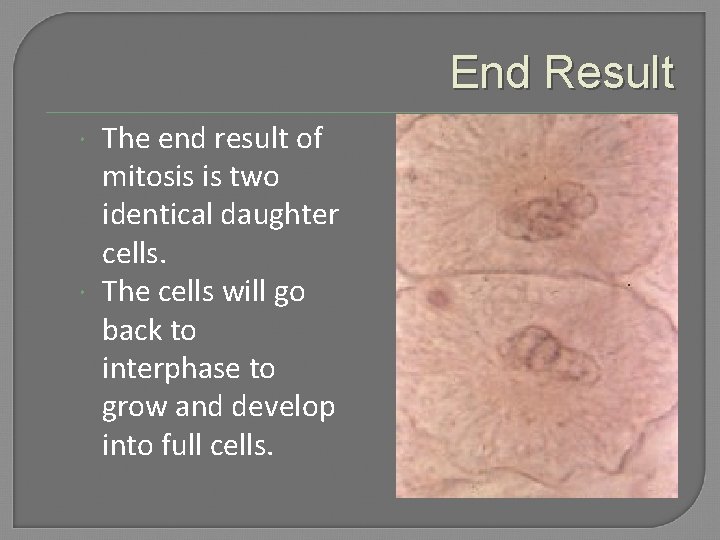
End Result The end result of mitosis is two identical daughter cells. The cells will go back to interphase to grow and develop into full cells.
Control of Cell Division Cell growth (G 1 ) checkpoint: the cell determines if it is ready to start the process of division DNA synthesis (G 2) checkpoint: check DNA synthesis Mitosis checkpoint: check if mitosis proceeded correctly When control is lost it can lead to cancer
Cell Reproduction Chapter 8 Part 3: Meiosis and Reproduction
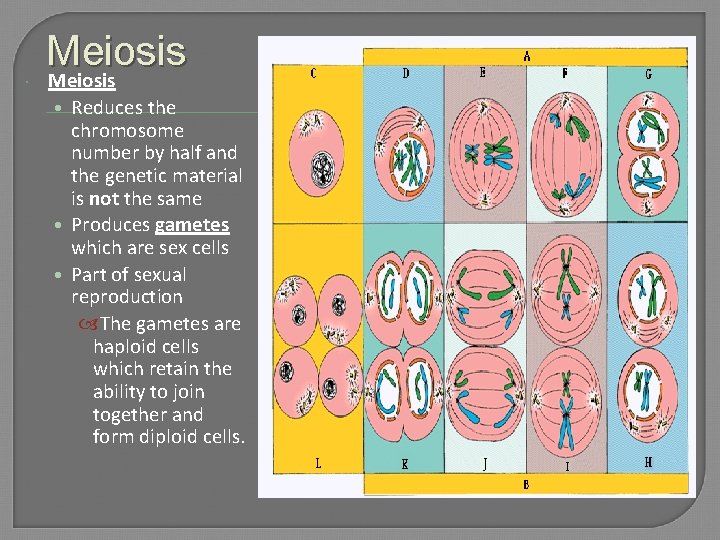
Meiosis • Reduces the chromosome number by half and the genetic material is not the same • Produces gametes which are sex cells • Part of sexual reproduction The gametes are haploid cells which retain the ability to join together and form diploid cells.
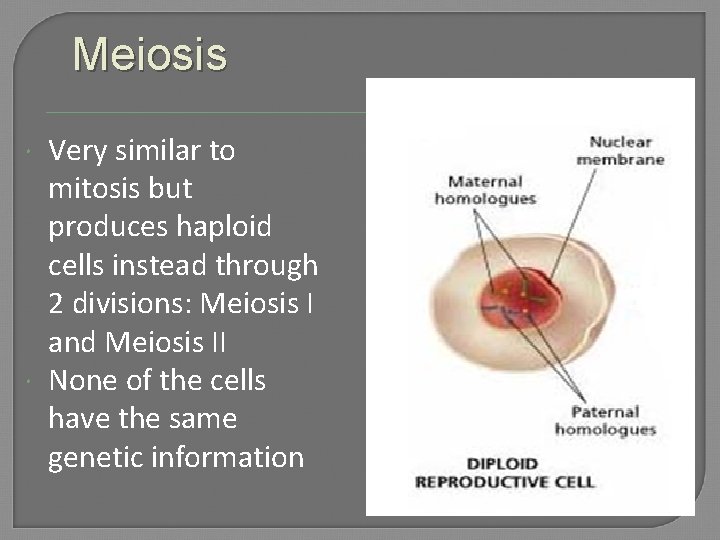
Meiosis Very similar to mitosis but produces haploid cells instead through 2 divisions: Meiosis I and Meiosis II None of the cells have the same genetic information
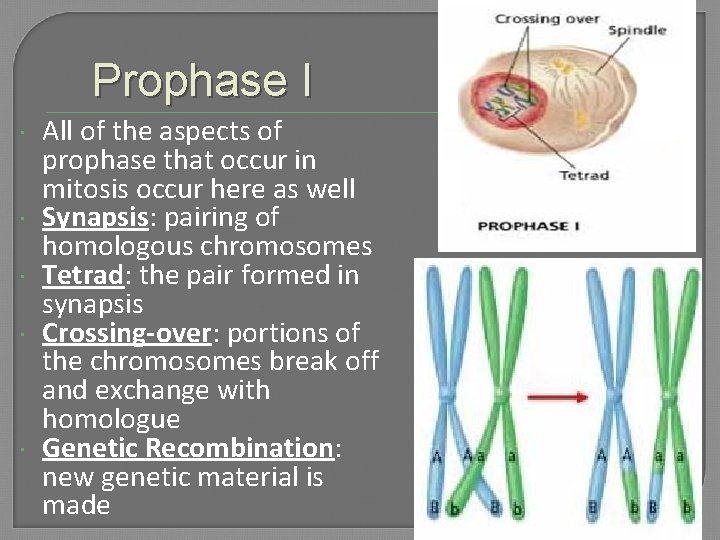
Prophase I All of the aspects of prophase that occur in mitosis occur here as well Synapsis: pairing of homologous chromosomes Tetrad: the pair formed in synapsis Crossing-over: portions of the chromosomes break off and exchange with homologue Genetic Recombination: new genetic material is made
Metaphase I and Anaphase I Metaphase I • The tetrads line up in the middle of the cell Anaphase I • Here the homologous chromosomes separate and go toward opposite poles • Since they randomly lined up in metaphase, they now randomly separate. This process is called independent assortment. • Independent Assortment: the random separation of homologues
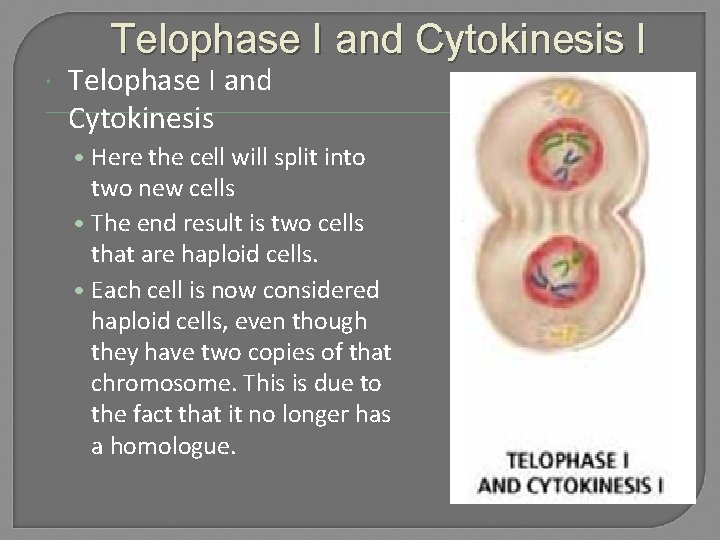
Telophase I and Cytokinesis I Telophase I and Cytokinesis • Here the cell will split into two new cells • The end result is two cells that are haploid cells. • Each cell is now considered haploid cells, even though they have two copies of that chromosome. This is due to the fact that it no longer has a homologue.
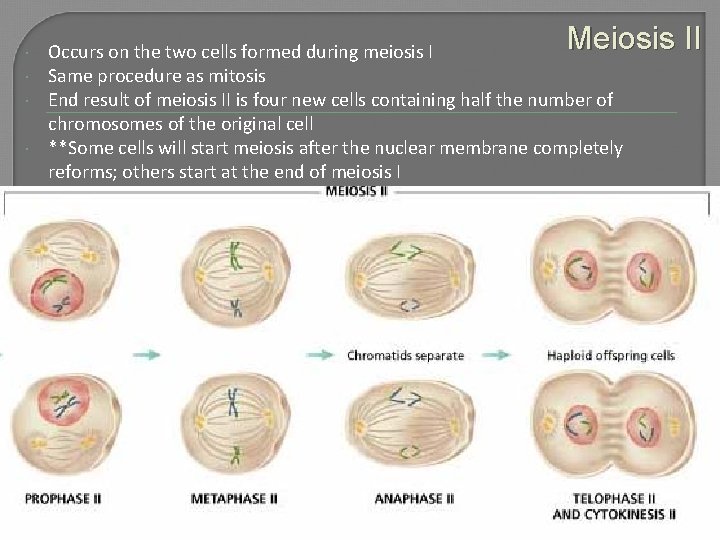
23 Meiosis II Occurs on the two cells formed during meiosis I Same procedure as mitosis End result of meiosis II is four new cells containing half the number of chromosomes of the original cell **Some cells will start meiosis after the nuclear membrane completely reforms; others start at the end of meiosis I
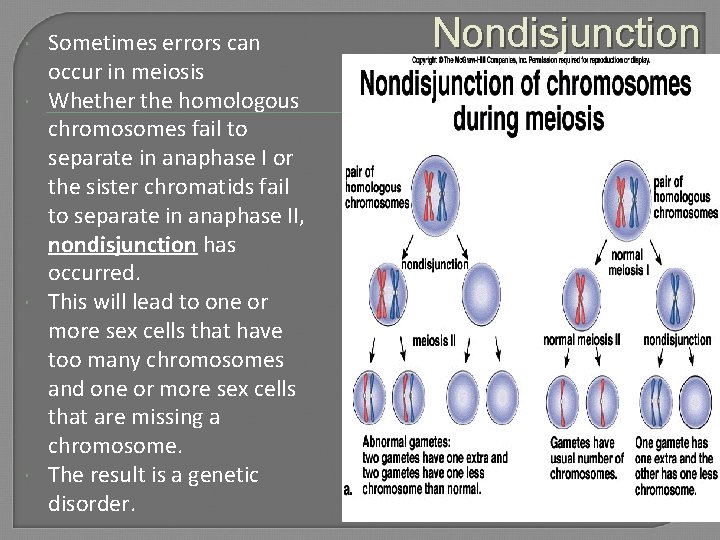
Sometimes errors can occur in meiosis Whether the homologous chromosomes fail to separate in anaphase I or the sister chromatids fail to separate in anaphase II, nondisjunction has occurred. This will lead to one or more sex cells that have too many chromosomes and one or more sex cells that are missing a chromosome. The result is a genetic disorder. Nondisjunction
30
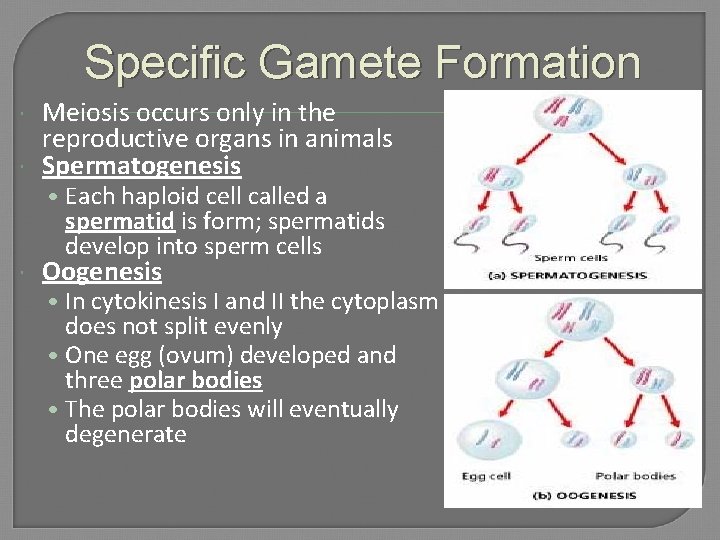
Specific Gamete Formation Meiosis occurs only in the reproductive organs in animals Spermatogenesis • Each haploid cell called a spermatid is form; spermatids develop into sperm cells Oogenesis • In cytokinesis I and II the cytoplasm does not split evenly • One egg (ovum) developed and three polar bodies • The polar bodies will eventually degenerate
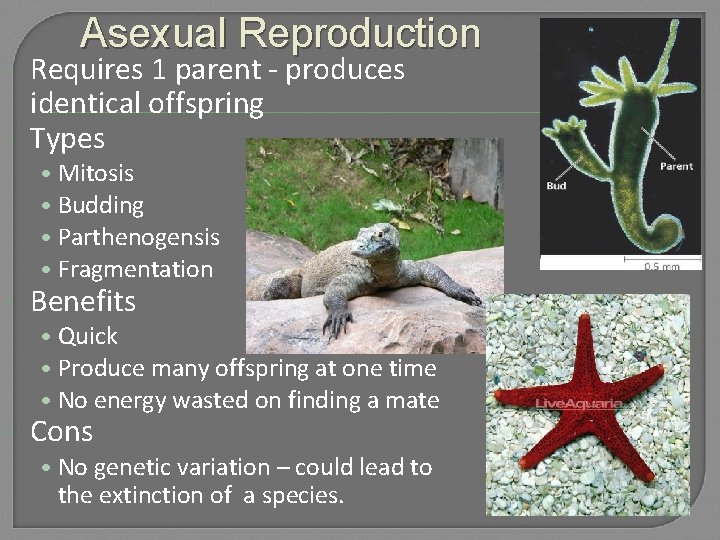
Asexual Reproduction Requires 1 parent - produces identical offspring Types • Mitosis • Budding • Parthenogensis • Fragmentation Benefits • Quick • Produce many offspring at one time • No energy wasted on finding a mate Cons • No genetic variation – could lead to the extinction of a species.
Sexual Reproduction Requires 2 parents – leads to genetically different offspring. Benefits • Offspring are genetically different than each other and their parents*** - This allows a species to adapt to rapidly changing conditions. Cons • Must find a mate • Expend energy in producing gametes that may not be fertilized *** With the exception of identical twins!***