
Cell Reproduction Mitosis and Meiosis Cells n Your





![Chromosome Genes Total bases Sequenced bases[54] 1 3, 148 247, 200, 000 224, 999,](https://slidetodoc.com/presentation_image_h2/9e027d2b832795fbdbb3f203b2c5a411/image-15.jpg "Chromosome Genes Total bases Sequenced bases[54] 1 3, 148 247, 200, 000 224, 999,")



- Slides: 62
Cell Reproduction Mitosis and Meiosis
Cells n Your body is made up of between 10 and 100 trillion cells. (100, 000, 000) n One-thousandth of them die every day
Cells n Where do all these cells come from?
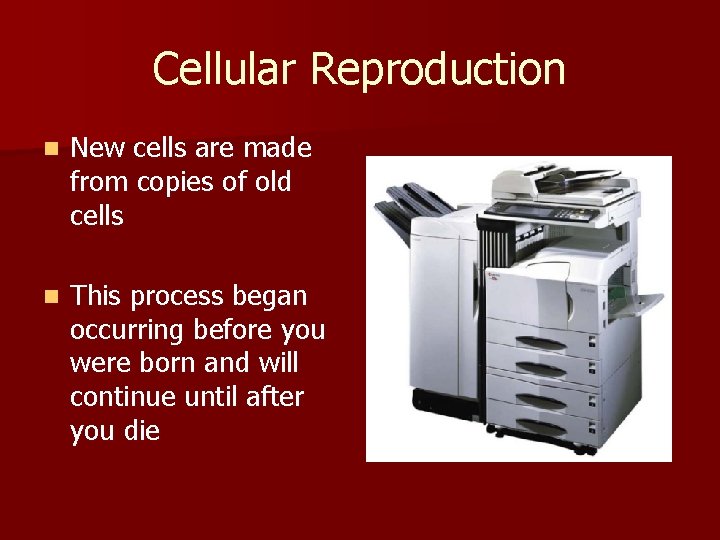
Cellular Reproduction n New cells are made from copies of old cells n This process began occurring before you were born and will continue until after you die
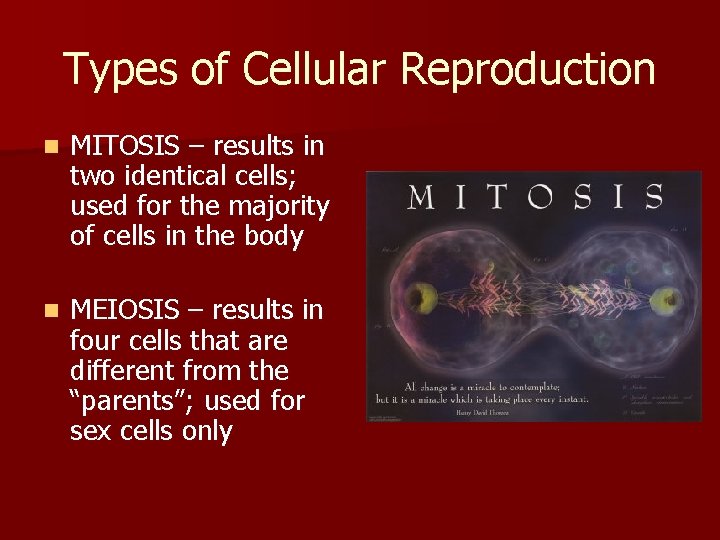
Types of Cellular Reproduction n MITOSIS – results in two identical cells; used for the majority of cells in the body n MEIOSIS – results in four cells that are different from the “parents”; used for sex cells only
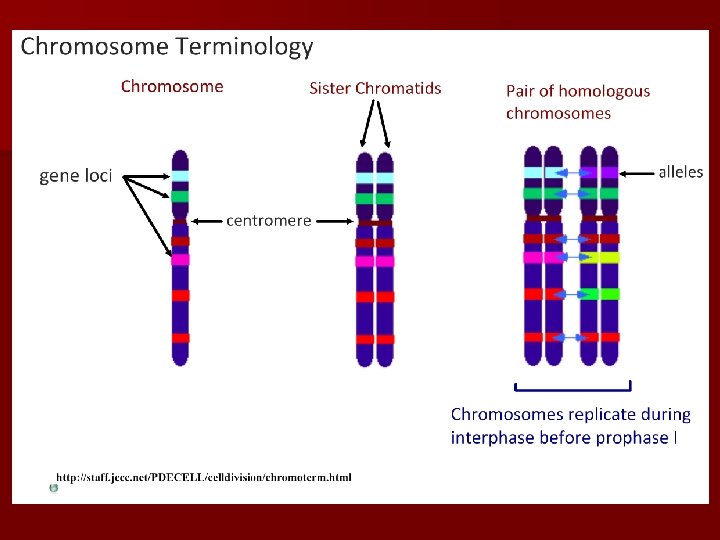
Important Definitions n n n Chromosome: a single DNA double helix together with proteins that help to organize the DNA Chromatid: one of the two identical strands of DNA and protein that forms a replicated chromosome Gene: a unit of heredity; specifies the amino acid sequence of proteins and hence particular traits Allele: one of several alternative forms of a particular gene Locus: the physical location of a gene on a chromosome
Important Definitions (cont. ) n n n Autosome: chromosome not related to sex Diploid: referring to a cell with pairs of homologous chromosomes Haploid: referring to a cell that has only one member of each pair of homologous chromosomes Homologous Pair: two homologues that are similar in appearance and genetic information that pair during meiosis Heterozygous: carrying two different alleles of a given gene Homozygous: carrying two copies of the same allele of a given gene
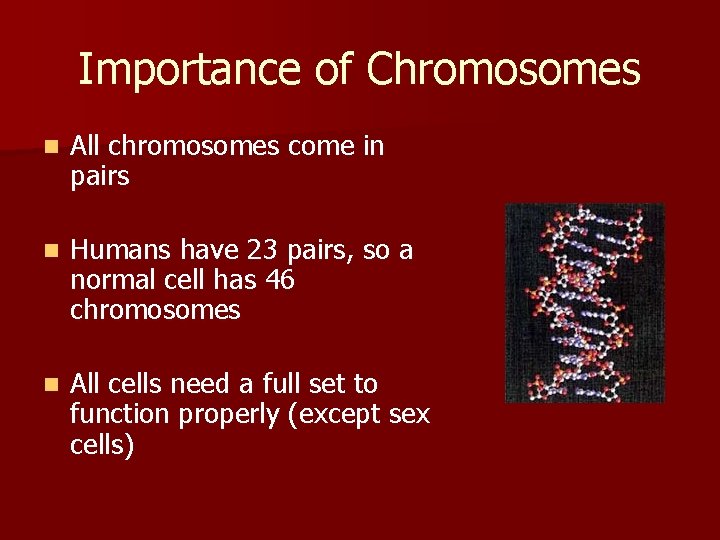
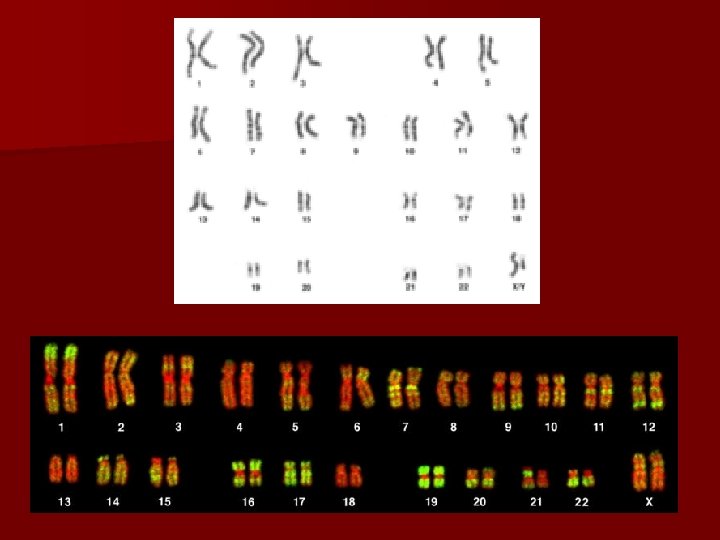
Importance of Chromosomes n All chromosomes come in pairs n Humans have 23 pairs, so a normal cell has 46 chromosomes n All cells need a full set to function properly (except sex cells)
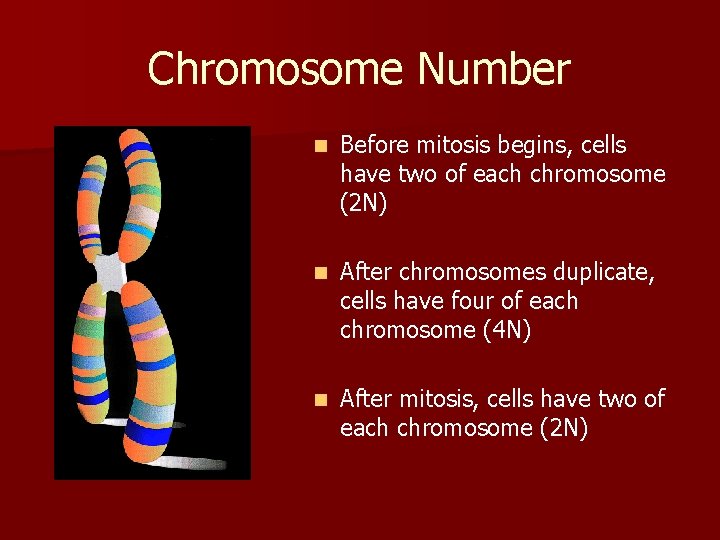
Chromosome Number n Before mitosis begins, cells have two of each chromosome (2 N) n After chromosomes duplicate, cells have four of each chromosome (4 N) n After mitosis, cells have two of each chromosome (2 N)
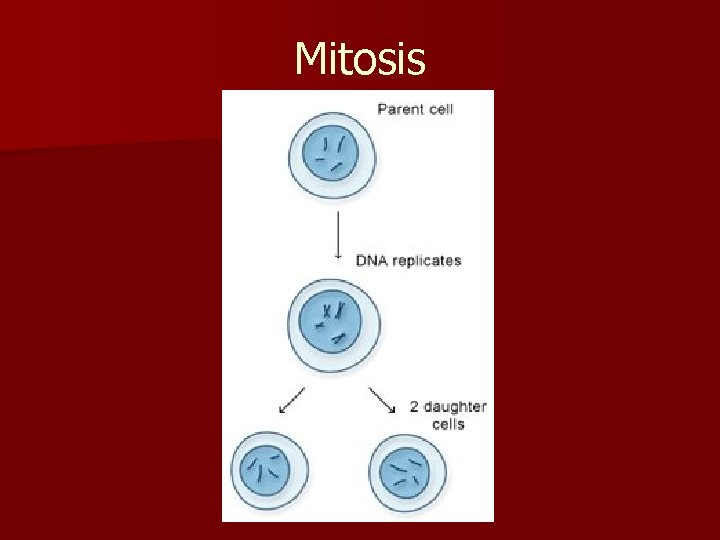
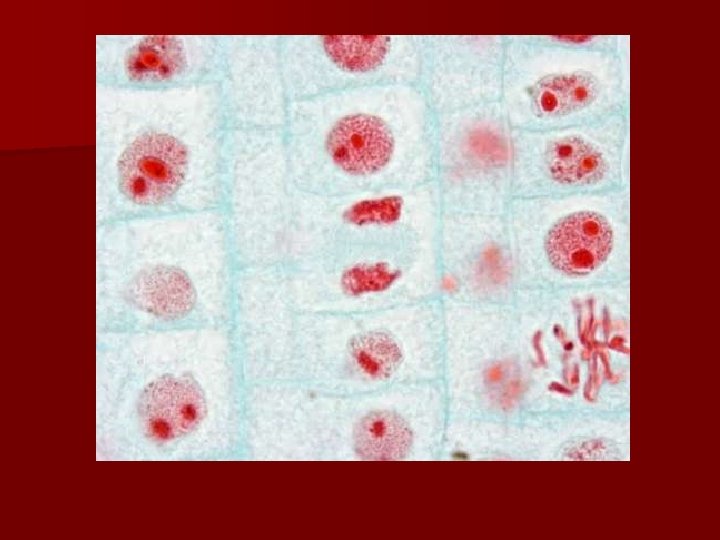
Mitosis n n n Mitosis is the division of chromosomes in a cell It can take a few minutes or a few days Usually followed by cytokinesis (cell division) Daughter cells produced after mitosis have the same number of chromosomes as the original cell Purpose of mitosis is replication of somatic cells and asexual reproduction Somatic cells include all cells in the body except the egg or sperm
Mitosis
Chromosome Genes Total bases Sequenced bases[54] 1 3, 148 247, 200, 000 224, 999, 719 2 902 242, 750, 000 237, 712, 649 3 1, 436 199, 450, 000 194, 704, 827 4 453 191, 260, 000 187, 297, 063 5 609 180, 840, 000 177, 702, 766 6 1, 585 170, 900, 000 167, 273, 992 7 1, 824 158, 820, 000 154, 952, 424 8 781 146, 270, 000 142, 612, 826 9 1, 229 140, 440, 000 120, 312, 298 10 1, 312 135, 370, 000 131, 624, 737 11 405 134, 450, 000 131, 130, 853 12 1, 330 132, 290, 000 130, 303, 534 13 623 114, 130, 000 95, 559, 980 14 886 106, 360, 000 88, 290, 585 15 676 100, 340, 000 81, 341, 915 16 898 88, 820, 000 78, 884, 754 17 1, 367 78, 650, 000 77, 800, 220 18 365 76, 120, 000 74, 656, 155 19 1, 553 63, 810, 000 55, 785, 651 20 816 62, 440, 000 59, 505, 254 21 446 46, 940, 000 34, 171, 998 22 595 49, 530, 000 34, 893, 953 X (sex chromosome) 1, 093 154, 910, 000 151, 058, 754 Y (sex chromosome) 125 57, 740, 000 22, 429, 293
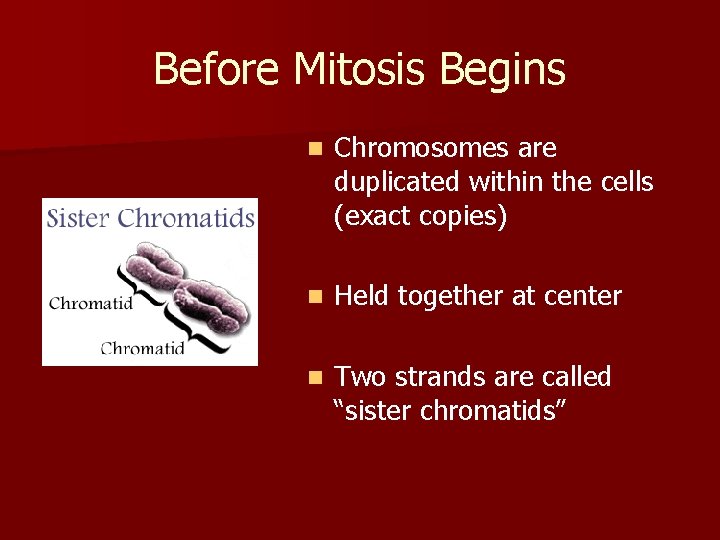
Before Mitosis Begins n Chromosomes are duplicated within the cells (exact copies) n Held together at center n Two strands are called “sister chromatids”
n Crash Course Biology - Mitosis
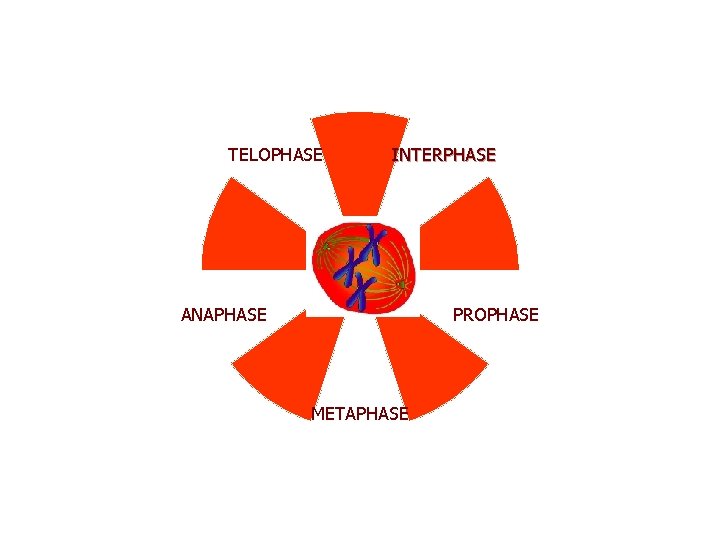
Stages Of Mitosis n Interphase n Prophase n Metaphase n Anaphase n Telophase
Mitosis n Step 1: INTERPHASE – During Interphase the cell carries out normal activities such as metabolism and protein synthesis – The DNA in each chromosome is replicated
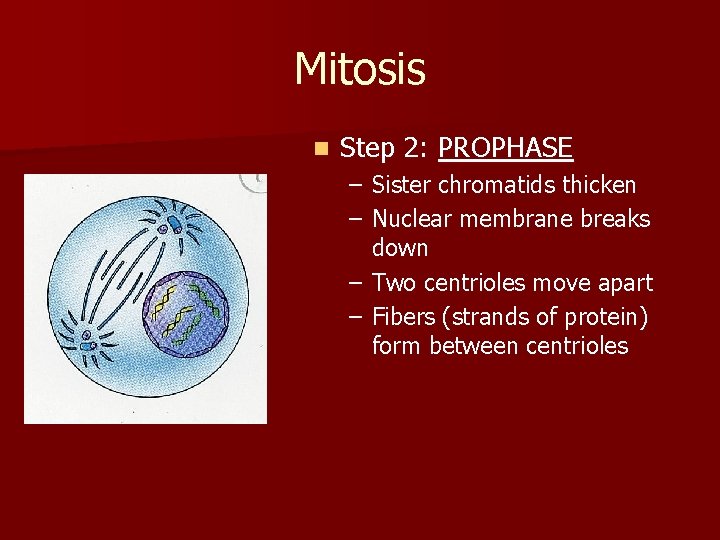
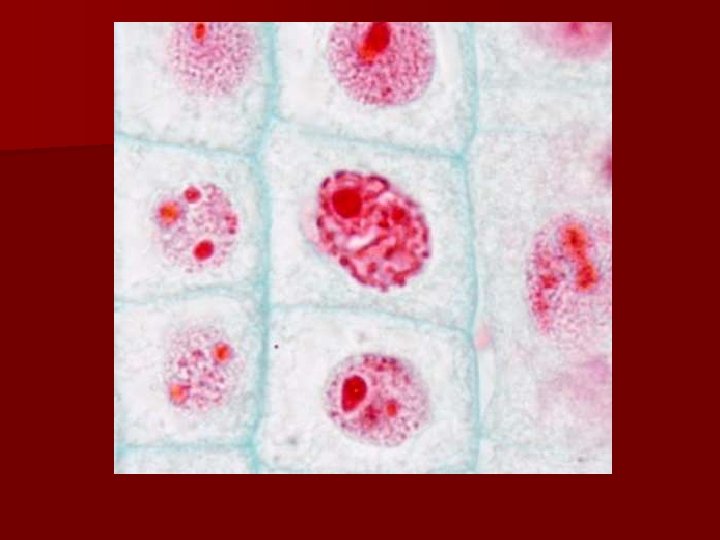
Mitosis n Step 2: PROPHASE – Sister chromatids thicken – Nuclear membrane breaks down – Two centrioles move apart – Fibers (strands of protein) form between centrioles
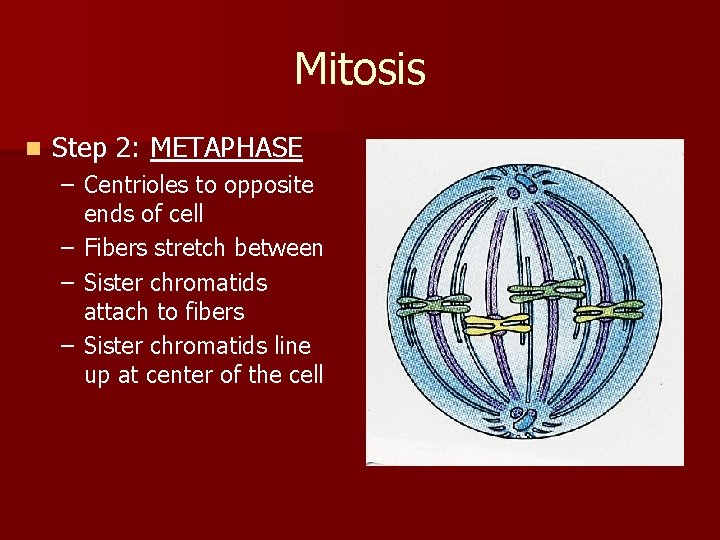
Mitosis n Step 2: METAPHASE – Centrioles to opposite ends of cell – Fibers stretch between – Sister chromatids attach to fibers – Sister chromatids line up at center of the cell
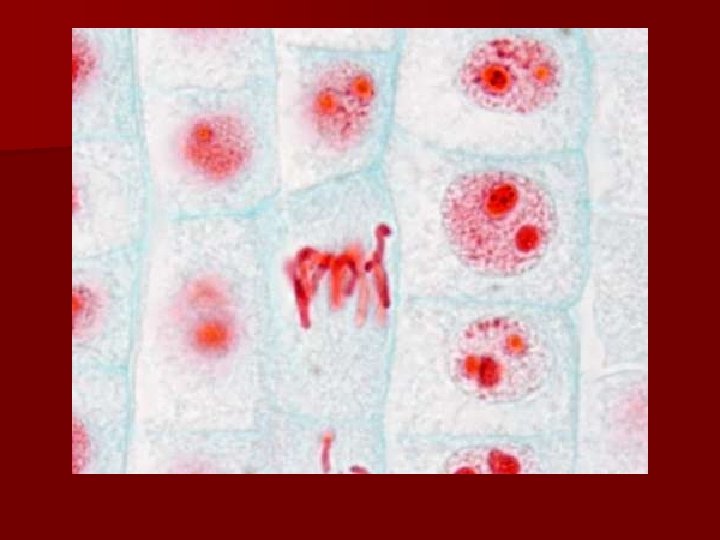
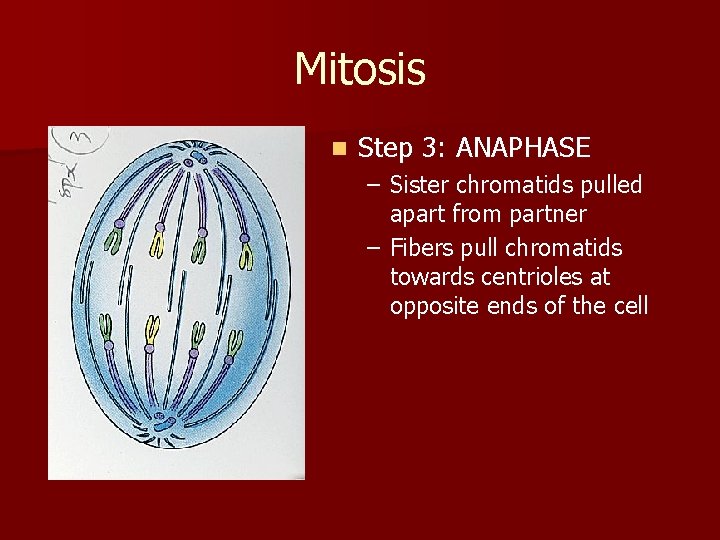
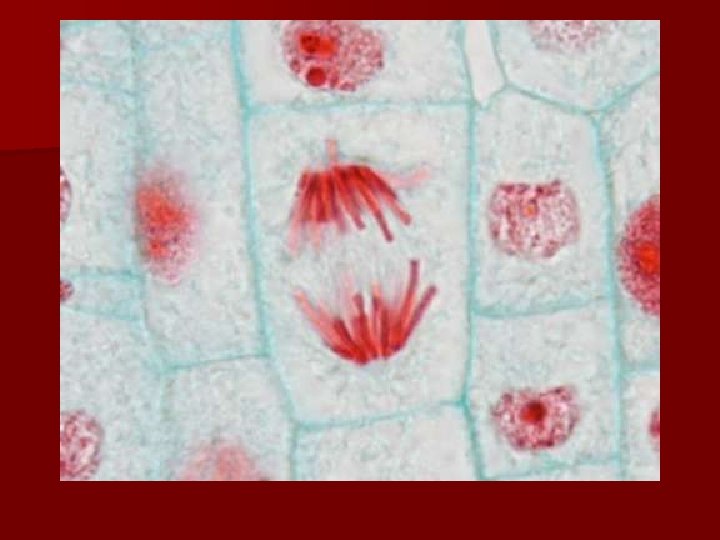
Mitosis n Step 3: ANAPHASE – Sister chromatids pulled apart from partner – Fibers pull chromatids towards centrioles at opposite ends of the cell
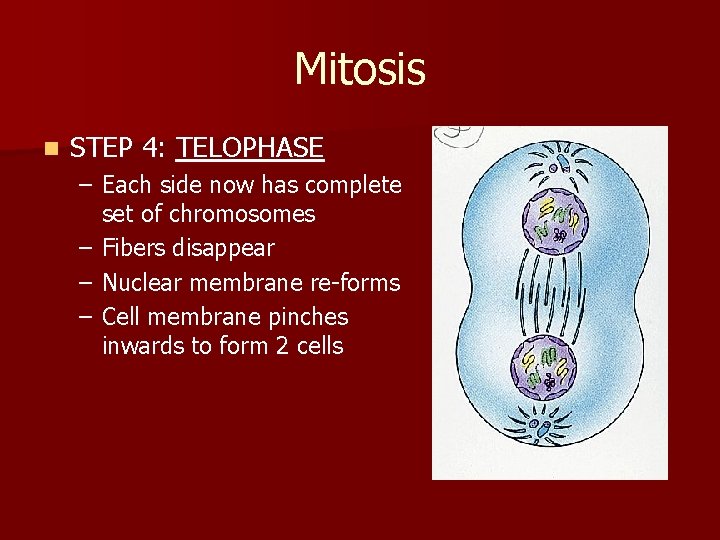
Mitosis n STEP 4: TELOPHASE – Each side now has complete set of chromosomes – Fibers disappear – Nuclear membrane re-forms – Cell membrane pinches inwards to form 2 cells
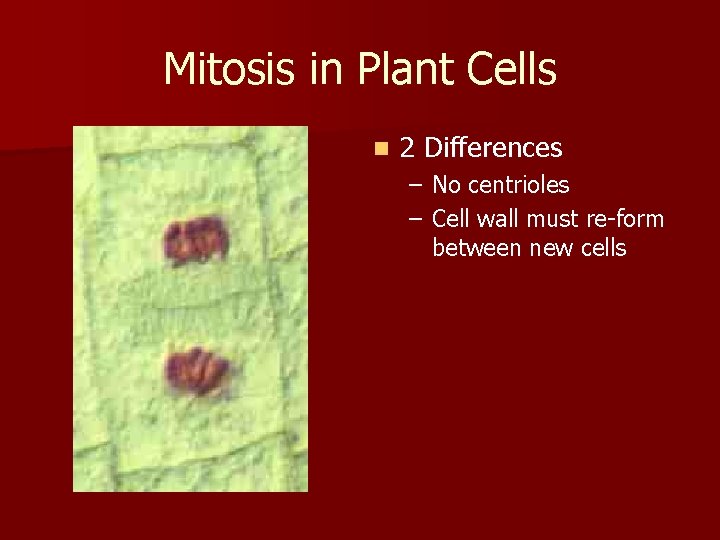
Mitosis in Plant Cells n 2 Differences – No centrioles – Cell wall must re-form between new cells
TELOPHASE INTERPHASE ANAPHASE PROPHASE METAPHASE
n Bazemann simulation Biology – mitosis and meiosis
Meiosis
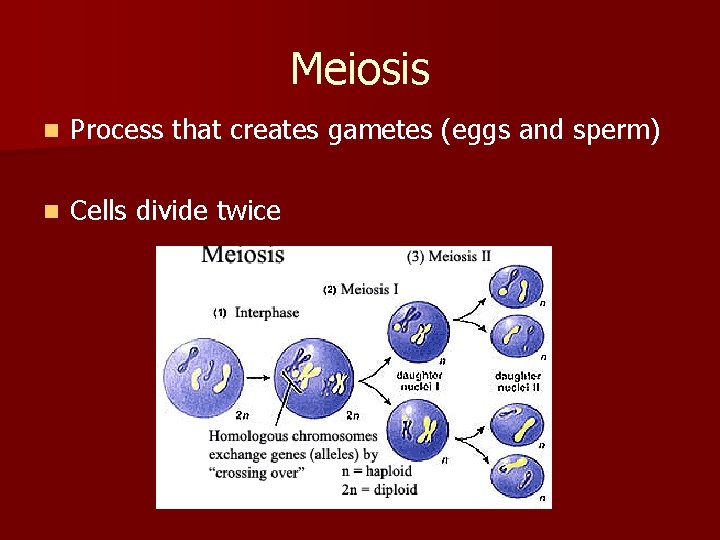
Meiosis n Process that creates gametes (eggs and sperm) n Cells divide twice
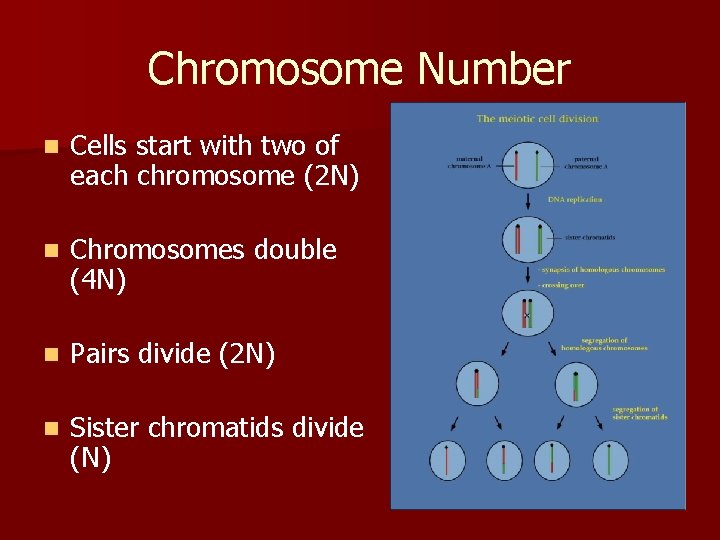
Chromosome Number n Cells start with two of each chromosome (2 N) n Chromosomes double (4 N) n Pairs divide (2 N) n Sister chromatids divide (N)
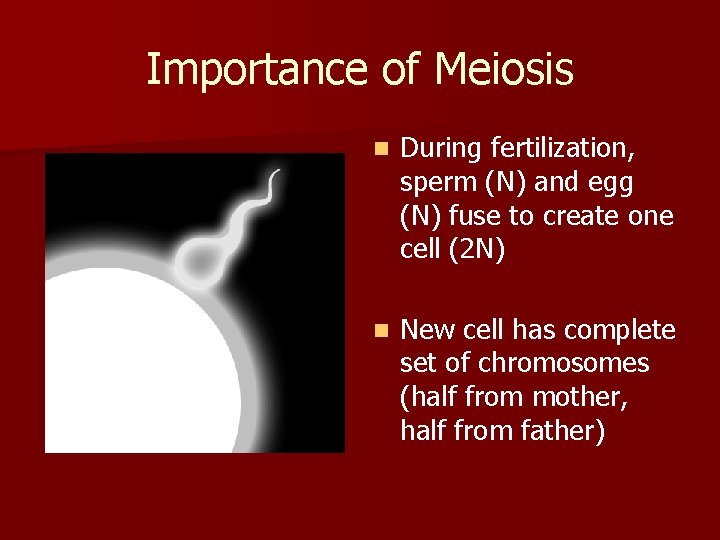
Importance of Meiosis n During fertilization, sperm (N) and egg (N) fuse to create one cell (2 N) n New cell has complete set of chromosomes (half from mother, half from father)
Diploid n n Di= two sets Cell that contains both sets of homologus chromosomes – Cell contains § 2 complete sets of chromosome § 2 complete sets of genes n Number of chromosomes in diploid cell represented by 2 N
Haploid n Means “one set” n Refers to cells that contain only one set of chromosomes n Gametes (sex cells) n Represented by N
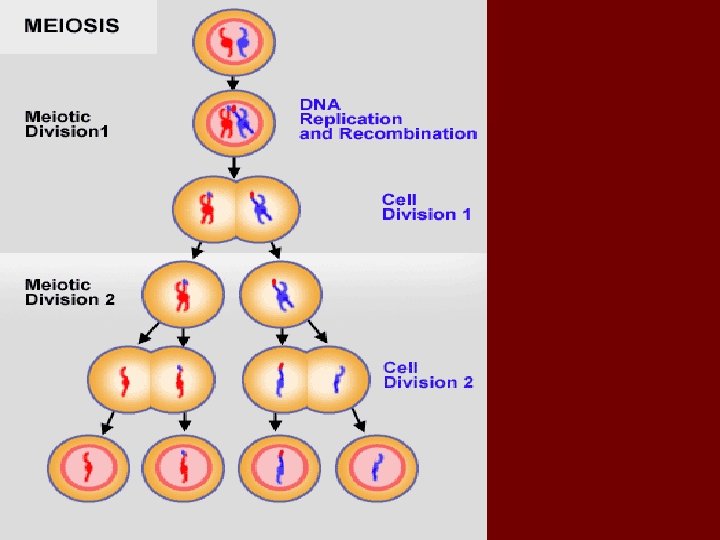
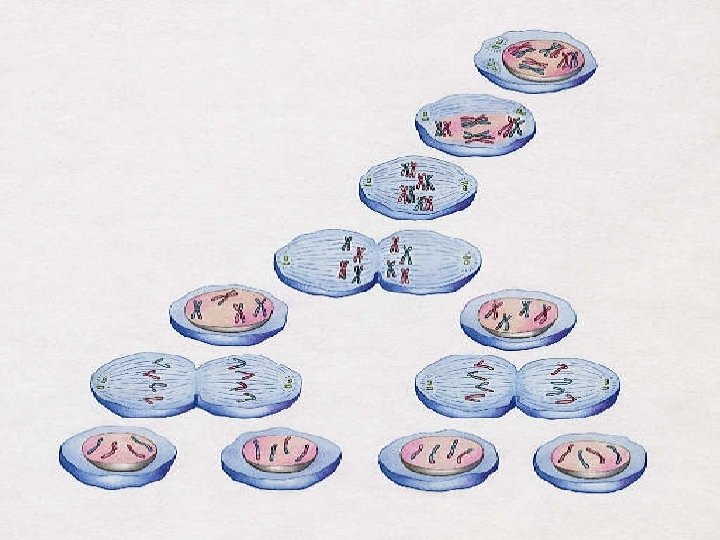
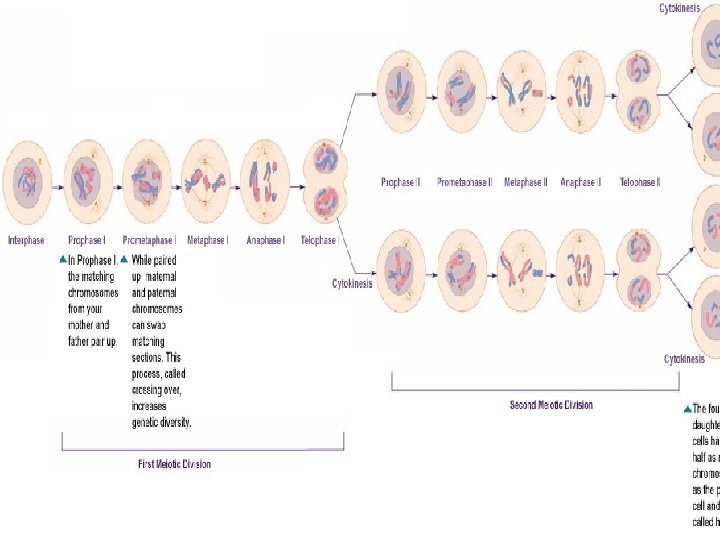
Meiosis n 2 distinct stages n Meiosis I – A diploid cell enters here n Meiosis II – At the end of this, the diploid cell that entered meiosis has become 4 haploid cells
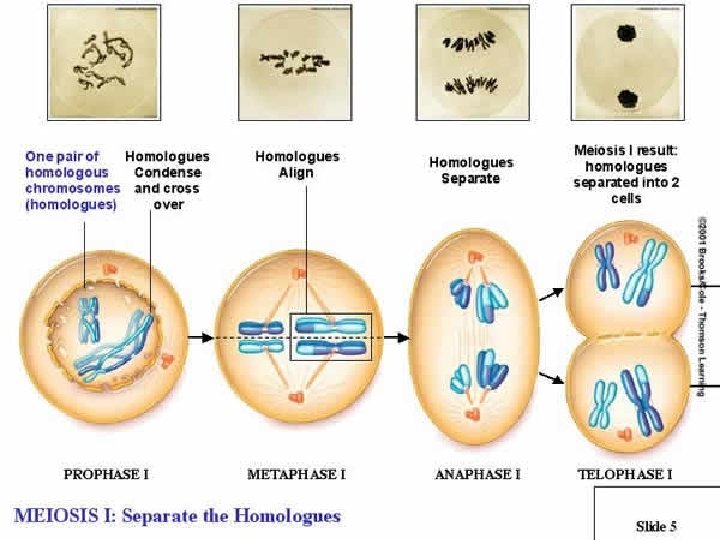
Meiosis I n n n Before meiosis 1, each chromosome replicates Then they divide like in mitosis What happened in mitosis? n Tetrad – PMAT – STRUCTURE MADE WHEN EACH CHROMOSOME PAIRS UP WITH ITS HOMOLOGOUS CHROMOSOME – 4 CHROMATIDS IN A TETRAD
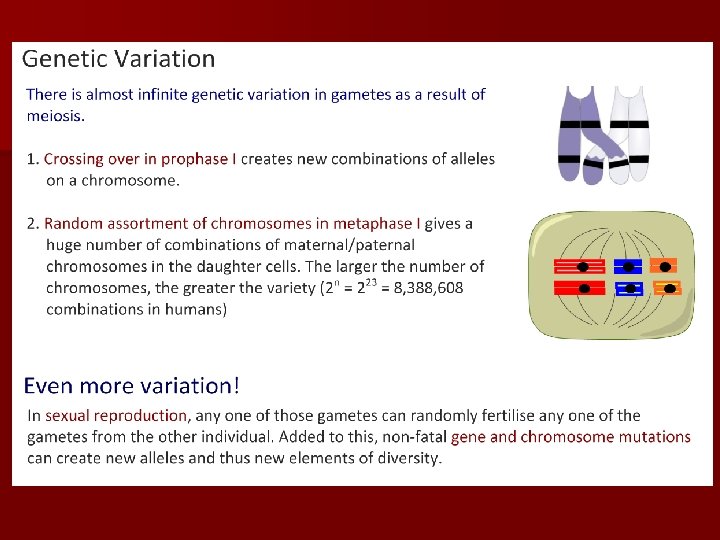
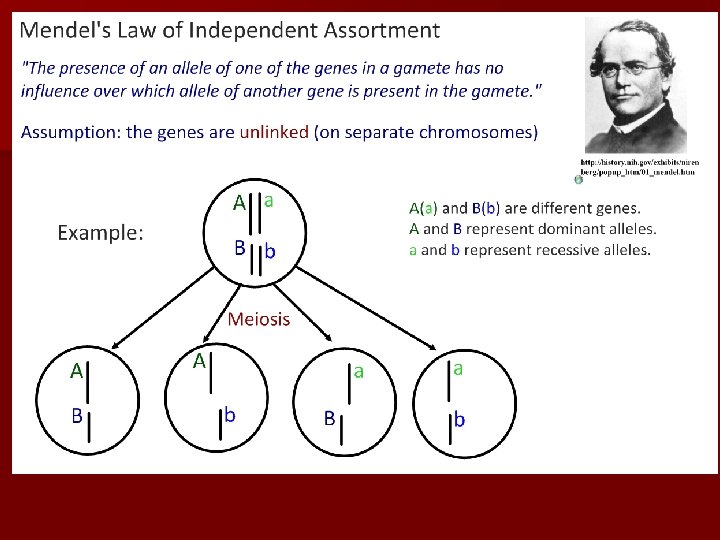
Independent Assortment n This is the random alignment of the replicated chromosomes n Chromosomes don’t line up in a particular way, this leads to variation.
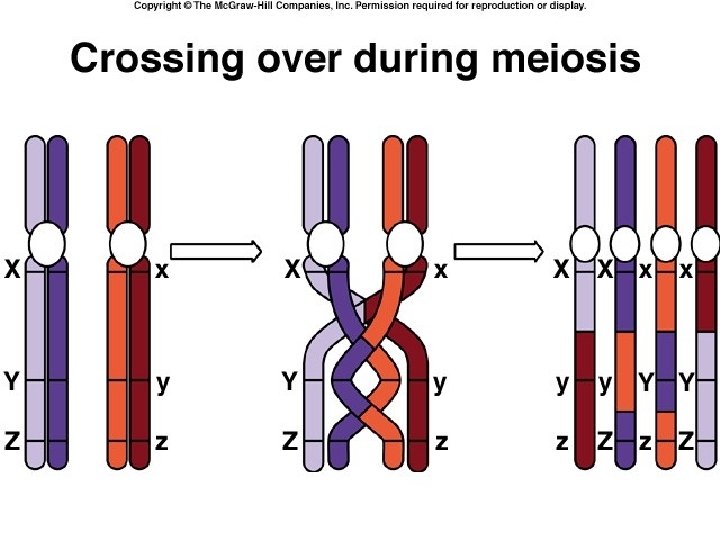
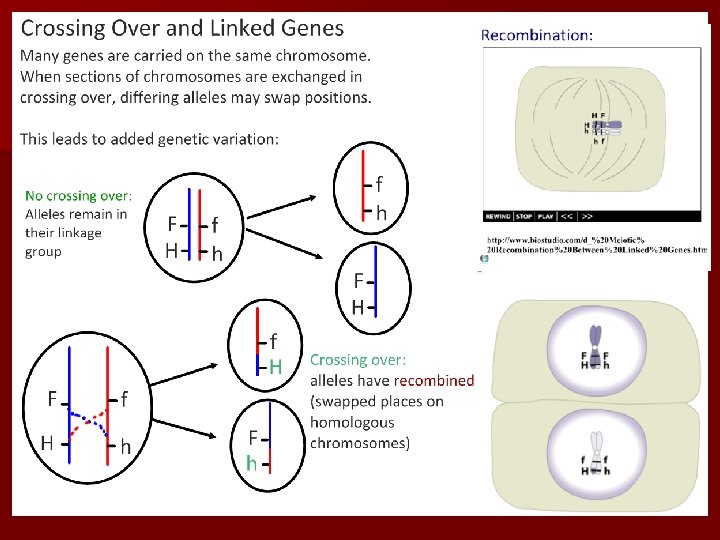
Prophase 1 n Each chromosome pairs with its homologous chromosome making a tetrad n As they pair up in tetrads, chromosomes exchange portions of their chromatids in the process …. CROSSING OVER
Metaphase 1 n Spindle fibers attach to chromosomes Anaphase 1 n The spindles pull homologous chromosomes apart to opposite poles/ends Telophase 1 n Nuclear membranes form and cell separates into two new cells
Now what do we have? n 2 new daughter cells n Each daughter cell has a set of chromosomes and alleles different from each other and different from the parent diploid cell
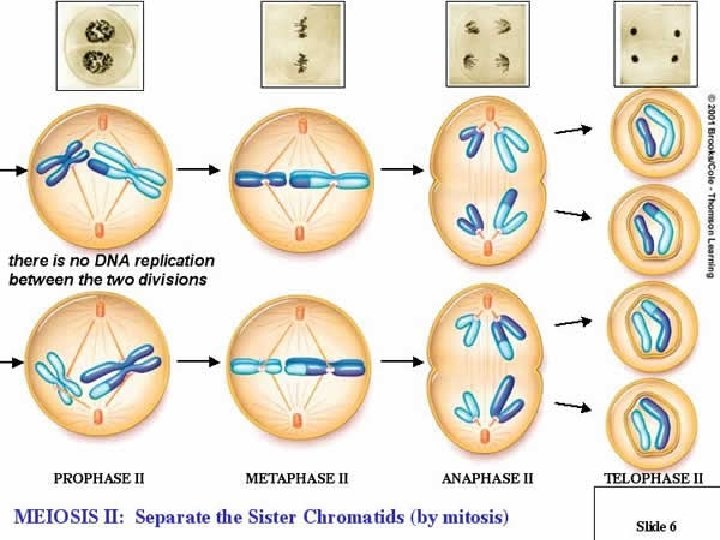
Meiosis II n Unlike Mitosis, Neither cell goes through a round of chromosome replication n Each cell’s chromosome has 2 chromatids
Prophase II n Meiosis resulted in 2 haploid (N) cells, each with ½ the number of chromosomes in the original cell
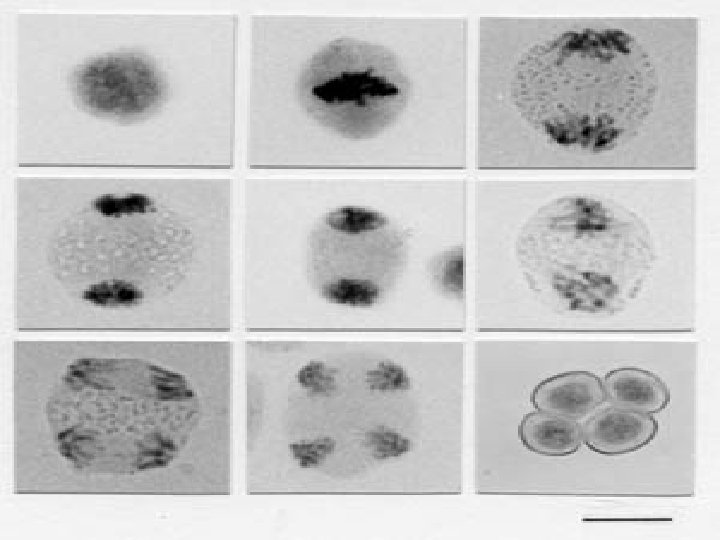
Metaphase 2 n Chromosomes n Sister line up in middle Anaphase 2 chromatids separate and move to opposite poles n Meiosis Telophase 2 II results in 4 haploid (N) daughter cells n 4 daughter cells contain haploid number of chromosomes, just 2 each
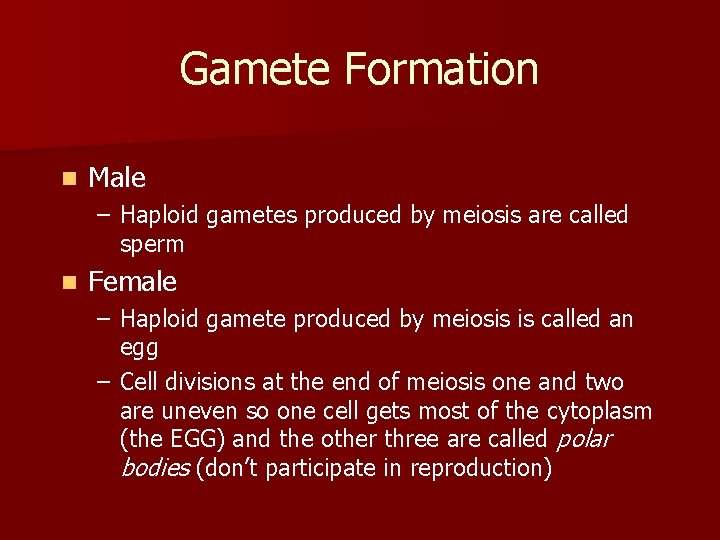
Gamete Formation n Male – Haploid gametes produced by meiosis are called sperm n Female – Haploid gamete produced by meiosis is called an egg – Cell divisions at the end of meiosis one and two are uneven so one cell gets most of the cytoplasm (the EGG) and the other three are called polar bodies (don’t participate in reproduction)
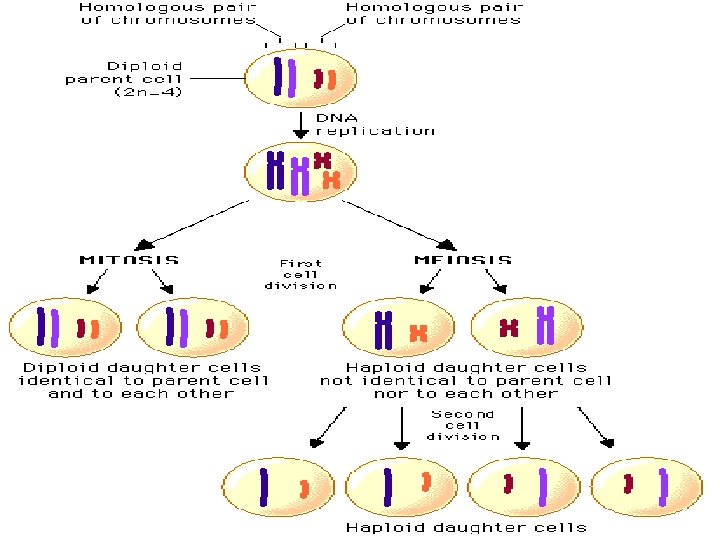
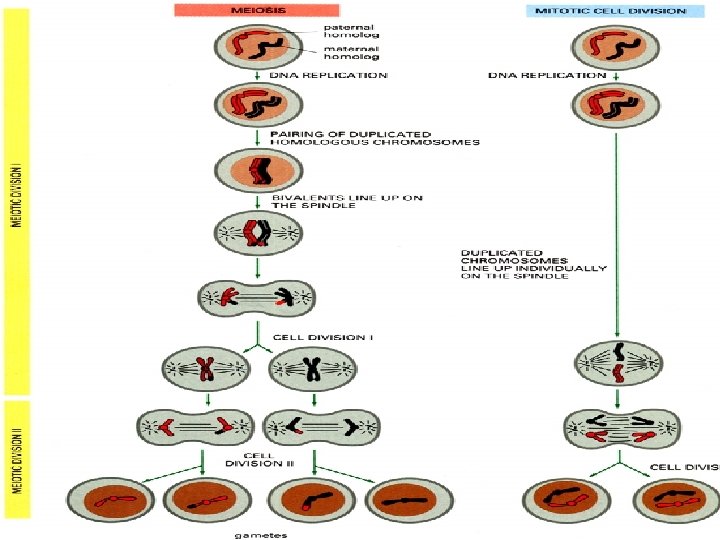
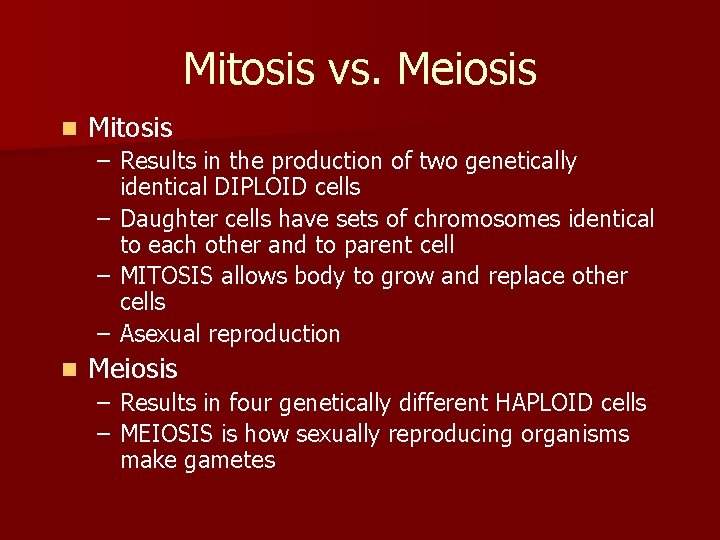
Mitosis vs. Meiosis n Mitosis – Results in the production of two genetically identical DIPLOID cells – Daughter cells have sets of chromosomes identical to each other and to parent cell – MITOSIS allows body to grow and replace other cells – Asexual reproduction n Meiosis – Results in four genetically different HAPLOID cells – MEIOSIS is how sexually reproducing organisms make gametes