
Cell Reproduction in Eukaryotic Cells by Angelique Sykes
Cell Reproduction in Eukaryotic Cells by Angelique Sykes
Note from the Instructor Welcome to this week’s unit featuring cell reproduction. Together we will learn the processes eukaryotic cells use to reproduce. During this unit we will observe the cell cycle, which includes: interphase, mitosis and cytokinesis in both plant and animal cells.
Overview n Content Standard n Essential Knowledge and Skills n Performance Standard n Student Expectations n Unit: The Cell Cycle: Interphase, Mitosis and Cytokinesis n Quiz
Content Standard Observe, investigate, describe and classify living things; explain life cycles, diversity, adaptations, structure and functions of cells and systems reproduction, heredity, interdependence, behavior, flow of energy and matter and changes over time.
Essential Knowledge and Skills Students will examine the complex interactions in a cell that cause distinct cycles of activities, such as cell growth and division. n Students will investigate the relationship between gene mutations in cells and uncontrolled cell division, called cancer. n
Performance Standards Students will be able to differentiate between animal and plant eukaryotic cells. n Students will be able to describe the process of mitosis and its role in the cell cycle. n
Student Expectations Students are responsible for building their content knowledge about the cell cycle and mitosis by consistently completing all class and home assignments.
The Cell Cycle During development from stem to fully differentiated, cells in the body alternately divide and "appear" to be resting. This sequence of activities exhibited by cells that result in new cell production is called the cell cycle.
Interphase, which appears to the eye to be a resting stage between cell divisions, is actually a period of diverse activities. Interphase activities are indispensable in making the next mitosis possible.
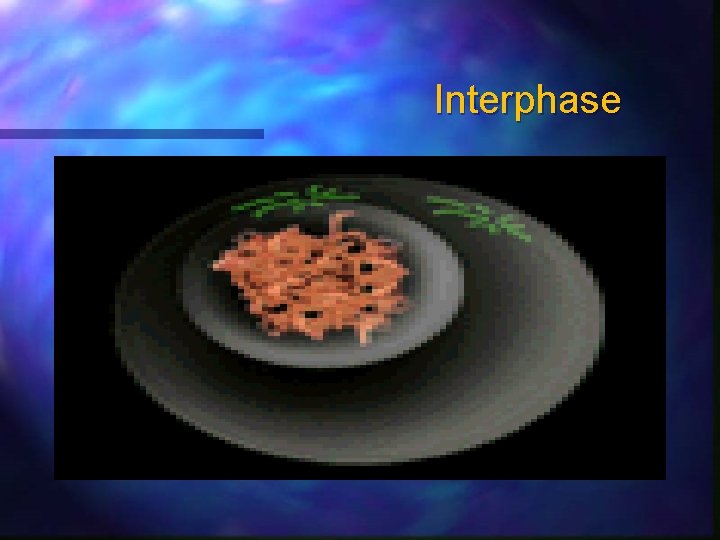
Interphase Cells may appear inactive during this stage, but they are quite the opposite. This is the longest period of the cell cycle, during which DNA replicates, the centrioles divide, and proteins are actively produced.

Interphase generally lasts at least 12 to 24 hours in mammalian tissue. During this period, the cell is constantly synthesizing RNA, producing protein and growing in size.
Interphase By studying molecular events in cells, scientists have determined that interphase can be divided into 3 steps: Gap 1 (G 1), S (synthesis) phase, Gap 2 (G 2).

Interphase: Gap I (G 1) Cells increase in size in Gap 1, produce RNA and synthesize protein. An important cell cycle control mechanism activated during this period ensures that everything is ready for DNA synthesis.
Interphase: Synthesis (S) Phase To produce two similar daughter cells, the complete DNA instructions in the cell must be duplicated. DNA replication occurs during this S (synthesis) phase.
Interphase: Gap II(G 2) During the gap between DNA synthesis and mitosis, the cell will continue to grow and produce new proteins in preparation for division.
Interphase

Interphase Animal vs. Plant Cell
Mitosis is the division of the cell’s nucleus
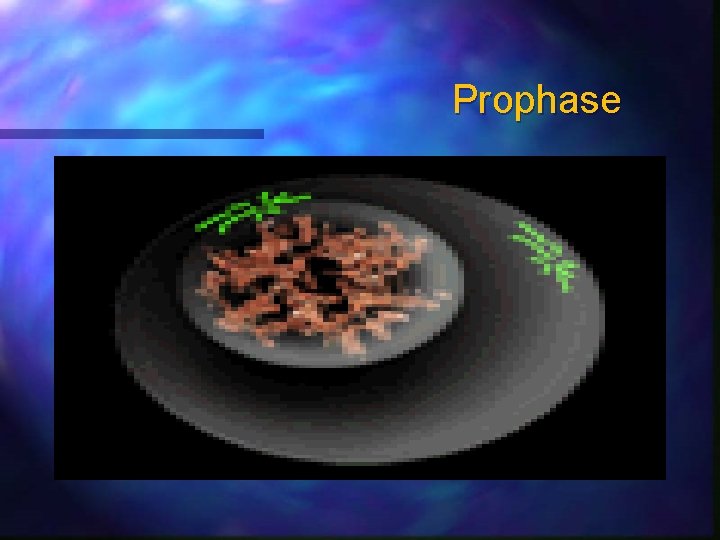
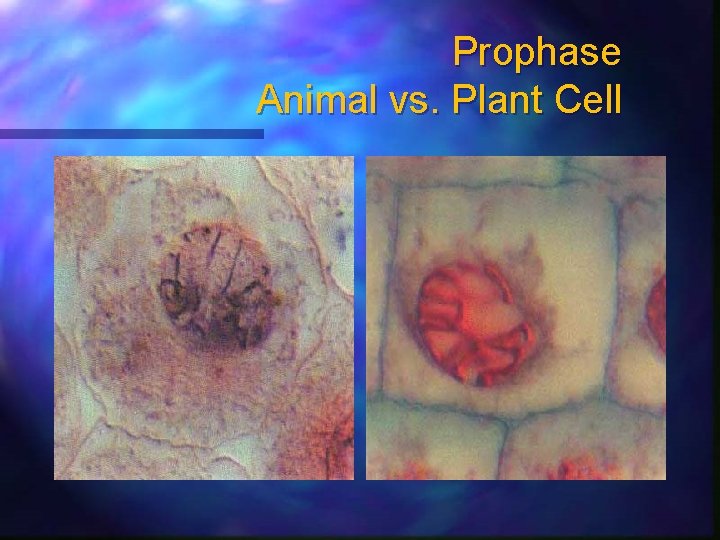
Mitosis: Prophase During this first mitotic stage, the nucleolus fades and chromatin (replicated DNA and associated proteins) condenses into chromosomes. Each replicated chromosome comprises two chromatids, both with the same genetic information.
Mitosis: Prophase Microtubules of the cytoskeleton, responsible for cell shape, motility and attachment to other cells during interphase, disassemble. And the building blocks of these microtubules are used to grow the mitotic spindle from the region of the centrioles.
Mitosis: Prophase The nuclear envelope breaks down so there is no longer a recognizable nucleus. Some mitotic spindle fibers elongate from the centrioles and attach to kinetichores, protein bundles located on the chromosomes.
Prophase
Prophase Animal vs. Plant Cell
Mitosis: Metaphase Other spindle fibers elongate but instead of attaching to chromosomes, overlap each other at the cell center. Tension applied by the spindle fibers aligns all chromosomes in one plane at the center of the cell.
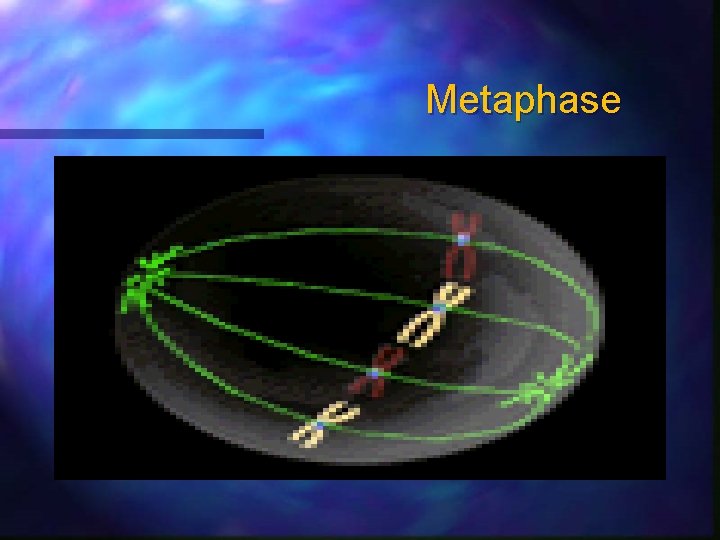
Metaphase
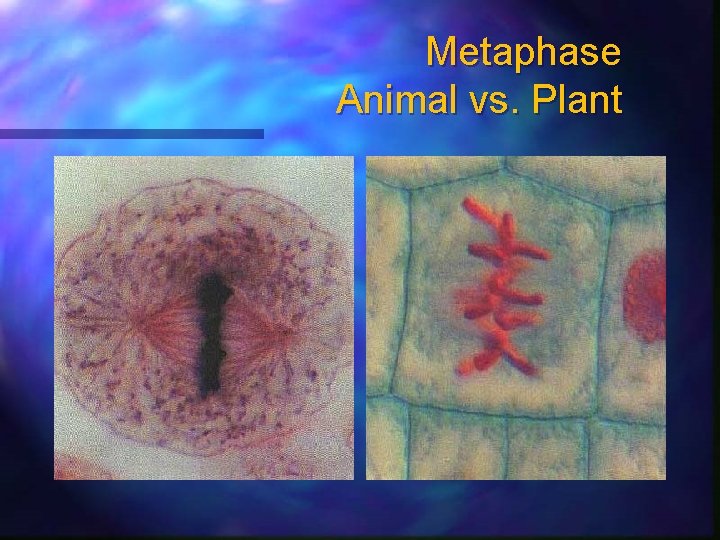
Metaphase Animal vs. Plant
Mitosis: Anaphase Spindle fibers shorten, the kinetichores separate, and the chromatids (daughter chromosomes) are pulled apart and begin moving to the cell poles.
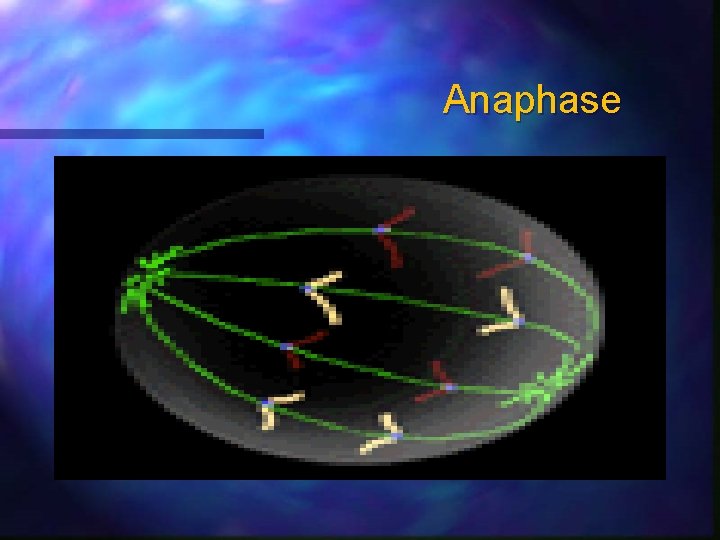
Anaphase
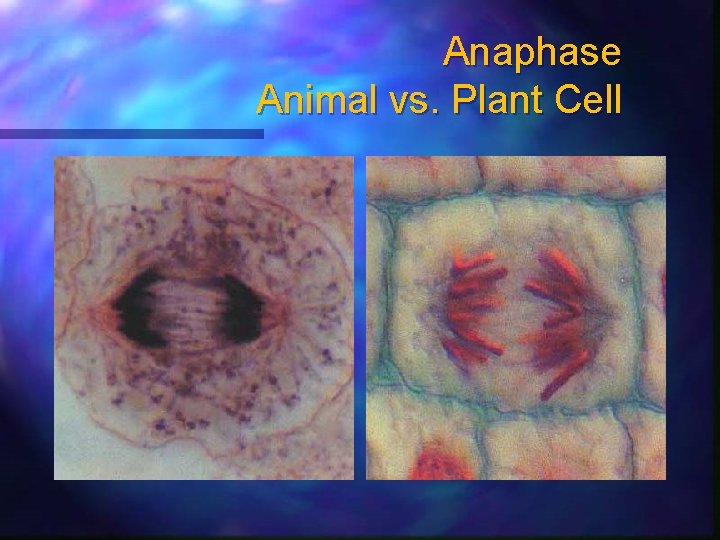
Anaphase Animal vs. Plant Cell
Mitosis: Telophase The daughter chromosomes arrive at the poles and the spindle fibers that have pulled them apart disappear.
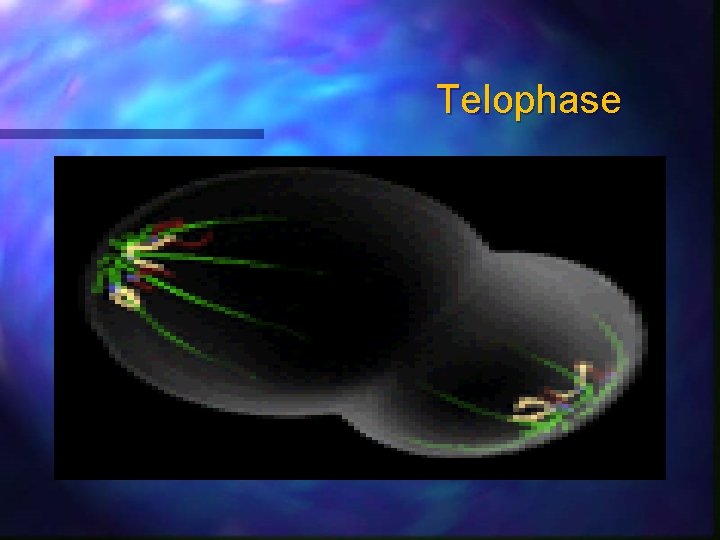
Telophase
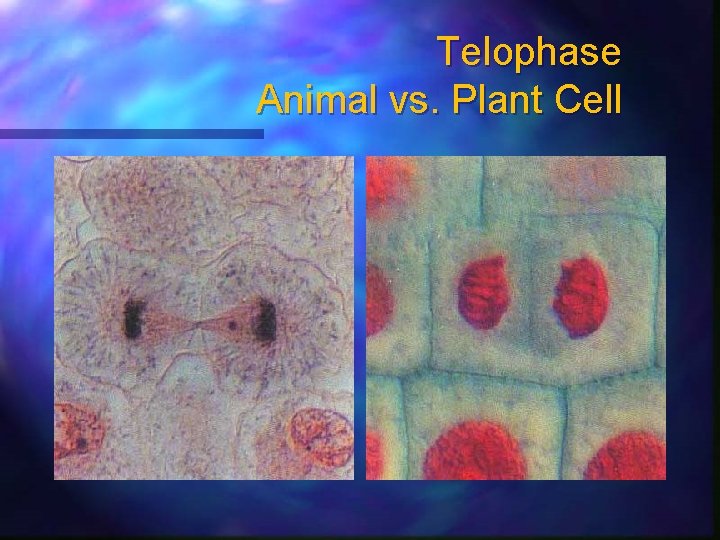
Telophase Animal vs. Plant Cell
Cytokienesis The spindle fibers not attached to chromosomes begin breaking down until only that portion of overlap is left. It is in this region that a contractile ring cleaves the cell into two daughter cells.
Cytokinesis Microtubules then reorganize into a new cytoskeleton for the return to interphase. In animal cells, cytokinesis results when a fiber ring composed of a protein called actin around the center of the cell contracts pinching the cell into two daughter cells, each with one nucleus.
Cytokinesis In plant cells, the rigid wall requires that a cell plate be synthesized between the two daughter cells.
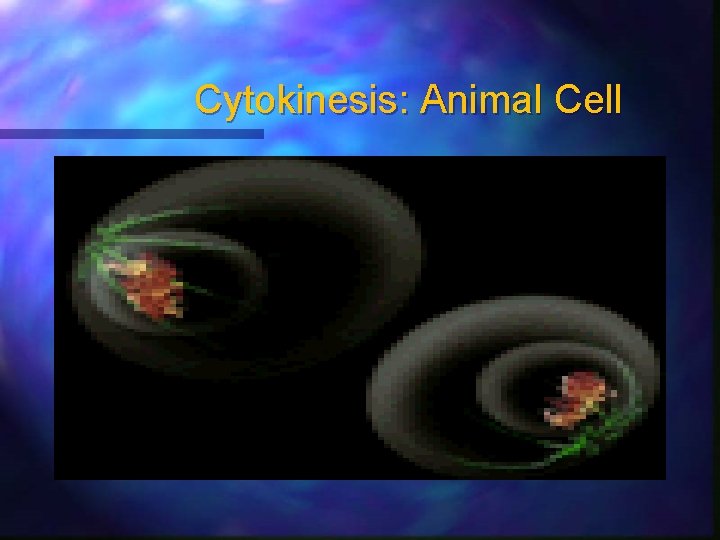
Cytokinesis: Animal Cell
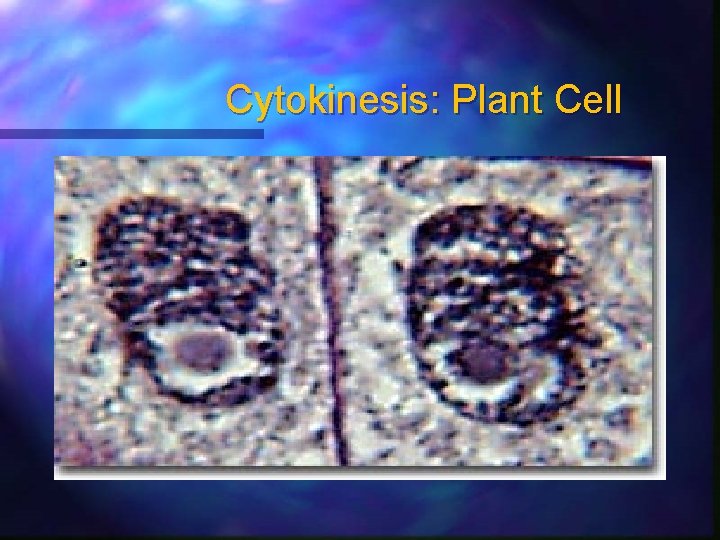
Cytokinesis: Plant Cell
Quiz Complete numbers 1 through 10 and record the number of correct answers. http: //www. biology. arizona. edu/cell_bio/tut orials/cell_cycle/01 q. html
Have a pleasant and productive day.
- Slides: 39