
Cell Reproduction Chromosomes Structure of DNA during cell
- Slides: 29
Cell Reproduction
Chromosomes » Structure of DNA during cell division » Chromatid » Centromere » Chromatin
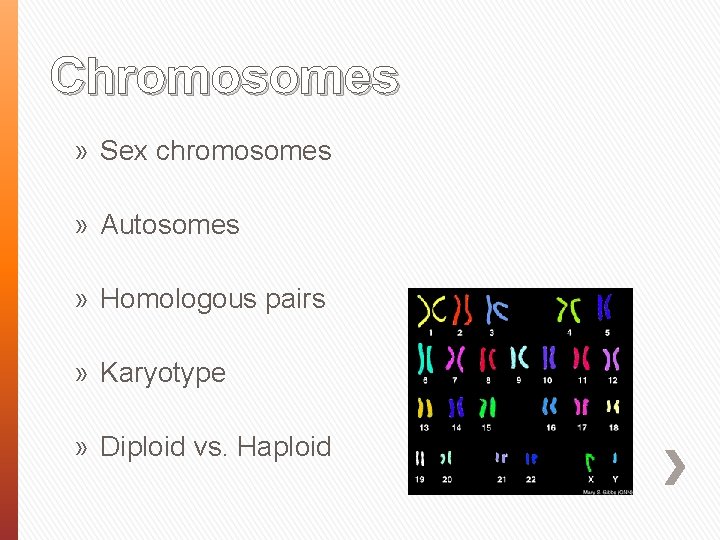
Chromosomes » Sex chromosomes » Autosomes » Homologous pairs » Karyotype » Diploid vs. Haploid
Prokaryotic Cell Division » Binary fission » Results in two identical offspring/new cells
Eukaryotic Cell Division » Mitosis » Occurs in somatic cells » New cells are identical
A. True B. False All of the non sex chromosomes are called autosomes.
Cell Cycle » Interphase and Mitosis
Interphase » Not considered Mitosis » G 1 – growth phase » S – DNA is copied » G 2 – growth phase; microtubules formed
Mitosis » » » Prophase Metaphase Anaphase Telophase Cytokinesis
Prophase » Centrosomes (centrioles) appear and move towards ends of cell » DNA as chromosomes is visible » Spindle fibers forms » Nuclear envelope begins to break down
Metaphase » Chromosomes line up in the middle of the cell » Spindle fibers attach to chromosomes
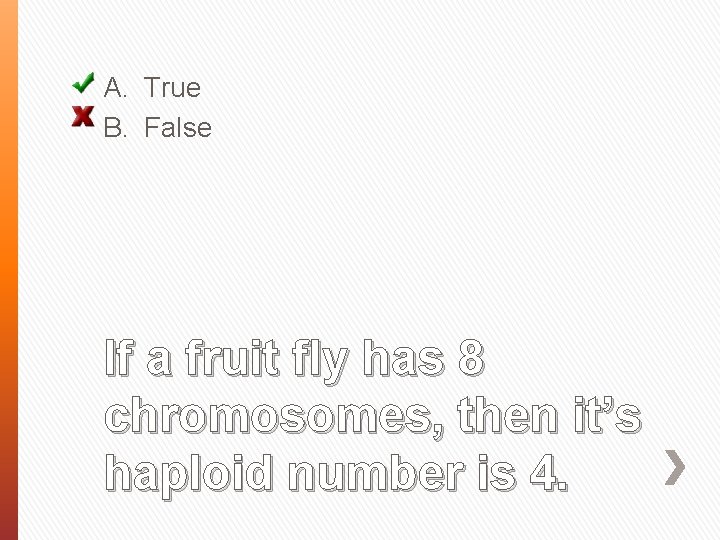
A. True B. False If a fruit fly has 8 chromosomes, then it’s haploid number is 4.
Anaphase » Spindle fibers pull apart the chromatids » New single chromosomes pulled towards pole
Telophase » Spindle fibers break down » Chromosomes return to chromatin form » Nuclear envelope reforms
Cytokinesis » Cleavage furrow forms » Parent cell cleaved into two identical offspring/new cells
A. B. C. D. Prophase Metaphase Anaphase Telophase In which phase of mitosis do [Default] [MC Any] chromatids separate and [MC All] become individual chromosomes?
Plant Cell Mitosis » Asters » Cell plate forms during cytokinesis; eventually becomes cell wall
Checkpoints » G 1 growth – cell must be healthy and large enough to divide; if not, then the cycle will not continue » G 2 synthesis – DNA that was copied will be checked and repairs made » M – cell will exit mitosis
Division of Sex Cells
Meiosis » Formation of gametes/haploid cells » Involves two distinct stages » Also goes through G 1, S, and G 2 phases » Occurs in diploid sex cells
Prophase I » Chromosomes and spindle fibers appear » Nuclear envelope begins to dissolve » Homologous chromosomes pair up » Crossing over can occur in a tetrad
Metaphase I » Tetrads randomly line up in the middle » Spindle fibers attach to each homologous pair
Anaphase I » Spindle fibers pull apart the tetrads, resulting in chromatids being pulled to opposite ends of the cell » Independent assortment
Telophase I and Cytokinesis » Chromosomes reach the end of the cell » Cytokinesis begins » 2 Haploid cells
Prophase II » Spindle fibers form » Nuclear envelope dissolves
Metaphase II » Chromosomes line up along the middle of the cell
Anaphase II » Chromatids are pulled apart by the spindle fibers.
Telophase II and Cytokinesis » Nuclear membrane forms around each set of chromosomes » Cleavage furrow begins to form » 4 Haploid cells
Gametes » Sperm ˃ Spermatogenesis » Egg ˃ Oogenesis