
Cell Reproduction Chapter 8 Biology Section 1 Chromosomes
Cell Reproduction Chapter 8: Biology
Section 1: Chromosomes n Chromosomes are rod-shaped structures made of DNA and proteins. n The DNA in eukaryotic cells wraps tightly around proteins called histones (which help keep shape of chromosomes and helps pack the DNA in tight)
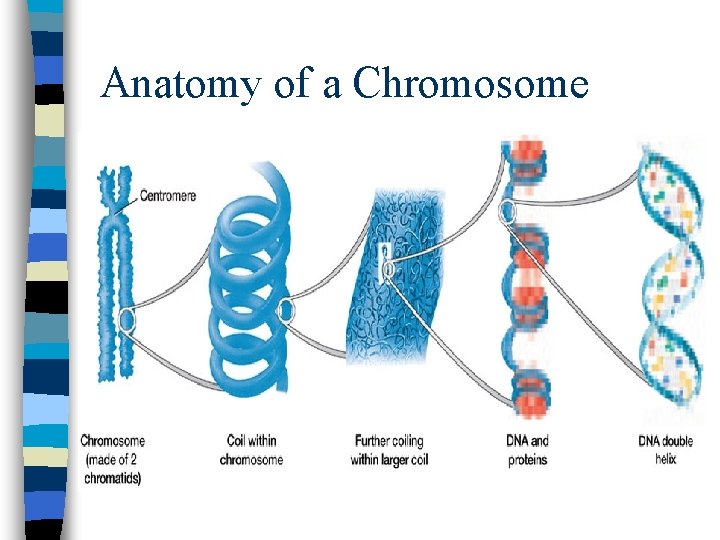
Anatomy of a Chromosome
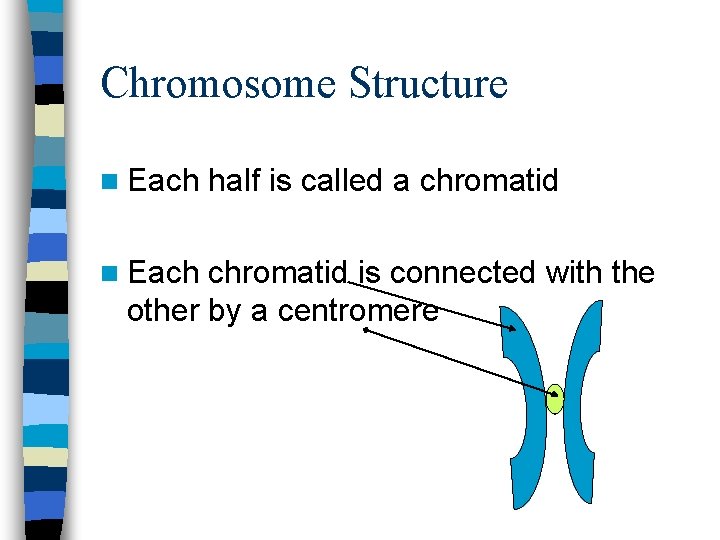
Chromosome Structure n Each half is called a chromatid is connected with the other by a centromere
Chromosome Numbers n Types of Chromosomes: – Sex chromosomes: XX = female XY=male • Determine sex of organisms – Autotomes: all other chromosomes • Determine traits of organisms • Homologous Chromosomes: 2 copies of each autosome • HUMANS: 46 pairs (2 sex, 44 autosomes) • Each organism has own number of chromosomes (the higher the number does not mean more complex organisms)
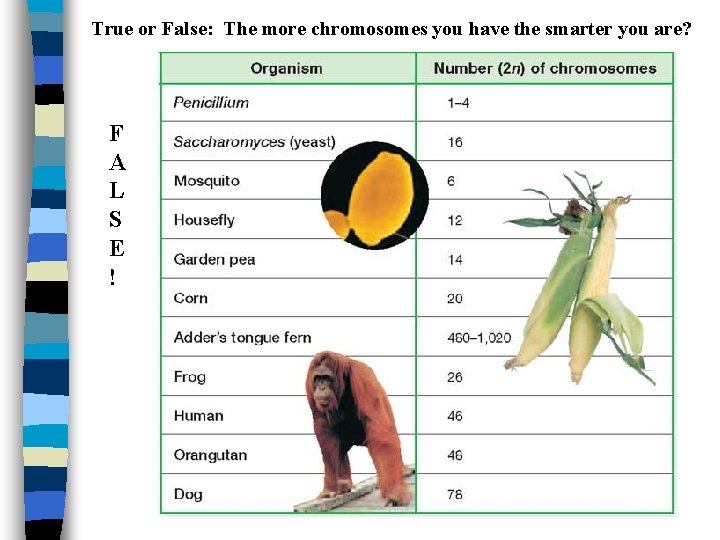
True or False: The more chromosomes you have the smarter you are? F A L S E !
Karyotypes n Picture/Mapping of chromosomes to help “see” them
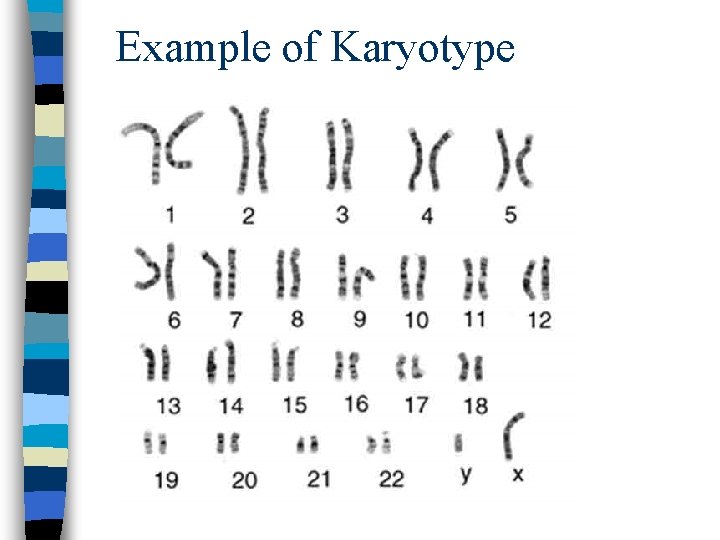
Example of Karyotype

Diploid and Haploid Numbers n Diploid number: The total number of chromosomes an organism has (2 N) n Haploid number: one set of chromosomes (1 N), sex cells n Example: 46 chromosomes (diploid) – 23 (haploid)
Section 2: Cell Division n Cell Division in Prokaryotes (cells that lack nuclei and membrane-bound organelles) n Binary Fission: 2 identical cells are formed from one cell (splitting)
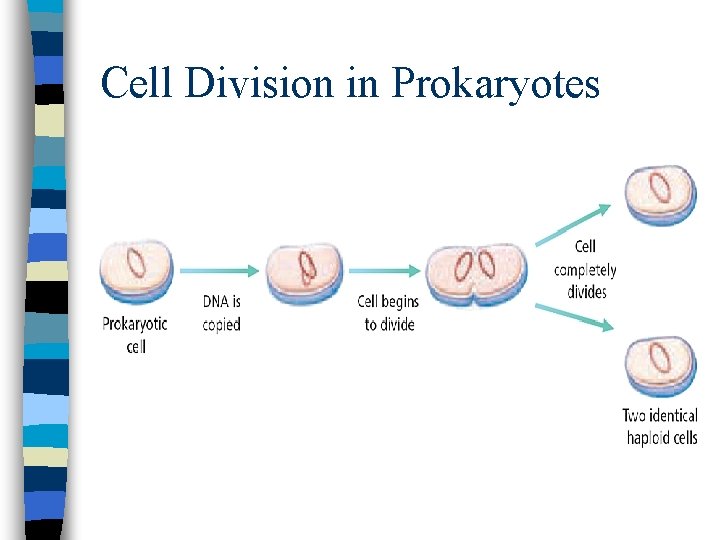
Cell Division in Prokaryotes
Cell Division in Eukaryotic Cells n Mitosis: cell division of body cells n Meiosis: cell division of sex cells n Asexual Reproduction: reproduction that requires only one parent n Sexual Reproduction: reproduction that requires 2 parents (promotes diversity among offspring)
The Cell Cycle: Mitosis (IPMAT) n n n **Interphase: period of rest/growth for cell, chromosomes duplicate, then mitosis begins Prophase: chromosomes point toward middle of cell Metaphase: chromosomes move toward center of cell Anaphase: chromosomes separate at middle (centromere) Telophase: chromosomes go to opposite ends of cell and cell splits (cytokinesis: 2 daughter cells that are identical to parent) – *in plant cells, a cell plate forms
Control of Cell Division n 3 Main Checkpoints: (Interphase) – 1. Cell Growth (G-1) checkpoint: controls whether the cell will divide, cell copies its DNA in this checkpoint, if cell needs to rest it does so now. – 2. DNA Synthesis (G-2) checkpoint: DNA duplication is checked here, if all is well, mitosis is begun – 3. Mitosis Checkpoint: if cell passes, proteins signal the cell to exit mitosis
Section 3: Meiosis n Meiosis: cells n Meiosis division of sex cells, haploid I: (Interphase is resting stage) – Begins with Prophase, Metaphase, Anaphase, and Telophase (followed by cytokinesis) 2 daughter cells here Meiosis II: PMAT (cytokinesis where both daughter cells split into 4 daughter cells)
Development of Gametes n Formation of Gametes: sex cells n Types of Gametes: eggs/sperms n Meiosis occurs in testes (male) and ovaries (females) n Spermatogenesis: production of sperm cells (produces 4 cells) n Oogenesis: production of egg cells (produces only 1 good egg, 3 that degenerate)
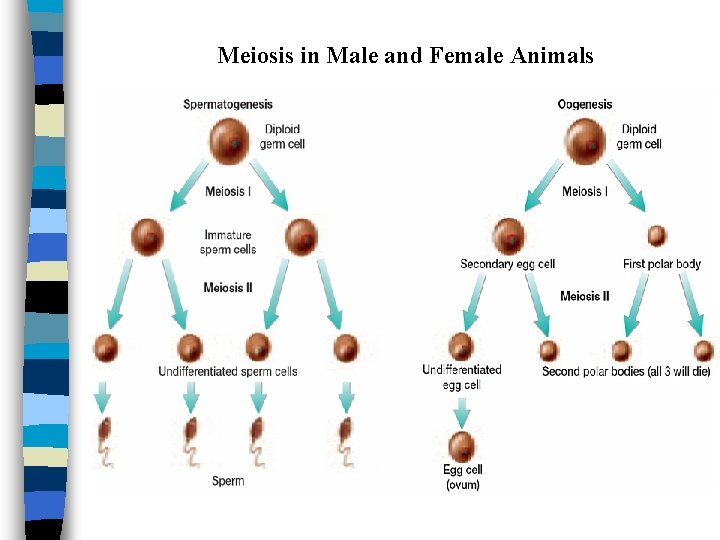
Meiosis in Male and Female Animals
Sexual Reproduction Production of offspring through meiosis and the union of egg and sperm. n Offspring that are produced are genetically different than parents (genes combine) n Allows species to adapt rapidly to changing environment (diseased crops, medicines) n Sometimes twins may form n – Identical (when egg and sperm have fused, then cell divides, DNA identical) – Fraternal (when more than one egg is fertilized)
- Slides: 18