
Cell Reproduction and Growth Why is cell division
- Slides: 49
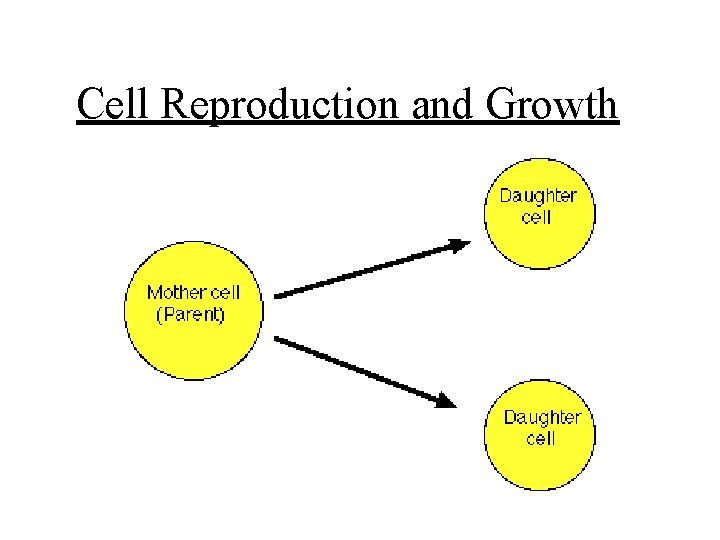
Cell Reproduction and Growth
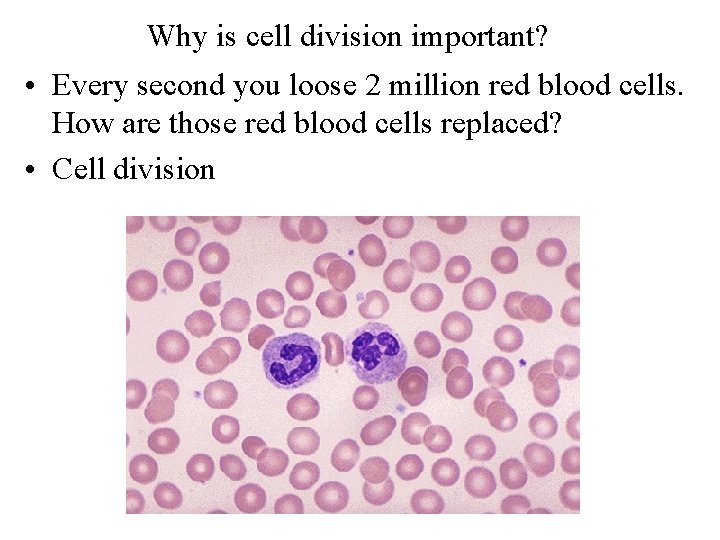
Why is cell division important? • Every second you loose 2 million red blood cells. How are those red blood cells replaced? • Cell division
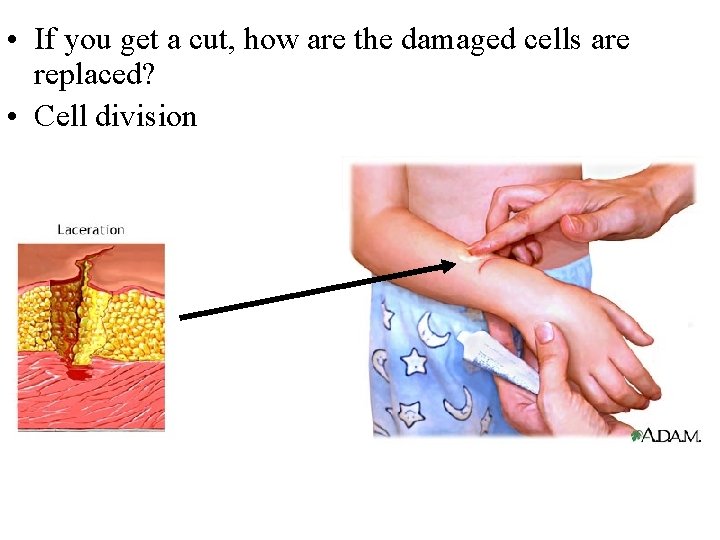
• If you get a cut, how are the damaged cells are replaced? • Cell division
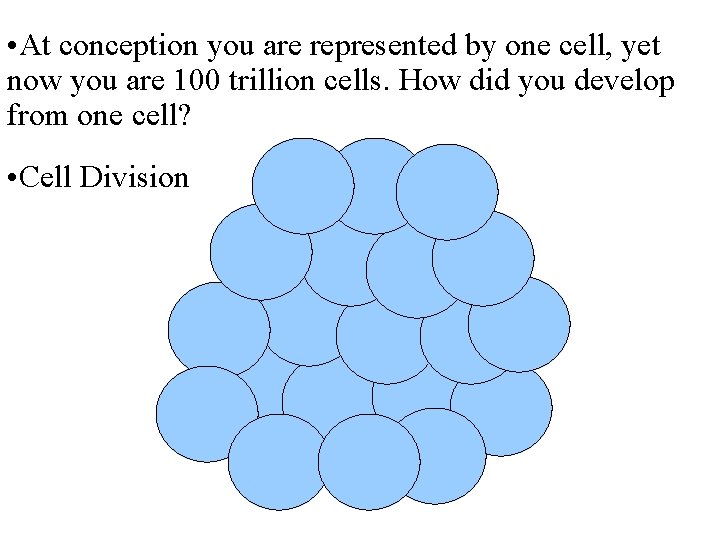
• At conception you are represented by one cell, yet now you are 100 trillion cells. How did you develop from one cell? • Cell Division
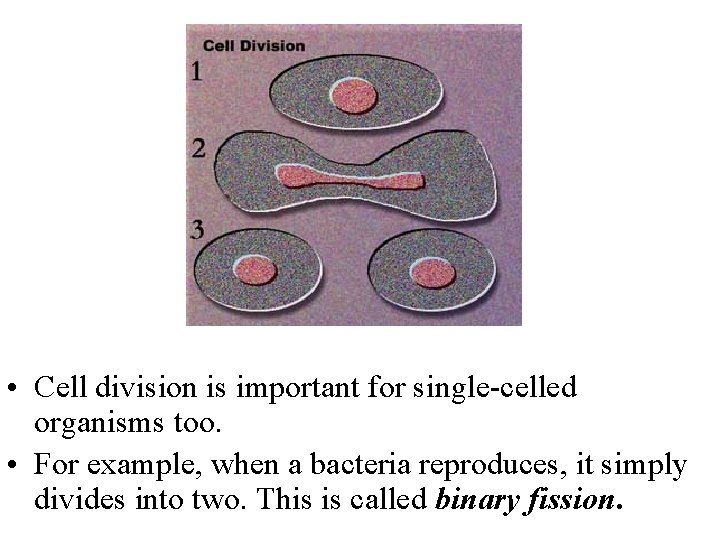
• Cell division is important for single-celled organisms too. • For example, when a bacteria reproduces, it simply divides into two. This is called binary fission.
• Amoeba reproduce by cell division too.
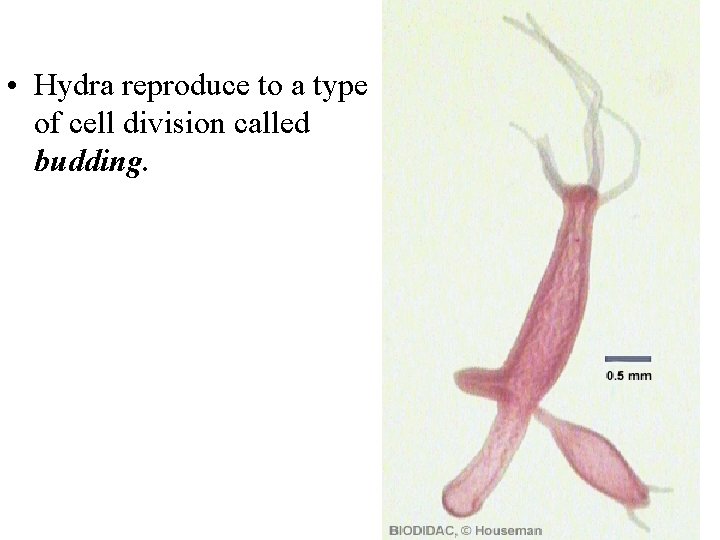
• Hydra reproduce to a type of cell division called budding.
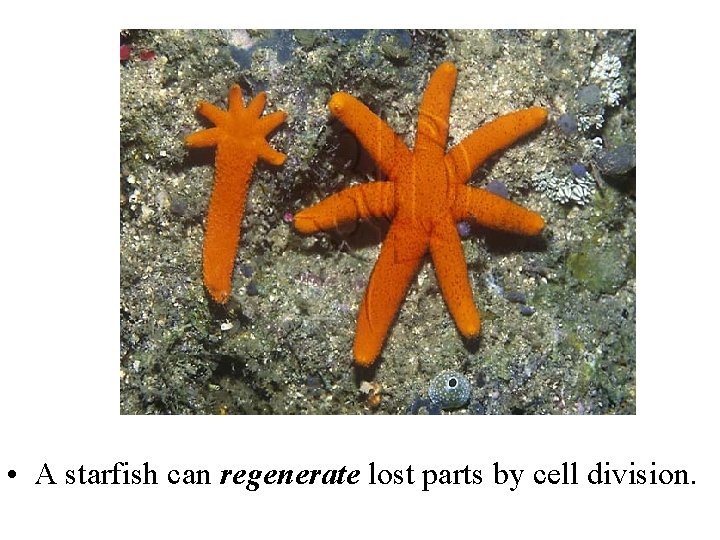
• A starfish can regenerate lost parts by cell division.
Does a living thing grow because its cells get larger and larger or does it grow because it produces more and more cells?
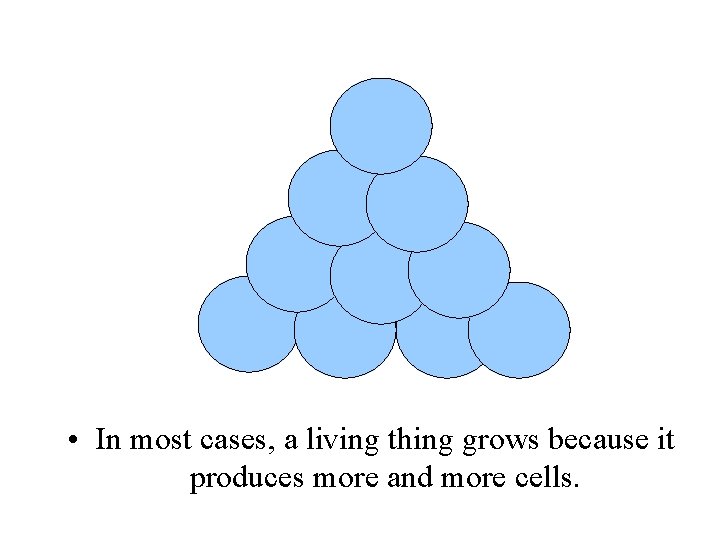
• In most cases, a living thing grows because it produces more and more cells.
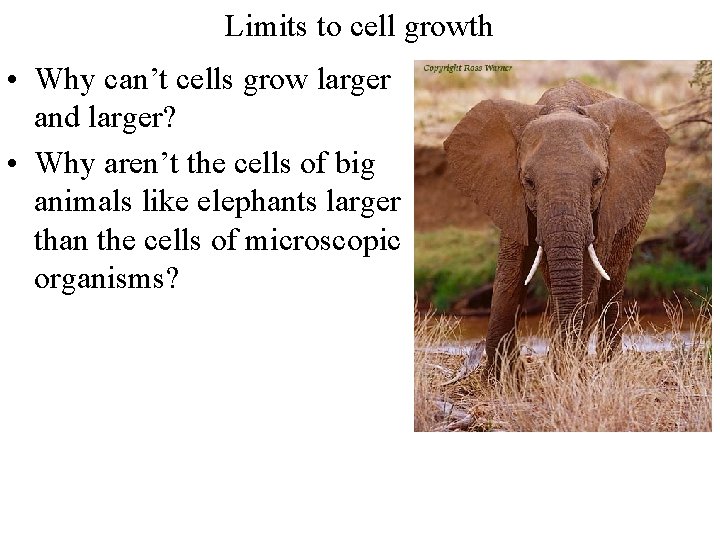
Limits to cell growth • Why can’t cells grow larger and larger? • Why aren’t the cells of big animals like elephants larger than the cells of microscopic organisms?
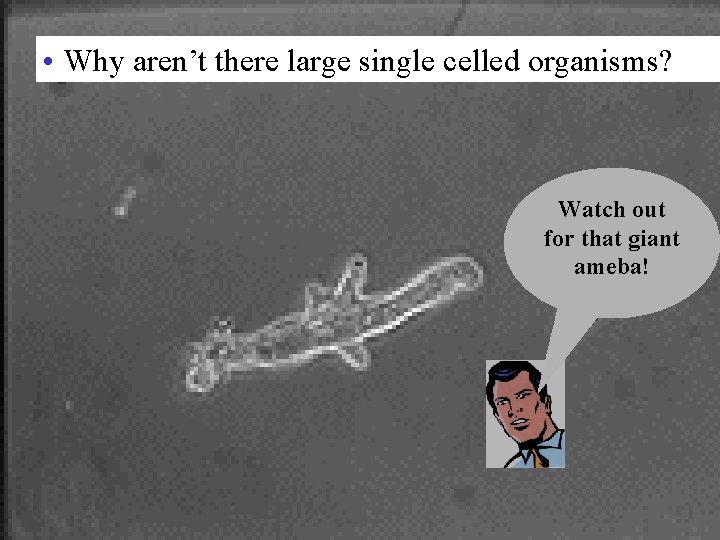
• Why aren’t there large single celled organisms? Watch out for that giant ameba!
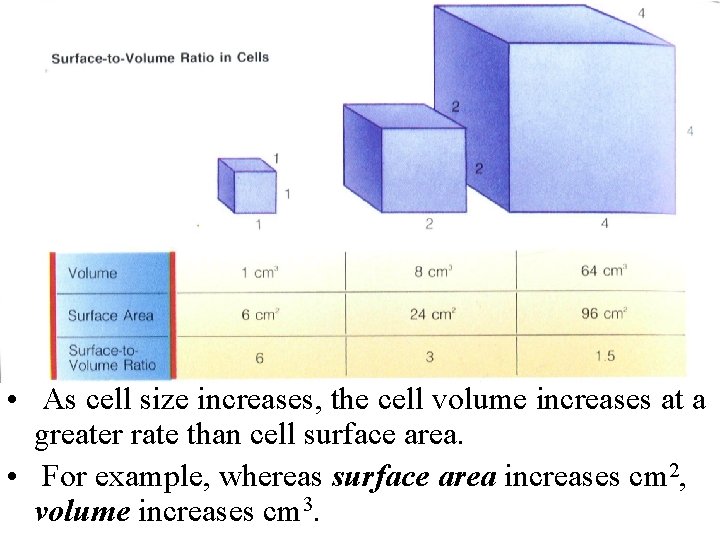
• As cell size increases, the cell volume increases at a greater rate than cell surface area. • For example, whereas surface area increases cm 2, volume increases cm 3.
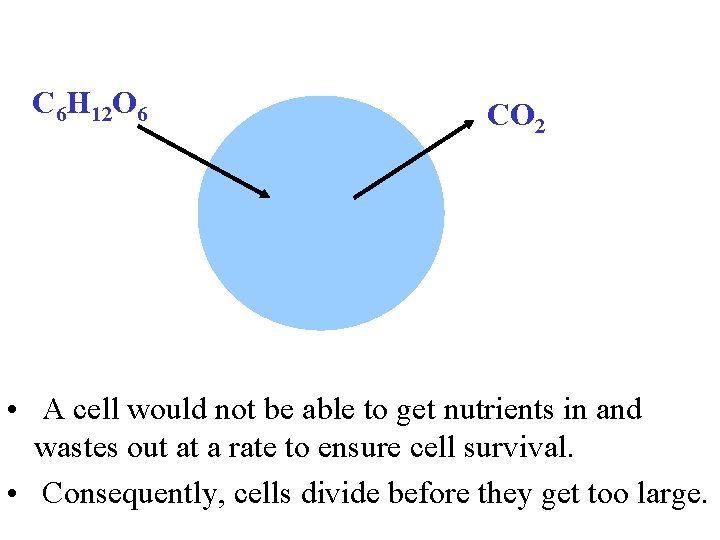
C 6 H 12 O 6 CO 2 • A cell would not be able to get nutrients in and wastes out at a rate to ensure cell survival. • Consequently, cells divide before they get too large.
Rates of cell division
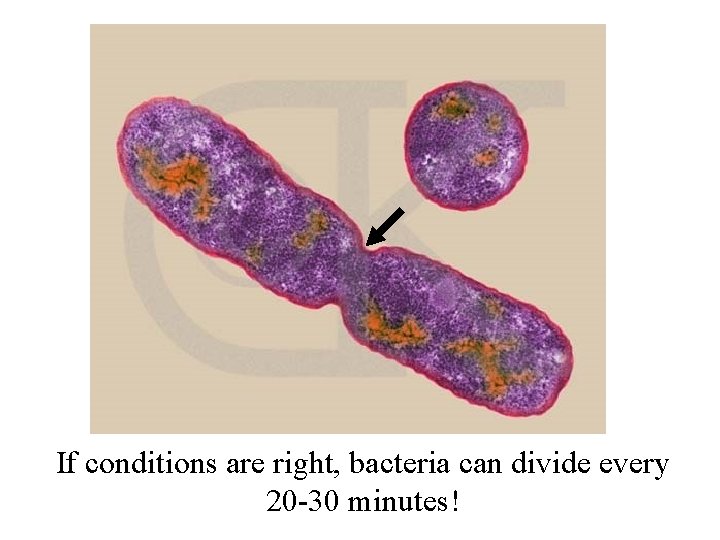
If conditions are right, bacteria can divide every 20 -30 minutes!
• Cells in the heart and brain rarely divide, if at all. • In contrasts, skin cells and cells in the digestive tract divide rapidly. Why?
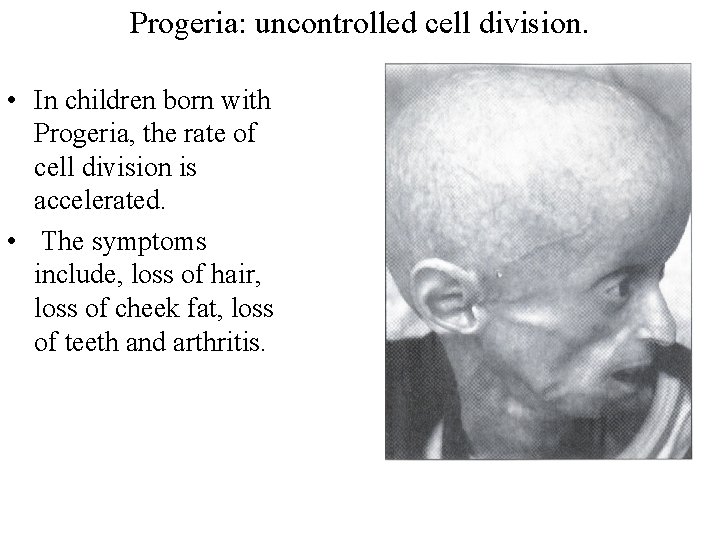
Progeria: uncontrolled cell division. • In children born with Progeria, the rate of cell division is accelerated. • The symptoms include, loss of hair, loss of cheek fat, loss of teeth and arthritis.
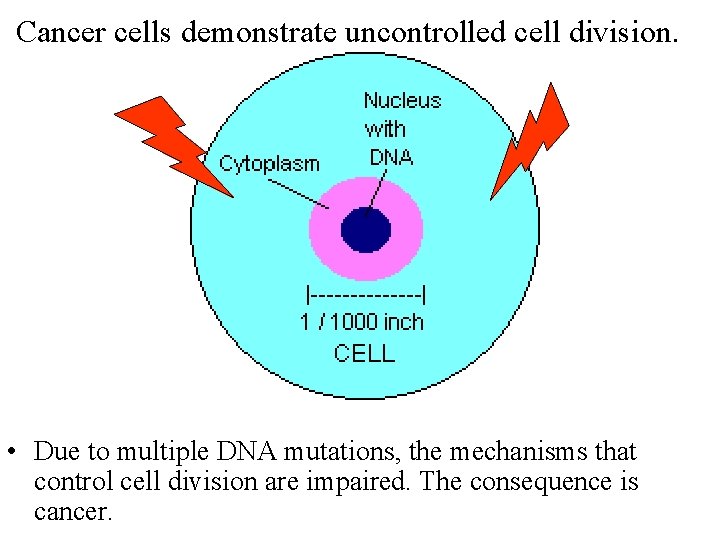
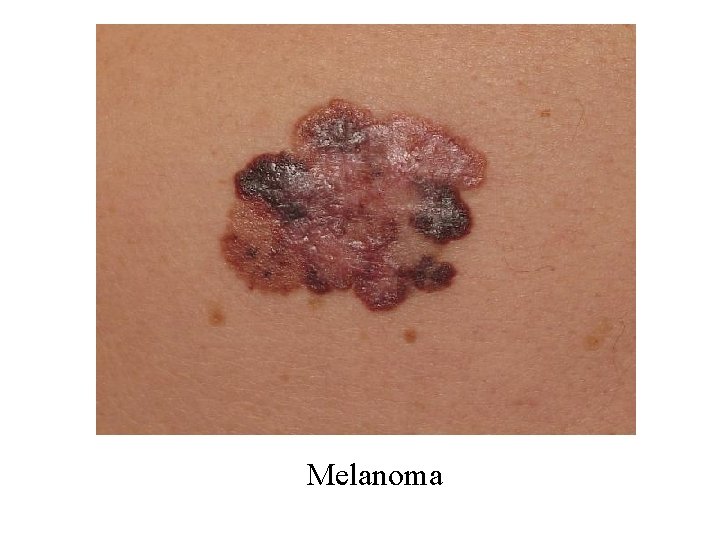
Cancer cells demonstrate uncontrolled cell division. • Due to multiple DNA mutations, the mechanisms that control cell division are impaired. The consequence is cancer.
Melanoma
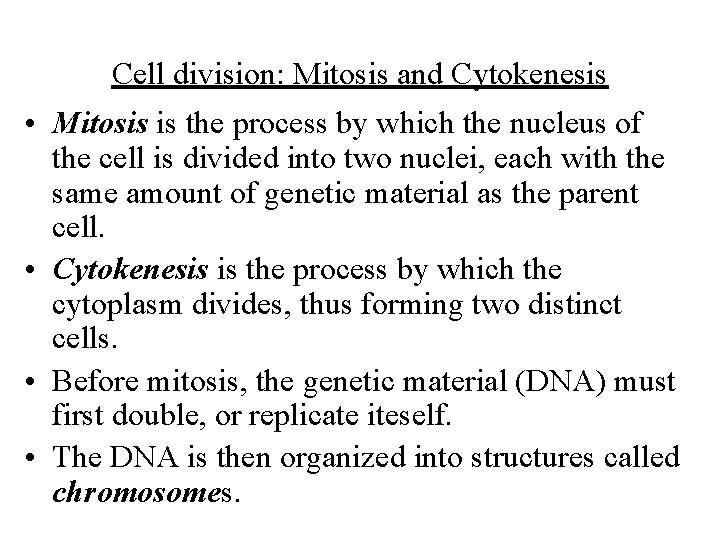
Cell division: Mitosis and Cytokenesis • Mitosis is the process by which the nucleus of the cell is divided into two nuclei, each with the same amount of genetic material as the parent cell. • Cytokenesis is the process by which the cytoplasm divides, thus forming two distinct cells. • Before mitosis, the genetic material (DNA) must first double, or replicate iteself. • The DNA is then organized into structures called chromosomes.
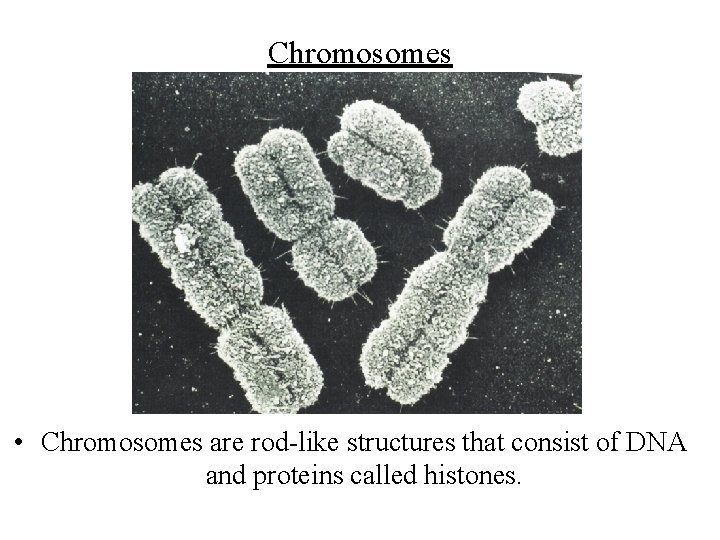
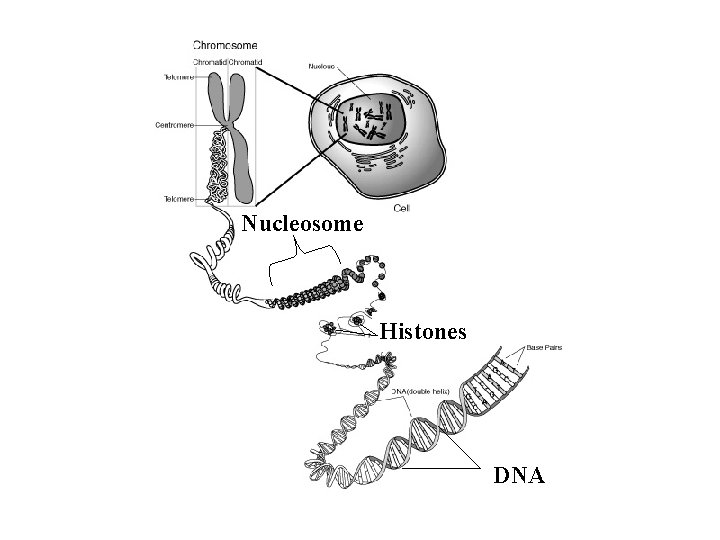
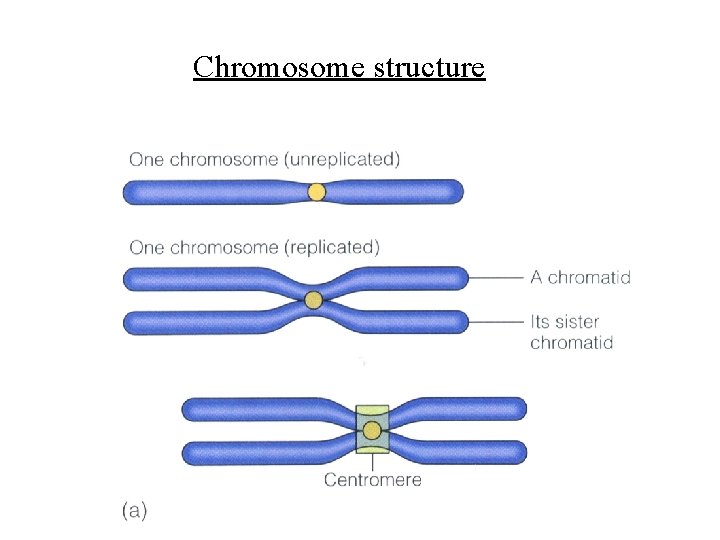
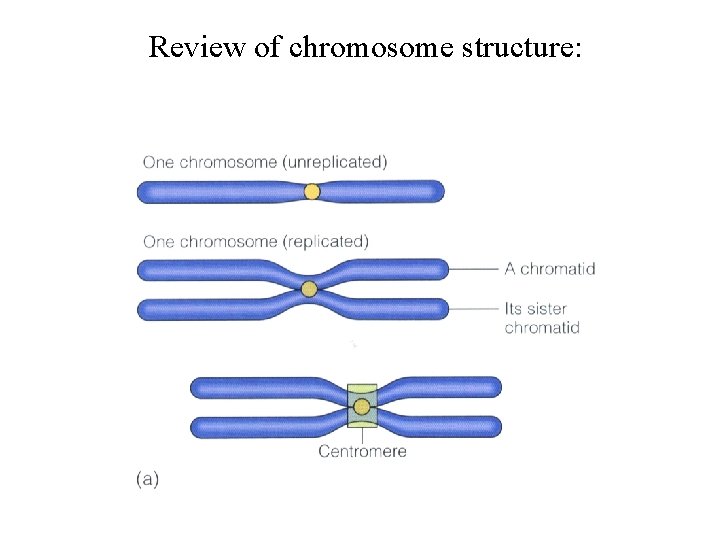
Chromosomes • Chromosomes are rod-like structures that consist of DNA and proteins called histones.
Nucleosome Histones DNA
Chromosome structure
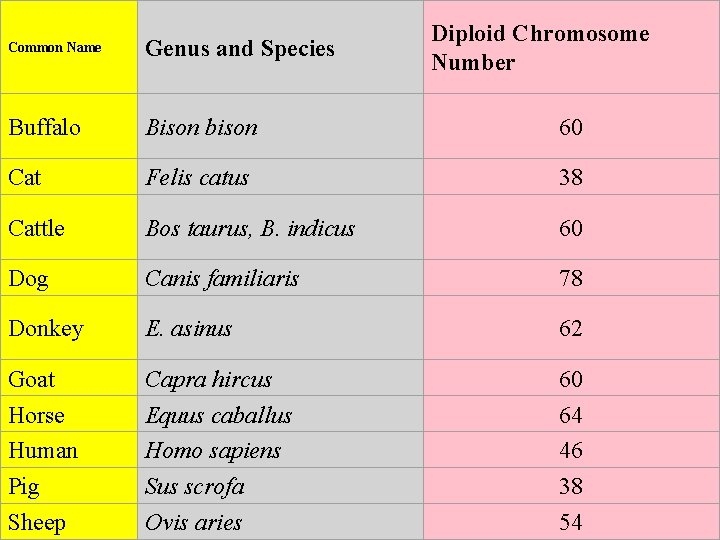
What relationship exists between chromosome number and a species complexity?
Diploid Chromosome Number Common Name Genus and Species Buffalo Bison bison 60 Cat Felis catus 38 Cattle Bos taurus, B. indicus 60 Dog Canis familiaris 78 Donkey E. asinus 62 Goat Horse Human Pig Sheep Capra hircus Equus caballus Homo sapiens Sus scrofa Ovis aries 60 64 46 38 54
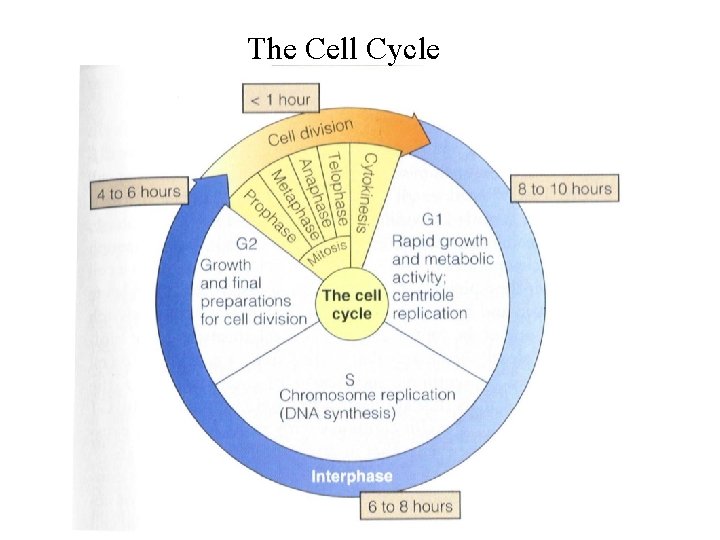
The Cell Cycle
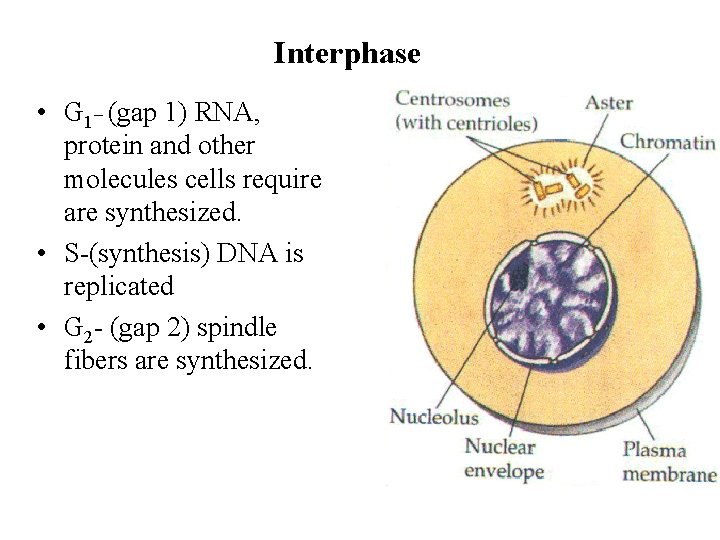
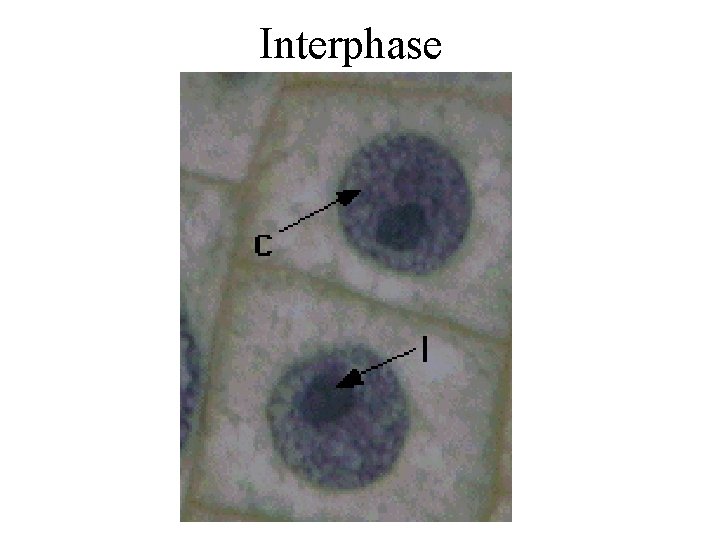
Interphase • G 1_ (gap 1) RNA, protein and other molecules cells require are synthesized. • S-(synthesis) DNA is replicated • G 2 - (gap 2) spindle fibers are synthesized.
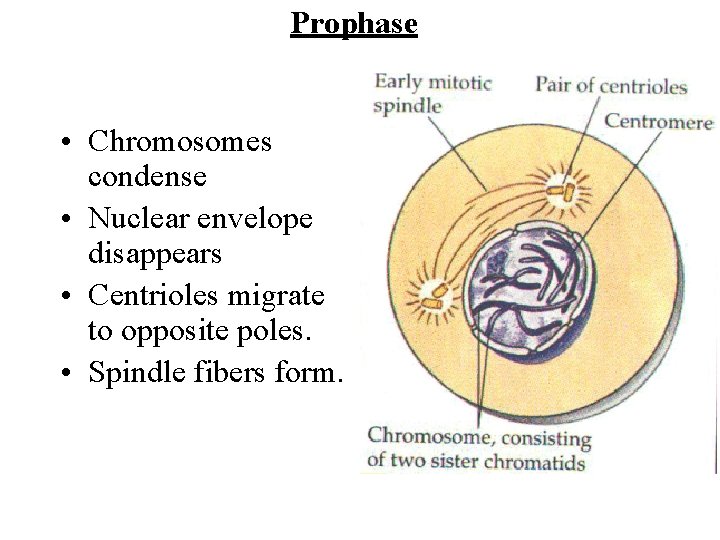
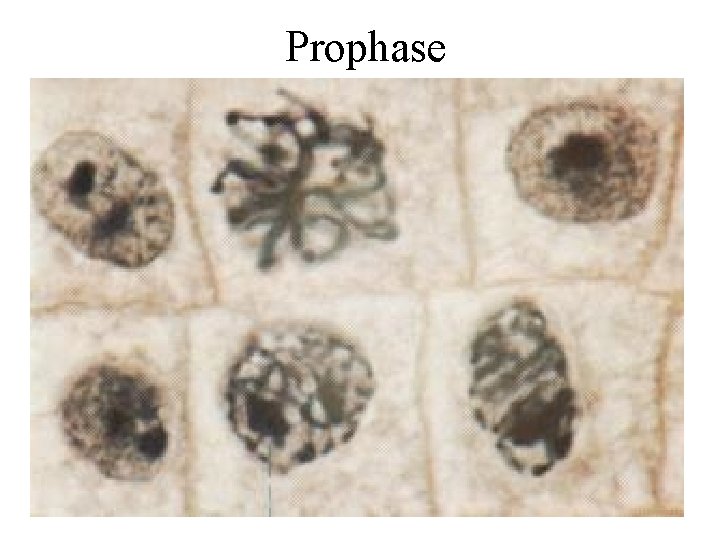
Prophase • Chromosomes condense • Nuclear envelope disappears • Centrioles migrate to opposite poles. • Spindle fibers form.
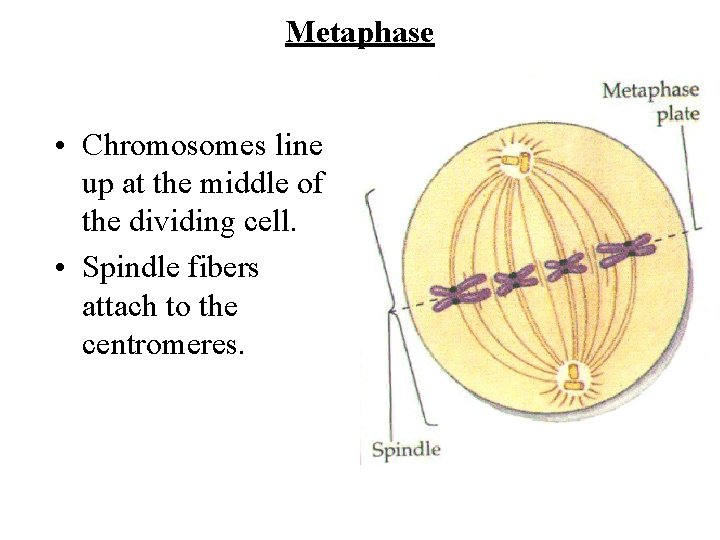
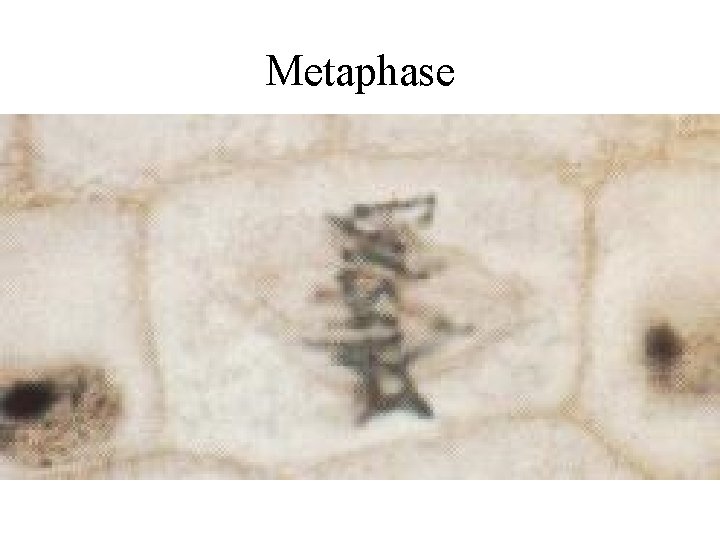
Metaphase • Chromosomes line up at the middle of the dividing cell. • Spindle fibers attach to the centromeres.
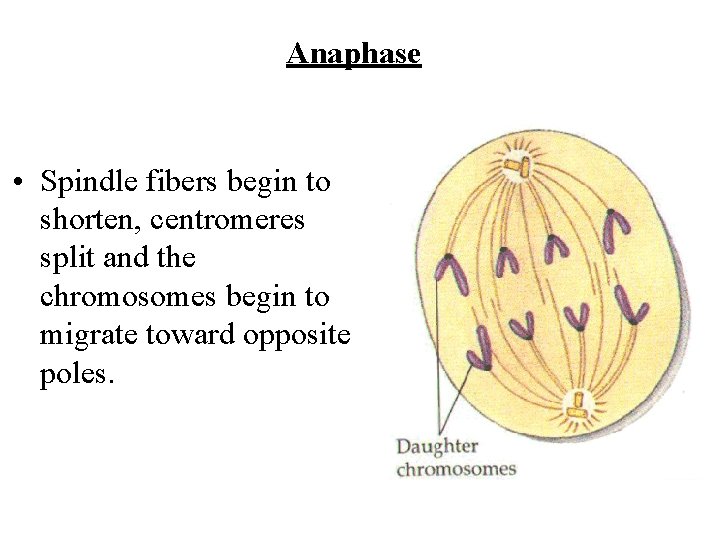
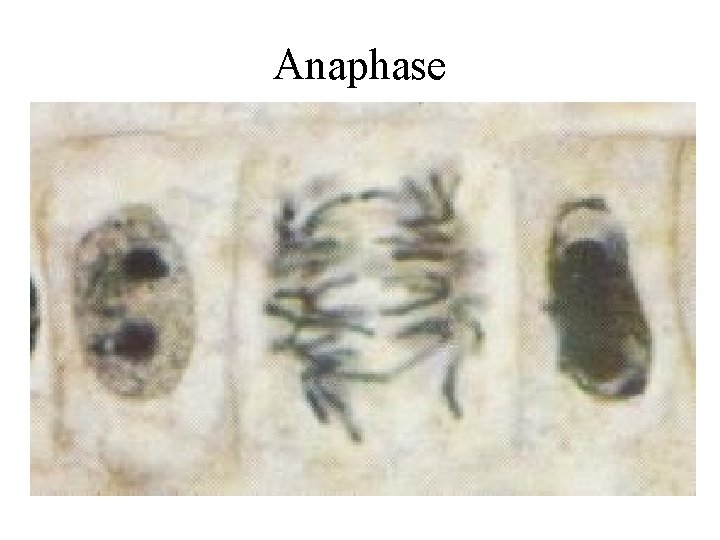
Anaphase • Spindle fibers begin to shorten, centromeres split and the chromosomes begin to migrate toward opposite poles.
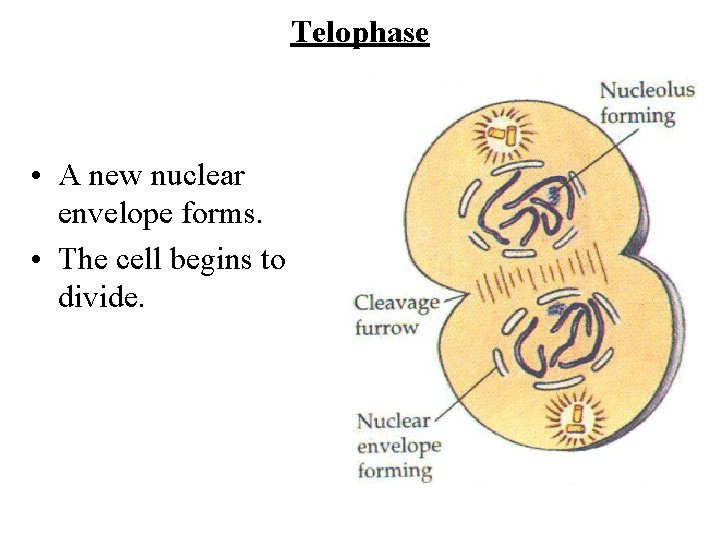
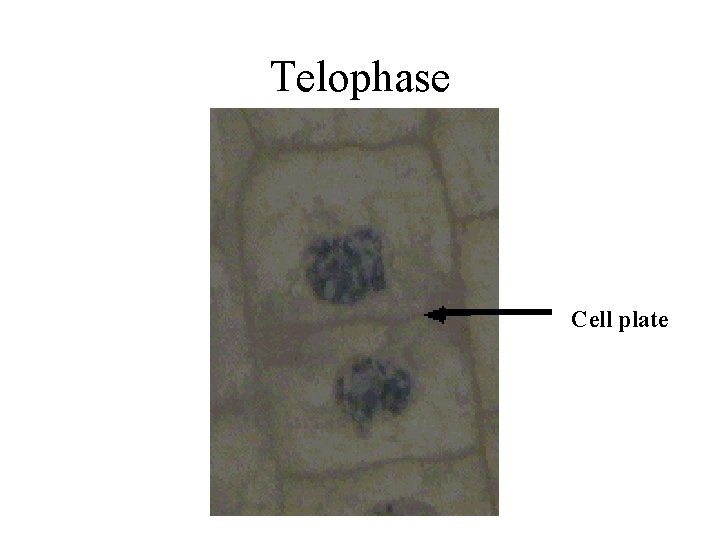
Telophase • A new nuclear envelope forms. • The cell begins to divide.
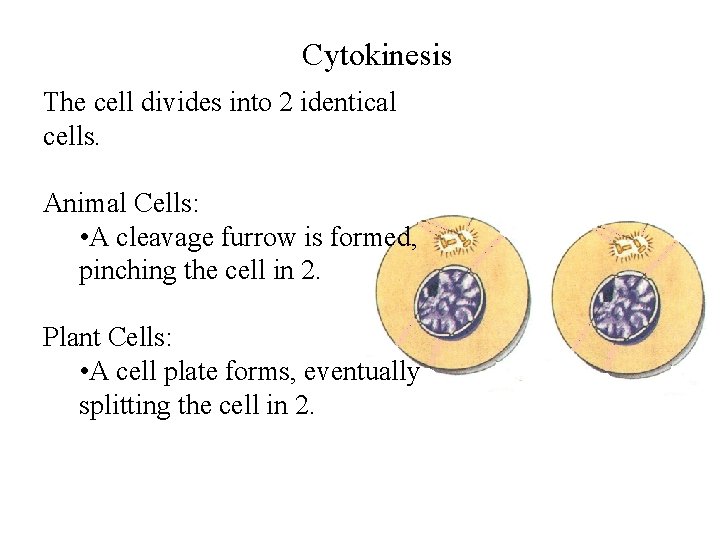
Cytokinesis The cell divides into 2 identical cells. Animal Cells: • A cleavage furrow is formed, pinching the cell in 2. Plant Cells: • A cell plate forms, eventually splitting the cell in 2.
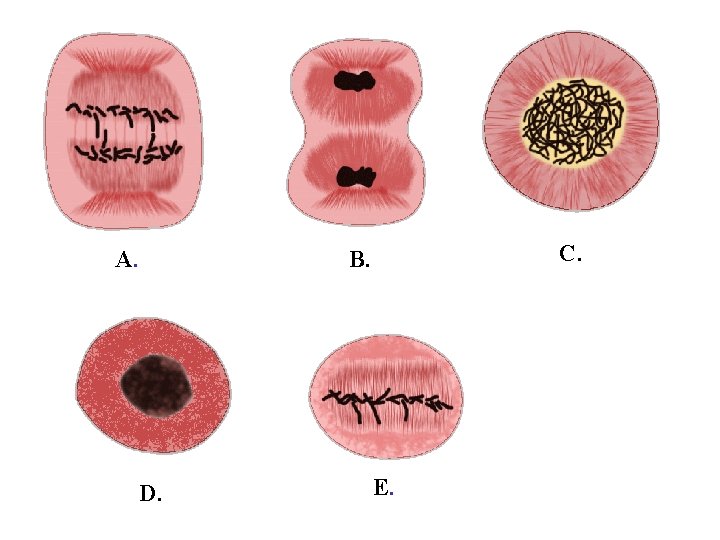
A. C. B. D. E.
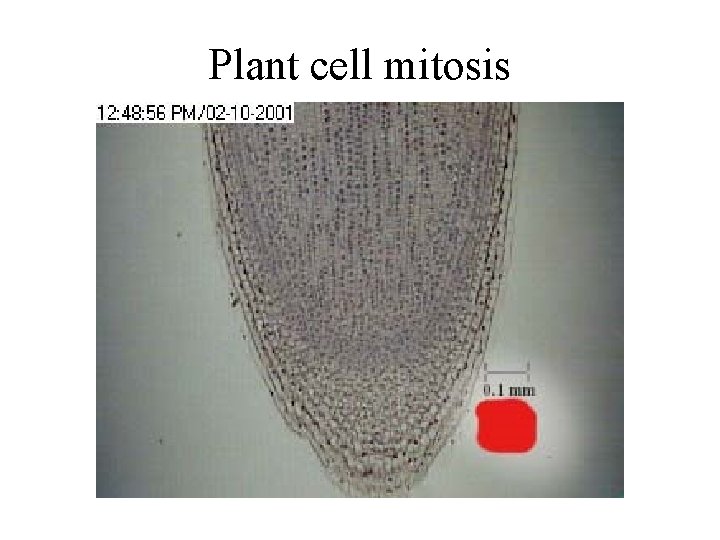
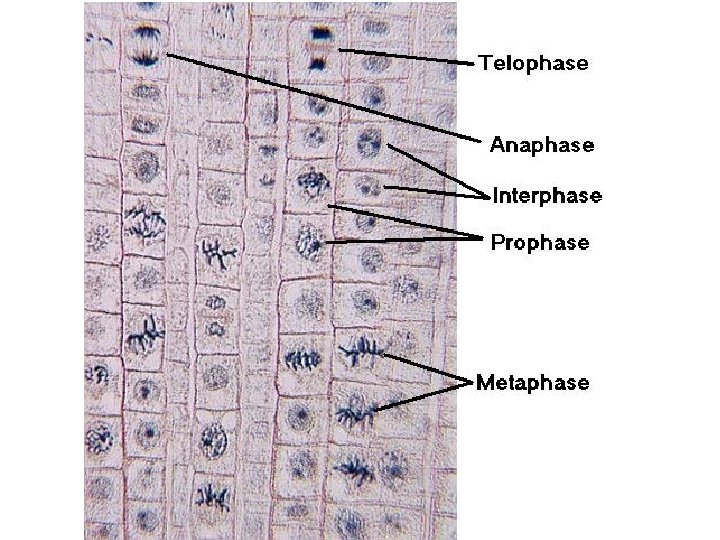
Plant cell mitosis
Interphase
Prophase
Metaphase
Anaphase
Telophase Cell plate
Review of chromosome structure:
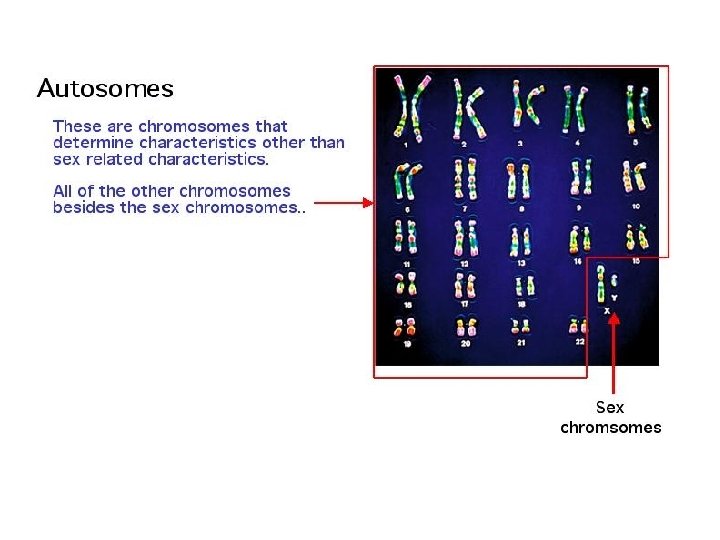
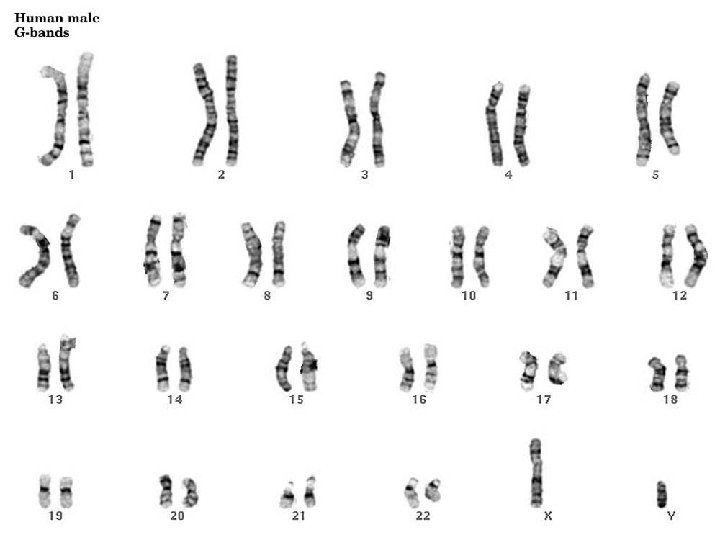
• • • Autosomes and sex chromosomes Autosomes are the chromosomes that determine characteristics other than those that are sex related. There are 22 pairs of human autosomes in each body cell and 22 unpaired autosomes in each sex cell. Autosomes occur in homologous pairs i. e. pairs are structurally identical. Sex chromosome determine sex –related characteristics e. g sex organs. In humans there is one pair of sex chromosomes in each body cell, and a single sex chromosome in each sex cell.
• Diploid cells are body cells, which, have paired chromosomes. • Haploid cells are sex cells, which, have unpaired chromosomes. • The diploid number of chromosomes is referred to as 2 n and the haploid number of chromosomes is referred to as n. • Since humans have 23 pairs of chromsomes in each body cell (22 autosomes and 1 pair of sex chromosomes) , 2 n = 46. • Since humans have 23 unpaired chromosomes in each sex cell, n=23.
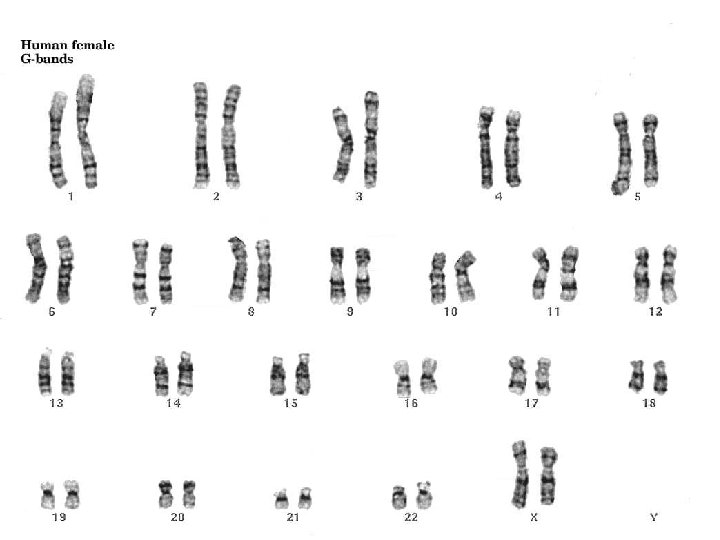
A karyotype is a picture of chromosomes that have been arranged in order based on size and banding patterns.