
Cell Processes All About Cells l Cells are
Cell Processes
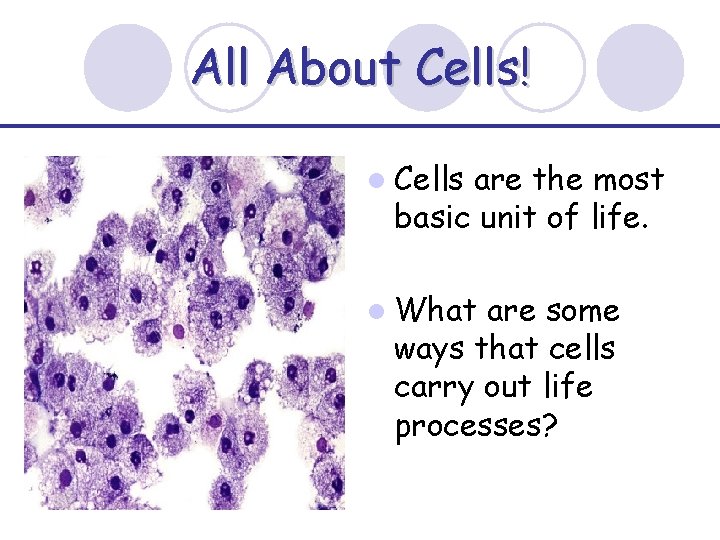
All About Cells! l Cells are the most basic unit of life. l What are some ways that cells carry out life processes?
Process: Maintaining Homeostasis l Living cells can only function within a narrow range of such conditions as temperature, p. H , ion concentrations, and nutrient availability. l Organisms need a way to maintaining internal stability in spite of environmental change.
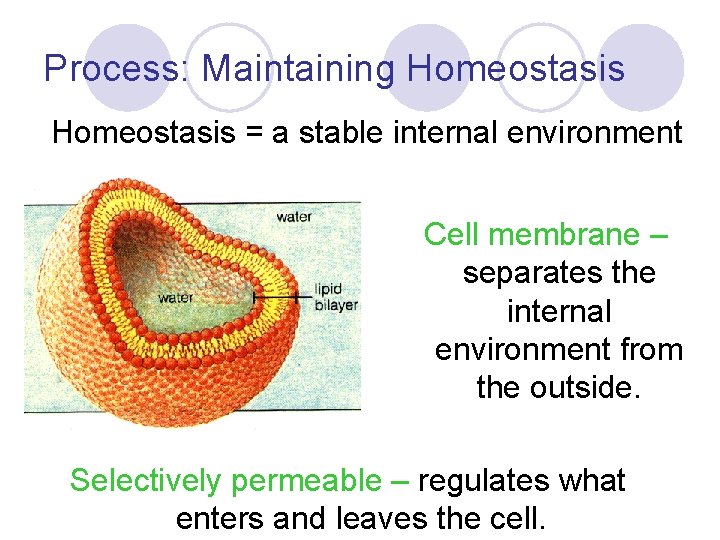
Process: Maintaining Homeostasis = a stable internal environment Cell membrane – separates the internal environment from the outside. Selectively permeable – regulates what enters and leaves the cell.
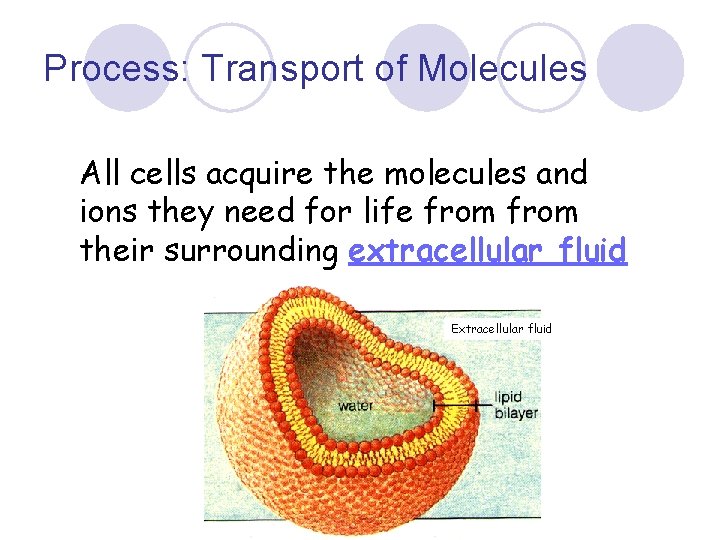
Process: Transport of Molecules All cells acquire the molecules and ions they need for life from their surrounding extracellular fluid Extracellular fluid
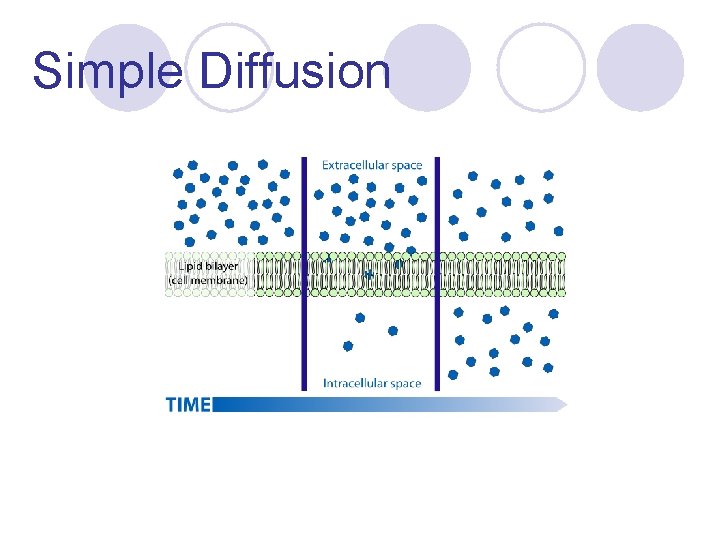
Simple Diffusion
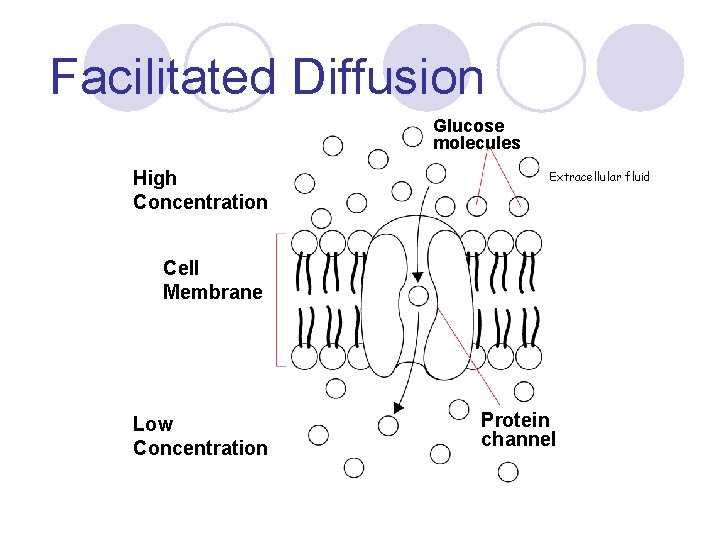
Facilitated Diffusion Glucose molecules High Concentration Extracellular fluid Cell Membrane Low Concentration Protein channel
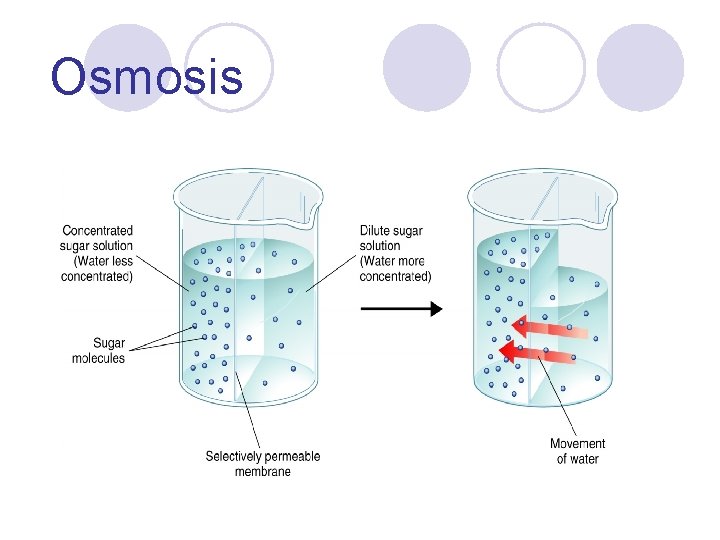
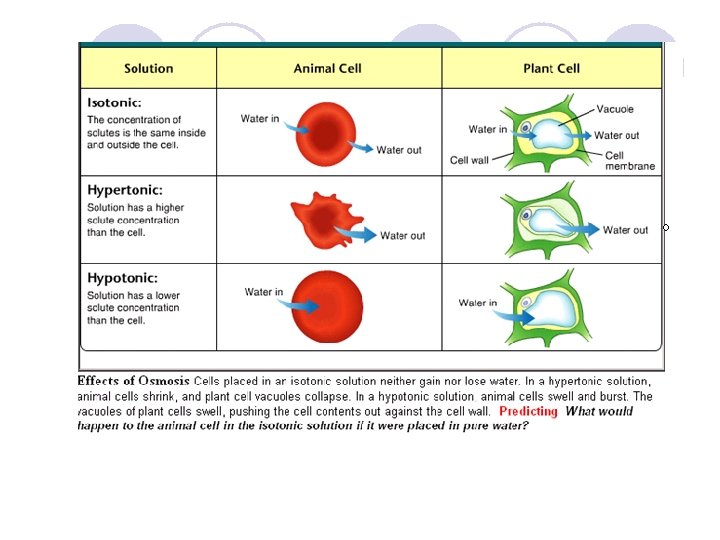
Osmosis
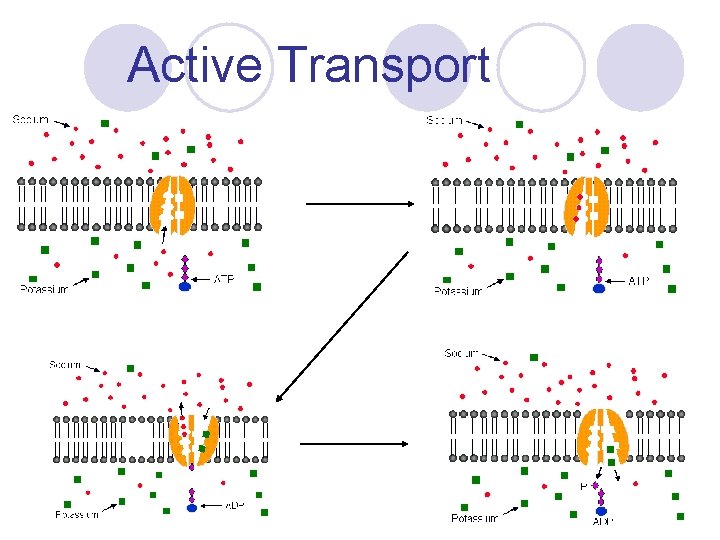
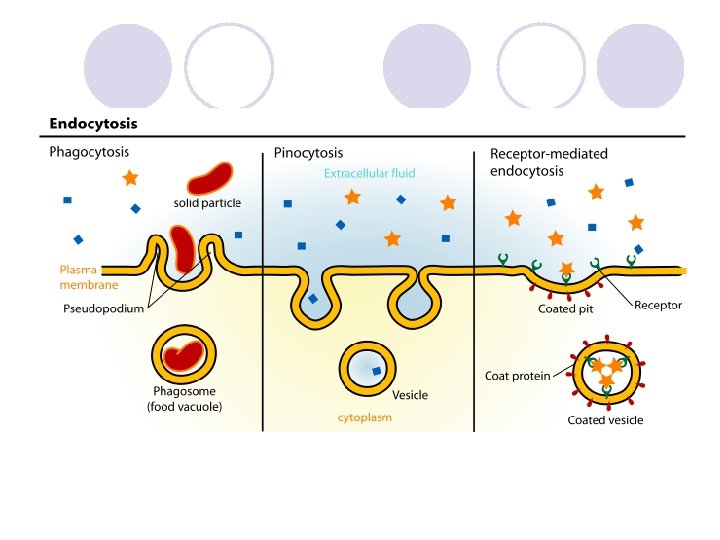
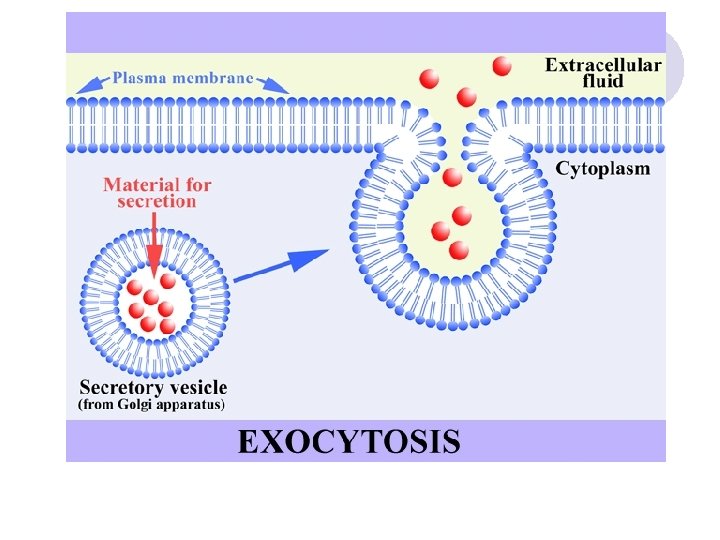
Active Transport
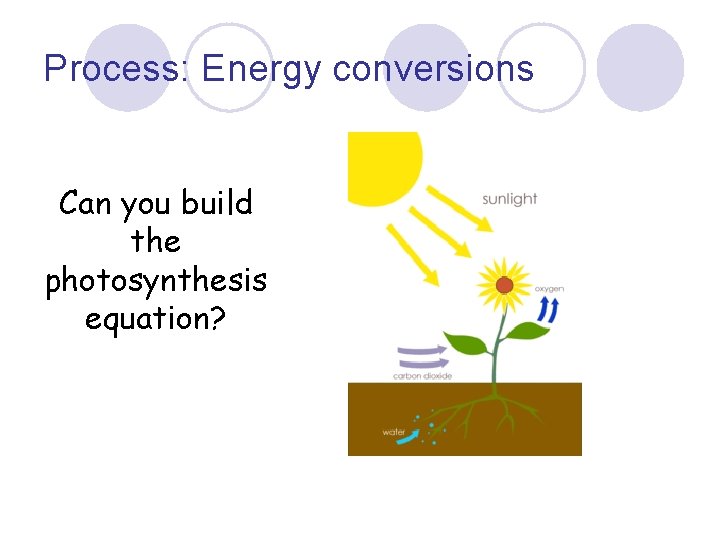
Process: Energy conversions Can you build the photosynthesis equation?
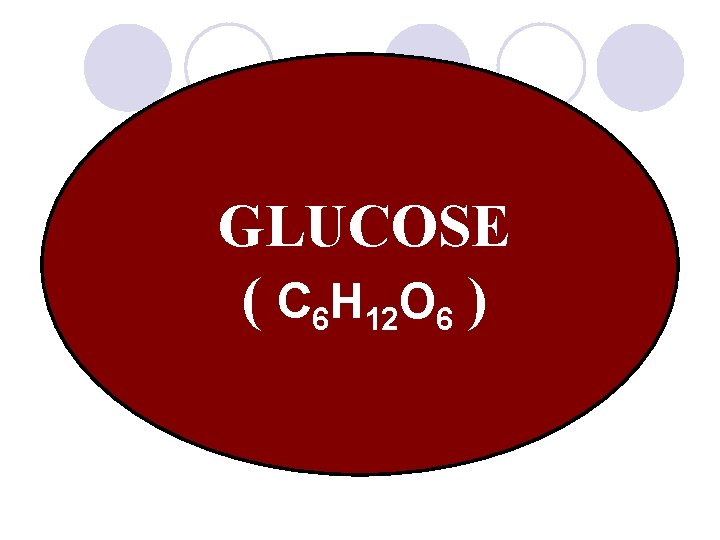
GLUCOSE ( C 6 H 12 O 6 )
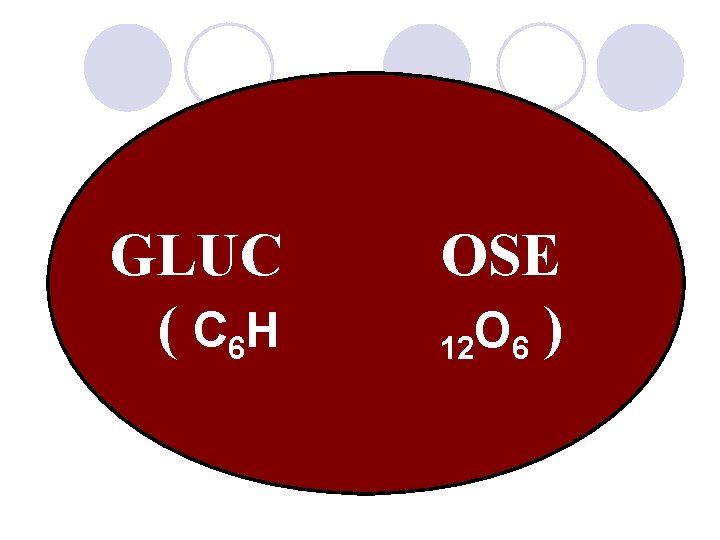
GLUC ( C 6 H OSE 12 O 6 )
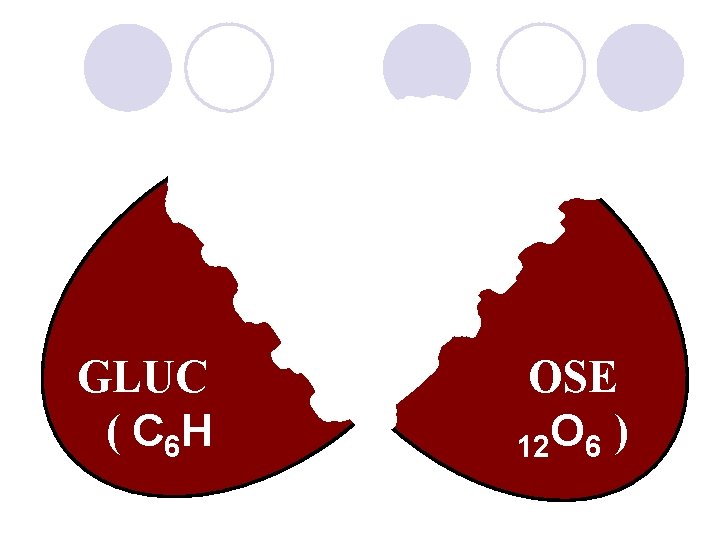
GLUC ( C 6 H OSE 12 O 6 )
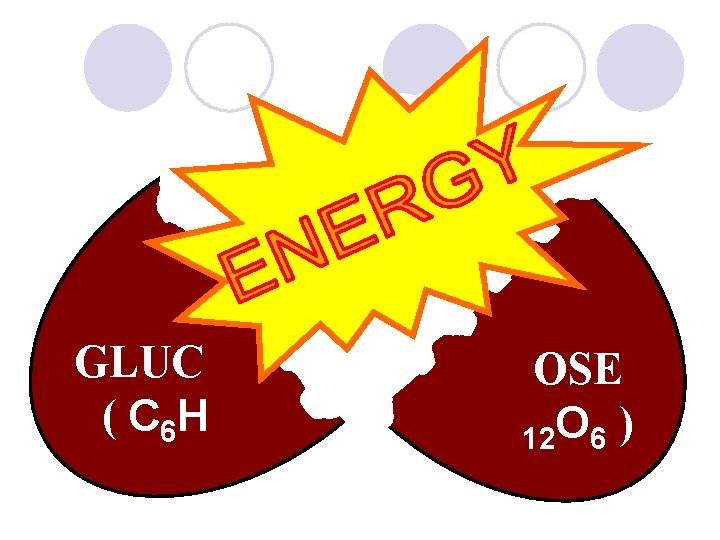
GLUC ( C 6 H OSE 12 O 6 )
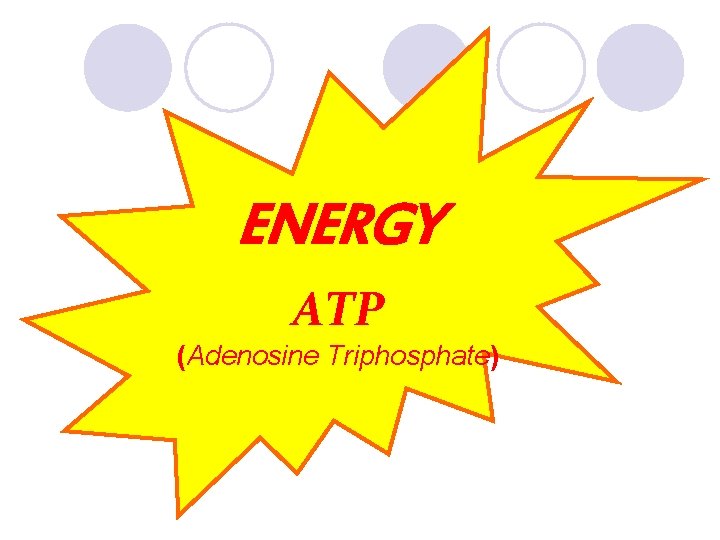
ENERGY ATP (Adenosine Triphosphate)
Can you build the equation for cellular respiration?
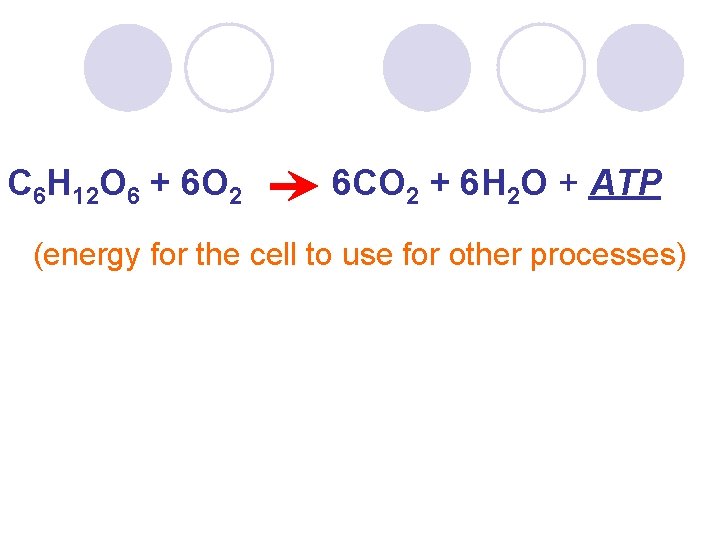
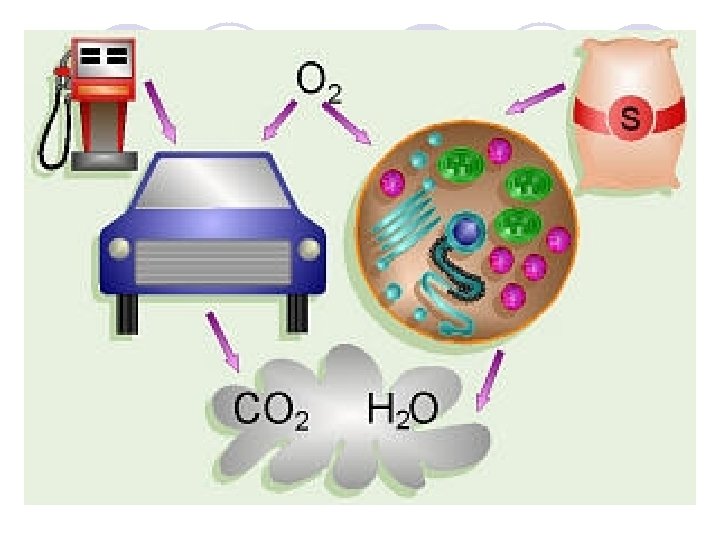
C 6 H 12 O 6 + 6 O 2 6 CO 2 + 6 H 2 O + ATP (energy for the cell to use for other processes)
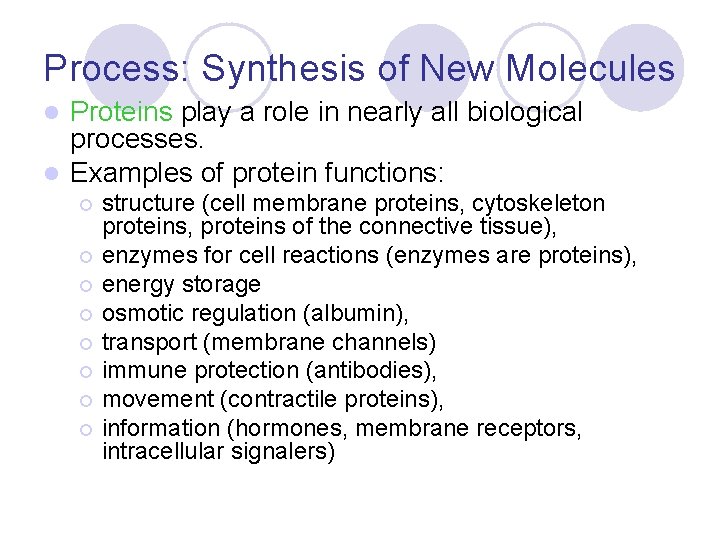
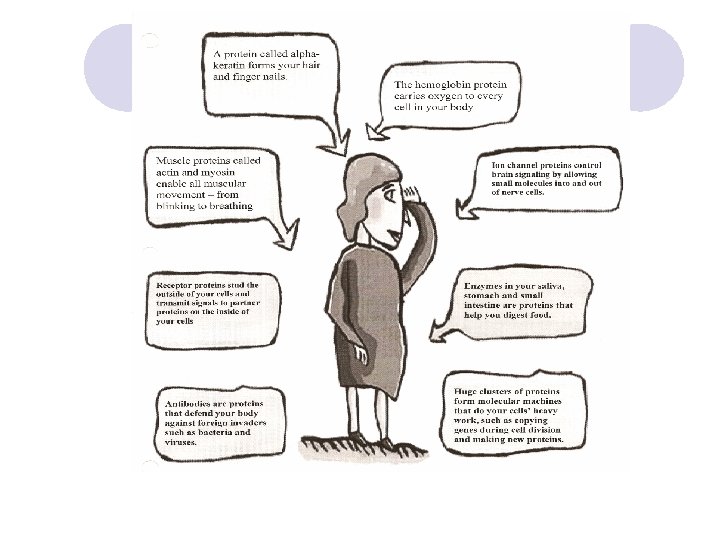
Process: Synthesis of New Molecules Proteins play a role in nearly all biological processes. l Examples of protein functions: l structure (cell membrane proteins, cytoskeleton proteins, proteins of the connective tissue), ¡ enzymes for cell reactions (enzymes are proteins), ¡ energy storage ¡ osmotic regulation (albumin), ¡ transport (membrane channels) ¡ immune protection (antibodies), ¡ movement (contractile proteins), ¡ information (hormones, membrane receptors, intracellular signalers) ¡
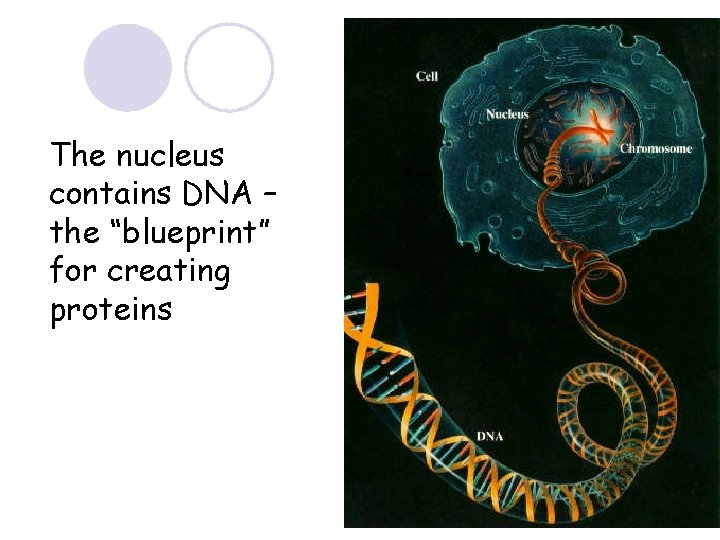
The nucleus contains DNA – the “blueprint” for creating proteins
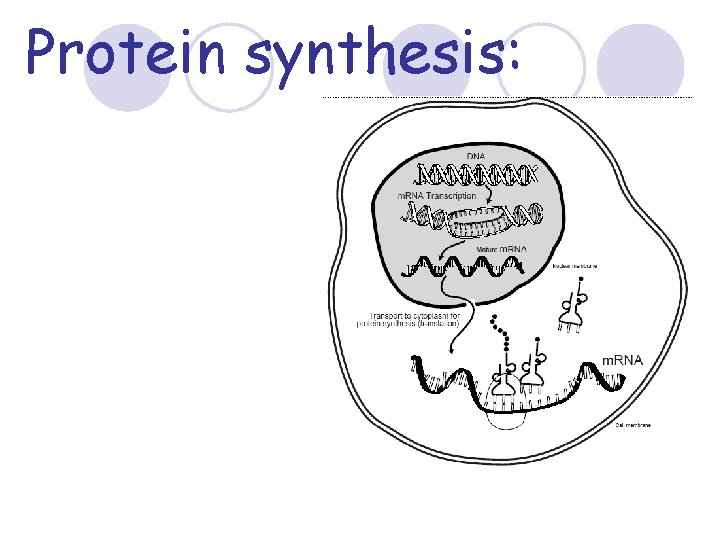
Protein synthesis:
- Slides: 25