
Cell Physiology Cell Structure And Function 2 Distinguish
- Slides: 22
Cell Physiology: Cell Structure And Function
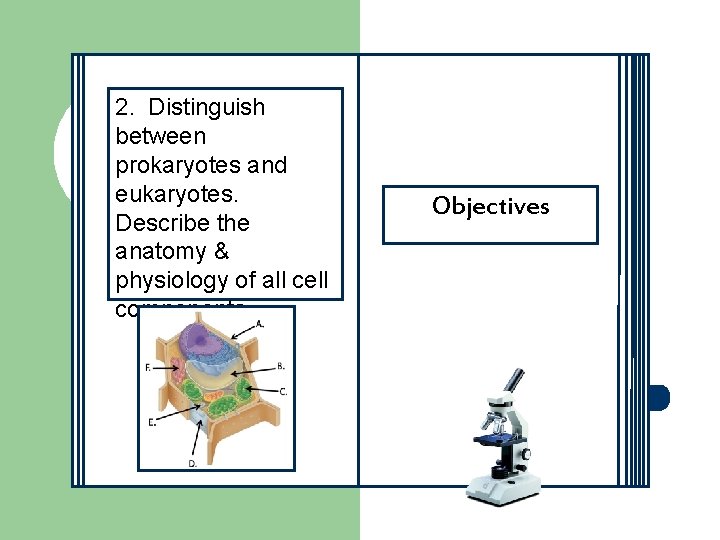
2. Distinguish between prokaryotes and eukaryotes. Describe the anatomy & physiology of all cell components. Identify and explain the Objectives various cell processes that 1. take Explain cell placethe with theory andtothe regards cell researchers boundaries. contributions.
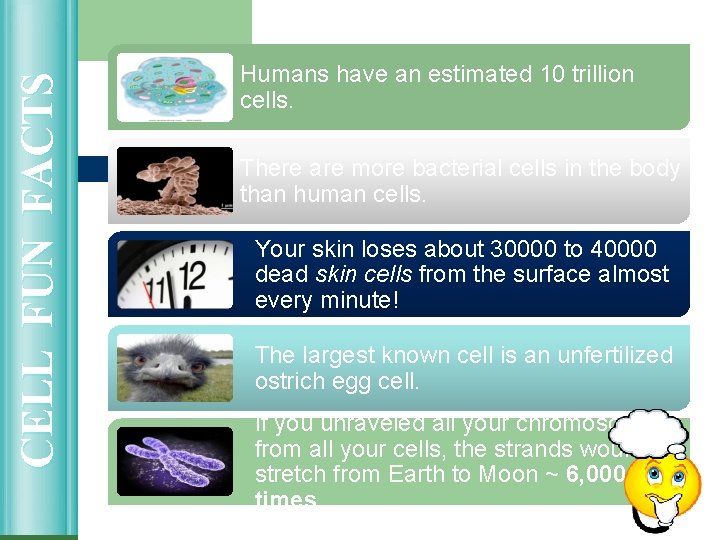
CELL FUN FACTS Humans have an estimated 10 trillion cells. There are more bacterial cells in the body than human cells. Your skin loses about 30000 to 40000 dead skin cells from the surface almost every minute! The largest known cell is an unfertilized ostrich egg cell. If you unraveled all your chromosomes from all your cells, the strands would stretch from Earth to Moon ~ 6, 000 times
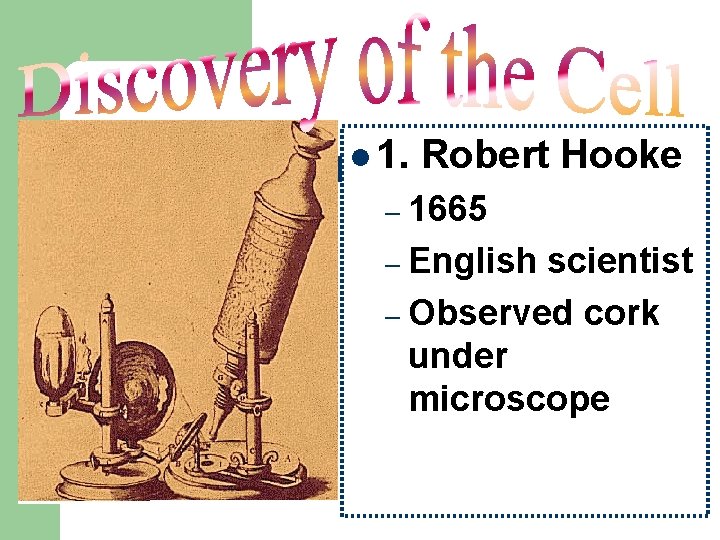
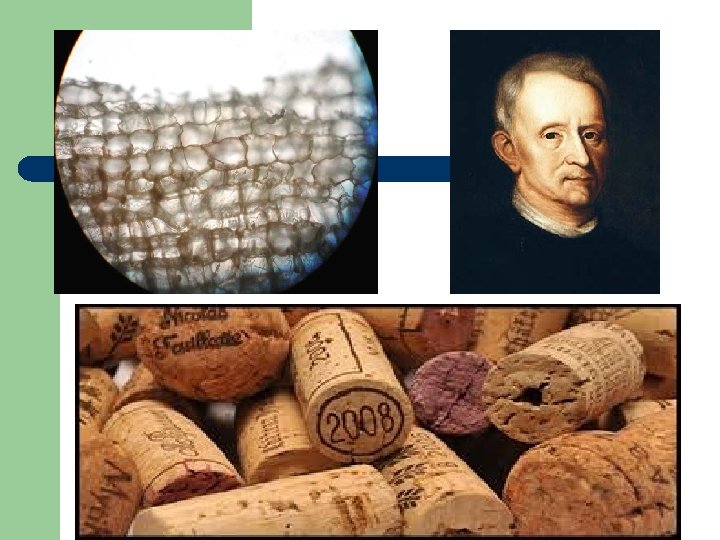
l 1. Robert Hooke – 1665 – English scientist – Observed cork under microscope
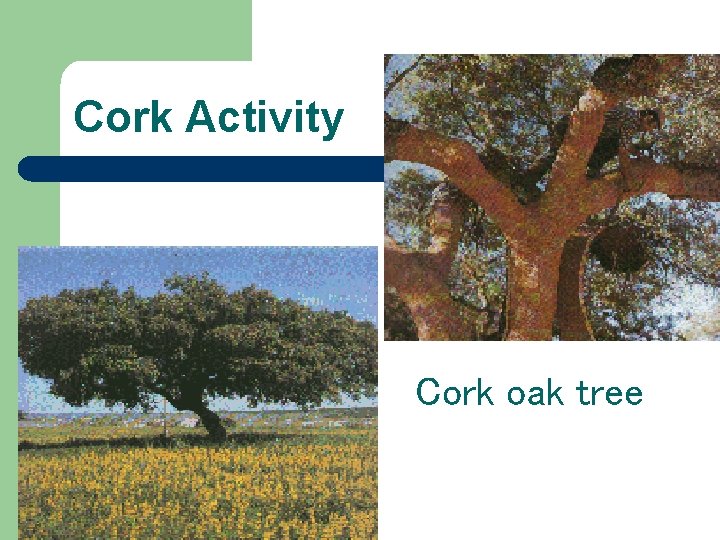
Cork Activity Cork oak tree
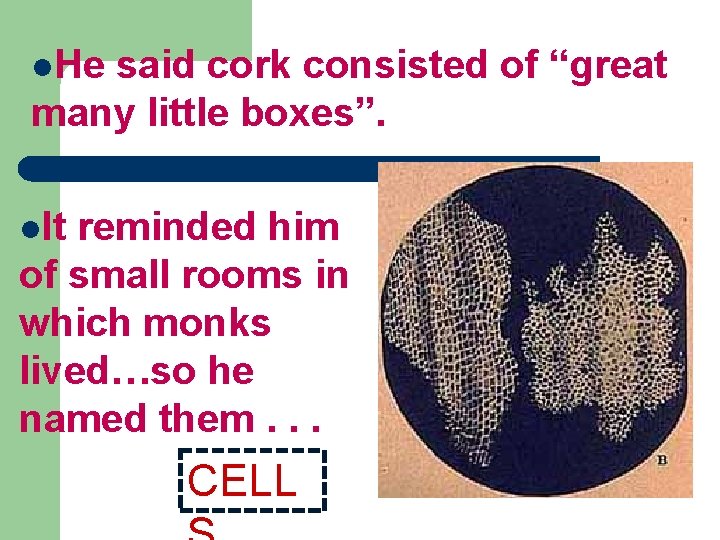
l. He said cork consisted of “great many little boxes”. l. It reminded him of small rooms in which monks lived…so he named them. . . CELL
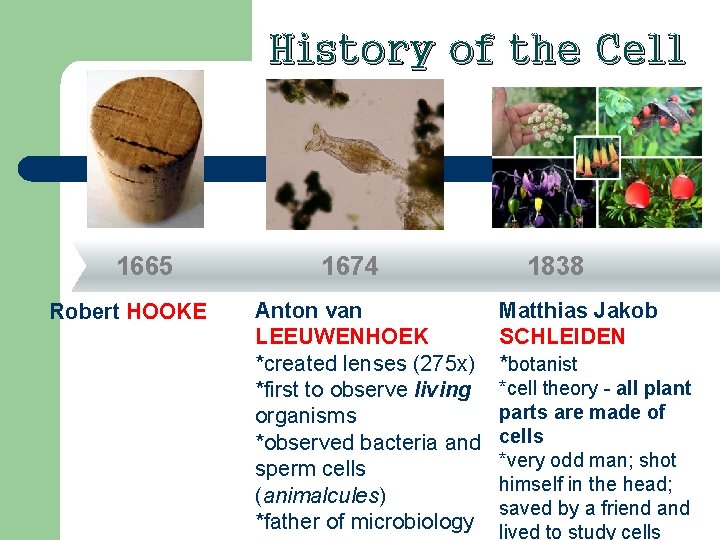
History of the Cell 1665 Robert HOOKE 1674 Anton van LEEUWENHOEK *created lenses (275 x) *first to observe living organisms *observed bacteria and sperm cells (animalcules) *father of microbiology 1838 Matthias Jakob SCHLEIDEN *botanist *cell theory - all plant parts are made of cells *very odd man; shot himself in the head; saved by a friend and lived to study cells
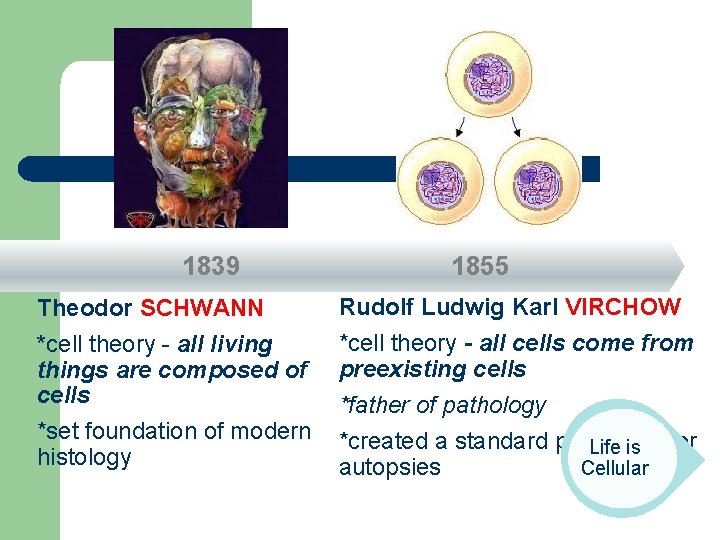
1839 1855 Theodor SCHWANN Rudolf Ludwig Karl VIRCHOW *cell theory - all living things are composed of cells *set foundation of modern histology *cell theory - all cells come from preexisting cells *father of pathology *created a standard procedure Life is for autopsies Cellular
Video from: http: //ed. ted. com/lessons/the-wacky-history-of-cell-theory
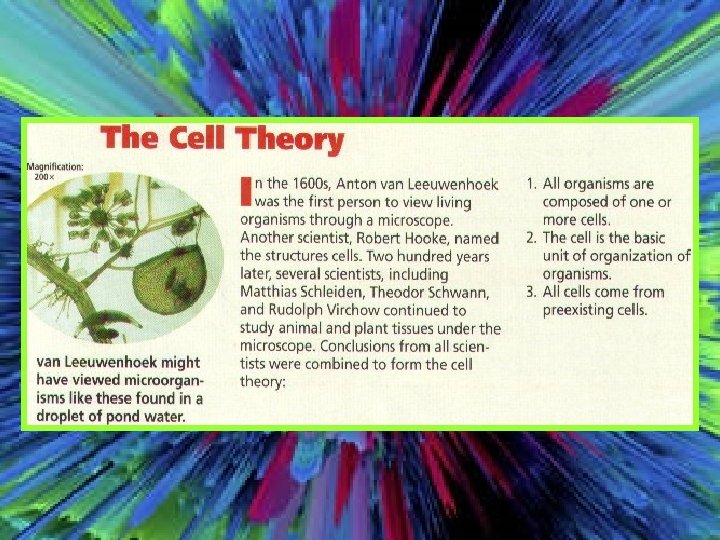
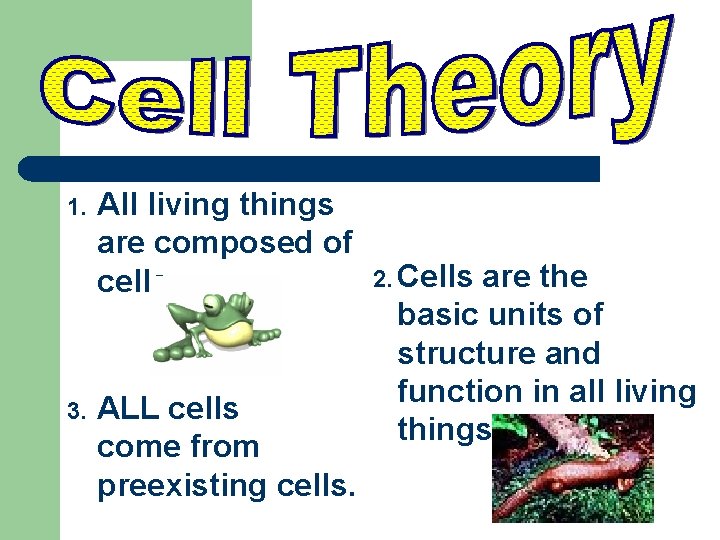
1. 3. All living things are composed of cells ALL cells come from preexisting cells. 2. Cells are the basic units of structure and function in all living things.
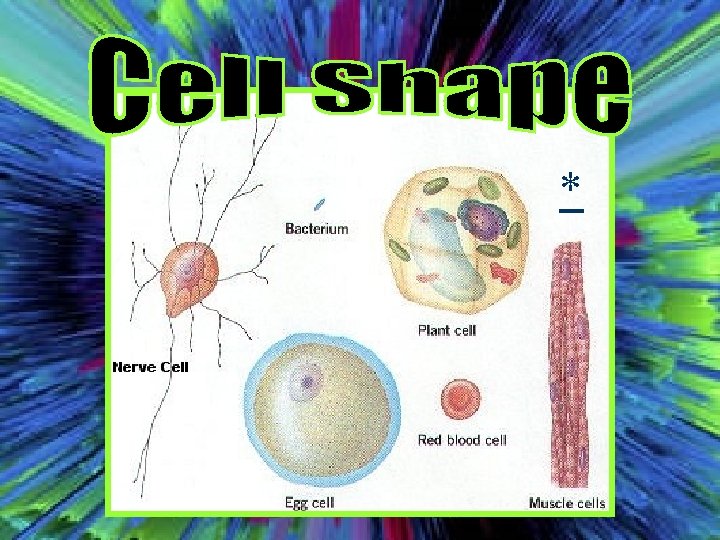
1. SHAPE – • The shape of the cell is based on the function the cell needs to perform. Structure = Function • Different types of cells have different shapes.
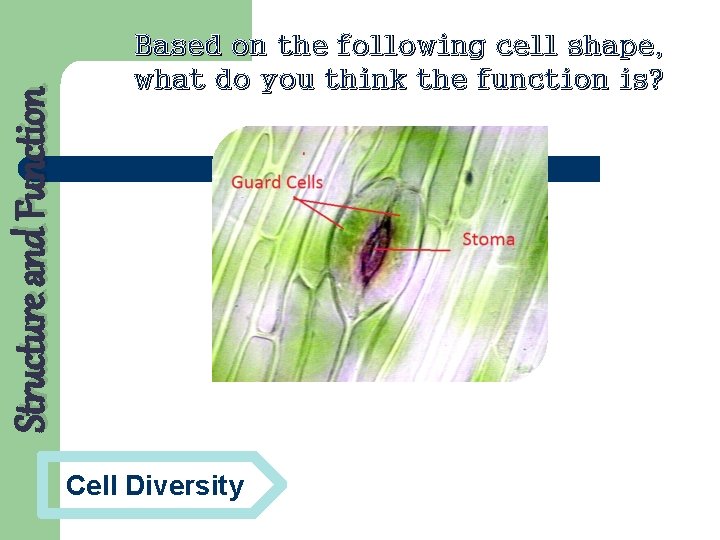
Structure and Function Based on the following cell shape, what do you think the function is? Cell Diversity
2. SIZE – Cells vary in size from macroscopic to microscopic Cell Size Demo: See lab handout
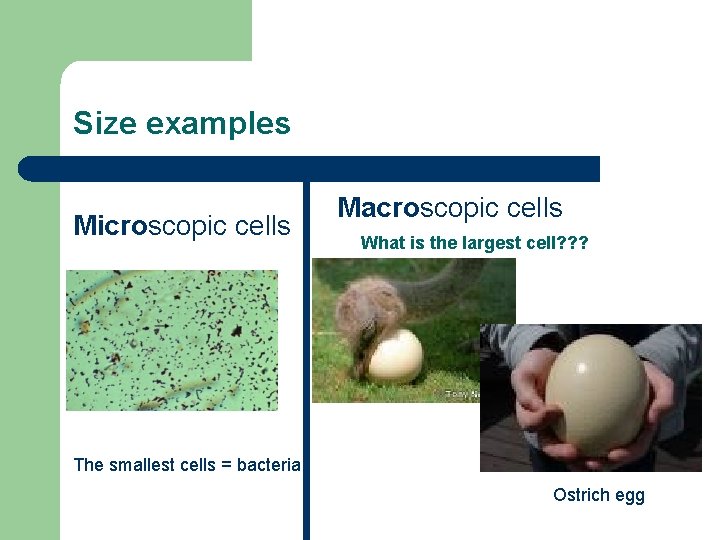
Size examples Microscopic cells Macroscopic cells What is the largest cell? ? ? The smallest cells = bacteria Ostrich egg
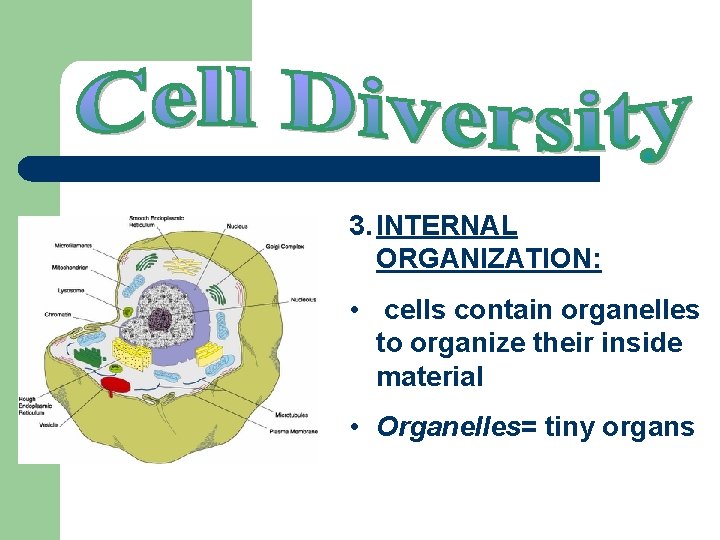
3. INTERNAL ORGANIZATION: • cells contain organelles to organize their inside material • Organelles= tiny organs
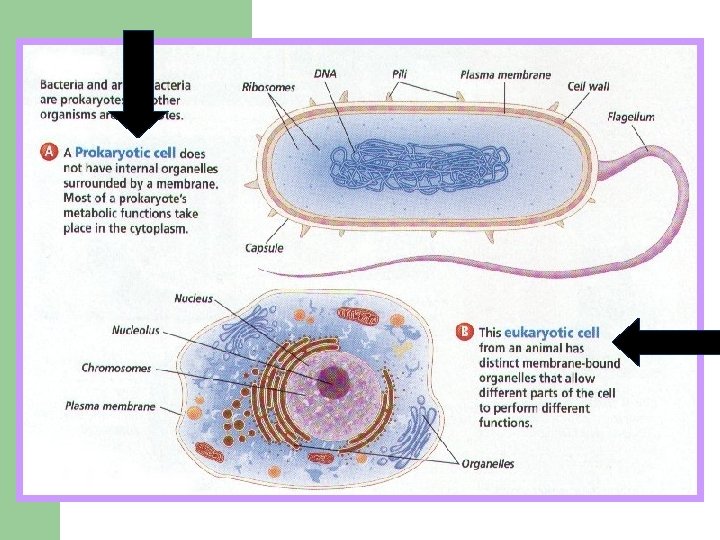
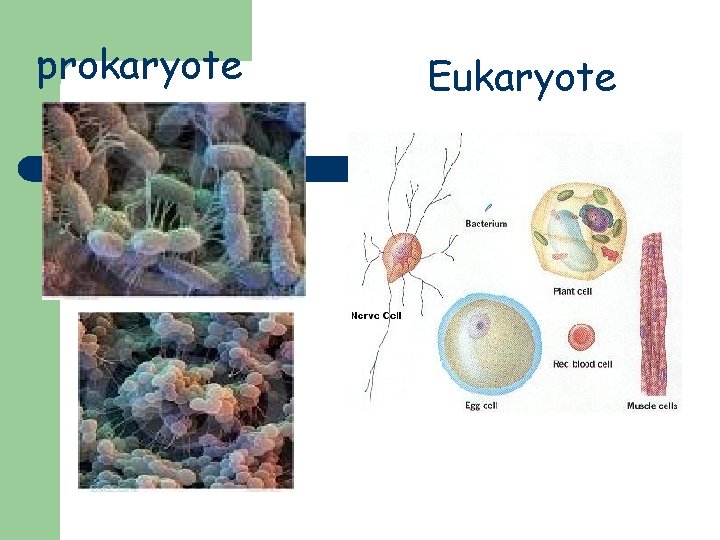
prokaryote Eukaryote
Prokaryotes vs. Eukaryotes Chart Fill in what you know with a partner. Have at least 5 points for each and an example. You may use your notes and textbook.