
Cell Organelles Structure and Function of the Cell
- Slides: 18
Cell Organelles Structure and Function of the Cell
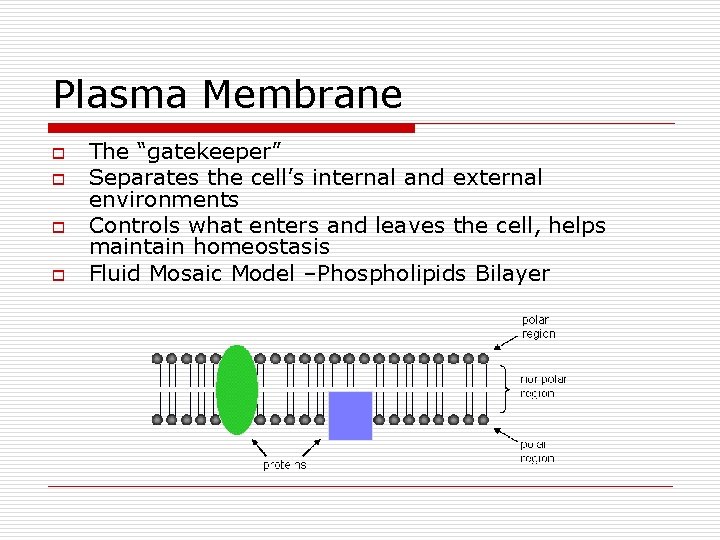
Plasma Membrane o o The “gatekeeper” Separates the cell’s internal and external environments Controls what enters and leaves the cell, helps maintain homeostasis Fluid Mosaic Model –Phospholipids Bilayer
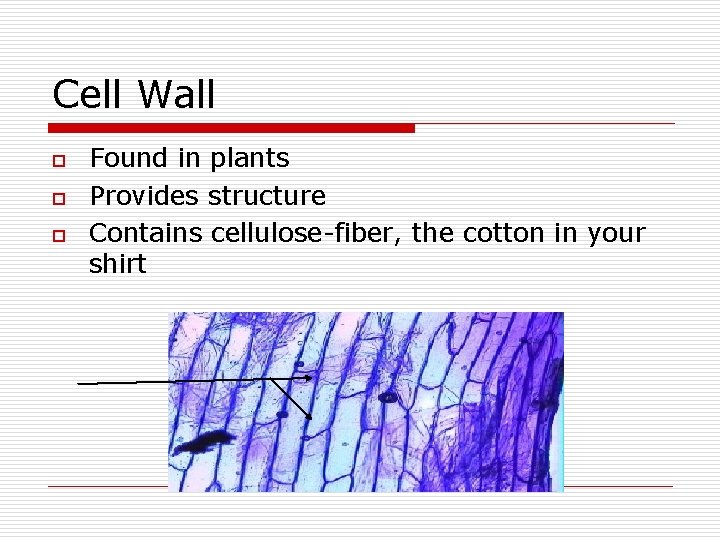
Cell Wall o o o Found in plants Provides structure Contains cellulose-fiber, the cotton in your shirt
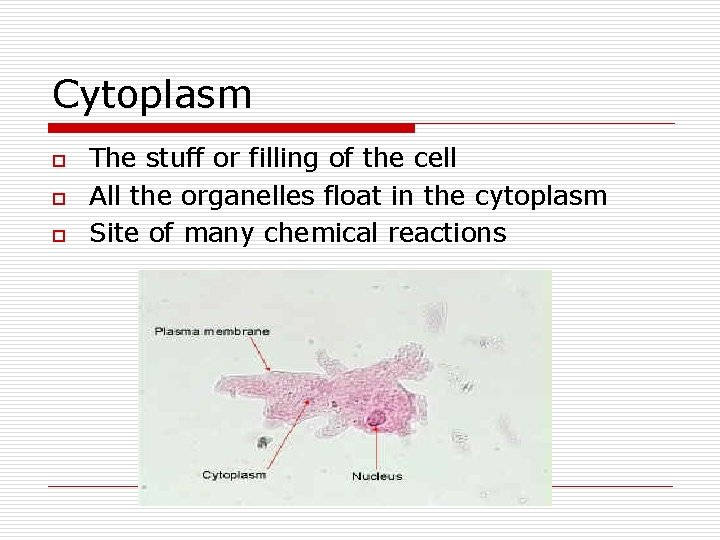
Cytoplasm o o o The stuff or filling of the cell All the organelles float in the cytoplasm Site of many chemical reactions
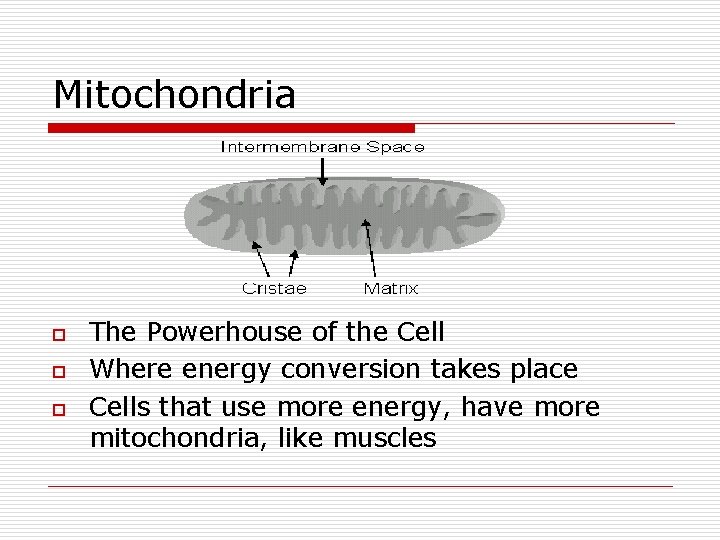
Mitochondria o o o The Powerhouse of the Cell Where energy conversion takes place Cells that use more energy, have more mitochondria, like muscles
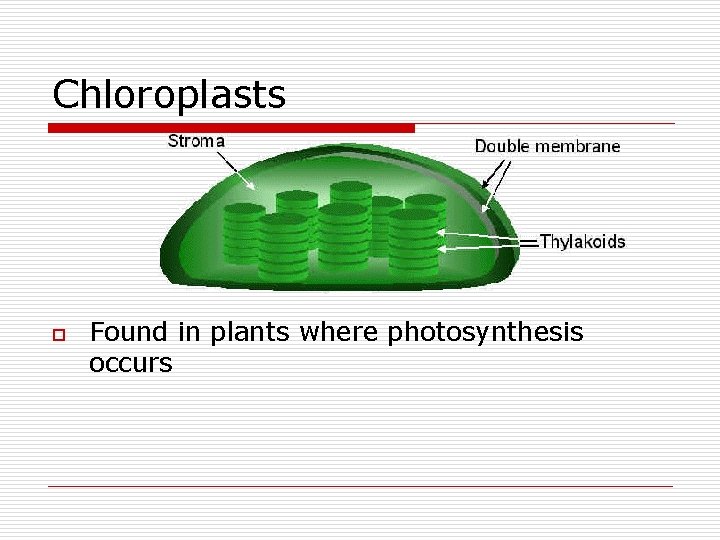
Chloroplasts o Found in plants where photosynthesis occurs
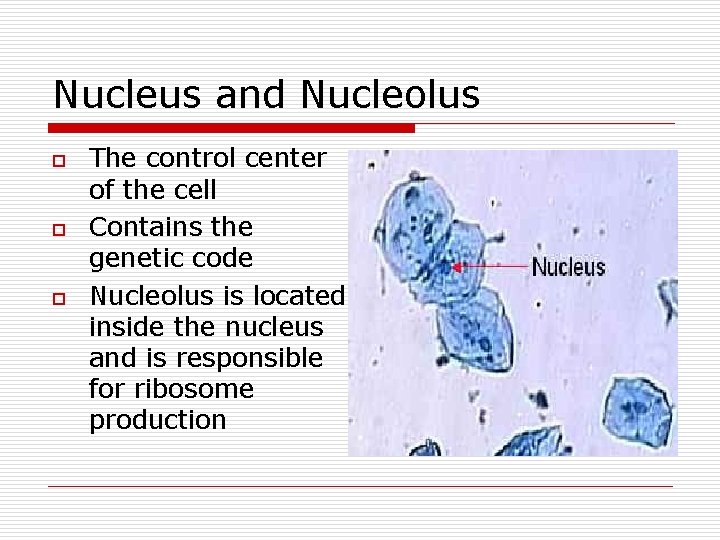
Nucleus and Nucleolus o o o The control center of the cell Contains the genetic code Nucleolus is located inside the nucleus and is responsible for ribosome production
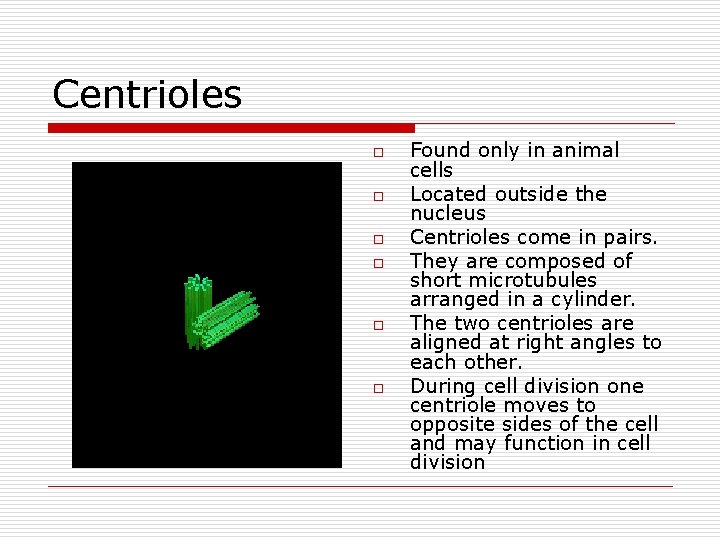
Centrioles o o o Found only in animal cells Located outside the nucleus Centrioles come in pairs. They are composed of short microtubules arranged in a cylinder. The two centrioles are aligned at right angles to each other. During cell division one centriole moves to opposite sides of the cell and may function in cell division
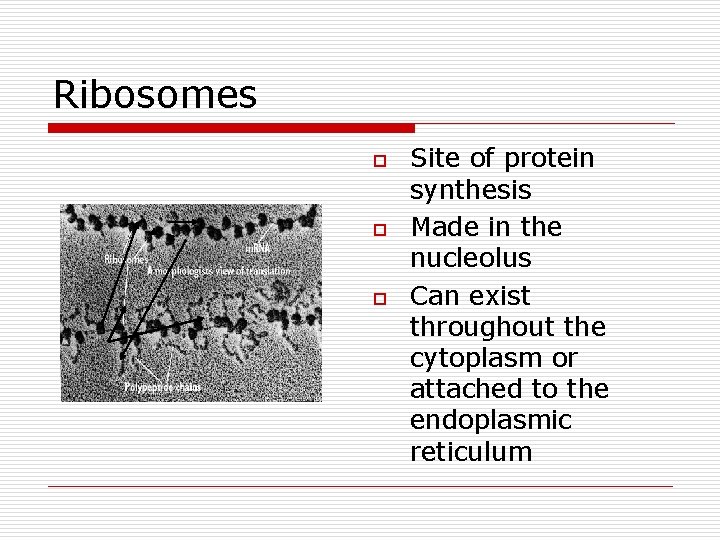
Ribosomes o o o Site of protein synthesis Made in the nucleolus Can exist throughout the cytoplasm or attached to the endoplasmic reticulum
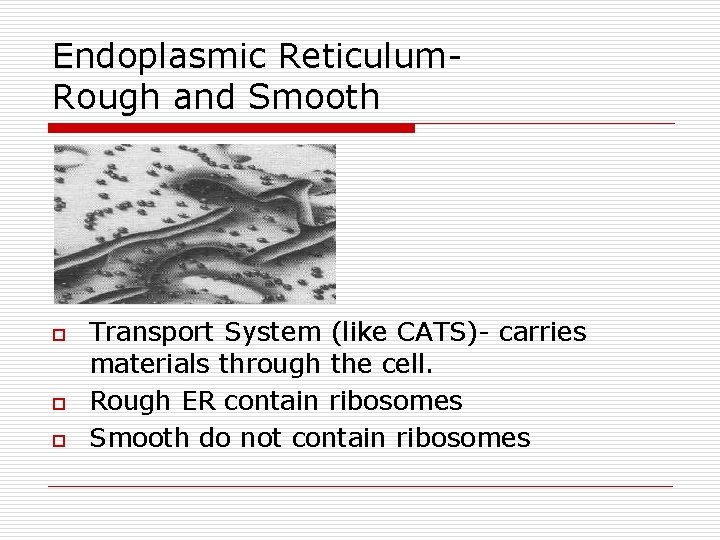
Endoplasmic Reticulum. Rough and Smooth o o o Transport System (like CATS)- carries materials through the cell. Rough ER contain ribosomes Smooth do not contain ribosomes
Lysosomes o o o Called “suicide sacs”- membranes filled with digestive enzymes Destroys worn out parts of the cell interior The Pac man of the cell
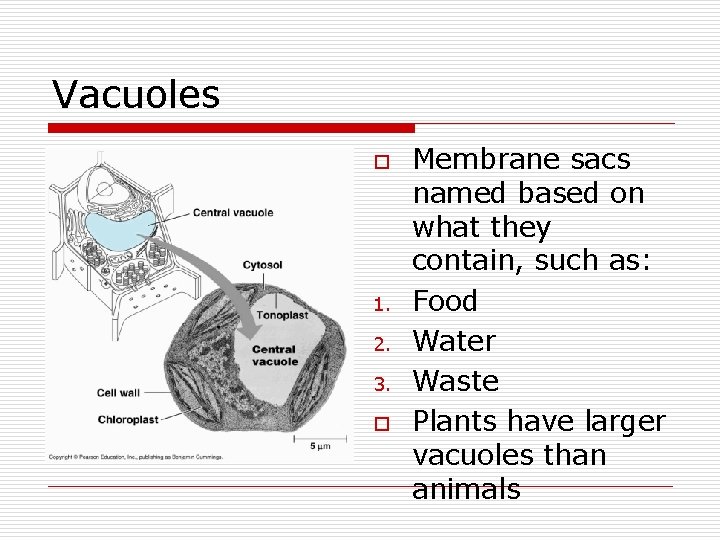
Vacuoles o 1. 2. 3. o Membrane sacs named based on what they contain, such as: Food Water Waste Plants have larger vacuoles than animals
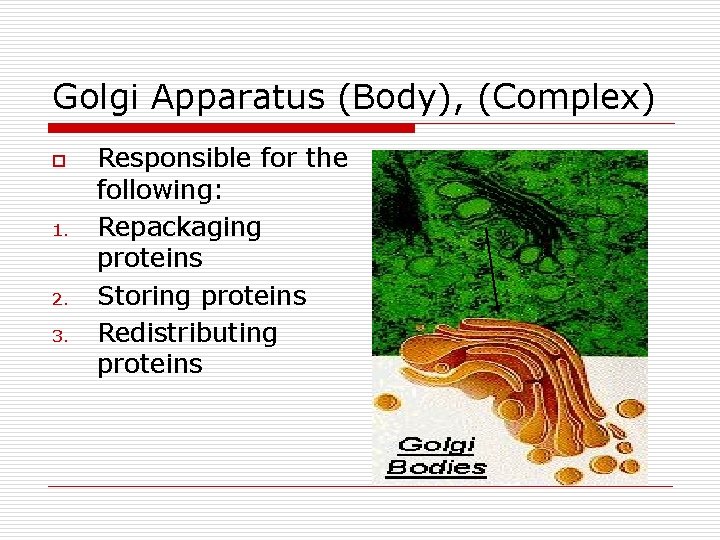
Golgi Apparatus (Body), (Complex) o 1. 2. 3. Responsible for the following: Repackaging proteins Storing proteins Redistributing proteins
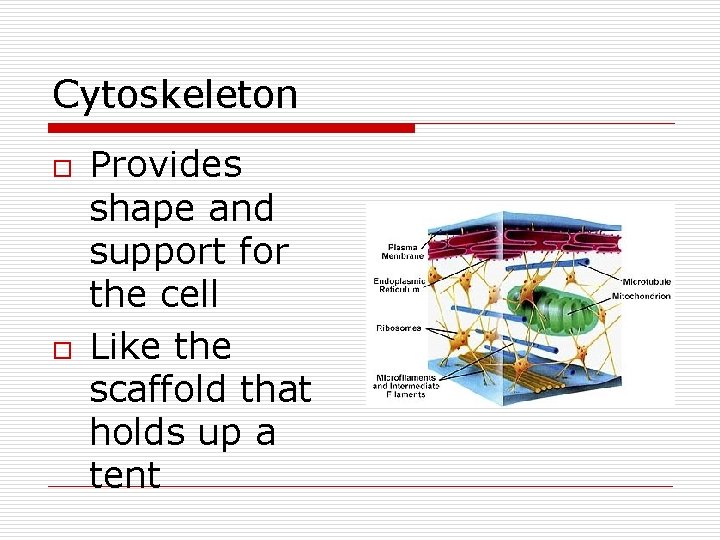
Cytoskeleton o o Provides shape and support for the cell Like the scaffold that holds up a tent
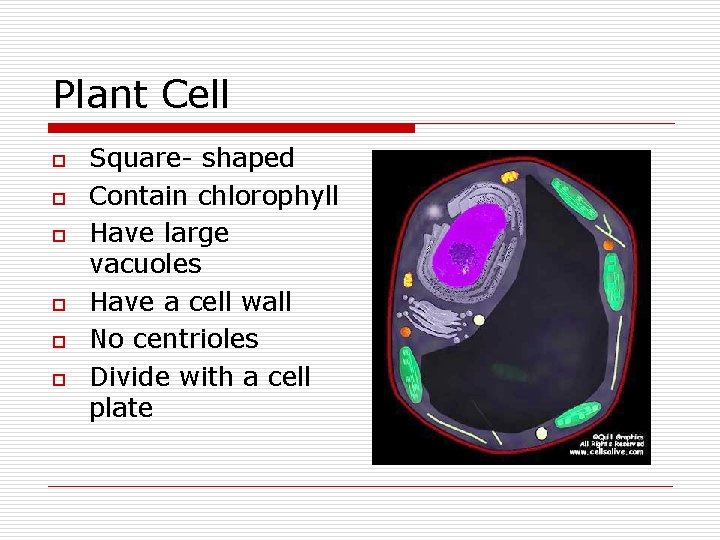
Plant Cell o o o Square- shaped Contain chlorophyll Have large vacuoles Have a cell wall No centrioles Divide with a cell plate
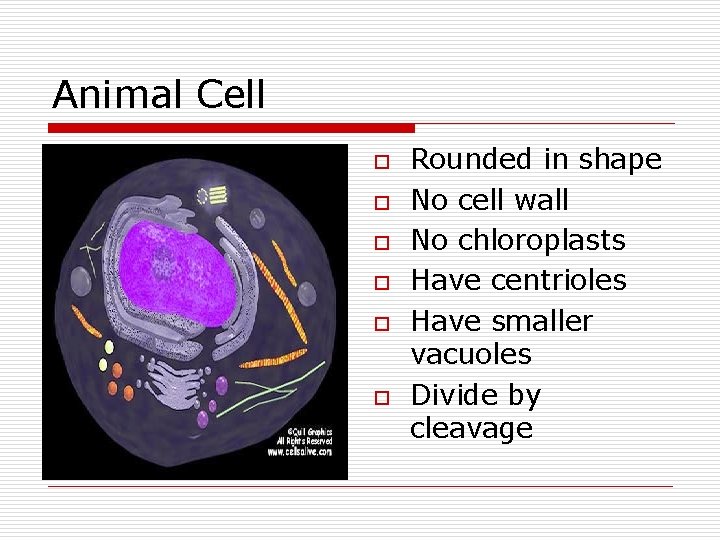
Animal Cell o o o Rounded in shape No cell wall No chloroplasts Have centrioles Have smaller vacuoles Divide by cleavage
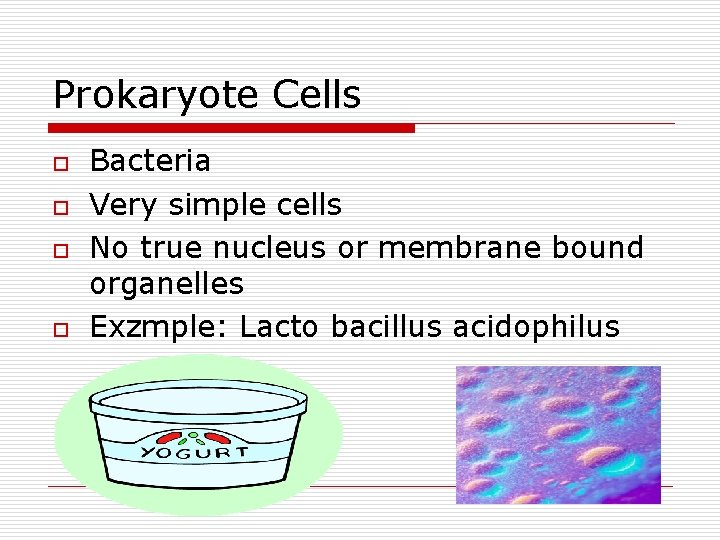
Prokaryote Cells o o Bacteria Very simple cells No true nucleus or membrane bound organelles Exzmple: Lacto bacillus acidophilus
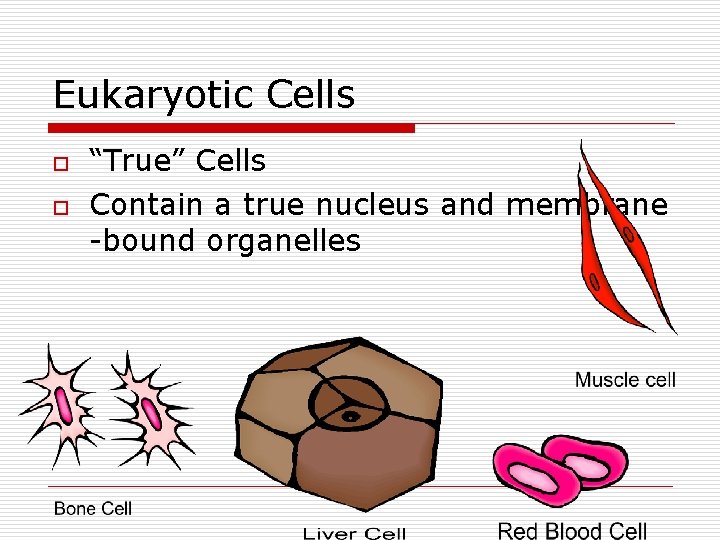
Eukaryotic Cells o o “True” Cells Contain a true nucleus and membrane -bound organelles