
Cell Organelles and Functions Ms Reinhard Biology Organelles
Cell Organelles and Functions Ms. Reinhard Biology
Organelles Cells are like tiny factories ● They design, build and ship/transport products Organelles = little organs Cells have organelles, humans have organs ● Both have specialized functions
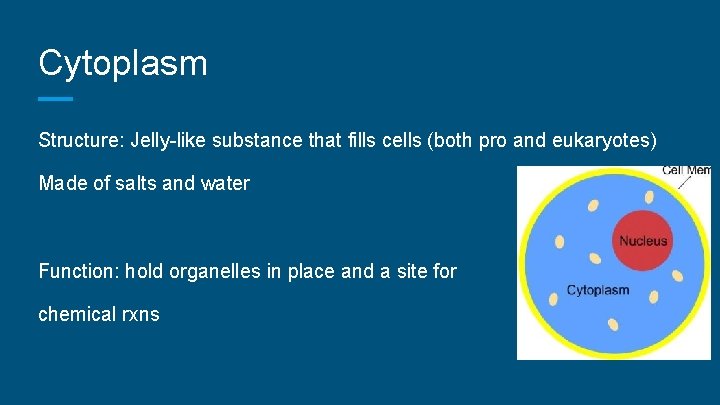
Cytoplasm Structure: Jelly-like substance that fills cells (both pro and eukaryotes) Made of salts and water Function: hold organelles in place and a site for chemical rxns
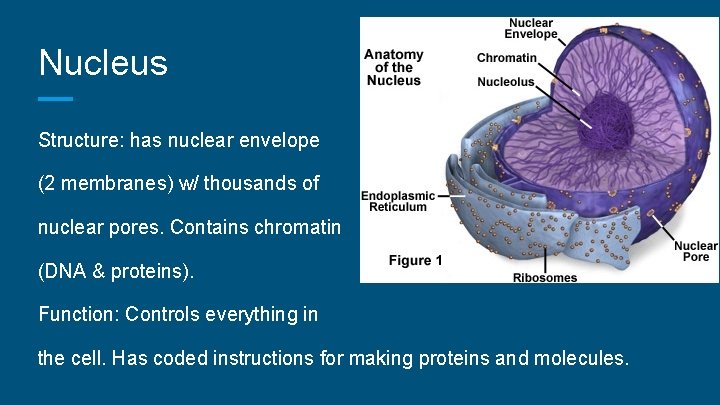
Nucleus Structure: has nuclear envelope (2 membranes) w/ thousands of nuclear pores. Contains chromatin (DNA & proteins). Function: Controls everything in the cell. Has coded instructions for making proteins and molecules.
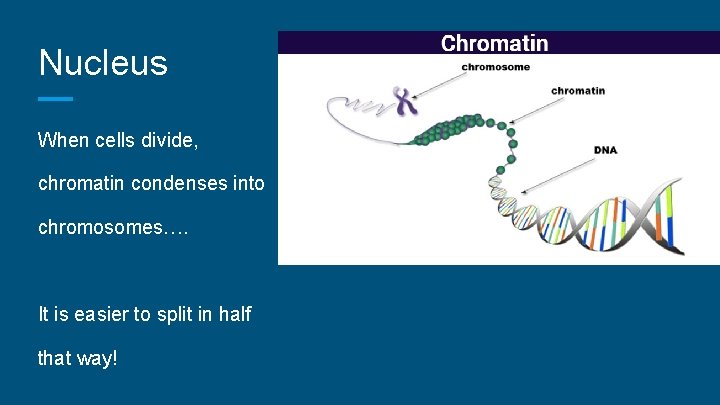
Nucleus When cells divide, chromatin condenses into chromosomes…. It is easier to split in half that way!
Nucleus = head office/ headquarters
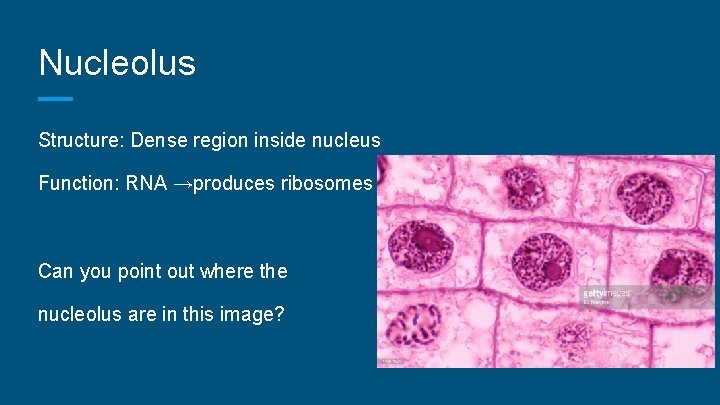
Nucleolus Structure: Dense region inside nucleus Function: RNA →produces ribosomes Can you point out where the nucleolus are in this image?
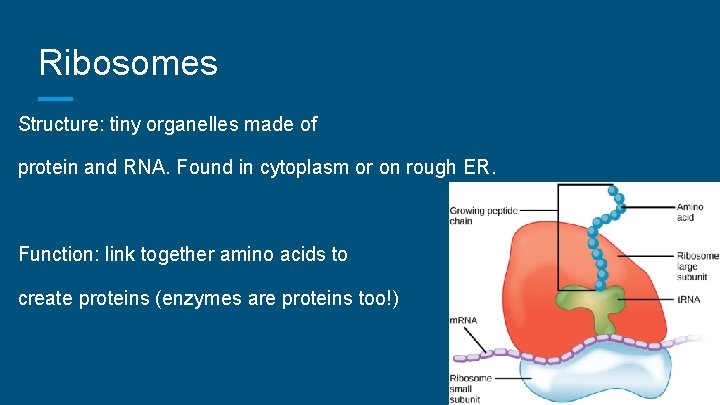
Ribosomes Structure: tiny organelles made of protein and RNA. Found in cytoplasm or on rough ER. Function: link together amino acids to create proteins (enzymes are proteins too!)
Ribosomes = assembly workers in factory
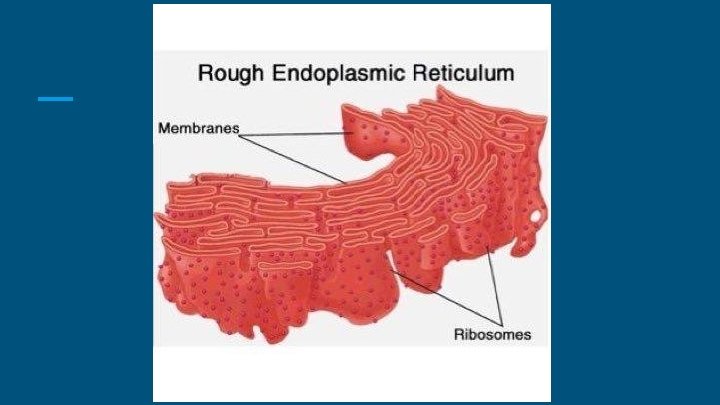
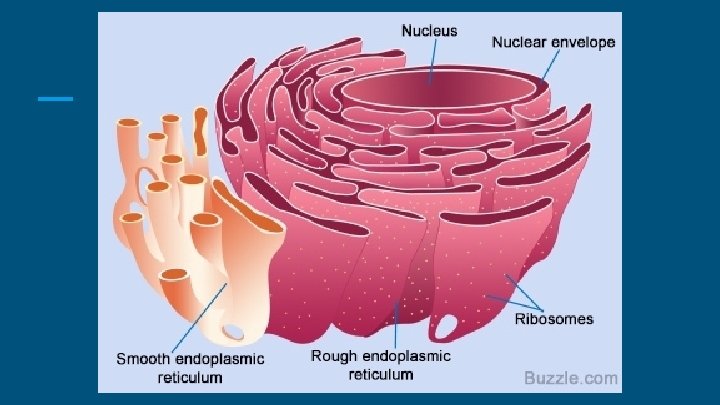
Rough Endoplasmic Reticulum Structure: Thin, folded membranes, attached to nucleus Function: Rough ER = has ribosomes (production of proteins)
Smooth Endoplasmic Reticulum Structure: part of ER with NO RIBOSOMES Function: Produces mainly lipids Lipids ----> phospholipid bilayer (cell membrane) Smooth ER detoxes chemicals - Liver cells have a lot of smooth ER……. why?
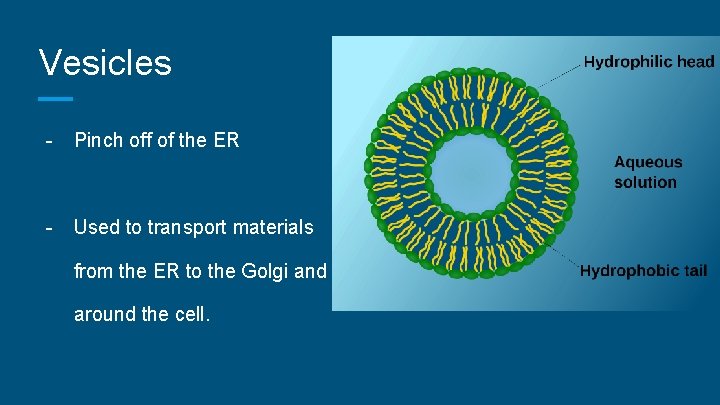
Vesicles - Pinch off of the ER - Used to transport materials from the ER to the Golgi and around the cell.
Vesicles = transportation system
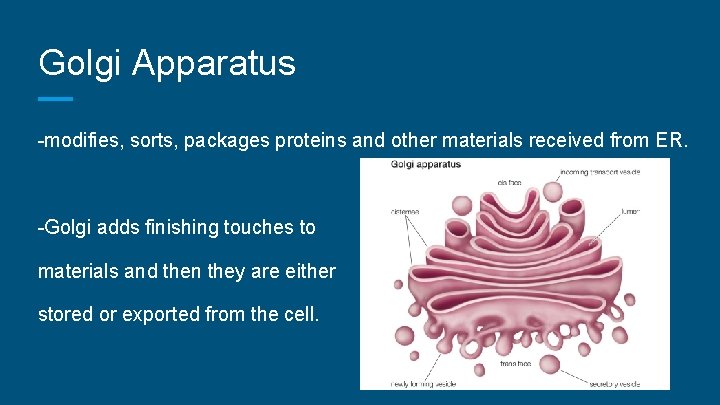
Golgi Apparatus -modifies, sorts, packages proteins and other materials received from ER. -Golgi adds finishing touches to materials and then they are either stored or exported from the cell.
Golgi Apparatus = mailroom of cell
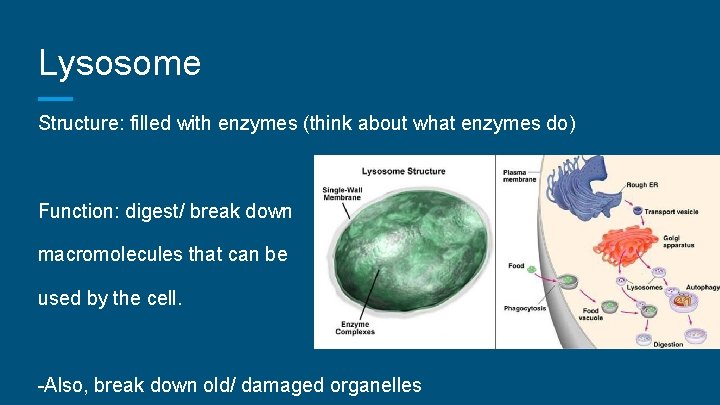
Lysosome Structure: filled with enzymes (think about what enzymes do) Function: digest/ break down macromolecules that can be used by the cell. -Also, break down old/ damaged organelles
Lysosome = cleaning crew/ assassins
Vacuoles Structure: sac-like structures that contain water, salts, proteins, carbs, etc. Function: vacuoles are important in maintaining cell homeostasis Plant cells = central vacuole. Large vacuole that creates pressure in the cell and adds support to the plant.
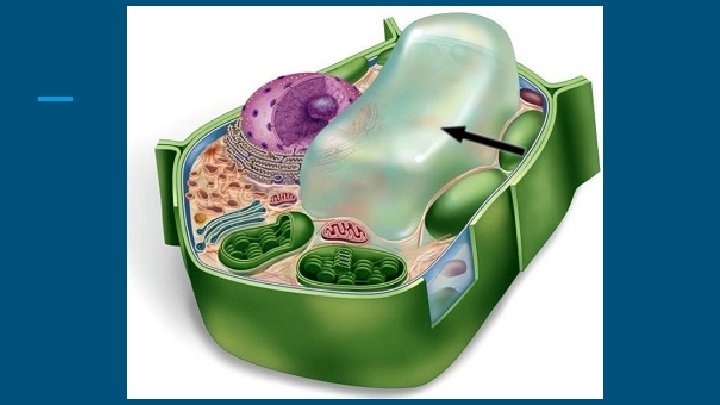
Vacuole = storage room
Mitochondria Structure: has 2 membranes. Cristae = folds in mitochondria inner membrane. In plants AND animal cells. Function: convert chemical energy stored in food into compounds that the cell can use. Cellular respiration. Fun Fact: your mitochondria are inherited from your mom! (from cytoplasm of ovum)
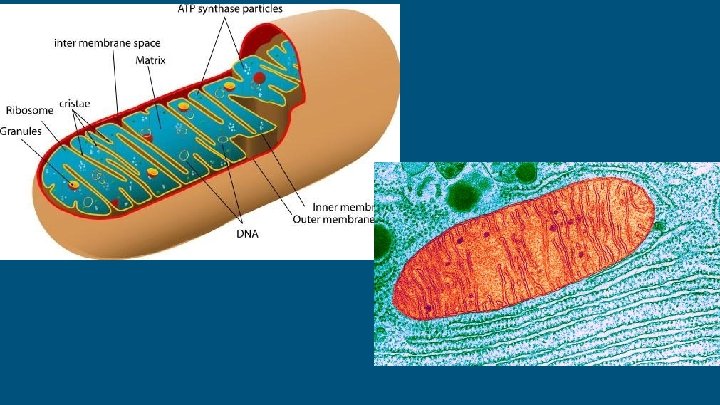
Mitochondria = powerhouse/ energy source
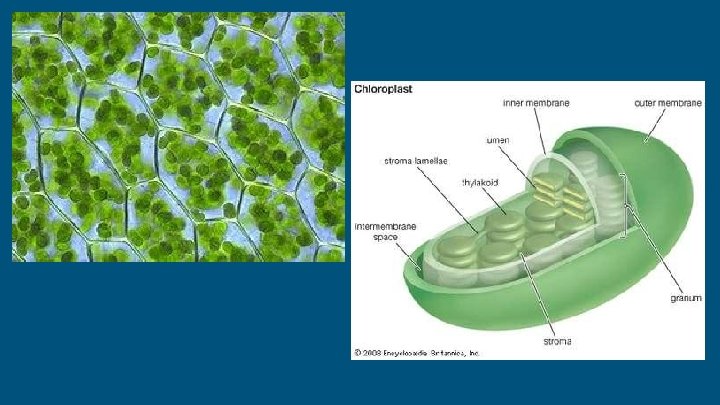
Chloroplast Structure: only in plant cells. Also has 2 membranes and chlorophyll. Function: take energy (photons) from sunlight and convert into chemical energy that the cell can use. Photosynthesis. Chlorophyll is pigment that absorbs light energy and causes green color!
Chloroplasts = solar power of cell
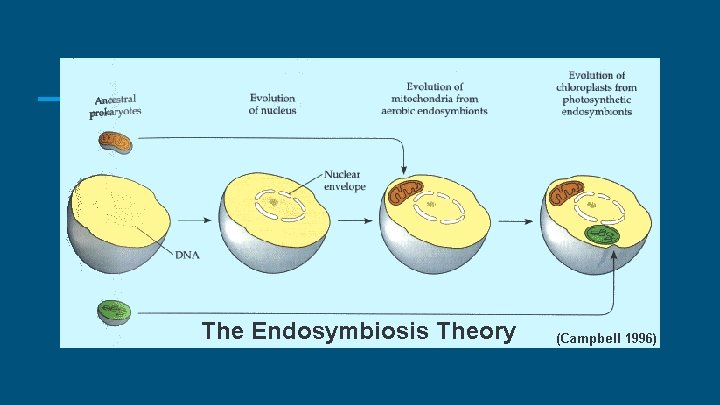
Endosymbiotic Theory Why do chloroplasts and mitochondria have double membranes and their own DNA? . . Mitochondria and chloroplasts are descendants of prokaryotic cells. A symbiotic relationship started it all…. Ancestors of mitochondria and chloroplasts began to live inside eukaryotes and evolved
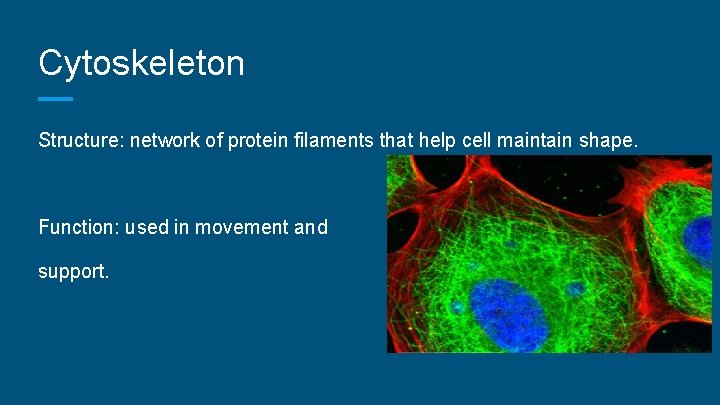
Cytoskeleton Structure: network of protein filaments that help cell maintain shape. Function: used in movement and support.
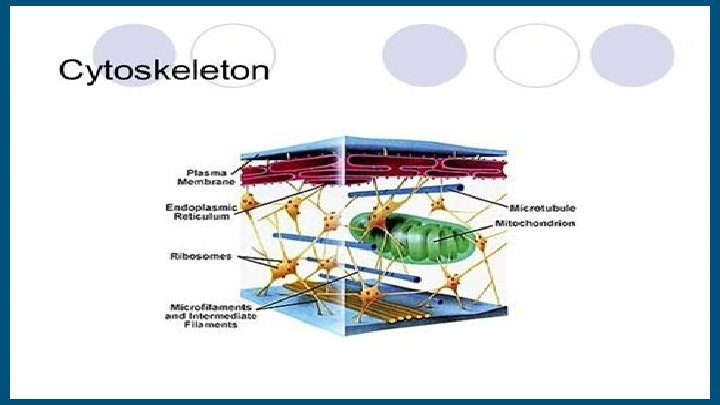
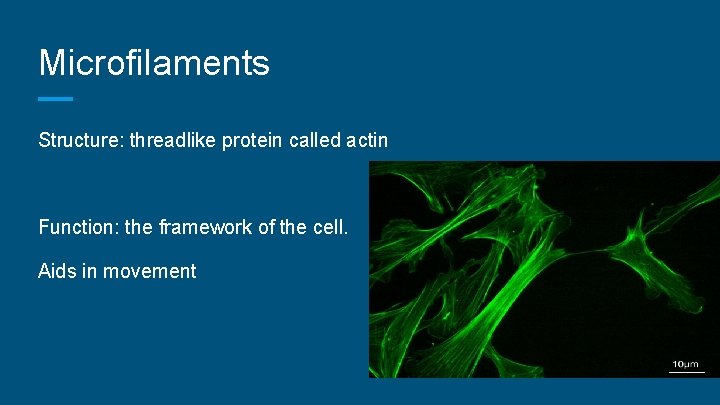
Microfilaments Structure: threadlike protein called actin Function: the framework of the cell. Aids in movement
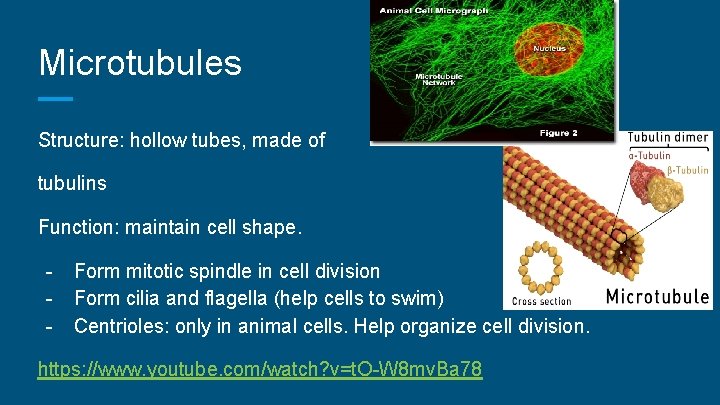
Microtubules Structure: hollow tubes, made of tubulins Function: maintain cell shape. - Form mitotic spindle in cell division Form cilia and flagella (help cells to swim) Centrioles: only in animal cells. Help organize cell division. https: //www. youtube. com/watch? v=t. O-W 8 mv. Ba 78
- Slides: 34