
CELL ORGANELLES A LITTLE REVIEW All organisms are
- Slides: 20
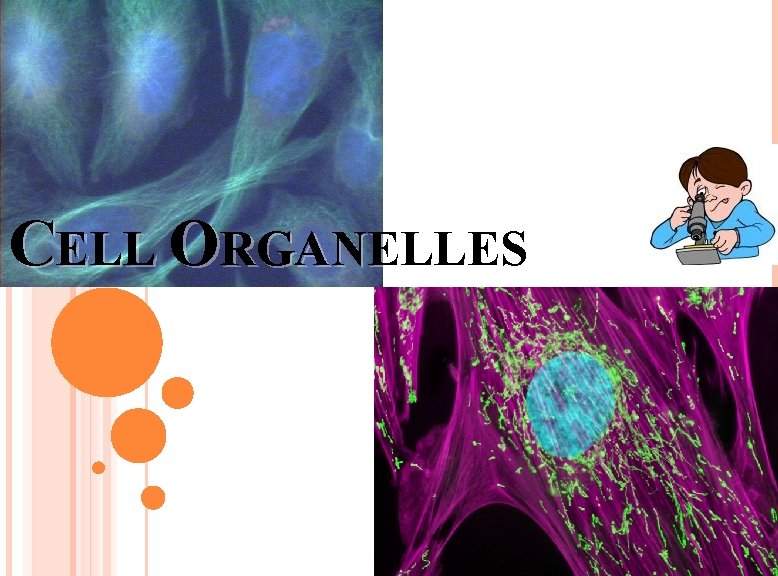
CELL ORGANELLES
A LITTLE REVIEW… All organisms are made up of one or more cells. The life functions of an organisms are carried out by its cell or cells. All cells come from other, already existing cells. SO, WE ARE GOING TO STUDY CELLS!
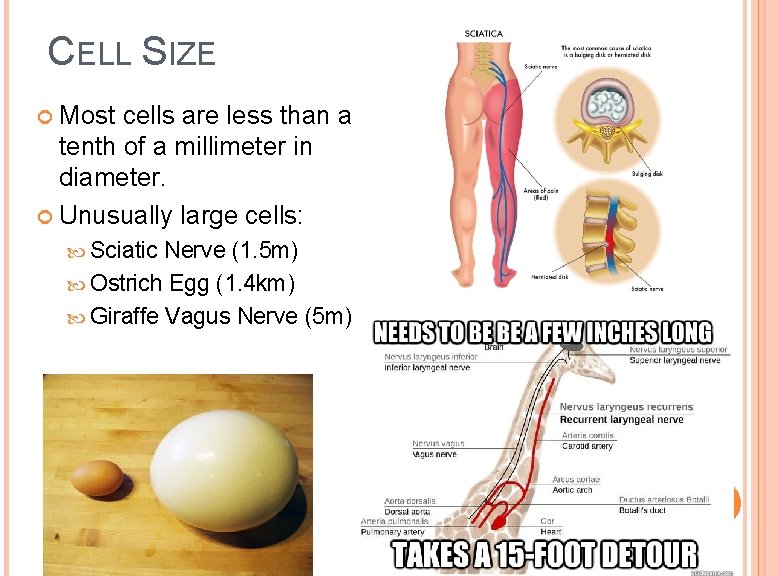
CELL SIZE Most cells are less than a tenth of a millimeter in diameter. Unusually large cells: Sciatic Nerve (1. 5 m) Ostrich Egg (1. 4 km) Giraffe Vagus Nerve (5 m)
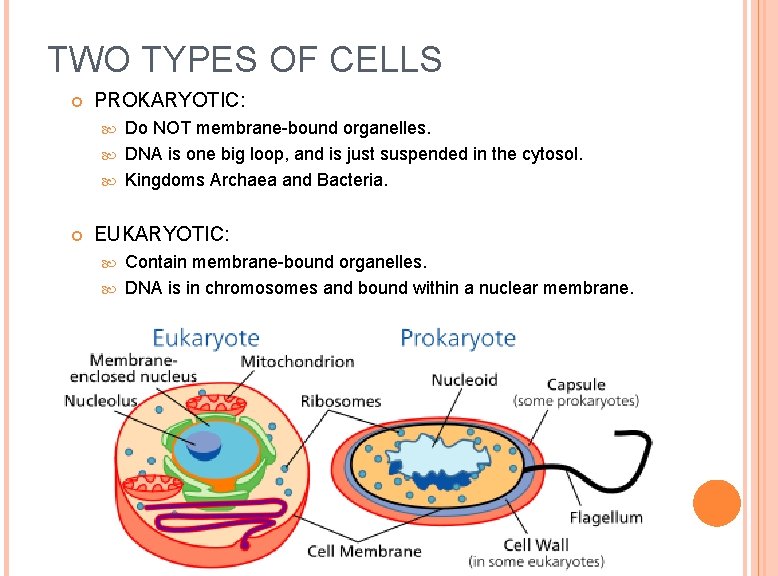
TWO TYPES OF CELLS PROKARYOTIC: Do NOT membrane-bound organelles. DNA is one big loop, and is just suspended in the cytosol. Kingdoms Archaea and Bacteria. EUKARYOTIC: Contain membrane-bound organelles. DNA is in chromosomes and bound within a nuclear membrane.
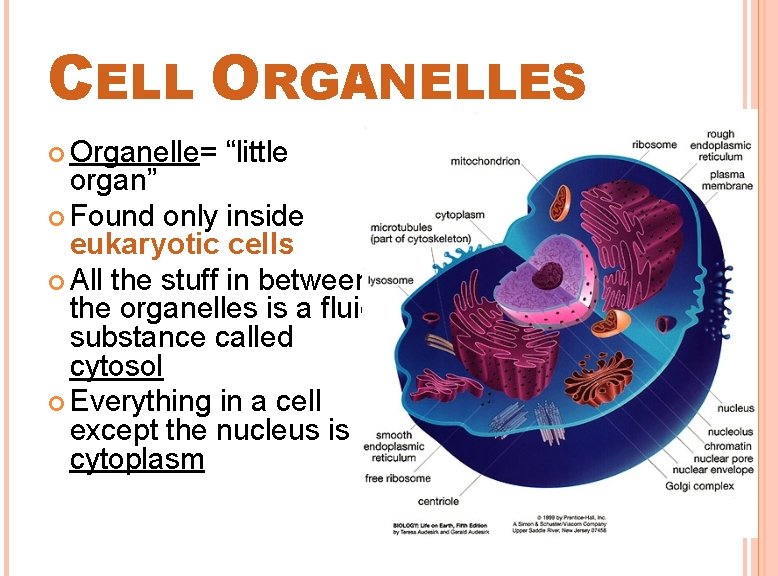
CELL ORGANELLES Organelle= “little organ” Found only inside eukaryotic cells All the stuff in between the organelles is a fluid substance called cytosol Everything in a cell except the nucleus is cytoplasm
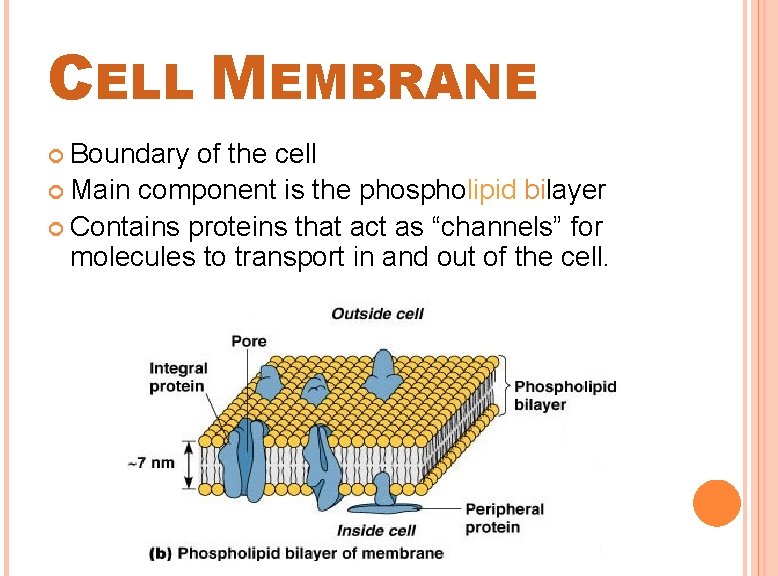
CELL MEMBRANE Boundary of the cell Main component is the phospholipid bilayer Contains proteins that act as “channels” for molecules to transport in and out of the cell.
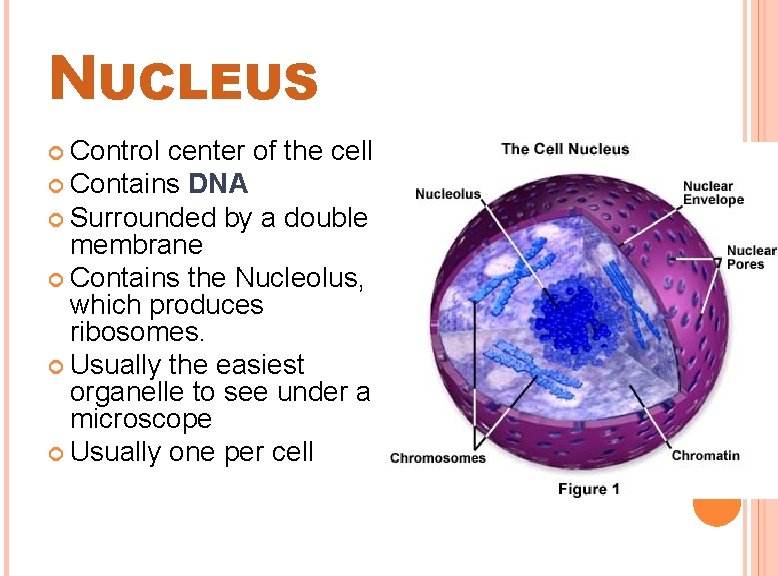
NUCLEUS Control center of the cell Contains DNA Surrounded by a double membrane Contains the Nucleolus, which produces ribosomes. Usually the easiest organelle to see under a microscope Usually one per cell
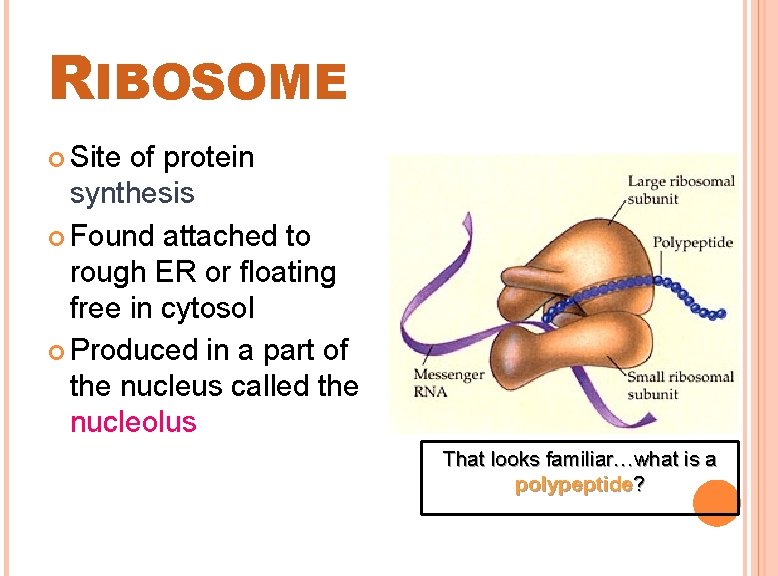
RIBOSOME Site of protein synthesis Found attached to rough ER or floating free in cytosol Produced in a part of the nucleus called the nucleolus That looks familiar…what is a polypeptide?
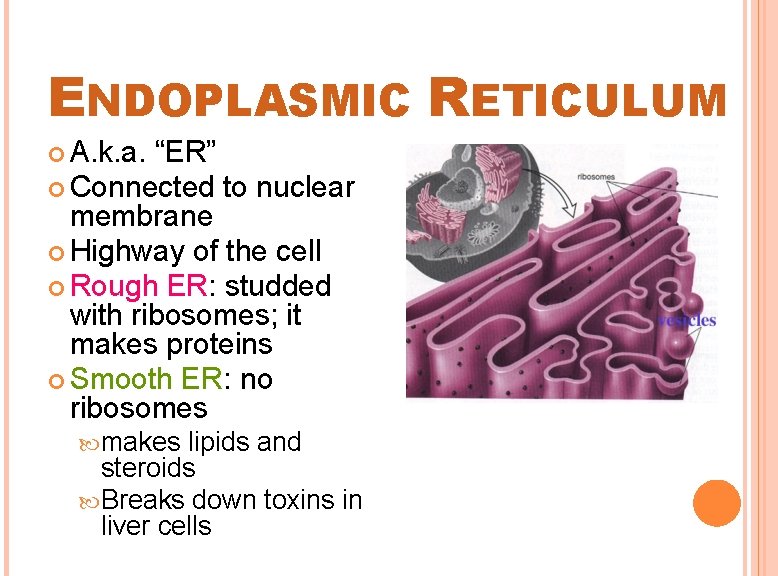
ENDOPLASMIC RETICULUM A. k. a. “ER” Connected to nuclear membrane Highway of the cell Rough ER: studded with ribosomes; it makes proteins Smooth ER: no ribosomes makes lipids and steroids Breaks down toxins in liver cells
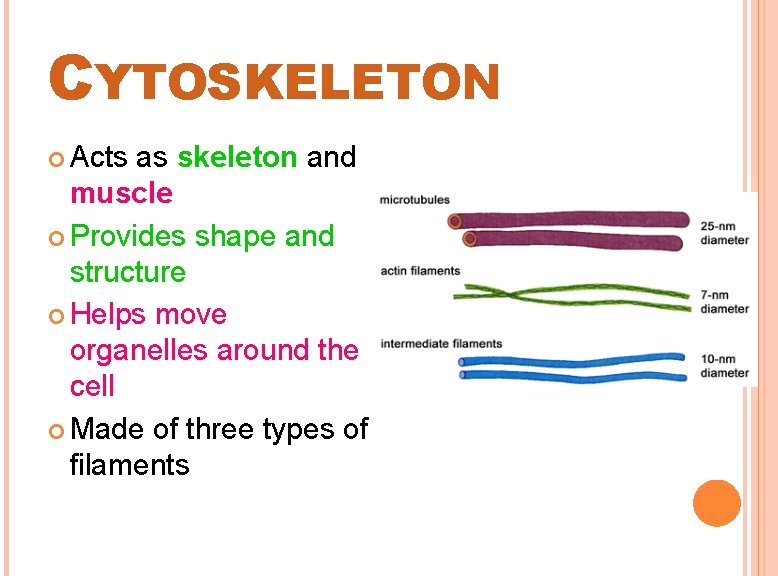
CYTOSKELETON Acts as skeleton and muscle Provides shape and structure Helps move organelles around the cell Made of three types of filaments
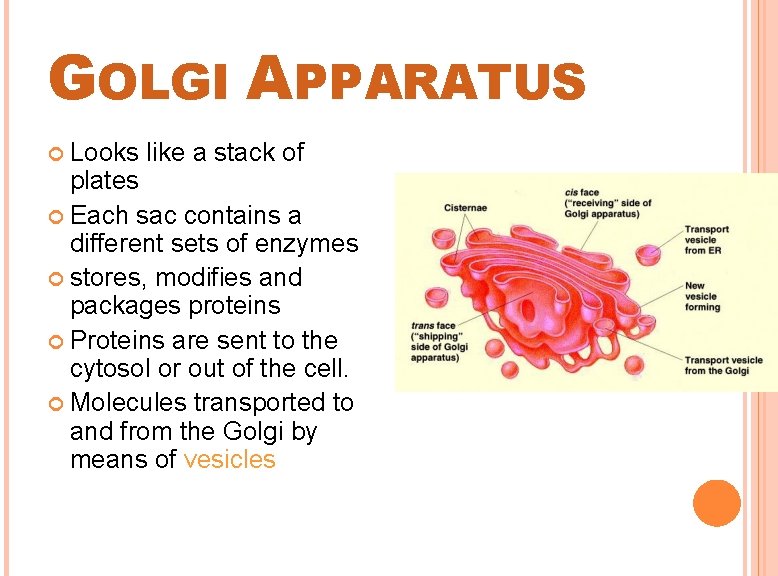
GOLGI APPARATUS Looks like a stack of plates Each sac contains a different sets of enzymes stores, modifies and packages proteins Proteins are sent to the cytosol or out of the cell. Molecules transported to and from the Golgi by means of vesicles
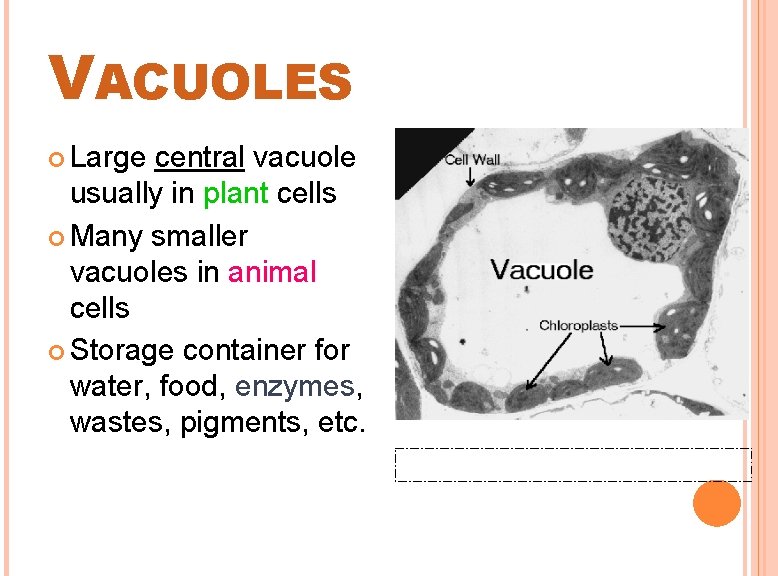
VACUOLES Large central vacuole usually in plant cells Many smaller vacuoles in animal cells Storage container for water, food, enzymes, wastes, pigments, etc.
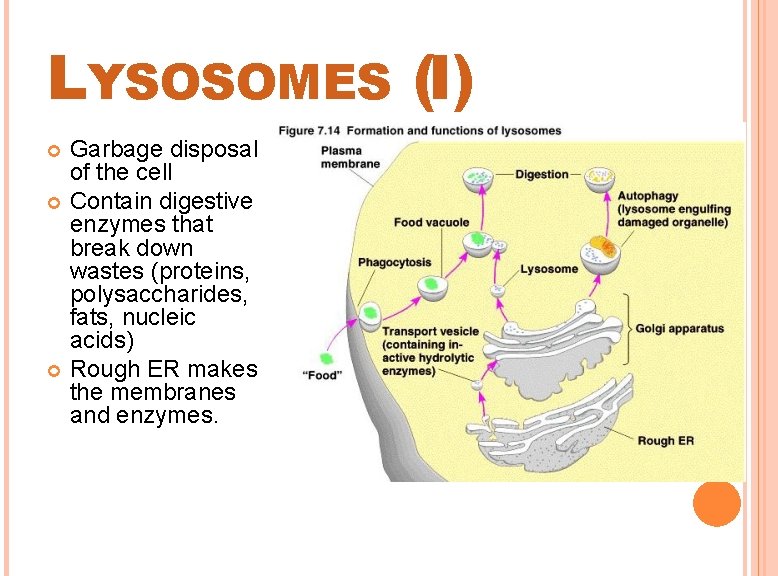
LYSOSOMES (I) Garbage disposal of the cell Contain digestive enzymes that break down wastes (proteins, polysaccharides, fats, nucleic acids) Rough ER makes the membranes and enzymes.
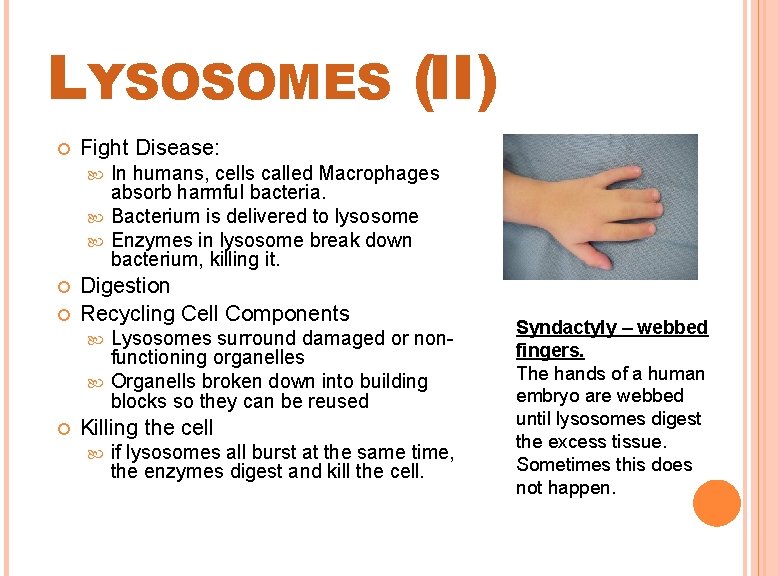
LYSOSOMES (II) Fight Disease: In humans, cells called Macrophages absorb harmful bacteria. Bacterium is delivered to lysosome Enzymes in lysosome break down bacterium, killing it. Digestion Recycling Cell Components Lysosomes surround damaged or nonfunctioning organelles Organells broken down into building blocks so they can be reused Killing the cell if lysosomes all burst at the same time, the enzymes digest and kill the cell. Syndactyly – webbed fingers. The hands of a human embryo are webbed until lysosomes digest the excess tissue. Sometimes this does not happen.
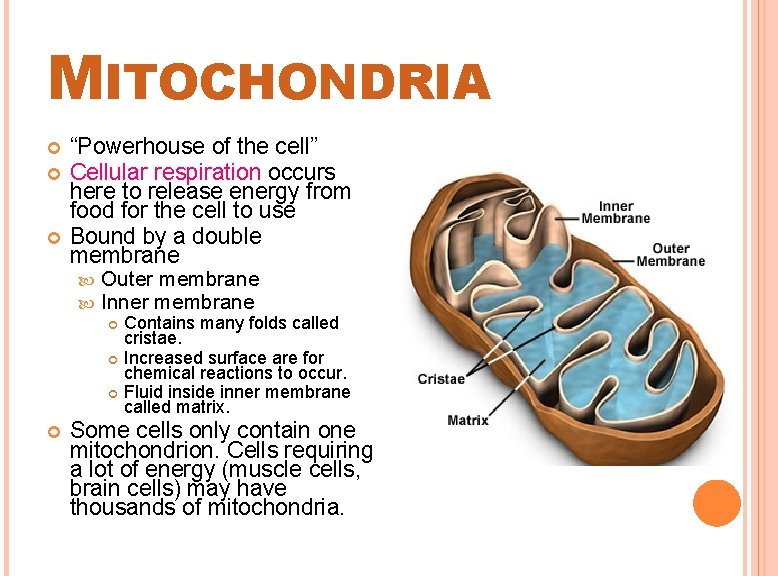
MITOCHONDRIA “Powerhouse of the cell” Cellular respiration occurs here to release energy from food for the cell to use Bound by a double membrane Outer membrane Inner membrane Contains many folds called cristae. Increased surface are for chemical reactions to occur. Fluid inside inner membrane called matrix. Some cells only contain one mitochondrion. Cells requiring a lot of energy (muscle cells, brain cells) may have thousands of mitochondria.
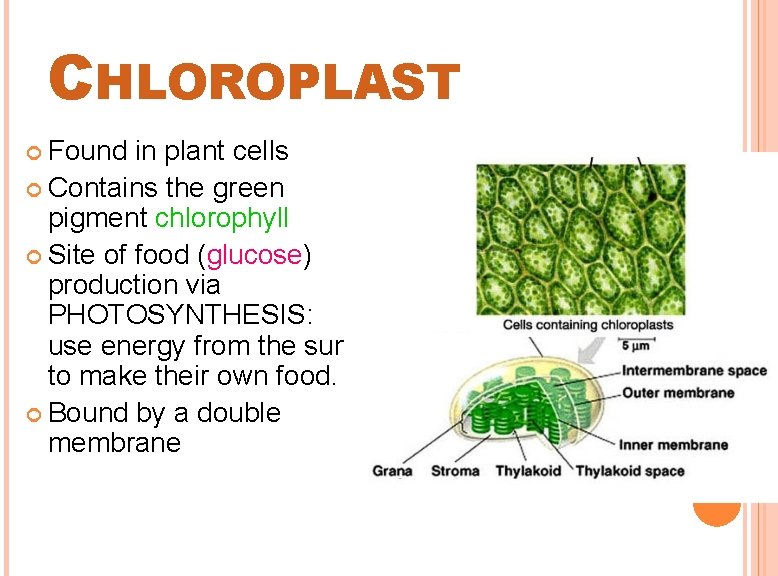
CHLOROPLAST Found in plant cells Contains the green pigment chlorophyll Site of food (glucose) production via PHOTOSYNTHESIS: use energy from the sun to make their own food. Bound by a double membrane
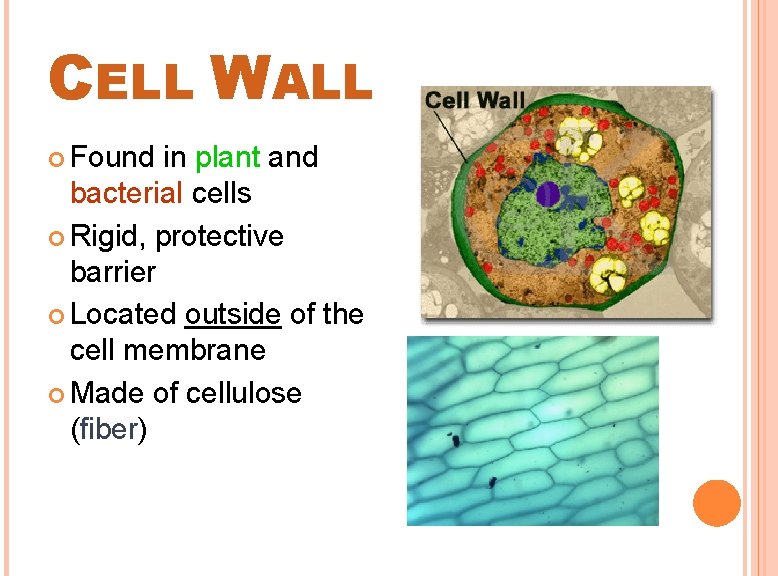
CELL WALL Found in plant and bacterial cells Rigid, protective barrier Located outside of the cell membrane Made of cellulose (fiber)
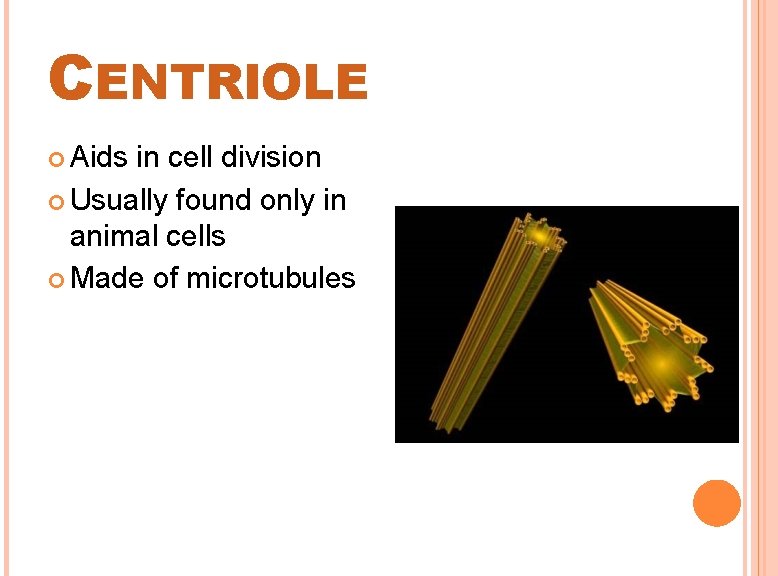
CENTRIOLE Aids in cell division Usually found only in animal cells Made of microtubules
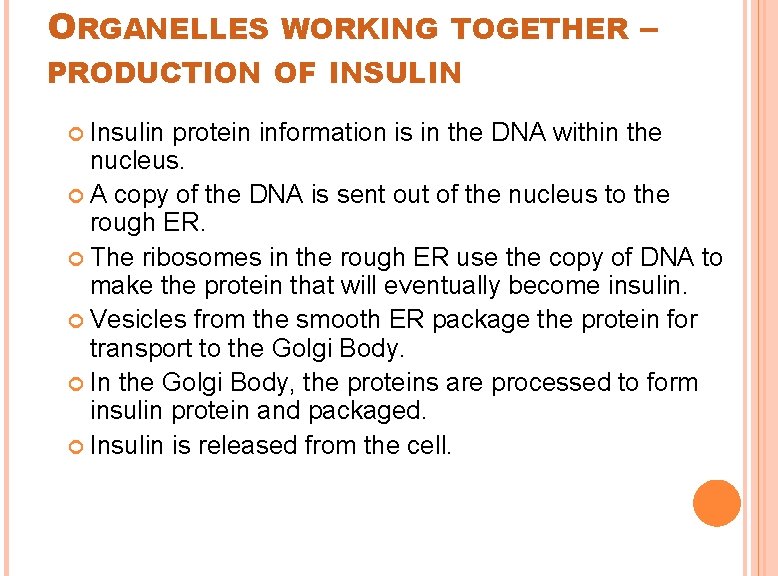
ORGANELLES WORKING TOGETHER – PRODUCTION OF INSULIN Insulin protein information is in the DNA within the nucleus. A copy of the DNA is sent out of the nucleus to the rough ER. The ribosomes in the rough ER use the copy of DNA to make the protein that will eventually become insulin. Vesicles from the smooth ER package the protein for transport to the Golgi Body. In the Golgi Body, the proteins are processed to form insulin protein and packaged. Insulin is released from the cell.
QUICK REVIEW Which organelle is the control center of the cell? Nucleus Which structure holds the cell together? Cell membrane Which organelles are not found in animal cells? Cell wall, central vacuole, chloroplasts Which organelle helps plant cells make food? Chloroplasts What does E. R. stand for? What does it do? Endoplasmic reticulum. It’s a ‘highway’ for the cell.