
Cell Notes Cell Basic Unit of structure and
Cell Notes

Cell Basic Unit of structure and function of all living things, including human body. n 60% of it is water. n All cells are covered with a salt water solution call interstitial fluid. n
3 Basic Parts of a Cell 1. Plasma Membrane: it’s like the skin. 2. Cytoplasm: contains the organelles (little organs) and fluid-like jelly and inside the cell membrane. 3. Nucleus: Control Center containing DNA (genetic material)
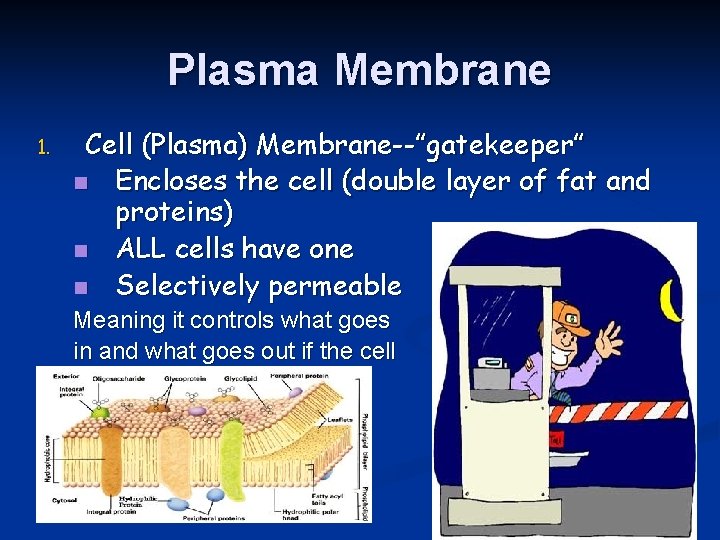
Plasma Membrane 1. Cell (Plasma) Membrane--”gatekeeper” n Encloses the cell (double layer of fat and proteins) n ALL cells have one n Selectively permeable Meaning it controls what goes in and what goes out if the cell
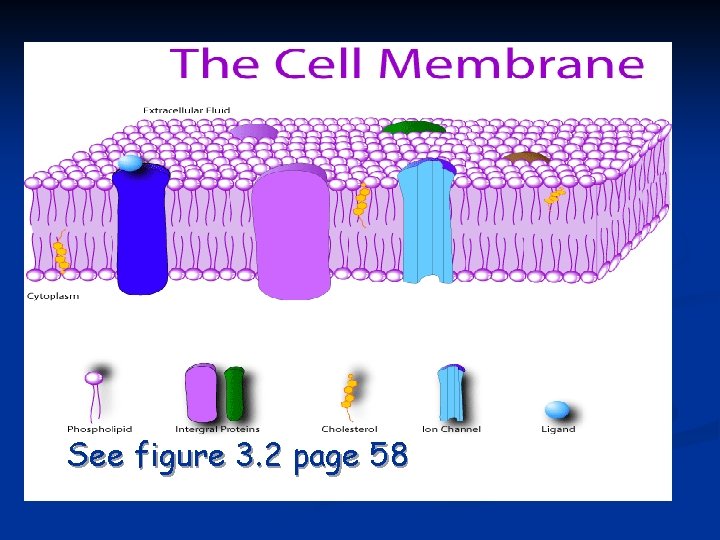
Cell Membrane See figure 3. 2 page 58
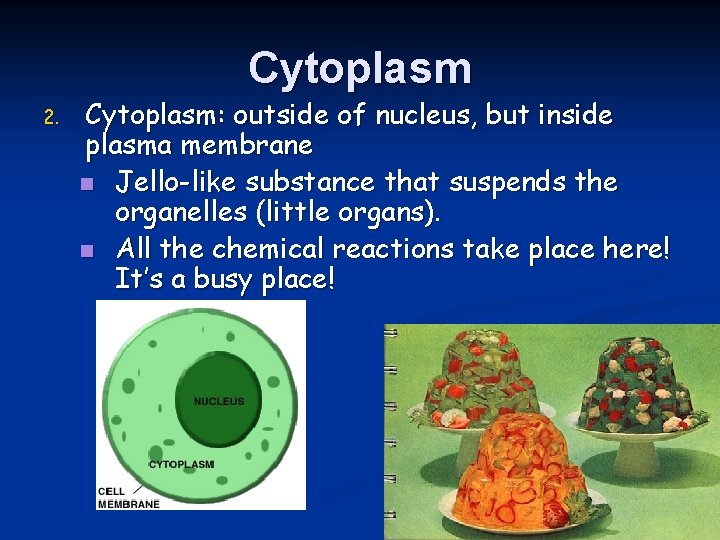
Cytoplasm 2. Cytoplasm: outside of nucleus, but inside plasma membrane n Jello-like substance that suspends the organelles (little organs). n All the chemical reactions take place here! It’s a busy place!
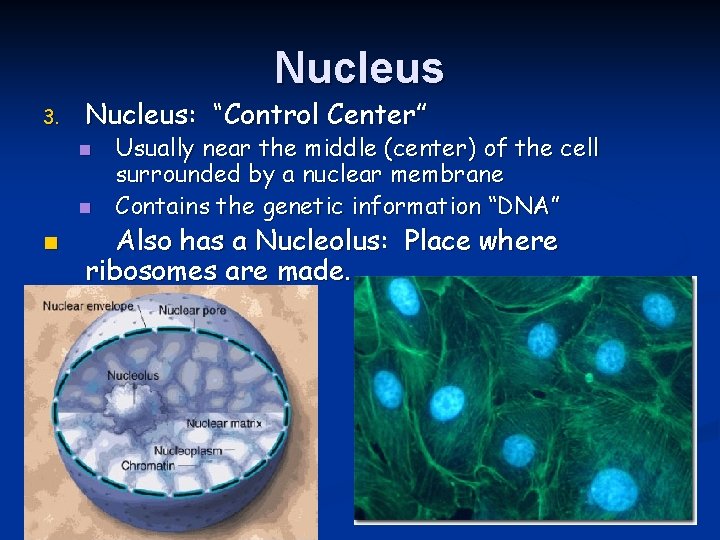
Nucleus 3. Nucleus: “Control Center” n n n Usually near the middle (center) of the cell surrounded by a nuclear membrane Contains the genetic information “DNA” Also has a Nucleolus: Place where ribosomes are made.
Organelles (9 of them) n Little organs inside the cytoplasm. n Similar to the organs of the body.
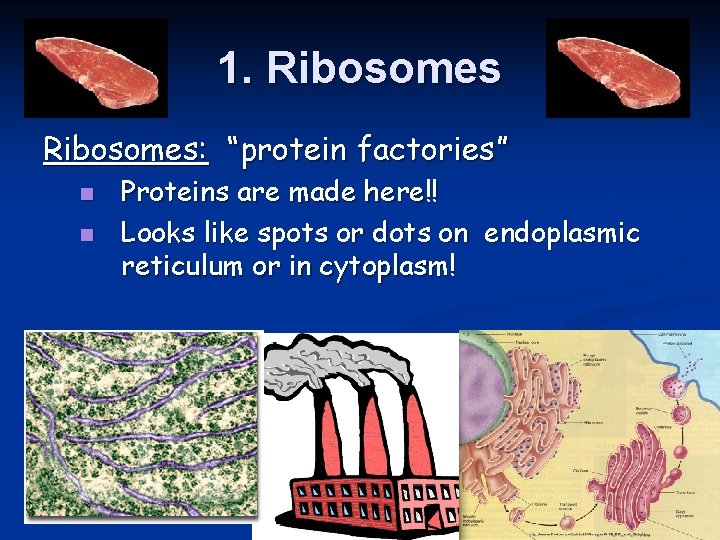
1. Ribosomes: “protein factories” n n Proteins are made here!! Looks like spots or dots on endoplasmic reticulum or in cytoplasm!
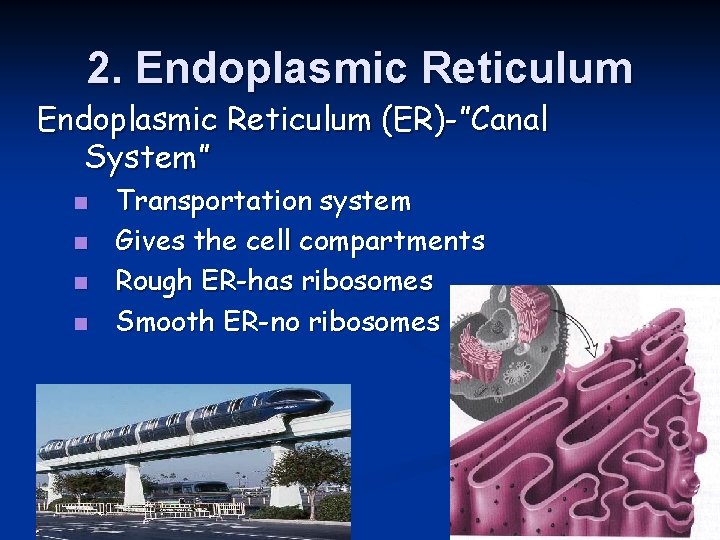
2. Endoplasmic Reticulum (ER)-”Canal System” n n Transportation system Gives the cell compartments Rough ER-has ribosomes Smooth ER-no ribosomes
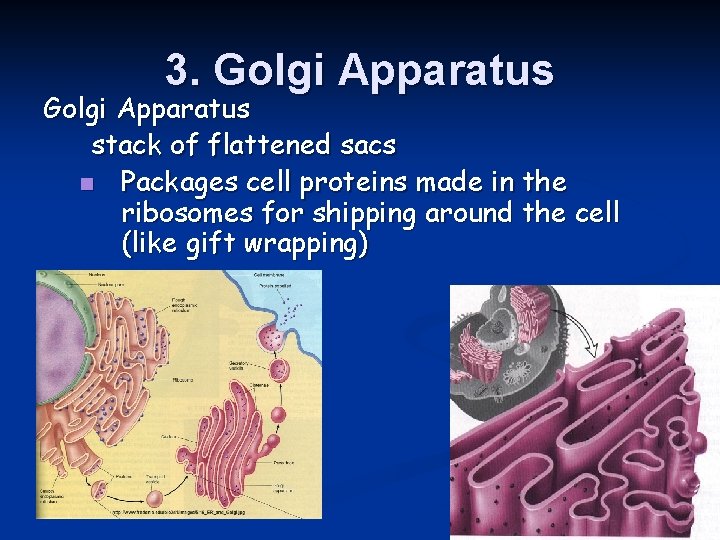
3. Golgi Apparatus stack of flattened sacs n Packages cell proteins made in the ribosomes for shipping around the cell (like gift wrapping)
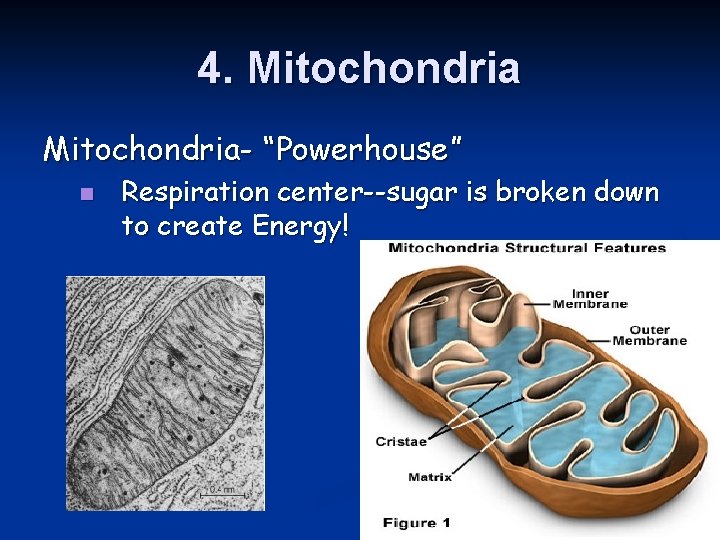
4. Mitochondria- “Powerhouse” n Respiration center--sugar is broken down to create Energy!
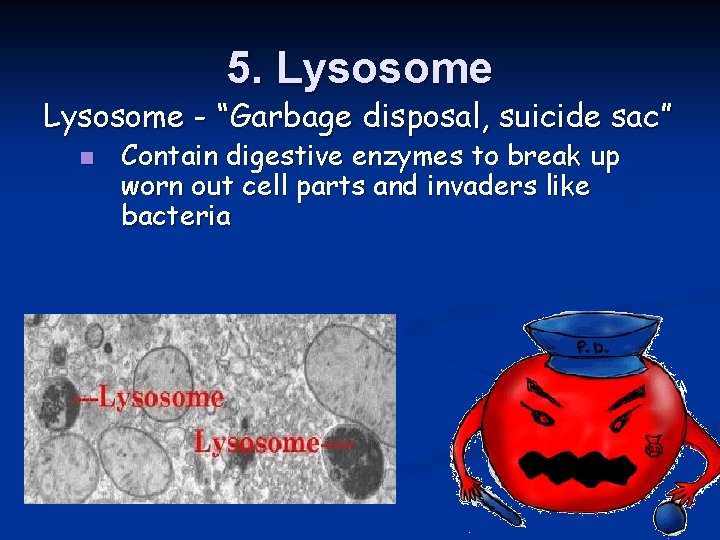
5. Lysosome - “Garbage disposal, suicide sac” n Contain digestive enzymes to break up worn out cell parts and invaders like bacteria
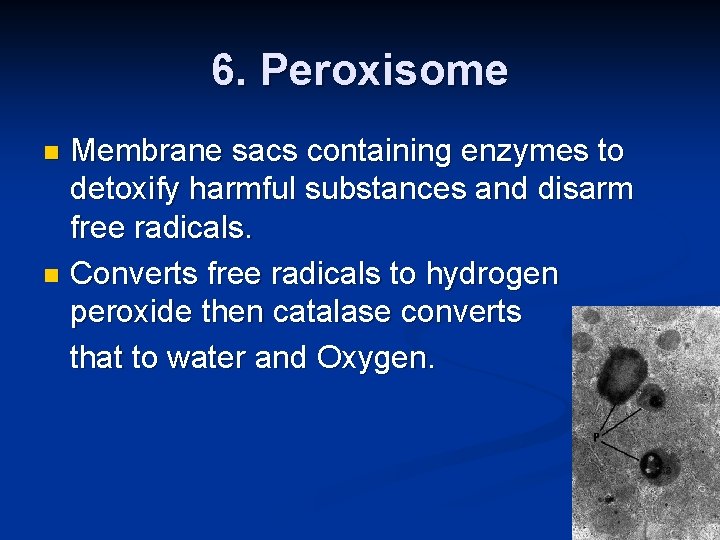
6. Peroxisome Membrane sacs containing enzymes to detoxify harmful substances and disarm free radicals. n Converts free radicals to hydrogen peroxide then catalase converts that to water and Oxygen. n
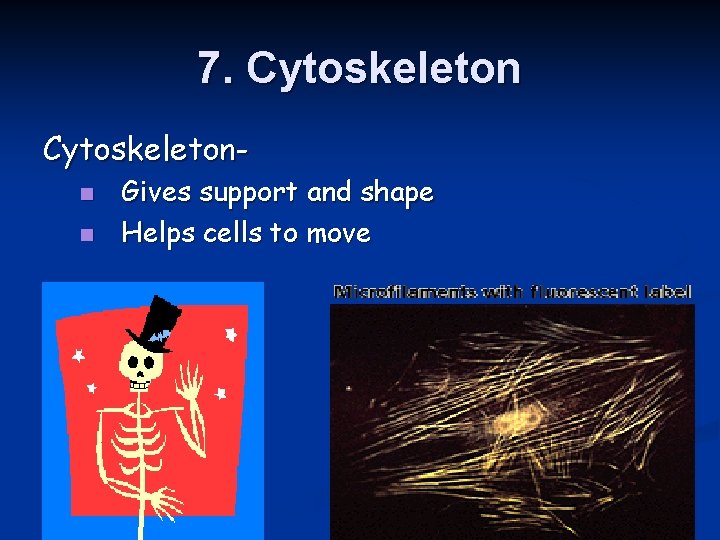
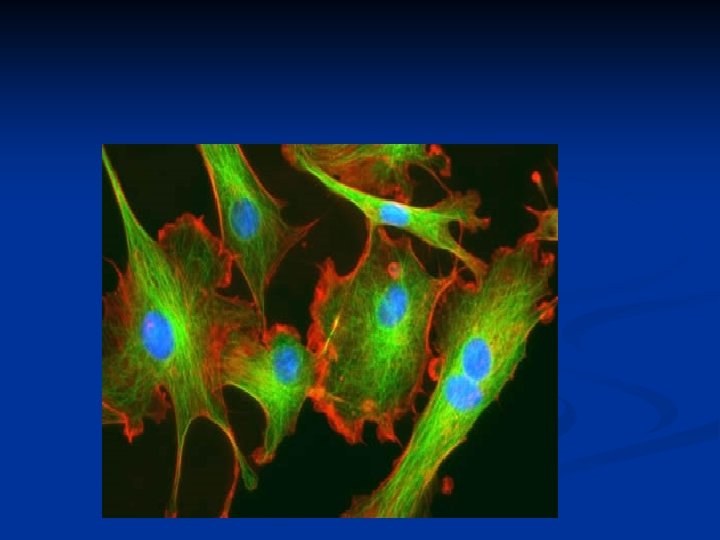
7. Cytoskeletonn n Gives support and shape Helps cells to move
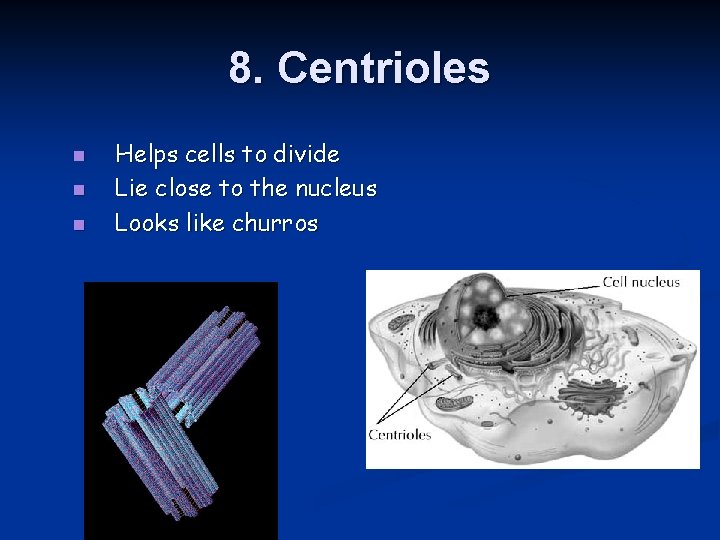
8. Centrioles n n n Helps cells to divide Lie close to the nucleus Looks like churros
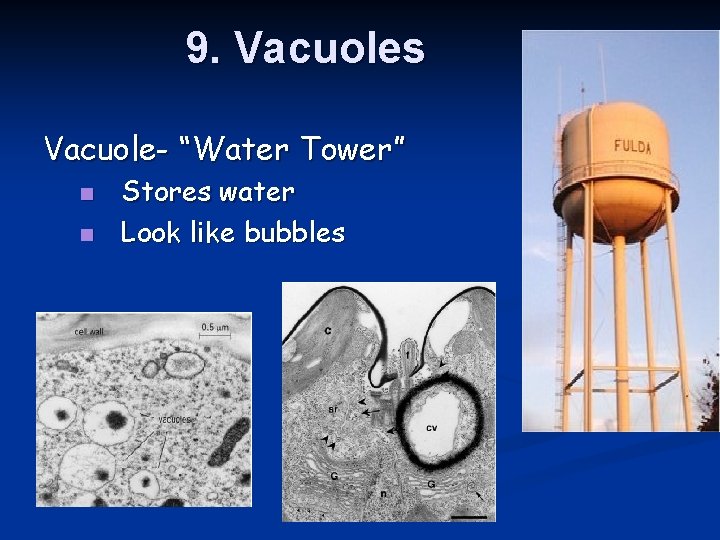
9. Vacuoles Vacuole- “Water Tower” n n Stores water Look like bubbles
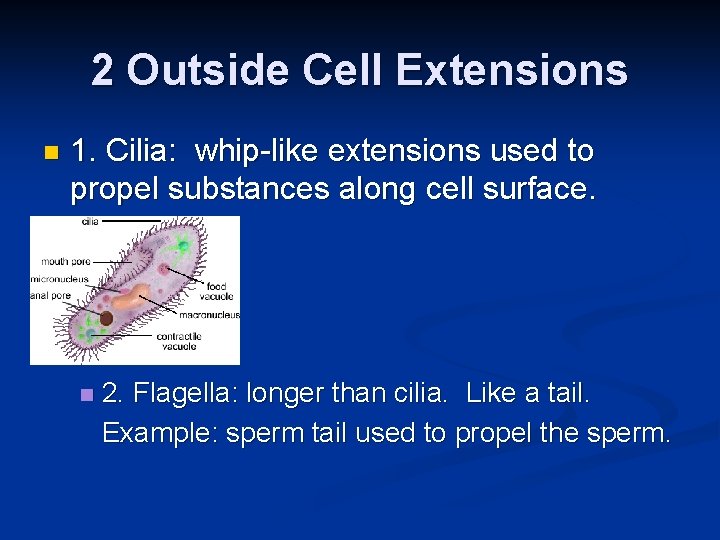
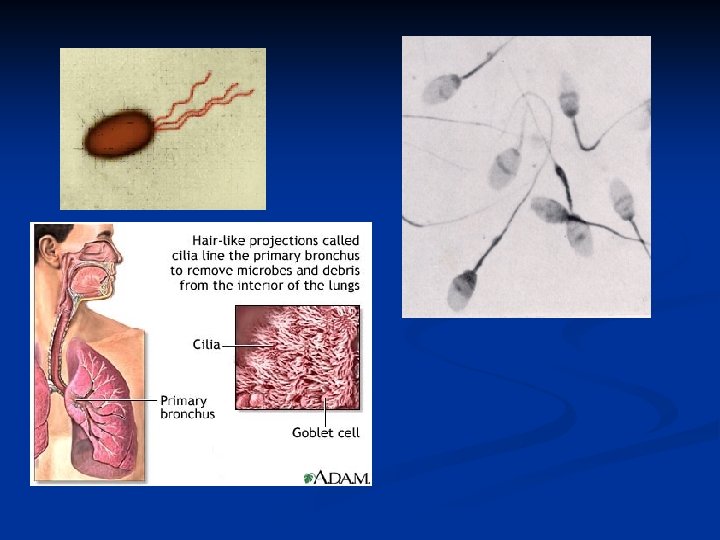
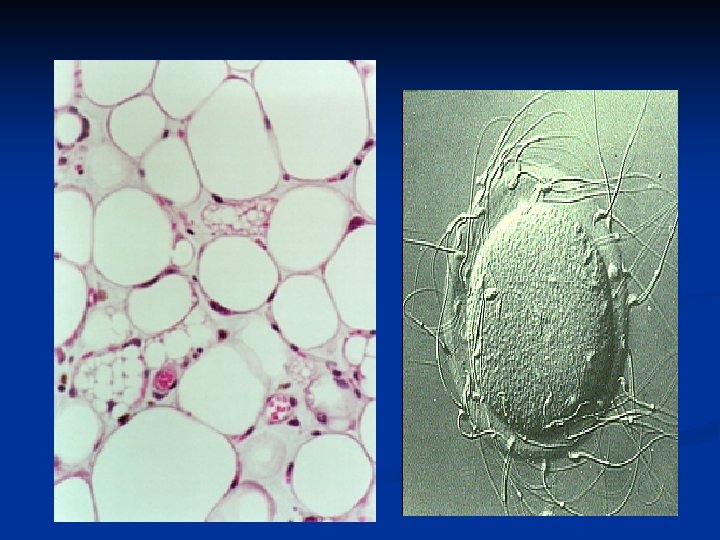
2 Outside Cell Extensions n 1. Cilia: whip-like extensions used to propel substances along cell surface. n 2. Flagella: longer than cilia. Like a tail. Example: sperm tail used to propel the sperm.
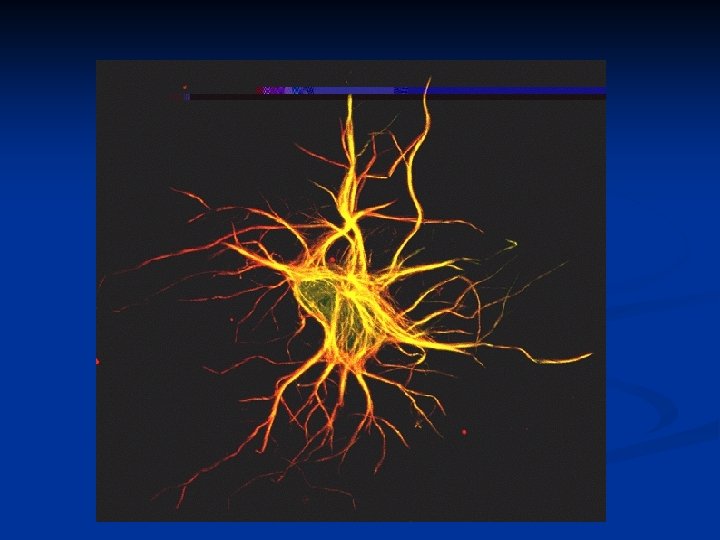
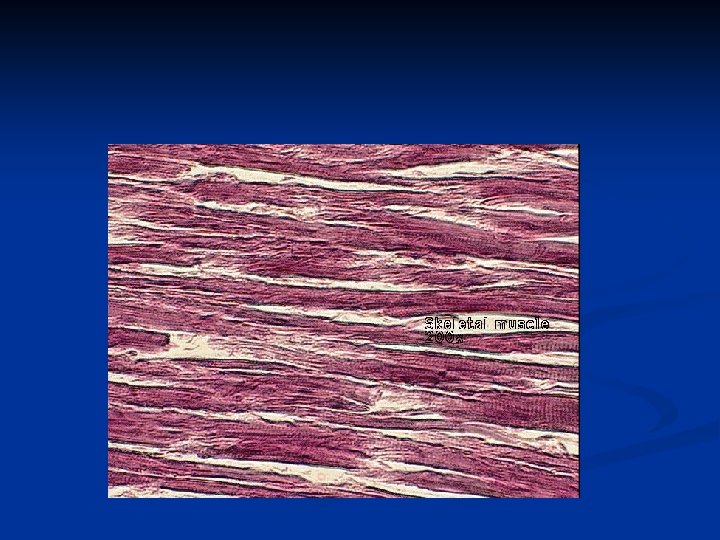
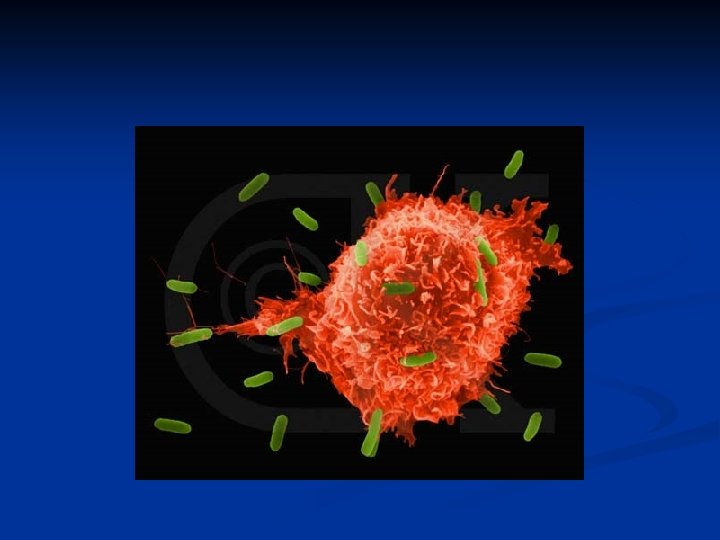
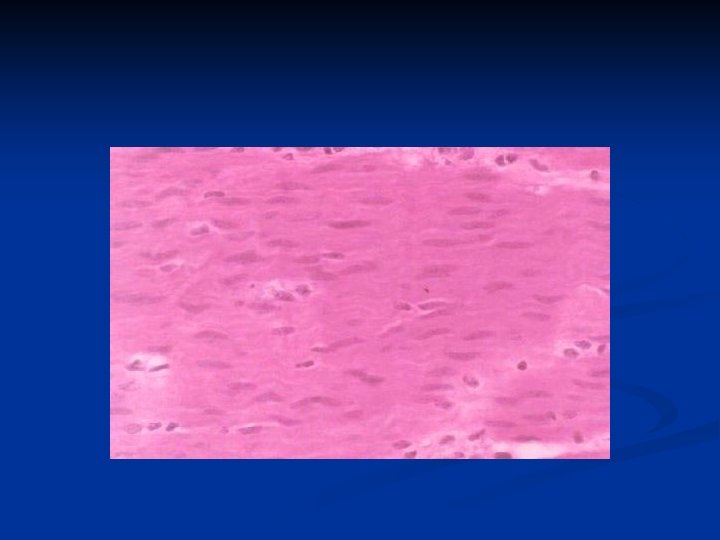
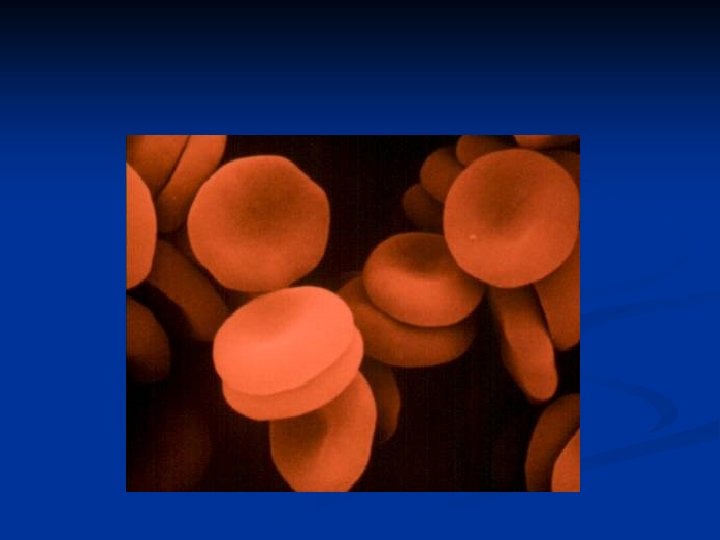
Cell Diversity 1. Fibroblasts: connect body parts n 2. Erythrocytes (red blood cells) carries oxygen n 3. Epithilial cells: cover and line the body organs n 4. skeletal muscle and smooth muscle. n 5. macrophage: cells that fight disease n 6. fat cell: Store nutrients. n
Cell diversity continues 7. Nerve cells: gather and transmit messages n 8. Reproductive cells: Oocyte and sperm. n
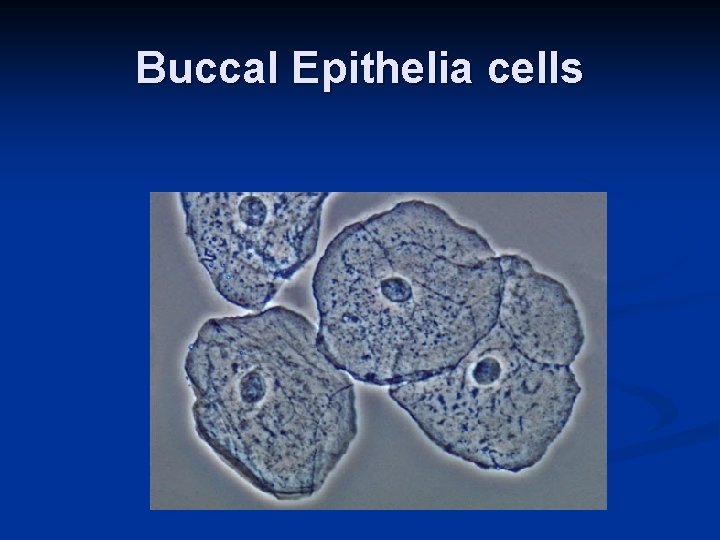
Buccal Epithelia cells
Embryonic Stem Cells
Adult Stem Cells
- Slides: 32