
Cell Membranes are Selectively Permeable What can pass
Cell Membranes are Selectively Permeable
What can pass? n Water and other smaller molecules n Gases like oxygen, carbon dioxide, and nitrogen n Small polar molecules n Larger non-polar molecules pass through more slowly
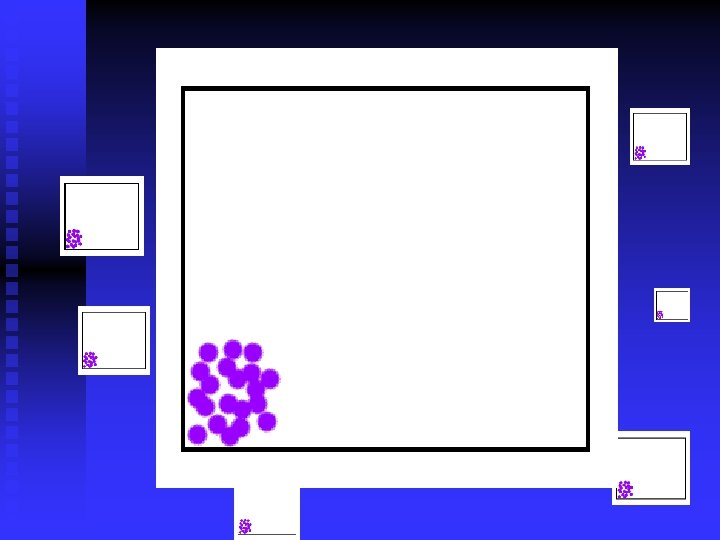
Diffusion n Random motion of particles powers diffusion- kinetic energy n Particles move from an area of higher concentration to an area of lower concentration ultimately reaching equilibrium
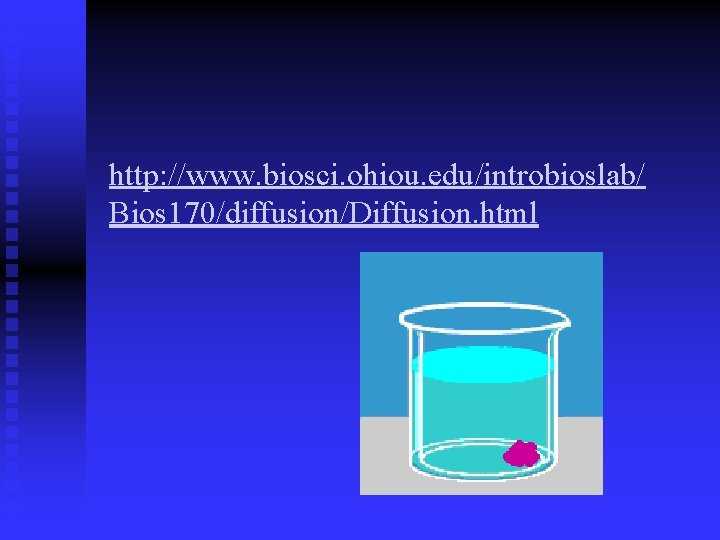
http: //www. biosci. ohiou. edu/introbioslab/ Bios 170/diffusion/Diffusion. html
Rate of Diffusion n Depends upon Temperature u Size of molecules u Electrical charges u Concentration gradient u
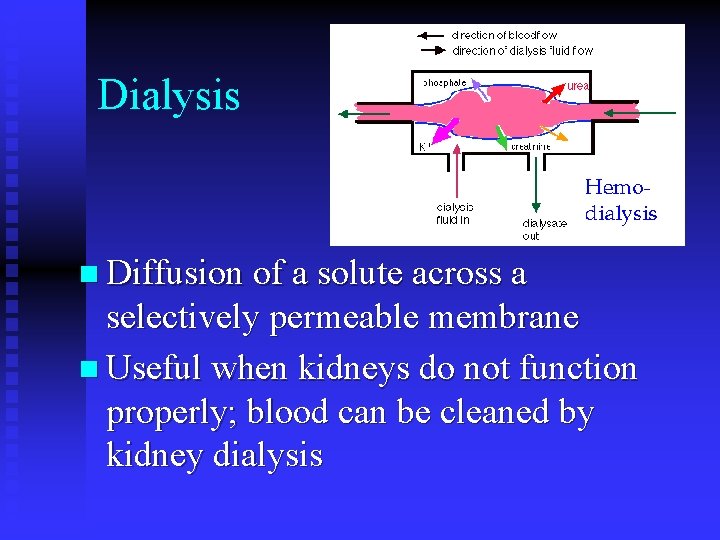
Dialysis n Diffusion of a solute across a selectively permeable membrane n Useful when kidneys do not function properly; blood can be cleaned by kidney dialysis
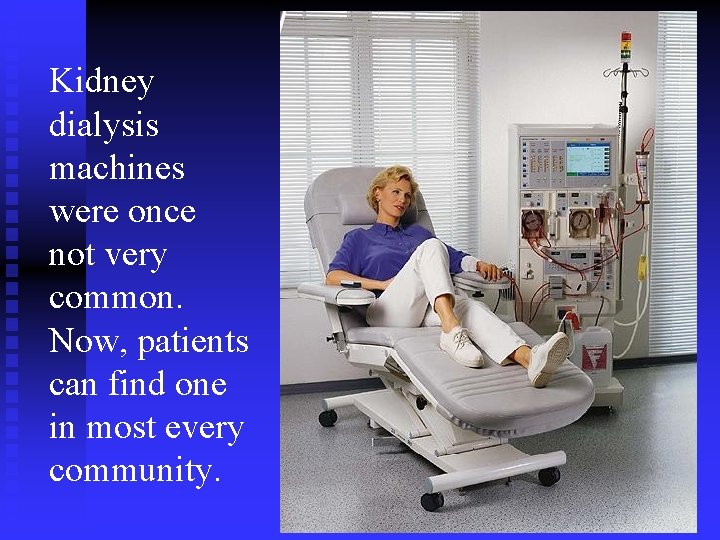
Kidney dialysis machines were once not very common. Now, patients can find one in most every community.
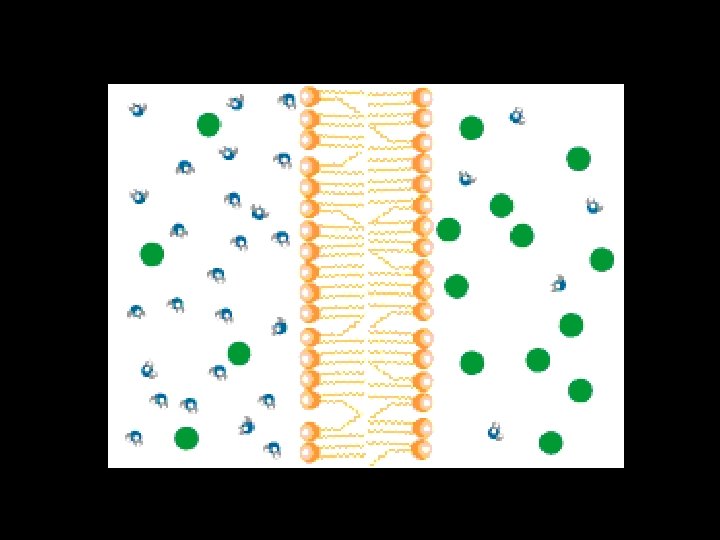
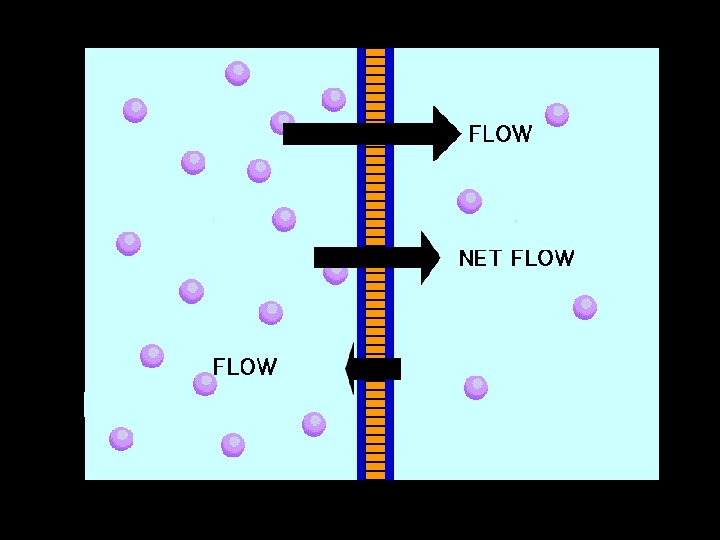
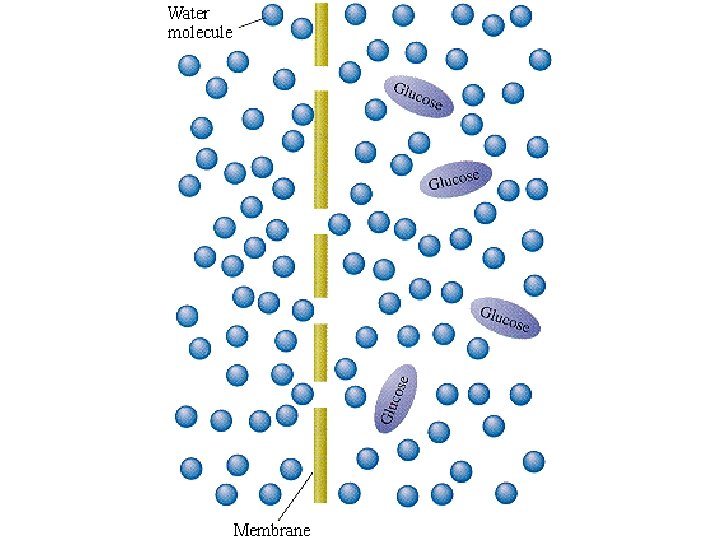
Osmosis n Diffusion of water across a selectively permeable membrane n Osmotic pressure is the tendency of water to move into that solution.
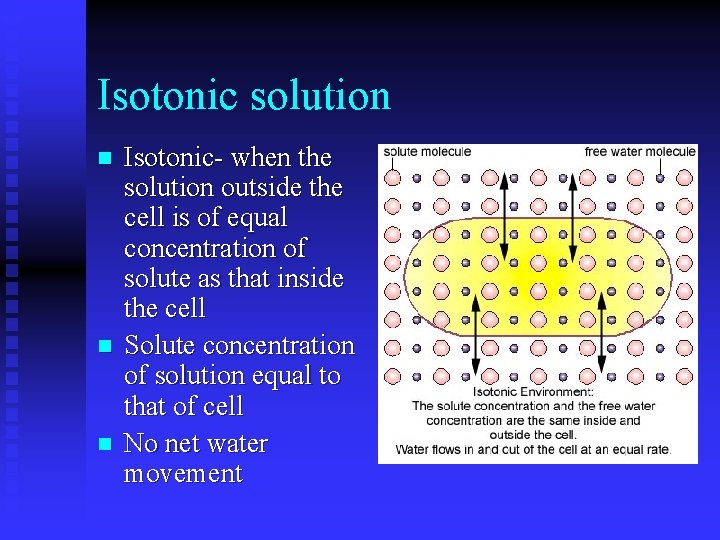
Isotonic solution n Isotonic- when the solution outside the cell is of equal concentration of solute as that inside the cell Solute concentration of solution equal to that of cell No net water movement
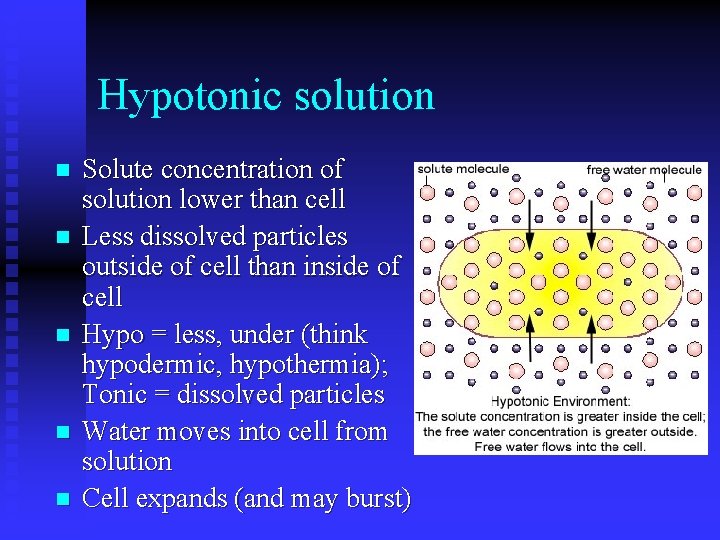
Hypotonic solution n n Solute concentration of solution lower than cell Less dissolved particles outside of cell than inside of cell Hypo = less, under (think hypodermic, hypothermia); Tonic = dissolved particles Water moves into cell from solution Cell expands (and may burst)
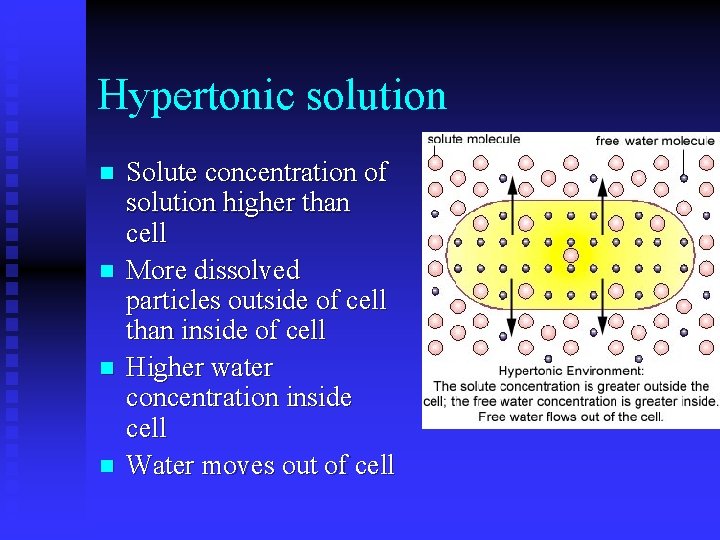
Hypertonic solution n n Solute concentration of solution higher than cell More dissolved particles outside of cell than inside of cell Higher water concentration inside cell Water moves out of cell
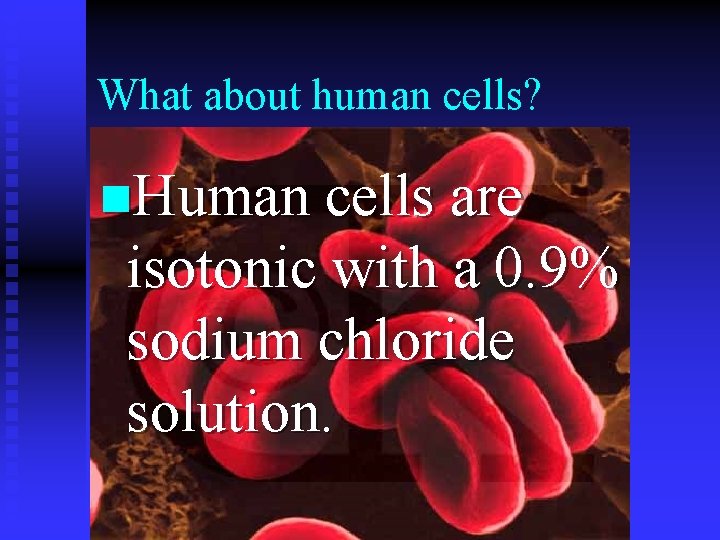
What about human cells? n. Human cells are isotonic with a 0. 9% sodium chloride solution.
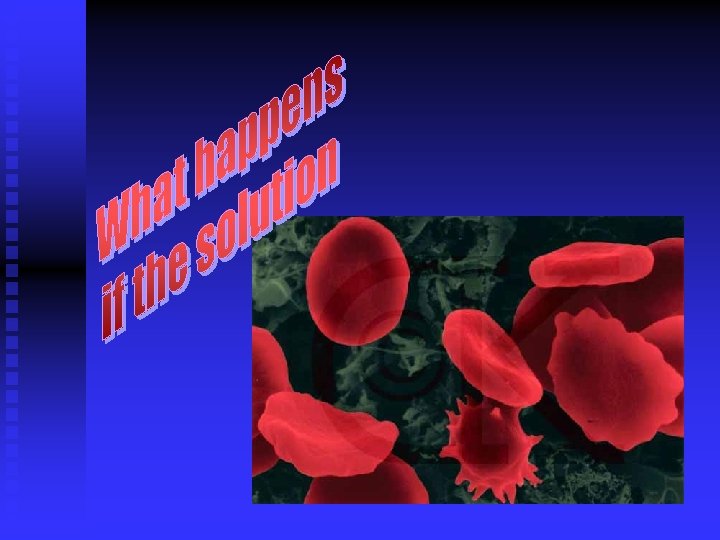
Osmotic pressure Solutions that are hypertonic have a higher osmotic pressure than the cells n Solutions that are hypotonic have a lower osmotic pressure than the cells n Remember that osmosis is the movement of water n
Who is this man?
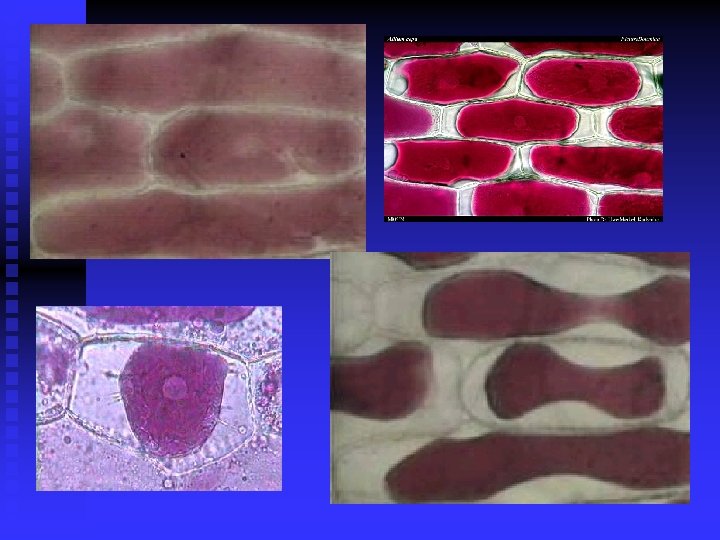
Osmotic Pressure changes Cell Size Plasmolysis- cell contents shrink away from its cell wall caused by a hypertonic solution n Crenation- cell shrinks caused by a hypertonic solution n Cytolysis- cell contents swell and burst the cell caused by a hypotonic solution n
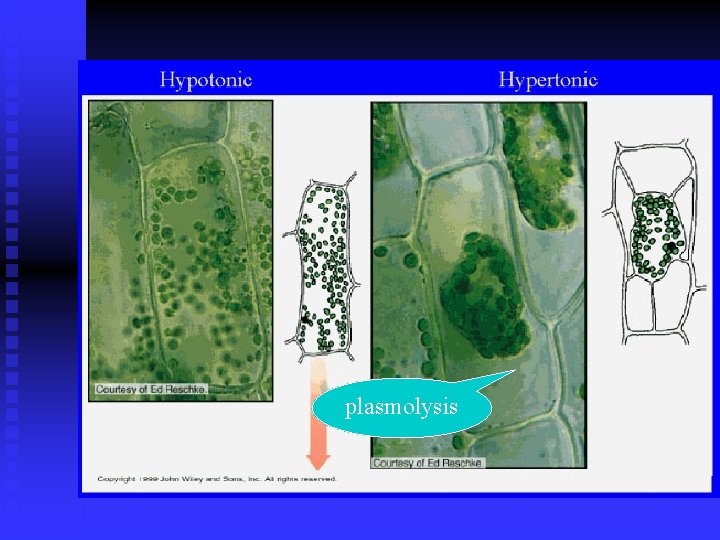
plasmolysis
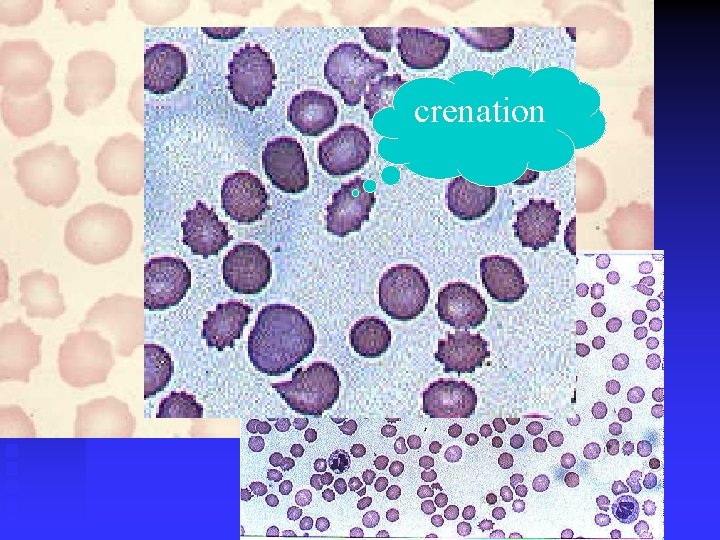
crenation
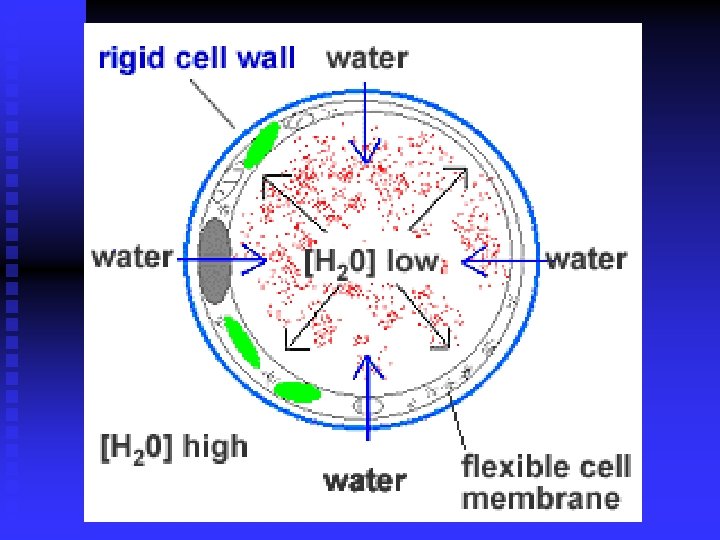
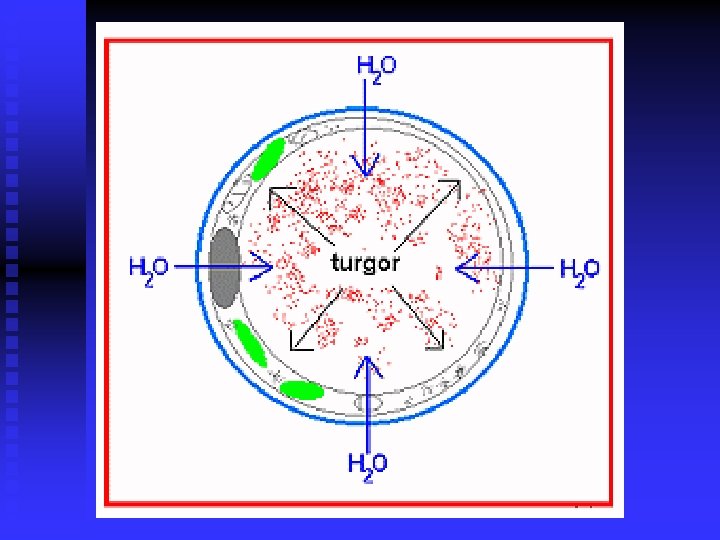
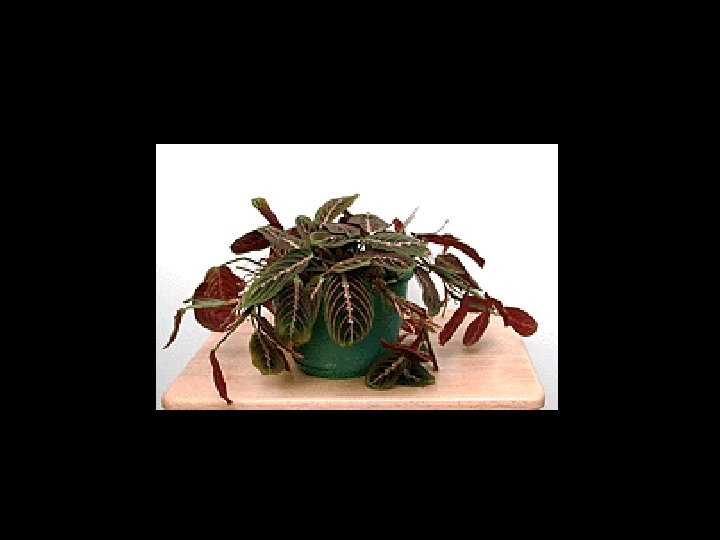
Turgor Pressure n The pressure that a plant cell places on its cell wall n Caused by the plant’s cellular environment being almost always hypotonic n Turgor provides structural support in non-woody plants
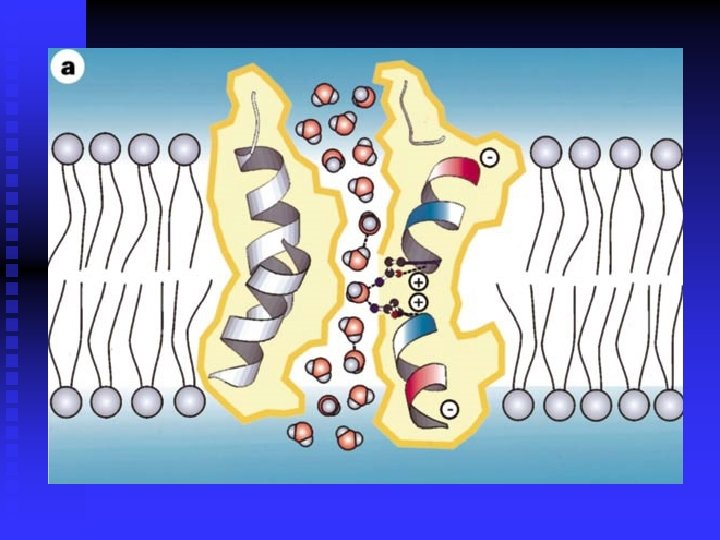
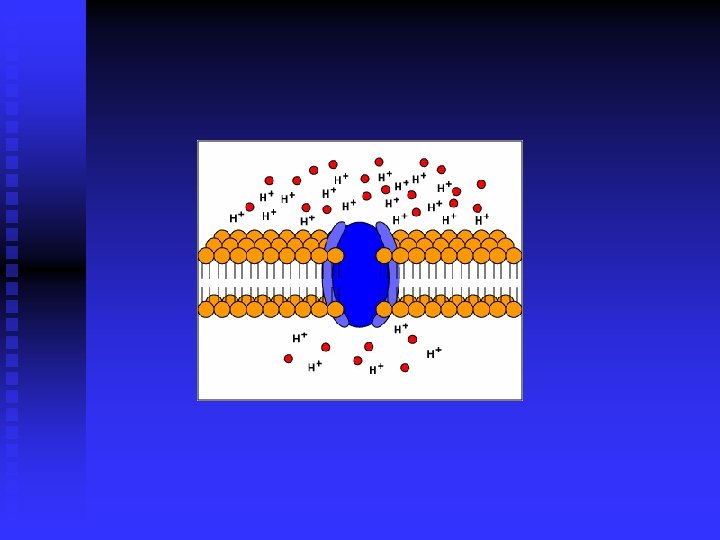
Aquaporin-1 n Water sometimes seems to come into the cell faster than osmosis can account for n Aquaporin-1 is an integral protein that acts as a gated water channel n Aquaporin-1 allows water to pass through but not protons
Question for Experts- (that’s you) n Large molecules cannot move easily through the cell’s selectively permeable membrane. Ions cannot cross a lipid bilayer. Why is this advantageous to the cell?
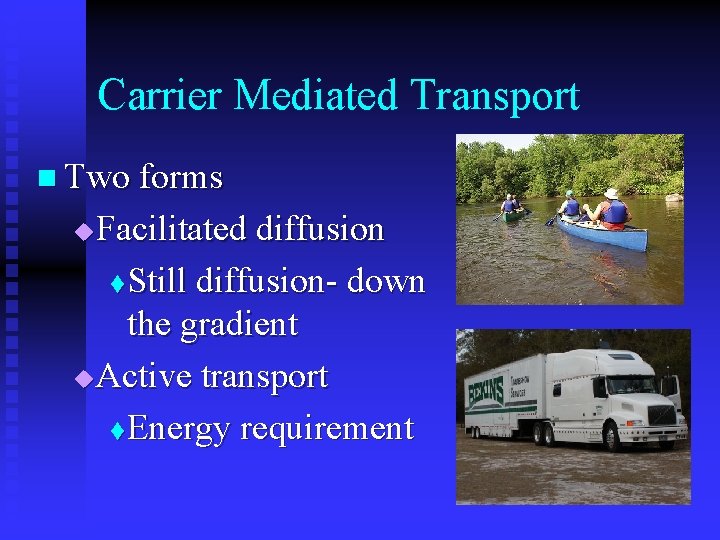
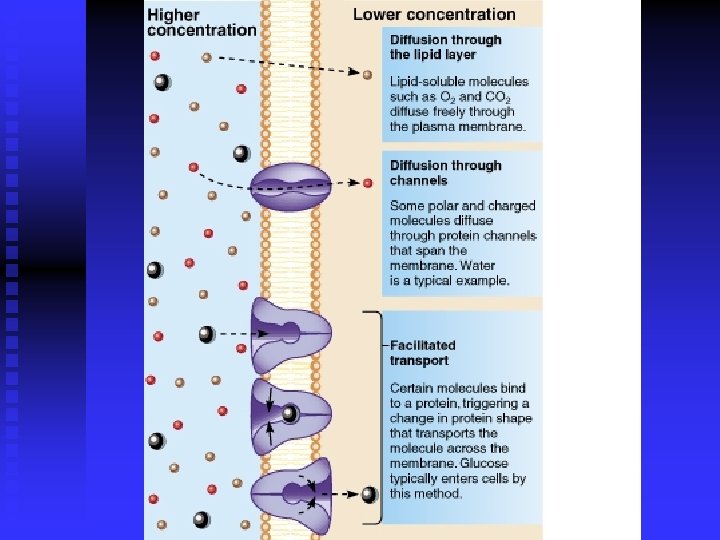
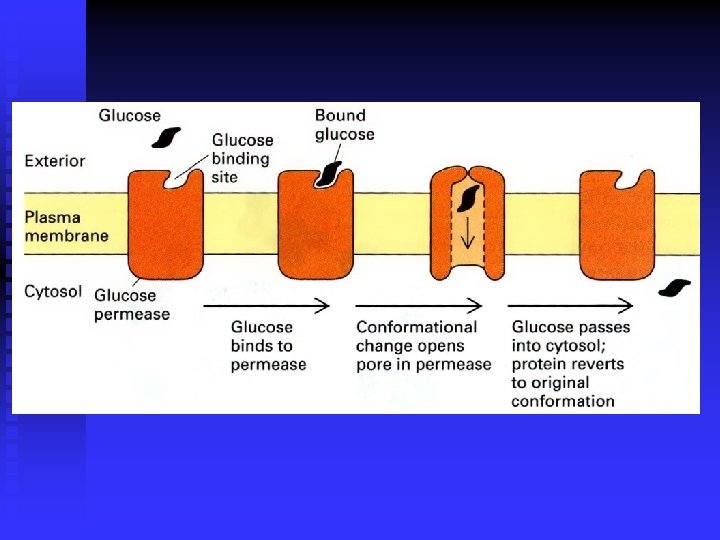
Carrier Mediated Transport n Two forms Facilitated diffusion t Still diffusion- down the gradient u Active transport t Energy requirement u
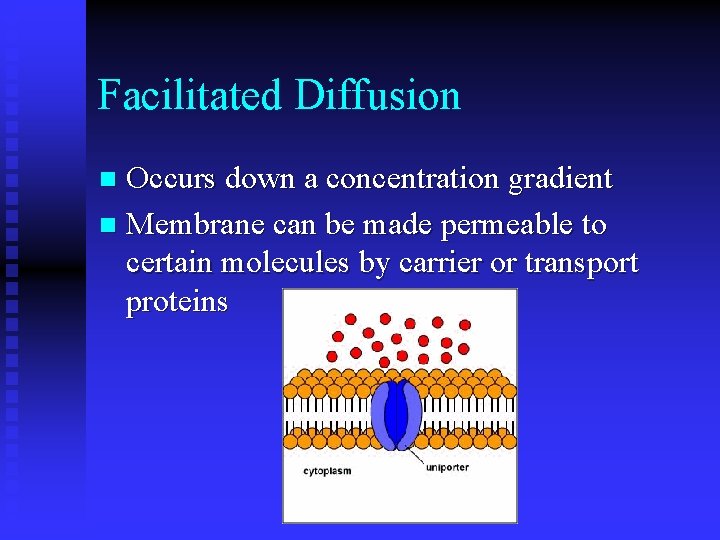
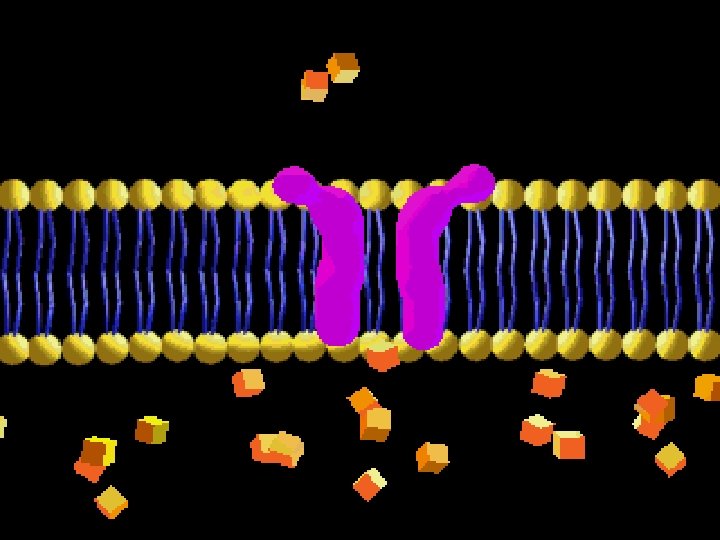
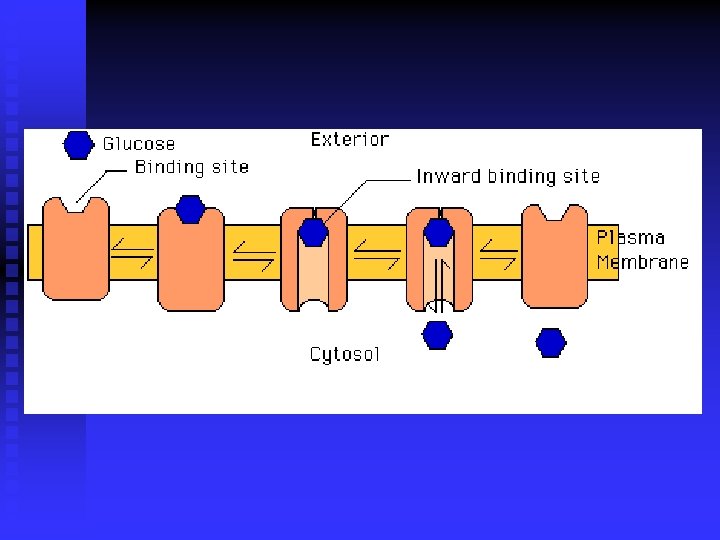
Facilitated Diffusion Occurs down a concentration gradient n Membrane can be made permeable to certain molecules by carrier or transport proteins n
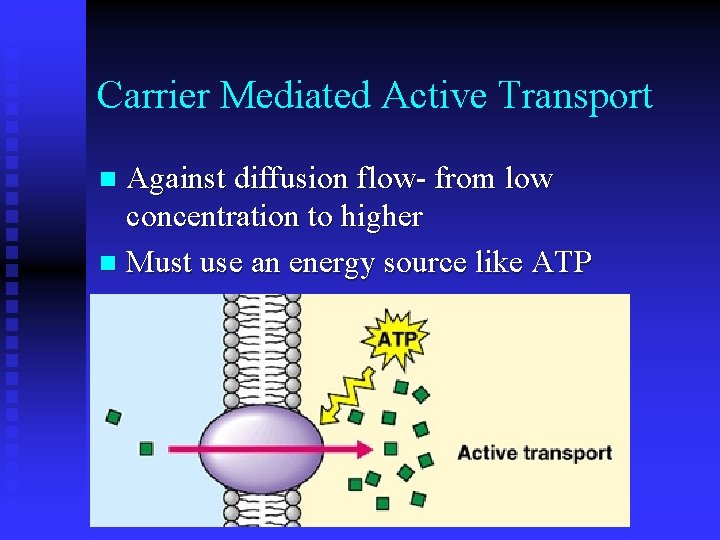
Carrier Mediated Active Transport Against diffusion flow- from low concentration to higher n Must use an energy source like ATP n
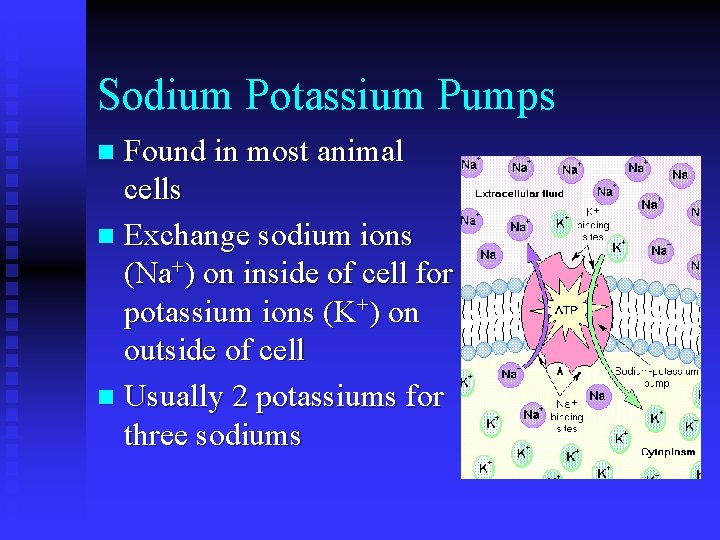
Sodium Potassium Pumps Found in most animal cells n Exchange sodium ions (Na+) on inside of cell for potassium ions (K+) on outside of cell n Usually 2 potassiums for three sodiums n
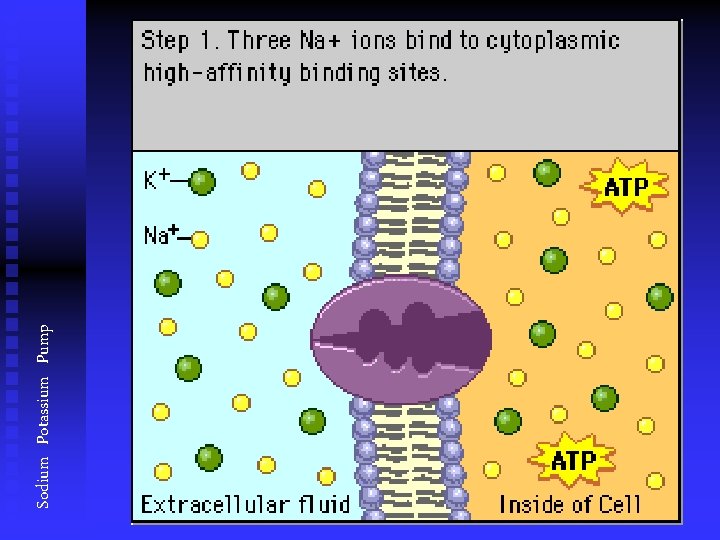
Sodium Potassium Pump
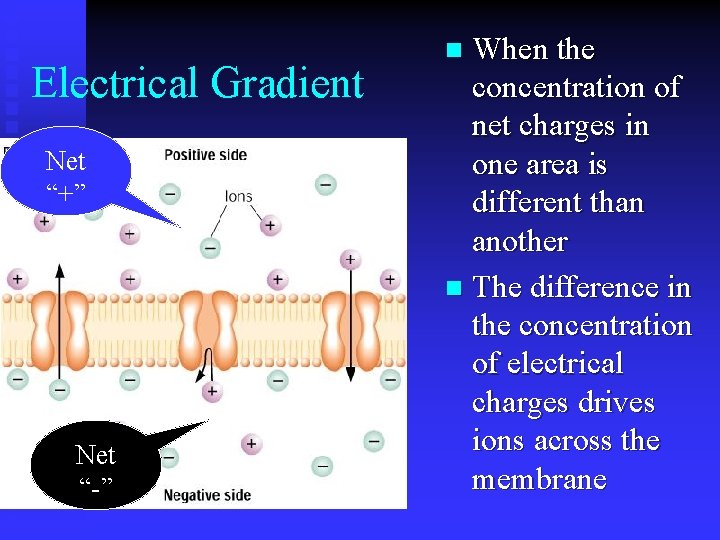
Electrical Gradient Net “+” Net “-” When the concentration of net charges in one area is different than another n The difference in the concentration of electrical charges drives ions across the membrane n
Cotransport n Electrochemical gradient- higher concentration of electrical charges and molecules in one place than in another n Moving down the gradient can supply enough energy to push a molecule through a protein transport back against the gradient
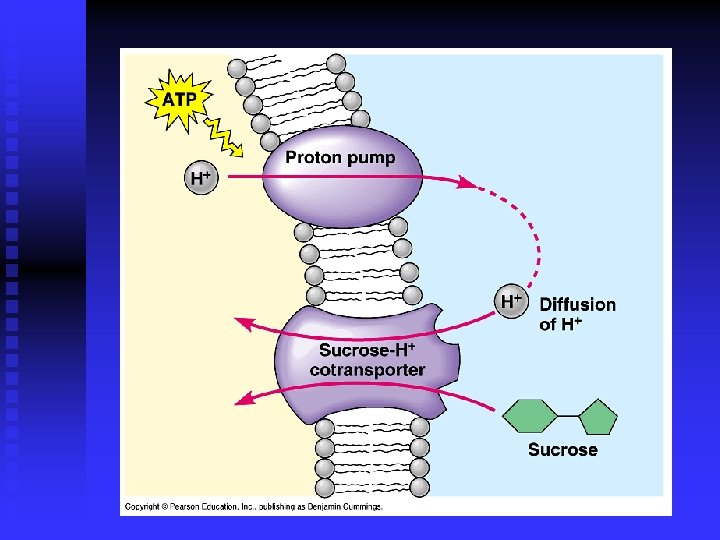
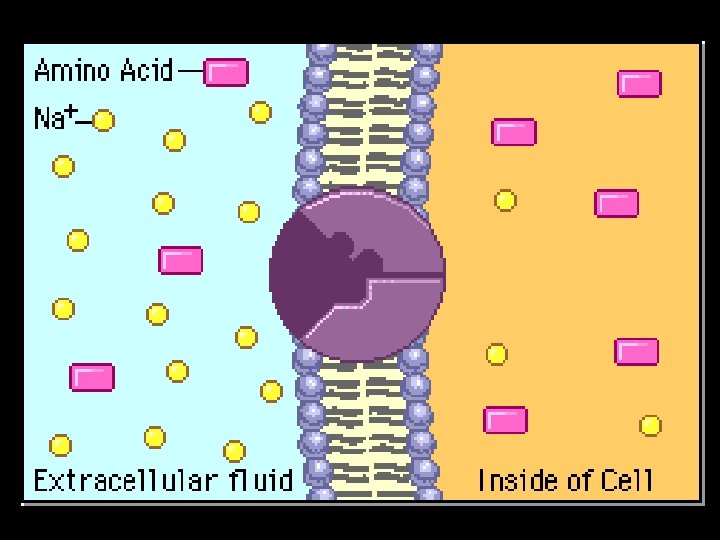
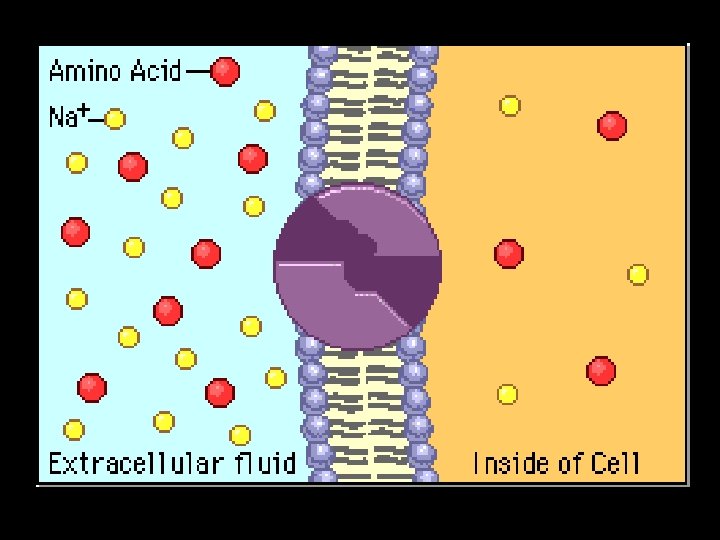
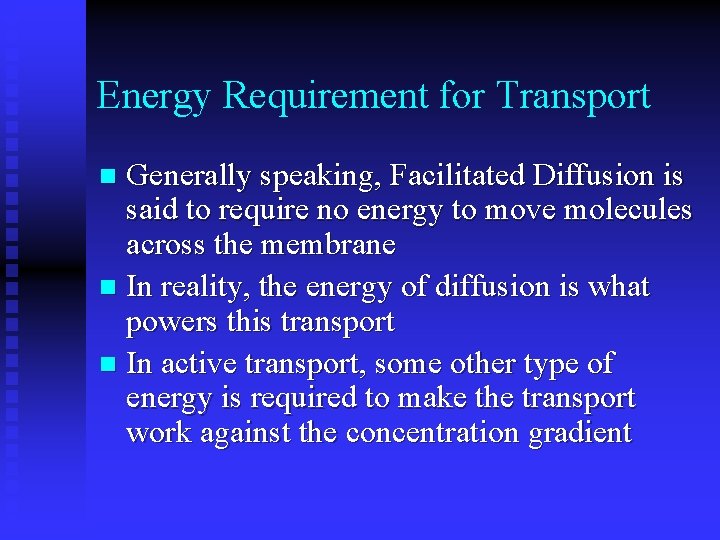
Energy Requirement for Transport Generally speaking, Facilitated Diffusion is said to require no energy to move molecules across the membrane n In reality, the energy of diffusion is what powers this transport n In active transport, some other type of energy is required to make the transport work against the concentration gradient n
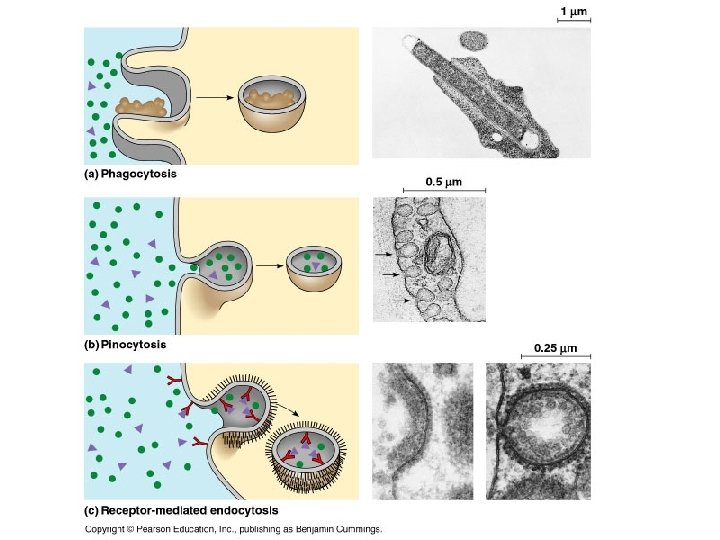
Endocytosis n Three types Pinocytosis- pino “to drink”; cyto “cell” u. Phagocytosis- phago “to eat” u. Receptor-mediated endocytosis u
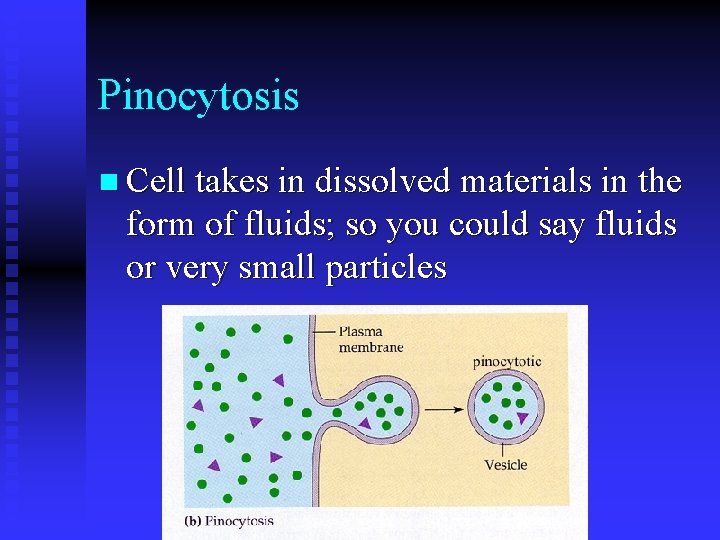
Pinocytosis n Cell takes in dissolved materials in the form of fluids; so you could say fluids or very small particles
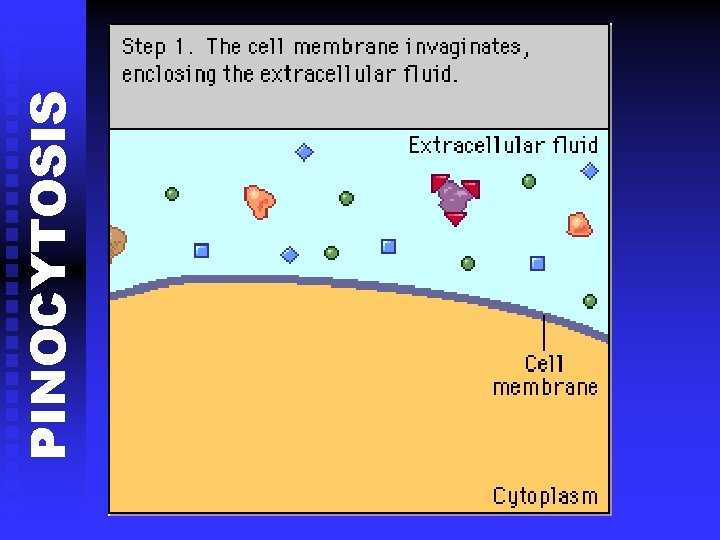
PINOCYTOSIS
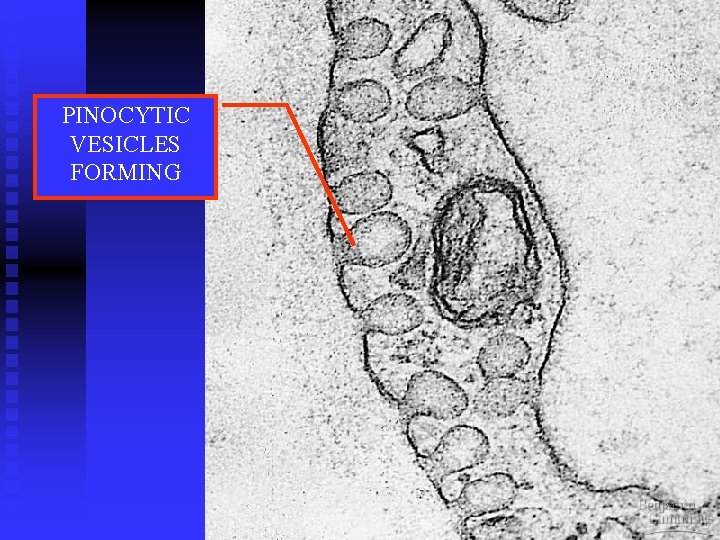
PINOCYTIC VESICLES FORMING
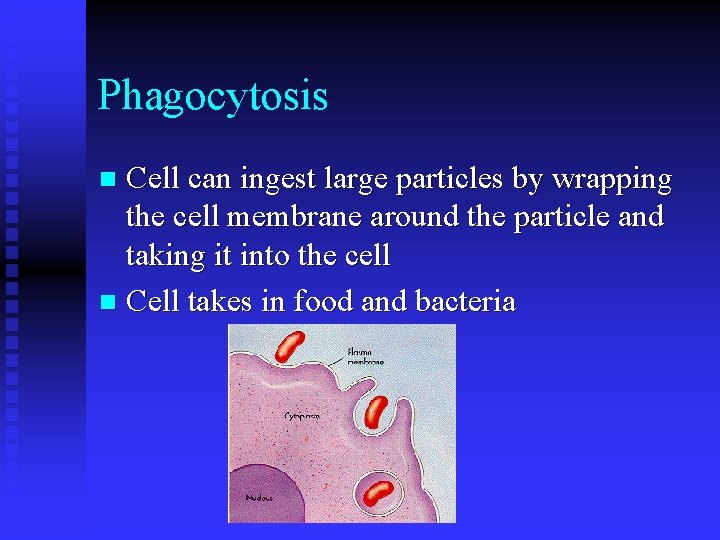
Phagocytosis Cell can ingest large particles by wrapping the cell membrane around the particle and taking it into the cell n Cell takes in food and bacteria n
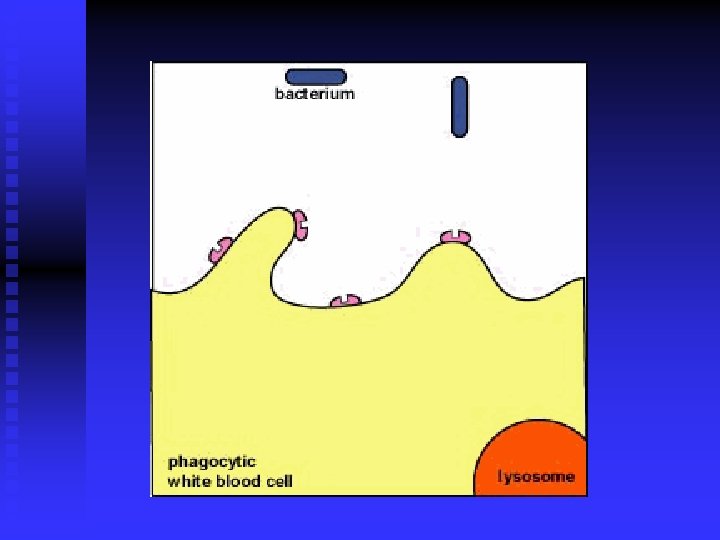
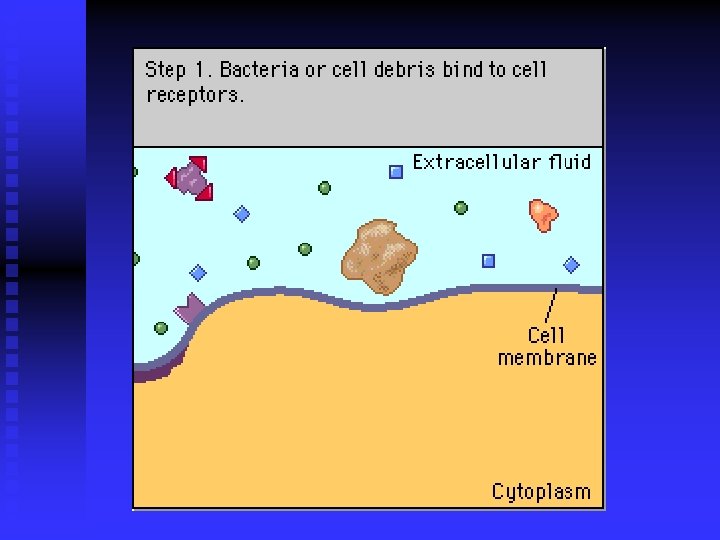
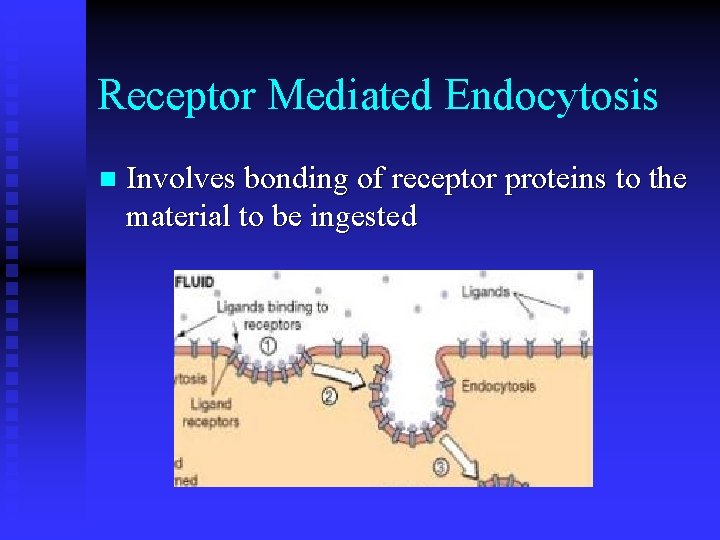
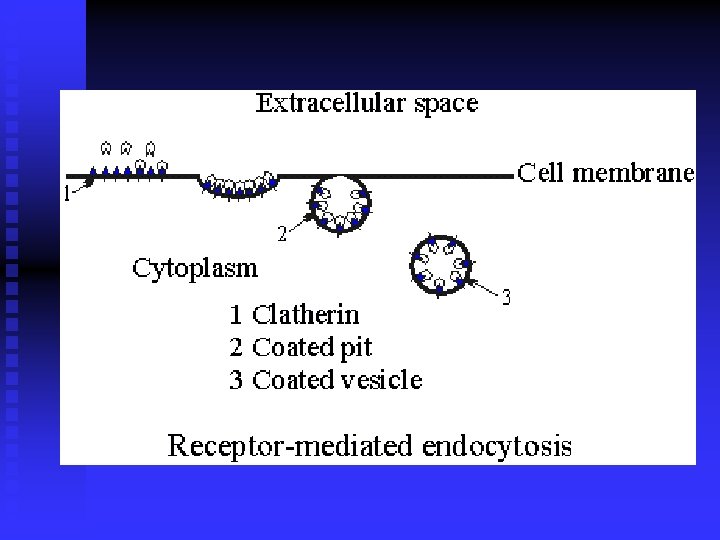
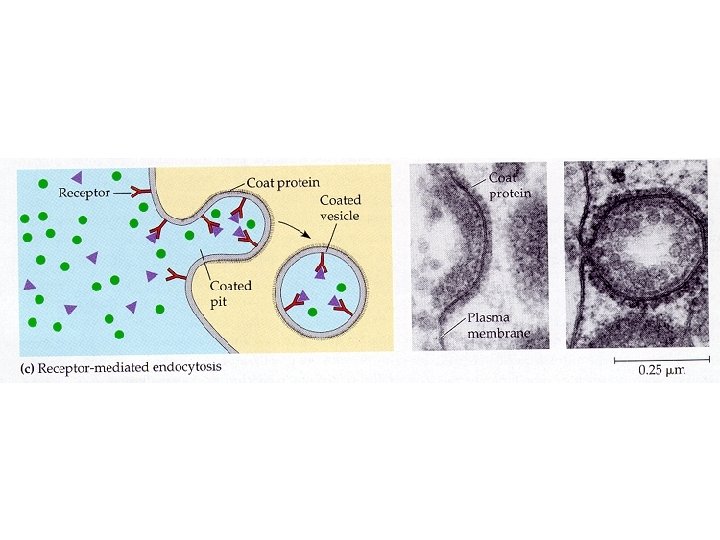
Receptor Mediated Endocytosis n Involves bonding of receptor proteins to the material to be ingested
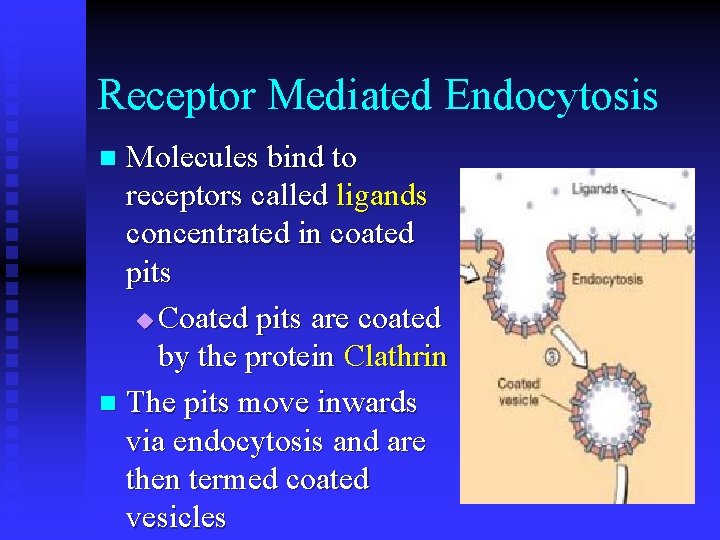
Receptor Mediated Endocytosis Molecules bind to receptors called ligands concentrated in coated pits u Coated pits are coated by the protein Clathrin n The pits move inwards via endocytosis and are then termed coated vesicles n
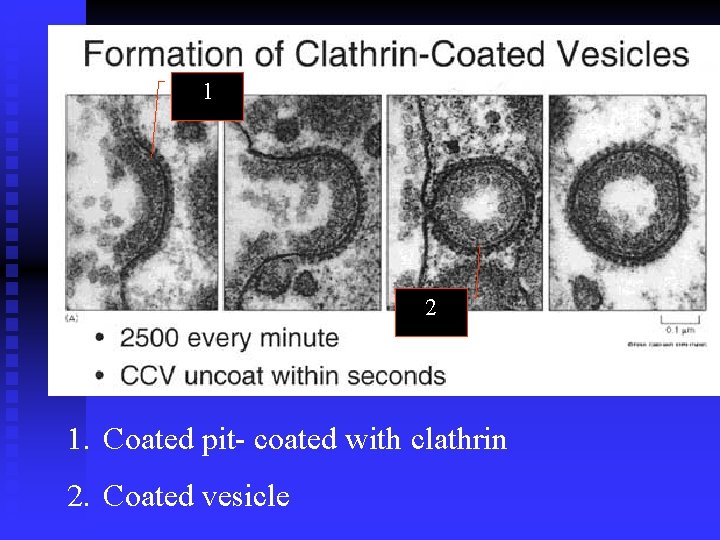
1 2 1. Coated pit- coated with clathrin 2. Coated vesicle
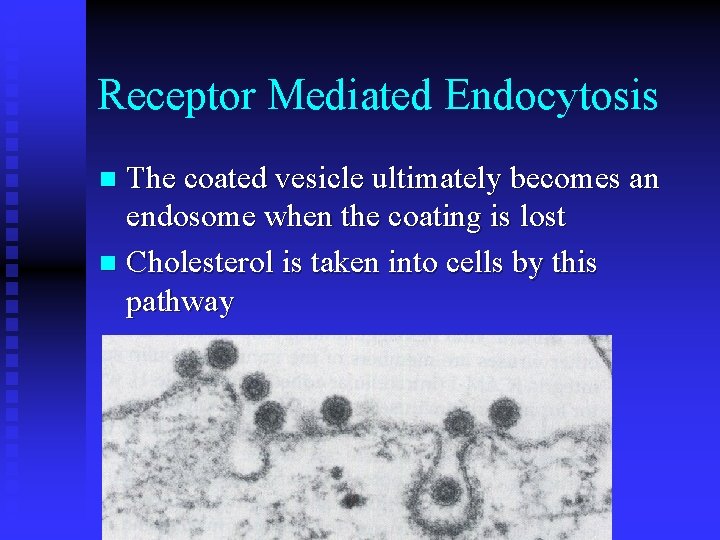
Receptor Mediated Endocytosis The coated vesicle ultimately becomes an endosome when the coating is lost n Cholesterol is taken into cells by this pathway n
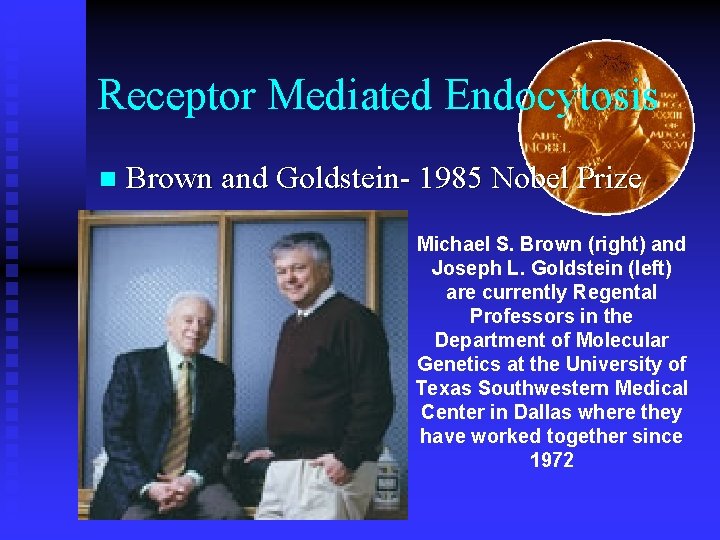
Receptor Mediated Endocytosis n Brown and Goldstein- 1985 Nobel Prize Michael S. Brown (right) and Joseph L. Goldstein (left) are currently Regental Professors in the Department of Molecular Genetics at the University of Texas Southwestern Medical Center in Dallas where they have worked together since 1972
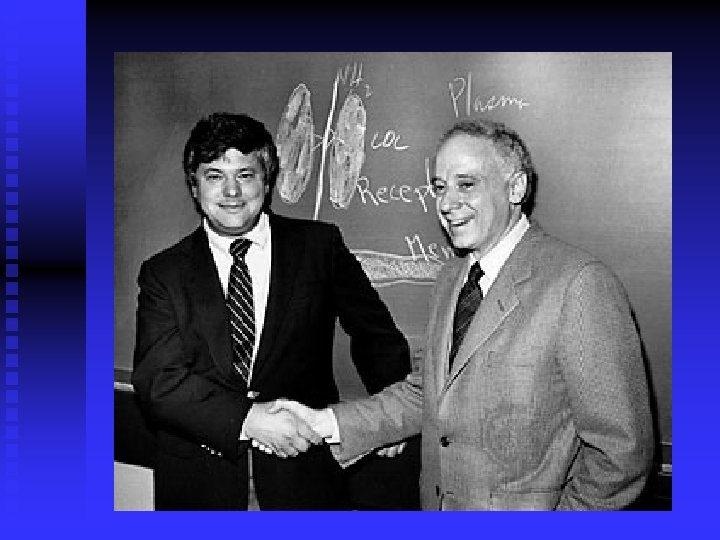
Drs. Brown and Goldstein personify the team dynamic at the heart of UT Southwestern’s approach to research. They shared the 1985 Nobel Prize for their discovery of the underlying mechanisms of cholesterol metabolism. Their findings led to the development of statin drugs, the cholesterol-lowering compounds that today are used by 16 million Americans and are the most widely prescribed medications in the United States. And their discovery is improving more lives every year. New federal cholesterol guidelines will triple the number of Americans taking statin drugs to lower their cholesterol, reducing the risk of heart disease and stroke for countless people.
- Slides: 65