
Cell Membranes are composed of 2 Layers of
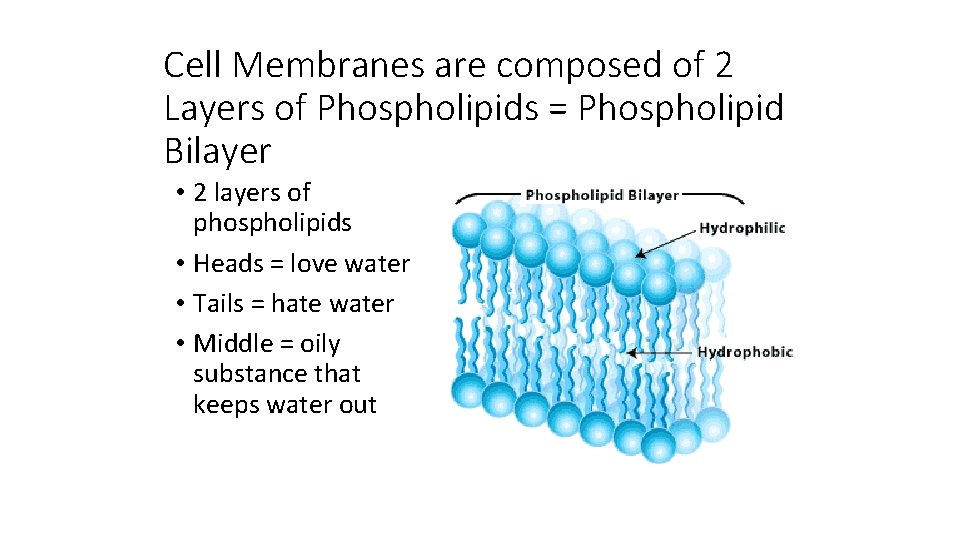
Cell Membranes are composed of 2 Layers of Phospholipids = Phospholipid Bilayer • 2 layers of phospholipids • Heads = love water • Tails = hate water • Middle = oily substance that keeps water out
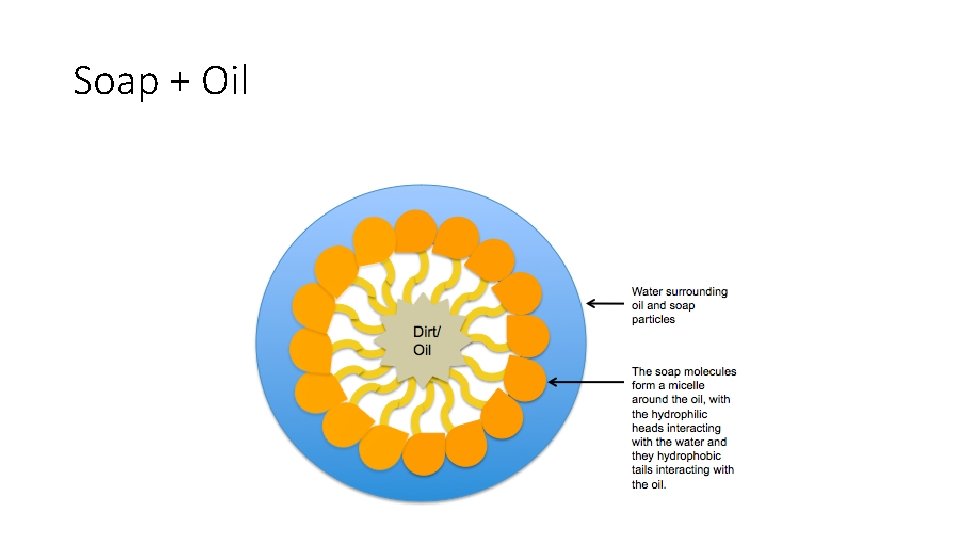
Soap + Oil
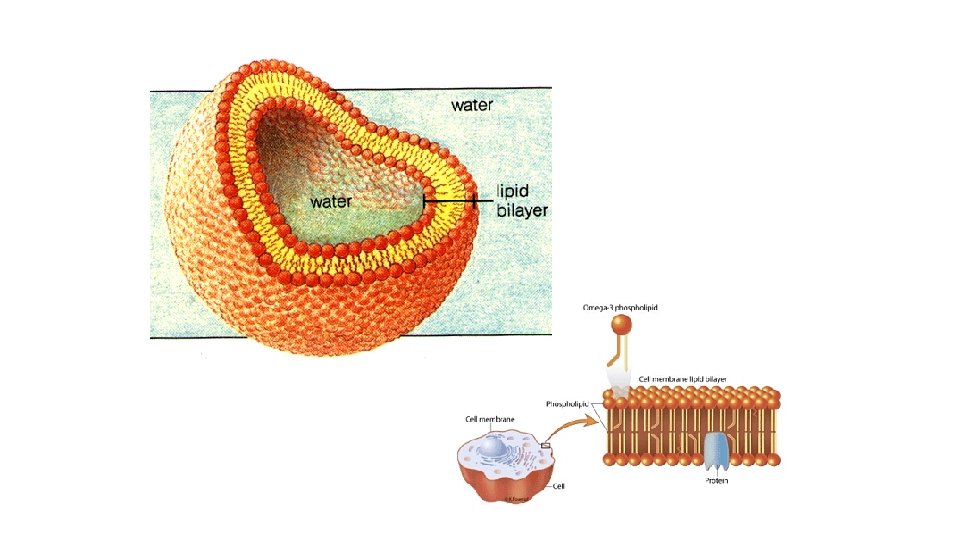
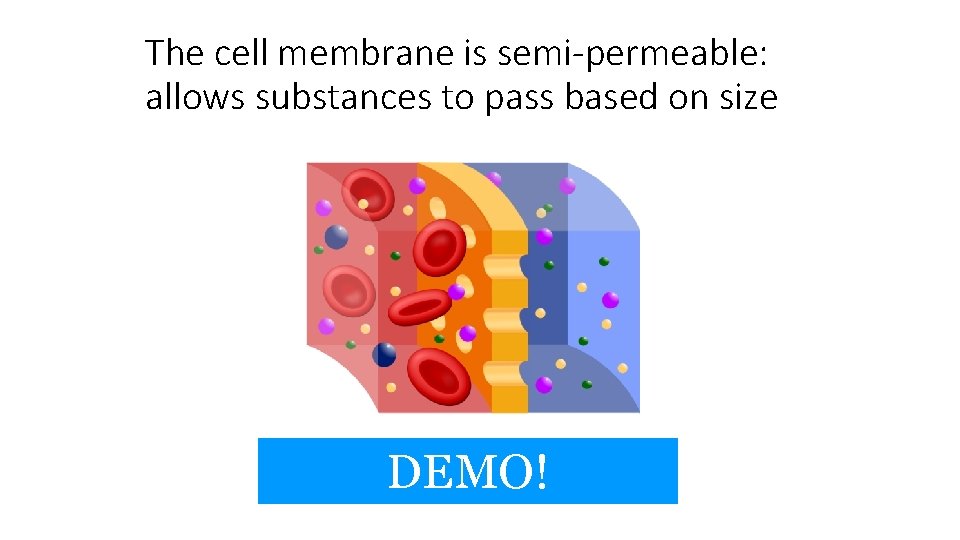
The cell membrane is semi-permeable: allows substances to pass based on size DEMO!
What enters and exits cells? http: //www. teachersdomain. org/asset/tdc 02_int_membraneweb/ • Carbon Dioxide • Water • Oxygen • Glucose • Enzymes Small molecules can pass through the phospholipid bilayer; but how do the big molecules get into cells?
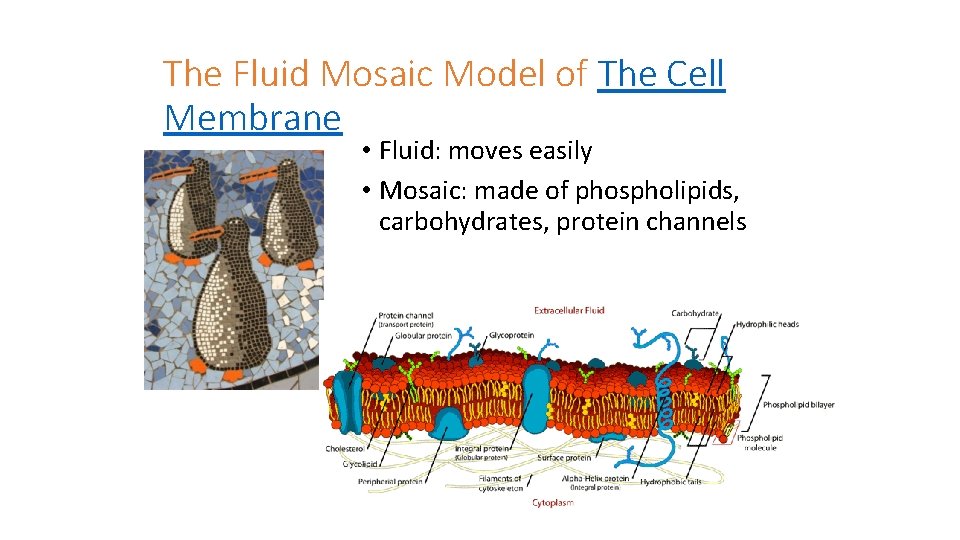
The Fluid Mosaic Model of The Cell Membrane • Fluid: moves easily • Mosaic: made of phospholipids, carbohydrates, protein channels
Cell Transport Jigsaw: • Each group will read about a different type of cell transport • You are to become an EXPERT in your topic. • While reading: • Pull out vocab words and define. • Take notes on important info. • Summarize the transport type. • You will then switch groups and become the teacher of that topic in your group. • You are fully responsible for the people in your group learning your section of notes. • Group 1: Diffusion • Group 2: Osmosis • Group 3: Facilitated Diffusion/Ion Channels • Group 4: Sodium Pumps • Group 5: Exo/Endocytosis • **B 2 Only: • Group 5: Exocytosis • Group 6: Endocytosis
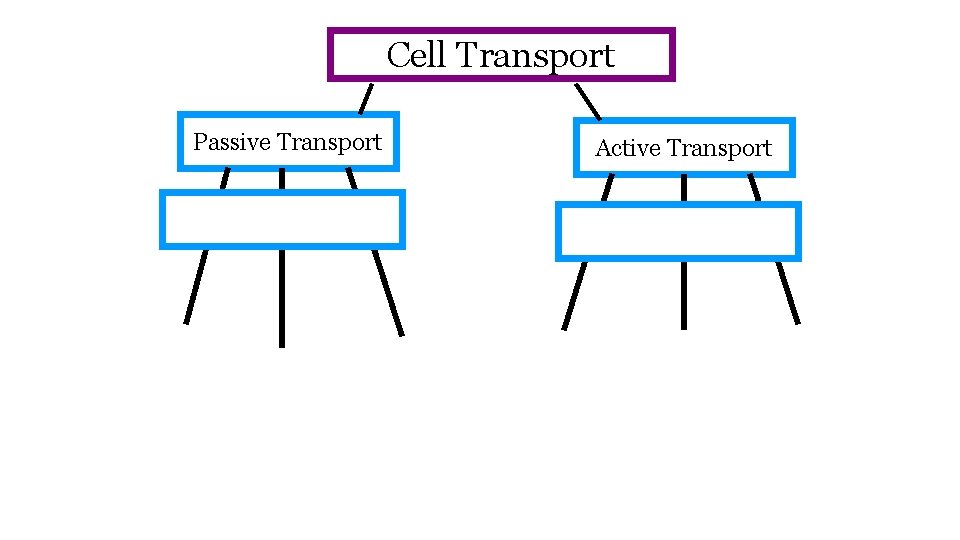
Cell Transport Passive Transport Active Transport
Terms given for the movement of molecules into and out of the cell: Passive Transport: No Energy Required • Simple Diffusion • Osmosis • Facilitated Diffusion Active Transport: Energy (ATP) Required • Cell Membrane Pumps • Endocytosis • Exocytosis
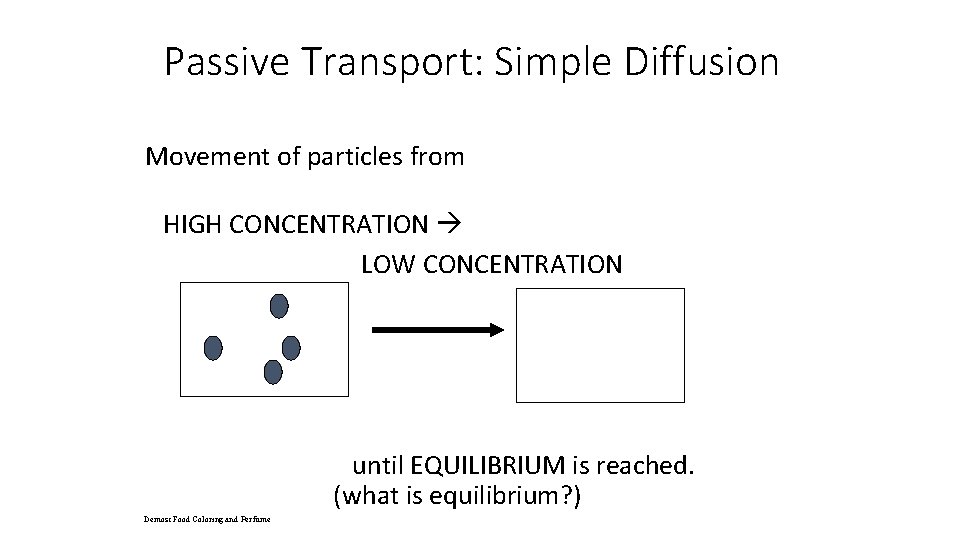
Passive Transport: Simple Diffusion Movement of particles from HIGH CONCENTRATION LOW CONCENTRATION until EQUILIBRIUM is reached. (what is equilibrium? ) Demos: Food Coloring and Perfume
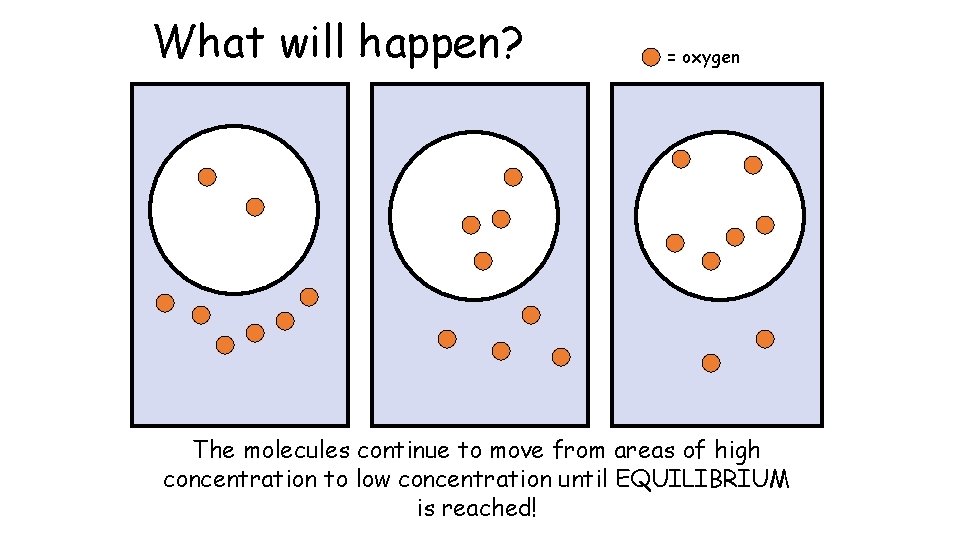
What will happen? = oxygen The molecules continue to move from areas of high concentration to low concentration until EQUILIBRIUM is reached!
Simple Diffusion in Cells: Oxygen and Carbon Dioxide
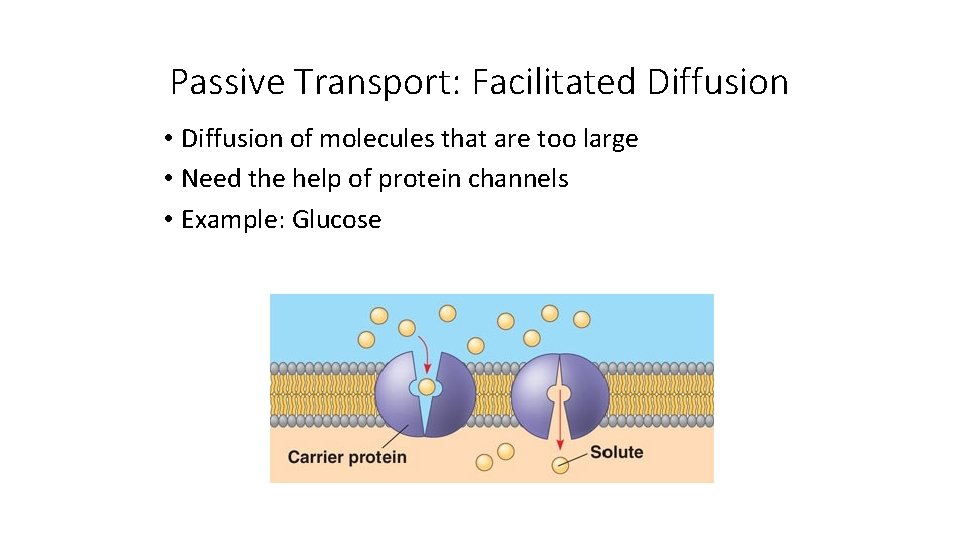
Passive Transport: Facilitated Diffusion • Diffusion of molecules that are too large • Need the help of protein channels • Example: Glucose
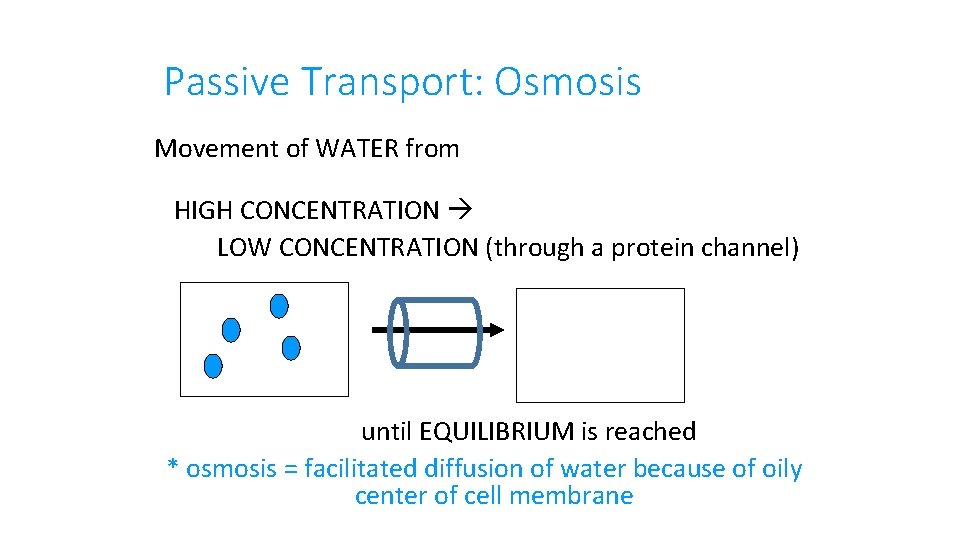
Passive Transport: Osmosis Movement of WATER from HIGH CONCENTRATION LOW CONCENTRATION (through a protein channel) until EQUILIBRIUM is reached * osmosis = facilitated diffusion of water because of oily center of cell membrane
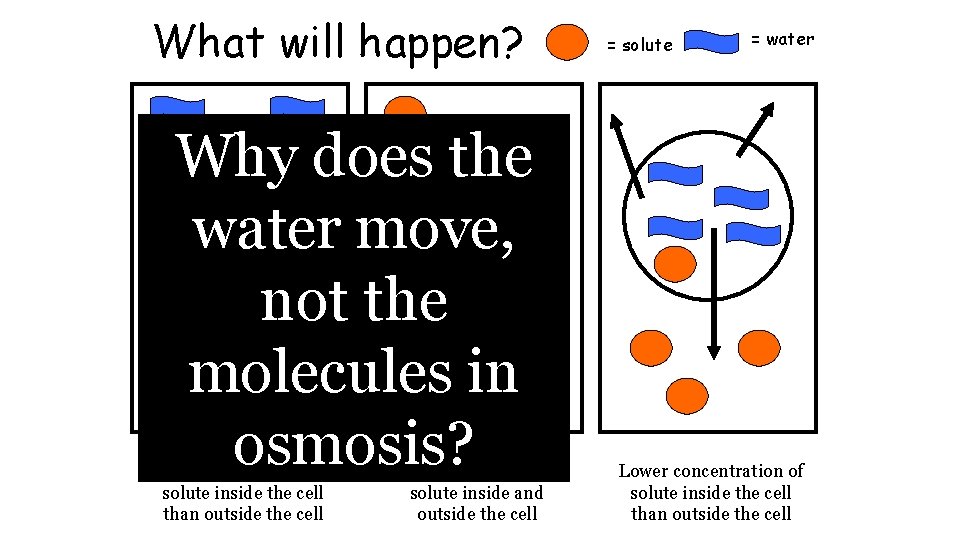
What will happen? Why does the water move, not the molecules in osmosis? Higher concentration of solute inside the cell than outside the cell Equal concentration of solute inside and outside the cell = solute = water Lower concentration of solute inside the cell than outside the cell
Switching from Passive Transport to Active Transport. What do you think the difference will be?
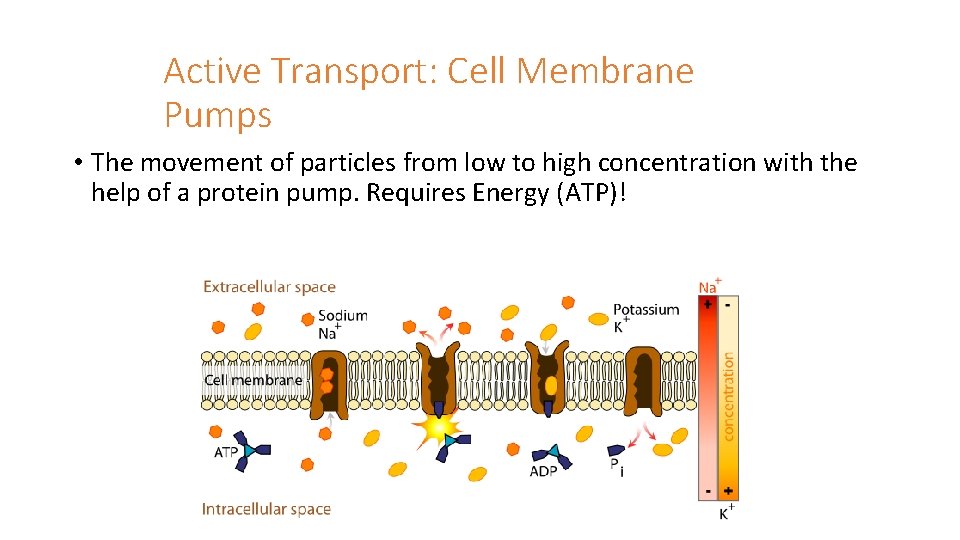
Active Transport: Cell Membrane Pumps • The movement of particles from low to high concentration with the help of a protein pump. Requires Energy (ATP)!
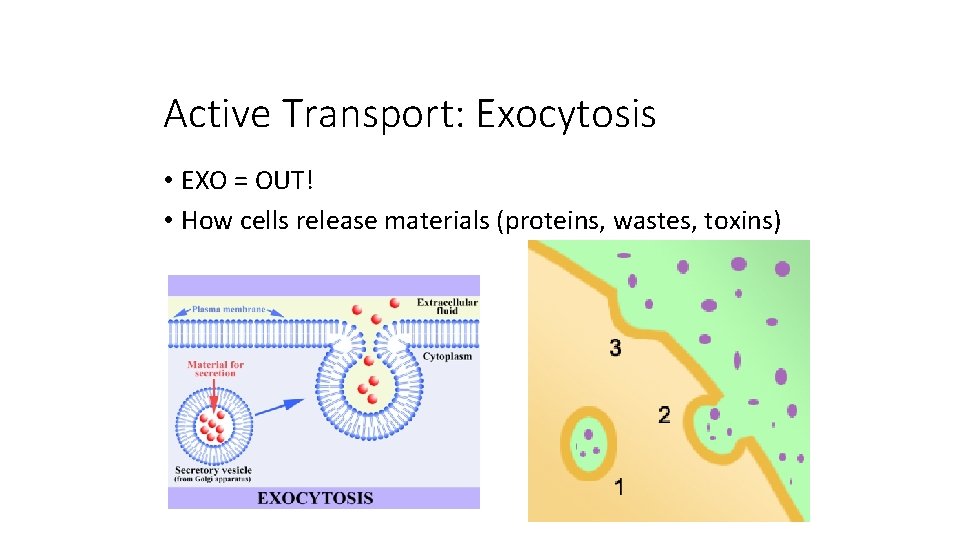
Active Transport: Exocytosis • EXO = OUT! • How cells release materials (proteins, wastes, toxins)
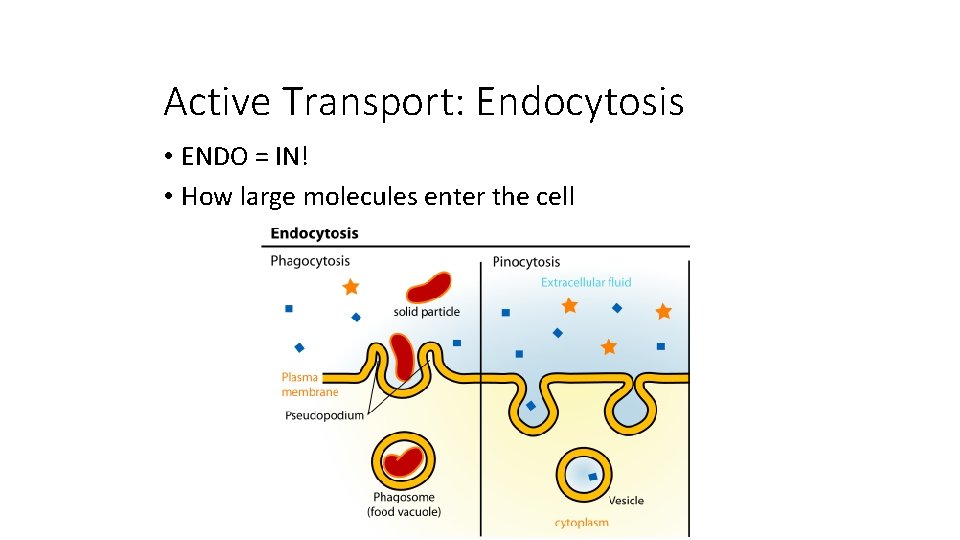
Active Transport: Endocytosis • ENDO = IN! • How large molecules enter the cell
- Slides: 20