
Cell Membrane Transport Ms Rayner Yr 11 ATAR
Cell Membrane & Transport Ms Rayner Yr 11 ATAR Biology
Objectives • • • Explain how the cell membrane is structured to allow this transport (i. e. , semi-permeable, carrier molecules). Explain how materials can enter and leave a cell (diffusion, facilitated diffusion, osmosis and active transport – endocytosis and exocytosis) Describe how surface area to volume ratio and concentration gradients affect the movement of materials into and out of a cell.
Cells Require Inputs & Removal of wastes • Must take in useful molecules & ions from external environment • Amino acids, monosaccharides, fatty acids, glycerol, minerals, vitamins & water • For example: a cell producing proteins will need to take in a variety of amino acids • Cells must get rid of waste products from cellular respiration • Water, metabolic wastes – nitrogenous wastes • Many cellular reactions require specific conditions to occur. Enzymes can only perform their functions within narrow p. H ranges so Hydrogen ion concentrations must be kept within strict limits to maintain cytoplasmic p. H level
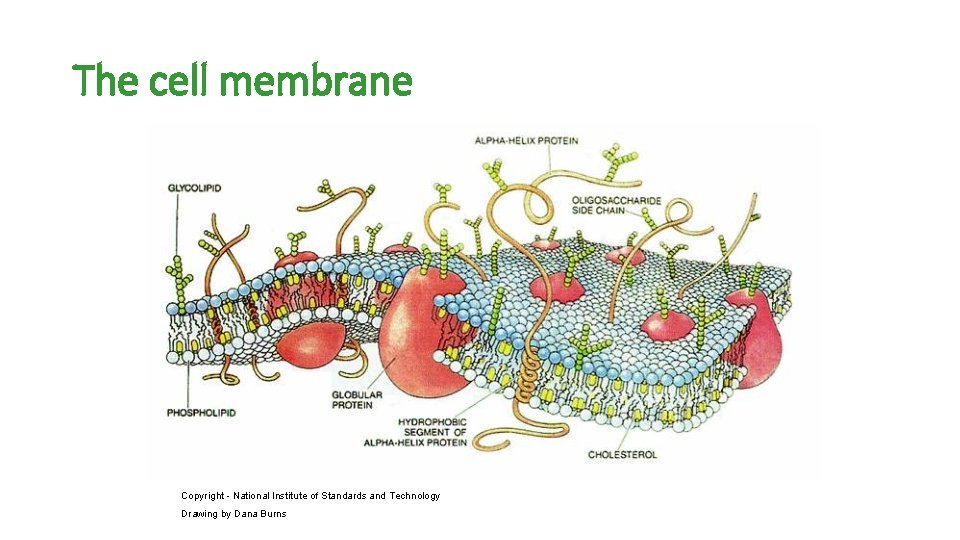
The cell membrane Copyright - National Institute of Standards and Technology Drawing by Dana Burns
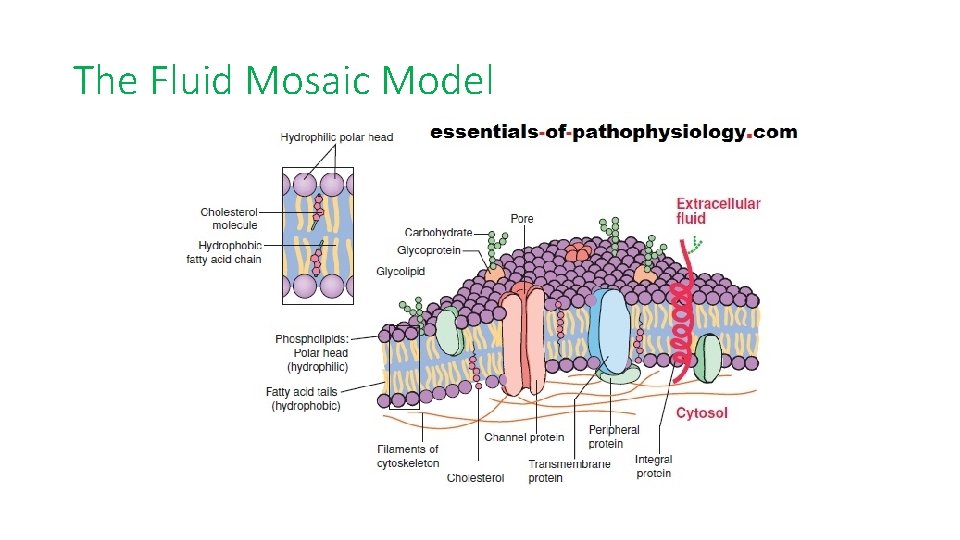
The Fluid Mosaic Model
The cell membrane • The cell membrane (or plasma membrane) is the outer boundary of a cell. • The membrane is a phospholipid bi-layer. • Proteins and other molecules are embedded in the membrane. • The cell membrane is semi-permeable which means it is selectively permeable and only allows some substances to cross and not others.
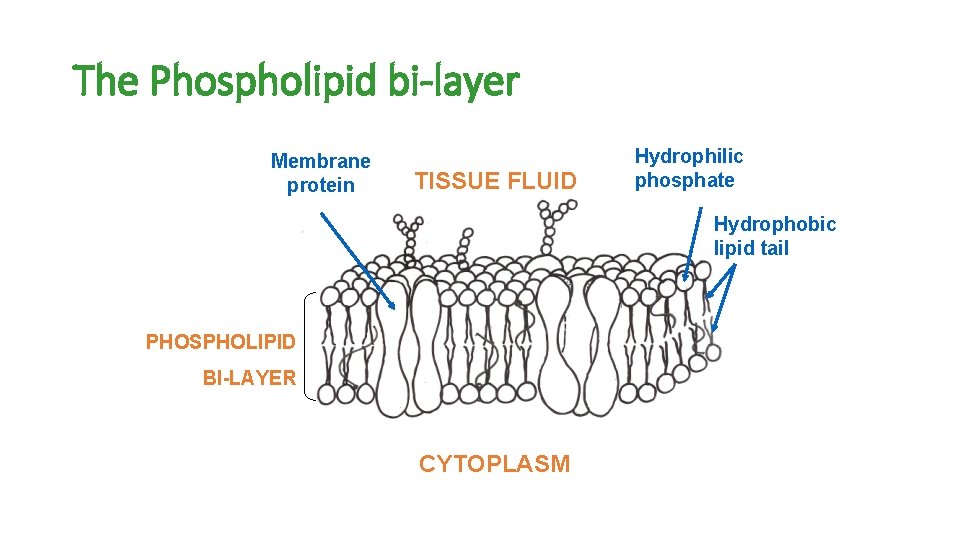
The Phospholipid bi-layer Membrane protein TISSUE FLUID Hydrophilic phosphate Hydrophobic lipid tail PHOSPHOLIPID BI-LAYER CYTOPLASM
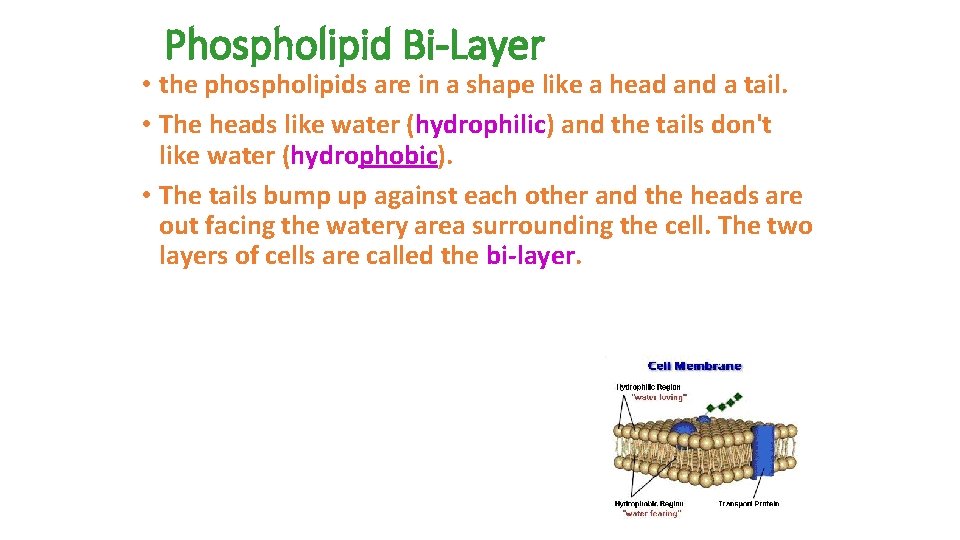
Phospholipid Bi-Layer • the phospholipids are in a shape like a head and a tail. • The heads like water (hydrophilic) and the tails don't like water (hydrophobic). • The tails bump up against each other and the heads are out facing the watery area surrounding the cell. The two layers of cells are called the bi-layer.
Movement through the membrane • Because the cell membrane is fatty, most water soluble substances cannot diffuse through it. • Exceptions include oxygen & carbon dioxide.
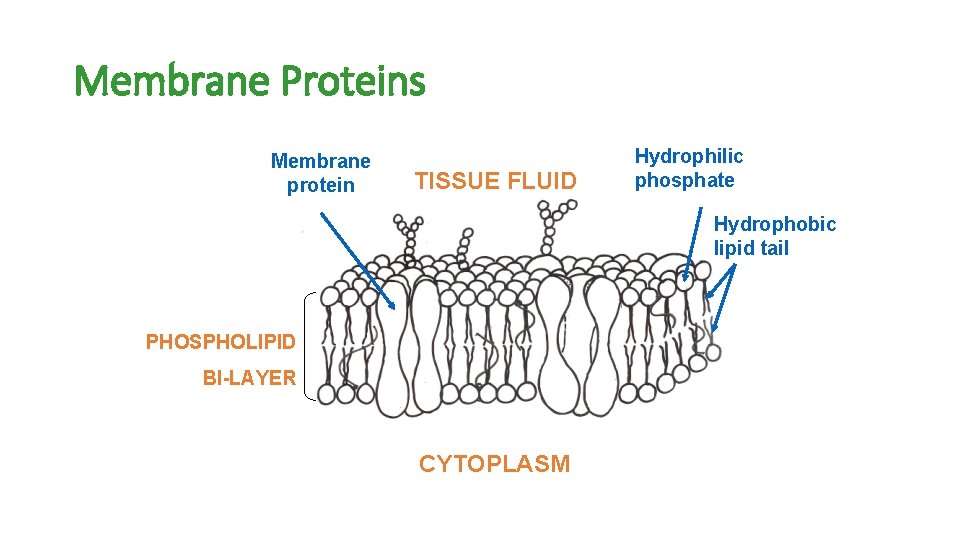
Membrane Proteins Membrane protein TISSUE FLUID Hydrophilic phosphate Hydrophobic lipid tail PHOSPHOLIPID BI-LAYER CYTOPLASM
Membrane proteins • A variety of proteins are embedded in the bi-layer. • These serve various functions including the movement of substances in and out of the cell (membrane transport proteins). • Some act as receptor sites for hormones
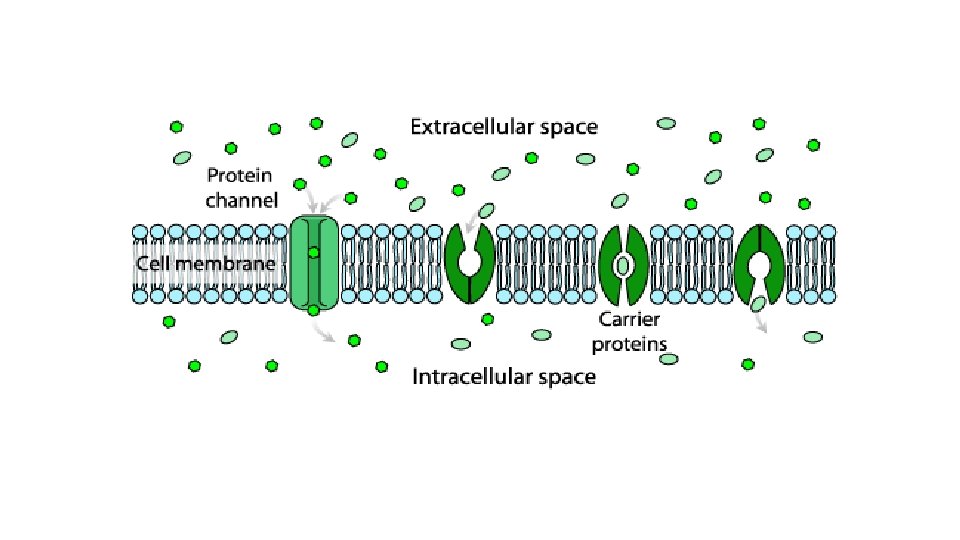
Membrane transport proteins • Membrane proteins that aid the movement of substances in and out of the cell include: • Channel proteins (ion channels) – open channels that allow facillitated diffusion. • Carrier proteins that allow facilitated diffusion (e. g. glucose) and active transport (specific membrane pumps).
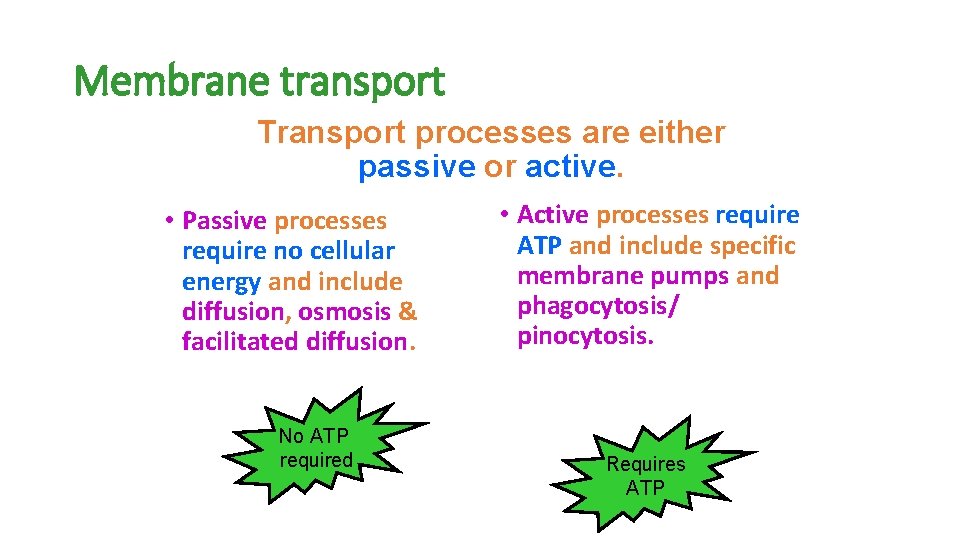
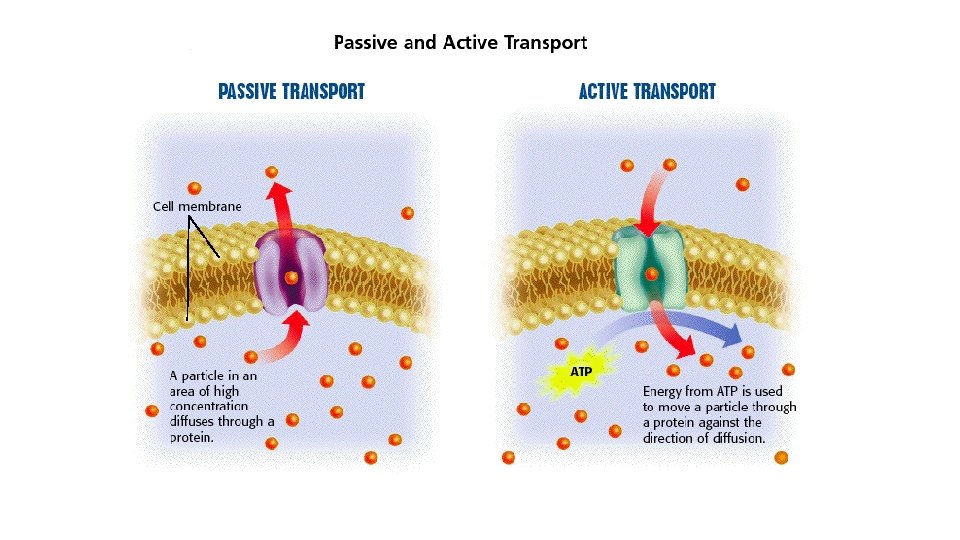
Membrane transport Transport processes are either passive or active. • Passive processes require no cellular energy and include diffusion, osmosis & facilitated diffusion. No ATP required • Active processes require ATP and include specific membrane pumps and phagocytosis/ pinocytosis. Requires ATP
Passive processes • Require no cellular energy (ATP). • Substances move from high concentration to low concentration. • E. g. – diffusion, facilitated diffusion & osmosis.
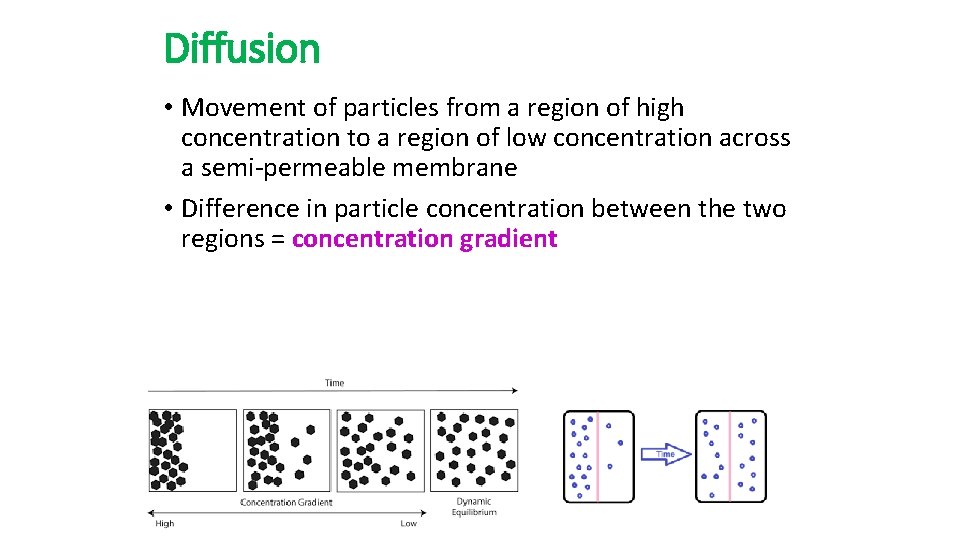
Diffusion • Movement of particles from a region of high concentration to a region of low concentration across a semi-permeable membrane • Difference in particle concentration between the two regions = concentration gradient
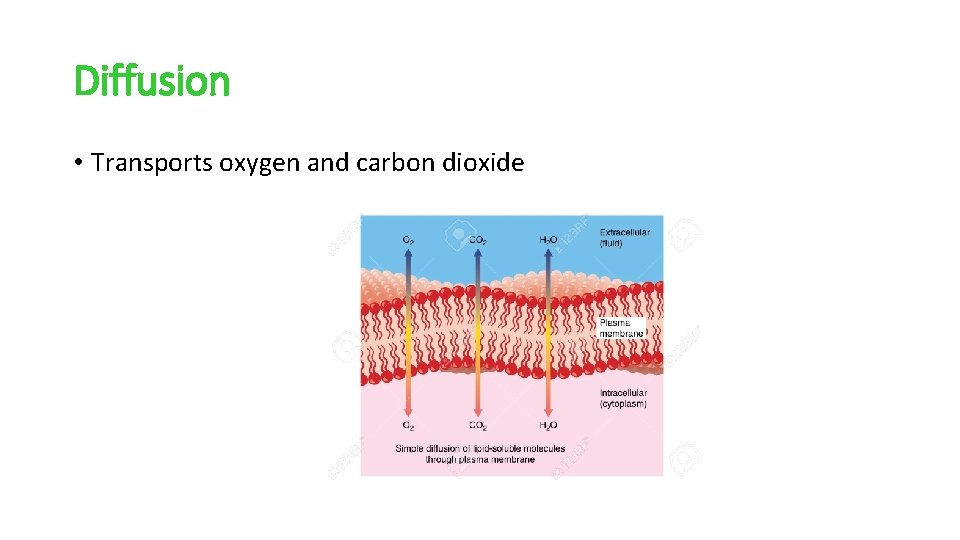
Diffusion • Transports oxygen and carbon dioxide
Diffusion Animations • http: //highered. mheducation. com/sites/0072495855/student_view 0 /chapter 2/animation__how_diffusion_works. html • http: //esminfo. prenhall. com/science/Biology. Archive/lectureanimatio ns/closerlook/diffusion. html
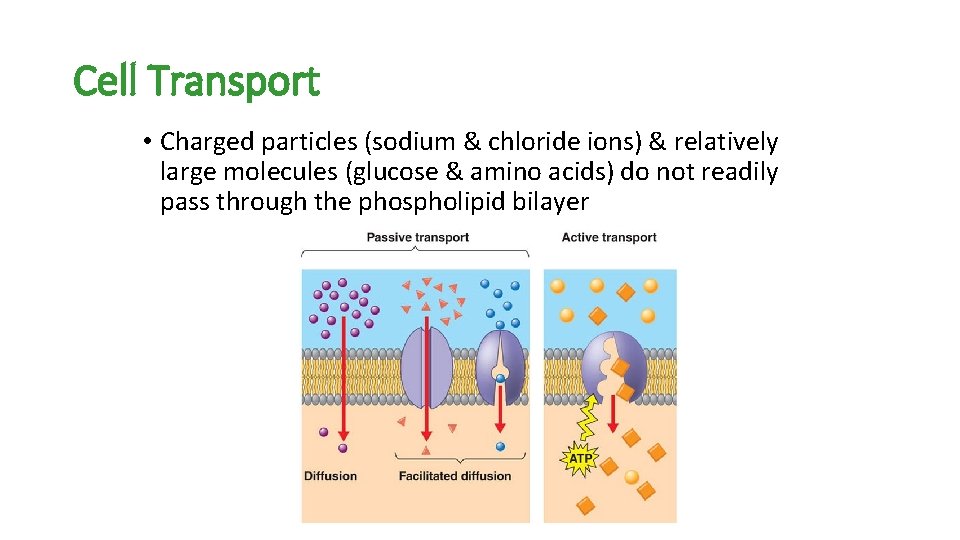
Cell Transport • Charged particles (sodium & chloride ions) & relatively large molecules (glucose & amino acids) do not readily pass through the phospholipid bilayer
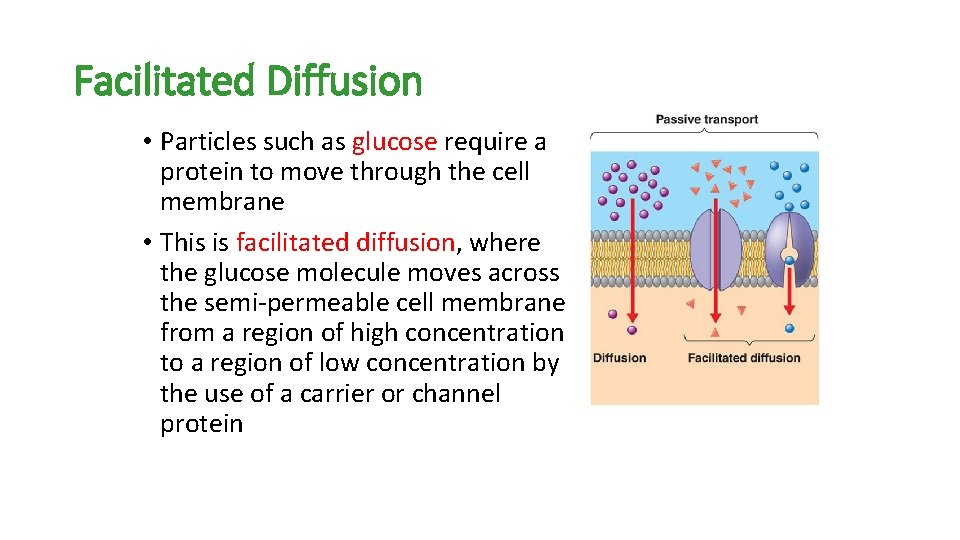
Facilitated Diffusion • Particles such as glucose require a protein to move through the cell membrane • This is facilitated diffusion, where the glucose molecule moves across the semi-permeable cell membrane from a region of high concentration to a region of low concentration by the use of a carrier or channel protein
Facilitated Diffusion Animation • http: //highered. mheducation. com/sites/0072495855/student_view 0 /chapter 2/animation__how_facilitated_diffusion_works. html
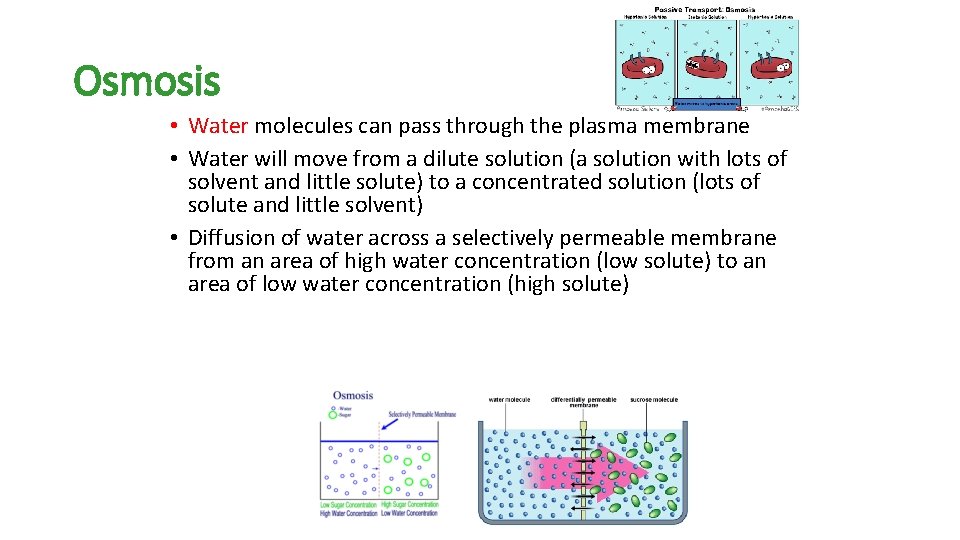
Osmosis • Water molecules can pass through the plasma membrane • Water will move from a dilute solution (a solution with lots of solvent and little solute) to a concentrated solution (lots of solute and little solvent) • Diffusion of water across a selectively permeable membrane from an area of high water concentration (low solute) to an area of low water concentration (high solute)

Osmosis Animations • http: //highered. mheducation. com/sites/0072495855/student_view 0 /chapter 2/animation__how_osmosis_works. html • http: //highered. mheducation. com/sites/9834092339/student_view 0 /chapter 38/animation_-_osmosis. html
Active transport • Require energy (in the form of ATP). • Substances move from low concentration to high concentration (i. e. against the concentration gradient) with the use of a carrier protein to transport ions such as sodium
Endocytosis • For large molecules that cannot be moved by diffusion or active transport • Active process, requiring energy • Two types • Phagocytosis – engulfs solids – food particles • Pinocytosis – liquids
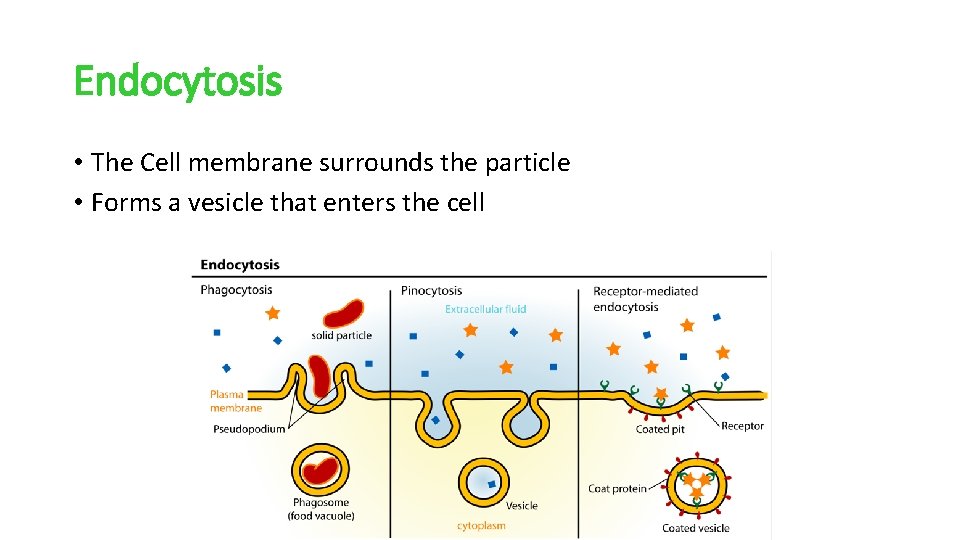
Endocytosis • The Cell membrane surrounds the particle • Forms a vesicle that enters the cell
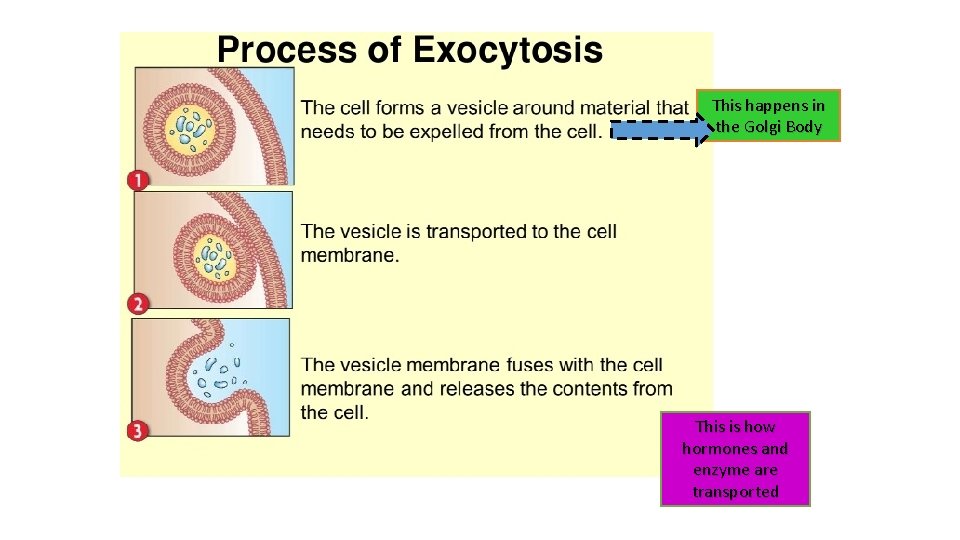
This happens in the Golgi Body This is how hormones and enzyme are transported

Endocytosis & Exocytosis Animation • http: //highered. mheducation. com/olcweb/cgi/pluginpop. cgi? it=swf: : 535: : /sites/dl/free/0072437316/120068/bio 02. swf: : Endocytosis +and+Exocytosis
- Slides: 29