
Cell Membrane The Ways Molecules Move I Cell
Cell Membrane & The Ways Molecules Move
![I. Cell Membrane 1) POLAR ends face INSIDE & OUTSIDE cell [where water is]](http://slidetodoc.com/presentation_image/5855a5fd632e3ec1bed516113cc681aa/image-2.jpg "I. Cell Membrane 1) POLAR ends face INSIDE & OUTSIDE cell [where water is]")
I. Cell Membrane 1) POLAR ends face INSIDE & OUTSIDE cell [where water is] 2) NONPOLAR tails face each other inside bilayer [to avoid water]

Outside of cell Proteins Carbohydrate chains Cell membrane Inside of cell (cytoplasm) Protein channel Lipid bilayer
II. FUNCTION: SELECTIVE PERMEABILITY = allows only certain materials to go into & out of cell
a. Why doesn’t the cell membrane let everything through? HOMEOSTASIS! - Cells maintain a stable environment by controlling what enters & leaves.
III. Cellular Transport – Two Major Types (Passive & Active Transport) 1. Passive Transport = moves molecules across cell mem. using NO ENERGY Movement going with the concentration gradient (normal flow)
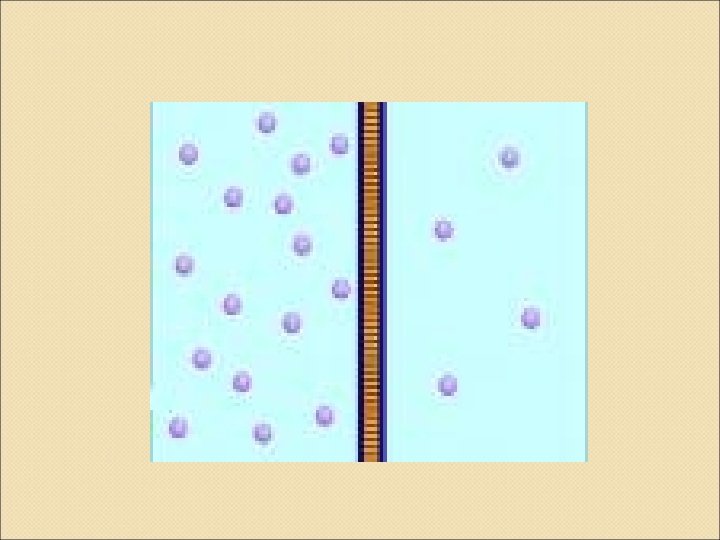
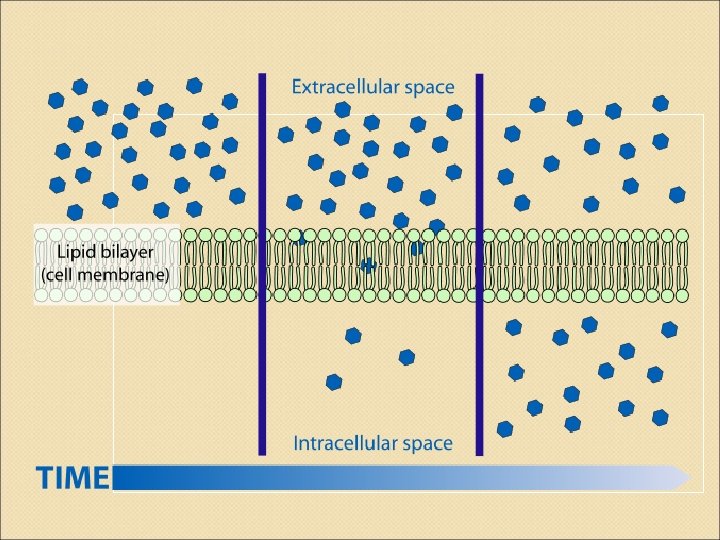
A. Types of Passive Transport 1. Diffusion – molecules move from HIGH conc. to LOW conc. a. Small molecules: O 2, CO 2 b. Slow process
2. Facilitated Diffusion – movement of molecules with help of a carrier protein
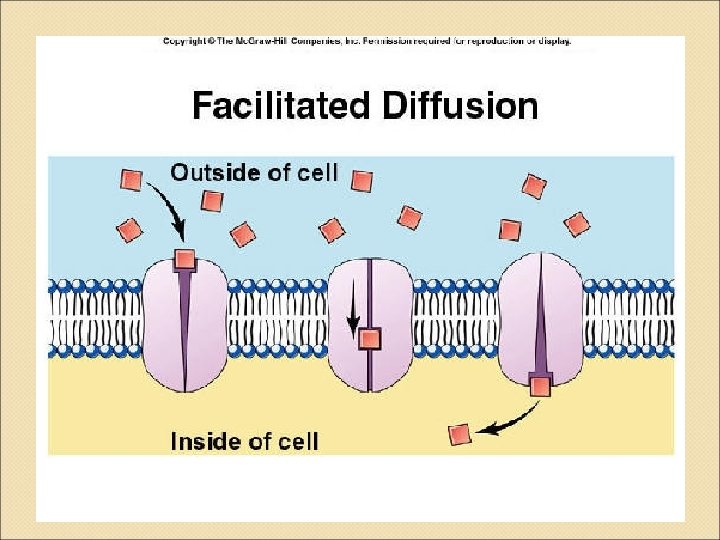
a. Moves large molecules like Glucose and Fructose (C 6 H 12 O 6) b. Faster than diffusion
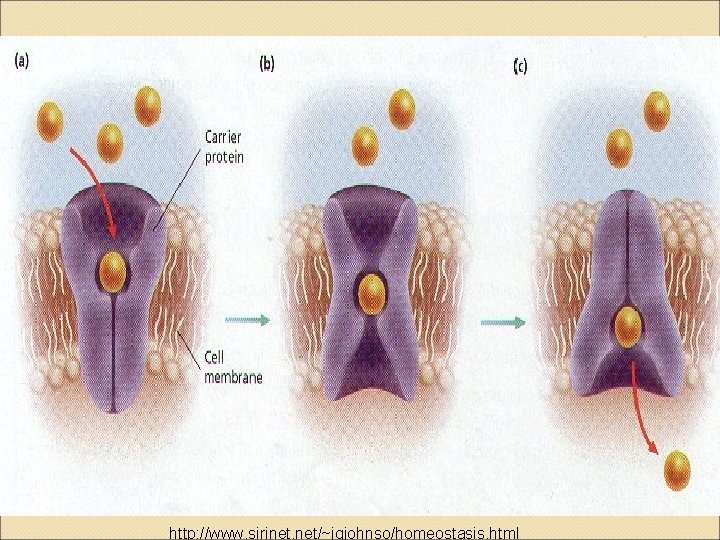
http: //www. sirinet. net/~jgjohnso/homeostasis. html
3. Osmosis – diffusion of WATER across cell membrane * H 2 O moves to area with LESS WATER
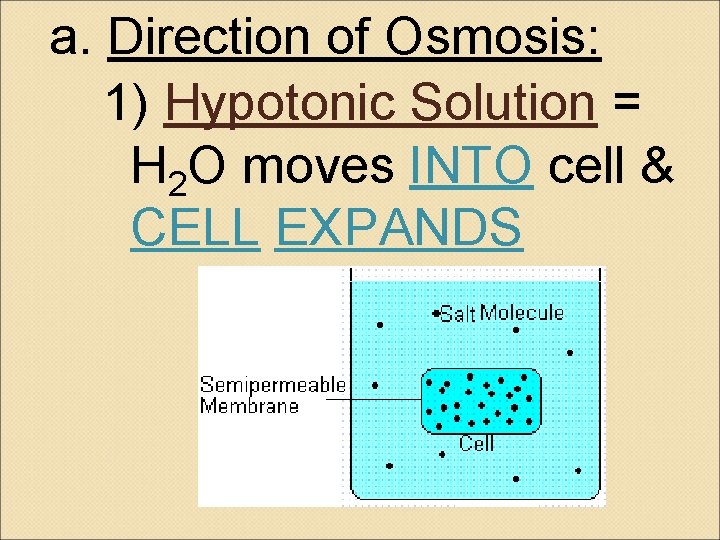
a. Direction of Osmosis: 1) Hypotonic Solution = H 2 O moves INTO cell & CELL EXPANDS
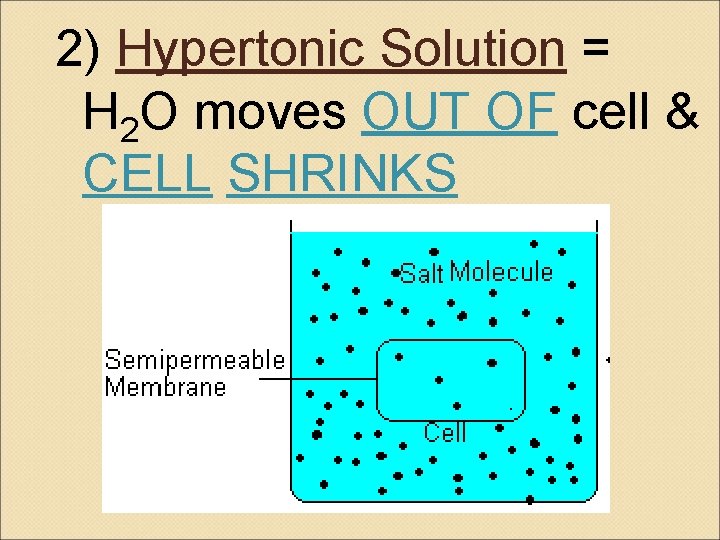
2) Hypertonic Solution = H 2 O moves OUT OF cell & CELL SHRINKS
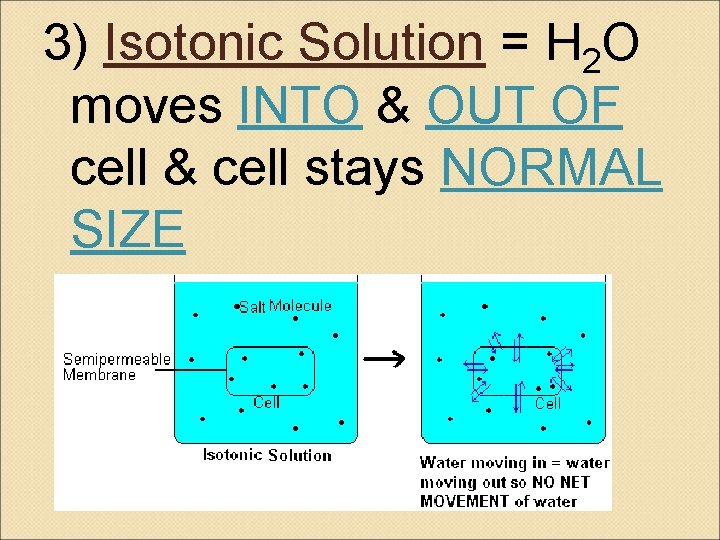
3) Isotonic Solution = H 2 O moves INTO & OUT OF cell & cell stays NORMAL SIZE
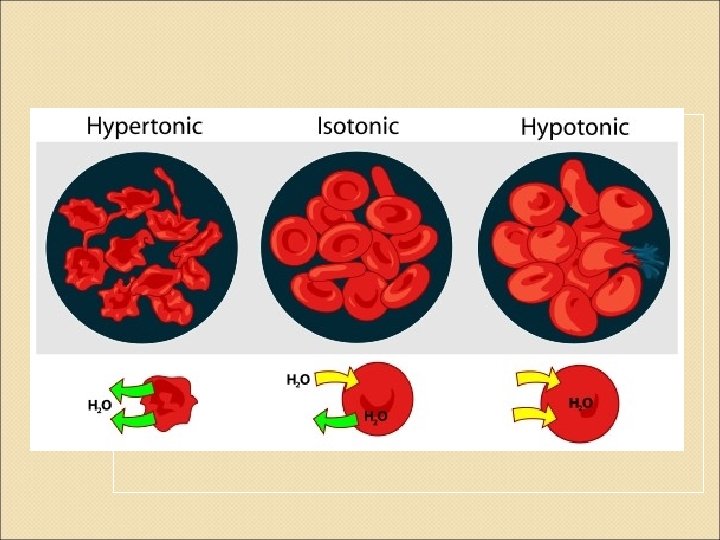
* EQUILIBRIUM = concentration of molecules is same everywhere * Molecules never stop moving – even at equilibrium
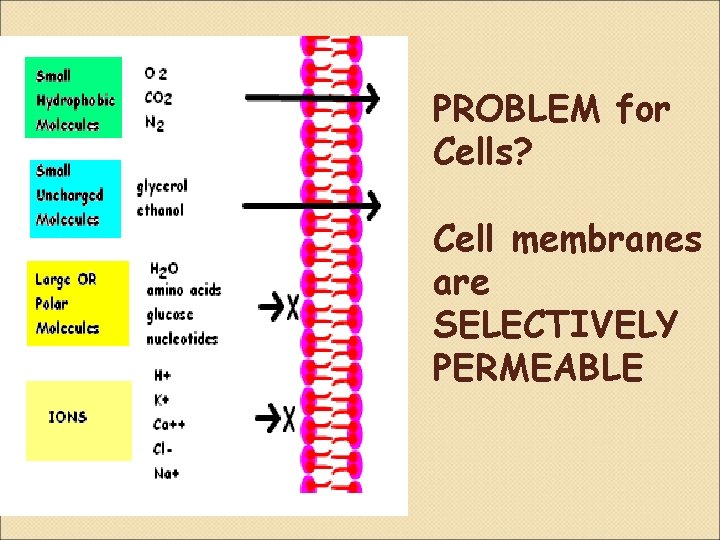
PROBLEM for Cells? Cell membranes are SELECTIVELY PERMEABLE
nd 2 2. Type of Transport Active Transport 1. moves molecules across cell membrane using ENERGY
B. Types of Active Transport 1. Transport Proteins: in membrane- move substances from low to high conc. (opposite of how it wants to move)
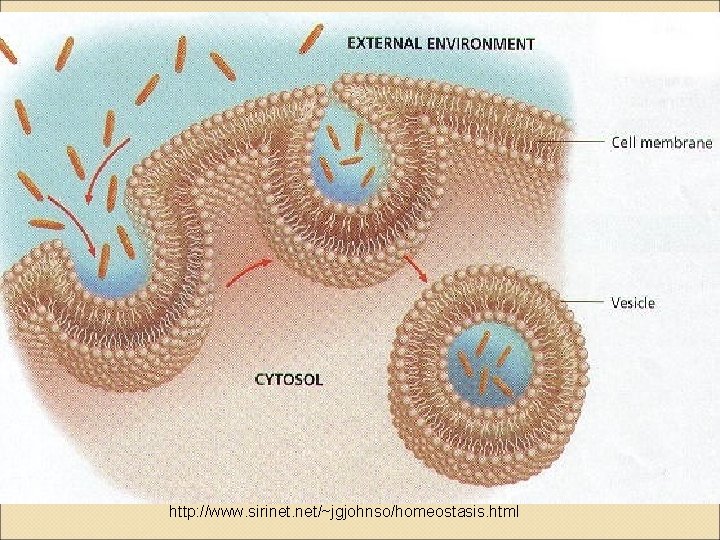
2. Endocytosis = cell surrounds & ingests materials from OUTSIDE to INSIDE cell using VESICLES
http: //www. sirinet. net/~jgjohnso/homeostasis. html
a. Steps: 1) membrane folds in & forms pocket 2) Pocket closes & pinches off in cell vesicle 3) vesicle fuses w/ organelles to release contents
b. Two Types of Endocytosis: 1)Phagocytosis – LARGE particles (food) or whole CELLS (bacteria) into cell 2) Pinocytosis – large amounts of liquids/ fluids into cell
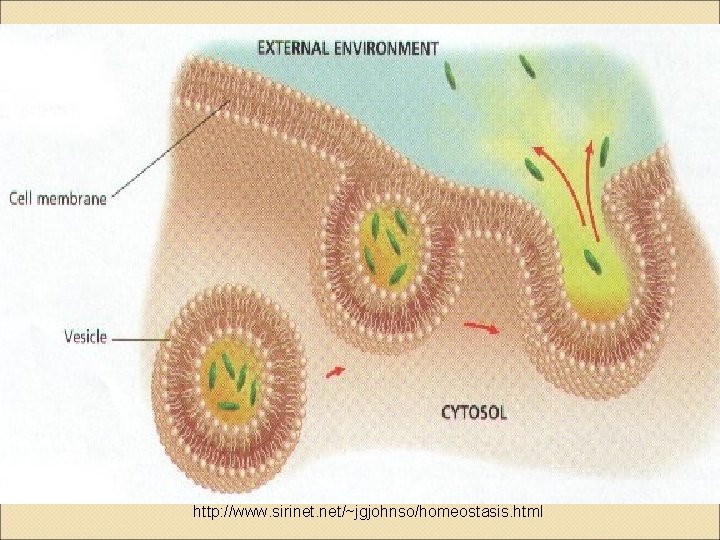
3. Exocytosis –releases large amounts of material to the OUTSIDE of the cell using VESICLES
a. Steps: 1)Vesicle forms, travels to & fuses w/ cell mem. 2)Vesicle opens to outside & releases contents
http: //www. sirinet. net/~jgjohnso/homeostasis. html
- Slides: 29