
Cell Membrane The Gate Keeper Selectively Permeable u
Cell Membrane The Gate Keeper
Selectively Permeable u Only certain molecules are allowed in and out of the cell membrane u Caused by the arrangement of the phospholipids and protein channels u Factors that are involved: – Size of the molecule – Polar or non-polar – Concentration of the substance

What makes up the cell membrane? u Phospholipids u Proteins u Cholesterol
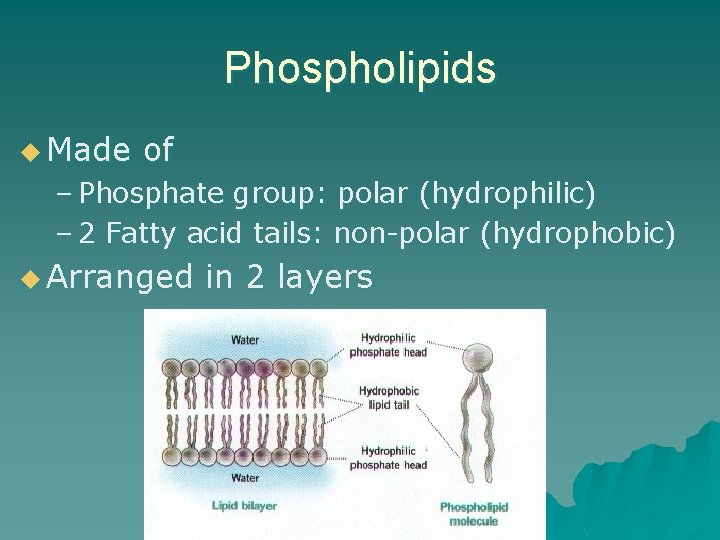
Phospholipids u Made of – Phosphate group: polar (hydrophilic) – 2 Fatty acid tails: non-polar (hydrophobic) u Arranged in 2 layers
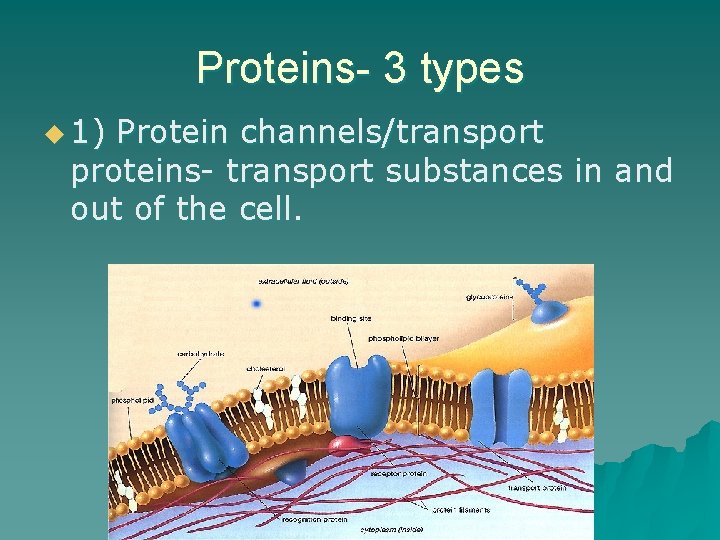
Proteins- 3 types u 1) Protein channels/transport proteins- transport substances in and out of the cell.
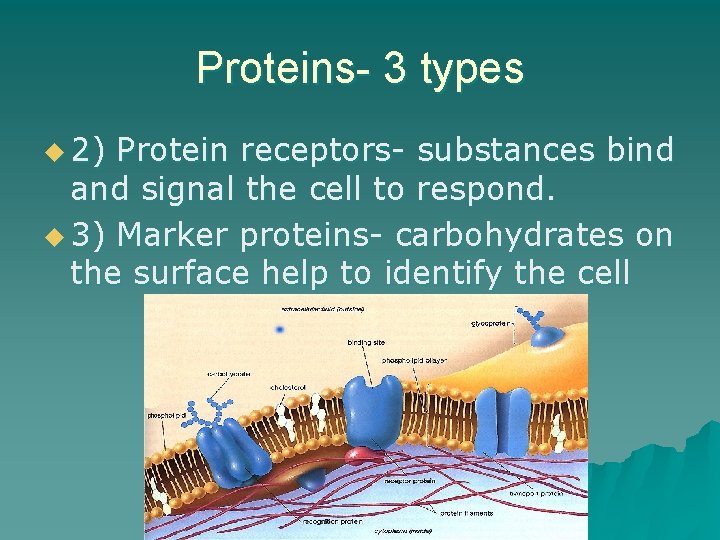
Proteins- 3 types u 2) Protein receptors- substances bind and signal the cell to respond. u 3) Marker proteins- carbohydrates on the surface help to identify the cell
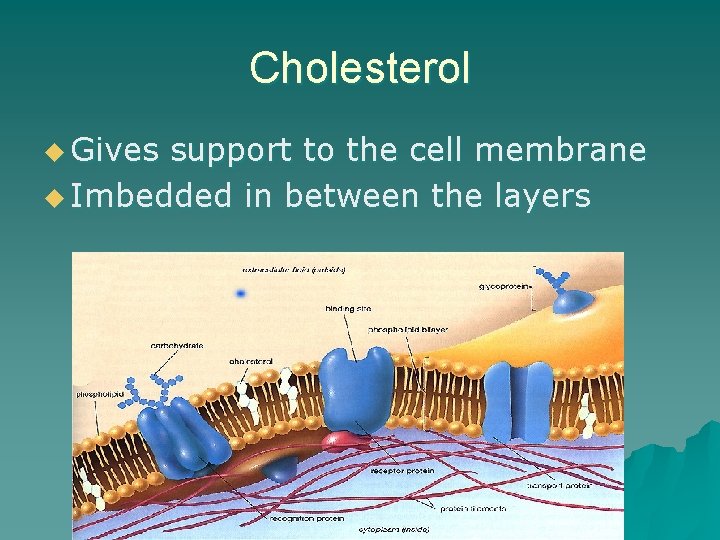
Cholesterol u Gives support to the cell membrane u Imbedded in between the layers
How do substances move into or out of the cell? u Passive Transport- No energy required – Diffusion – Osmosis – Facilitated Diffusion u Active Transport- Energy required – Bulk Transport u Exocytosis u Endocytosis – Na+/K+ Pump
Passive Transport H: cells and transportPassive_Transport. asf *Requires no energy *Goes down the concentration gradient (high concentration to low concentration) * Concentration gradient is the difference in concentration between the 2 sides of the membrane
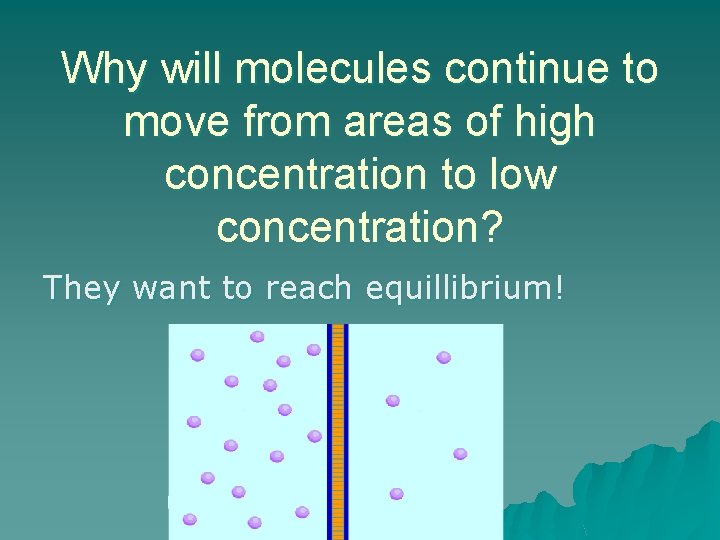
Why will molecules continue to move from areas of high concentration to low concentration? They want to reach equillibrium!
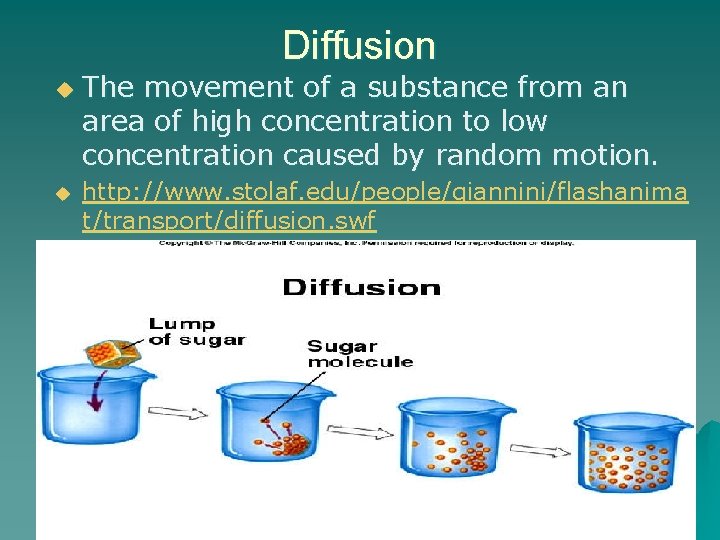
Diffusion u u The movement of a substance from an area of high concentration to low concentration caused by random motion. http: //www. stolaf. edu/people/giannini/flashanima t/transport/diffusion. swf
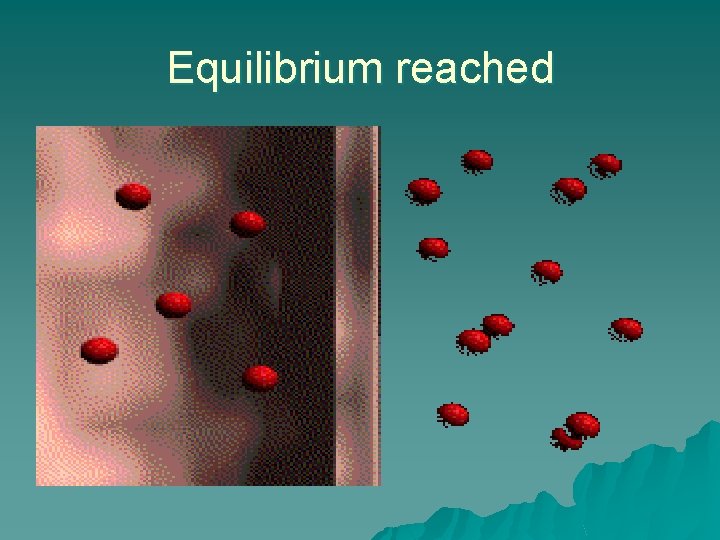
Equilibrium reached
Facilitated Diffusion u Proteins help molecules to cross the cell membranefacilitated diffusion You. Tube
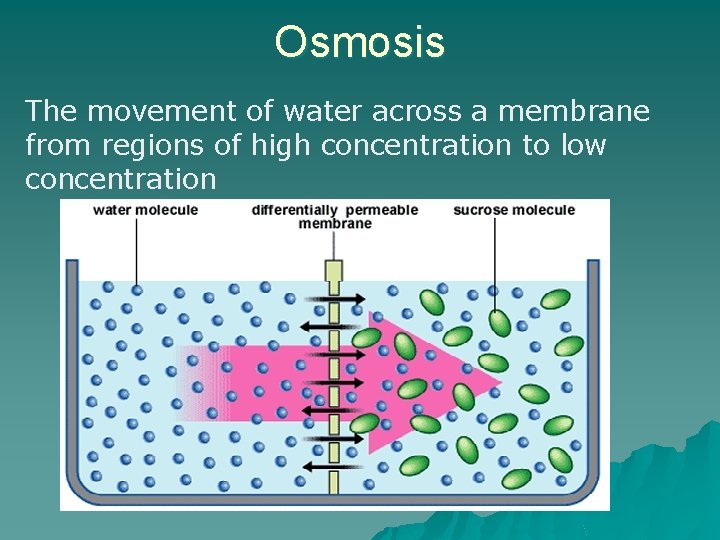
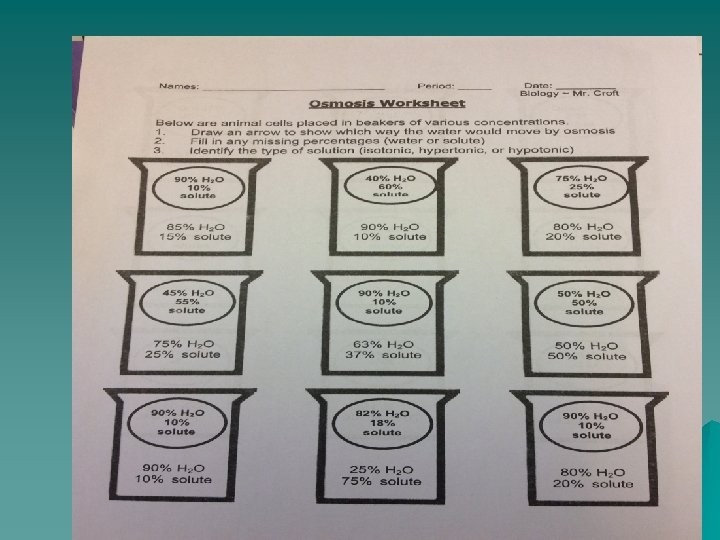
Osmosis The movement of water across a membrane from regions of high concentration to low concentration
Water concentrations Solute- The substance that is dissolved in the water (salt, sugar) u Solution- The combination of water and dissolved substance (ocean water) u Types of solution: u – Isotonic- same concentration as the cell – Hypotonic- less solute than the cell – Hypertonic- more solute than the cell
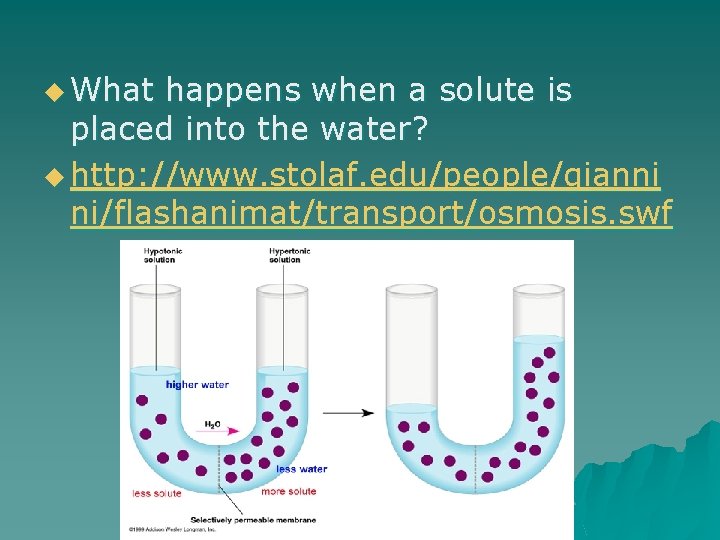
u What happens when a solute is placed into the water? u http: //www. stolaf. edu/people/gianni ni/flashanimat/transport/osmosis. swf
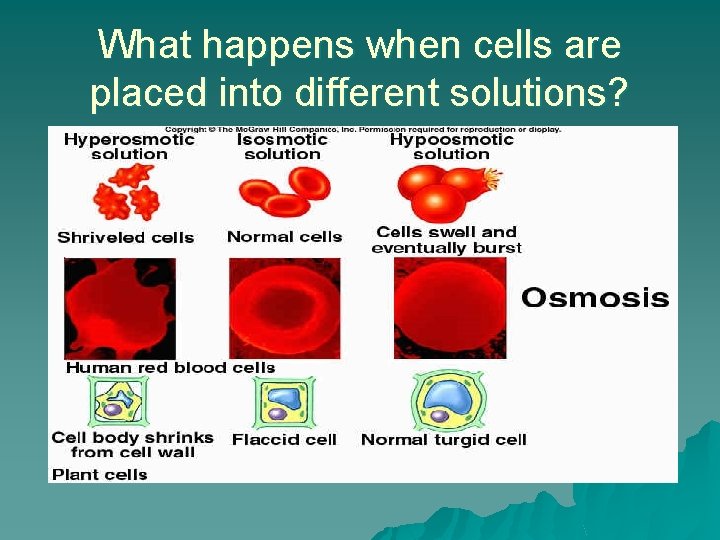
What happens when cells are placed into different solutions?
Active Transport Active_Transport. asf u Requires energy u Why must active transport be used? – Goes against the concentration gradient – OR – The molecule is too large to fit through the spaces in the cell membrane u The types of Active transport – Bulk transport – Pump (Na+/K+)
Bulk Transport Active transport=ATP u Molecules are transported into or out of the cell in vesicles (membrane sacs) u Exocytosis- molecules exit the cell – exo= exit – Cyto= cell u Endocytosis- – Endo= enter – Cyto= cell molecules enter the cell
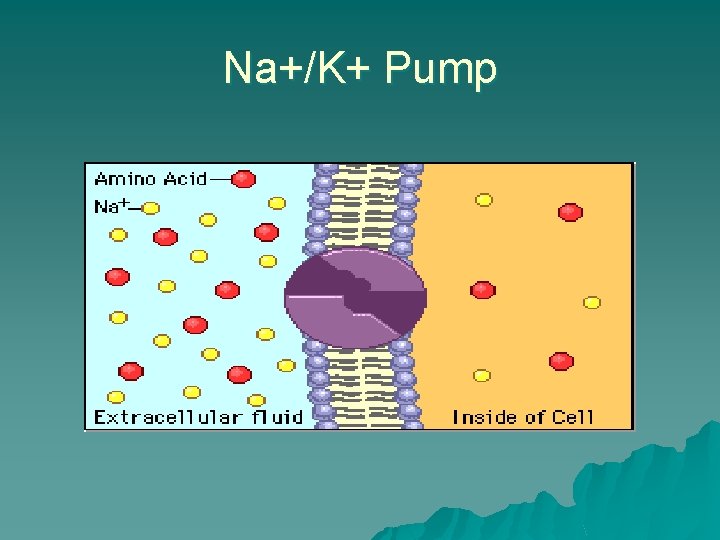
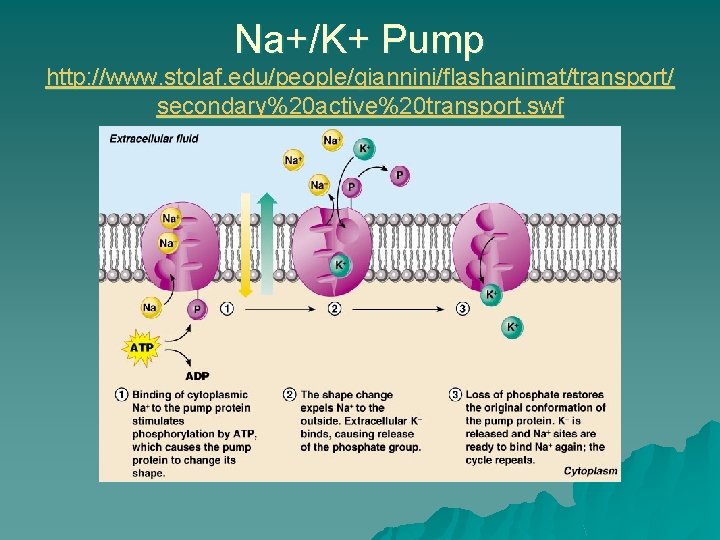
Na+/K+ Pump u http: //www. stolaf. edu/people/gianni ni/flashanimat/transport/secondary% 20 active%20 transport. swf u Moves ions against the concentration gradient
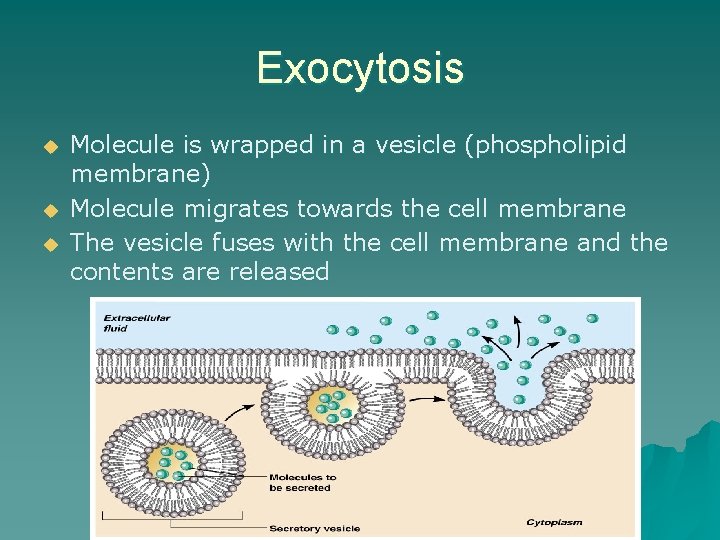
Exocytosis u u u Molecule is wrapped in a vesicle (phospholipid membrane) Molecule migrates towards the cell membrane The vesicle fuses with the cell membrane and the contents are released
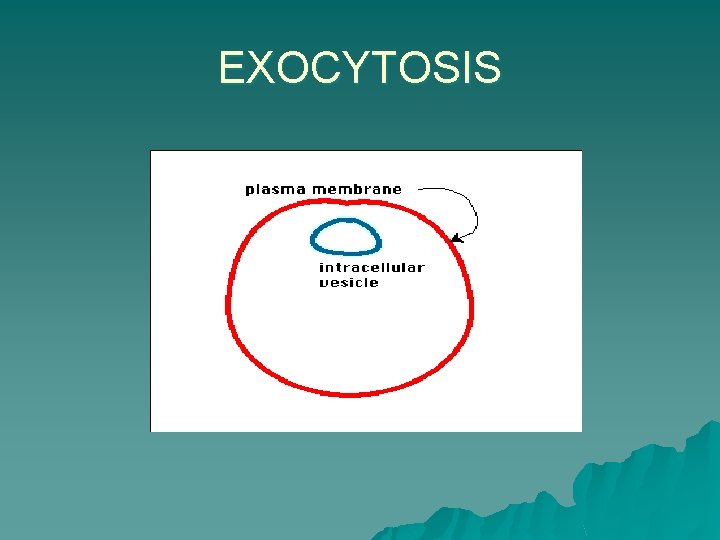
EXOCYTOSIS
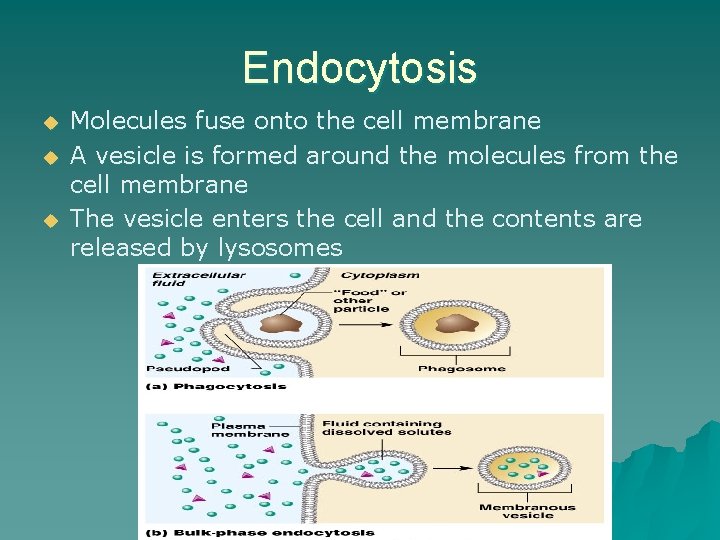
Endocytosis u u u Molecules fuse onto the cell membrane A vesicle is formed around the molecules from the cell membrane The vesicle enters the cell and the contents are released by lysosomes
ENDOCYTOSIS
Pump Active transport = ATP u Molecules are moved against their concentration gradient (low to high) through transport proteins u Example- Na+/K+ pump – Used to send a message through a nerve (impulse)
Na+/K+ Pump
Na+/K+ Pump http: //www. stolaf. edu/people/giannini/flashanimat/transport/ secondary%20 active%20 transport. swf
- Slides: 28