
Cell Membrane Structure and Function Chapter 7 Cell
Cell Membrane Structure and Function Chapter 7
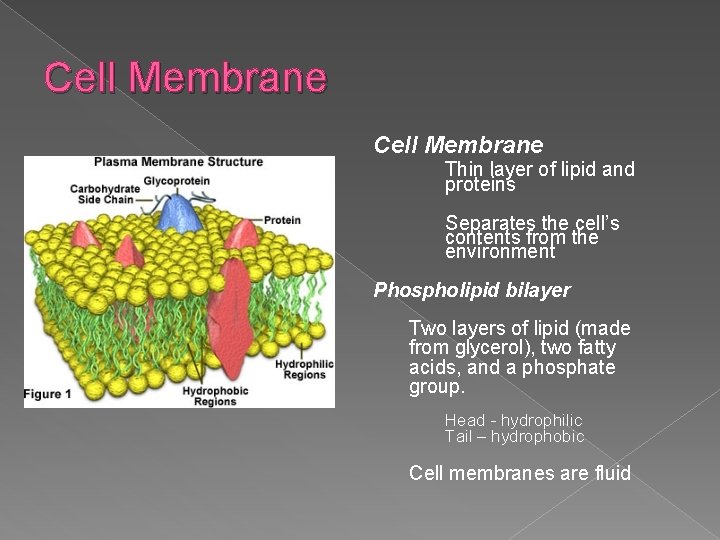
Cell Membrane Thin layer of lipid and proteins Separates the cell’s contents from the environment Phospholipid bilayer Two layers of lipid (made from glycerol), two fatty acids, and a phosphate group. Head - hydrophilic Tail – hydrophobic Cell membranes are fluid

3 -3 Cell Membrane
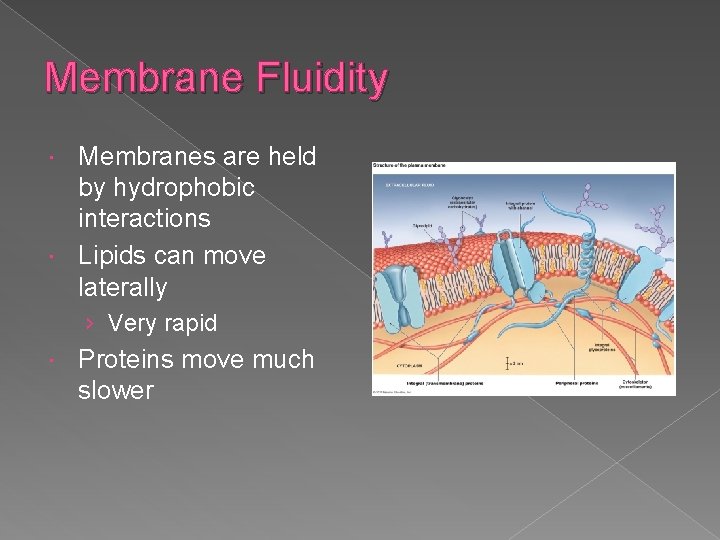
Membrane Fluidity Membranes are held by hydrophobic interactions Lipids can move laterally › Very rapid Proteins move much slower

Membrane Fluidity Temperature affects fluidity › Decrease – phospholipids will settle into closely packed arrangements and solidify › Dependent on type of lipid Unsaturated hydrocarbon tails – lower temperature tolerance › Other molecular affects Cholesterol – actually solidifies animal membranes
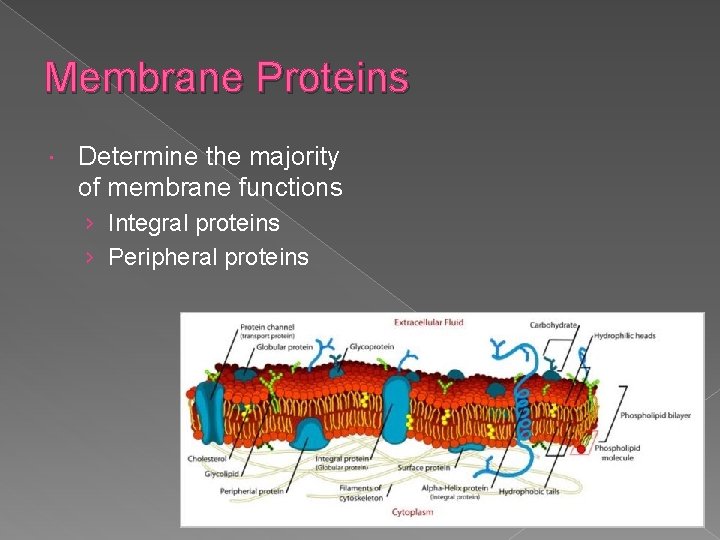
Membrane Proteins Determine the majority of membrane functions › Integral proteins › Peripheral proteins
Membrane Proteins Functions Transport Enzymatic activity Signal transduction Cell to cell recognition Intercellular joining Attachment to the cytoskeleton/ECM
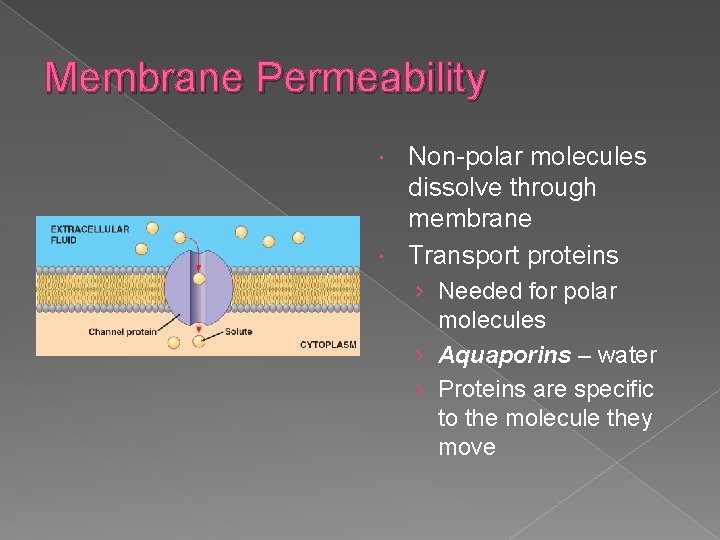
Membrane Permeability Non-polar molecules dissolve through membrane Transport proteins › Needed for polar molecules › Aquaporins – water › Proteins are specific to the molecule they move
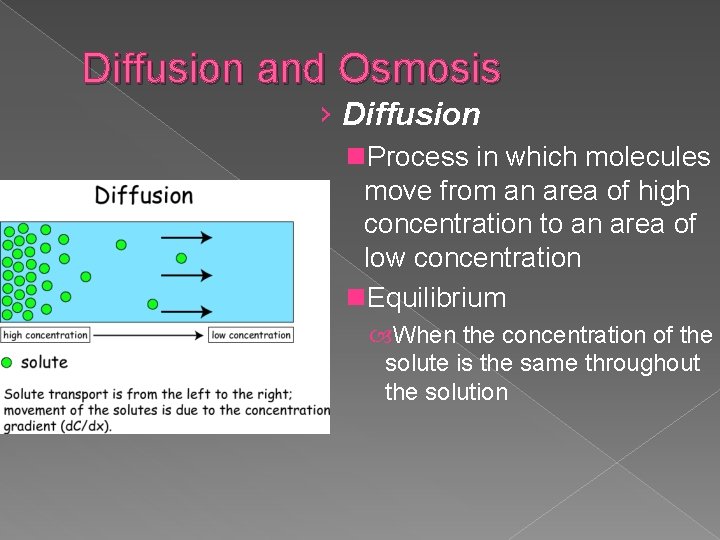
Diffusion and Osmosis › Diffusion n. Process in which molecules move from an area of high concentration to an area of low concentration n. Equilibrium When the concentration of the solute is the same throughout the solution
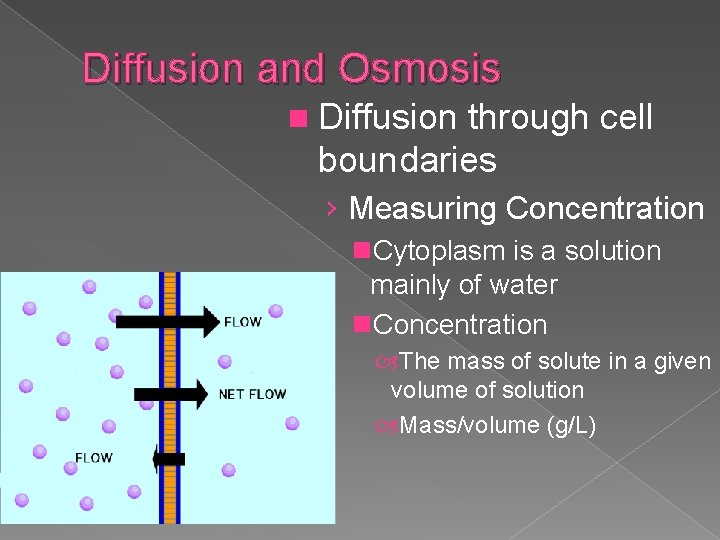
Diffusion and Osmosis n Diffusion through cell boundaries › Measuring Concentration n. Cytoplasm is a solution mainly of water n. Concentration The mass of solute in a given volume of solution Mass/volume (g/L)
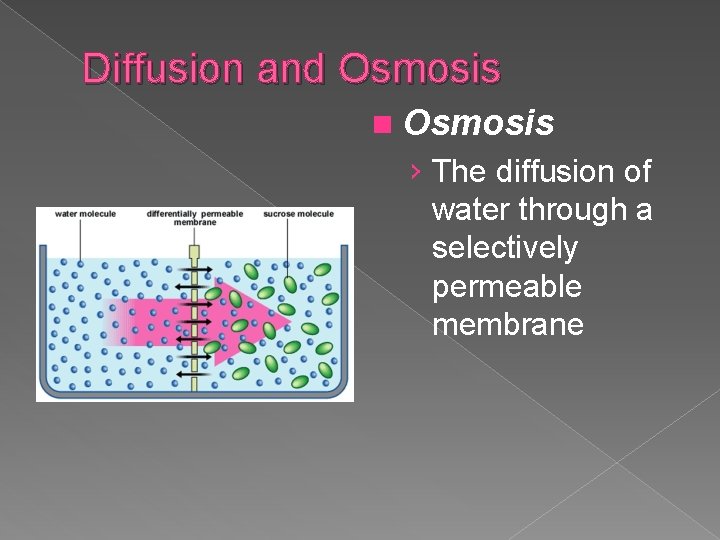
Diffusion and Osmosis n Osmosis › The diffusion of water through a selectively permeable membrane
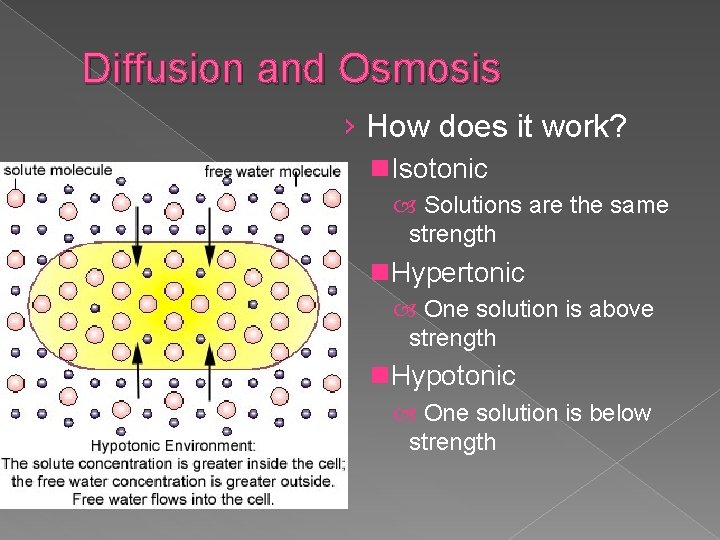
Diffusion and Osmosis › How does it work? n. Isotonic Solutions are the same strength n. Hypertonic One solution is above strength n. Hypotonic One solution is below strength
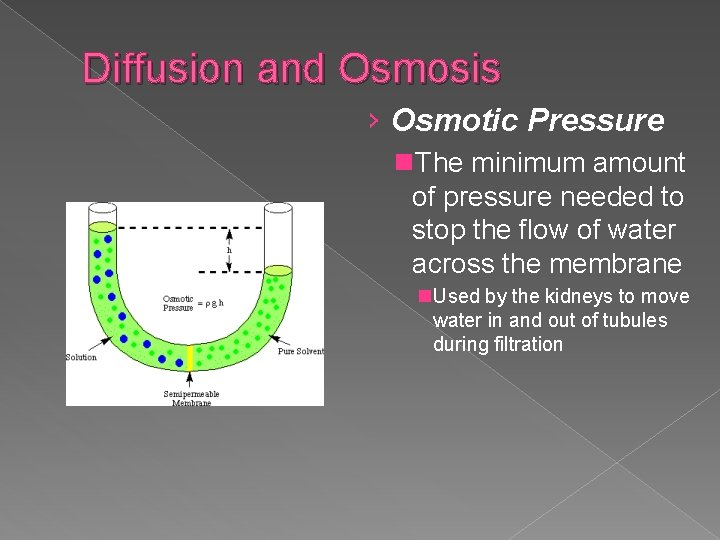
Diffusion and Osmosis › Osmotic Pressure n. The minimum amount of pressure needed to stop the flow of water across the membrane n Used by the kidneys to move water in and out of tubules during filtration
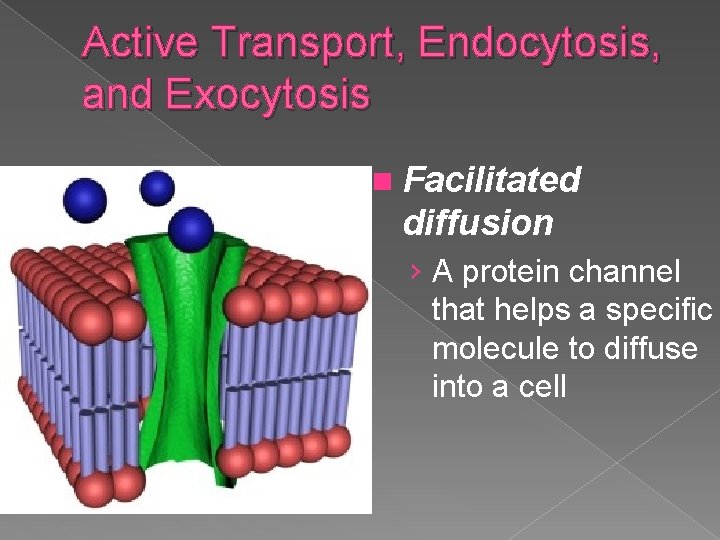
Active Transport, Endocytosis, and Exocytosis n Facilitated diffusion › A protein channel that helps a specific molecule to diffuse into a cell
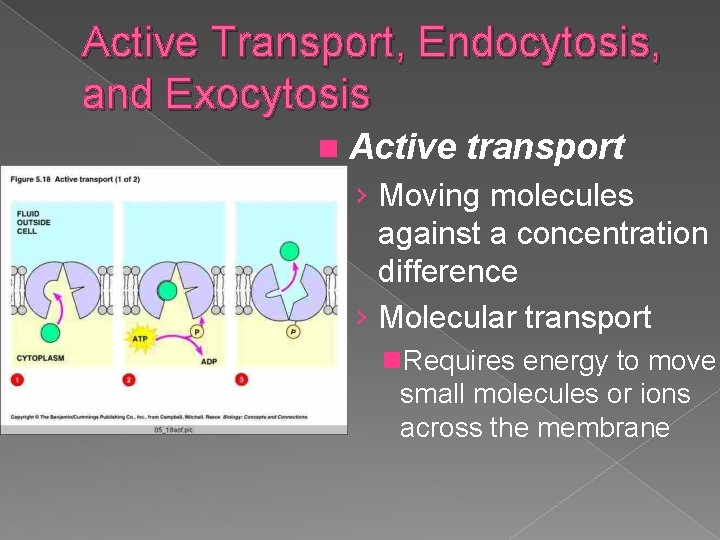
Active Transport, Endocytosis, and Exocytosis n Active transport › Moving molecules against a concentration difference › Molecular transport n. Requires energy to move small molecules or ions across the membrane
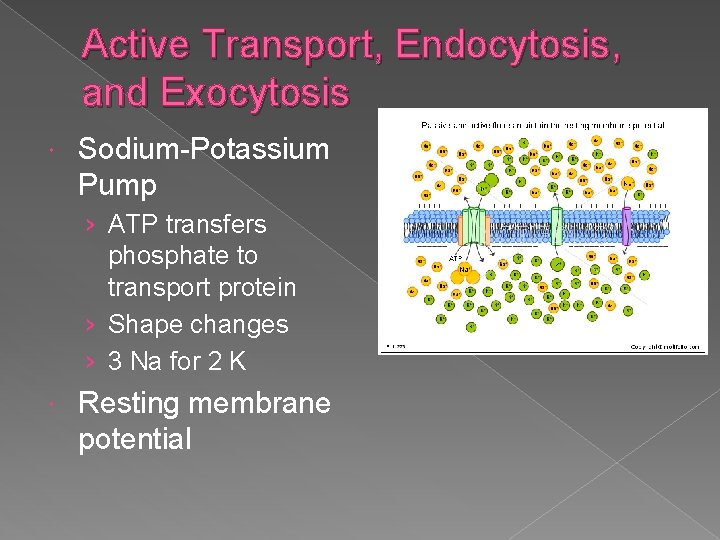
Active Transport, Endocytosis, and Exocytosis Sodium-Potassium Pump › ATP transfers phosphate to transport protein › Shape changes › 3 Na for 2 K Resting membrane potential
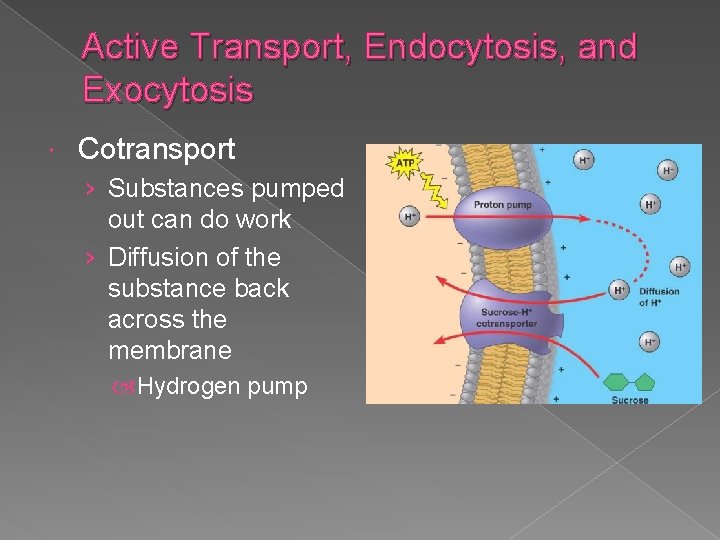
Active Transport, Endocytosis, and Exocytosis Cotransport › Substances pumped out can do work › Diffusion of the substance back across the membrane Hydrogen pump
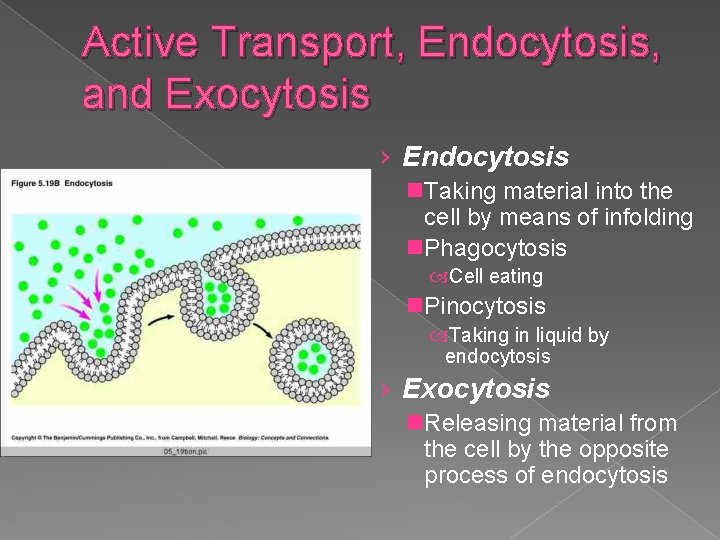
Active Transport, Endocytosis, and Exocytosis › Endocytosis n. Taking material into the cell by means of infolding n. Phagocytosis Cell eating n. Pinocytosis Taking in liquid by endocytosis › Exocytosis n. Releasing material from the cell by the opposite process of endocytosis
- Slides: 18