
Cell Membrane LETS QUICKLY REVIEW 1 All cells
Cell Membrane
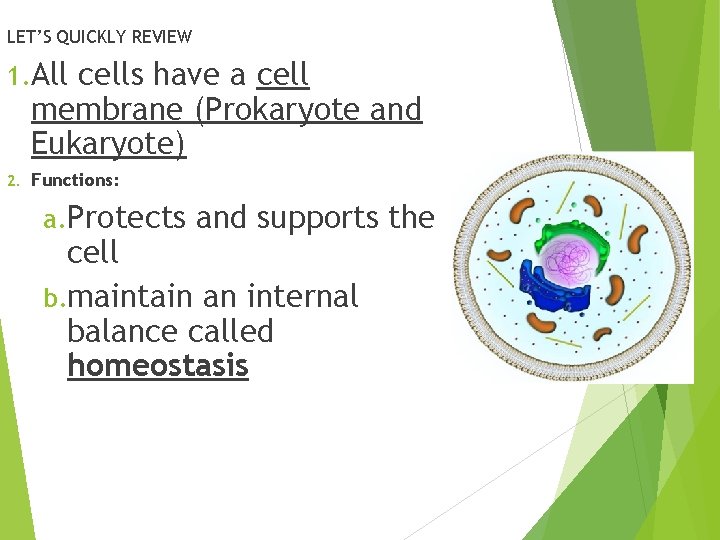
LET’S QUICKLY REVIEW 1. All cells have a cell membrane (Prokaryote and Eukaryote) 2. Functions: a. Protects and supports the cell b. maintain an internal balance called homeostasis
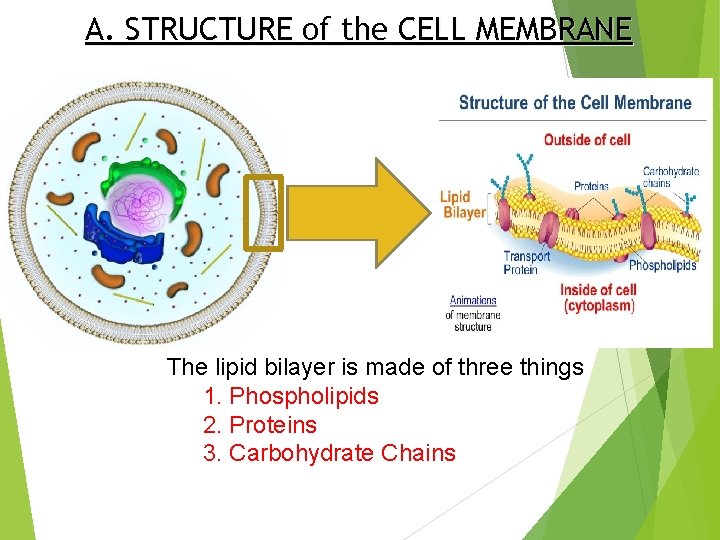
A. STRUCTURE of the CELL MEMBRANE The lipid bilayer is made of three things 1. Phospholipids 2. Proteins 3. Carbohydrate Chains
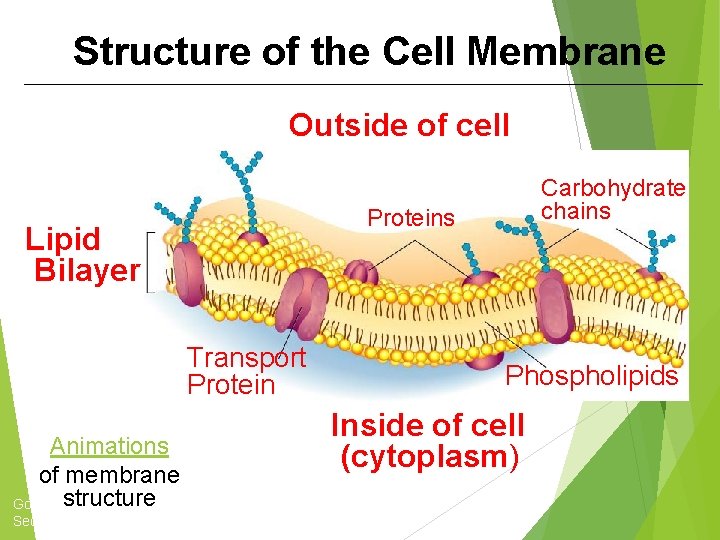
Structure of the Cell Membrane Outside of cell Proteins Lipid Bilayer Transport Protein Animations of membrane Go to structure Section: Carbohydrate chains Phospholipids Inside of cell (cytoplasm)
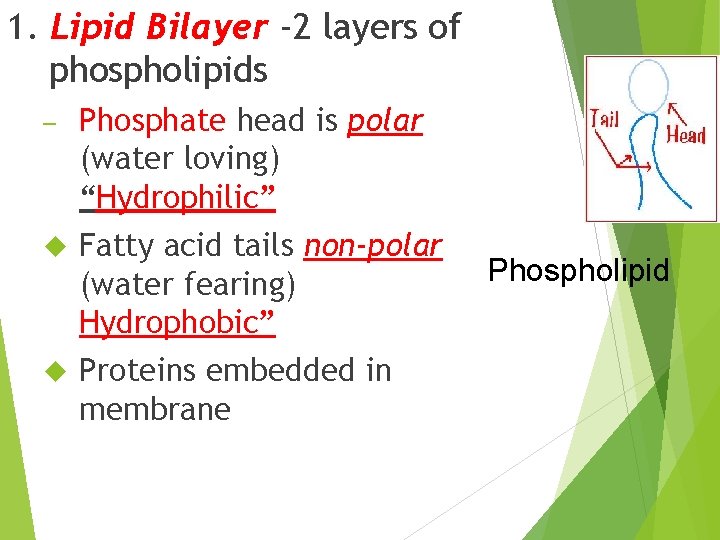
1. Lipid Bilayer -2 layers of phospholipids – Phosphate head is polar (water loving) “Hydrophilic” Fatty acid tails non-polar (water fearing) Hydrophobic” Proteins embedded in membrane Phospholipid
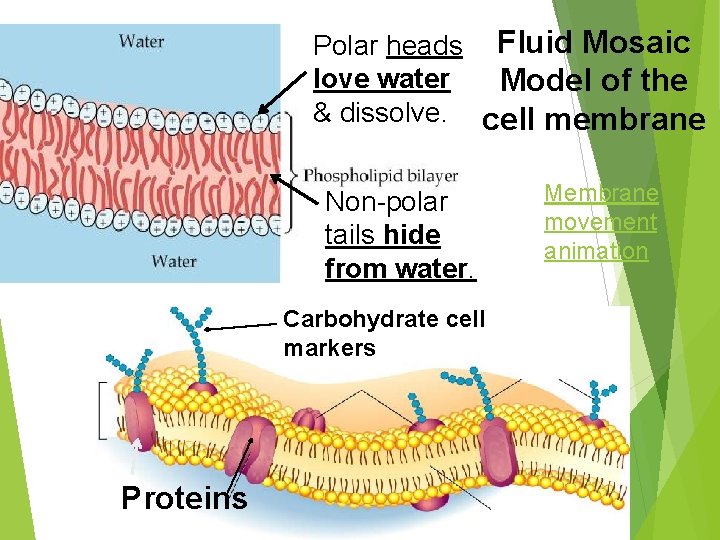
Polar heads Fluid Mosaic love water Model of the & dissolve. cell membrane Non-polar tails hide from water. Carbohydrate cell markers Proteins Membrane movement animation
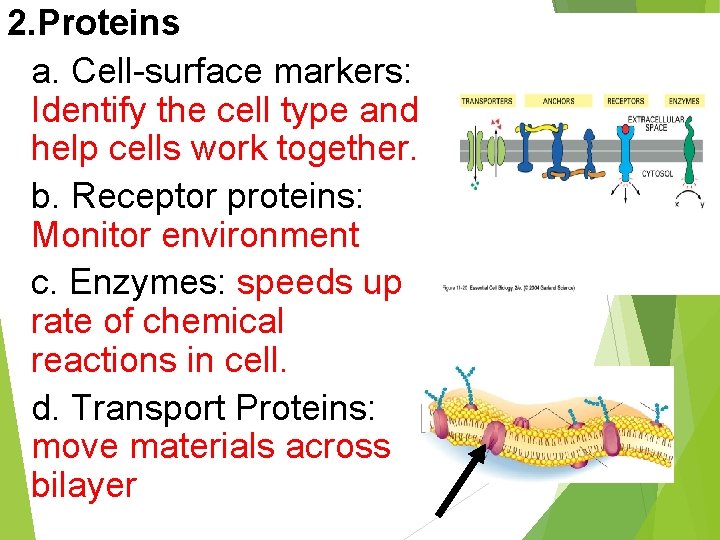
2. Proteins a. Cell-surface markers: Identify the cell type and help cells work together. b. Receptor proteins: Monitor environment c. Enzymes: speeds up rate of chemical reactions in cell. d. Transport Proteins: move materials across bilayer
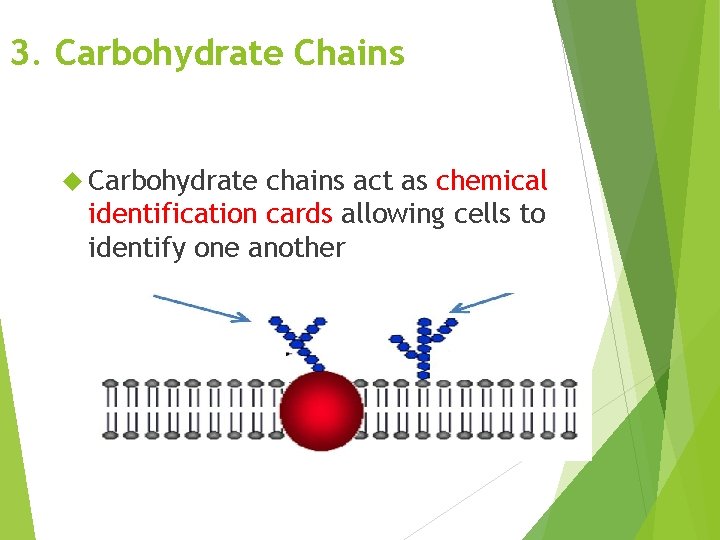
3. Carbohydrate Chains Carbohydrate chains act as chemical identification cards allowing cells to identify one another
B. Cell Transport
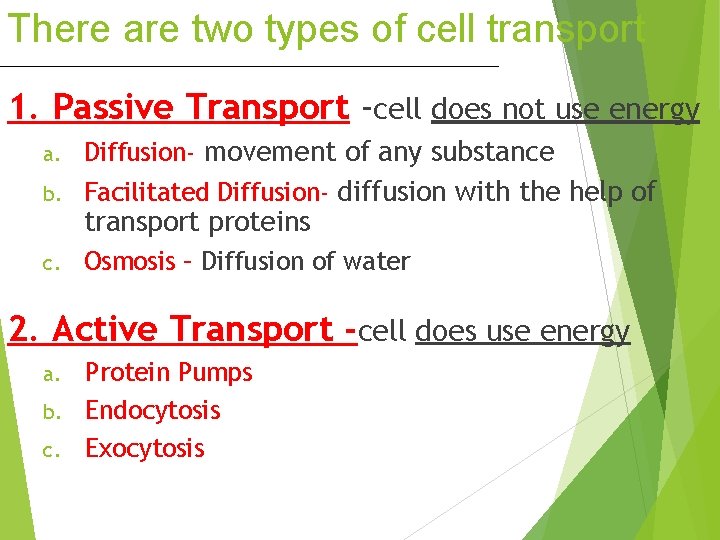
There are two types of cell transport 1. Passive Transport -cell does not use energy a. Diffusion- movement of any substance b. Facilitated Diffusion- diffusion with the help of c. Osmosis – Diffusion of water transport proteins 2. Active Transport -cell does use energy Protein Pumps b. Endocytosis c. Exocytosis a.
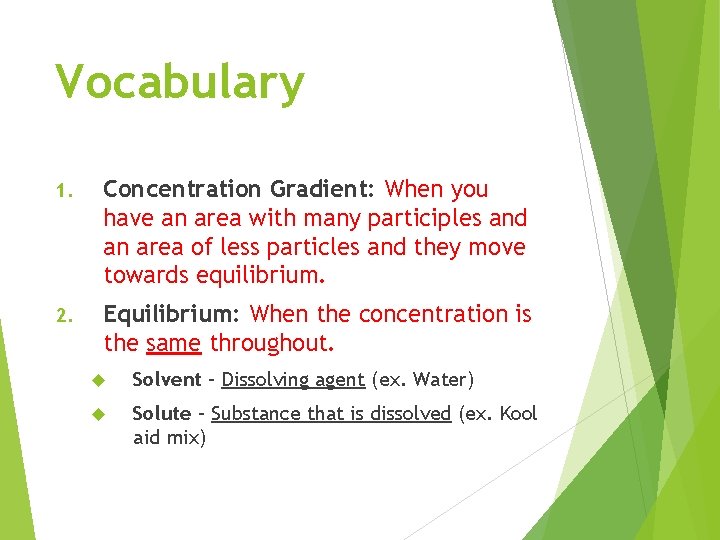
Vocabulary 1. Concentration Gradient: When you have an area with many participles and an area of less particles and they move towards equilibrium. 2. Equilibrium: When the concentration is the same throughout. Solvent – Dissolving agent (ex. Water) Solute – Substance that is dissolved (ex. Kool aid mix)
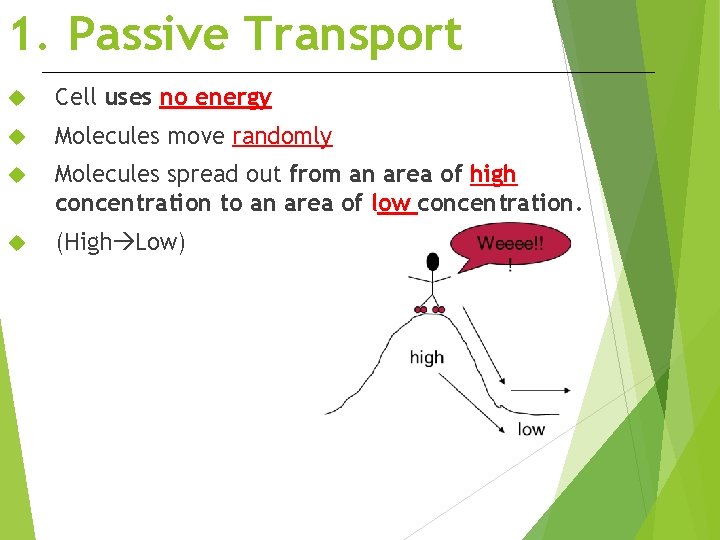
1. Passive Transport Cell uses no energy Molecules move randomly Molecules spread out from an area of high concentration to an area of low concentration. (High Low)
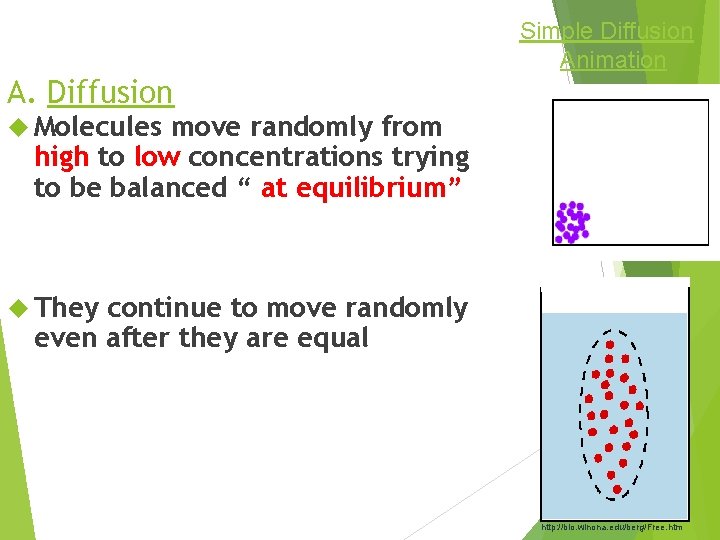
Simple Diffusion Animation A. Diffusion Molecules move randomly from high to low concentrations trying to be balanced “ at equilibrium” They continue to move randomly even after they are equal http: //bio. winona. edu/berg/Free. htm
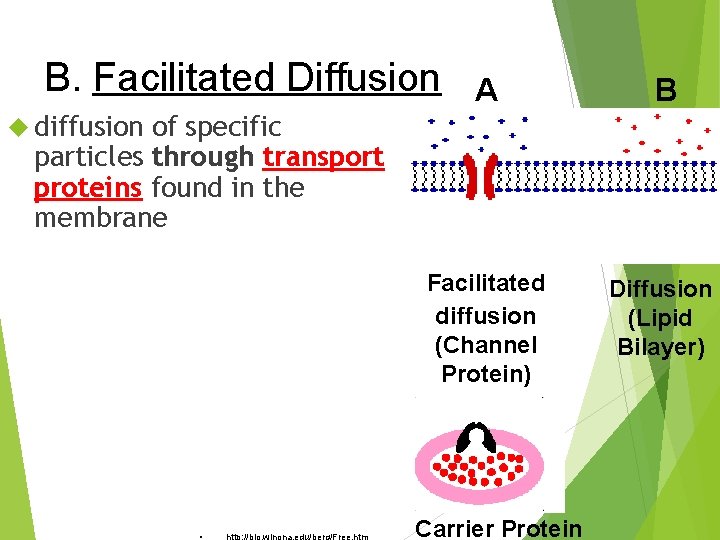
B. Facilitated Diffusion A B Facilitated diffusion (Channel Protein) Diffusion (Lipid Bilayer) diffusion of specific particles through transport proteins found in the membrane Carrier Protein
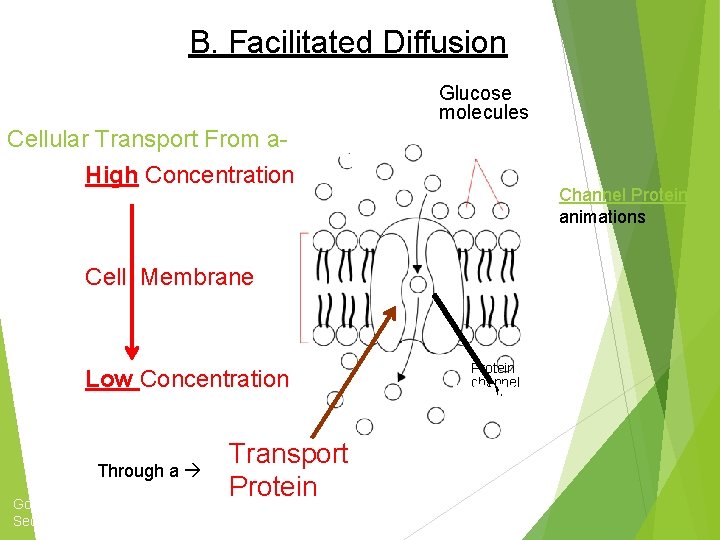
B. Facilitated Diffusion Glucose molecules Cellular Transport From a. High Concentration High Channel Protein animations Cell Membrane Low Concentration Through a Go to Section: Transport Protein channel Low
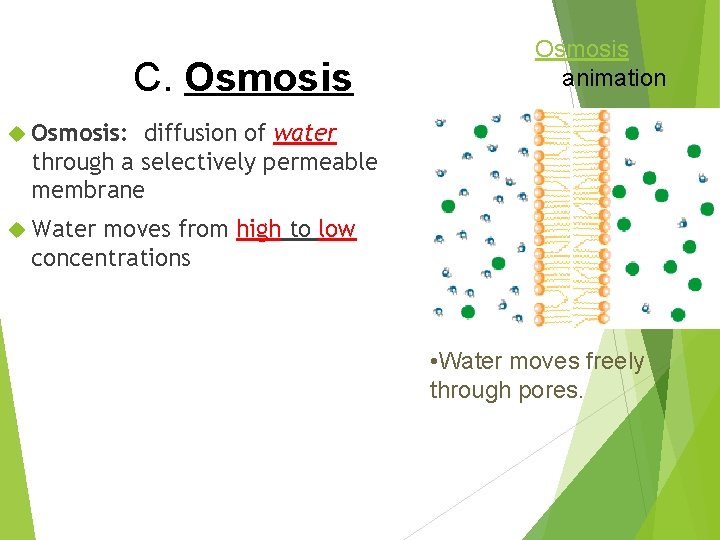
C. Osmosis animation Osmosis: diffusion of water through a selectively permeable membrane Water moves from high to low concentrations • Water moves freely through pores.
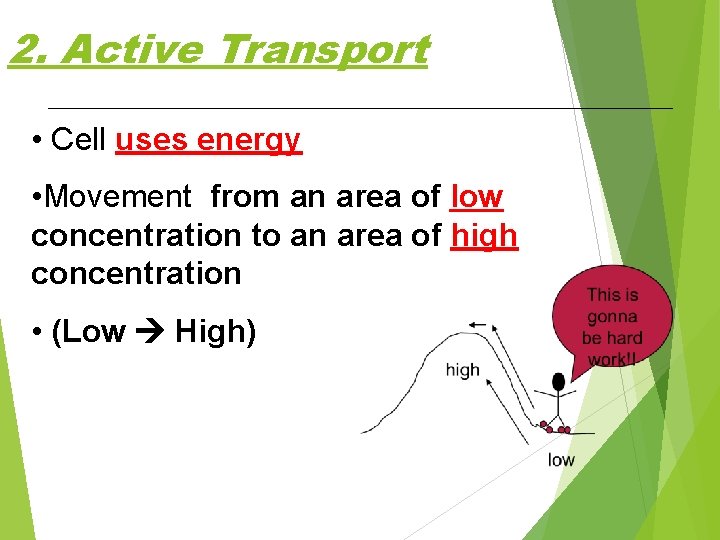
2. Active Transport • Cell uses energy • Movement from an area of low concentration to an area of high concentration • (Low High)
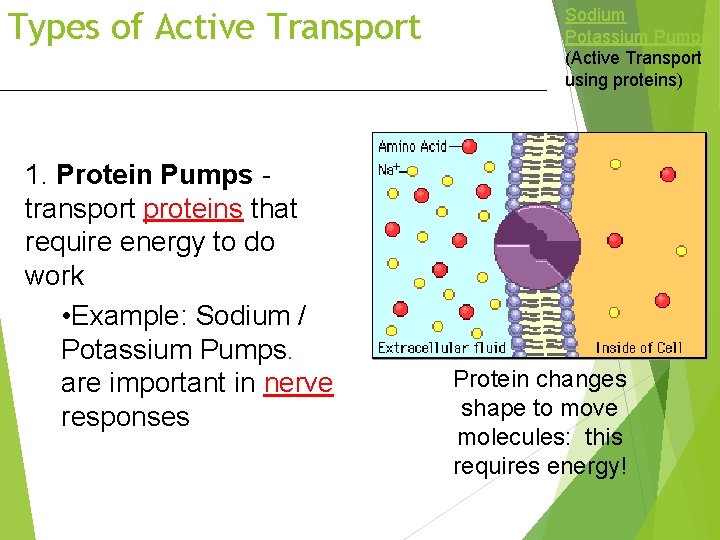
Types of Active Transport 1. Protein Pumps transport proteins that require energy to do work • Example: Sodium / Potassium Pumps. are important in nerve responses Sodium Potassium Pumps (Active Transport using proteins) Protein changes shape to move molecules: this requires energy!
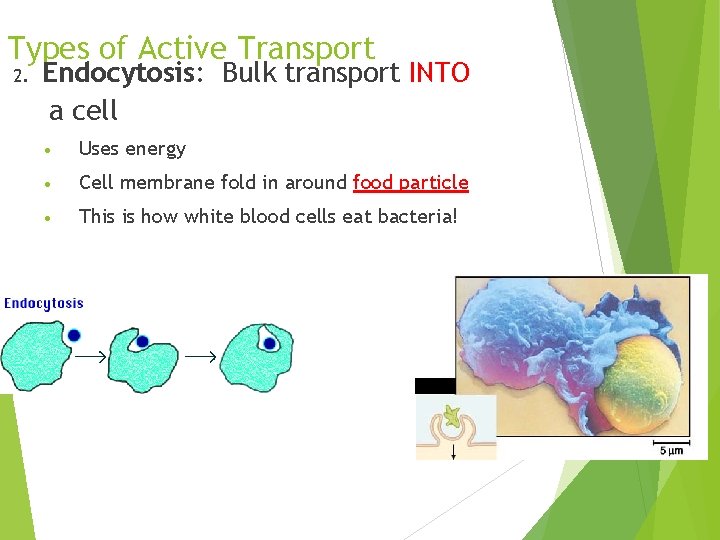
Types of Active Transport 2. Endocytosis: Bulk transport INTO a cell • Uses energy • Cell membrane fold in around food particle • This is how white blood cells eat bacteria!
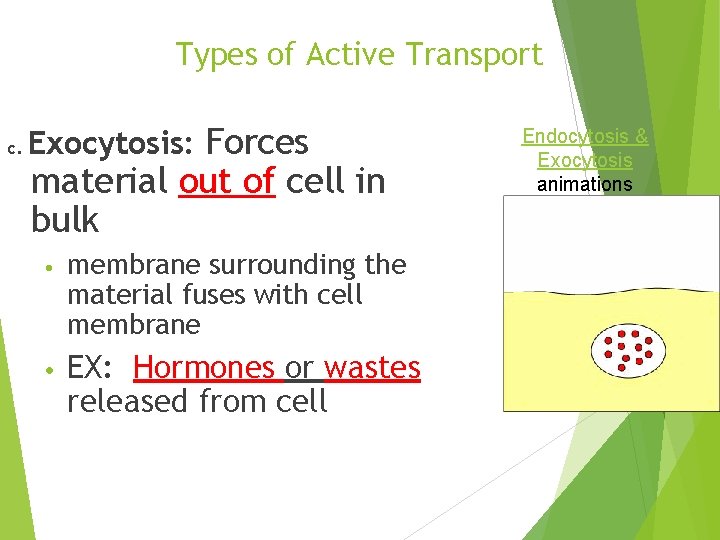
Types of Active Transport c. Exocytosis: Forces material out of cell in bulk • membrane surrounding the material fuses with cell membrane • EX: Hormones or wastes released from cell Endocytosis & Exocytosis animations

Effects of Osmosis on Life Osmosis- diffusion of water through a selectively permeable membrane Water is so small and there is so much of it the cell can’t control it’s movement through the cell membrane.
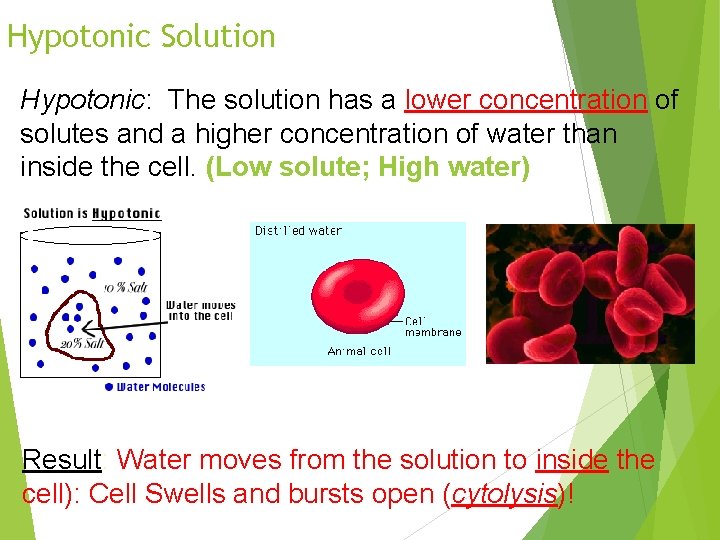
Hypotonic Solution Hypotonic: The solution has a lower concentration of solutes and a higher concentration of water than inside the cell. (Low solute; High water) Result: Water moves from the solution to inside the cell): Cell Swells and bursts open (cytolysis)!
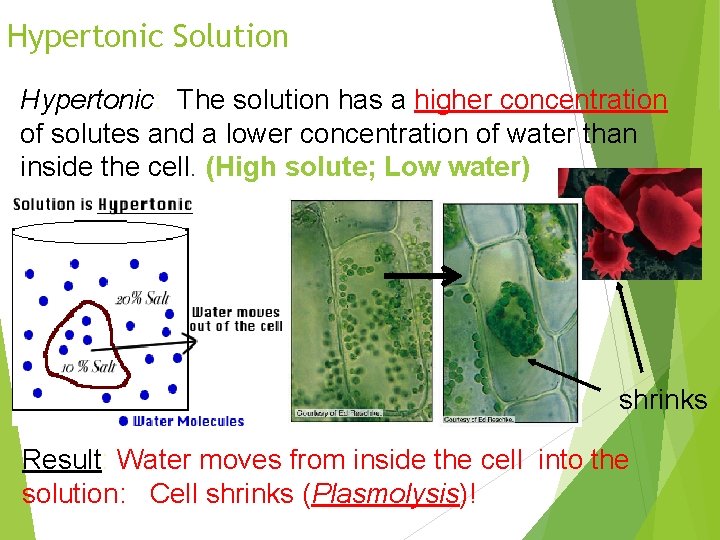
Hypertonic Solution Hypertonic: The solution has a higher concentration of solutes and a lower concentration of water than inside the cell. (High solute; Low water) shrinks Result: Water moves from inside the cell into the solution: Cell shrinks (Plasmolysis)!
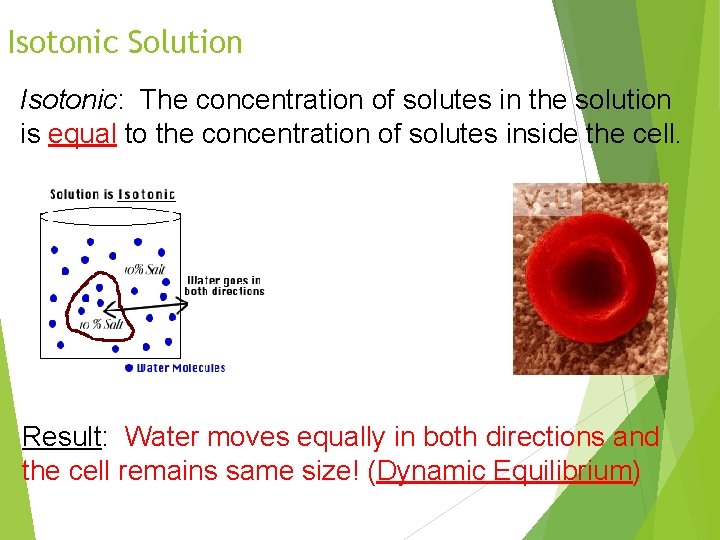
Isotonic Solution Isotonic: The concentration of solutes in the solution is equal to the concentration of solutes inside the cell. Result: Water moves equally in both directions and the cell remains same size! (Dynamic Equilibrium)
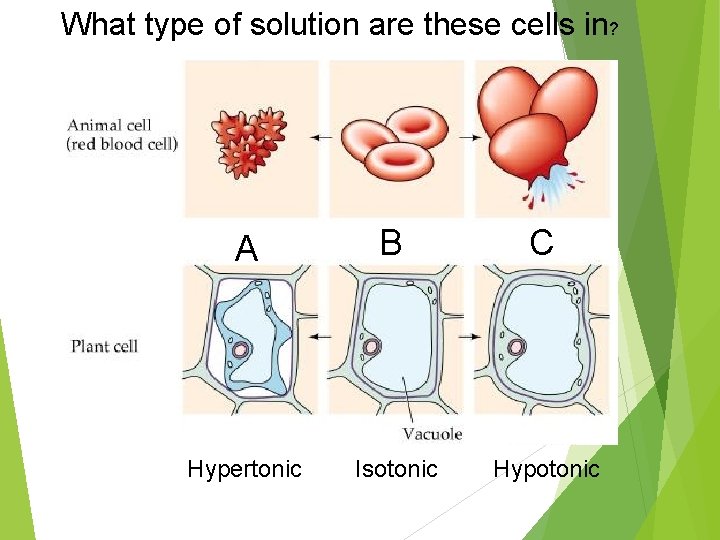
What type of solution are these cells in? A B C Hypertonic Isotonic Hypotonic
How Organisms Deal with Osmotic Pressure Salt water fish pump salt out of their specialized gills so they do not dehydrate. Animal cells are bathed in blood. Kidneys keep the blood isotonic by remove excess salt and water.
Homeostasis & Human Body Systems
Cell Development Humans start out as a single cell = a zygote Zygotes divide many times and differentiate into more than 200 types of cells 1 st cells produced from division are called embryonic stem cells Can become ANY specialized cell in the body
Cell Development Determination = The process where stem cells become committed to divide into only one type of cell (ex. Muscle Cell, Nerve Cell, etc. ) Differentiation = The process where committed cells acquire the structures and functions of specialized cells.
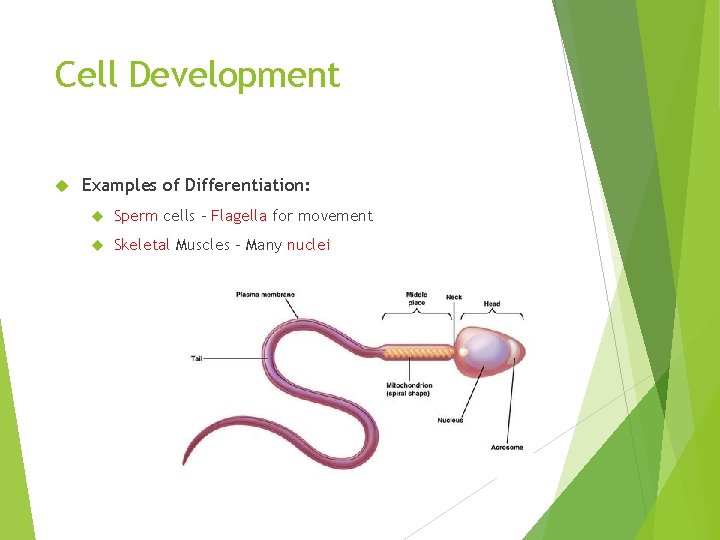
Cell Development Examples of Differentiation: Sperm cells – Flagella for movement Skeletal Muscles – Many nuclei
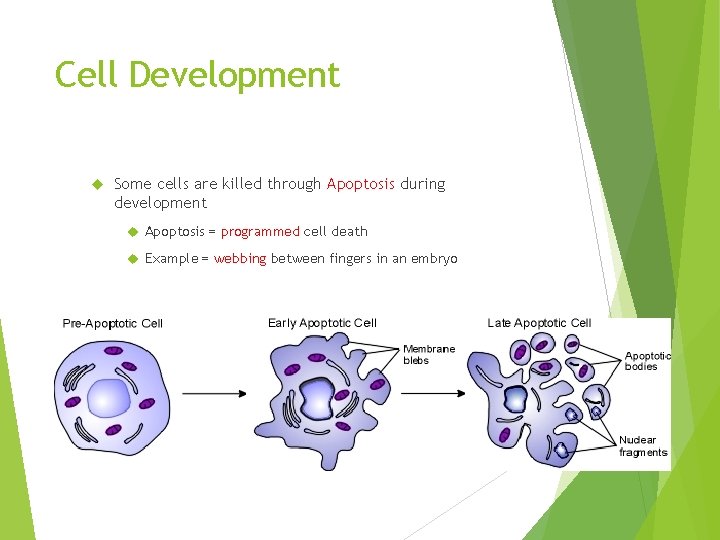
Cell Development Some cells are killed through Apoptosis during development Apoptosis = programmed cell death Example = webbing between fingers in an embryo
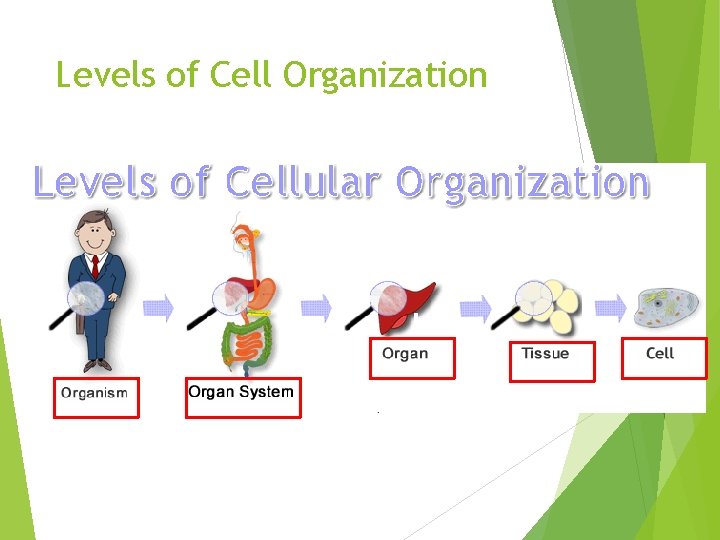
Levels of Cell Organization
Homeostasis = The regulation and maintenance of the internal environment within the narrow ranges that support human life. Examples = Body temperature, fluids, salts, p. H, nutrients & gases
Homeostasis Control systems in the body: Sensors = receptors that gather information about conditions inside and outside of the body Control Center = the brain receives information from the sensors and sends messages through a communication system
Homeostasis Control systems in the body: Communication Systems = Controlled by the nervous or endocrine systems that send nerve impulses & hormones as messages to all parts of the body Targets = any organ, tissue or cell that changes its level of activity in response to a message
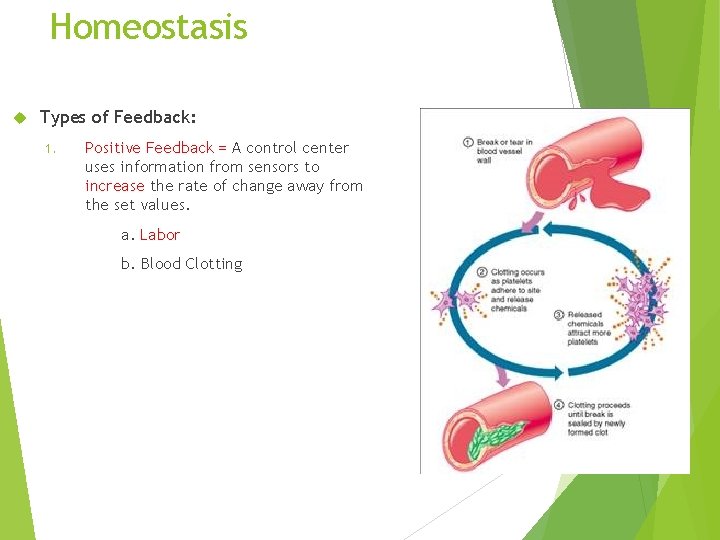
Homeostasis Types of Feedback: 1. Positive Feedback = A control center uses information from sensors to increase the rate of change away from the set values. a. Labor b. Blood Clotting
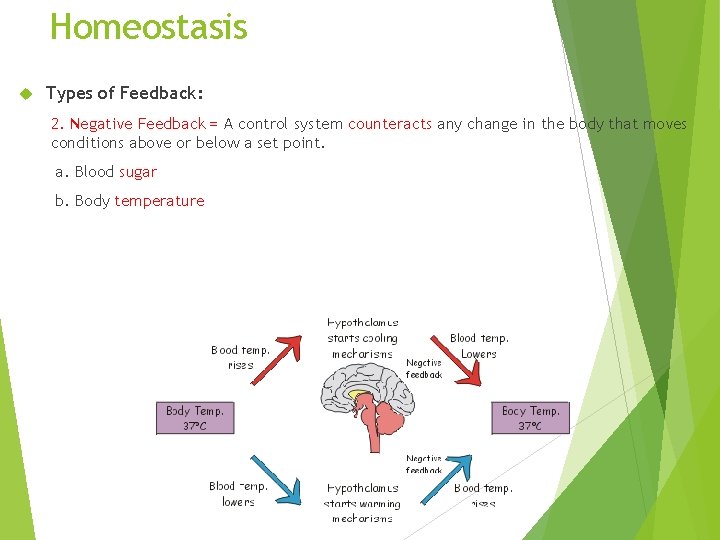
Homeostasis Types of Feedback: 2. Negative Feedback = A control system counteracts any change in the body that moves conditions above or below a set point. a. Blood sugar b. Body temperature
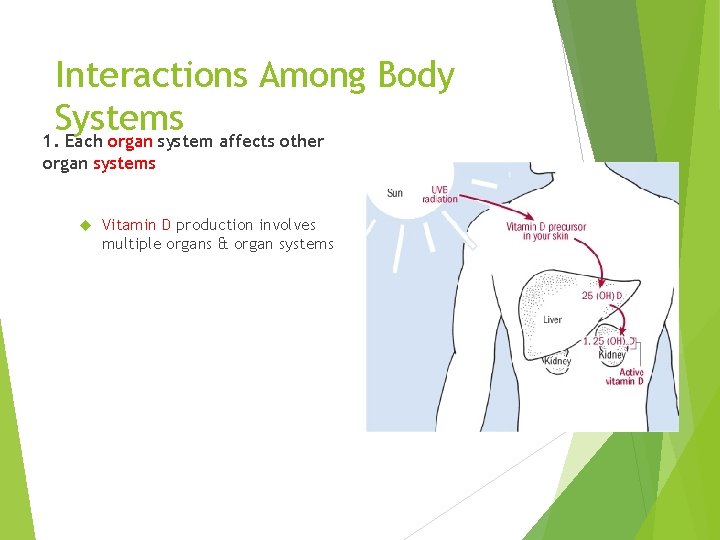
Interactions Among Body Systems 1. Each organ system affects other organ systems Vitamin D production involves multiple organs & organ systems
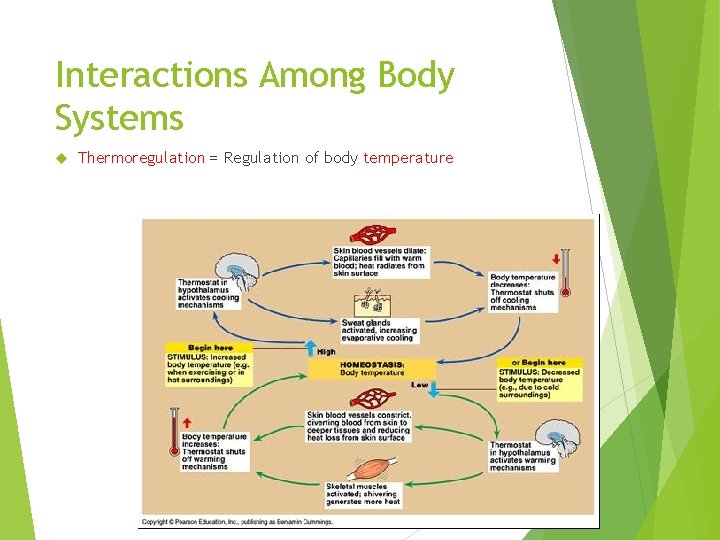
Interactions Among Body Systems Thermoregulation = Regulation of body temperature
Interactions Among Body Systems 2. Disruption of Homeostasis Short-Term Effects usually last a few days or weeks Example = Recovering from the common cold Long-Term Effects are more damaging to the body systems Example = Type 1 & 2 Diabetes
- Slides: 41