
Cell membrane composition Lecture NO 1 1 st
Cell membrane composition Lecture NO: 1, 1 st MBBS Dr Muhammad Ramzan
Cell membrane – the definition • Is a biological membrane that separates the interior of all cells from the outside environment • Also called as plasma membrane • Protects and maintains the integrity of a cell • www. biology - on line. org
Cell membrane – the background • Is selectively permeable to ions and organic molecules • Controls the movement of substances in and out of the cells. • Source of Communication B/W with the cells • Fundamental structure consists of Phospholipids Bilayer with embedded proteins • It is thin, Pliable and 7 -10 nms thick and envelops the cell • www. Encyclopedia britannica. com
Plasma membrane – electron micrograph Rail road track • The plasma membrane is referred to as rail road track that appears as Dense lines on : • Electron micrographs that run parallel and are separated by an intertwining space • (space between the 2 lines appears divided)
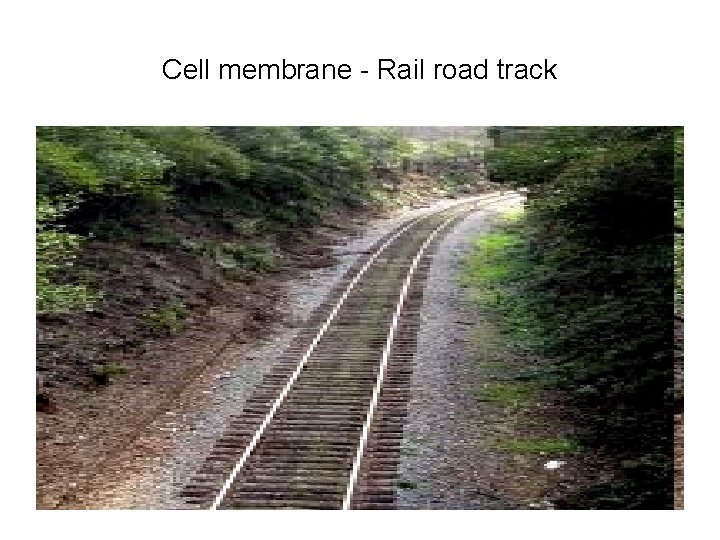
Cell membrane - Rail road track
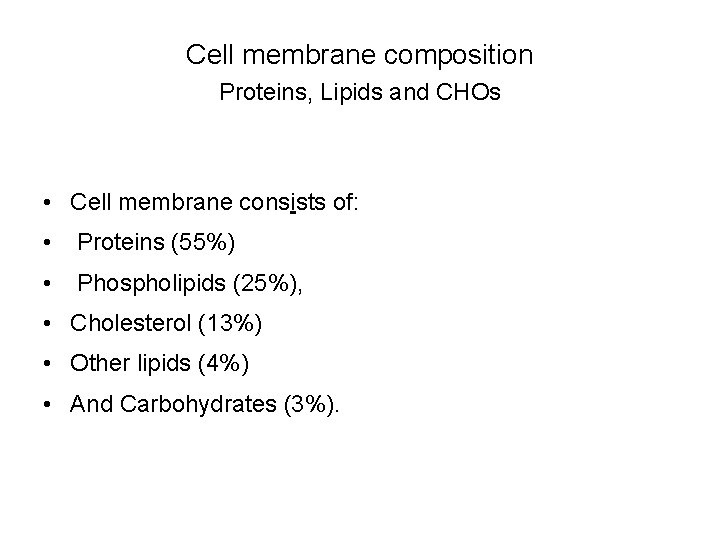
Cell membrane composition Proteins, Lipids and CHOs • Cell membrane consists of: • Proteins (55%) • Phospholipids (25%), • Cholesterol (13%) • Other lipids (4%) • And Carbohydrates (3%).
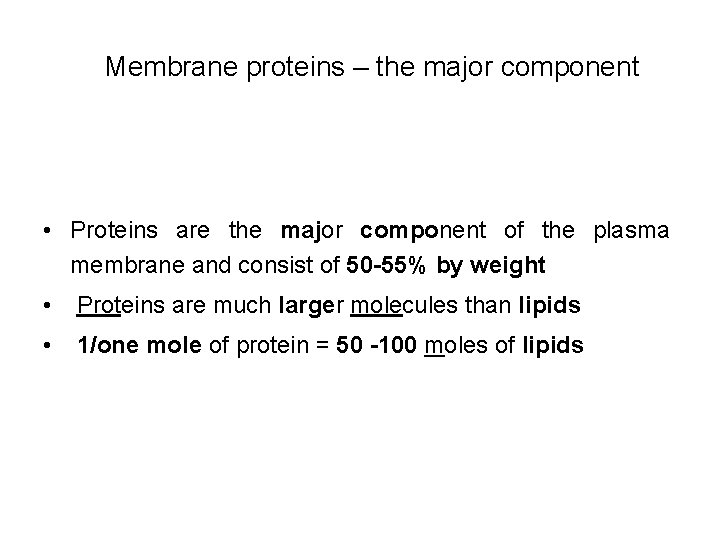
Membrane proteins – the major component • Proteins are the major component of the plasma membrane and consist of 50 -55% by weight • Proteins are much larger molecules than lipids • 1/one mole of protein = 50 -100 moles of lipids
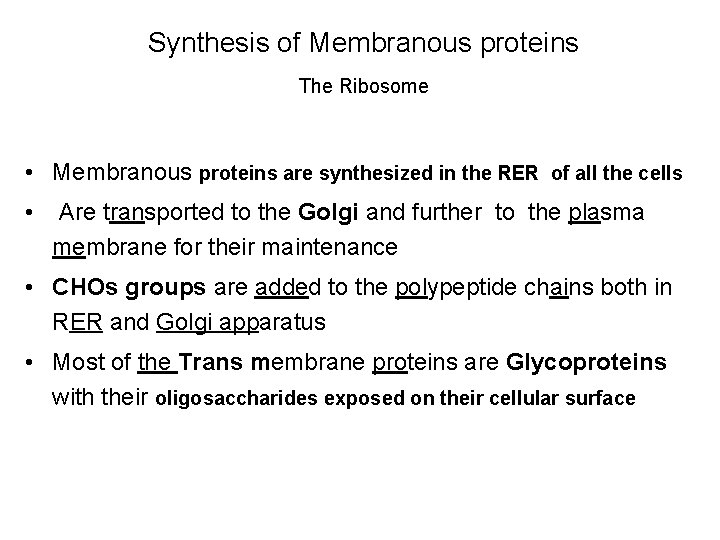
Synthesis of Membranous proteins The Ribosome • Membranous proteins are synthesized in the RER of all the cells • Are transported to the Golgi and further to the plasma membrane for their maintenance • CHOs groups are added to the polypeptide chains both in RER and Golgi apparatus • Most of the Trans membrane proteins are Glycoproteins with their oligosaccharides exposed on their cellular surface
Membrane proteins – Types Two (2) • Major membranous proteins are of 2 types based on the • Nature of the membrane and protein interactions • Integral/ Tran membrane/intrinsic proteins • Peripheral membrane/Extrinsic proteins 1 2
Integral /Trans membrane proteins Exposed to aqueous environment on both sides • These proteins cross the entire thickness of the membrane and are its structural/functional component 1 • Are firmly attached to membrane and lipid Bilayer • Cannot be removed without disrupting the cell • Are mostly Glycoproteins to span the lipid Bilayer 3 2 • Include: Ion channels; Transport proteins, GPCR, LDL – receptors and enzymes • www. biology - on line. org
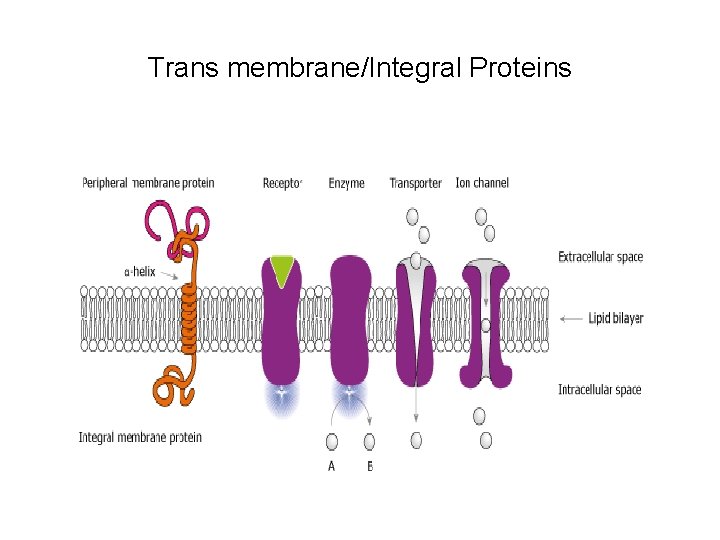
Trans membrane/Integral Proteins
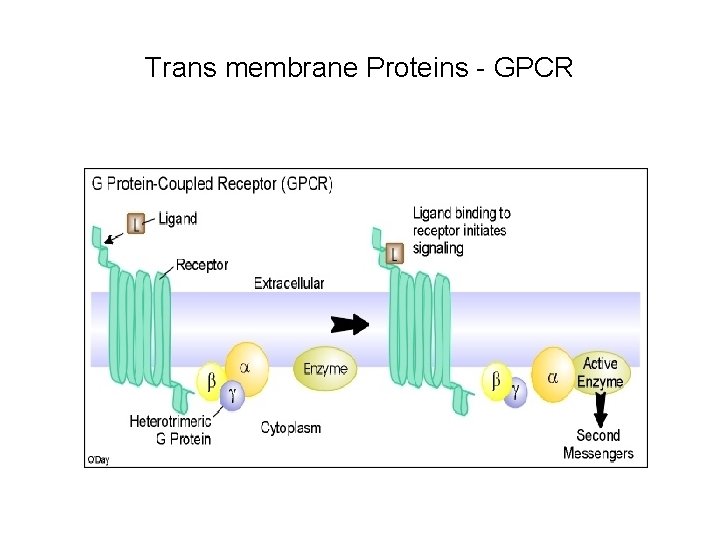
Trans membrane Proteins - GPCR
Peripheral proteins - Characteristics Do not pass through the lipid Bilayer • Are Indirectly associated with the membrane through protein - protein interactions or Ionic bonds or • Directly to the surface of integral proteins, either on the Cytoplasmic or extracellular side 1 • They do not cross through the lipid Bilayer 2 • They can be removed from the membrane through polar agents without disrupting phospholipids Bilayer 3
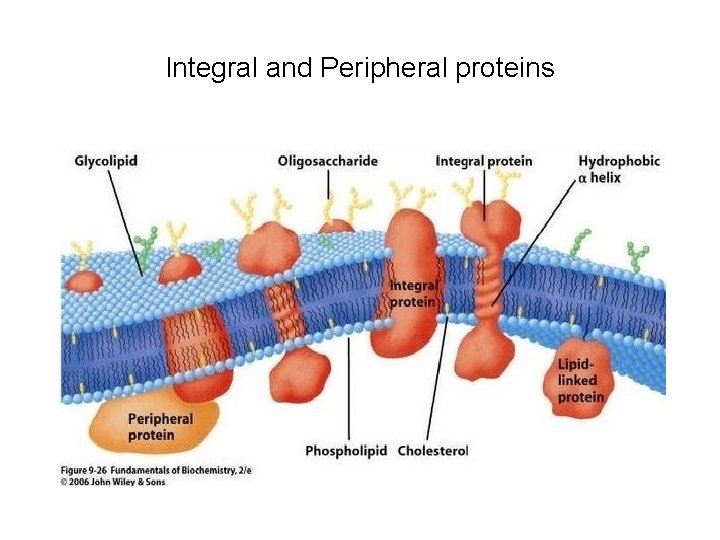
Integral and Peripheral proteins
Peripheral proteins – the role • Some of the peripheral proteins are water soluble enzymes that act on the water soluble heads of the : • membranous Phospholipids • These Phospholipases hydrolyze various bonds in the heads of phospholipids and : • Degrade the damaged or aged cell membranes
RBC membrane composition – A model special characteristics • Plasma membrane of the Human Erythrocyte is a model for membrane studies as it has : • No nuclei and internal membranes • Can easily be isolated for biochemical analysis 1 2 • Studies of the RBC plasma membrane provided the first evidence of the existence of Phospho lipid Bilayer 3
Tran membrane proteins of RBC the types • • • Major Trans membrane proteins are : Glycoproteins, Glycophorins and Band 3 Aquaporin RH(Rhesus) proteins The red cell glucose transporters (GLUT-1)
Tran membrane proteins of RBC • Glycophorins are proteins that contribute to the Glycosylation • Aquaporins is a water channel protein in renal tubules • RH (Rhesus) protein is one of the most immunogenic human blood group system • The Red cell Glucose transporter(GLUT 1) is passive one and is present in other tissues also. • Band 3 is an anion transporter for HCO 3 and Cl
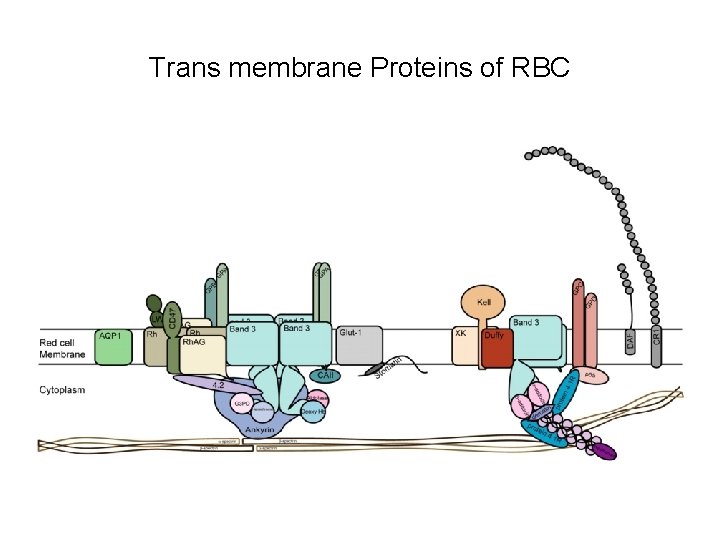
Trans membrane Proteins of RBC
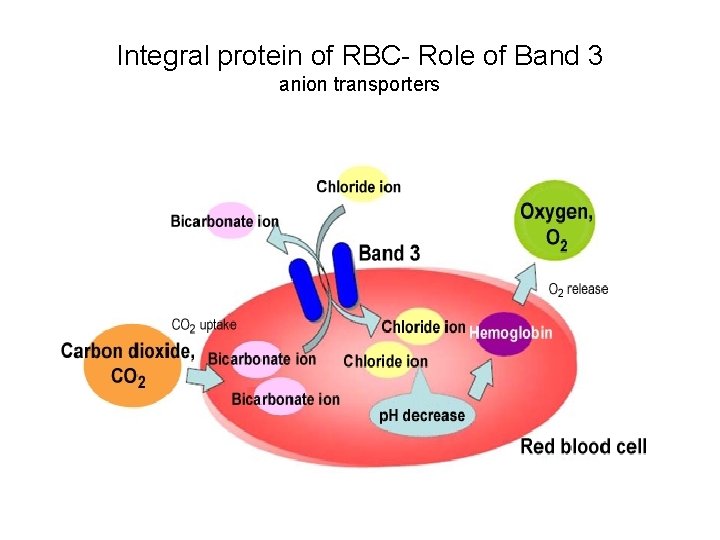
Integral protein of RBC- Role of Band 3 anion transporters
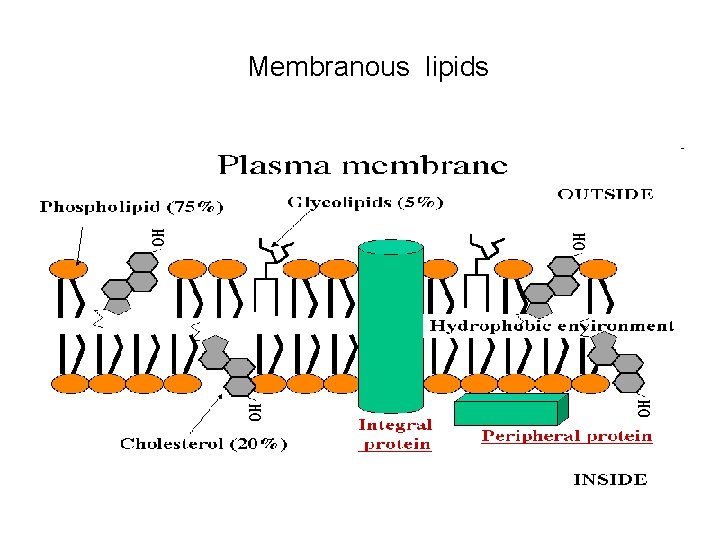
Membranous lipids – 3 types • The cell membrane consists of 3 classes of amphepathic lipids: • Phospholipids, Glycolipids and Cholesterol • The amount of each depends upon the type of cell • In majority of the cases phospholipids are the most abundant • In RBC studies 30% of the plasma membrane is lipid
Membranous lipids
Cell membrane – Fluid mosaic model pieces of elements are fitted togother • It describes the structure of plasma membrane as a mosaic of its components which: • Includes Proteins; phospholipids, Cholesterol and CHO • It gives fluid character to the cell membrane in which proteins move freely and laterally in lipid Bilayer • Fluidity is due to the Unsaturated FAs that are unable to pack • www. dictionary. com
Lipid Bilayer and its composition Lipids and proteins • It is primarily a thin layer of Phospholipids, both on the Cytoplasmic and extracellular surfaces : • Resulting in Bilayer with embedded proteins • The head is Hydrophilic with Phospholipids and tail is • Hydrophobic having CH and FAs in the middle • It is maintained by the : 1. hydrophobic, non covalent • interactions and H 2 bonds • www. wikipedia. org
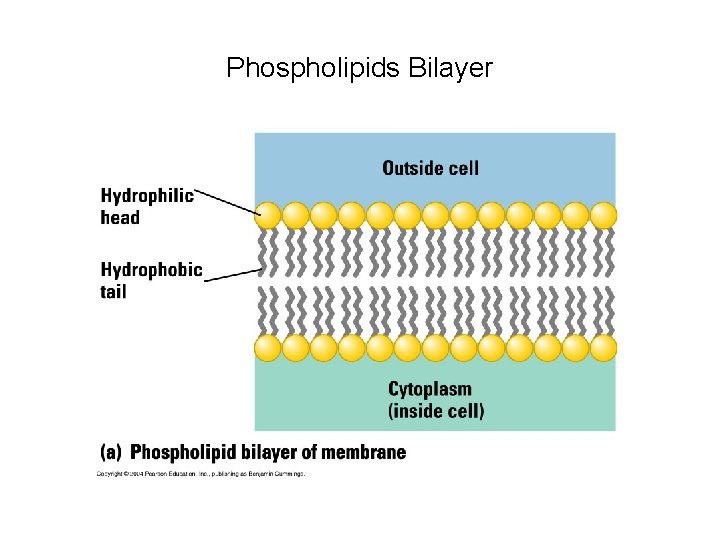
Phospholipids Bilayer
Lipid Bilayer and Membrane fluidity the basis • The FAs are usually unsaturated; have kinks, unable to pack and move freely within the membrane as Fluid 1 • The membrane is soft and flexible as a result. 2 • It allows the movements of the moles especially of proteins laterally, and prevents vertical movements 3 • Lipid Bilayer go through self assembly process for membrane formation in SER
lipid Bilayer – the significance • Lipid Bilayer is critical for membrane function: • It isolates the 2 aqueous compartments : Cytoplasmic and extra cellular from each 1 • Ensures membrane Semi permeability 2 • Maintains Fluidity of the cell membrane 3 • Embedded proteins give Fluid Mosaic appearance to the membrane 4
Membranous Carbohydrates (CHO) • Carbohydrates form a layer on the extracellular surface of the cell membrane – Glycocalyx • It protects the cell from physical and chemical injuries and act as adhesions B/W the cells • Prevents the invasion of pathological agents like Bacteria and Virus
Significance of carbohydrates • Carbohydrates are attached to the Lipids as Glycolipids on the outer cell surface as : • blood group antigens – important in blood transfusions • Glycoproteins are Proteins with CHOs • These serve as cell surface receptors GPCR and hormones like. All ant. Pituitary hormones)
- Slides: 29