
Cell Membrane Cellular Transport Homeostasis the maintenance of
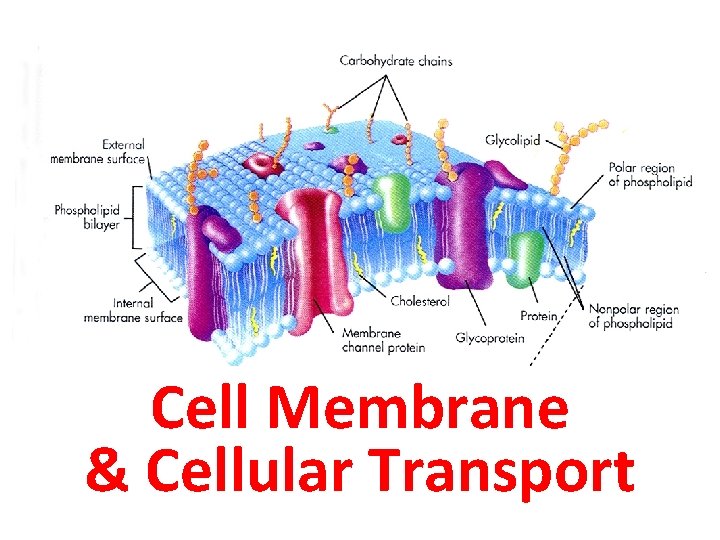
Cell Membrane & Cellular Transport
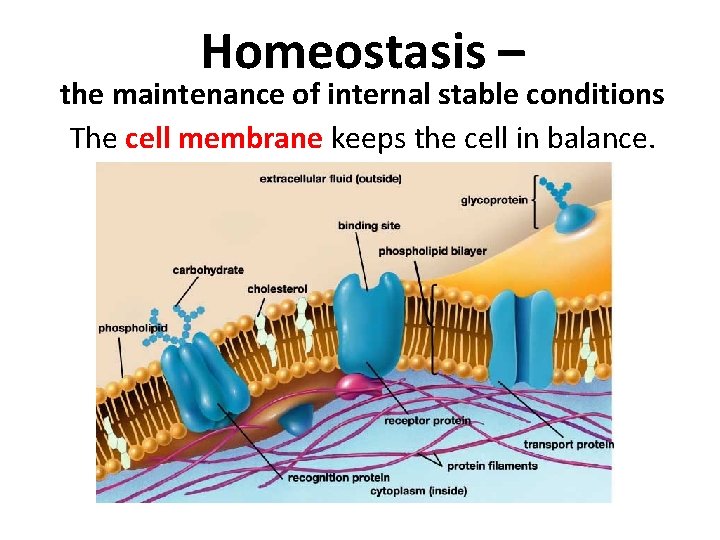
Homeostasis – the maintenance of internal stable conditions The cell membrane keeps the cell in balance.
Membrane Functions • Provides a selectively permeable barrier around the cell. • Controls the passage of substances in and out of the cell. • Maintains homeostasis for the cell.
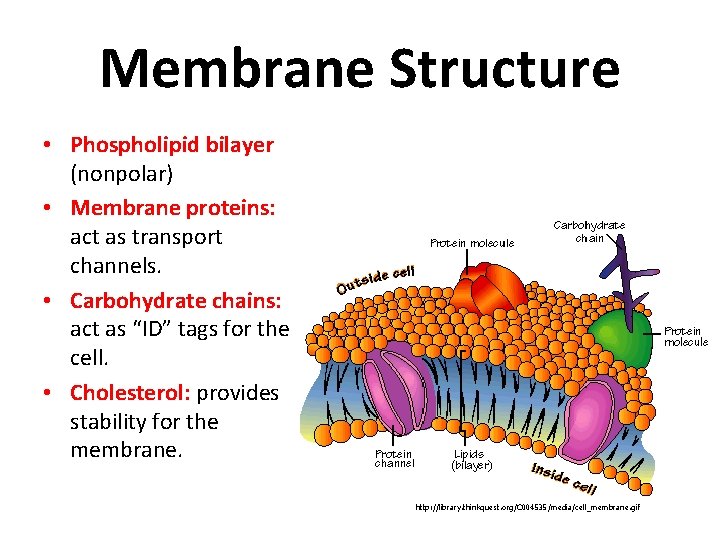
Membrane Structure • Phospholipid bilayer (nonpolar) • Membrane proteins: act as transport channels. • Carbohydrate chains: act as “ID” tags for the cell. • Cholesterol: provides stability for the membrane. http: //library. thinkquest. org/C 004535/media/cell_membrane. gif
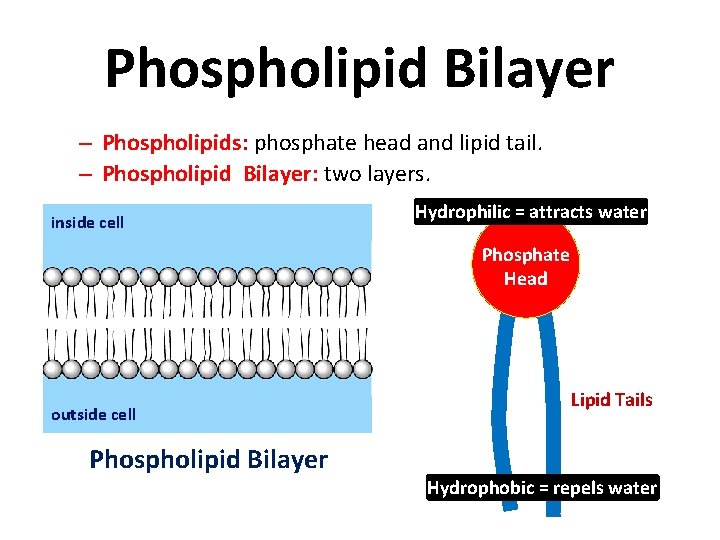
Phospholipid Bilayer – Phospholipids: phosphate head and lipid tail. – Phospholipid Bilayer: two layers. inside cell Hydrophilic = attracts water Phosphate Head outside cell Phospholipid Bilayer Lipid Tails Hydrophobic = repels water
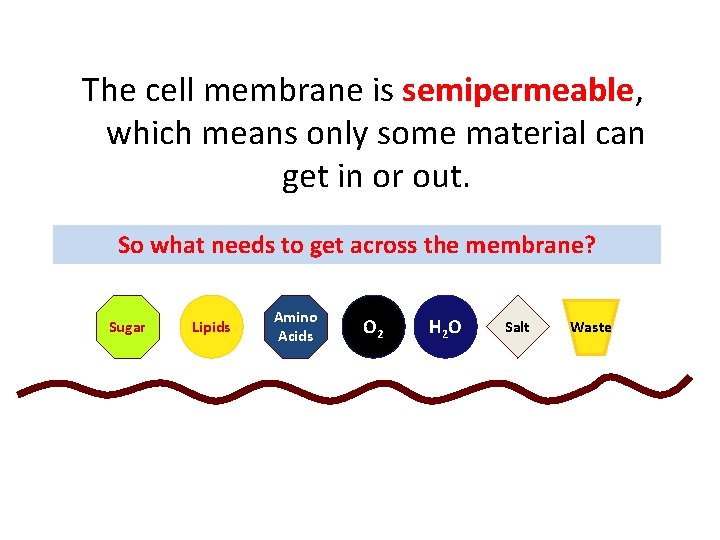
The cell membrane is semipermeable, which means only some material can get in or out. So what needs to get across the membrane? Sugar Lipids Amino Acids O 2 H 2 O Salt Waste
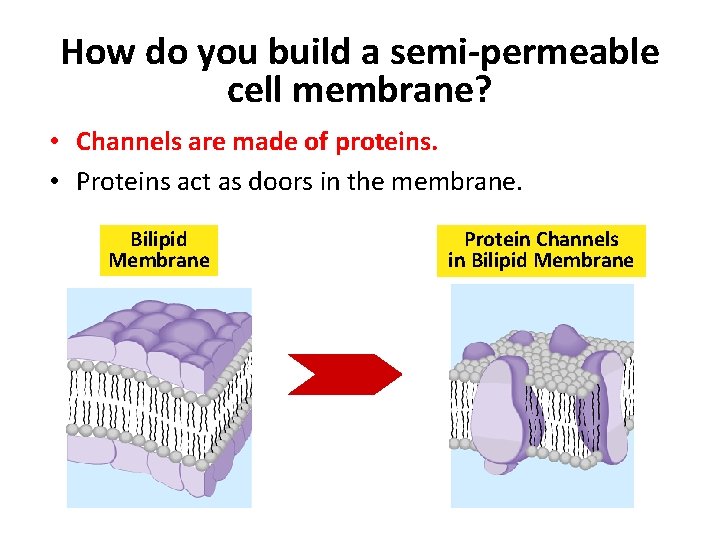
How do you build a semi-permeable cell membrane? • Channels are made of proteins. • Proteins act as doors in the membrane. Bilipid Membrane Protein Channels in Bilipid Membrane
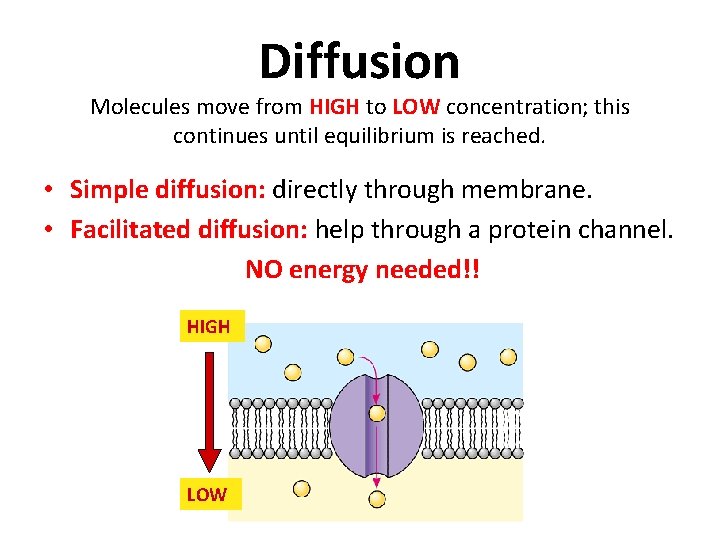
Diffusion Molecules move from HIGH to LOW concentration; this continues until equilibrium is reached. • Simple diffusion: directly through membrane. • Facilitated diffusion: help through a protein channel. NO energy needed!! HIGH LOW
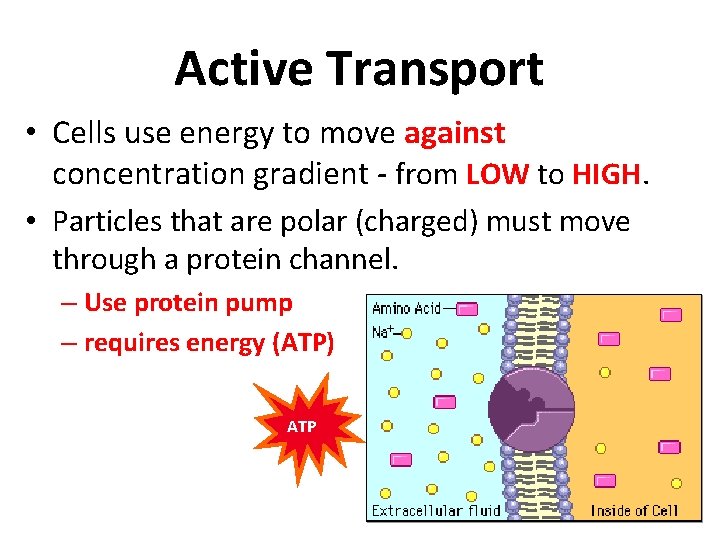
Active Transport • Cells use energy to move against concentration gradient - from LOW to HIGH. • Particles that are polar (charged) must move through a protein channel. – Use protein pump – requires energy (ATP) ATP
Transport of Molecules • Endocytosis: takes material into cell by cell membrane making pockets. – Phagocytosis – “cell eating”; cell engulfs particles – Pinocytosis – cell takes in liquid from surrounding environment. • Exocytosis: process forcing contents out of the cell.
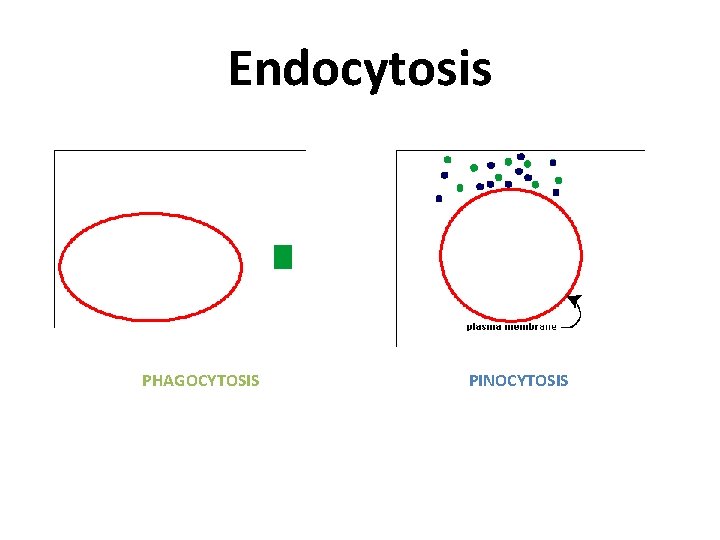
Endocytosis PHAGOCYTOSIS PINOCYTOSIS

Exocytosis
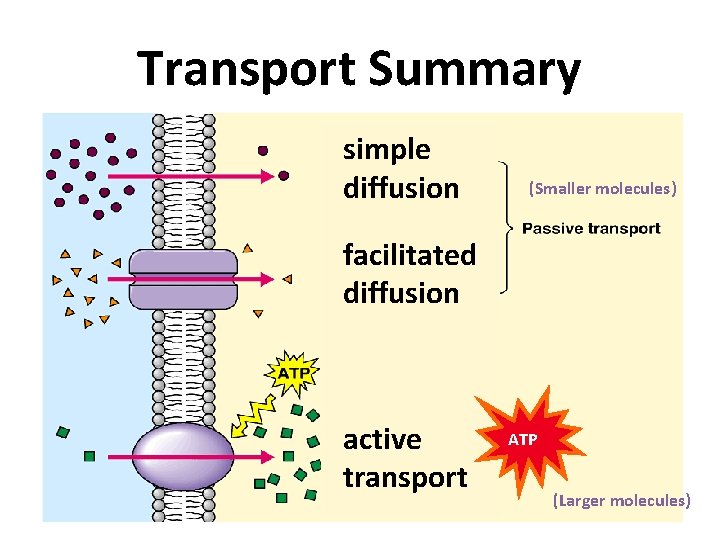
Transport Summary simple diffusion (Smaller molecules) facilitated diffusion active transport ATP (Larger molecules)
Types of Cellular Transport PASSIVE ACTIVE • Does NOT require energy • Goes with the concentration gradient (high to low) • Simple Diffusion, Facilitated Diffusion • Requires energy from ATP • Goes against the concentration gradient (low to high) • Active Transport, Endocytosis, Exocytosis
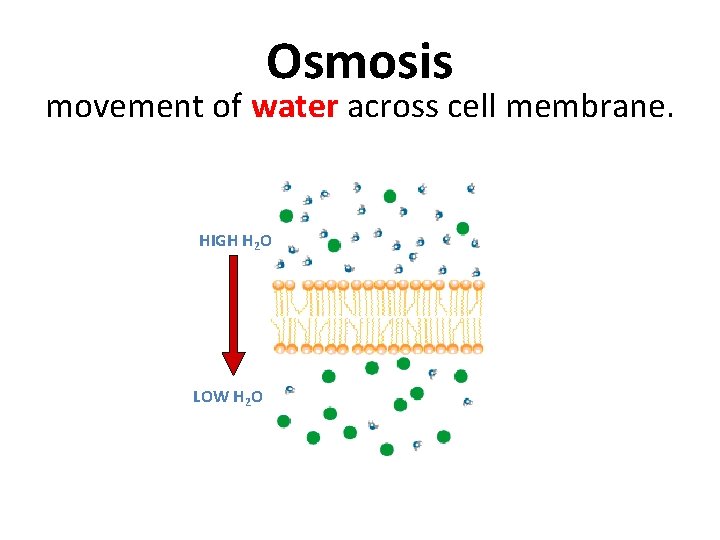
Osmosis movement of water across cell membrane. HIGH H 2 O LOW H 2 O
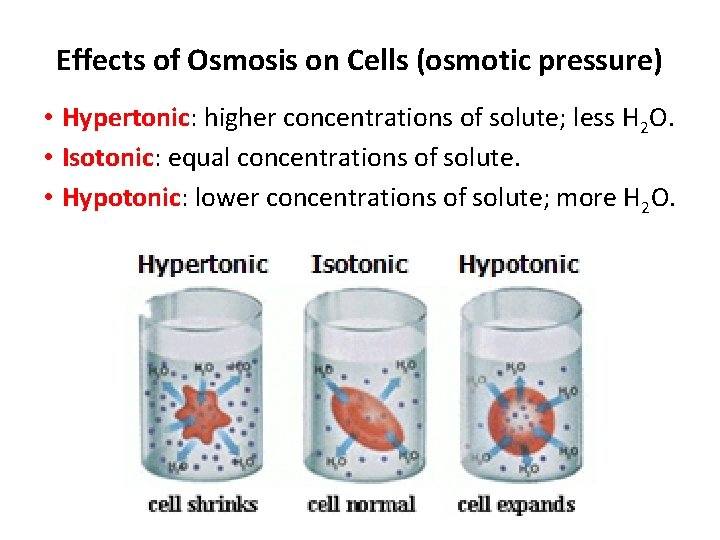
Effects of Osmosis on Cells (osmotic pressure) • Hypertonic: higher concentrations of solute; less H 2 O. • Isotonic: equal concentrations of solute. • Hypotonic: lower concentrations of solute; more H 2 O.
http: //www. glencoe. com/sites/common_assets/science/virtual_labs/LS 03. html
- Slides: 17