
Cell Membrane and Diffusion Cell Membrane The cell
Cell Membrane and Diffusion
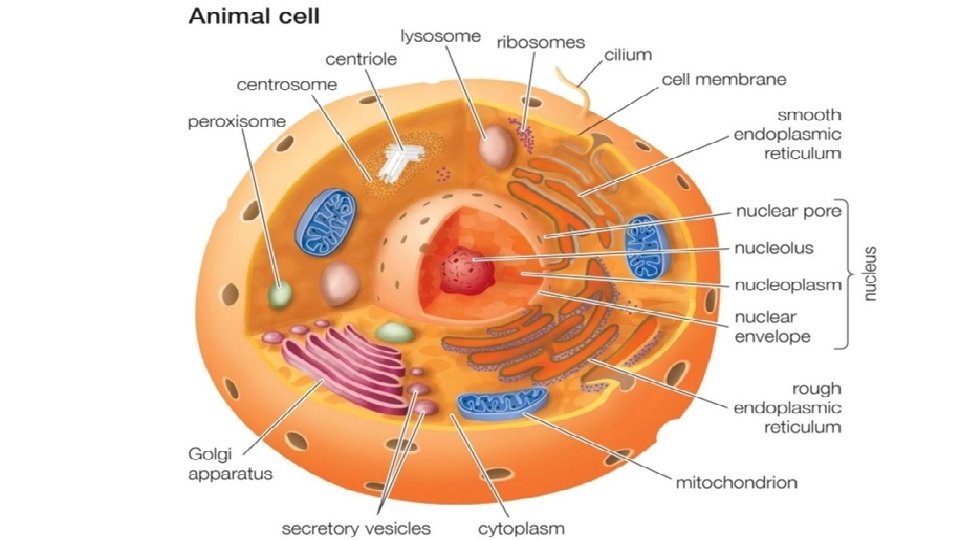
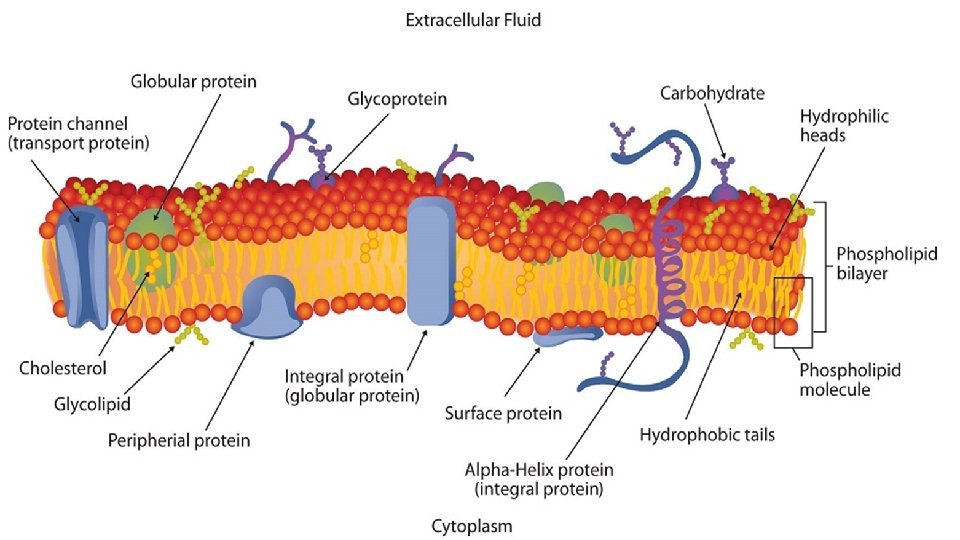
Cell Membrane The cell membrane is the structure that separates the cell from its external environment. It gives shape and flexibility to the cell. Selectively Permeable Membrane: The cell membrane is a complex barrier that keeps out some molecules but allows others to permeate, or pass, into the inside of the cell.
Cell Membrane
Cell Membrane The cell membrane is composed of two layers of molecules. Each layer is made up of a sheet of lipids. The heads of the lipid molecules form the outside of the membrane and the tails of the lipid molecules form the inside of the membrane. Protein layers. molecules are embedded in the lipid
Cell Membrane
Cell Membrane Fluid Mosaic Model: The lipid molecules that form the membrane are fluid. They can move about relative to one another in a fluid manner. The proteins are also free to move about, so that the mosaic, or pattern, of lipids and proteins changes.
Diffusion and Osmosis As molecules move, they tend to move into those areas where the molecules are less concentrated. This tendency results in an overall direction of movement among the molecules. Diffusion: The process by which molecules spread from an area of greater concentration to an area of lesser concentration.
Diffusion and Osmosis Concentration Gradient: Difference in concentrations of a substance across space. Equilibrium: The concentration of molecules of a substance is the same throughout a space.
Diffusion and Osmosis Some kinds of molecules can also diffuse across a membrane. They do this by moving between the molecules that make up the membrane. Permeable: If a substance can pass through a membrane. As with all diffusion, molecules diffuse from an area of greater concentration on one side of the membrane to one of lesser concentration on the other. Oxygen not. enters the cell by diffusion. Starch can
Diffusion and Osmosis In a sugar water example, what is the solute and what is the solvent? In a sugar water example, what substance diffuses? The solvent or the solute? It is possible for the solvent to diffuse. The most common solvent in our bodies is water. Osmosis: The process by which water molecules diffuse through a membrane from an area of greater concentration to an area of lesser concentration.
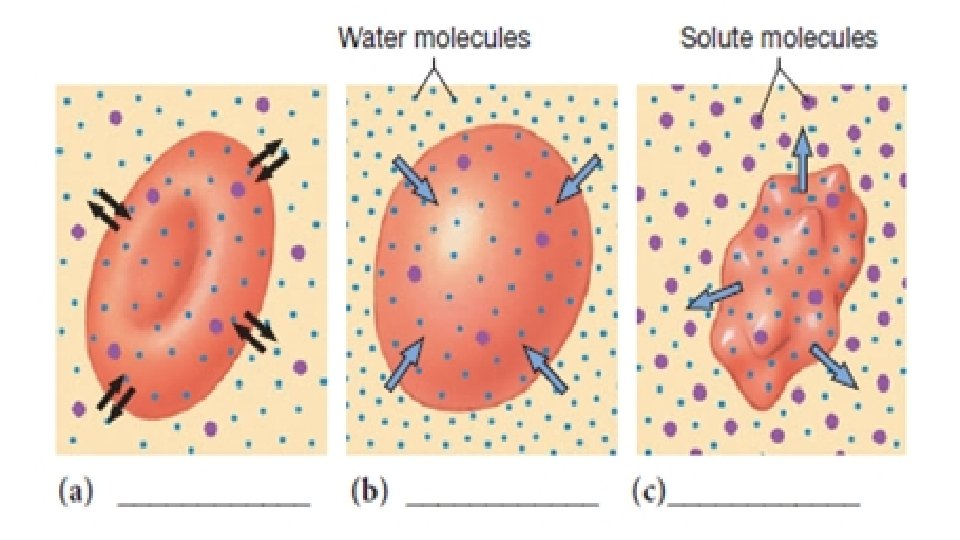
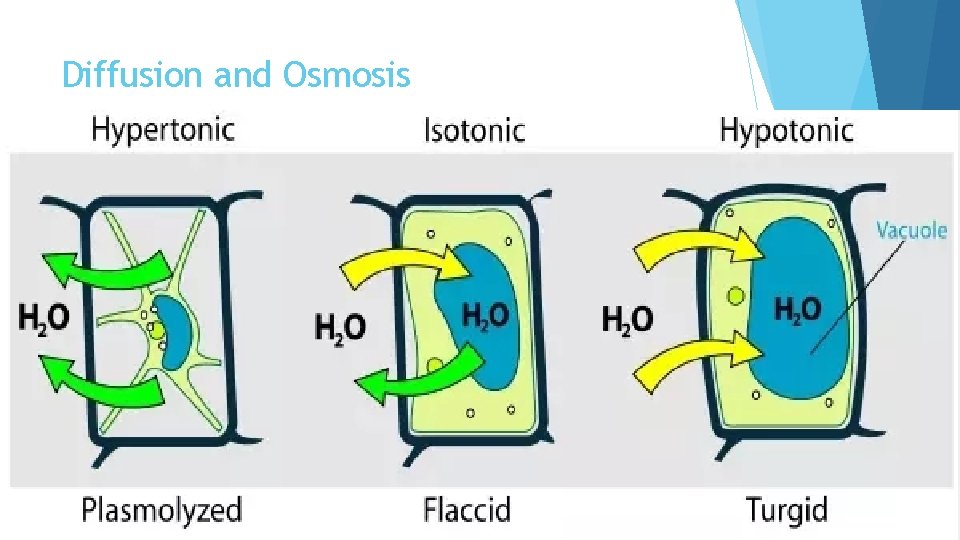
Diffusion and Osmosis Hypotonic: If the concentration of solute molecules in the environment outside the cell is lower than that in the cell. Hypertonic: If the concentration of solute molecules outside the cell is greater than that inside. Isotonic: If the concentration of solutes outside and inside the cell are equal.
Diffusion and Osmosis
Diffusion and Osmosis A plant cell swells as it fills with water. It does not swell endlessly because it is restricted by cell walls. As water diffuses into the cell, pressure – called turgor pressure – increases. The pressure forces the cytoplasm and cell membrane against the cell wall and the cell becomes rigid.
Diffusion and Osmosis Turgor pressure is maintained while the cells are in a hypotonic environment. Plasmolysis: If the environment loses water or gains solutes, the concentration of solutes outside the cell may become greater than that inside. Water then leaves the cell, turgor pressure is lost, and the cell wilts. Cytolysis: The reverse condition, in which cells take in so much water that they burst.
Diffusion and Osmosis
Other Kinds of Transport Passive Transport: The movement of any substance across a membrane without the use of chemical energy. Active Transport: The movement of any substance across a cell membrane with the use of chemical energy.
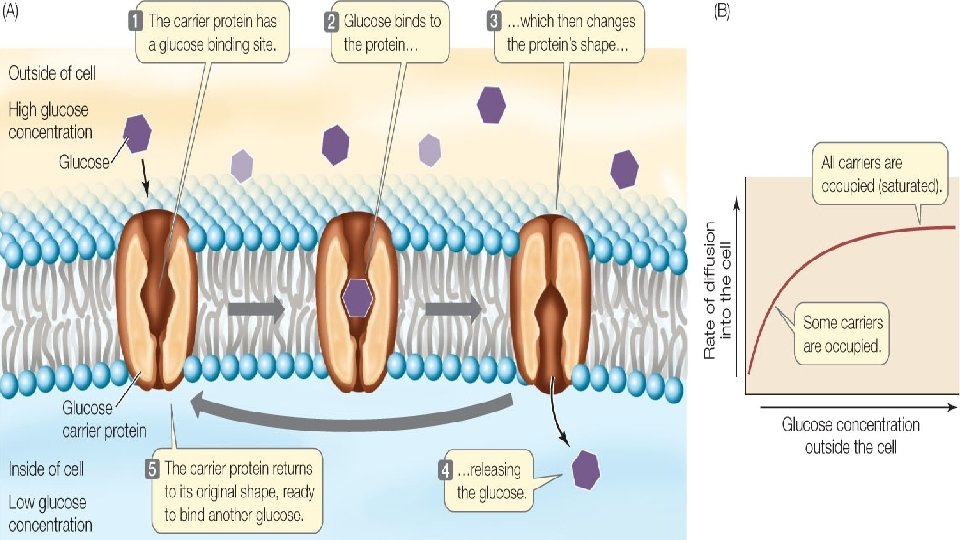
Other Kinds of Transport The cell membrane has proteins associated with the lipid bilayer. Some of these proteins extend across the membrane and others are embedded in it. Carrier Molecules: Proteins that aid in transport. These proteins are also called permeases. Generally, each carrier molecule is specialized to allow the movement of only one type of molecule across a membrane.
Other Kinds of Transport
Other Kinds of Transport Some carrier molecules transport solute molecules through a membrane without expending energy. Facilitated Diffusion: A passive form of carrier transport. Example: Glucose
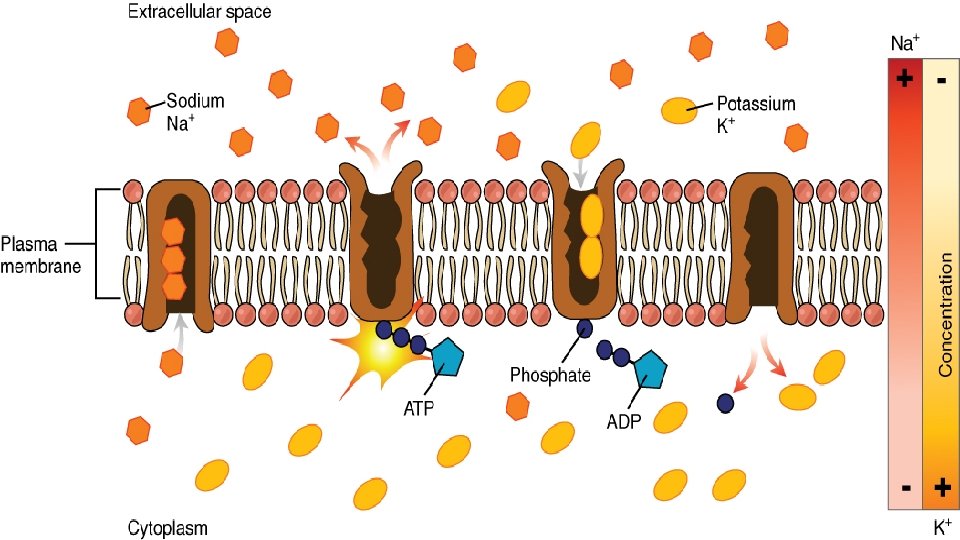
Other Kinds of Transport Carrier molecules also function in the active transport of solute molecules across cell membranes. Sodium-Potassium Pump: A chemical mechanism that moves sodium ions (Na+) out of the cell and forces potassium ions (K+) in. Movement in both cases is against the respective concentration gradients. The process depends on the ability of the protein carrier molecule to change shape. The pump moves three sodium ions in one direction for every two potassium ions moved in the opposite direction. The change in their distribution on either side of the membrane results in a buildup of a positive charge outside the cell and creates a gradient of electrical charge across the membrane.
Other Kinds of Transport
Other Kinds of Transport Another form of passive transport occurs when proteins in the membrane form a gated channel across the lipid membrane. Gated Channel: A protein-controlled passage that permits the cell membrane to be permeable as needed. Some channels are permanently open. Others open in response to environmental stimuli. Example: When an impulse travels down a nerve, stimulates a muscle, and causes it to contract, at least four types of gated channels open and close in the neuromuscular junction in less than one second.
Other Kinds of Transport Some molecules, such as food particles and waste materials, are too large to pass through the cell membrane. Endocytosis: The process by which cells engulf substances that are much too large to enter the cell by passing through the cell membrane. These large materials outside the cell are enclosed by a portion of the cell, which folds into itself and forms a pouch. The pouch, called a vesicle, then pinches off from the cell membrane and enters the cytoplasm. Pinocytosis: The movement of solutes or fluids into the cell. Phagocytosis: The movement of large food particles or whole microorganisms into the cell.
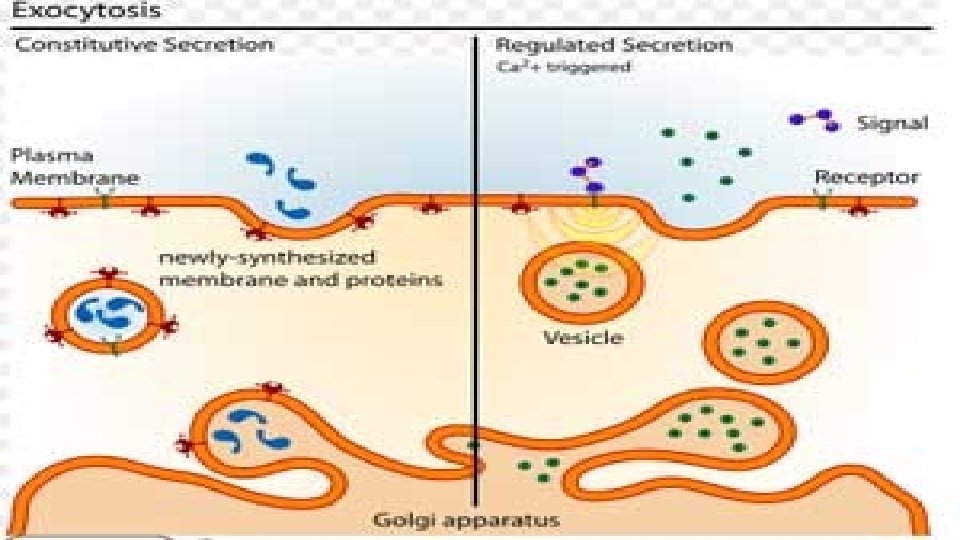
Other Kinds of Transport Exocytosis: The passage of large molecules out of a cell. Example: Cells manufacture proteins necessary for various physiological reactions outside the cell. Recall that ribosomes make the proteins and the Golgi apparatus processes and packages them into vesicles. The packaged proteins then move to the cell membrane. The vesicle membrane fuses with the cell membrane and dumps its contents out of the cell.
Other Kinds of Transport
- Slides: 25