
Cell junctions Cell communication Prof Dr Hala Elmazar
- Slides: 24
Cell junctions & Cell communication Prof. Dr. Hala Elmazar 1
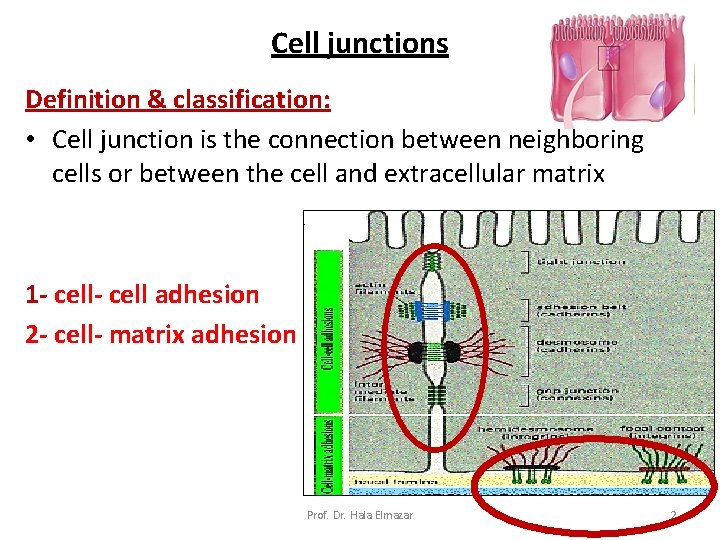
Cell junctions Definition & classification: • Cell junction is the connection between neighboring cells or between the cell and extracellular matrix 1 - cell adhesion 2 - cell- matrix adhesion Prof. Dr. Hala Elmazar 2
• Function of cell juctions: 1. Communication between neighboring cells. 2. Reducing stress placed upon cells. Cell adhesion is due to the action of : 1 - Cell Adhesion Molecules (CAMs) 2 - Intercellular junctions Prof. Dr. Hala Elmazar 3
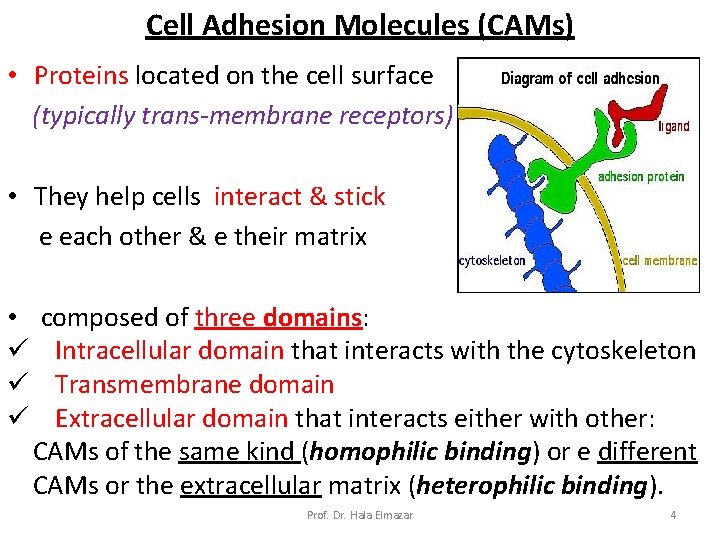
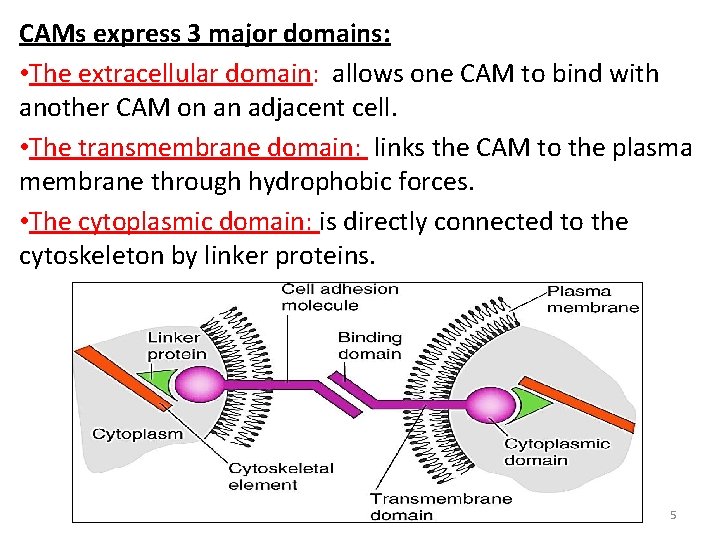
Cell Adhesion Molecules (CAMs) • Proteins located on the cell surface (typically trans-membrane receptors) • They help cells interact & stick e each other & e their matrix • ü ü ü composed of three domains: Intracellular domain that interacts with the cytoskeleton Transmembrane domain Extracellular domain that interacts either with other: CAMs of the same kind (homophilic binding) or e different CAMs or the extracellular matrix (heterophilic binding). Prof. Dr. Hala Elmazar 4
CAMs express 3 major domains: • The extracellular domain: allows one CAM to bind with another CAM on an adjacent cell. • The transmembrane domain: links the CAM to the plasma membrane through hydrophobic forces. • The cytoplasmic domain: is directly connected to the cytoskeleton by linker proteins. Prof. Dr. Hala Elmazar 5
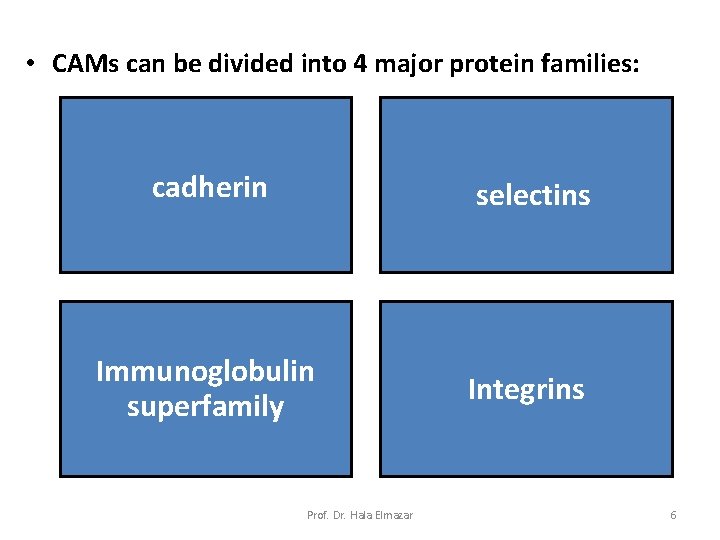
• CAMs can be divided into 4 major protein families: cadherin selectins Immunoglobulin superfamily Integrins Prof. Dr. Hala Elmazar 6
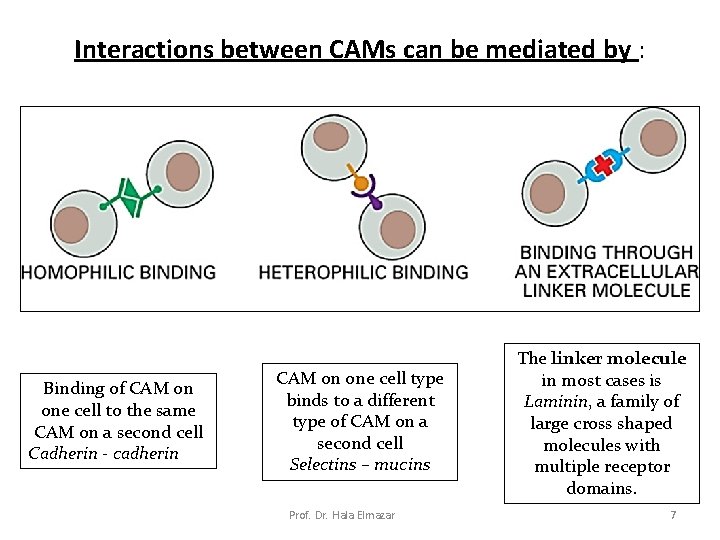
Interactions between CAMs can be mediated by : Binding of CAM on one cell to the same CAM on a second cell Cadherin - cadherin CAM on one cell type binds to a different type of CAM on a second cell Selectins – mucins Prof. Dr. Hala Elmazar The linker molecule in most cases is Laminin, a family of large cross shaped molecules with multiple receptor domains. 7
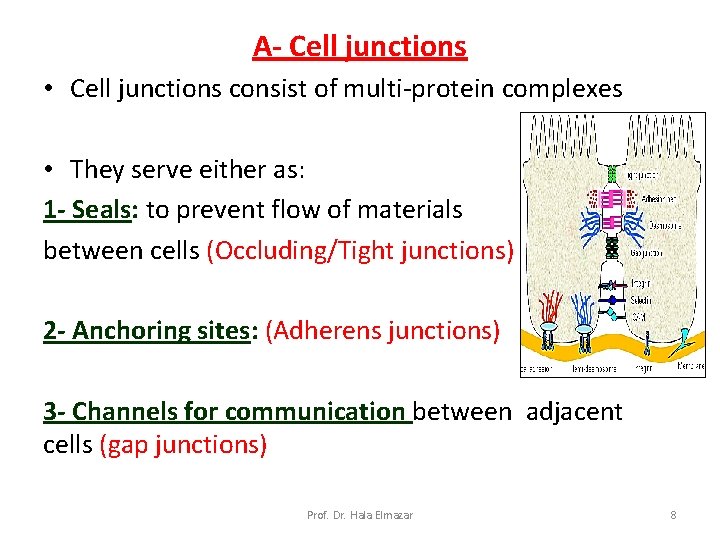
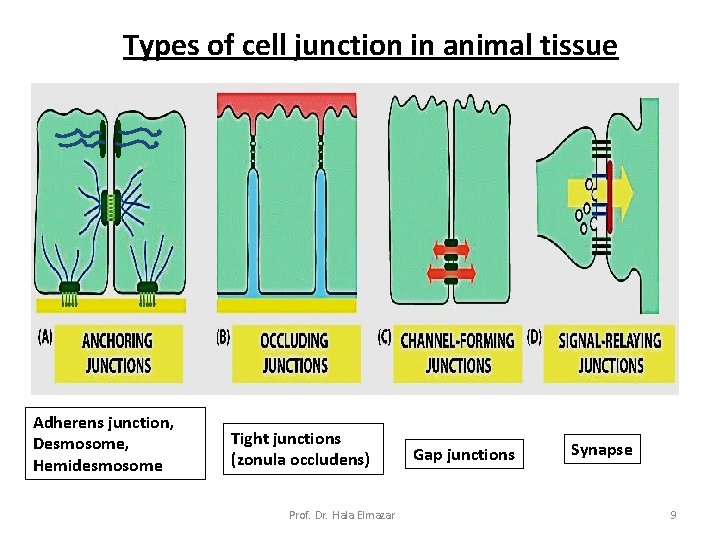
A- Cell junctions • Cell junctions consist of multi-protein complexes • They serve either as: 1 - Seals: to prevent flow of materials between cells (Occluding/Tight junctions) 2 - Anchoring sites: (Adherens junctions) 3 - Channels for communication between adjacent cells (gap junctions) Prof. Dr. Hala Elmazar 8
Types of cell junction in animal tissue Adherens junction, Desmosome, Hemidesmosome Tight junctions (zonula occludens) Prof. Dr. Hala Elmazar Gap junctions Synapse 9
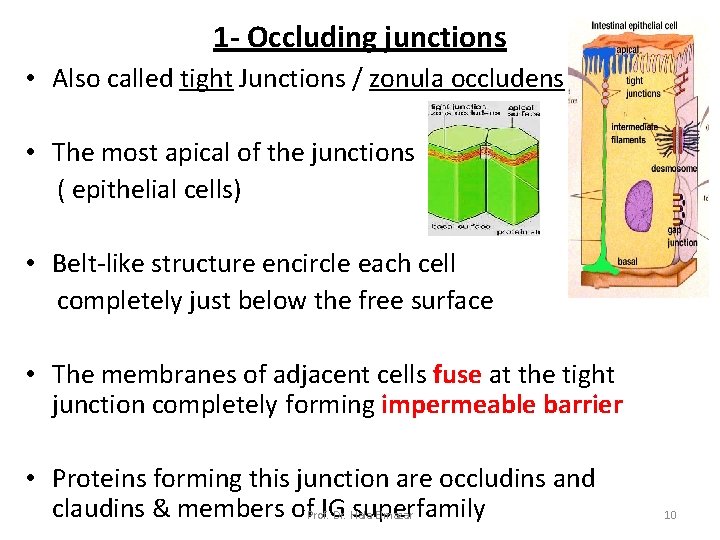
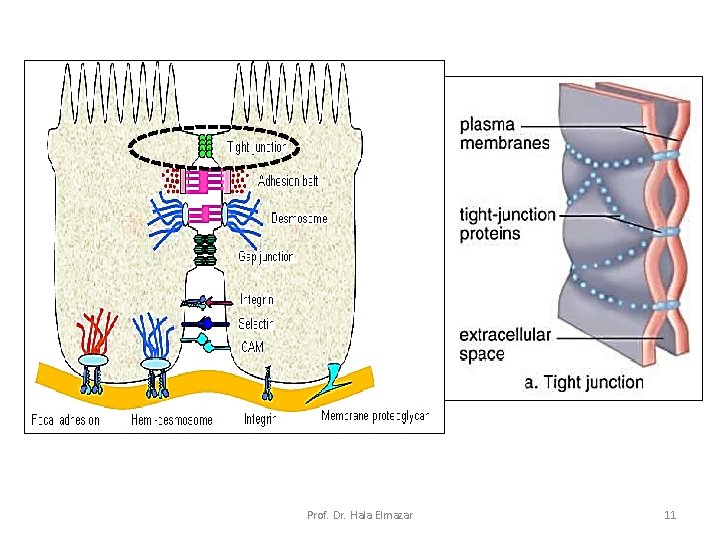
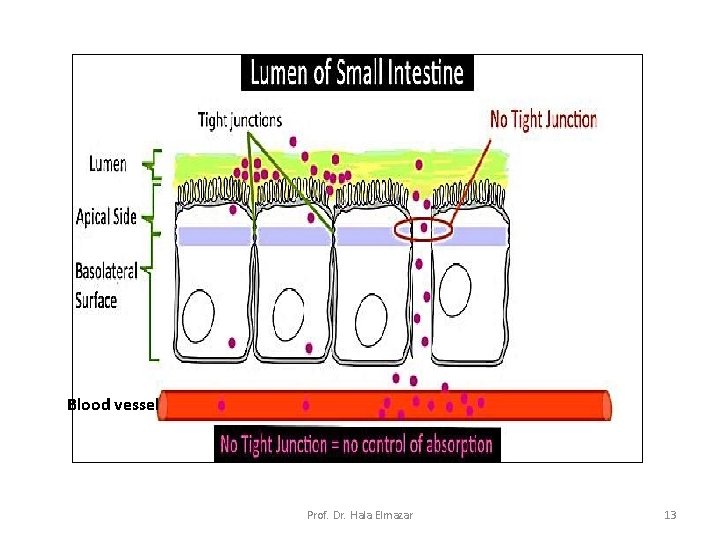
1 - Occluding junctions • Also called tight Junctions / zonula occludens • The most apical of the junctions ( epithelial cells) • Belt-like structure encircle each cell completely just below the free surface • The membranes of adjacent cells fuse at the tight junction completely forming impermeable barrier • Proteins forming this junction are occludins and claudins & members of. Prof. IGDr. Hala superfamily Elmazar 10
Prof. Dr. Hala Elmazar 11
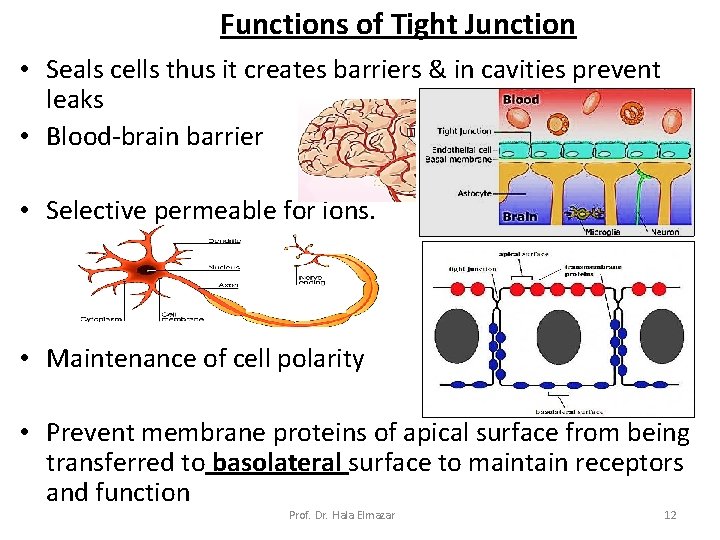
Functions of Tight Junction • Seals cells thus it creates barriers & in cavities prevent leaks • Blood-brain barrier • Selective permeable for ions. • Maintenance of cell polarity • Prevent membrane proteins of apical surface from being transferred to basolateral surface to maintain receptors and function Prof. Dr. Hala Elmazar 12
Blood vessel Prof. Dr. Hala Elmazar 13
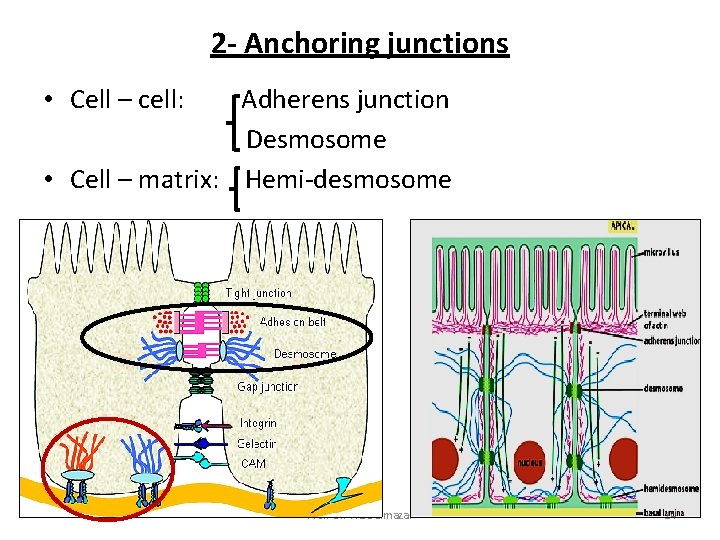
2 - Anchoring junctions • Cell – cell: Adherens junction Desmosome • Cell – matrix: Hemi-desmosome Prof. Dr. Hala Elmazar 14
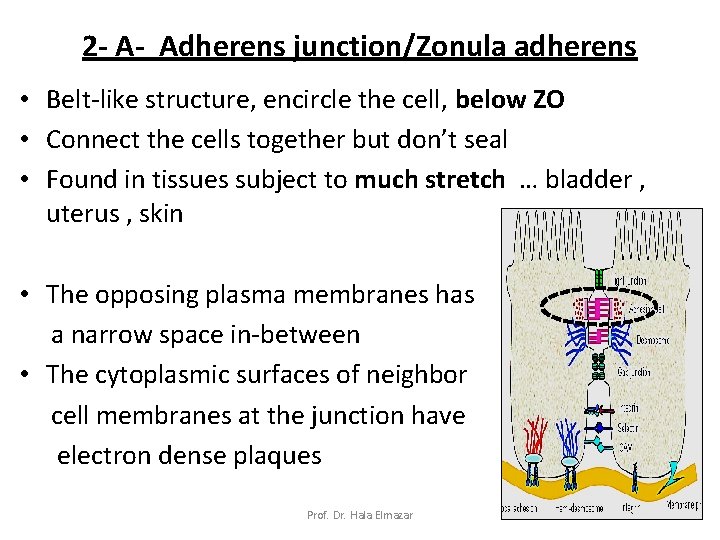
2 - A- Adherens junction/Zonula adherens • Belt-like structure, encircle the cell, below ZO • Connect the cells together but don’t seal • Found in tissues subject to much stretch … bladder , uterus , skin • The opposing plasma membranes has a narrow space in-between • The cytoplasmic surfaces of neighbor cell membranes at the junction have electron dense plaques Prof. Dr. Hala Elmazar 15
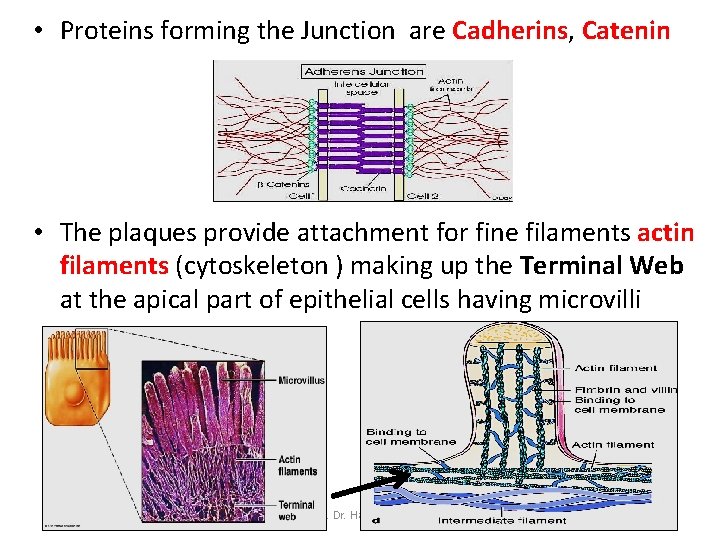
• Proteins forming the Junction are Cadherins, Catenin • The plaques provide attachment for fine filaments actin filaments (cytoskeleton ) making up the Terminal Web at the apical part of epithelial cells having microvilli Prof. Dr. Hala Elmazar 16
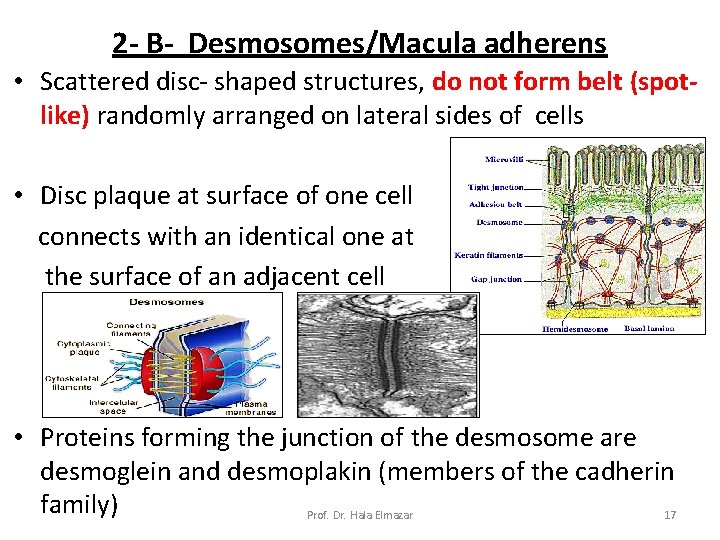
2 - B- Desmosomes/Macula adherens • Scattered disc- shaped structures, do not form belt (spotlike) randomly arranged on lateral sides of cells • Disc plaque at surface of one cell connects with an identical one at the surface of an adjacent cell • Proteins forming the junction of the desmosome are desmoglein and desmoplakin (members of the cadherin family) Prof. Dr. Hala Elmazar 17
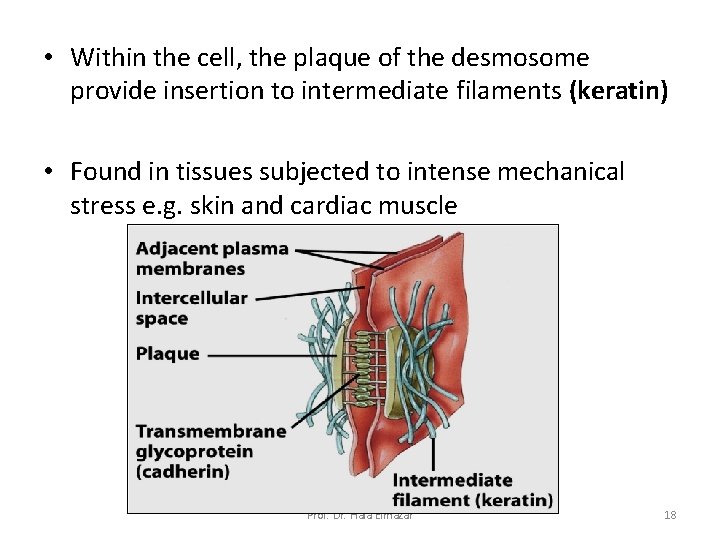
• Within the cell, the plaque of the desmosome provide insertion to intermediate filaments (keratin) • Found in tissues subjected to intense mechanical stress e. g. skin and cardiac muscle Prof. Dr. Hala Elmazar 18
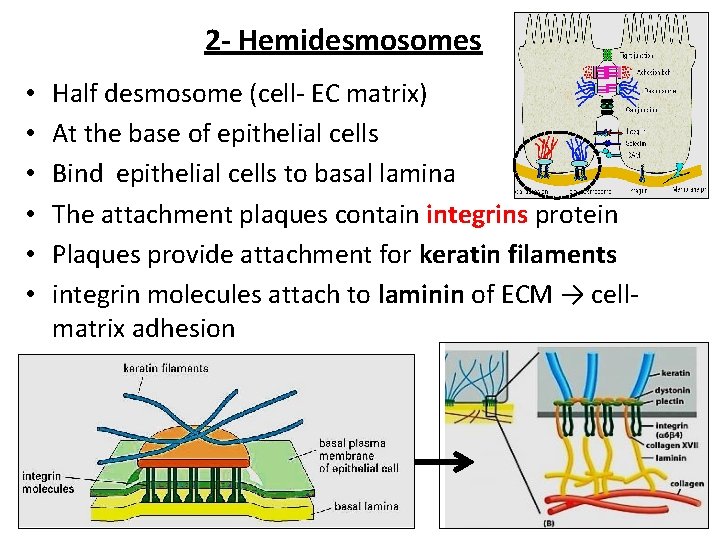
2 - Hemidesmosomes • • • Half desmosome (cell- EC matrix) At the base of epithelial cells Bind epithelial cells to basal lamina The attachment plaques contain integrins protein Plaques provide attachment for keratin filaments integrin molecules attach to laminin of ECM → cellmatrix adhesion Prof. Dr. Hala Elmazar 19
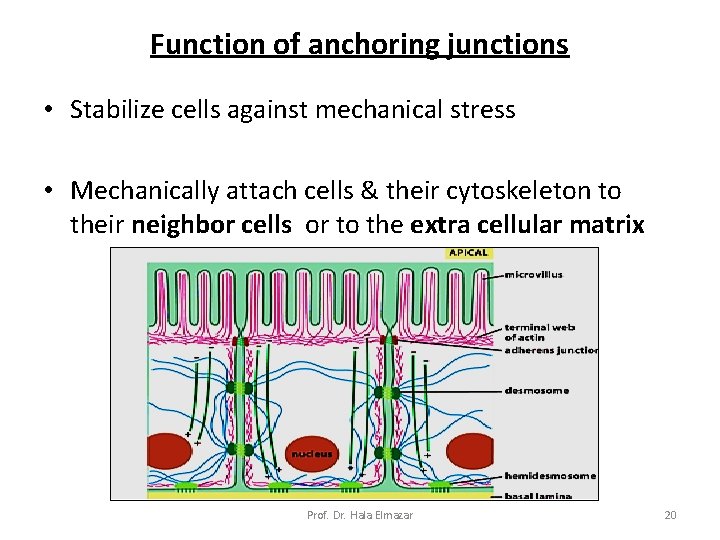
Function of anchoring junctions • Stabilize cells against mechanical stress • Mechanically attach cells & their cytoskeleton to their neighbor cells or to the extra cellular matrix Prof. Dr. Hala Elmazar 20
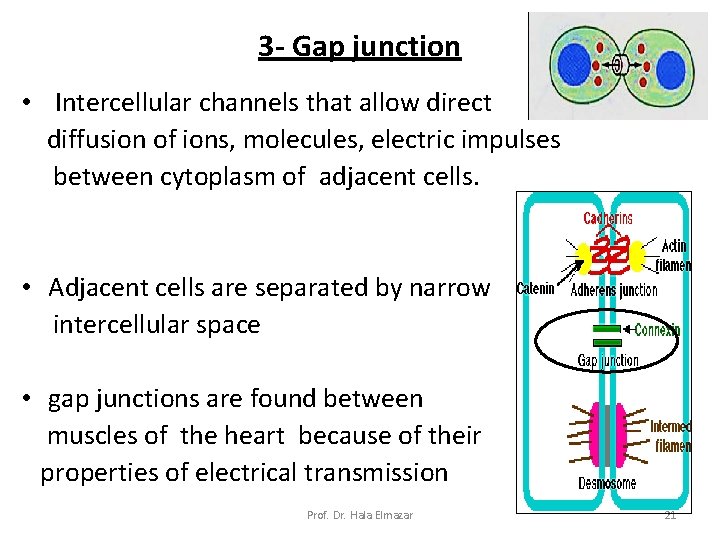
3 - Gap junction • Intercellular channels that allow direct diffusion of ions, molecules, electric impulses between cytoplasm of adjacent cells. • Adjacent cells are separated by narrow intercellular space • gap junctions are found between muscles of the heart because of their properties of electrical transmission Prof. Dr. Hala Elmazar 21
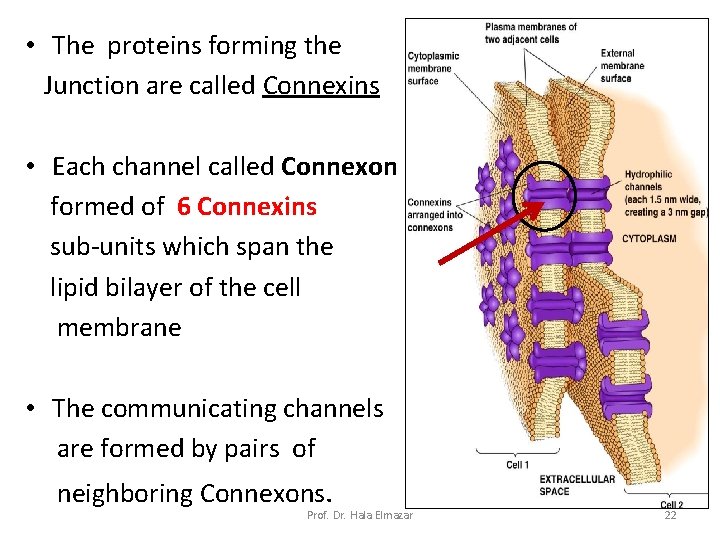
• The proteins forming the Junction are called Connexins • Each channel called Connexon formed of 6 Connexins sub-units which span the lipid bilayer of the cell membrane • The communicating channels are formed by pairs of neighboring Connexons. Prof. Dr. Hala Elmazar 22
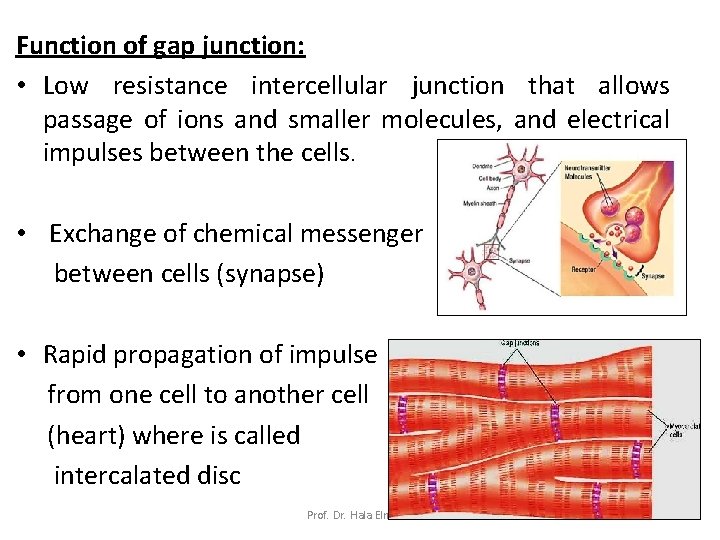
Function of gap junction: • Low resistance intercellular junction that allows passage of ions and smaller molecules, and electrical impulses between the cells. • Exchange of chemical messenger between cells (synapse) • Rapid propagation of impulse from one cell to another cell (heart) where is called intercalated disc Prof. Dr. Hala Elmazar 23
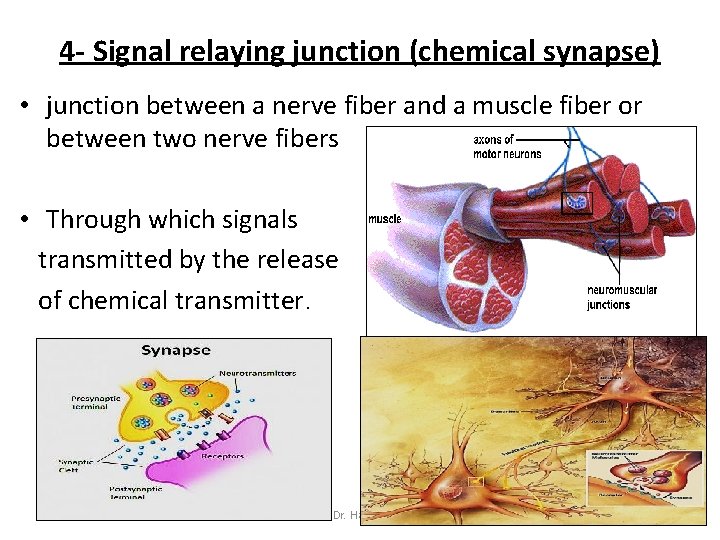
4 - Signal relaying junction (chemical synapse) • junction between a nerve fiber and a muscle fiber or between two nerve fibers • Through which signals transmitted by the release of chemical transmitter. Prof. Dr. Hala Elmazar 24