
Cell Growth Why cells divide the larger a

- Slides: 13
Cell Growth
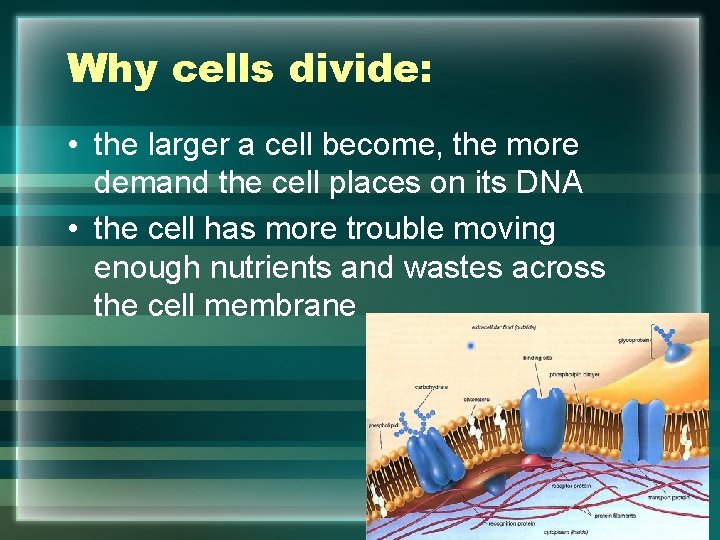
Why cells divide: • the larger a cell become, the more demand the cell places on its DNA • the cell has more trouble moving enough nutrients and wastes across the cell membrane
Large Cells • DNA – the information that controls a cell’s function – nucleus • If a cell was to grow without limits, an ‘information crisis’ would occur. • Most wanted library book.
Exchanging Material • Cell Membrane: Food, Oxygen, and Water enter while waste products exit. • Surface Area – total area of cell membrane – rate of travel • Cell Volume: consumption & production rates • Car Doors vs. Bus Doors
Ratio of Surface Area to Volume • Cell needs small surface area to volume ratio. • With growth, cell volume cell increases more rapidly than surface area. • Large Cells: difficult to get sufficient oxygen and nutrient in and waste products out. • Small Town with a Two Lane Road
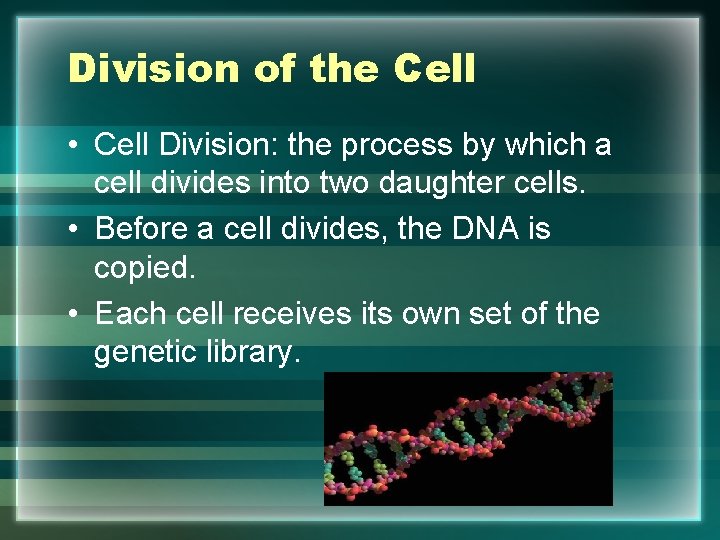
Division of the Cell • Cell Division: the process by which a cell divides into two daughter cells. • Before a cell divides, the DNA is copied. • Each cell receives its own set of the genetic library.
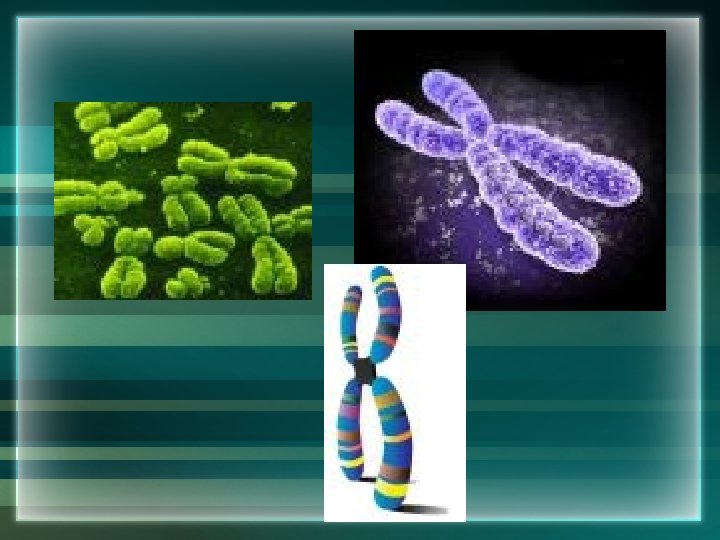
Chromosomes • carry genetic information • made of DNA • Each organism has a specific number of chromosomes. • Humans: 46; Fruit Flies: 8; Carrot: 18 • Before cell division, each chromosome is replicated, or copied.
Structure • Each chromosome consists of two sister chromatids. • The two sister chromatids are connected by a centromer. • When the cell divides, the sister chromatids separate from each other. • One chromatid goes to each of the two new cells.
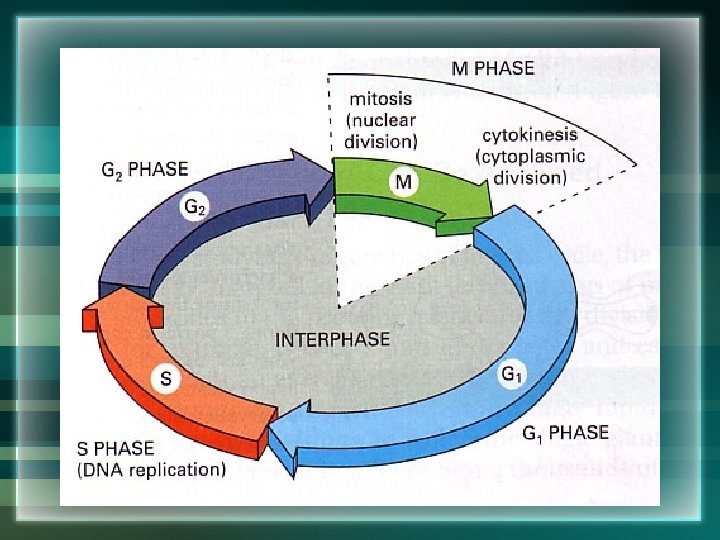
Cell Cycle • • Cell Grows Prepares for Division Divides into Two Daughter Cells Cell Cycle Begins Again
Events of the Cell Cycle • Interphase: long period of time – G 1 Phase: cell increases in size and synthesizes proteins and organelles – S Phase: chromosomes replicated and synthesis of DNA – G 2 Phase: organelles and molecules are produced • M Phase: short period of time – Mitosis- division of cell nucleus – Cytokinesis-division of cytoplasm